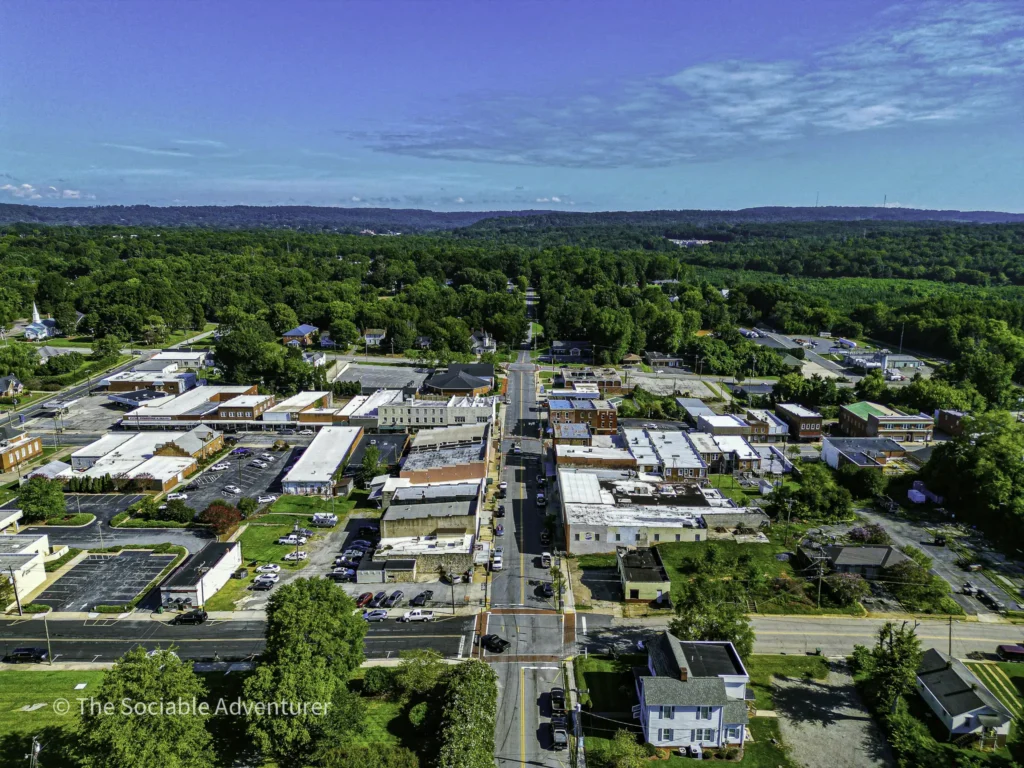
Madison is a small historic town at the confluence of the Dan and Mayo rivers in Rockingham County, NC, about ten miles south of the Virginia line. Named for President James Madison, the fourth U.S. president, the town was established by the North Carolina Legislature in 1815 and formally incorporated in 1873.
Madison was planned for river trade. In 1818, Randall Duke Scales laid out 96 half-acre lots and sold them at auction, and the town flourished as bateaux carried horses, hogs, and goods along the rivers. A toll bridge built across the Dan in 1830 even produced the only currency ever known to be issued in Rockingham County, and a covered bridge followed in 1887.
Tobacco defined Madison’s early growth. By the 1870s, the town hosted as many as 44 plug-tobacco factories, and the arrival of the railroad in 1888 brought hotels and further growth, with the population peaking around 3,300 in 1925. After World War II, Madison followed the county’s broader arc, shifting from tobacco toward textile manufacturing.
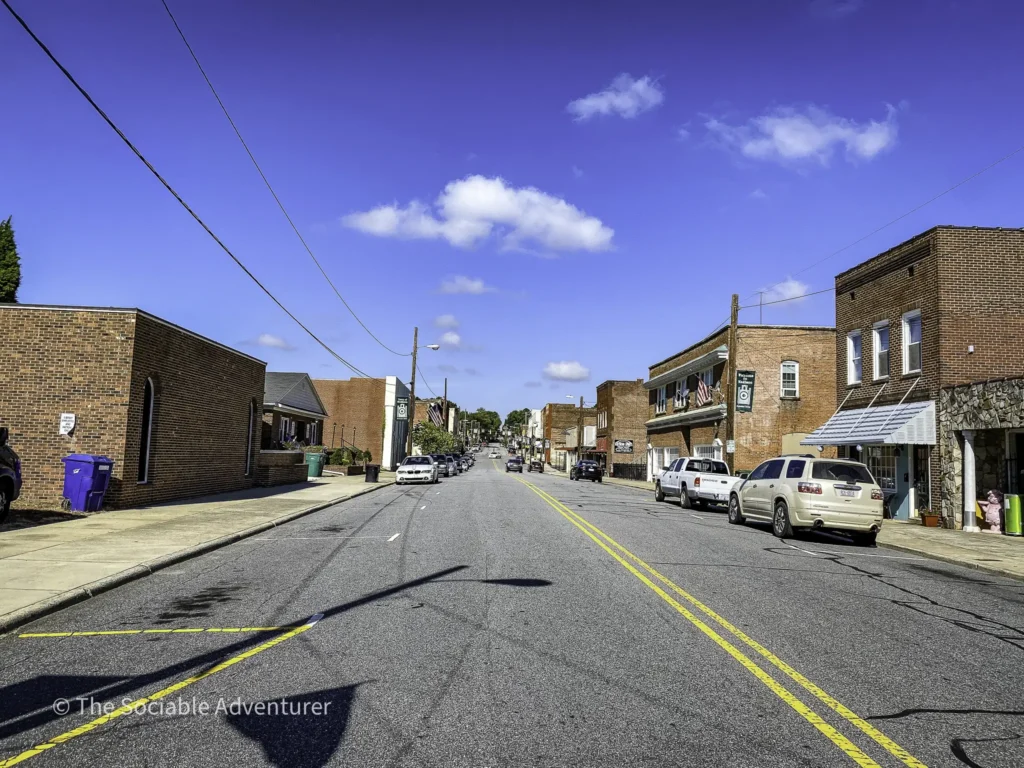
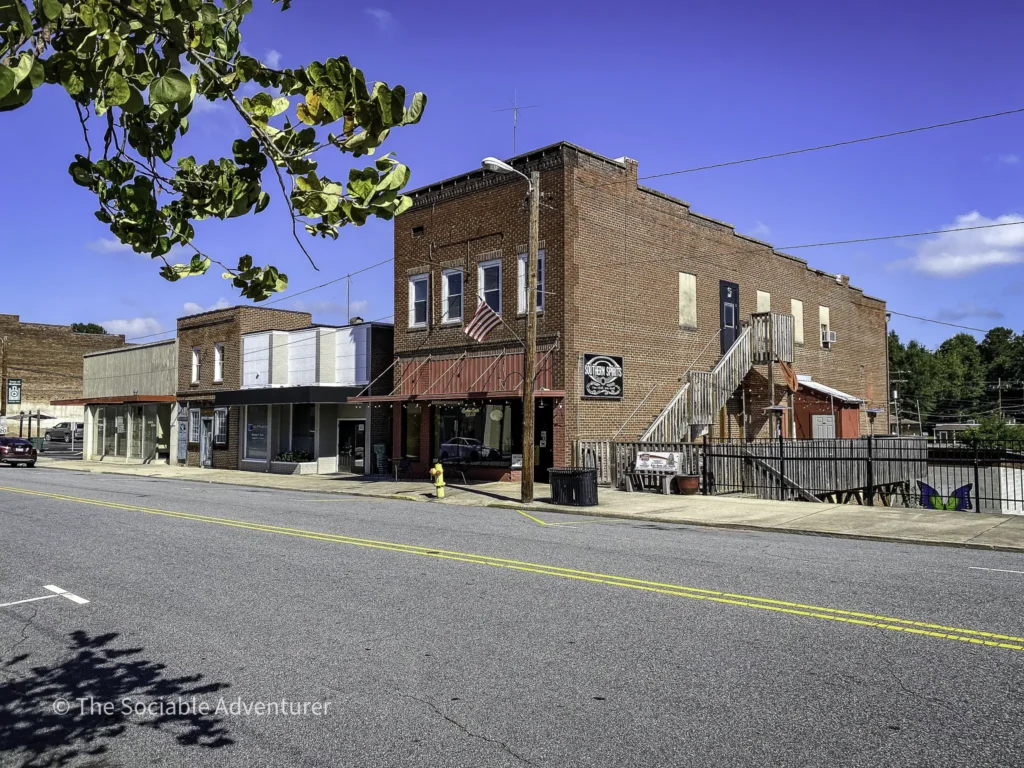
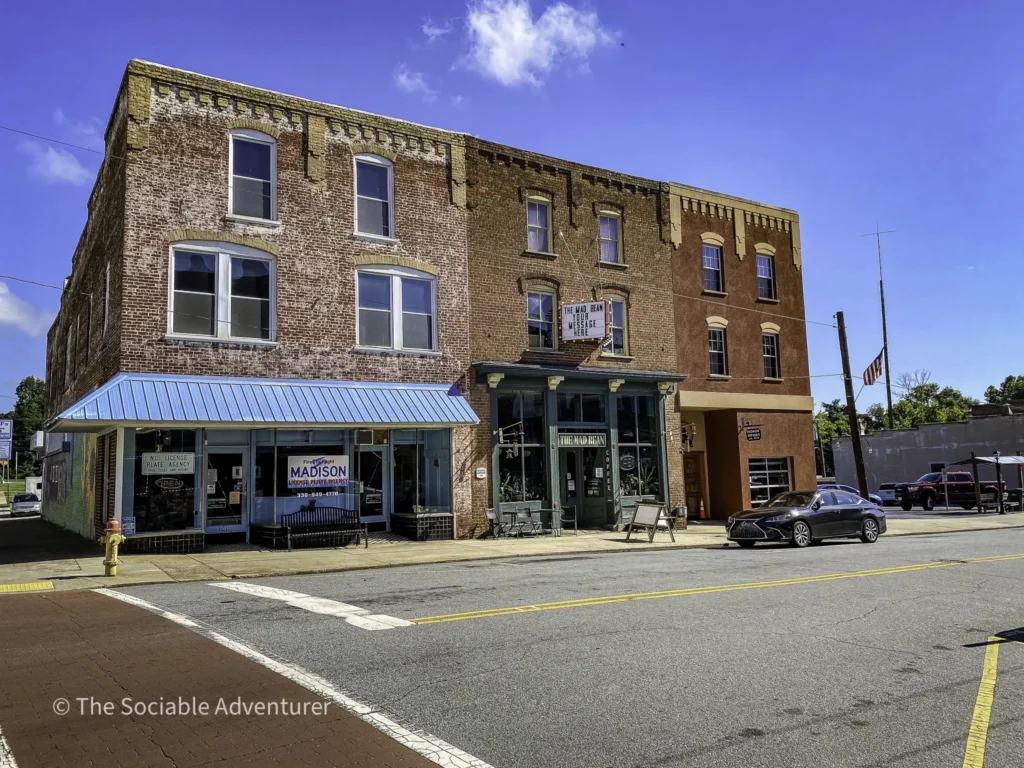
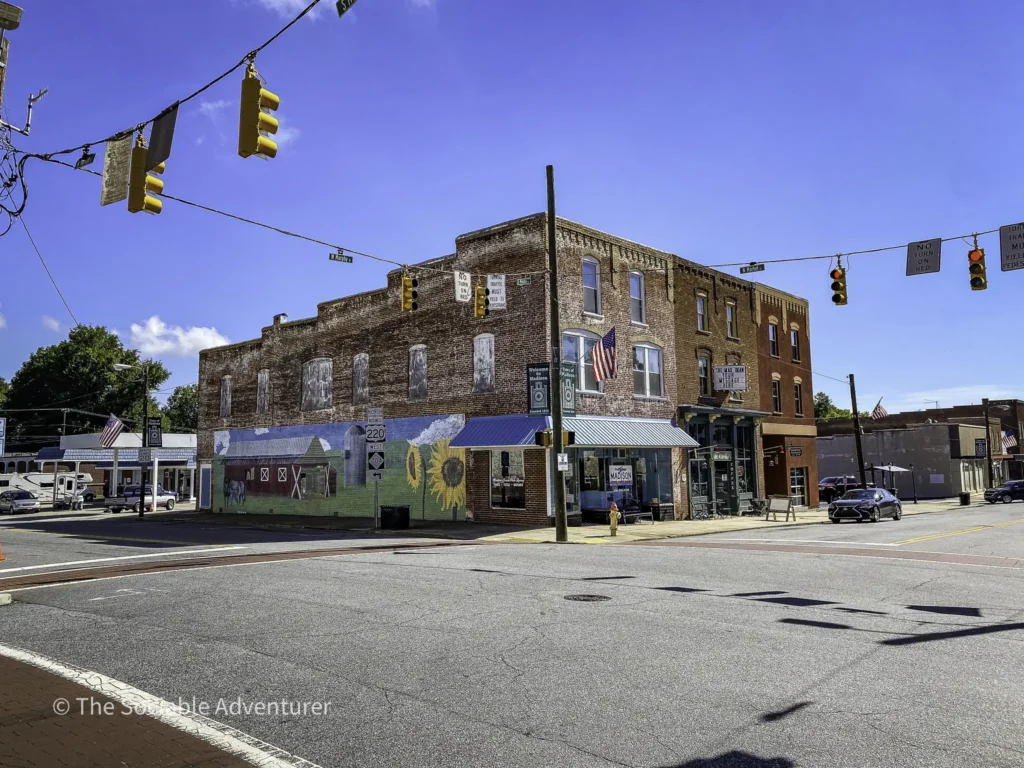
That history is still visible on the ground. Madison holds two historic districts — the Academy Street Historic District, on the National Register since 1982, and the Hunter-Decatur Street Historic District, the town’s first federally certified local district. A stroll down Hunter Street takes you past a remarkable row of Victorian and bungalow-era homes, and remnants of the old mills still stand along the Mayo River.
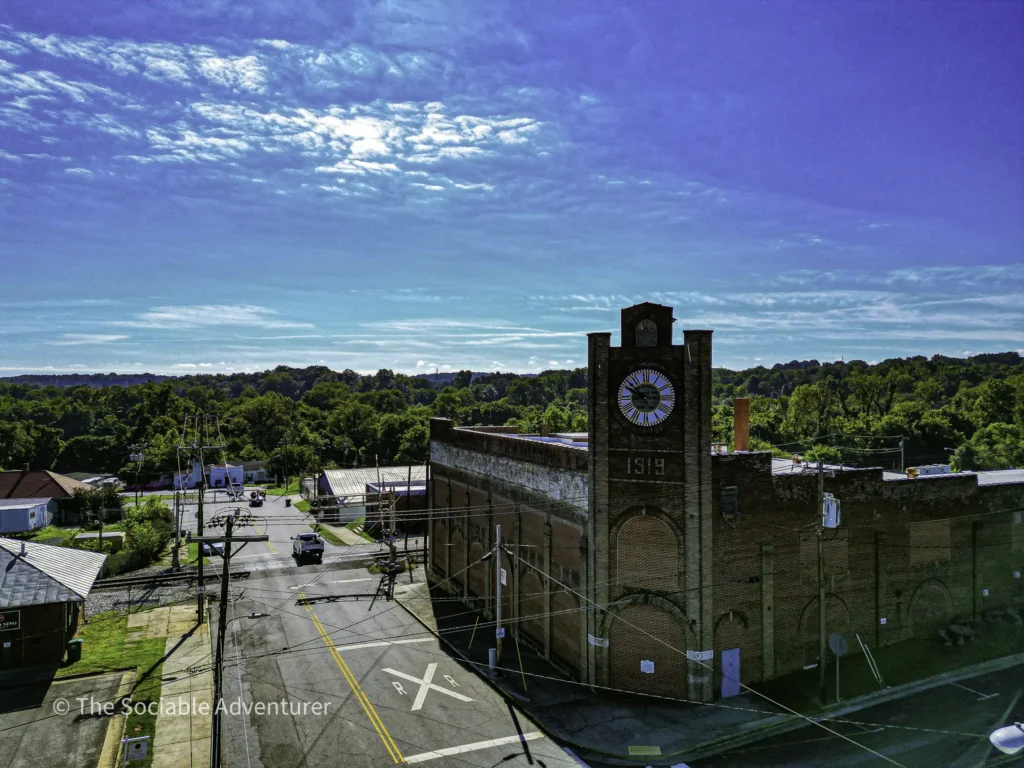
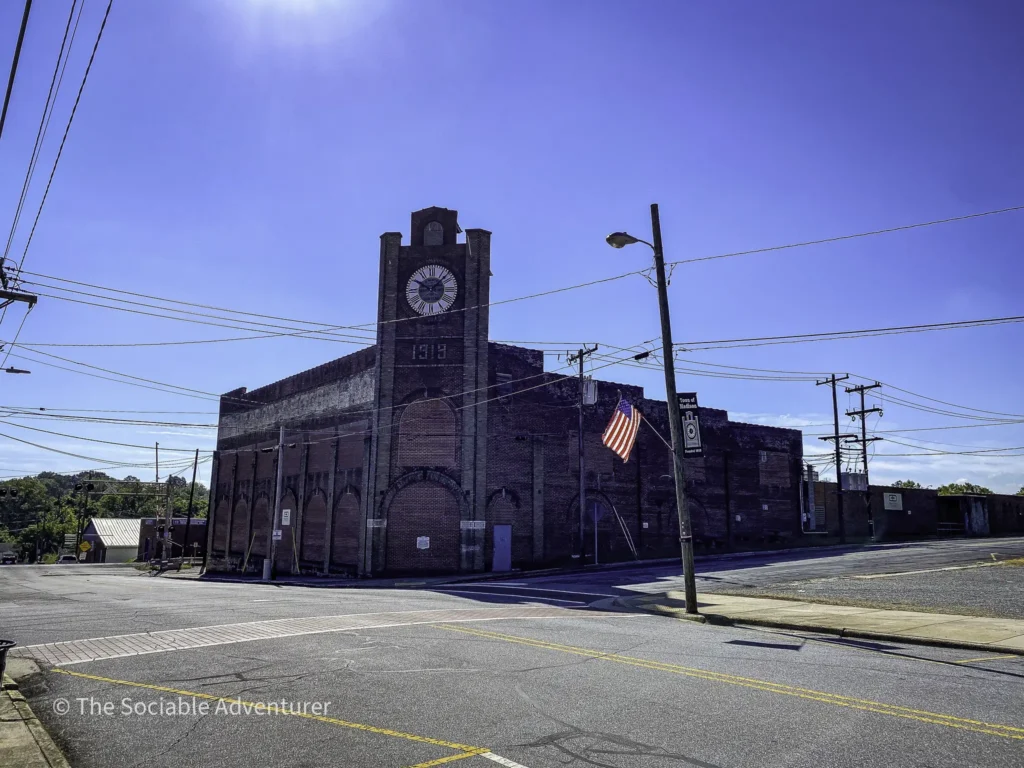
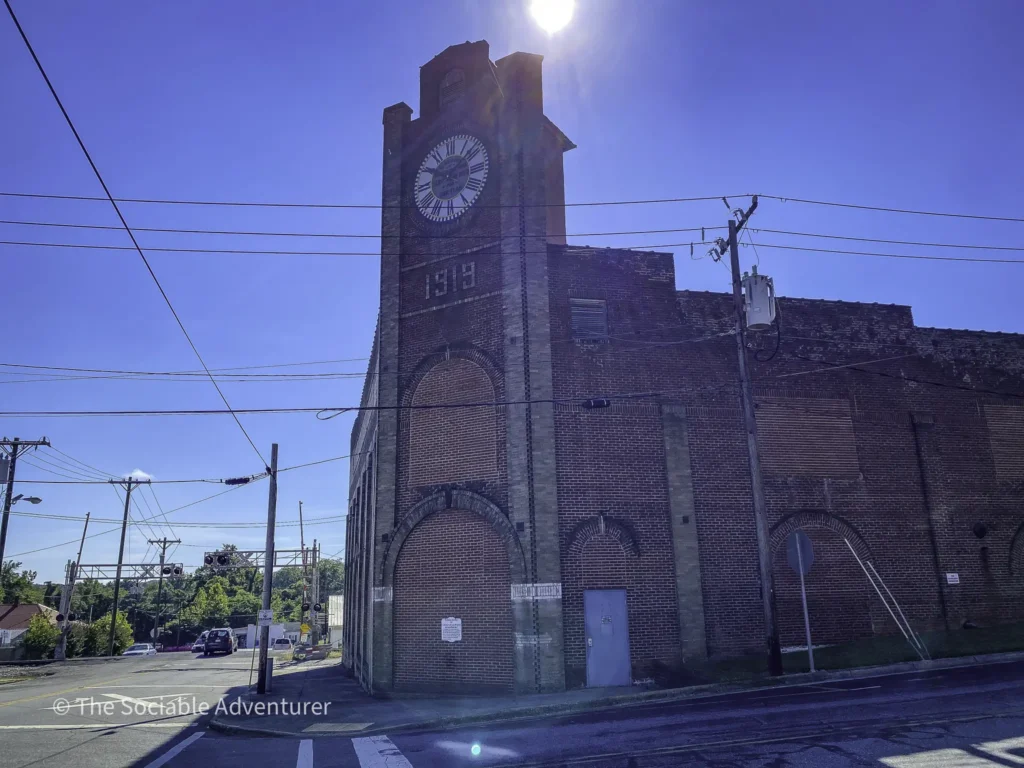
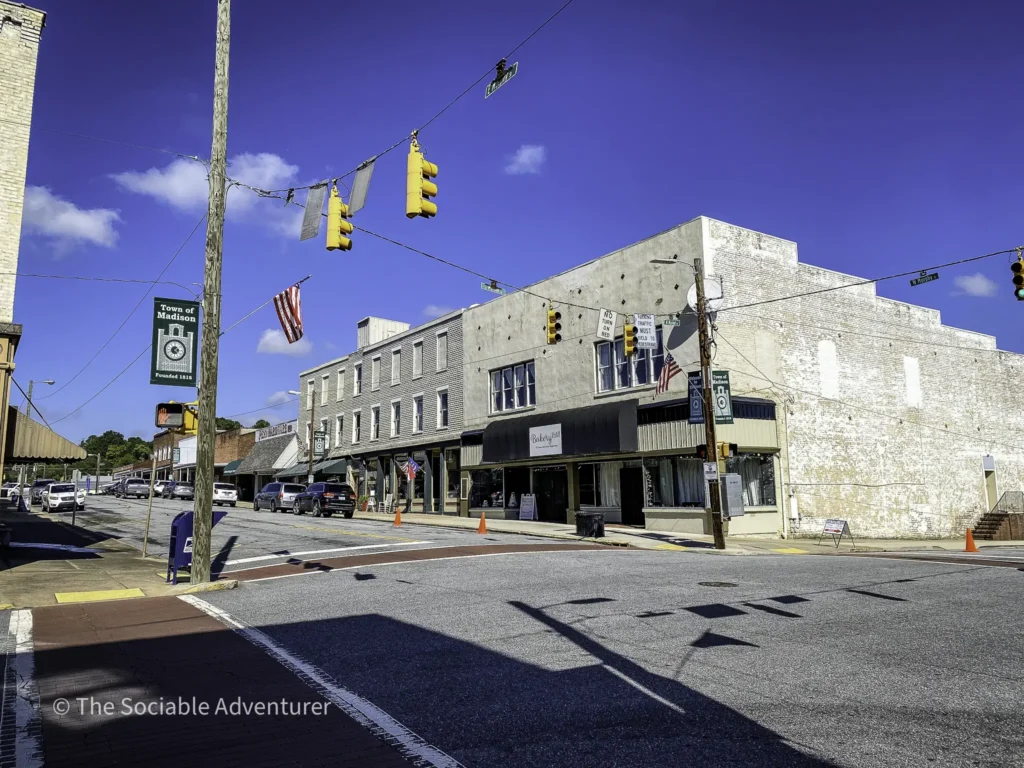
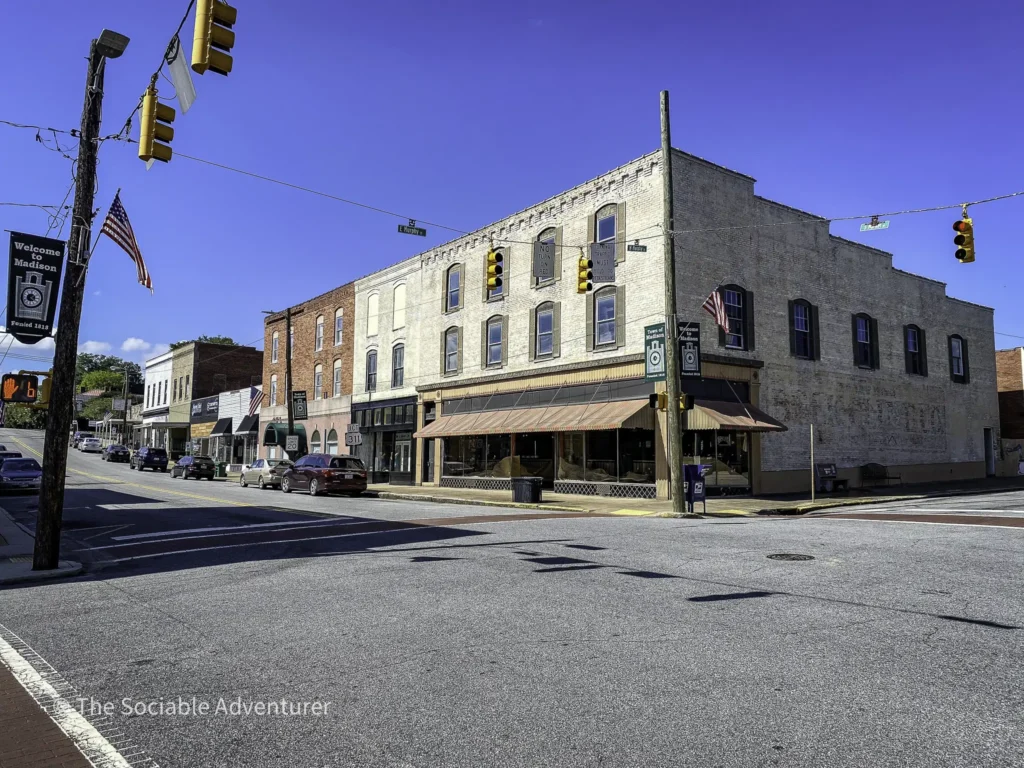
One landmark keeps time over it all. At the corner of Dalton and Murphy Streets, a 1919 war memorial town clock — hand-wound, built by Boston’s E. Howard Clock Company, inscribed “In Memory of All Those Who Served and Died For Our Flag,” has anchored downtown Madison for more than a century, and it’s one of the few remaining hand-wound street clocks in the country.
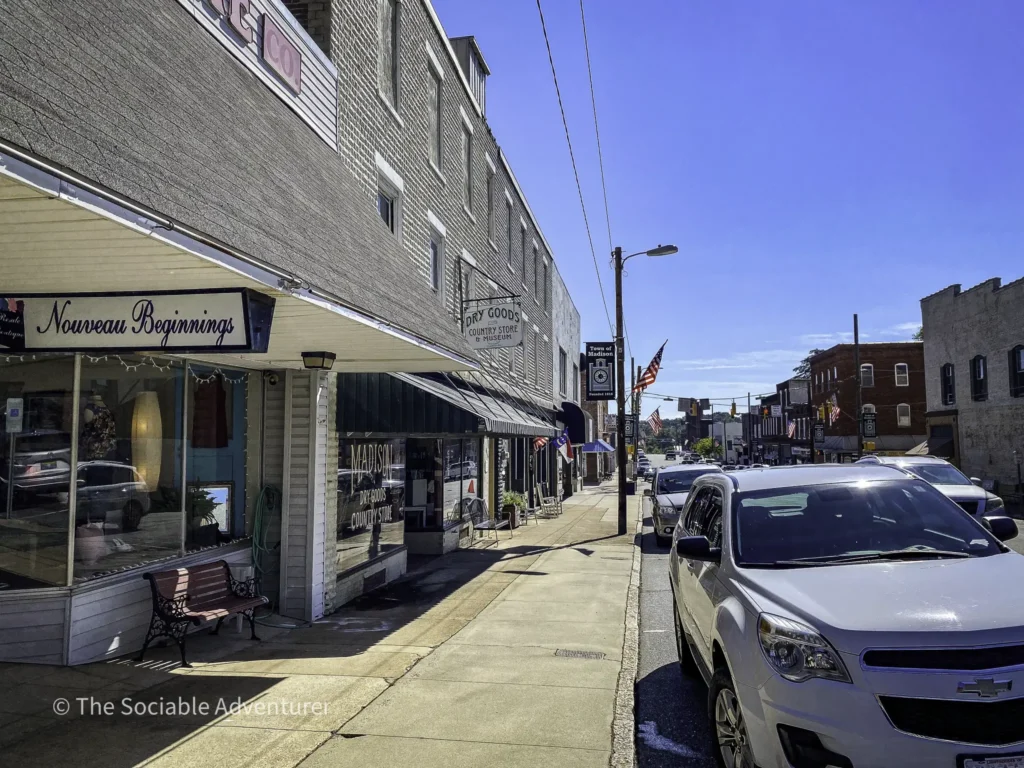
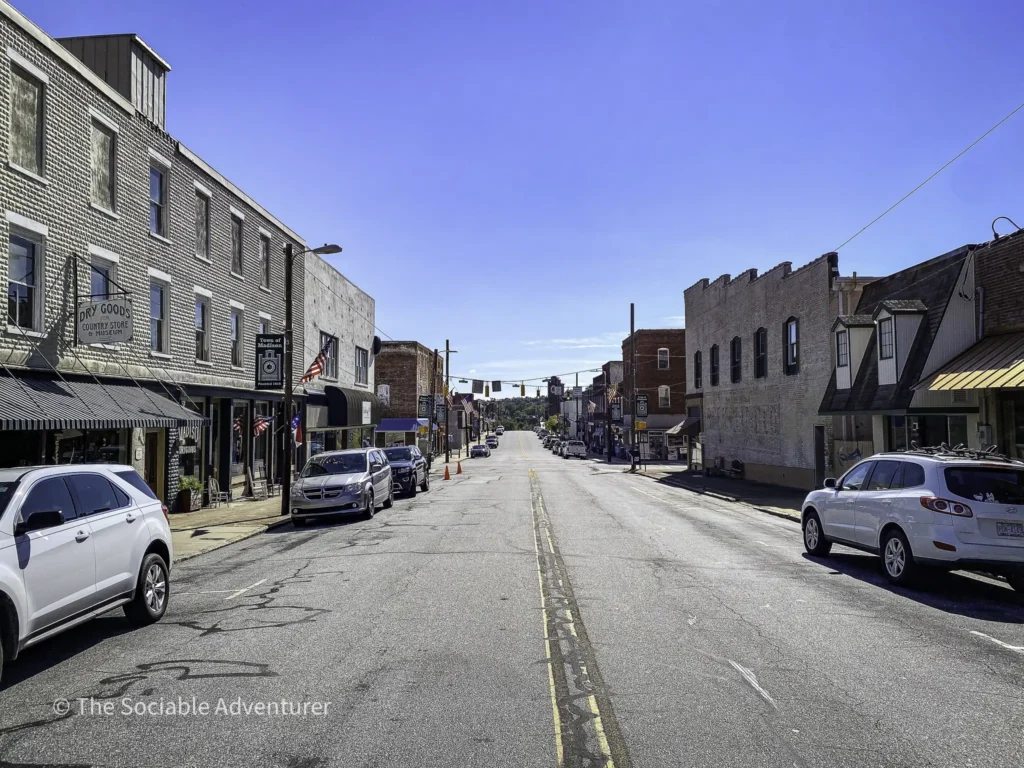
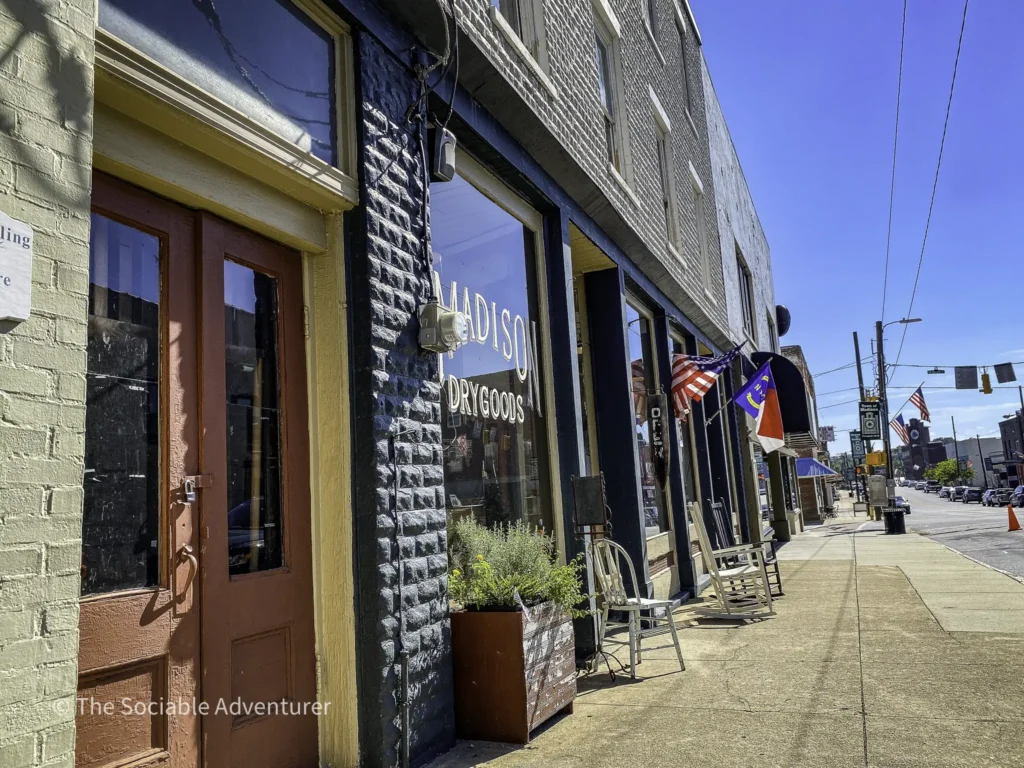
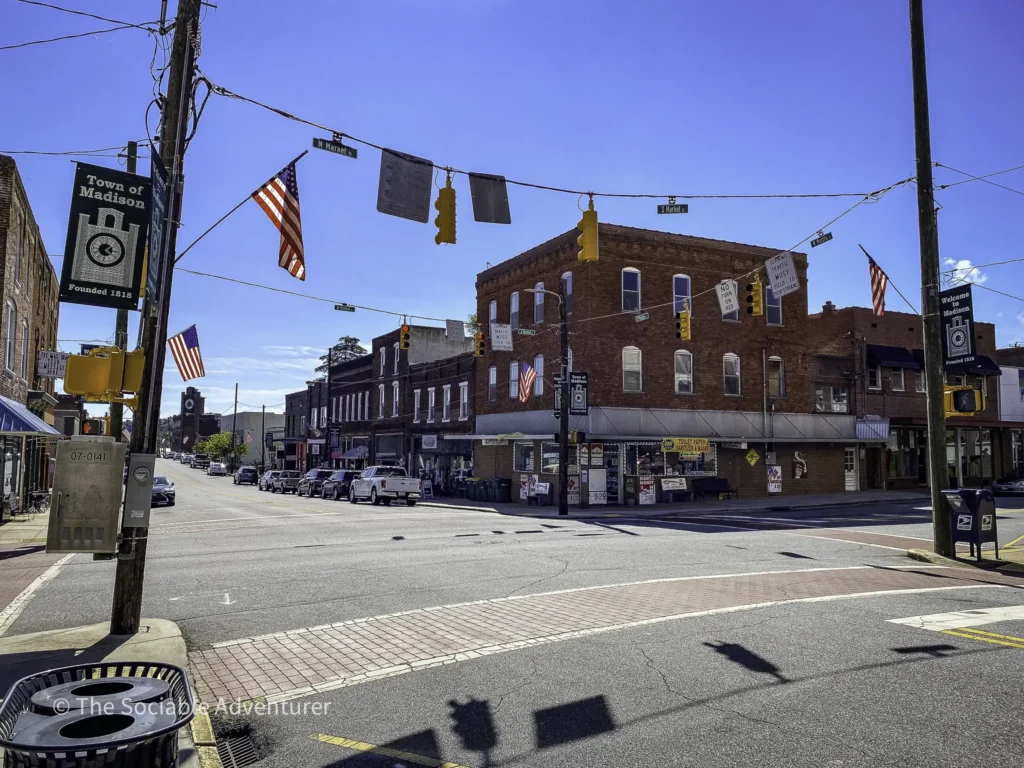
No stop in Madison is complete without Madison Dry Goods and Country Store, a community staple in a 1908 downtown building that has been a hotel, a hardware store, and — famously — the T.B. Knight Funeral Home. Today it’s a country store selling local goods, clothing, and gifts, with a second-floor museum covering both Madison’s history and the Lawson Family Tragedy, the 1929 Christmas Day murders connected to the building’s funeral-parlor past. The store’s history earned it a spot on Netflix’s 28 Days Haunted, and we always enjoy talking with the owners when we visit.
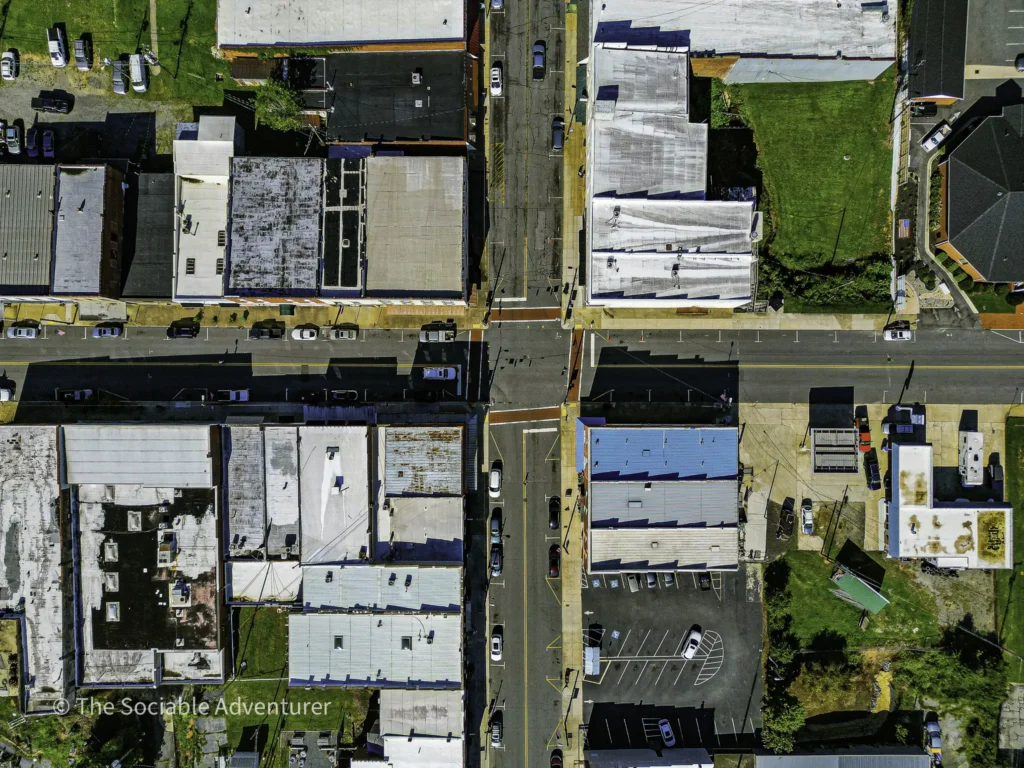
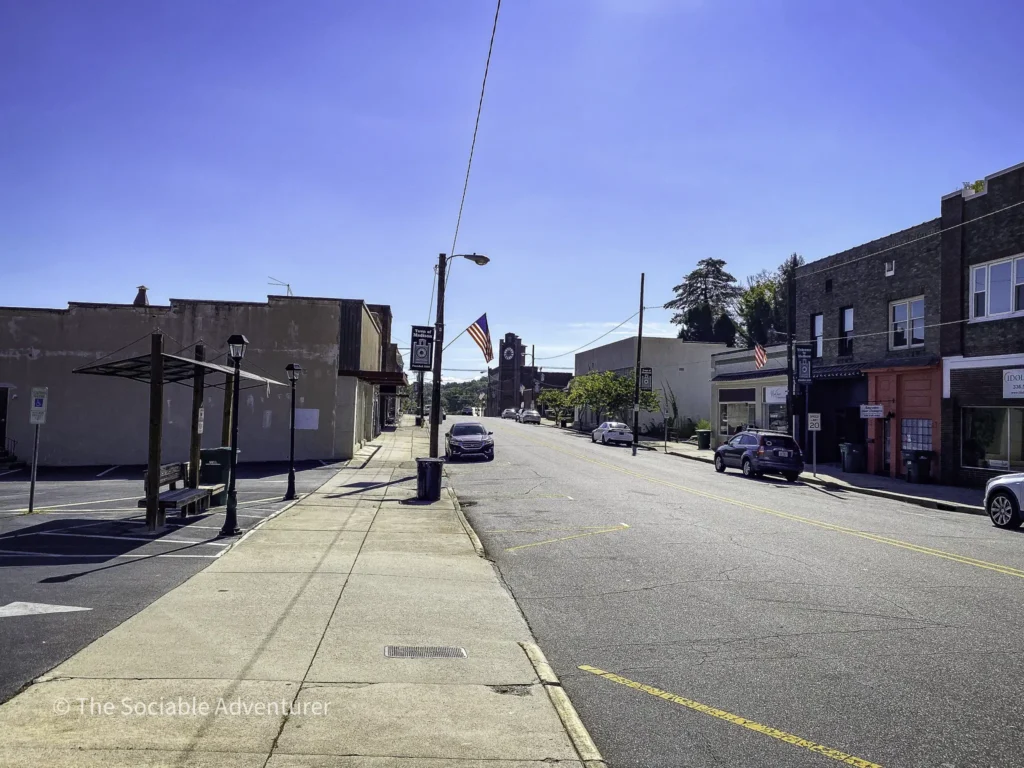
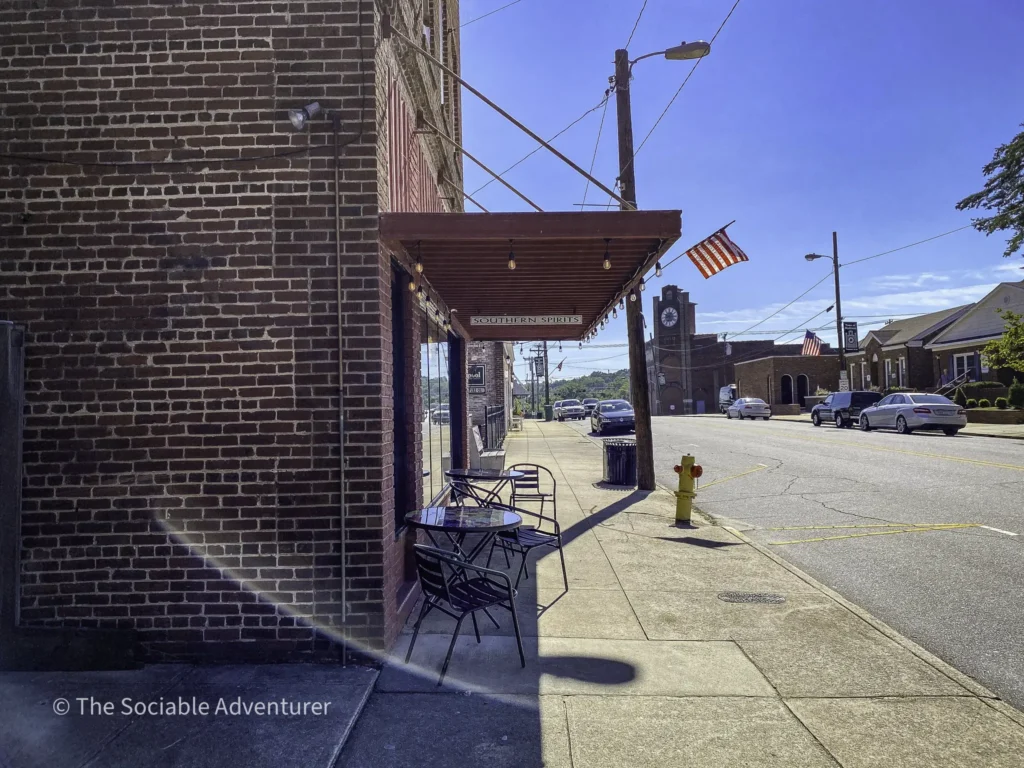
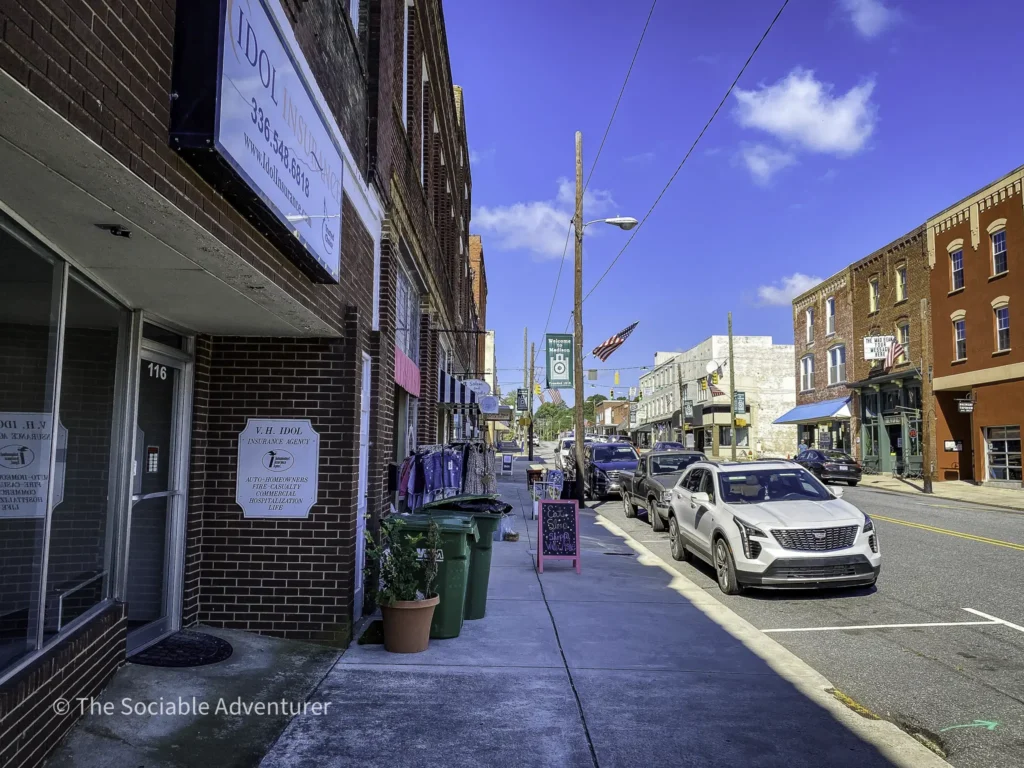
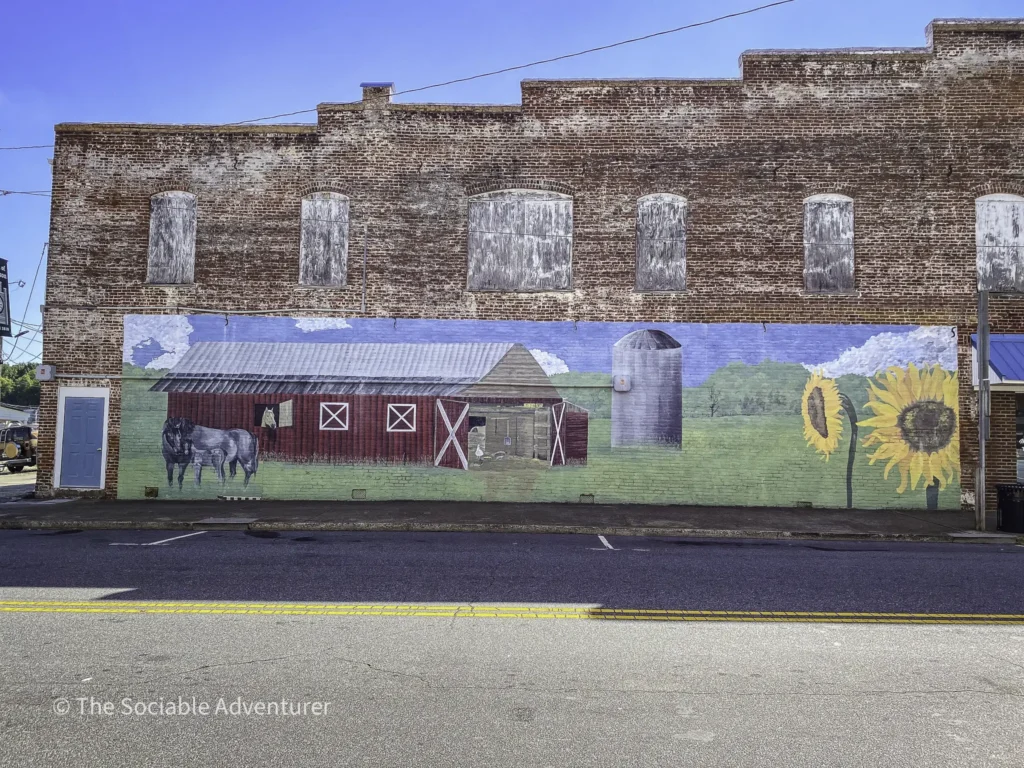
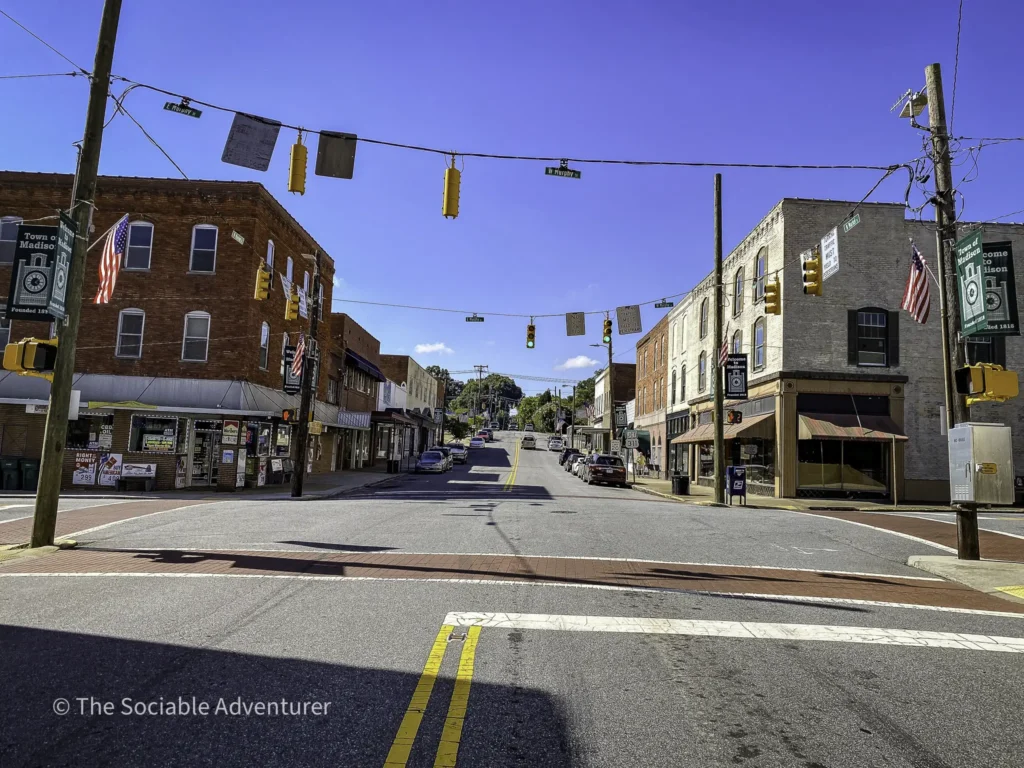
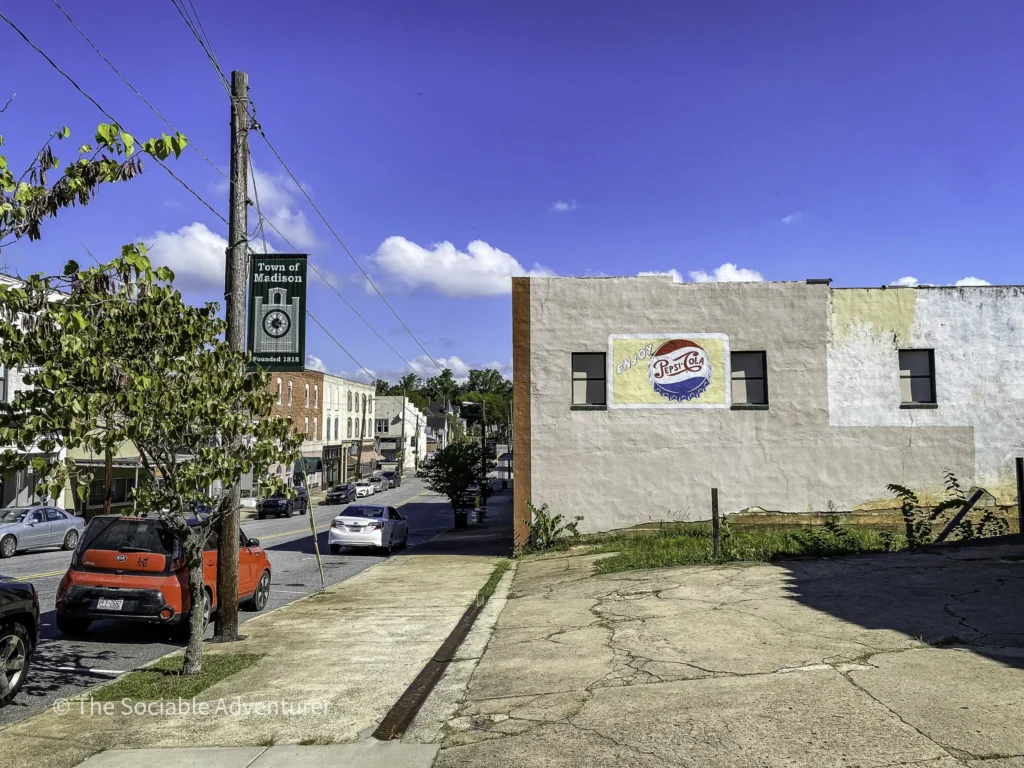
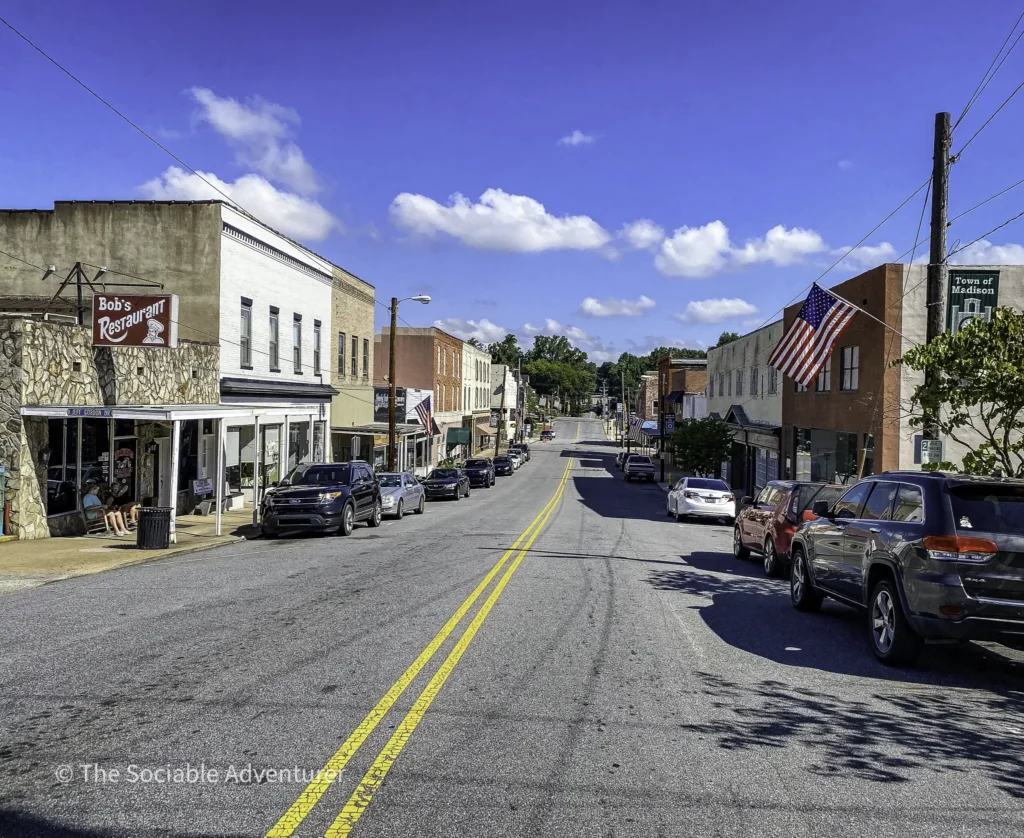
Today, Madison’s downtown is coming back to life as a social district for eating, drinking, and shopping. We’ve enjoyed exploring the town’s historic streets and its growing local scene — check out some of what we got up to below.
Photos of Downtown Madison
Things to do in Madison