Set along the Virginia border at the northern edge of the Piedmont Triad, Rockingham County is one of North Carolina’s most river-rich and history-layered counties — a place where textile mills, tobacco money, old-time music, and two state parks all trace back to the same web of rivers that shaped it. Known as “North Carolina’s North Star” for its position at the top of the state, the county rolls across nearly 573 square miles of Piedmont hills and fertile river valleys between Greensboro and the Virginia line.
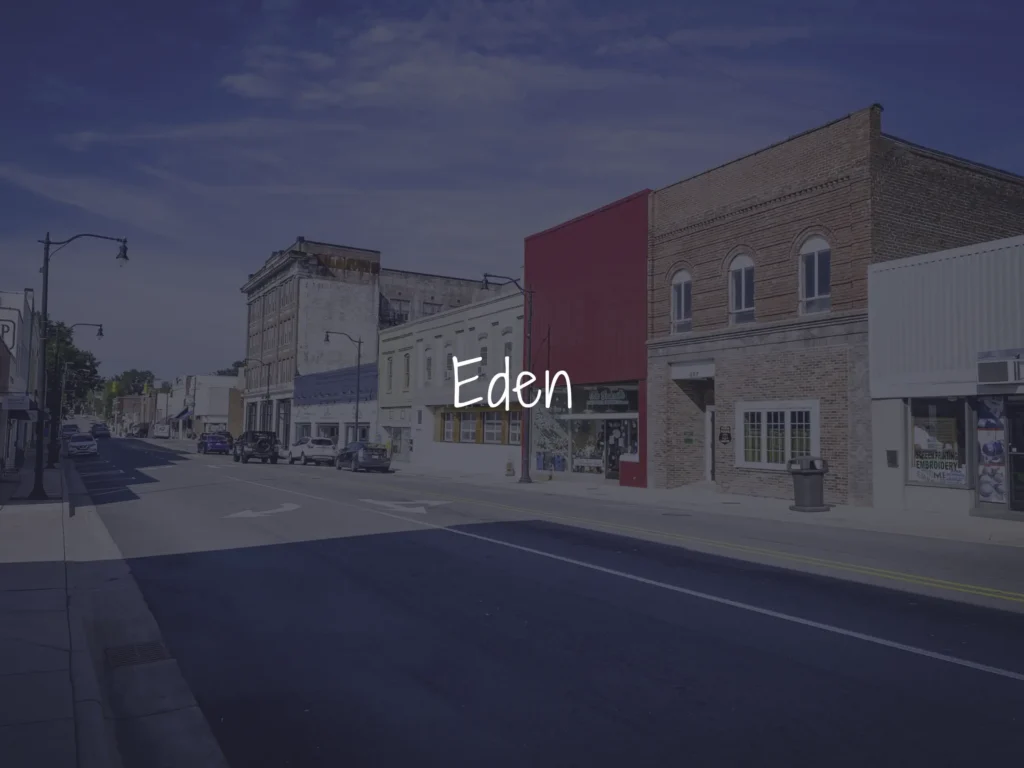
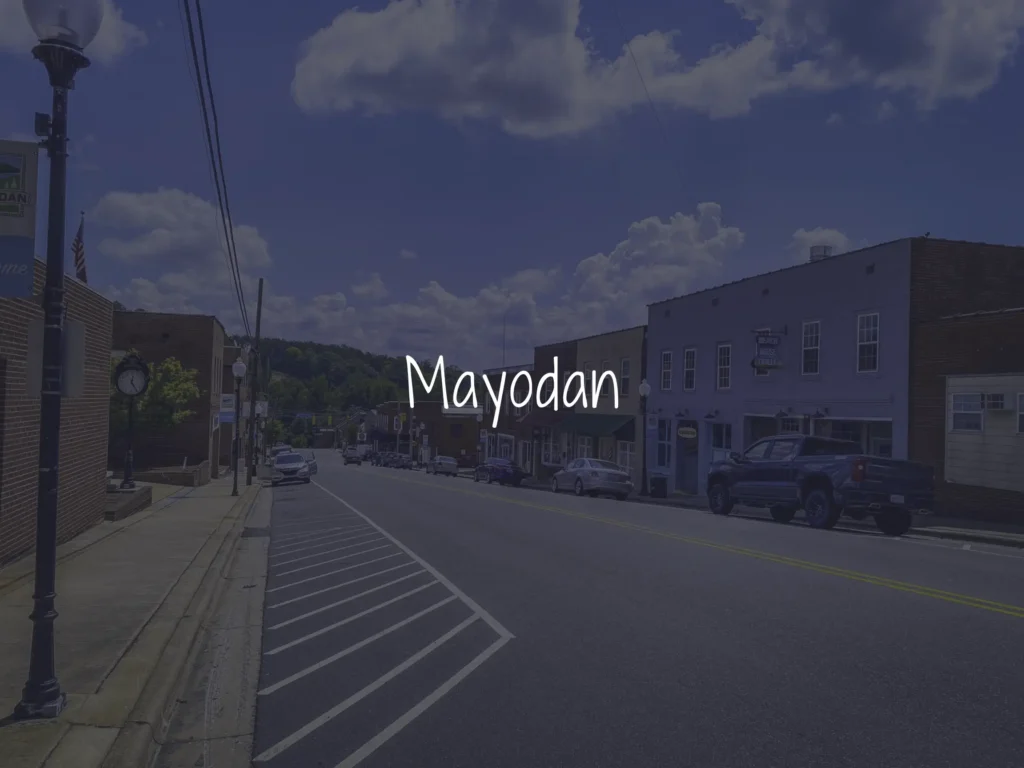
For travelers, Rockingham County is increasingly an outdoor destination. The Dan River runs 93 miles through the county, joined by the Mayo, Smith, and Haw rivers and a network of creeks, and the county is home to two state parks — Mayo River State Park near Mayodan and part of Haw River State Park in the south. Add a handful of walkable downtowns with breweries, shops, and restaurants, and you’ve got a genuine weekend’s worth of exploring. This is also the county we call home — we live close enough to the Rockingham–Guilford line that we happily claim both — which means much of what’s on these pages comes from our own backyard. The county seat is Wentworth, though the largest town is Eden. Click on the communities below to dive deeper into the places we’ve personally explored throughout Rockingham County.
Named for a Champion of the American Cause
Rockingham County was created by the North Carolina General Assembly on December 29, 1785, formed from the northern half of Guilford County. It was named for Charles Watson-Wentworth, 2nd Marquess of Rockingham (1730–1782), a British statesman who served twice as Prime Minister — and who, despite never setting foot in America, became one of the colonists’ most valued allies in Parliament.
As Prime Minister from 1765 to 1766, Rockingham led the repeal of the deeply unpopular Stamp Act, winning the Commons vote and earning lasting goodwill among the American colonists. Between his two terms, he remained Parliament’s leading opponent of the government’s American policy and the war itself, and during his brief second term in 1782 he helped initiate the peace negotiations that ended the Revolution. North Carolinians were fond enough of him to name both this county and its county seat — Wentworth — in his honor. The connection runs all the way back to his family’s ancestral estate, Wentworth Woodhouse in Yorkshire, England.
Before European settlement, the region was home to the Saura (Cheraw) people, who lived in small settlements along the Dan River before migrating south toward South Carolina around 1710. The first western settlers arrived from Pennsylvania, New Jersey, Maryland, and Virginia — German, English, Scottish, and Scots-Irish families who established the grist mills and farms that defined the county’s early frontier economy.
Textiles, Tobacco, and the Rivers That Powered Them
Rockingham County’s rivers didn’t just shape its geography — they built its economy. By the early 19th century, a network of grist mills lined the Dan and Smith rivers, and in 1813 the county’s first cotton mill rose at the junction of the two, launching a textile industry that would dominate the region for more than 150 years. Mill villages grew up around the waterpower, and towns like Leaksville, Draper, and Spray — which merged in 1967 to form the city of Eden — became textile centers of national importance.
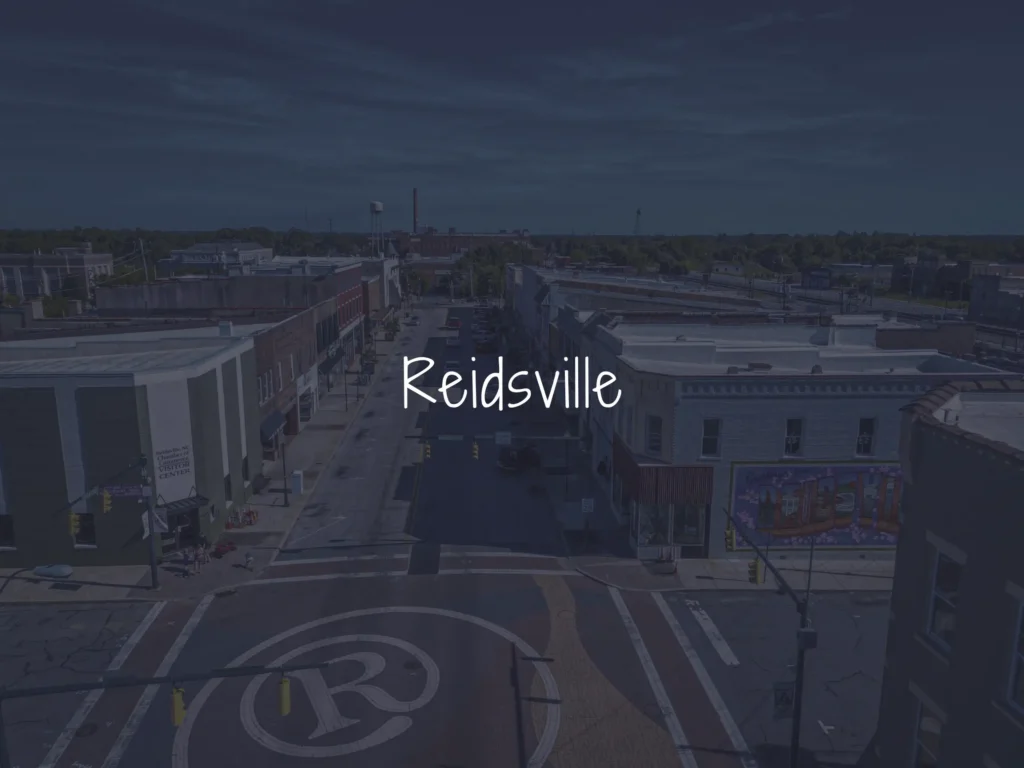
Tobacco was the county’s other economic engine. Reidsville grew into a major tobacco-processing town, home for decades to the American Tobacco Company factory that helped produce the Lucky Strike brand — a connection embodied by the Penn House, the 12,500-square-foot Reidsville mansion of Charles Penn, an American Tobacco vice president central to the Lucky Strike story. The county’s textile and tobacco heritage even shaped its culture: in the early 1900s, Rockingham County’s mill workers produced a rich body of old-time music that still echoes through the region’s festivals today.
The 20th century brought hard transitions as those industries wound down — the textile mills closed, the Miller brewery in Eden shut its doors in 2015, and the American Tobacco factory in Reidsville closed in early 2020. But the county has diversified into advanced manufacturing, logistics, and consumer-goods production, while increasingly turning its historic downtowns and its rivers toward tourism and recreation.
Two State Parks and 93 Miles of the Dan River
For outdoor travelers, the rivers are the main event. The Dan River is, as the county’s own tourism voice puts it, the soul of Rockingham County — 93 miles of paddling through Piedmont and foothills terrain, with canoe and kayak access points maintained by the Dan River Basin Association, which has spent decades protecting the waterway and running the annual RiverFest celebration. The Dan famously made national news in February 2014, when a stormwater pipe beneath a coal-ash containment pond at Duke Energy’s retired Dan River Steam Station in Eden failed, sending an estimated 39,000 tons of coal ash into the river — one of the largest such spills in U.S. history. The plant’s coal units had already ceased operating in 2012, but the ash left behind in its pond drew national attention to the Dan’s health, and the cleanup and recovery effort has since expanded public access along the corridor.
The county’s two state parks anchor the outdoor scene. Mayo River State Park, a 2,778-acre park near Mayodan, offers hiking trails, fishing ponds, a picnic area, and a group campsite at its Mayo Mountain access, plus four river accesses — Deshazo Mill, Anglin Mill, Hickory Creek, and Mayodan — that open onto the Mayo River’s Class II rapids, with a waterfall on Fall Creek at Deshazo Mill. Authorized in 2003 and still growing, it’s one of North Carolina’s newer state parks. In the county’s southern reaches, Haw River State Park — opened in 2003 and spanning the Guilford–Rockingham line — houses the Summit Environmental Education Center and forms the northern anchor of the developing 80-mile Haw River State Trail.
Beyond the parks, Lake Reidsville rounds out the county’s water recreation — a 750-acre city-owned lake and park with fishing for bass, crappie, and bream, boating and kayak rentals, lakeside camping, nature trails, an amphitheater, and Lake’s Edge, Rockingham County’s first disc golf course. Add riverside camping, historic trails like the High Rock Ford Historic Trail, and the kind of rolling backroads that make for a good scenic drive, and there’s plenty to fill a weekend. The Cycle NC 2026 Mountain to Coast route even passes through Eden, a nod to the county’s growing profile as an outdoor destination.
Landmarks and Living History
A handful of Rockingham County landmarks capture the county’s character in miniature. Chinqua Penn Plantation, near Reidsville, is a 27-room English-style manor built in the 1920s by tobacco heir Jeff Penn and his wife Betsy — a National Register estate filled with art and curiosities the couple gathered on their world travels. Its unusual name comes from the chinquapin, a small native chestnut relative once plentiful across these hills. The mansion closed to the public in 2012, but its surrounding land lives on as NC State’s Upper Piedmont Research Station, home to the free, public Chinqua-Penn Walking Trail through old-growth forest and pasture.
Near the county’s southern edge, High Rock Farm is helping bring back a lost giant of the Eastern forest. The American chestnut once made up a huge share of the region’s tree canopy before a 20th-century blight killed billions of them, but at High Rock Farm, chestnut trees are again living, thriving, and bearing fruit — a small but genuine bright spot in the decades-long effort to restore the species.
In Madison, a 1919 war memorial town clock still keeps time at the corner of Dalton and Murphy Streets. Purchased by townspeople for $600 and built into a new automobile garage, the hand-wound E. Howard clock — inscribed “In Memory of All Those Who Served and Died For Our Flag” — is one of the few remaining hand-wound street clocks in the country, and it has anchored downtown Madison for more than a century.
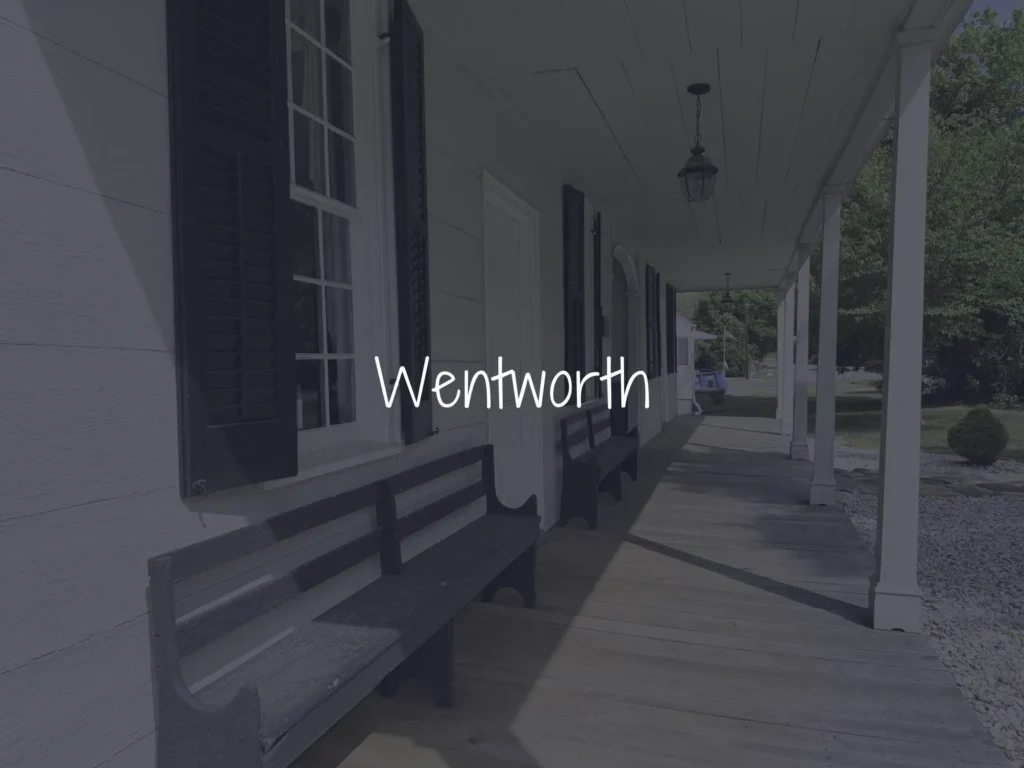
And in the county seat of Wentworth, the Museum & Archives of Rockingham County (the MARC) preserves the county’s story in the historic former courthouse, with the restored 1816 Wright Tavern and the 1910 Old Jail nearby — the best single stop for anyone wanting to understand how all these threads fit together.
Discover the Communities of Rockingham County
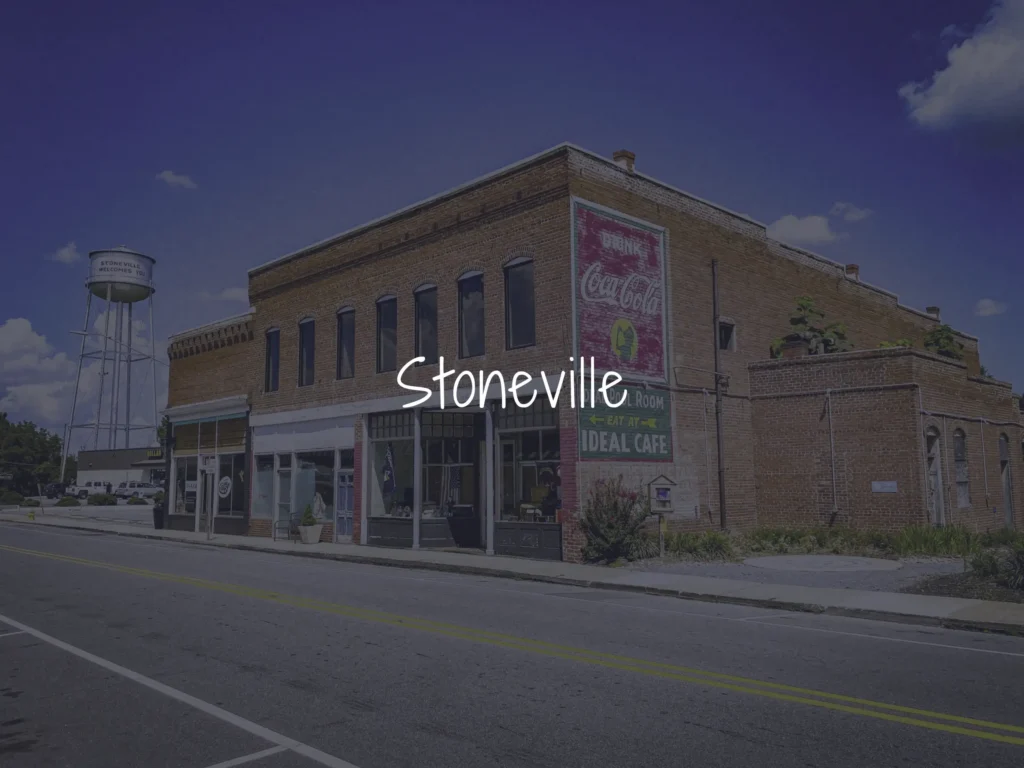
Explore the communities we’ve personally visited in Rockingham County, including the textile city of Eden, the river towns of Madison and Mayodan, the former tobacco hub of Reidsville, the small town of Stoneville, and the county seat of Wentworth. Click on the images below to dive deeper into each of these unique towns and communities.