
In the quiet corners of Ashe County, where the Blue Ridge Mountains meet peaceful valleys, there’s an artistic treasure you’d more likely expect to find in Florence than rural North Carolina. Inside the humble wooden walls of St. Mary’s and Holy Trinity churches, the frescoes by Benjamin F. Long IV and his students stand out against their simple country settings — bringing centuries-old Italian Renaissance technique to small Appalachian churches that have become known as the Churches of the Frescoes. Whether you love art or are just a curious traveler looking for a quiet, meaningful experience, this guide walks you through every fresco worth knowing about — what each one depicts, how it came to be there, and what makes the technique itself so remarkable.
Table of Contents
The Fresco Process
Ben Long gave the Ashe County churches their glowing, airy look using the traditional buon fresco technique — the same method used by Italian Renaissance masters like Michelangelo. Unlike modern paint, which simply sits on a wall’s surface, fresco painting binds the pigment directly into wet plaster through a chemical reaction that essentially makes the art a permanent part of the wall.
The process begins by preparing the wall with several layers of plaster made from aged lime putty and river sand. The final smooth layer, known as the intonaco, is applied only to the section the artist plans to finish that day. Pigments mixed with water are then brushed onto the wet plaster, where the colors soak into the wall instead of sitting on top of it. As the lime cures, it reacts with the air to form a hard calcium carbonate layer that seals in the color — helping the art last as long as the wall itself.
Before painting begins, the artist makes a full-size charcoal drawing called a cartoon, then transfers its outlines to the wet plaster either by dusting with charcoal or tracing the lines with a stylus. Only lime-resistant earth pigments are used — natural oxides like ochres, umbers, and siennas — which give the Ashe County frescoes their warm, organic glow that genuinely echoes the surrounding Appalachian landscape.
Each section of the work is shaped by the giornata, an Italian word meaning “a day’s work.” If you look closely at the walls of St. Mary’s or Holy Trinity, you’ll sometimes notice faint seams where one day’s plastering ended, and the next began — visible records of the artist’s progress through the piece.
Holy Trinity Episcopal Church
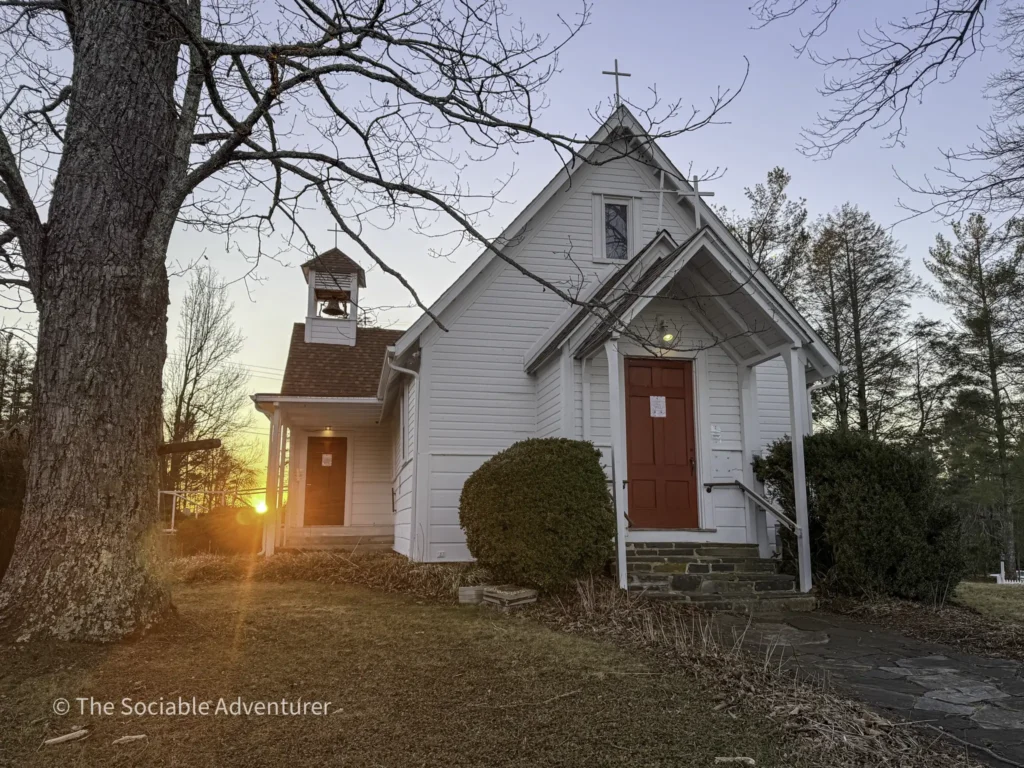
Holy Trinity Episcopal Church is a beloved historic landmark in the quiet mountain community of Glendale Springs, North Carolina. The church holds four notable frescoes:
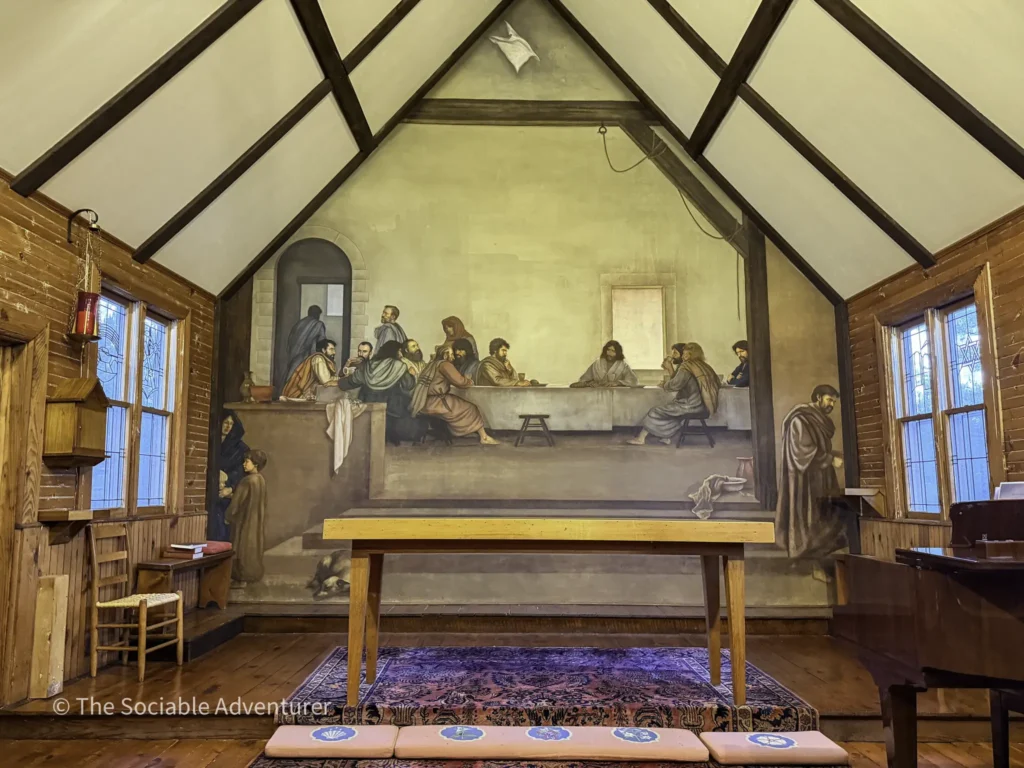
The Last Supper
The sanctuary is dominated by Ben Long’s The Last Supper, a massive work that reimagines the biblical scene through the lens of the North Carolina High Country. Long, who studied under masters in Italy, chose to ground this divine moment in local reality by using residents of Ashe County as models for the Apostles. The composition is physically immersive, spanning the entire wall behind the altar and including a self-portrait of Long as St. Thomas. The faces carry the weathered, stoic expressions of Appalachian life — bridging the gap between sacred history and the community that restored the church from ruin in the late 1970s.
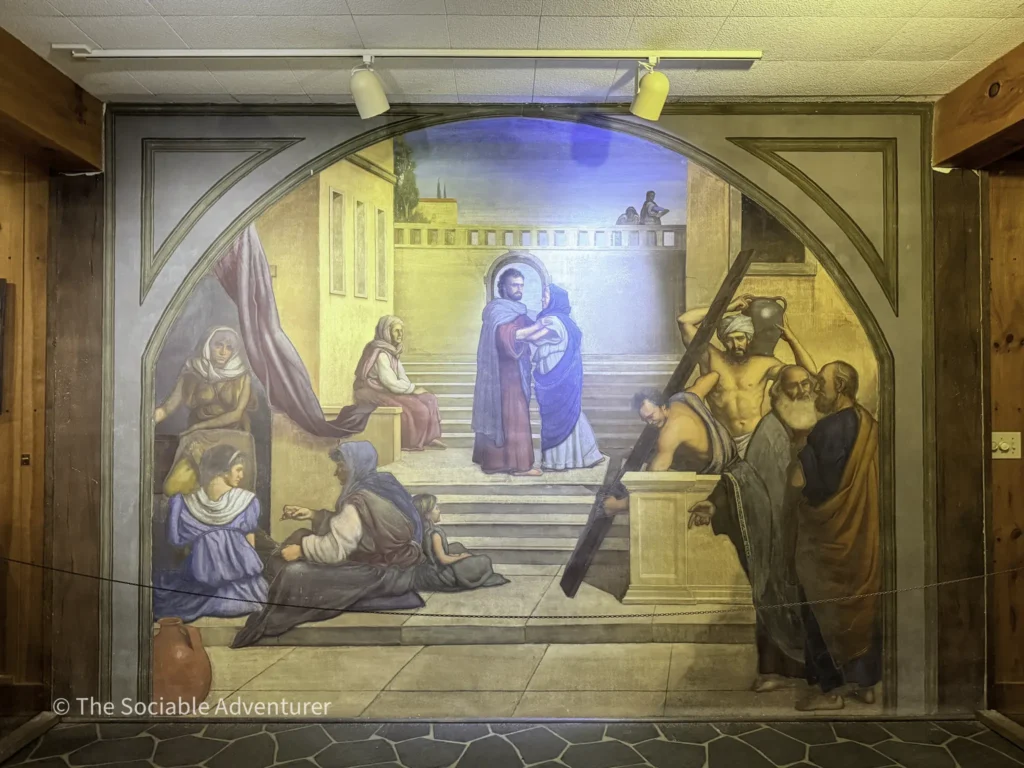
The Departure of Christ
Located in the church’s columbarium, The Departure of Christ by Jeffrey Mims offers a somber, emotive counterpoint to the gathered energy of the sanctuary. Mims, a contemporary of Long, used the same rigorous fresco techniques to capture the transition of Christ leaving his followers. The work is noted for its delicate use of color and the sense of movement within the plaster, guiding the viewer’s eye through a narrative of both loss and spiritual transition. Its placement in the columbarium — a space dedicated to the interment of ashes — deepens the thematic resonance of the artwork, connecting the biblical departure with the personal experiences of the congregation.
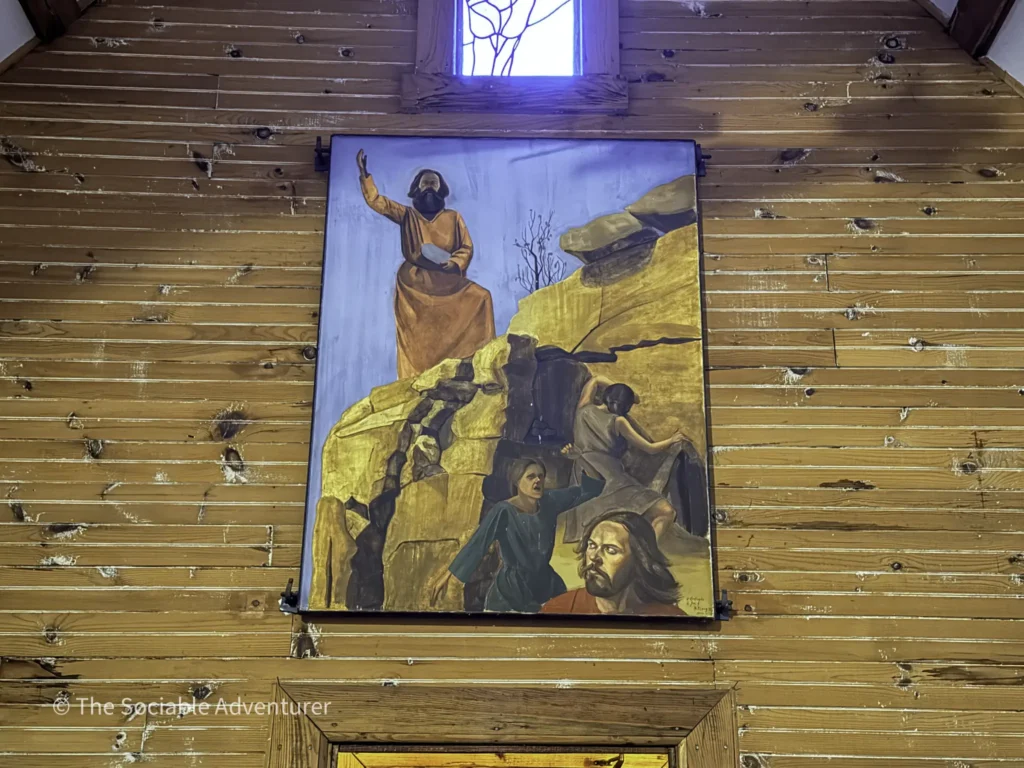
Moses on Mount Sinai
Positioned directly above the main entrance at the back of the sanctuary, Charles Kapsner’s Moses on Mount Sinai serves as a powerful introduction to the space — greeting visitors with a scene of divine law and revelation as they step through the doors. Kapsner’s work captures the rugged intensity of the Old Testament, depicting Moses at the moment he receives the Ten Commandments. The rocky, dramatic landscape of Sinai mirrors the craggy beauty of the surrounding Blue Ridge Mountains, creating a thematic bridge between the ancient scriptures and the North Carolina High Country.
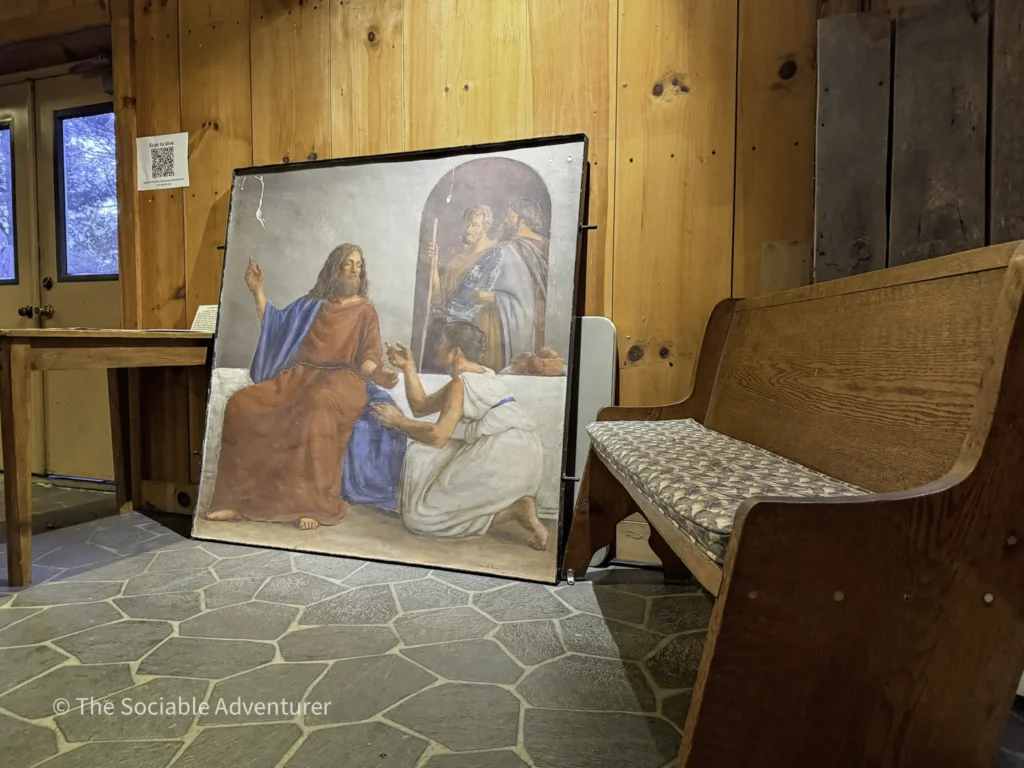
Mary Magdalene Washing Jesus’ Feet
Found in the lower-level chapel area, Mary Magdalene Washing Jesus’ Feet was created by one of Ben Long’s students during the original 1980 project. The fresco serves as both a piece of sacred art and a testament to the church’s role as a training ground for the fresco revival. The scene captures the moment of humble devotion where Mary Magdalene anoints Jesus’ feet with oil and dries them with her hair. Its placement in the lower level underscores the church’s dedication to themes of servanthood and humility, providing a quiet space for visitors to reflect on smaller, personal acts of faith.
St. Mary’s Episcopal Church
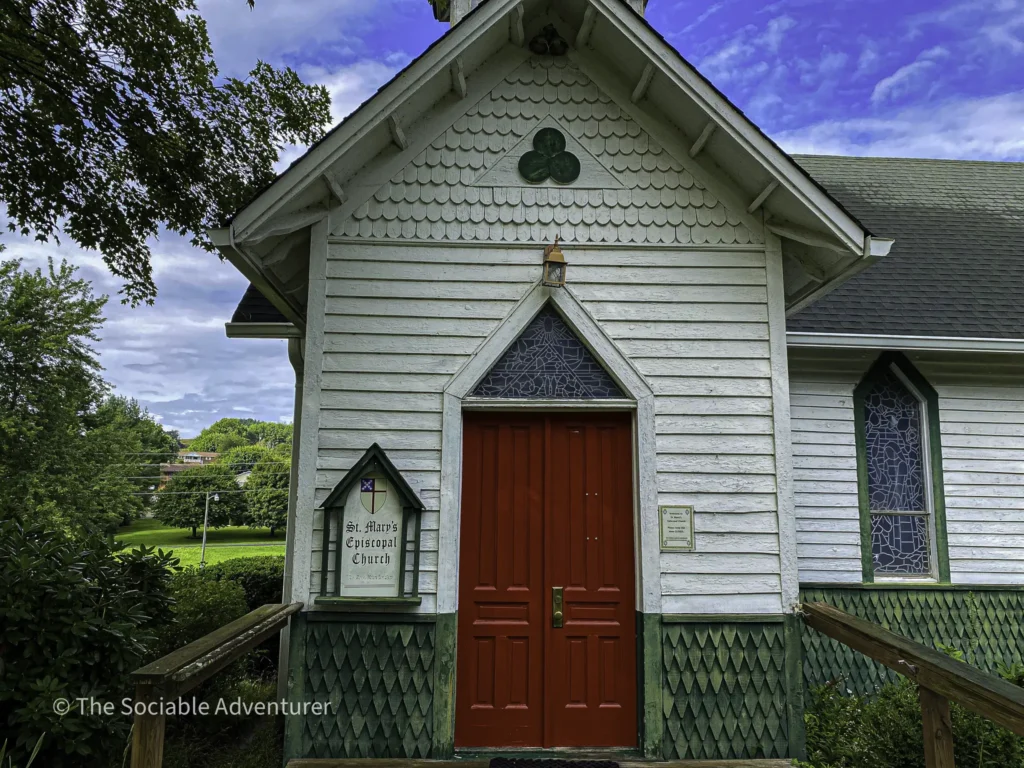
St. Mary’s Episcopal Church in West Jefferson, North Carolina is a historic white-frame chapel built in 1905. Its Carpenter Gothic style stands out with white clapboard, green trim, and a red front door. Although it seats fewer than 100 people, the church is one of Ashe County’s most cherished landmarks and draws visitors from across the country. The church holds three notable Ben Long frescoes:
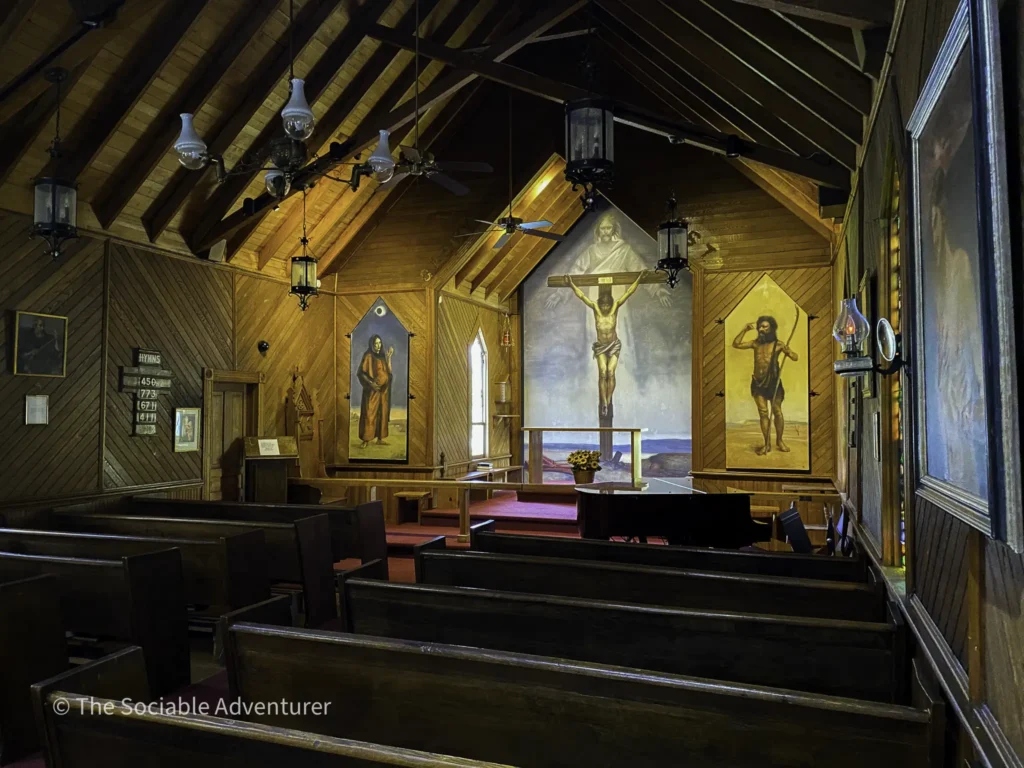
The Mystery of Faith
The largest and most complex of the three, The Mystery of Faith, spans the wall behind the high altar. It serves as a visual representation of the Eucharist and the central tenets of the Christian faith. The composition is multi-layered: it features the Crucifixion at its center, but rather than focusing solely on suffering, it incorporates the “Mystery” of the Resurrection — depicting Christ in a way that suggests he is simultaneously on the cross and rising from it, surrounded by figures representing both the historical witnesses of the event and the modern-day congregation. The scale and detail of this work provide a powerful, immersive backdrop for the church’s liturgy.
Mary Great with Child
The first fresco Ben Long created for the parish, Mary Great with Child, remains one of the most poignant. It depicts a young Mary, visibly and heavily pregnant, looking upward with a hand raised in a gesture of humble acceptance and praise. At the time of its unveiling, the work was considered somewhat provocative because it broke away from traditional, more ethereal depictions of the Virgin Mary, instead highlighting her very human, physical state as she awaited the birth of Christ. The warm, earthy tones and the soft light hitting her face create an atmosphere of quiet, expectant joy that anchors the side of the sanctuary.
John the Baptist
Located on the opposite wall, John the Baptist presents a sharp contrast to the serene Mary fresco. Long depicts John the Baptist as a rugged, visceral figure — a “voice crying out in the wilderness.” With weathered skin, tangled hair, and a piercing, almost haunting gaze, this is the fiery prophet of the Jordan River. He’s shown holding a staff symbolizing his role as a precursor to Jesus, with the Blue Ridge landscape subtly integrated into the biblical scene. The intensity of his expression is meant to evoke the urgency of his call to repentance.
An enduring and unique detail of this fresco: a small bumblebee that flew into the church while Ben Long was working became trapped in the wet lime plaster — and remains embedded within the artwork to this day. It’s one of those small, distinctive details that give the work a deeply human quality you wouldn’t expect from a piece of religious art.
Final Thoughts
Visiting the frescoes of Ashe County is one of those experiences that genuinely stays with you. The art is extraordinary on its own merits — but what makes it so memorable is the contrast between the world-class technique on the walls and the humble country churches that hold them. There’s something deeply moving about driving through the mountains of Ashe County, stepping into a small white-frame chapel, and finding yourself face-to-face with frescoes painted using the same methods Michelangelo used 500 years ago.
Both churches are open to the public, with no entrance fee and audio guides available inside. Visiting all three frescoes at St. Mary’s and all four at Holy Trinity takes about half a day with stops at both — and pairs perfectly with a walk through downtown West Jefferson, a meal at a local restaurant, or a scenic drive along the Blue Ridge Parkway. However you build your day, the Ashe County frescoes belong at the very top of the list for any visitor to this corner of North Carolina.
Your Complete Guide to Hiking Trails at Elk Knob State Park
Elk Knob State Park is one of North Carolina’s most rewarding mountain destinations — a 4,400-…
A Complete Guide to the Trails at Carolina Beach State Park
Tucked along the Cape Fear River on Pleasure Island, Carolina Beach State Park is one of southeaster…

The Complete Guide to Hiking Trails in Lansing, NC
Set in the rolling hills of Ashe County, just a stone’s throw from the Virginia and Tennessee …

Exploring Ashe County Park: A Hiker’s Guide to North Carolina’s Mountain Gem
If you’re searching for the best hiking trails at Ashe County Park in North Carolina, you̵…
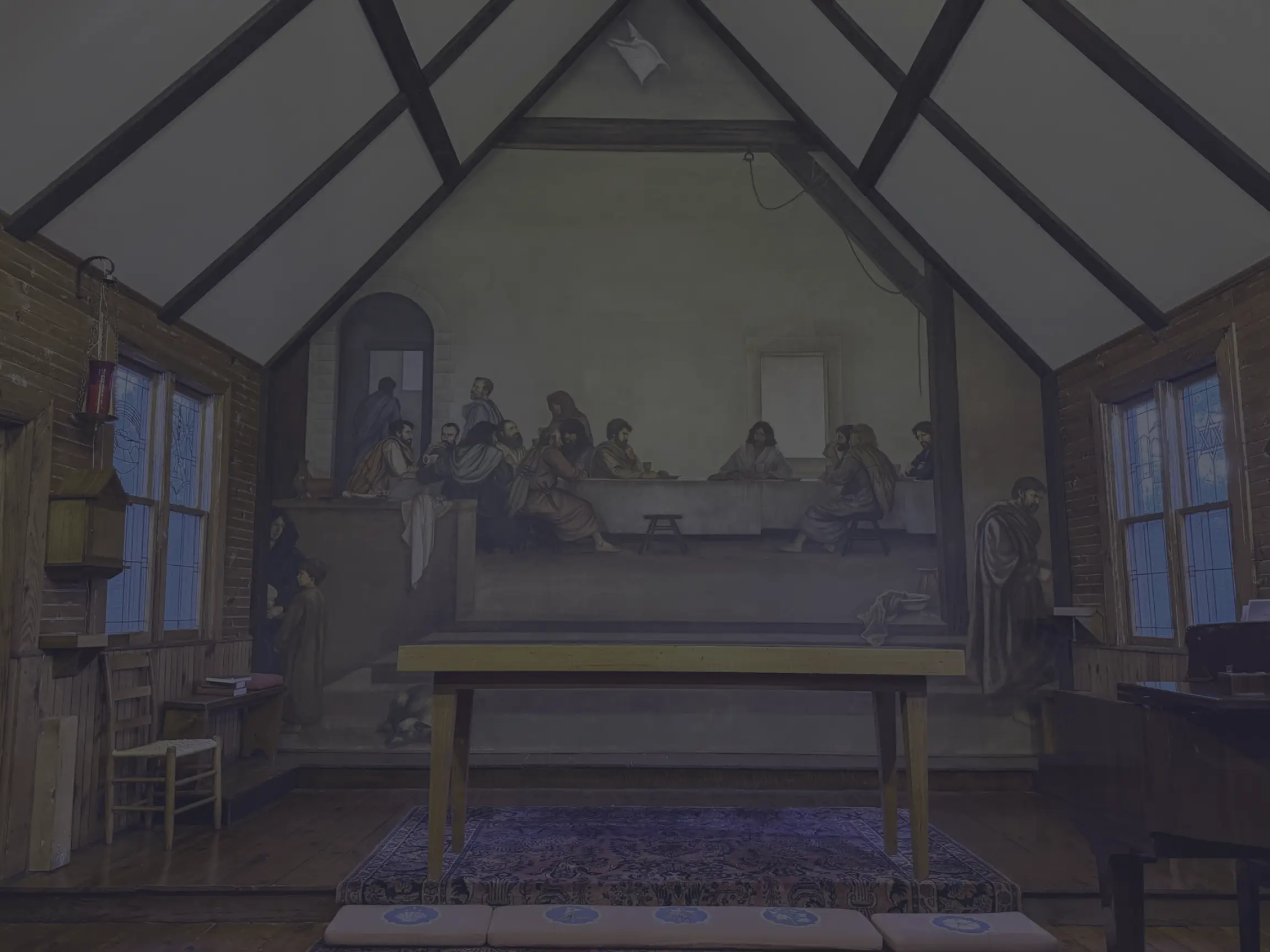
Mountain Masterpieces: A Guide to the Ben Long Frescoes of Ashe County
In the quiet corners of Ashe County, where the Blue Ridge Mountains meet peaceful valleys, thereR…
Granite, Grunts, and Glory: A Day on the Stone Mountain Loop Trail
The Stone Mountain Loop Trail is the signature hike at Stone Mountain State Park in North Carolina —…