For one of the most architecturally striking and historically significant courthouses in North Carolina, the Caswell County Courthouse is a real standout. Set on Courthouse Square in the heart of Yanceyville, NC — the county seat of Caswell County — this antebellum brick structure was built between 1858 and 1861 at a cost of approximately $28,000 and remains both an architectural masterpiece and the site of one of the most pivotal events in Reconstruction-era American history. Click on the pictures below to get a feel for the courthouse before you go — or to relive the visit after.
An Italian Romanesque Masterpiece
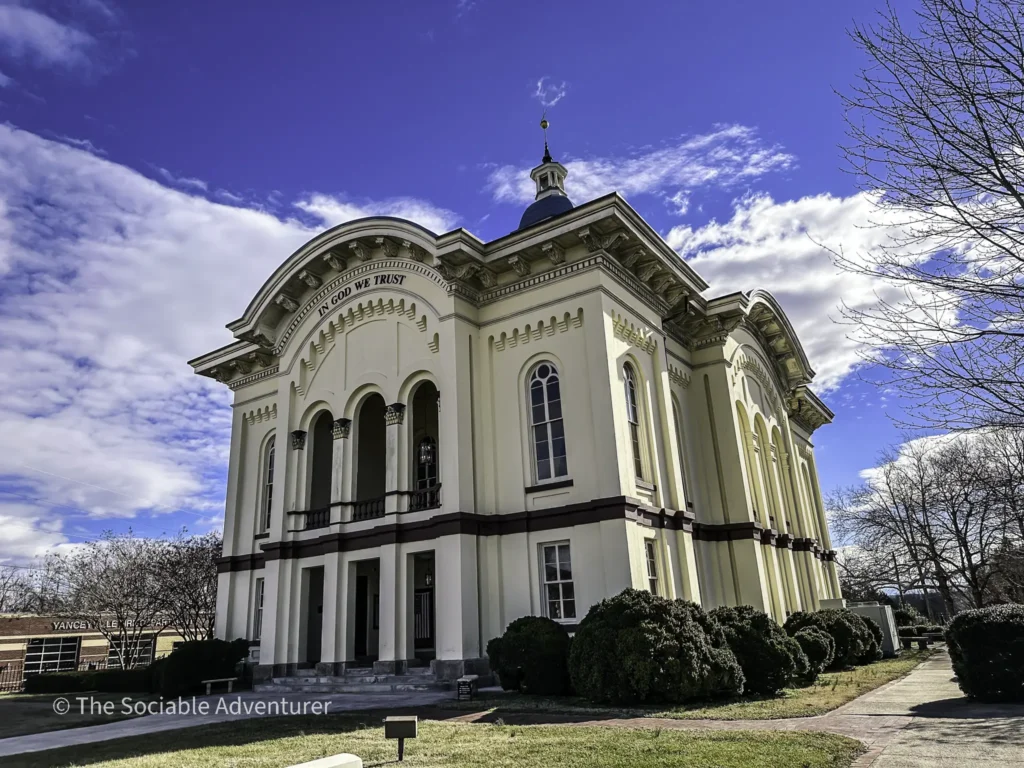
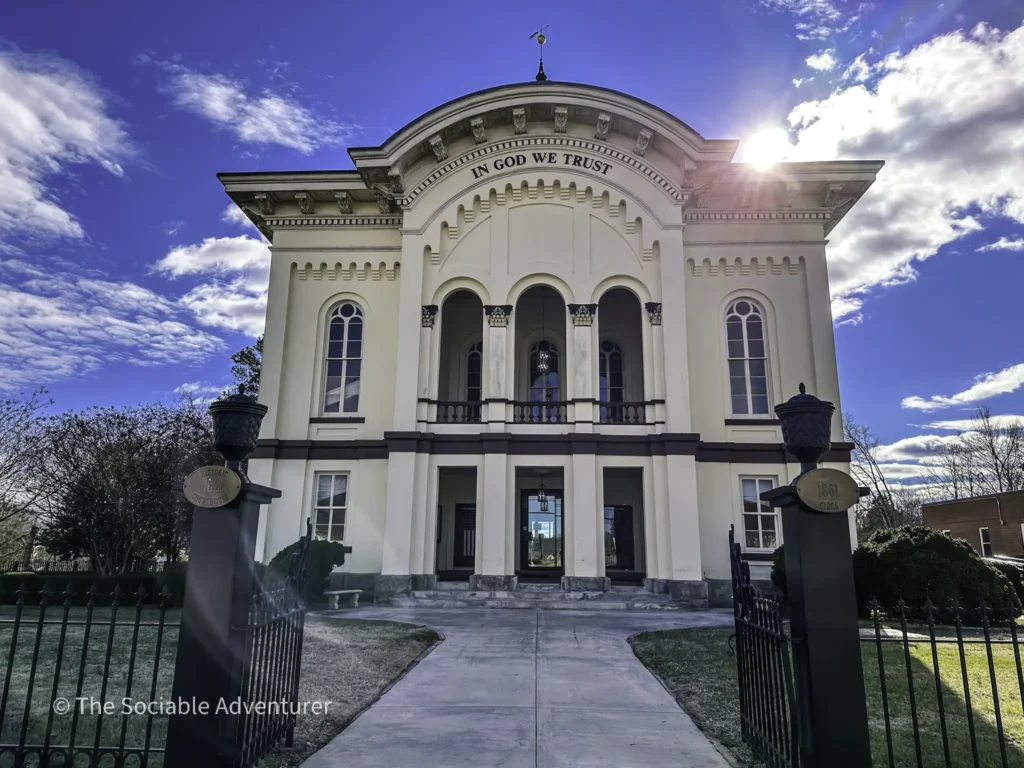
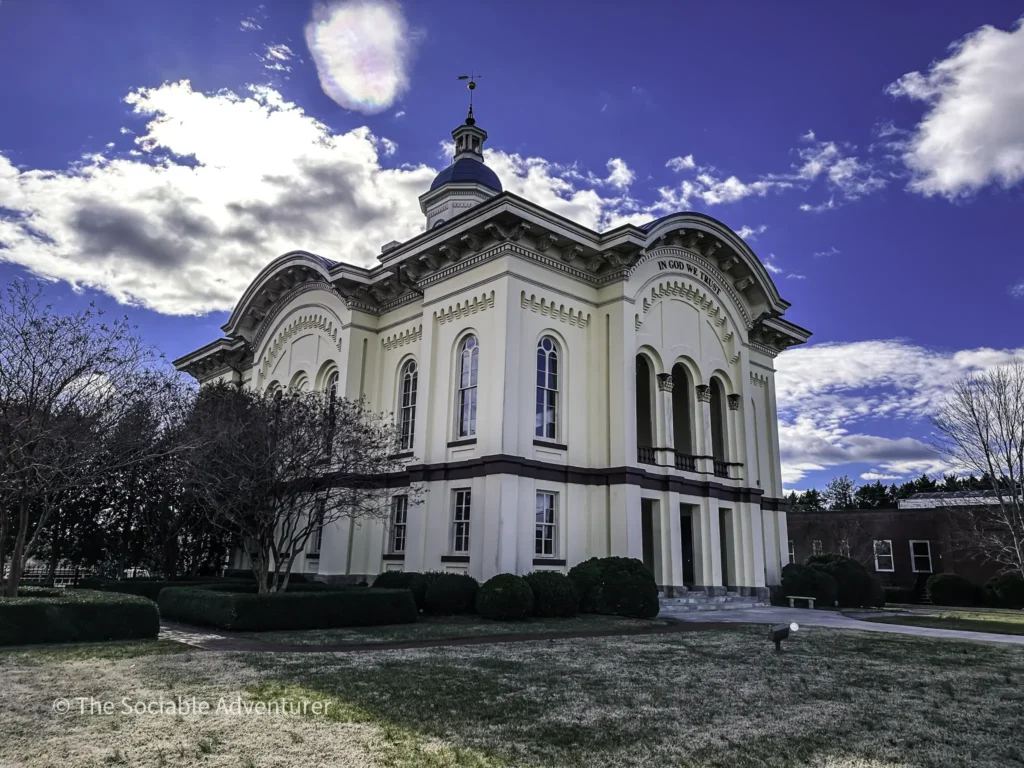
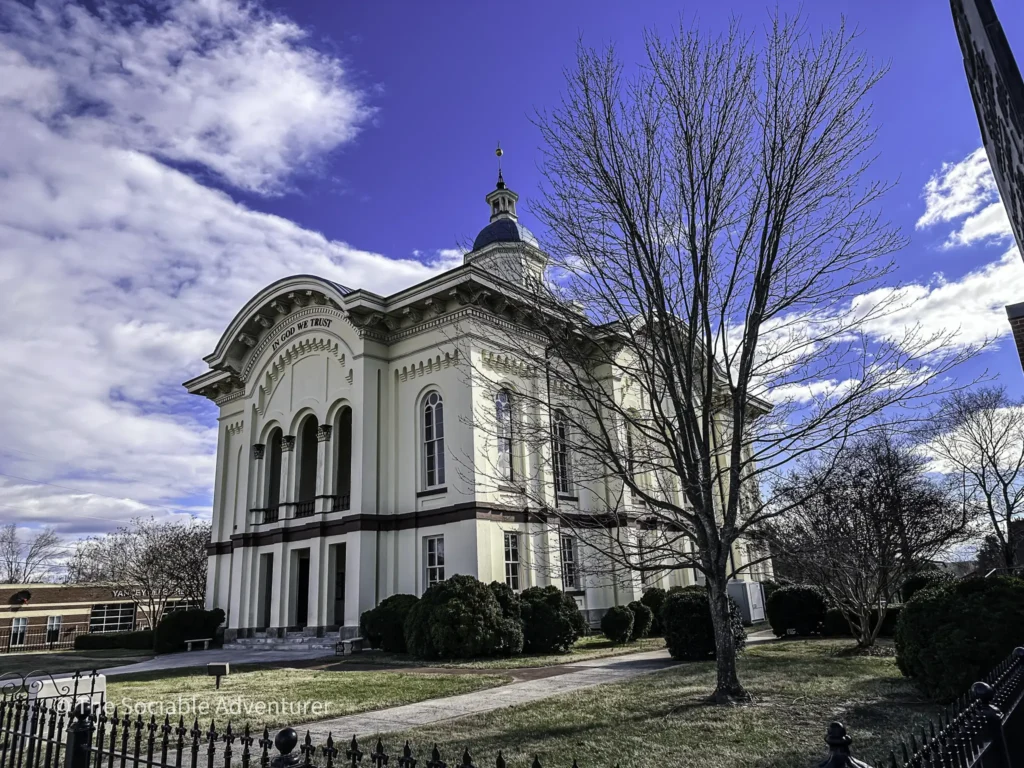
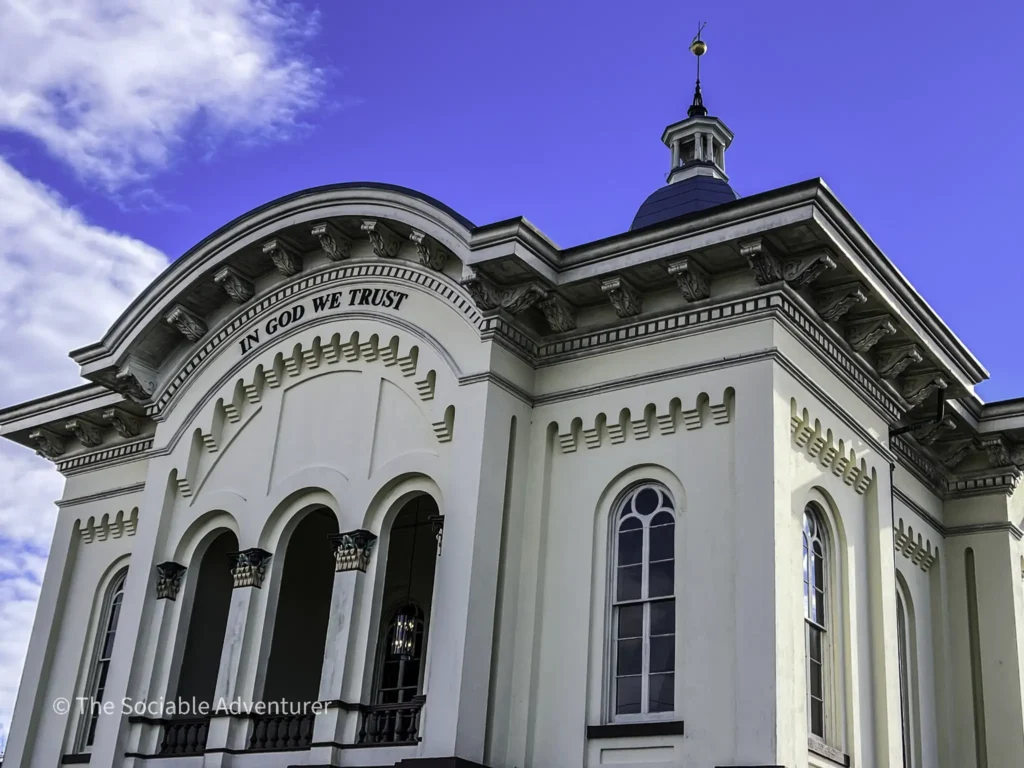
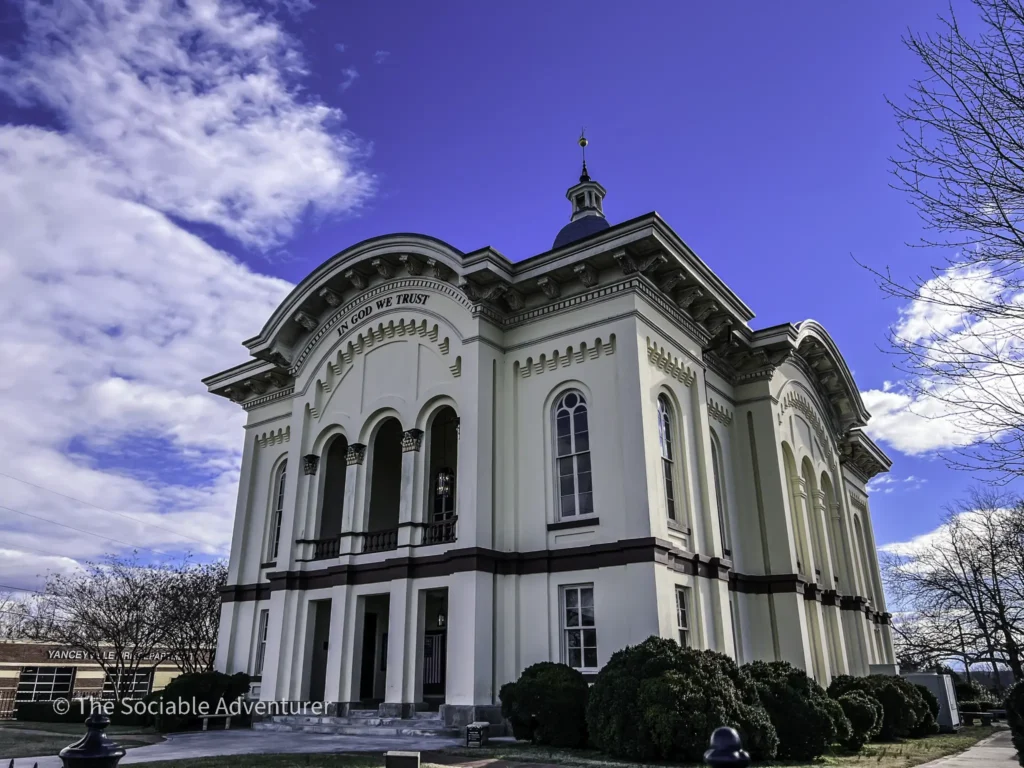
The Caswell County Courthouse is one of the most distinctive county courthouses in North Carolina, both in size and in design. Built during the prosperous Bright Leaf Boom Era by architect William Percival between 1858 and 1861, the structure combines Italian Romanesque and Classical architectural features in a design unique among the state’s antebellum courthouses. The two-story, stuccoed brick building sits on an elevated granite foundation, with a two-level recessed entrance porch and an octagonal cupola crowning the roof.
The courthouse was listed on the National Register of Historic Places in 1973 and remains the centerpiece of the Yanceyville Historic District today. For many visitors, it’s the first thing they notice when arriving in town — and the architectural ambition of the building gives a real sense of the wealth and confidence that defined Caswell County during its mid-19th century prosperity.
A Closer Look at the Architecture and Artistry
Inside the courthouse, visitors find a remarkable level of preserved 19th-century craftsmanship. The original judge’s bench, the cabinetry, the decorative plaster walls and corbels, and many of the building’s interior architectural details have been carefully maintained over the years. Together, they offer a tangible connection to the era when the courthouse was first completed — and a reminder of the artisanal expertise that produced it.
The Murder of “Chicken” Stephens and the Kirk-Holden War
Beyond its architectural beauty, the Caswell County Courthouse is the site of one of the most consequential events in Reconstruction-era American history.
On May 21, 1870 — a Saturday during a local political convention — Republican state senator John Walter “Chicken” Stephens was lured into the basement of the courthouse by Frank Wiley, a former Democratic county sheriff. Stephens, a white Caswell County native and former Confederate soldier turned Republican, had become a tireless advocate for the rights of freedmen following the Civil War. He served as both a state senator and a Freedmen’s Bureau agent, and Governor William Woods Holden had quietly tasked him with investigating local Klan members.
That commitment cost him his life. In the basement storeroom of the courthouse, Stephens was ambushed by a group of Ku Klux Klansmen, stabbed and garroted, and left on a woodpile. His body was discovered the following morning.
The murder of Stephens — combined with the murder of another civil rights advocate, Wyatt Outlaw, in nearby Alamance County — pushed Governor Holden into one of the most dramatic responses in NC history. He suspended the writ of habeas corpus, imposed martial law in Caswell and Alamance counties, and brought in Colonel George Washington Kirk to lead the state militia against the Klan. From July through November 1870, the operation — later known as the Kirk-Holden War — resulted in the arrest of 102 suspected Klansmen. None were charged by local authorities.
The political backlash was severe. In March 1871, the now Democratic-controlled General Assembly impeached Governor Holden and convicted him on six articles, making him the first U.S. governor to be impeached and removed from office.
The Stephens murder itself remained officially unsolved until 1935, when the last surviving conspirator, John G. Lea, died. A sealed nine-page affidavit, written by Lea in 1919 and deposited with the North Carolina Historical Commission, was opened upon his death and finally revealed the names of those responsible.
For visitors who take time to learn the full story, the Caswell County Courthouse is far more than a beautifully preserved antebellum building — it’s a site of national historical significance and a sobering reminder of the Reconstruction era’s most violent chapter.
Good to Know
- Built: 1858-1861, at a cost of approximately $28,000
- Architect: William Percival
- Style: Italian Romanesque and Classical features combined
- Listed on: National Register of Historic Places since 1973
- Notable preserved features: Original judge’s bench, cabinetry, decorative plaster walls, and corbels
- Historical significance: Site of the May 21, 1870, KKK murder of State Senator John W. “Chicken” Stephens, the event that triggered the Kirk-Holden War and the impeachment of Governor William W. Holden
- Pair with: A visit to the Caswell Community Arboretum just behind the courthouse, a tour of the Caswell County Historic Jail and Old Poteat Schoolhouse, or a walk through the broader Yanceyville Historic District
- Located on Courthouse Square in downtown Yanceyville, NC
A Yanceyville Highlight
The Caswell County Courthouse is the kind of stop that rewards visitors who care about both architecture and the deeper currents of American history. The building itself is genuinely beautiful — one of the most impressive antebellum courthouses in the South. But what gives the building its lasting weight is its role as the site of one of the most consequential events of the Reconstruction era. Whether you’re visiting for the architecture, the history, or both, this is one of the most genuinely meaningful stops you can make in Caswell County.
Resources
Location
Social Media
One of the most beautiful courthouses in North Carolina is in Caswell County.@VisitNC @ourstatemag @YanceyvilleNc @CaswellCounty #YanceyvilleNC #CaswellCounty #CaswellCountyNC #VisitNC #CelebratingNC #discover_carolinas #discoverNC #bestofthetarheelstate #NC #NorthCarolina pic.twitter.com/S8OUTn4CEP
— The Sociable Adventurer (@TheSociableAdv) January 26, 2023

Your Complete Guide to Hiking Trails at Elk Knob State Park
Elk Knob State Park is one of North Carolina’s most rewarding mountain destinations — a 4,400-…

A Complete Guide to the Trails at Carolina Beach State Park
Tucked along the Cape Fear River on Pleasure Island, Carolina Beach State Park is one of southeaster…

The Complete Guide to Hiking Trails in Lansing, NC
Set in the rolling hills of Ashe County, just a stone’s throw from the Virginia and Tennessee …

Exploring Ashe County Park: A Hiker’s Guide to North Carolina’s Mountain Gem
If you’re searching for the best hiking trails at Ashe County Park in North Carolina, you̵…
Mountain Masterpieces: A Guide to the Ben Long Frescoes of Ashe County
In the quiet corners of Ashe County, where the Blue Ridge Mountains meet peaceful valleys, thereR…

Granite, Grunts, and Glory: A Day on the Stone Mountain Loop Trail
The Stone Mountain Loop Trail is the signature hike at Stone Mountain State Park in North Carolina —…