
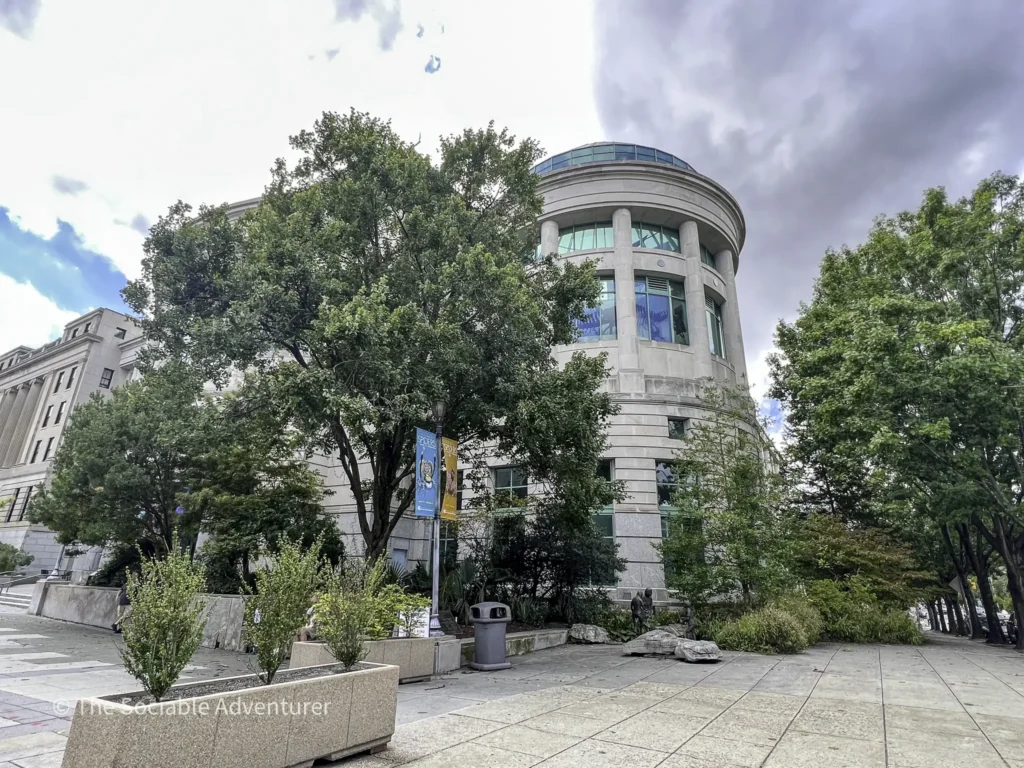
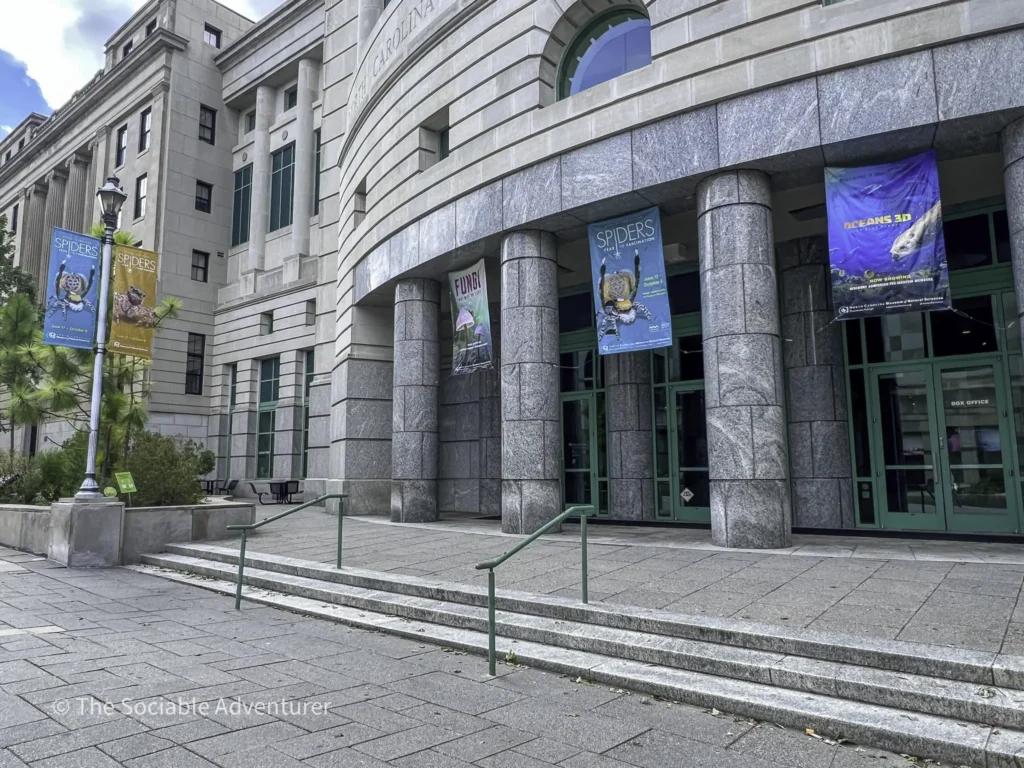
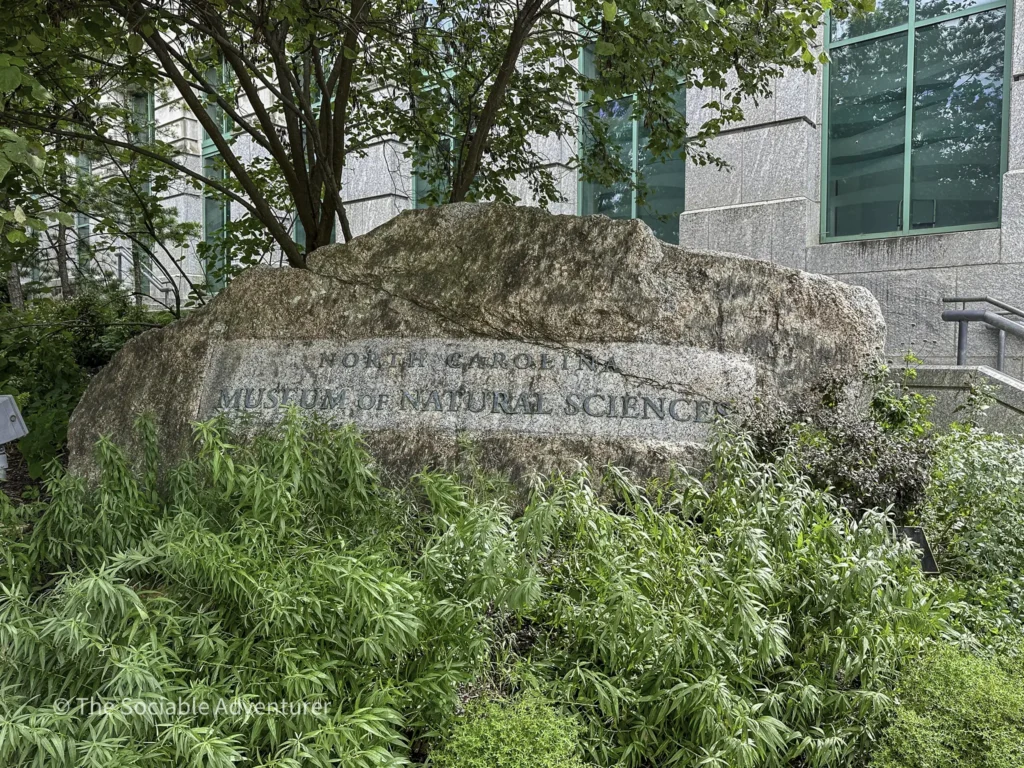
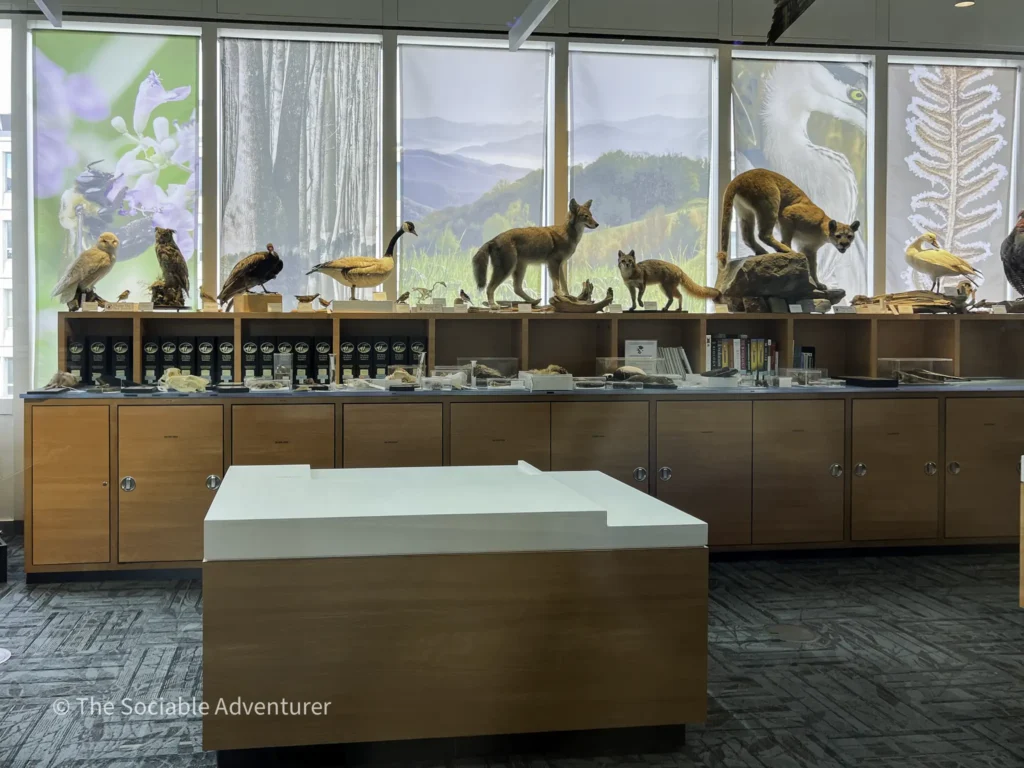
The North Carolina Museum of Natural Sciences (NCMNS) — set in downtown Raleigh, NC on Bicentennial Plaza — holds two distinctions that make it genuinely singular. It is the oldest museum in North Carolina (founded in 1879) and the largest natural history museum in the Southeastern United States. The museum houses more than 1.7 million specimens across two connected downtown buildings — spanning fossils, minerals, mammals, birds, fish, reptiles, amphibians, invertebrates, plants, and meteorites — and offers free admission to the public.
The museum’s two buildings together feature more than 14 permanent exhibits spread across seven floors, alongside working research labs visible to the public, live animals in the Living Conservatory, an iconic three-story multimedia globe, and famous dinosaur specimens, including the newly opened Dueling Dinosaurs exhibit.
Be sure to check out the YouTube video and pictures below to get a feel for the North Carolina Museum of Natural Sciences before you go — or to relive the visit after.
The Nature Exploration Center — Fourteen Permanent Exhibits Across Four Floors
The Nature Exploration Center opened in 2000 as the newest home for the museum’s natural science collection, dating back to 1879. The building’s exhibits are organized thematically across four floors and cover an impressively broad sweep of North Carolina’s natural habitats, wildlife, geology, and prehistory.
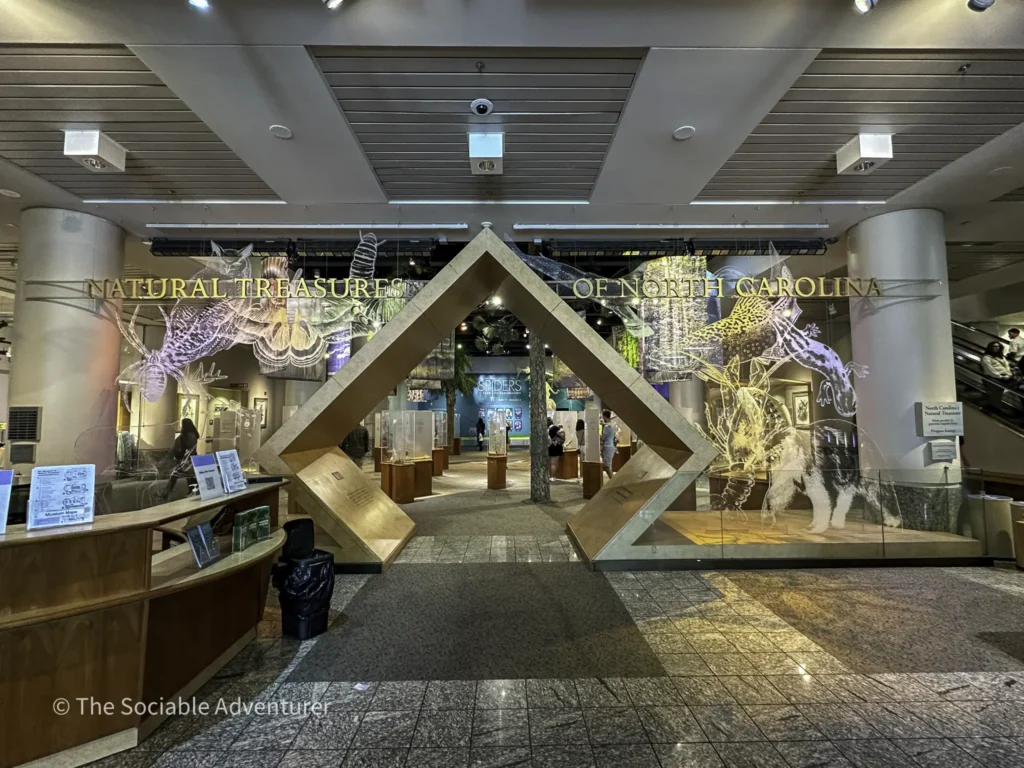
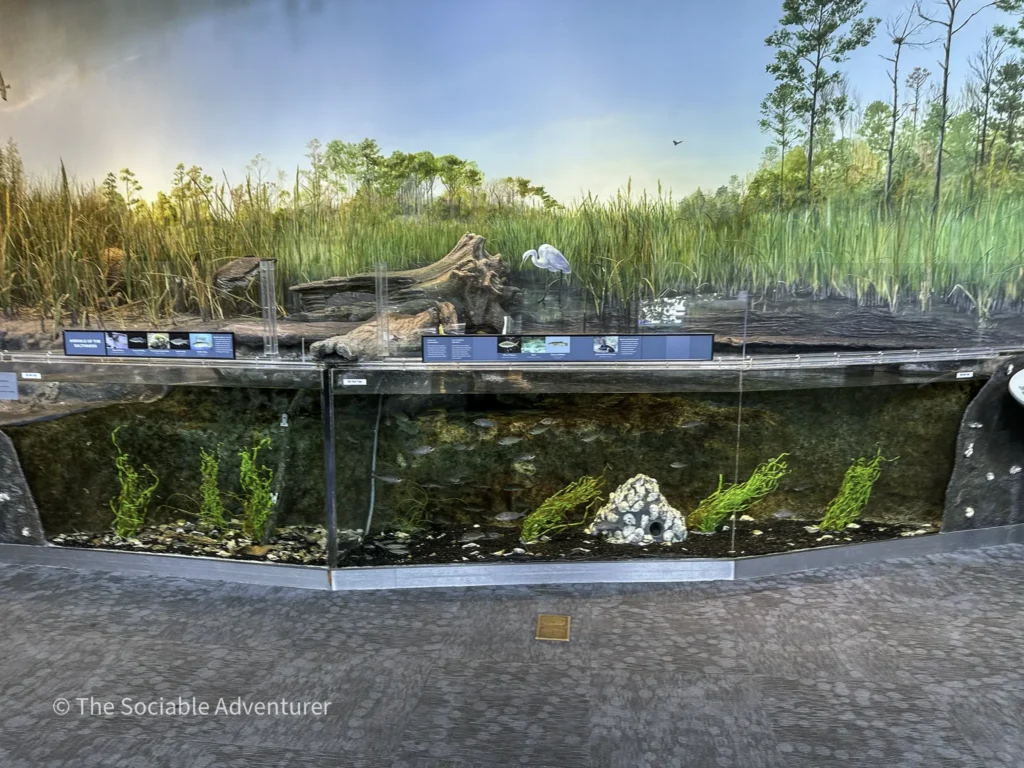
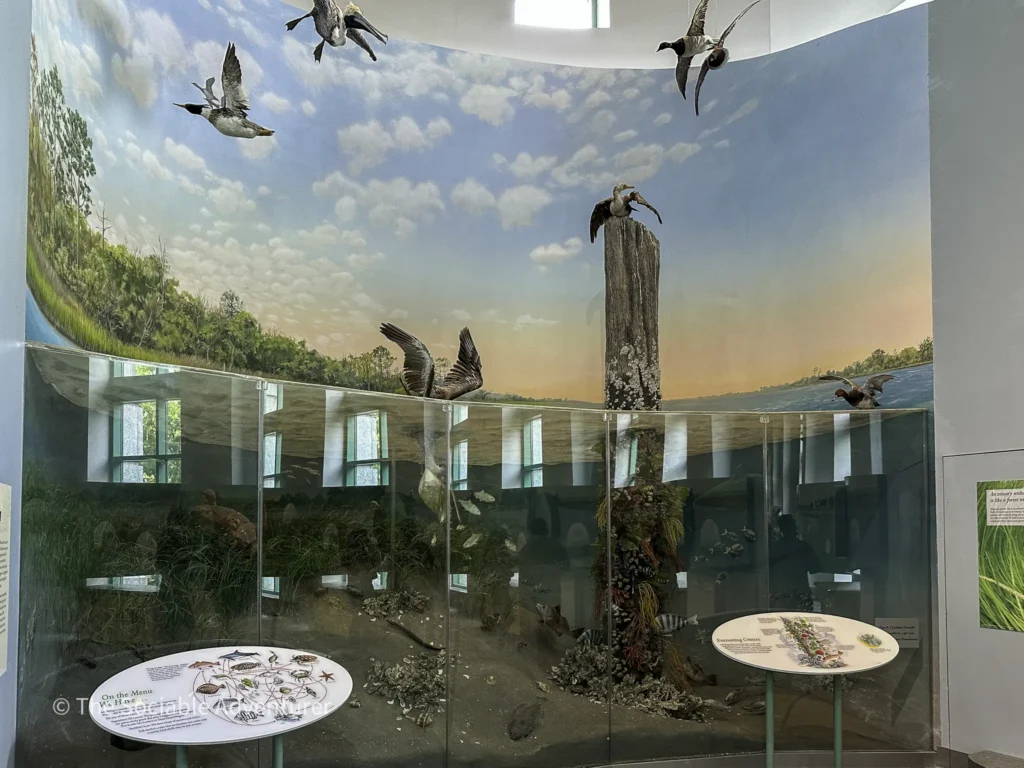
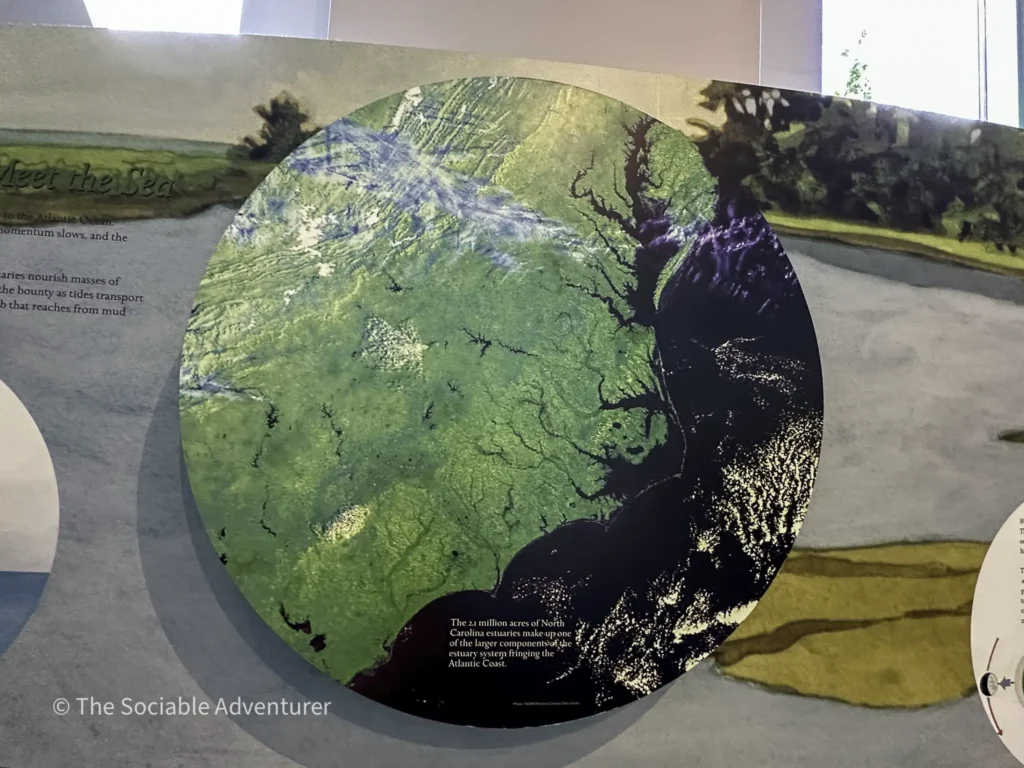
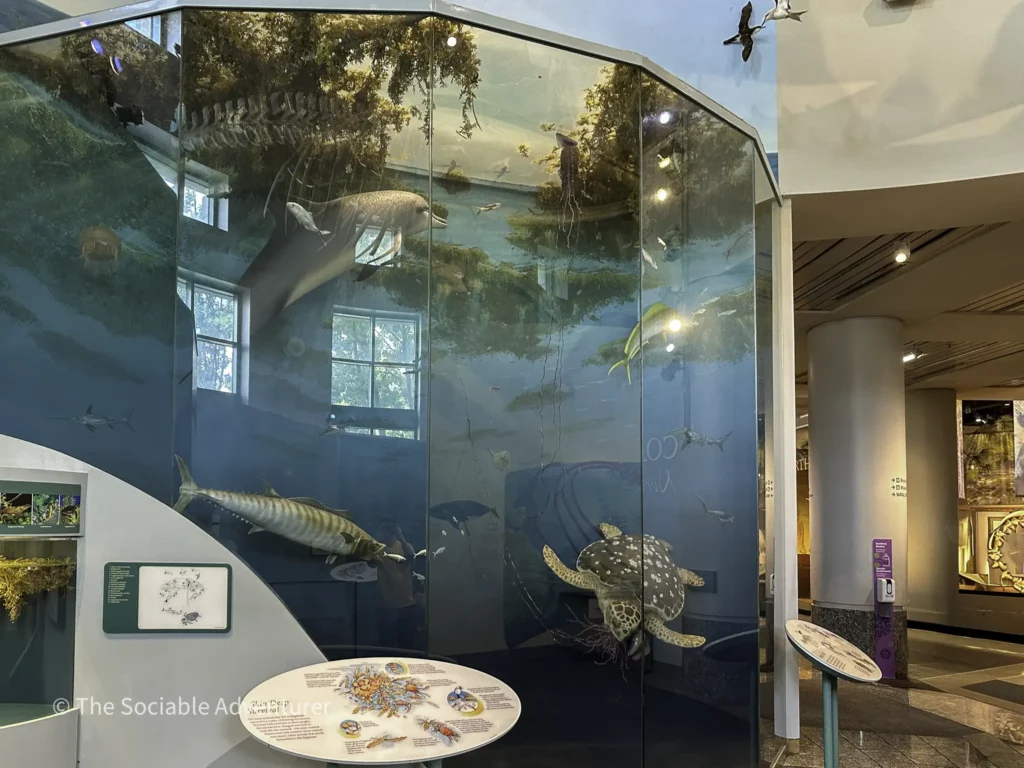
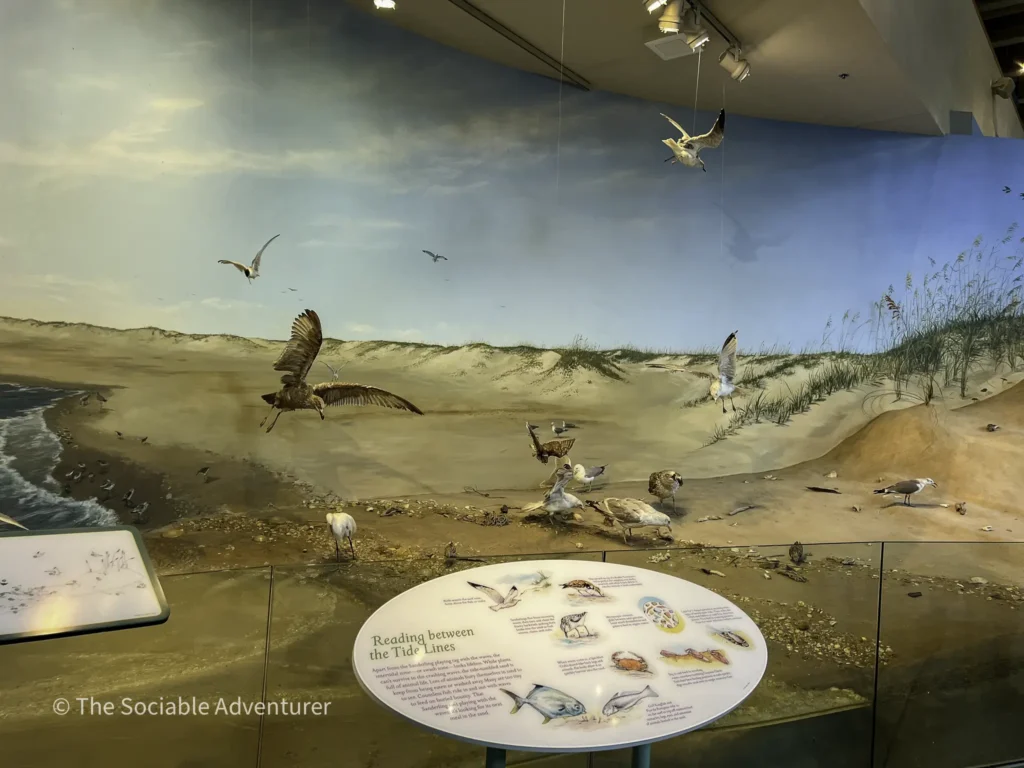
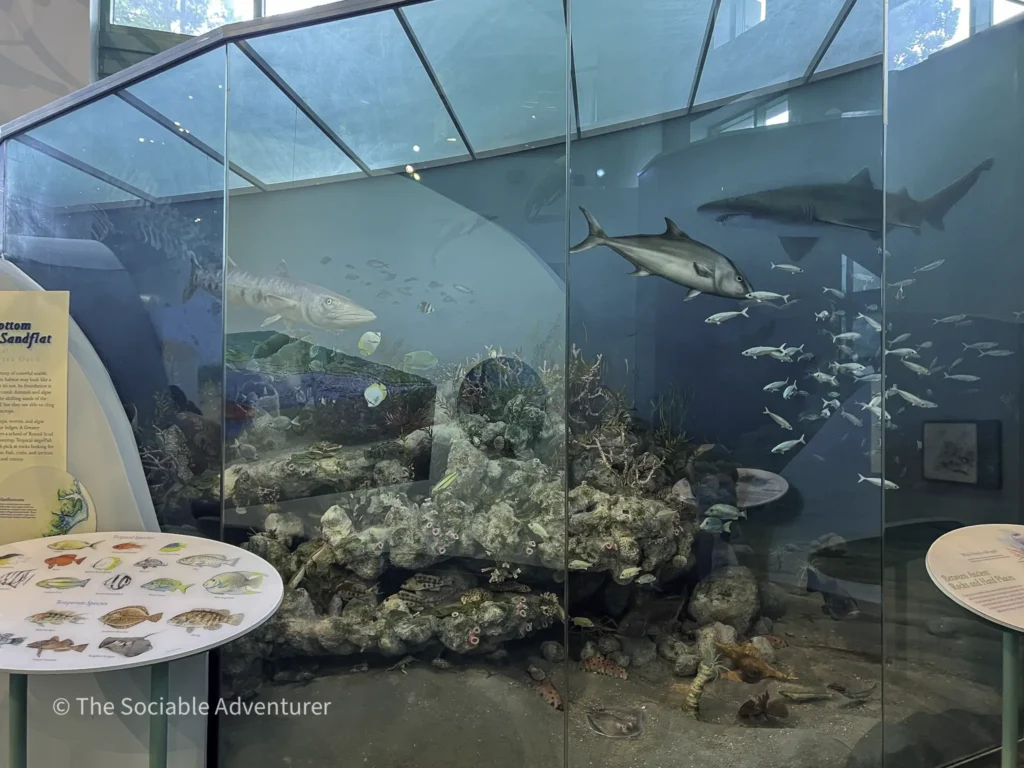
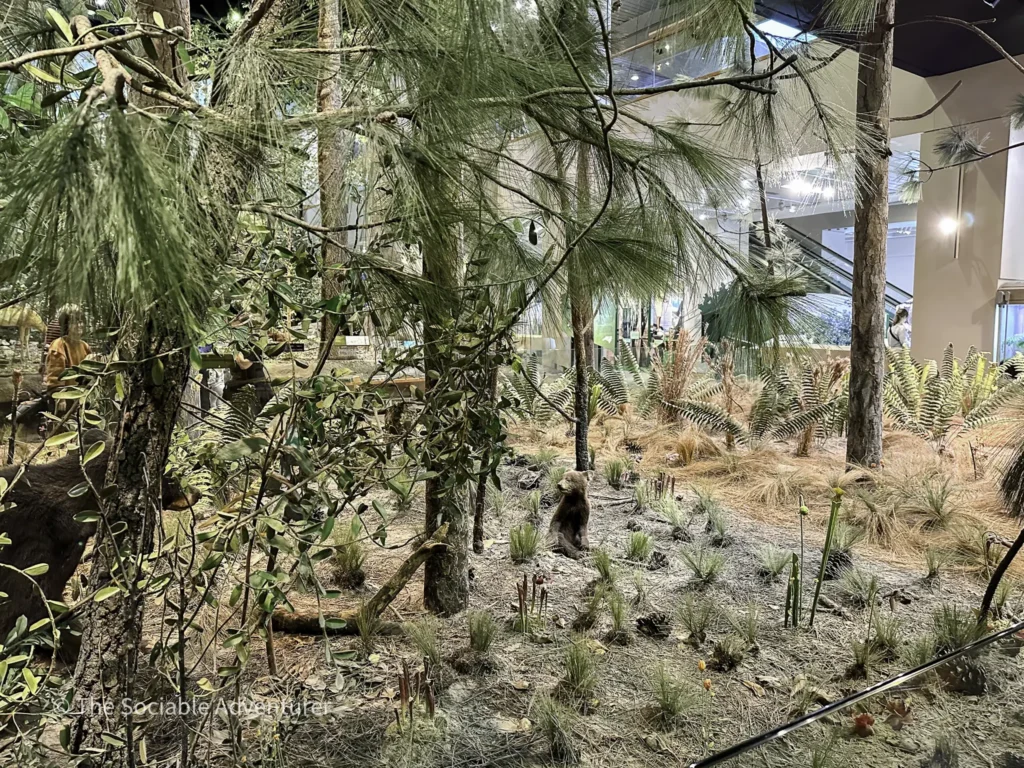
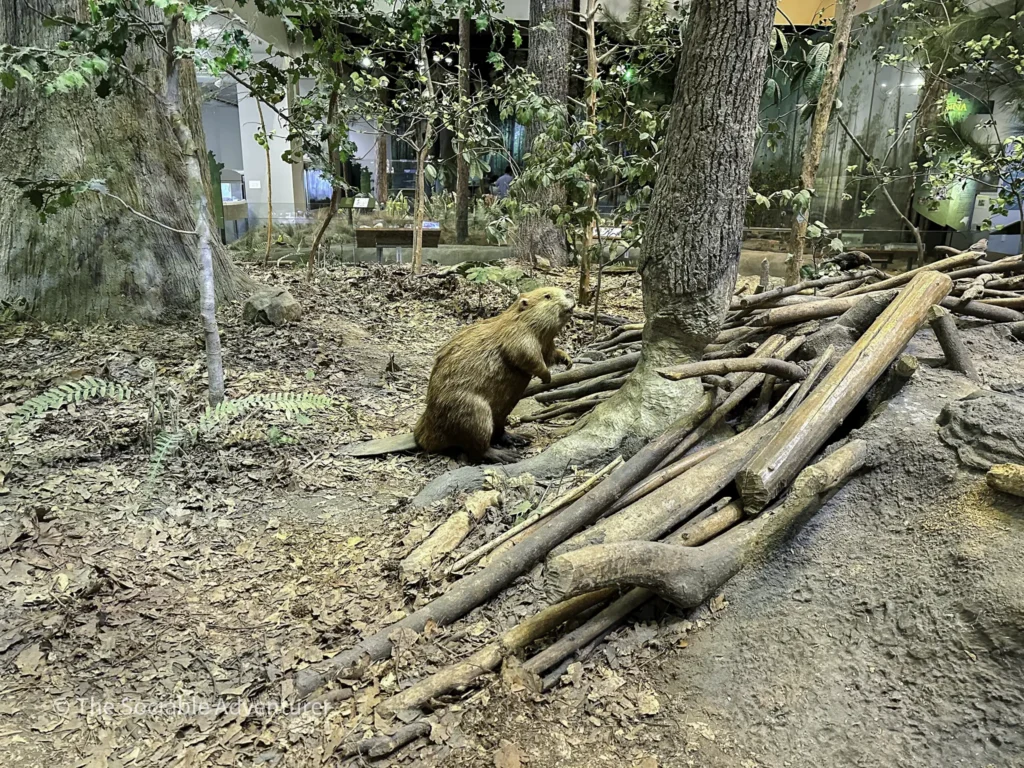
The first floor introduces visitors to NC’s biological diversity through Natural Treasures of North Carolina (featuring Venus flytraps native almost nowhere else on Earth, plus the extinct Carolina Parakeet) and the Coastal North Carolina exhibit — a walk-through of barrier islands, salt marshes, maritime forests, dunes, and open ocean habitats with dioramas and live aquariums.
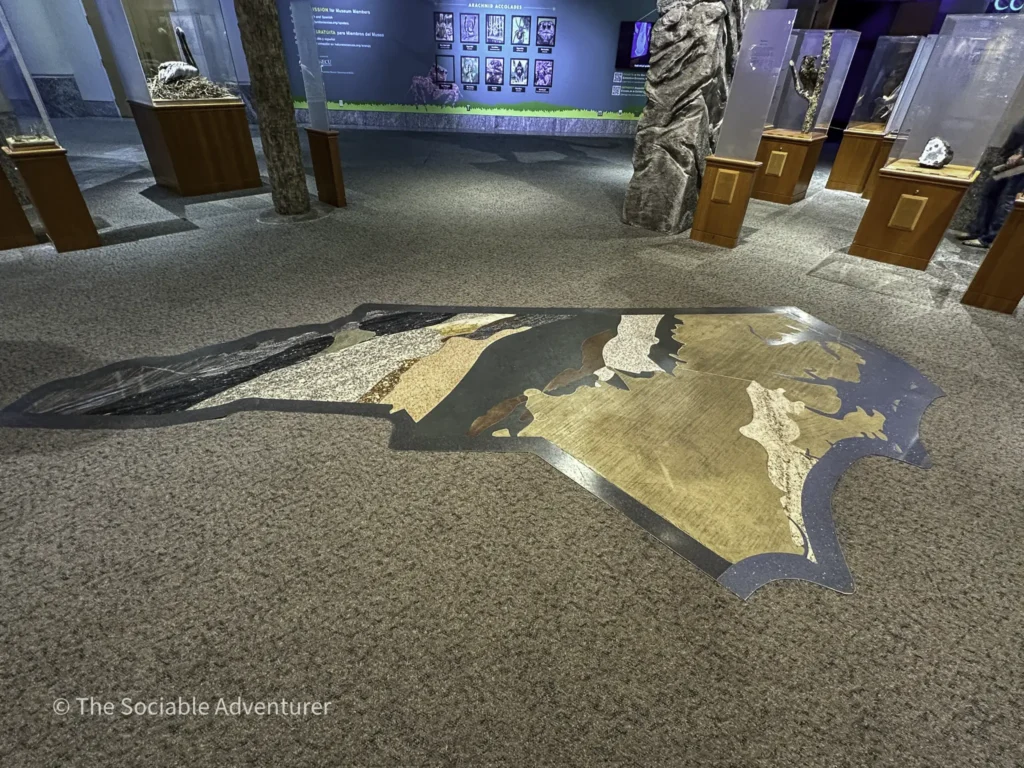
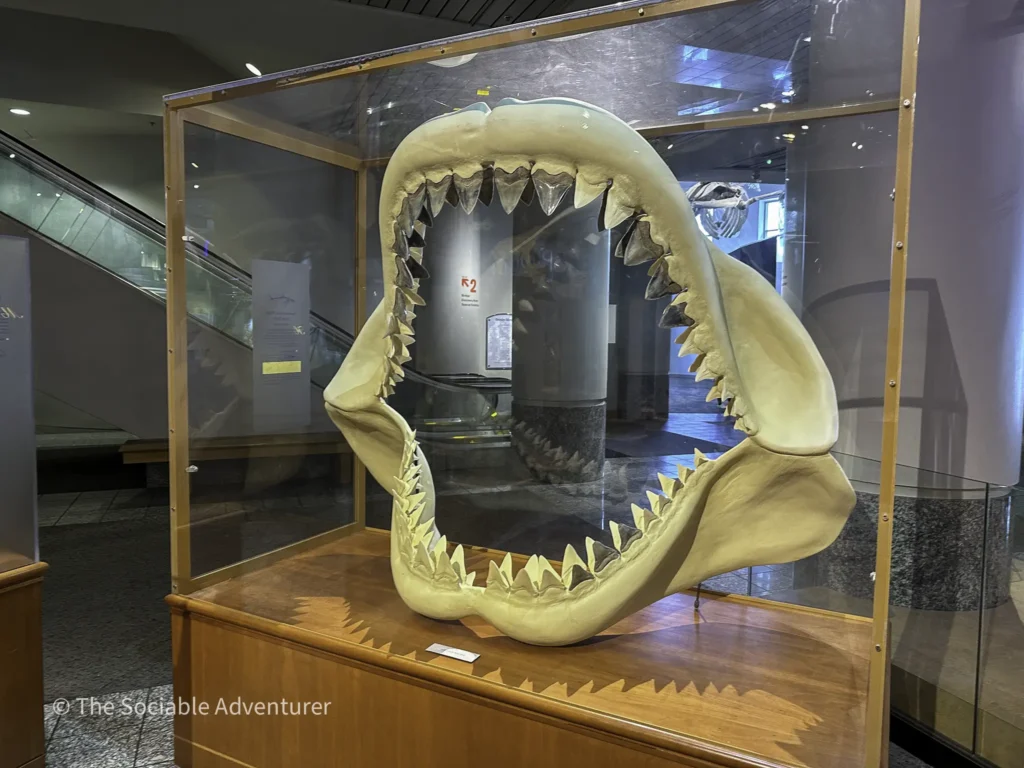
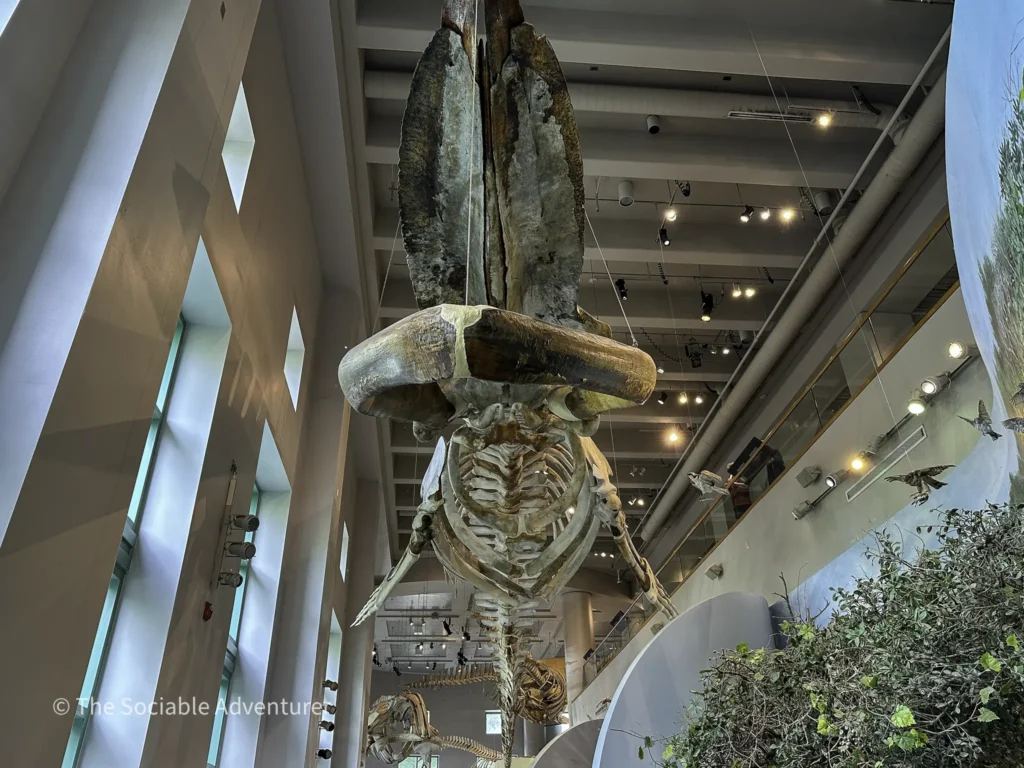
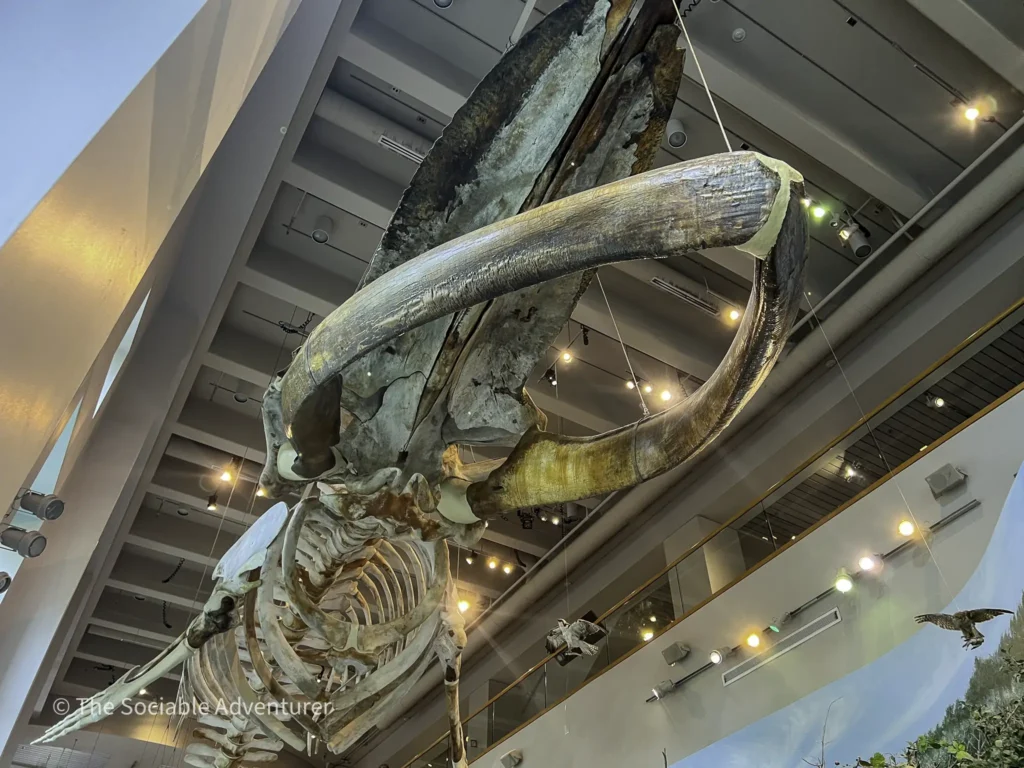
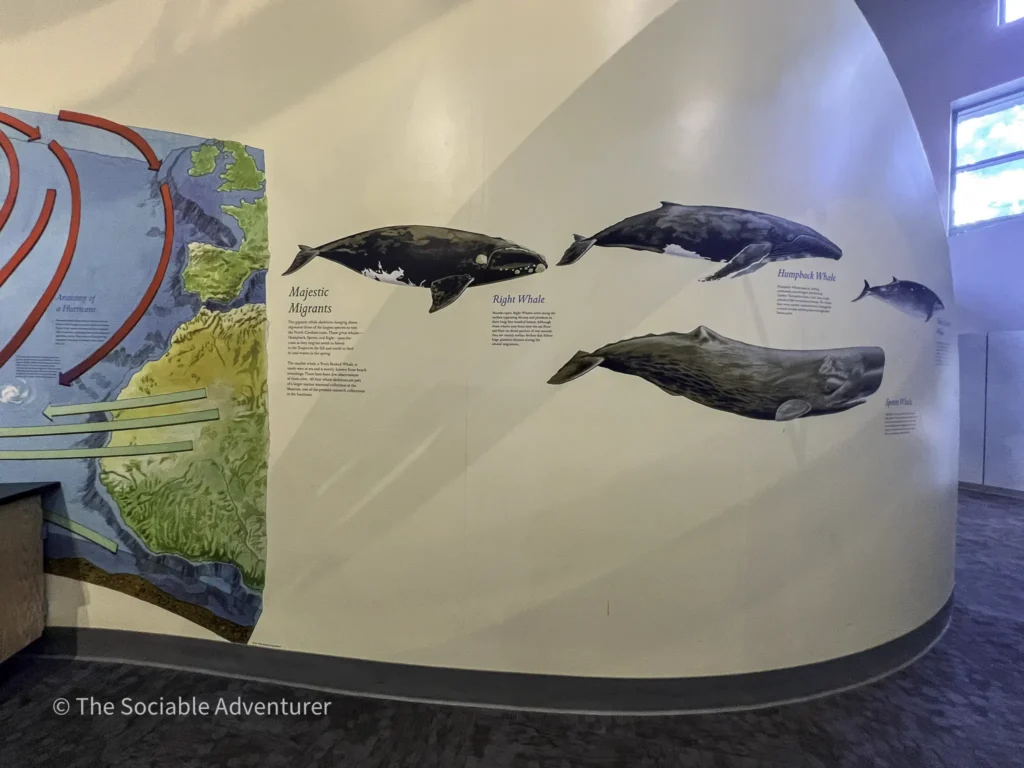
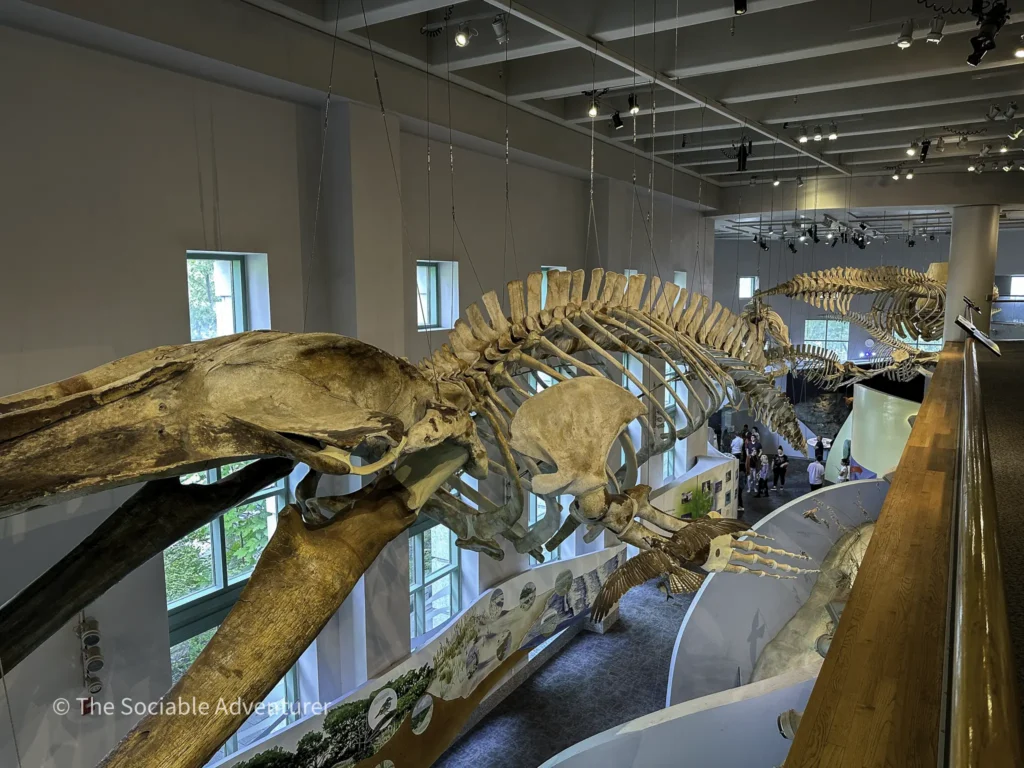
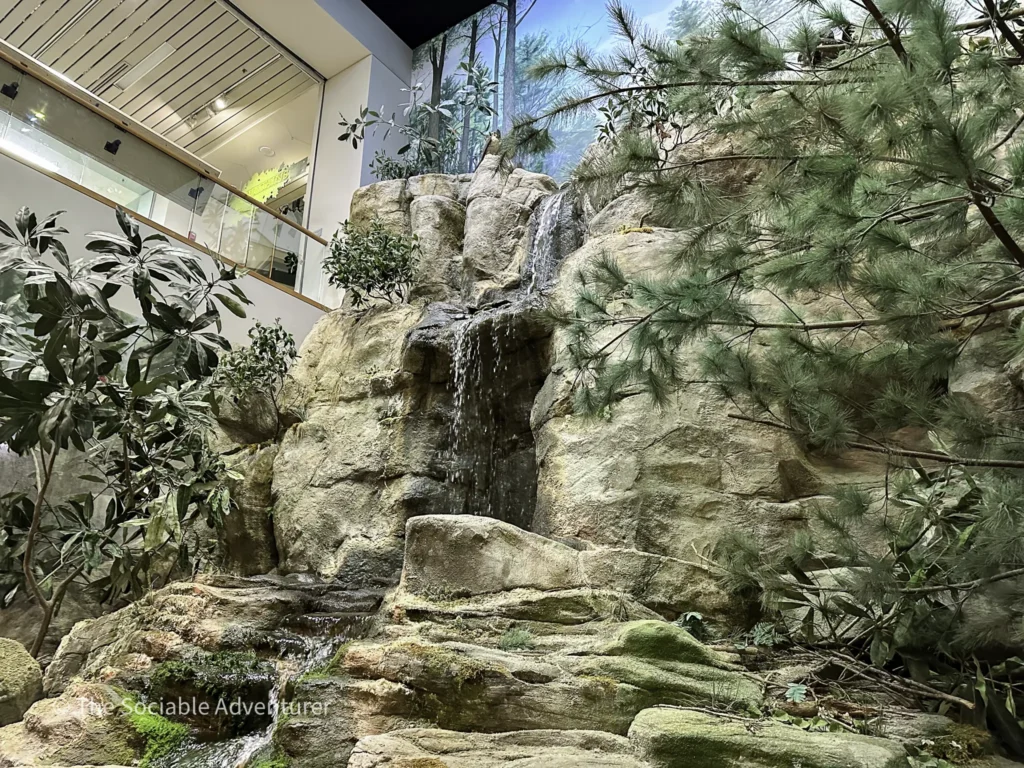
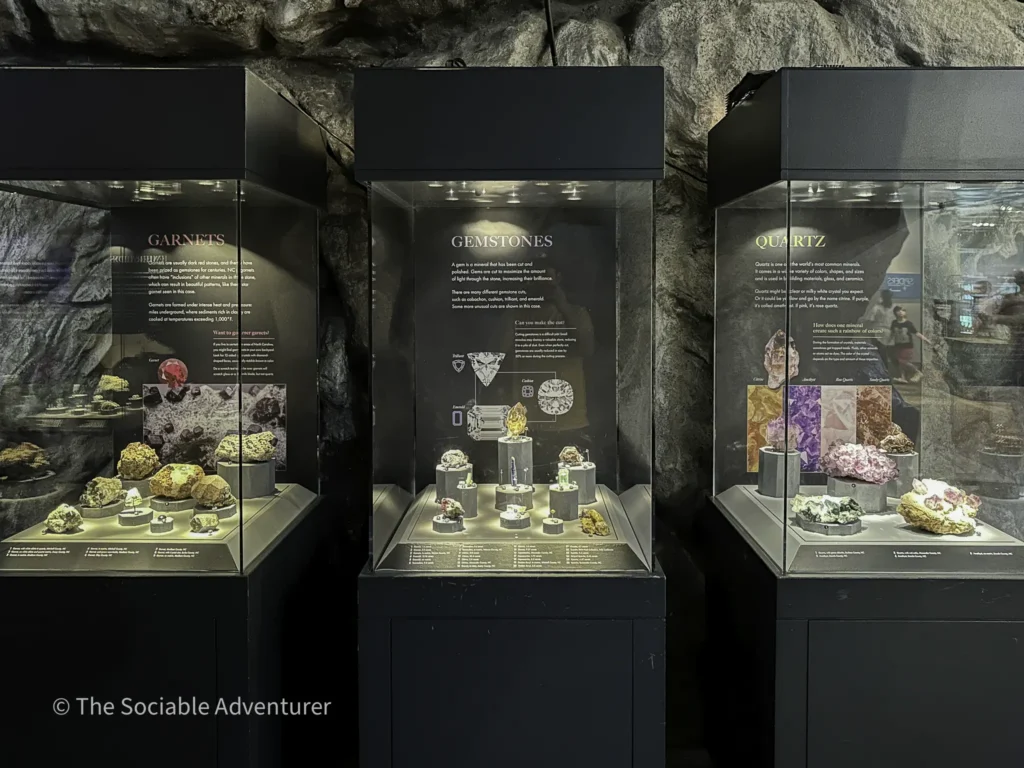
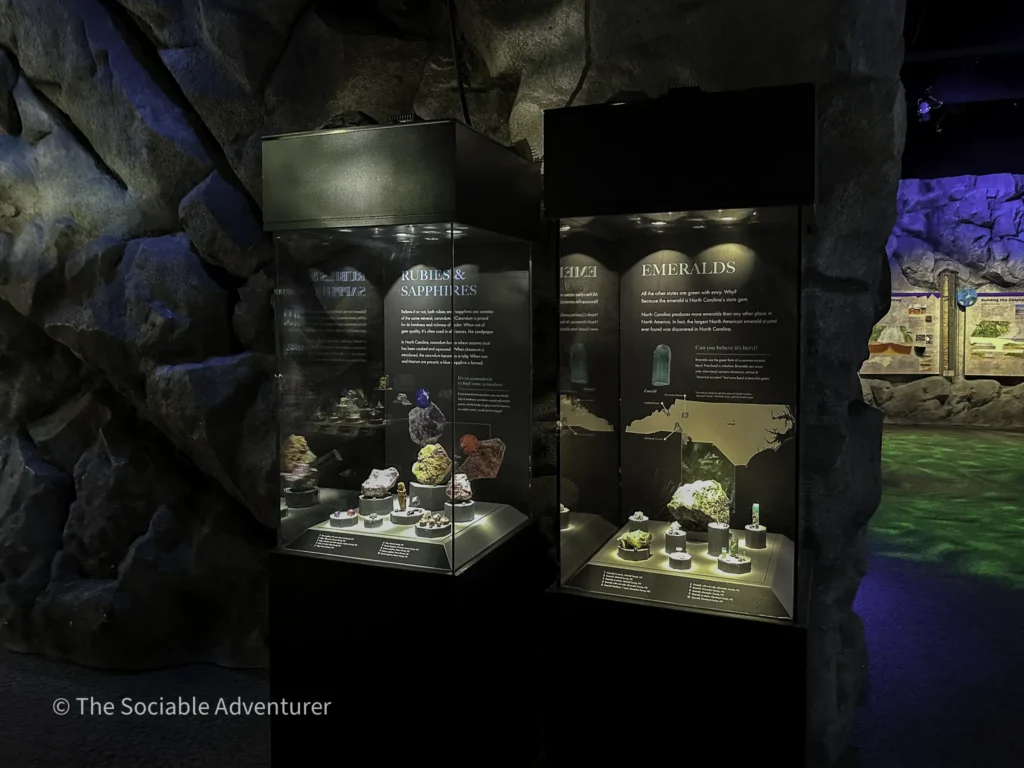
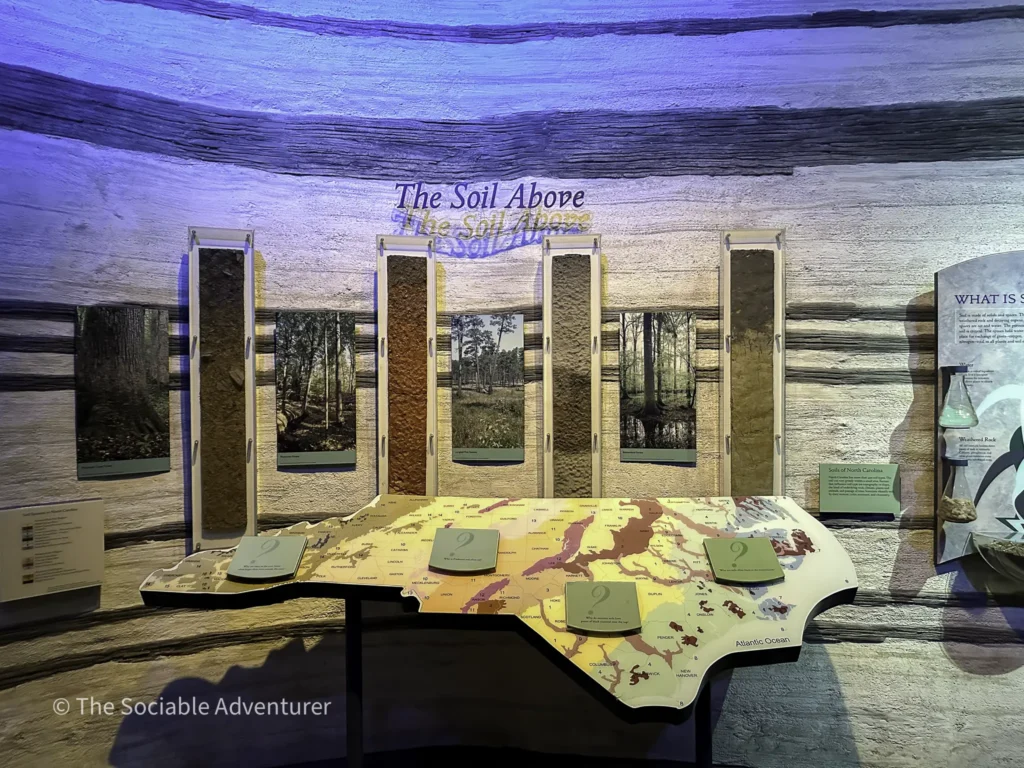
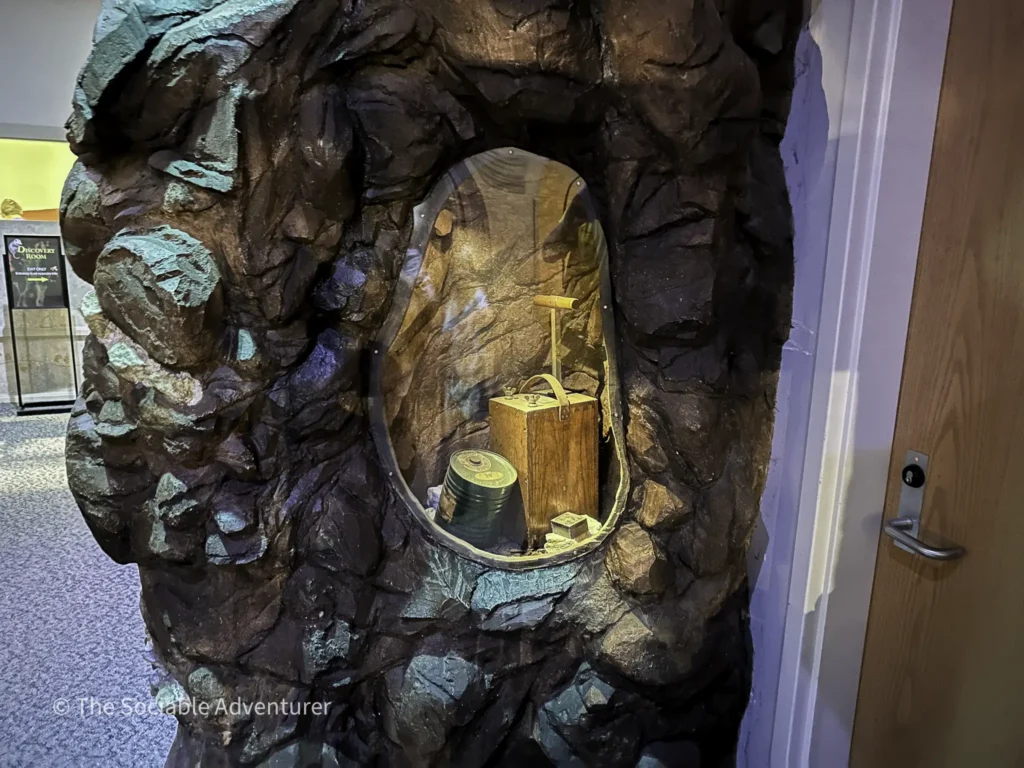
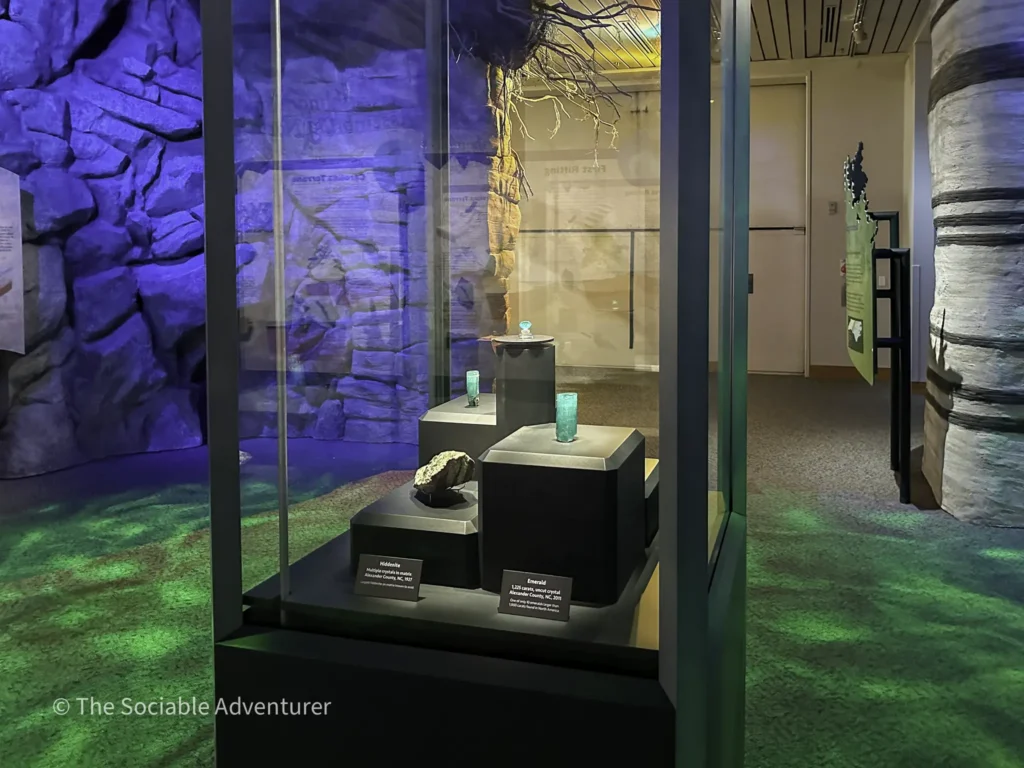
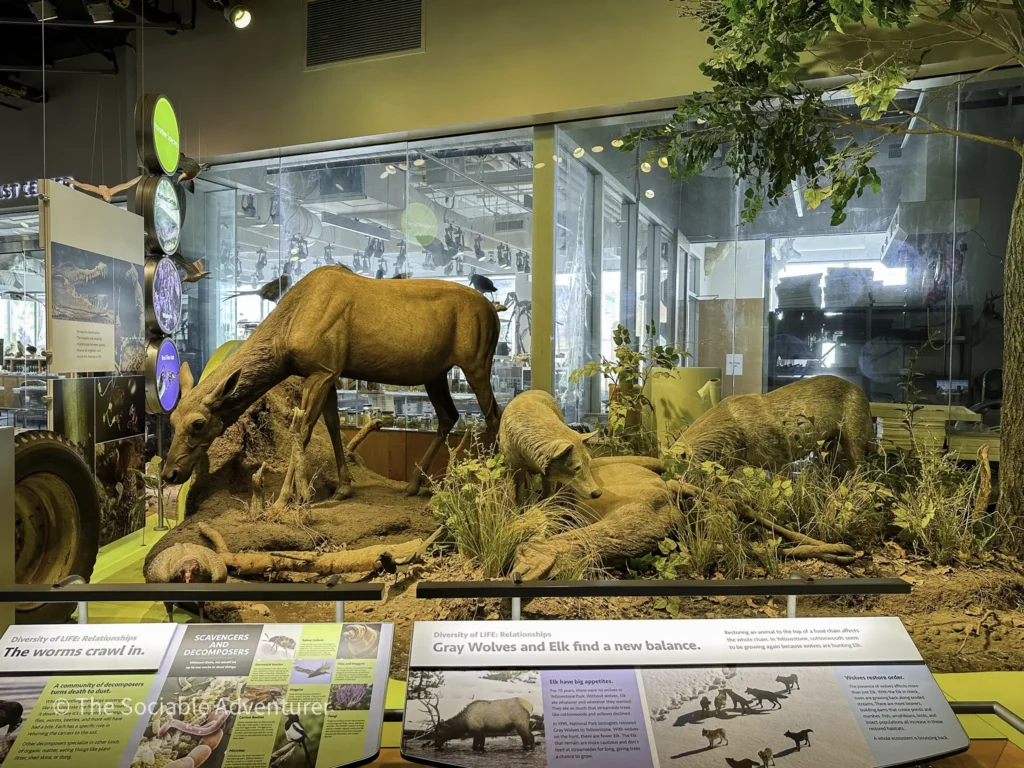
The second floor houses one of the museum’s most beloved exhibits: the Coastal North Carolina Overlook, which displays one of the most impressive whale skeleton collections in the United States. Highlights include a massive Blue Whale, a rare True’s Beaked Whale, the museum’s signature “Trouble” the Sperm Whale, and “Mayflower” the Right Whale — remains collected in 1874 that have been on public display for over 150 years. The floor also includes the Mountains to the Sea dioramas, the Nature’s Explorers exhibit (documenting the museum’s 1879+ history through artifacts like Miss Kagawa the Japanese friendship doll that survived WWII), the Underground North Carolina geology exhibit (where visitors learn NC was home to the first gold rush in the US and remains the only state where all four major gemstones — emeralds, rubies, sapphires, and diamonds — have been uncovered), and the Discovery Room for children.
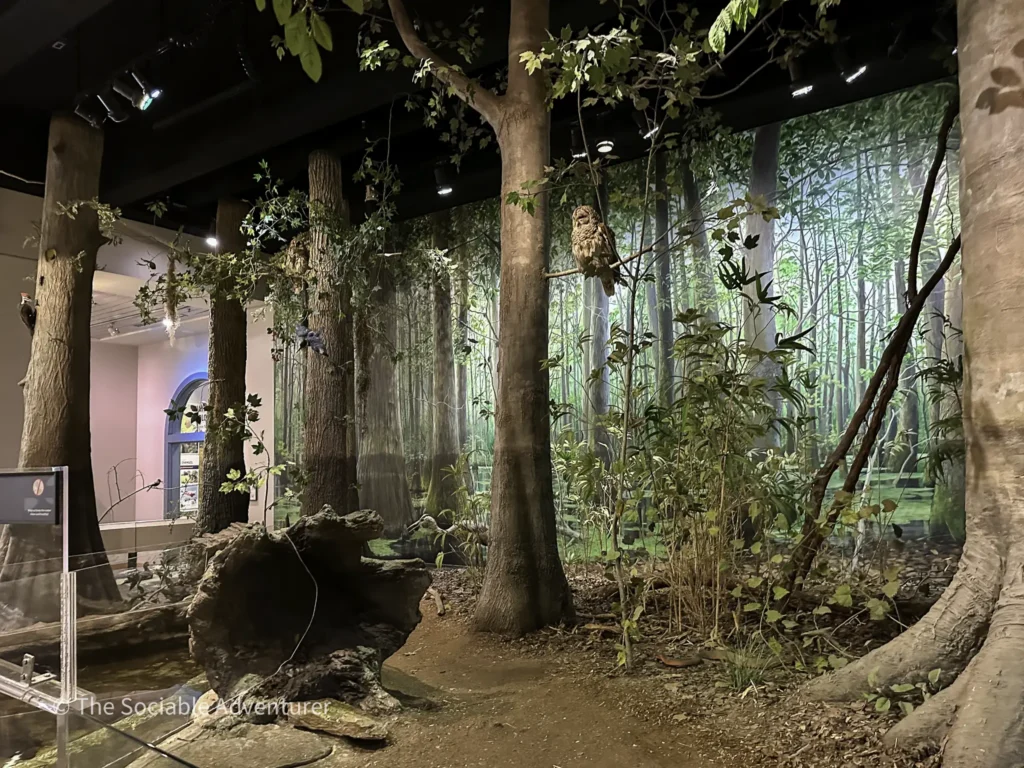
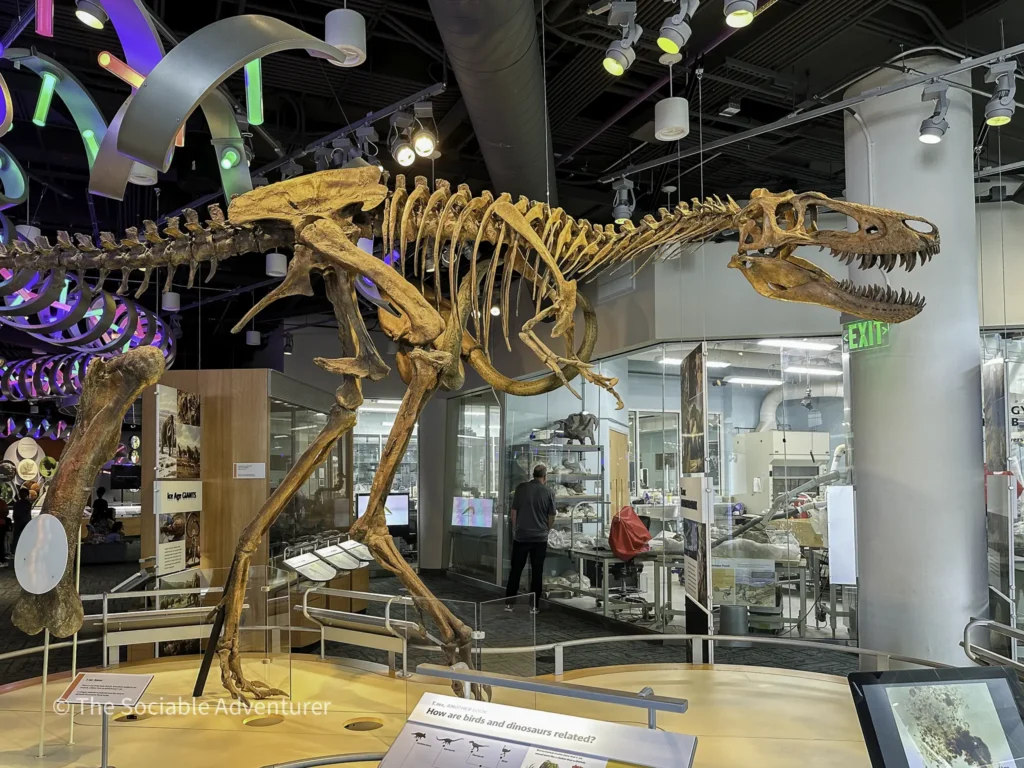
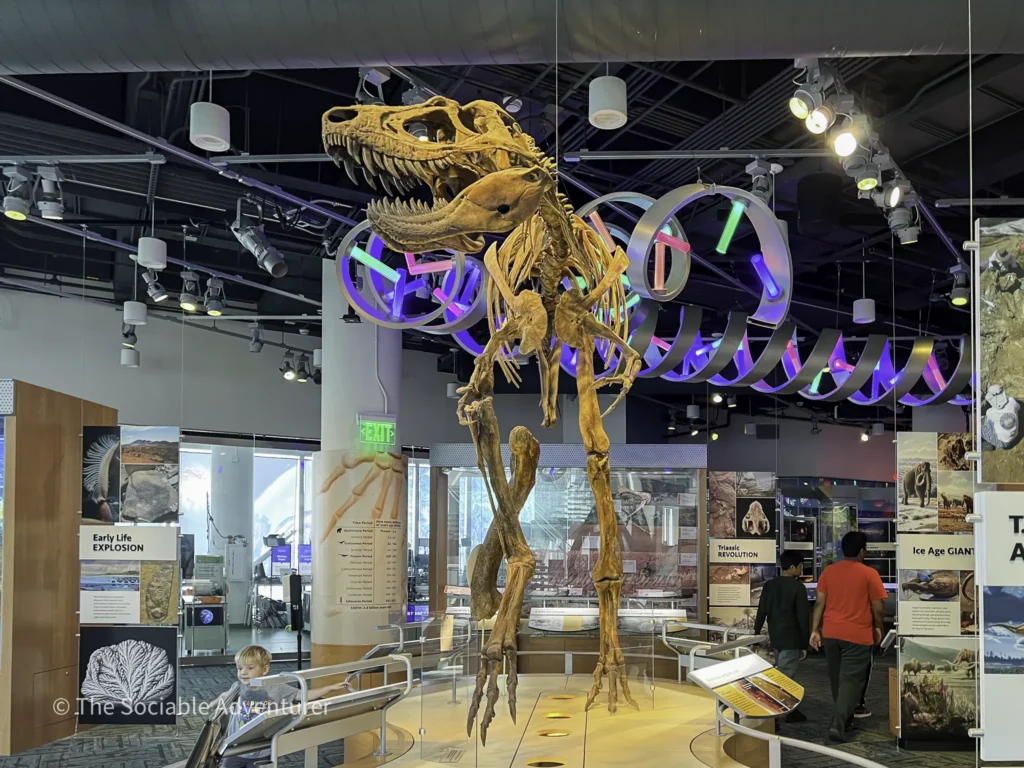
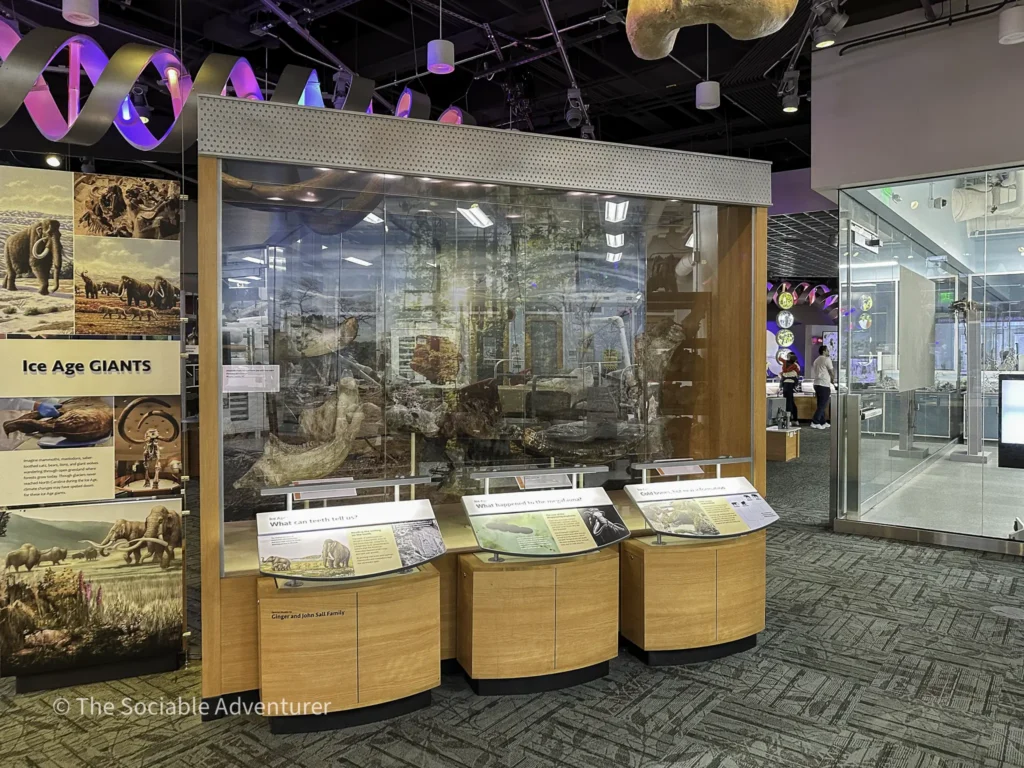
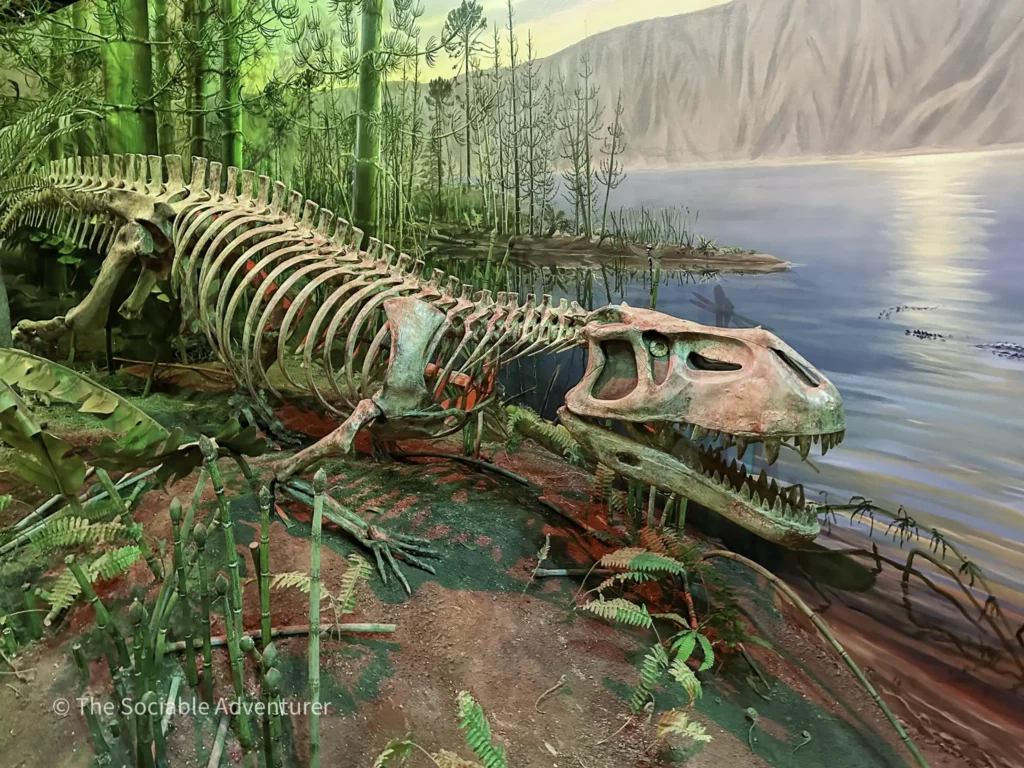
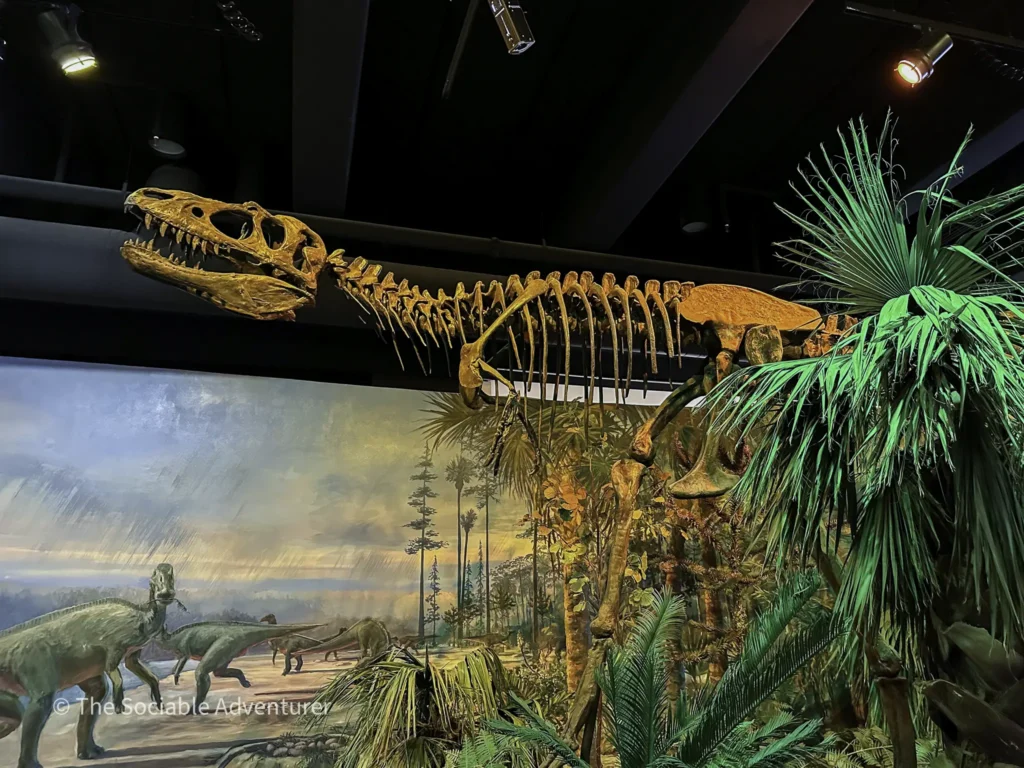
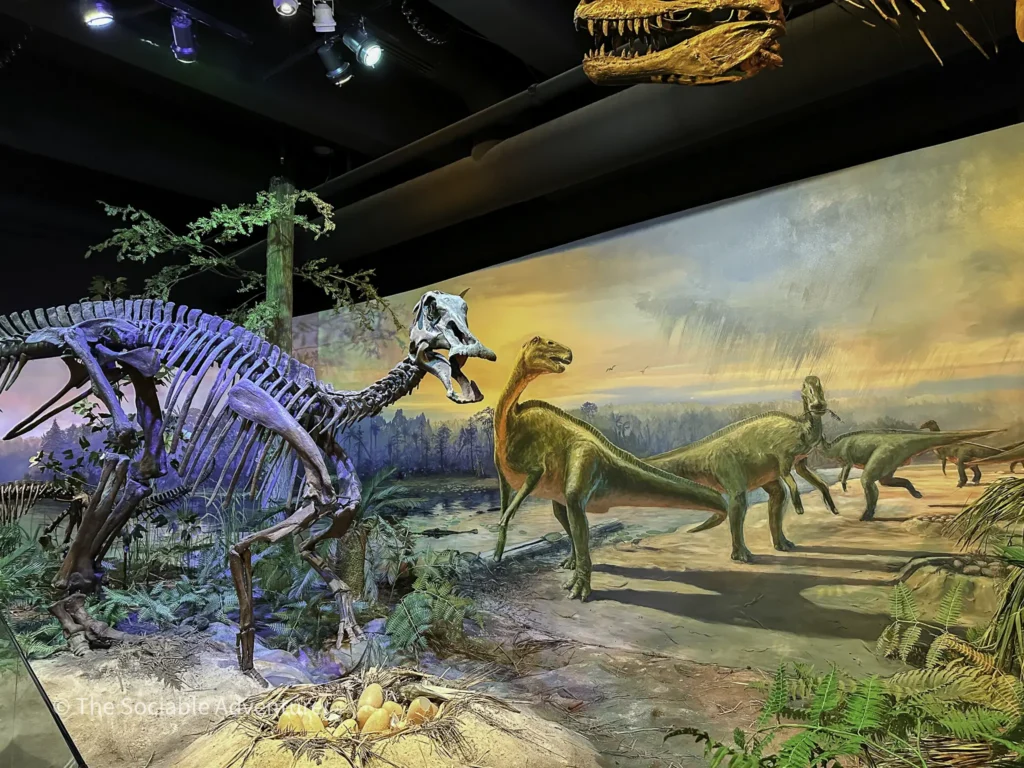
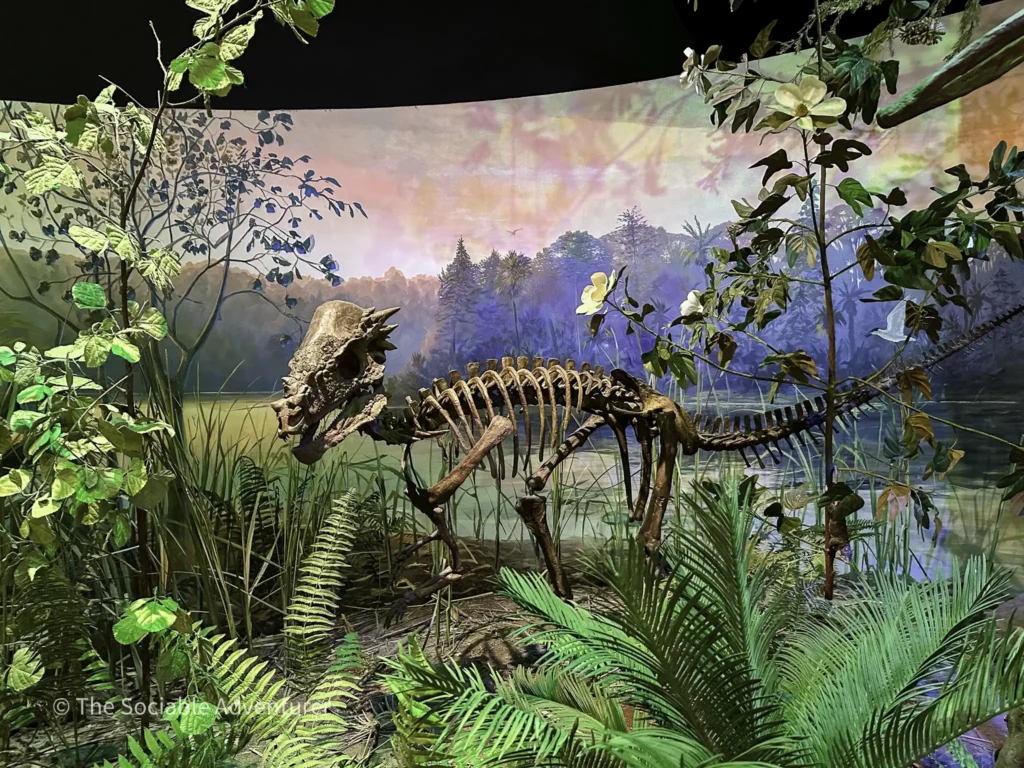
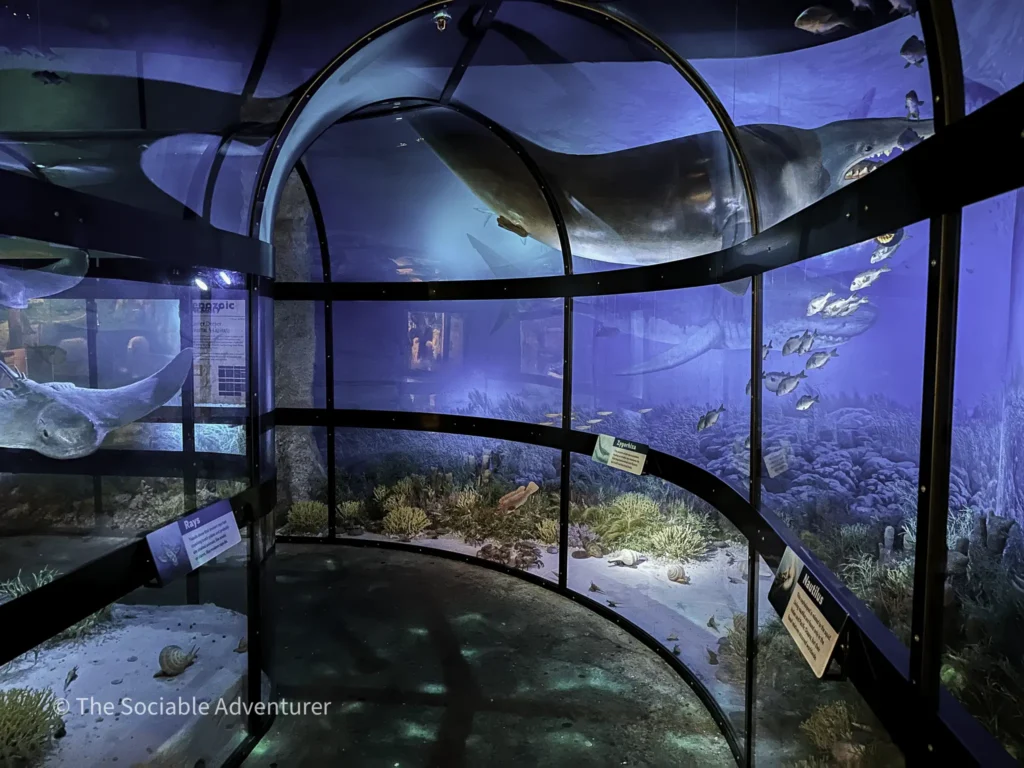
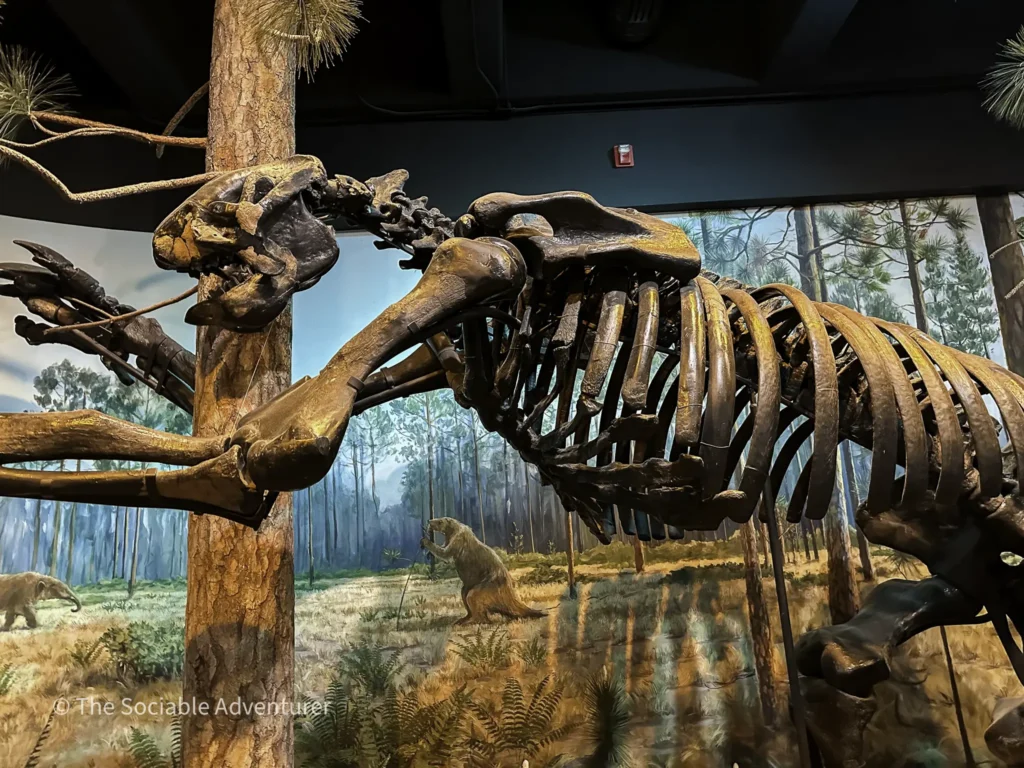
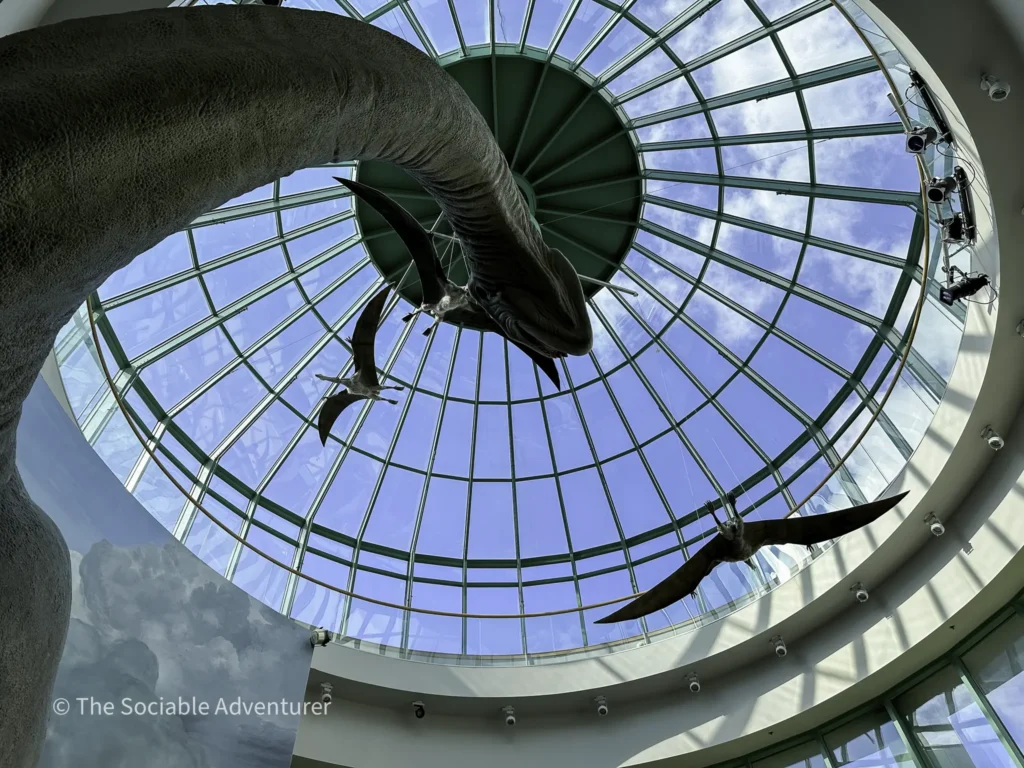
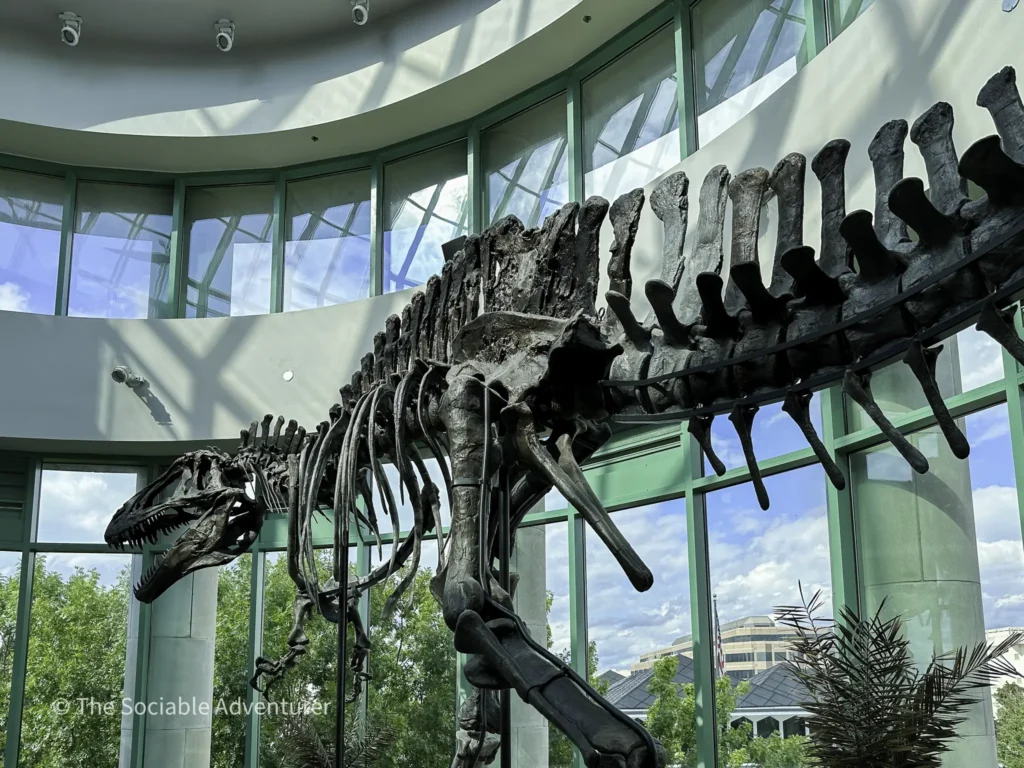
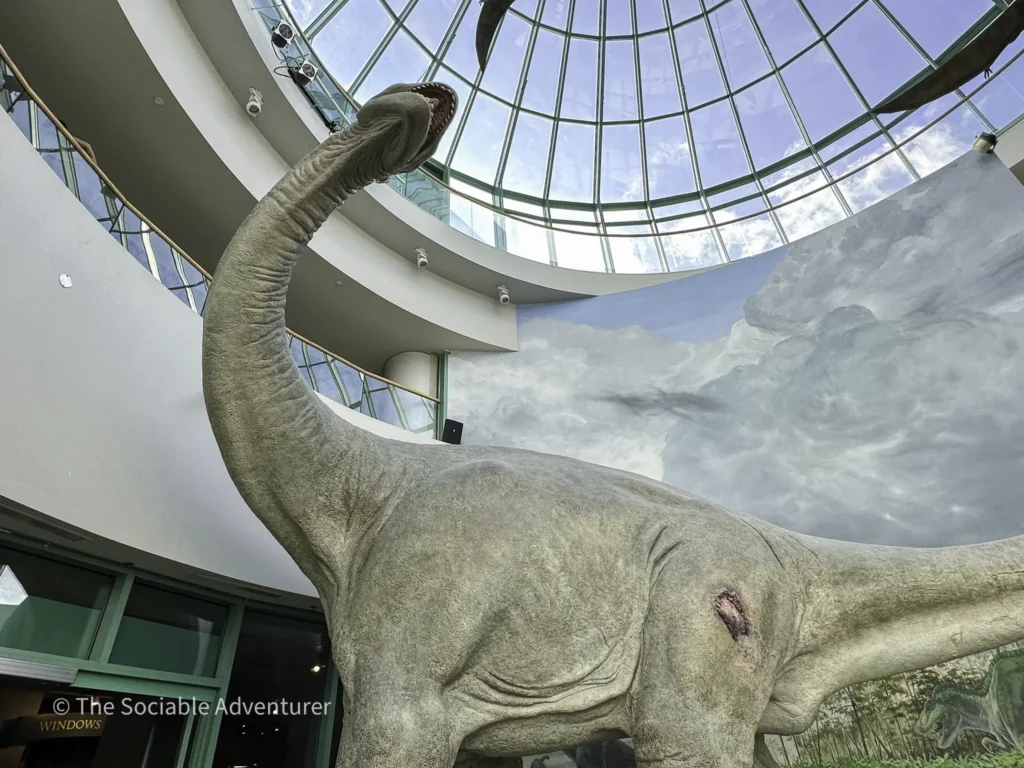
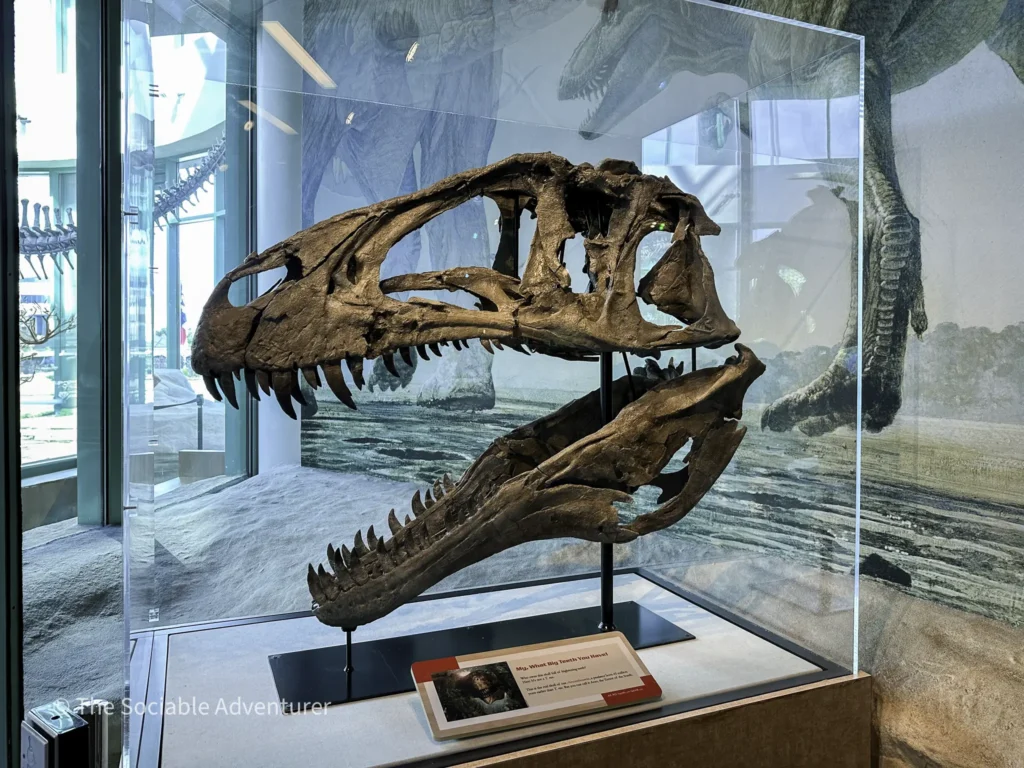
The third floor is the prehistoric and living species floor. Terror of the South displays “Acro,” the Acrocanthosaurus — the largest and most complete Acrocanthosaurus specimen ever discovered. Prehistoric North Carolina houses Willo the Thescelosaurus (once thought to have a fossilized heart) alongside an Eocene ocean tunnel and a 1.5-million-year-old giant ground sloth excavated near Wilmington. Tropical Connections features live emerald tree boas and poison dart frogs; Mountain Cove documents high-elevation NC species such as salamanders and owls; and Snakes of North Carolina displays nearly 40 species from the state behind protective glass.
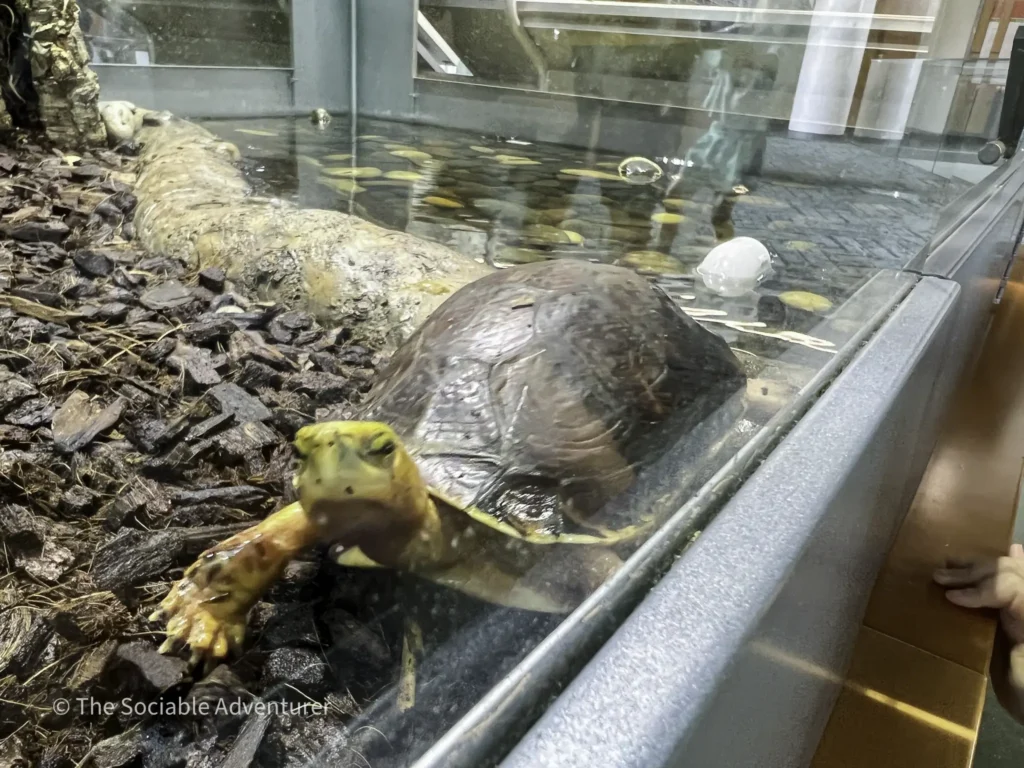
The fourth floor is home to the Arthropod Zoo (with live praying mantises, horseshoe crabs, and larger-than-life insect models) and the beloved Living Conservatory — a walk-through recreation of a tropical dry forest home to tropical butterflies, turtles, fish, and a two-toed sloth.
The Nature Research Center — SECU Daily Planet, Dueling Dinosaurs, and Working Labs
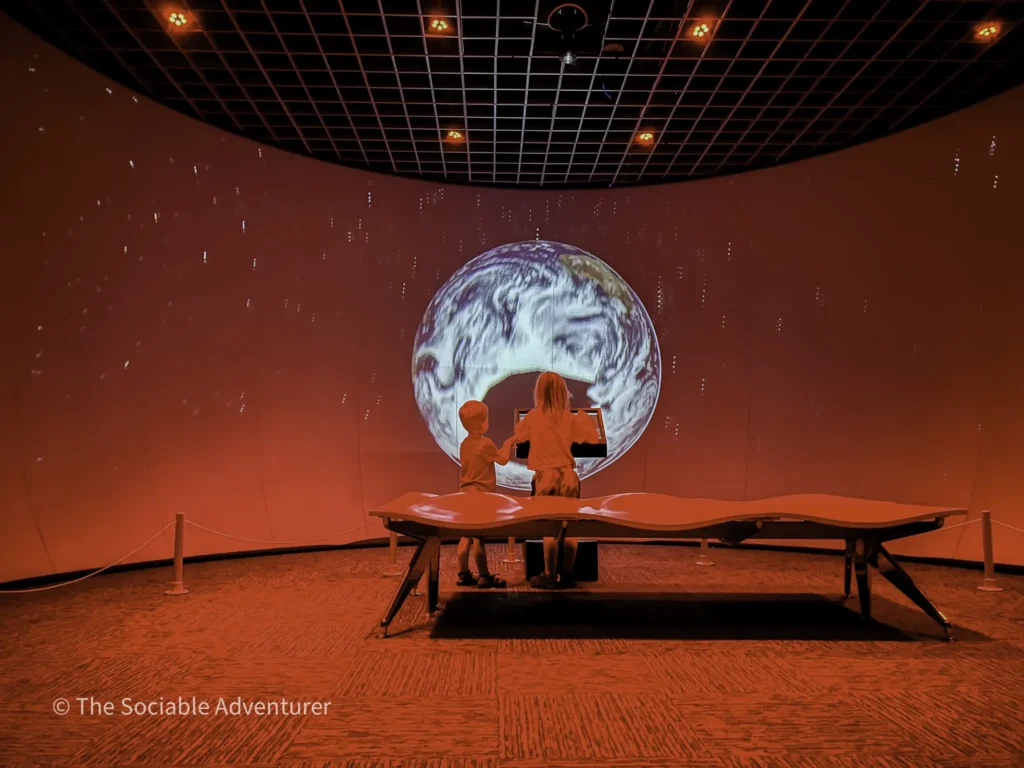
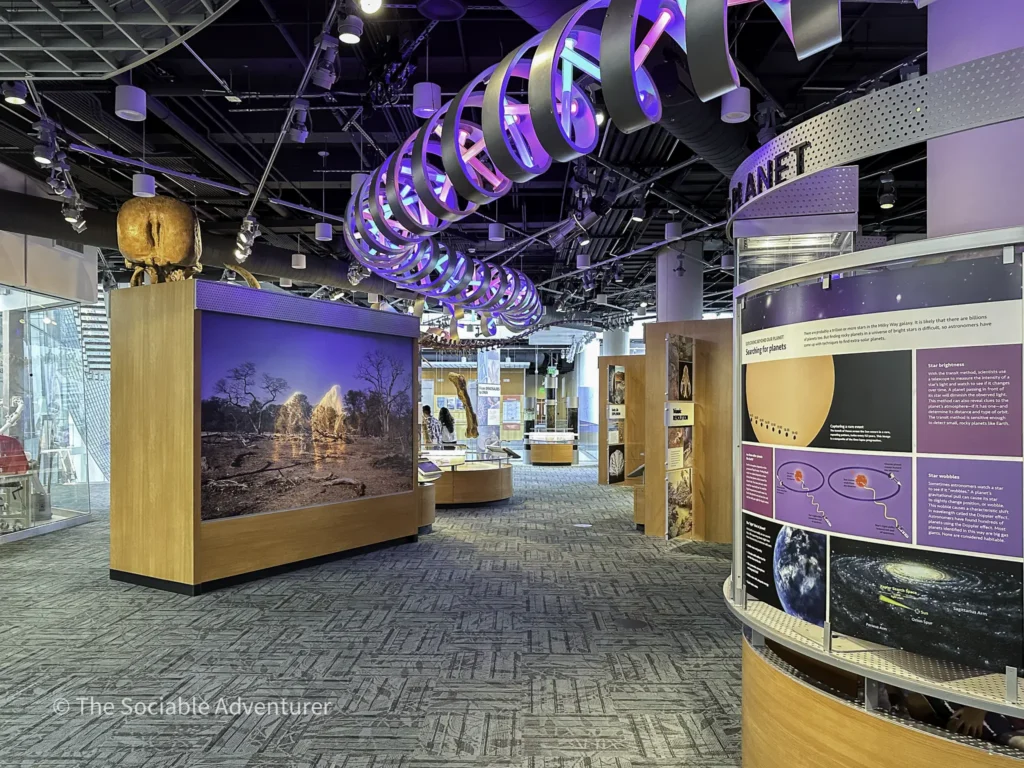
The Nature Research Center, opened in 2012 as a $56 million expansion adjacent to the original building, brings a different dimension to the museum: an emphasis on active scientific research made visible to the public. The building’s most iconic feature is the SECU Daily Planet — a 70-foot, three-story multimedia globe that simulates Earth’s dynamic systems and serves as the visual anchor of the entire building.
The Nature Research Center’s headline attraction is the SECU DinoLab, which opened in 2024 to house the museum’s remarkable Dueling Dinosaurs exhibit — a preserved fossil discovery from Montana showing a Triceratops and a Tyrannosaurus (likely a Nanotyrannus) apparently locked in combat. Acquired by the museum after a decade of legal negotiations and displayed in a purpose-built wing, it’s one of the most scientifically significant and visually striking dinosaur fossils on public display worldwide.
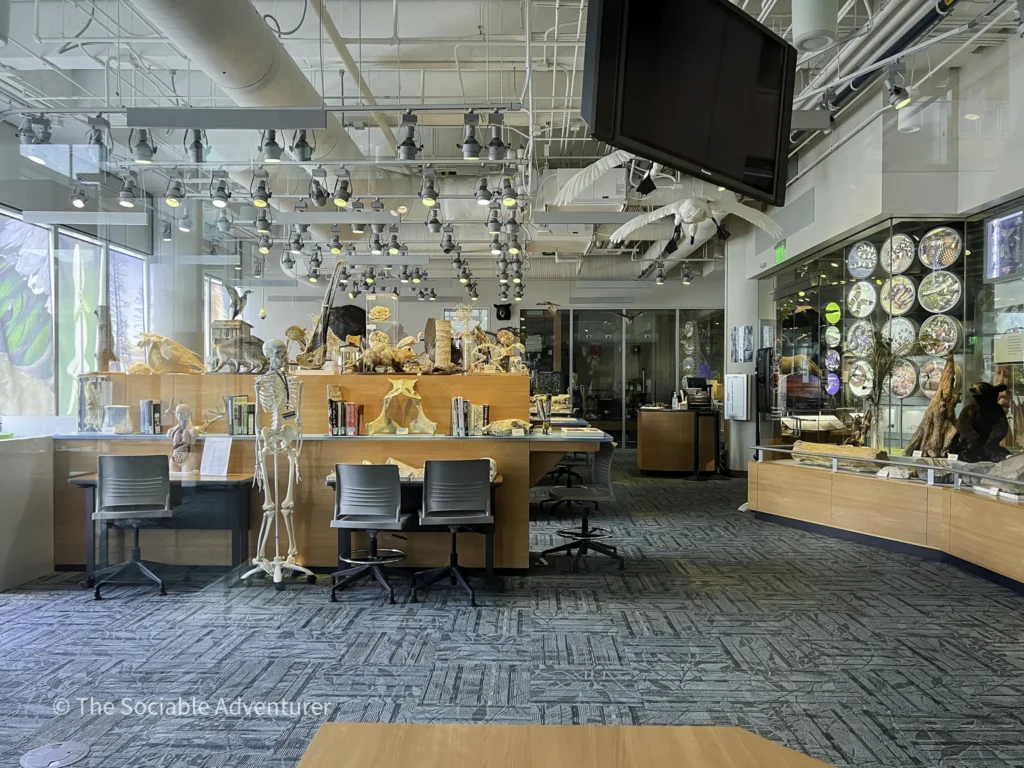
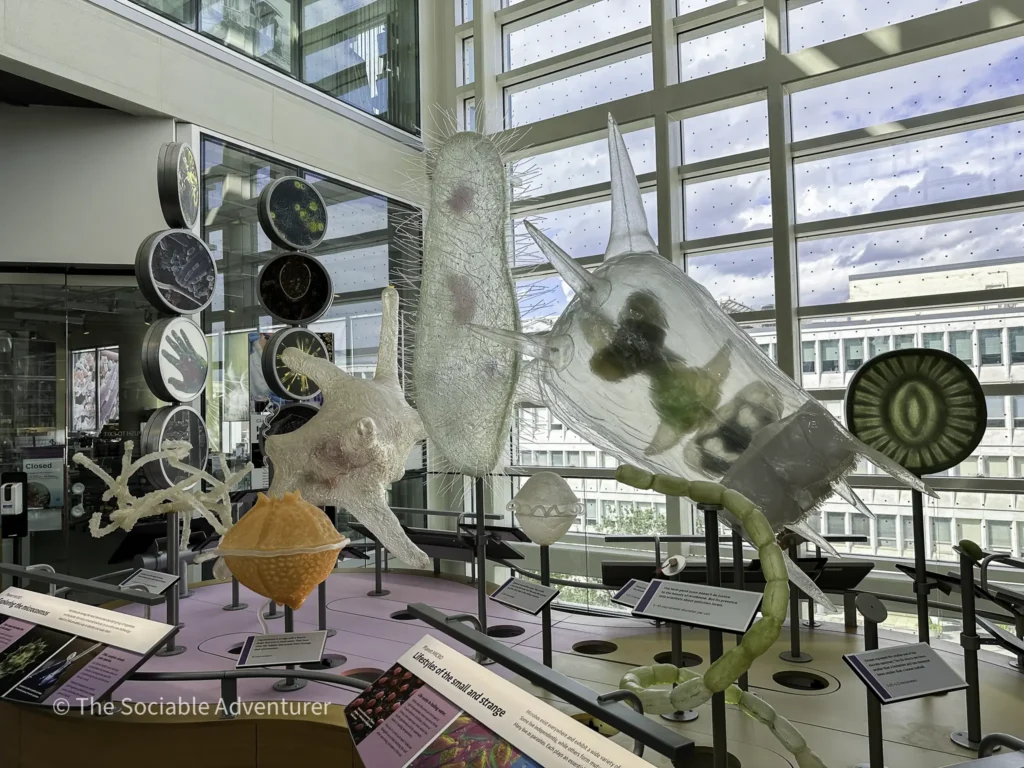
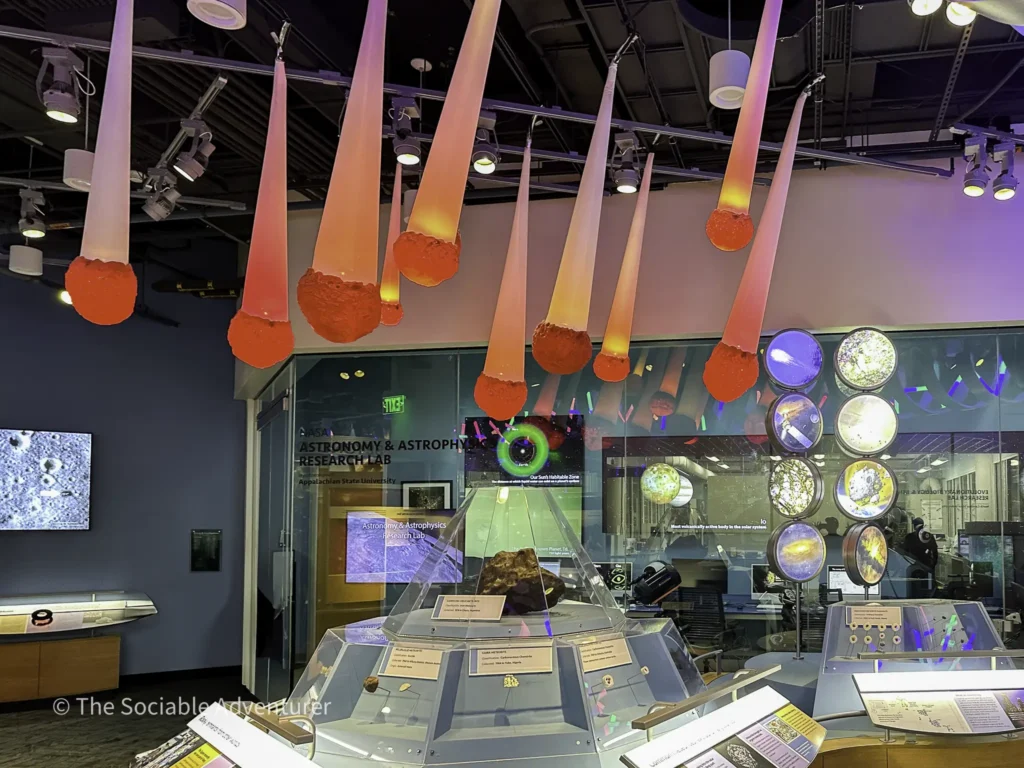
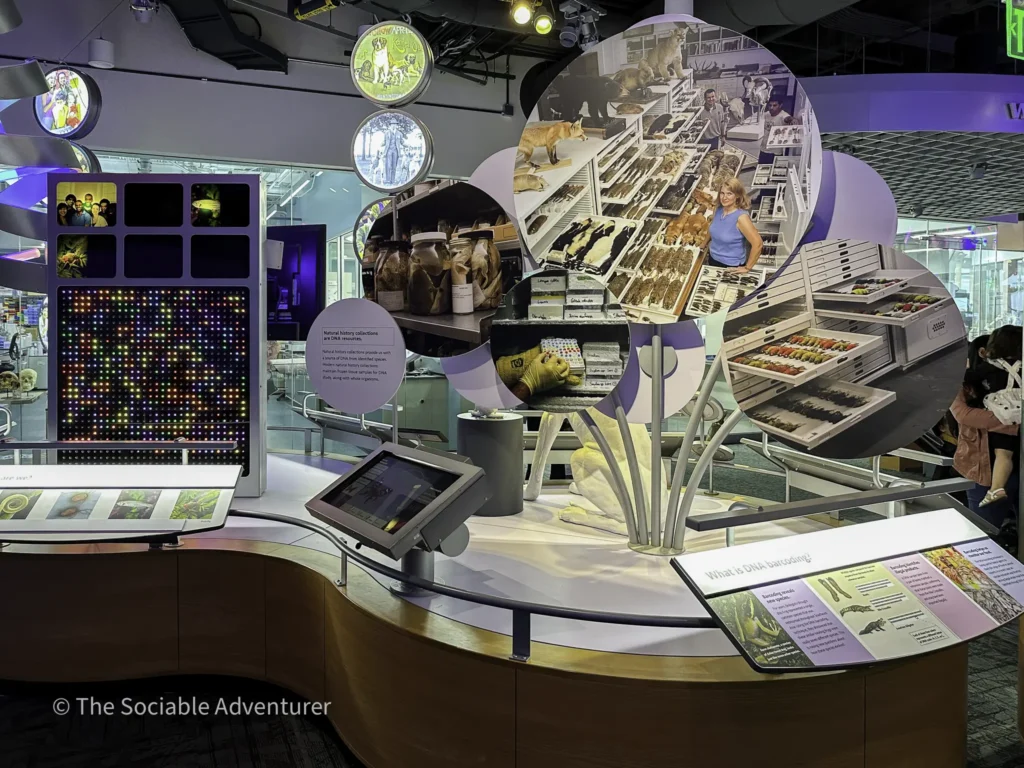
The center also features working scientific research labs visible to the public — where visitors can watch active paleontologists, geneticists, and other scientists at work — alongside interactive exhibits on the scientific process and the Investigate Lab with microscopes, pipettes, and tools for hands-on experimentation.
Signature Events, Live Animals, and Family Programming
Beyond the permanent exhibits, the NCMNS hosts a full calendar of annual events. The signature is BugFest — a free day-long celebration of insects held every mid-September that draws over 35,000 visitors annually. Other beloved traditions include Sir Walter Wally’s Groundhog Day prediction (February 2 each year — the museum’s mascot has a 58% accuracy rating in predicting the arrival of spring, earning nationwide recognition) and Día de la Ciencia y la Cultura, a fully bilingual celebration of science and culture held in both buildings.
The museum also maintains sister facilities, including the NC Museum of Natural Sciences at Whiteville, the Prairie Ridge Ecostation (a 45-acre outdoor learning site near Raleigh), the NC Museum of Natural Sciences at Greenville, and the Grifton Nature and Science Center — extending the museum’s reach well beyond the downtown Raleigh campus.
Good to Know
- Location: 11 W Jones Street, Raleigh, NC 27601 — on Bicentennial Plaza, adjacent to the North Carolina Museum of History and near the North Carolina State Capitol
- Founded: 1879 (the oldest museum in North Carolina)
- Distinction: The largest natural history museum in the Southeastern United States
- Admission: Free
- Hours: Monday–Sunday, 10 AM–5 PM (check the NCMNS website for current hours)
- Buildings: Two connected buildings — the Nature Exploration Center (four floors, opened 2000) and the Nature Research Center (opened 2012, $56 million expansion, working labs visible to the public)
- Collection scope: Over 1.7 million specimens across fossils, minerals, mammals, birds, fish, reptiles, amphibians, invertebrates, plants, geology, and meteorites
- Nature Exploration Center permanent exhibits:
- First Floor: Natural Treasures of North Carolina; Coastal North Carolina
- Second Floor: Coastal North Carolina Overlook (whale skeletons including “Trouble” the Sperm Whale, “Mayflower” the Right Whale, Blue Whale, True’s Beaked Whale); Mountains to the Sea; Nature’s Explorers; Underground North Carolina; Discovery Room
- Third Floor: Terror of the South (Acro the Acrocanthosaurus); Prehistoric North Carolina (Willo the Thescelosaurus, Eocene tunnel, Giant Ground Sloth); Tropical Connections; Mountain Cove; Snakes of North Carolina
- Fourth Floor: Arthropod Zoo; Living Conservatory (butterflies, two-toed sloth)
- Nature Research Center signature exhibits: SECU Daily Planet (70-foot multimedia globe); SECU DinoLab (Dueling Dinosaurs, opened 2024); working research labs visible to the public; Investigate Lab
- Signature events: BugFest (mid-September, free, 35,000+ visitors); Sir Walter Wally’s Groundhog Day prediction (Feb 2); Día de la Ciencia y la Cultura (bilingual celebration)
- Family-friendly features: Discovery Room, Naturalist Center, Investigate Lab, Nature PlaySpace, Wildlife Walk
- Parent organization: NC Department of Natural and Cultural Resources
- Historical note: The museum was originally housed in the 1874 Briggs Building on Fayetteville Street — the same building that today houses the City of Raleigh Museum
- Sister facilities: NC Museum of Natural Sciences at Whiteville, Prairie Ridge Ecostation (Raleigh), NC Museum of Natural Sciences at Greenville, Grifton Nature and Science Center
- Best for: Families with children, science enthusiasts, dinosaur fans, students, and visitors making a full downtown Raleigh museum day
- Pair with: A visit to the North Carolina State Capitol, the City of Raleigh Museum, the North Carolina Museum of Art, Mordecai Historic Park, or Pullen Park for family-friendly amusement
A Raleigh Highlight
The North Carolina Museum of Natural Sciences is the kind of institution that stays with you for the sheer breadth of what’s under one roof. Fourteen permanent exhibits across seven floors move visitors from Venus flytraps and Carolina Parakeets on the first floor, up through NC’s whale skeleton collection and gemstone geology, to Acro and Willo on the dinosaur floor, all the way to the tropical Living Conservatory sloth at the top. Layer in the Dueling Dinosaurs SECU DinoLab exhibit that opened in 2024, the 70-foot SECU Daily Planet globe, and the working research labs visible to the public, and the museum offers a genuinely comprehensive natural history experience with free admission.
The combination of world-class exhibits and family-focused programming rounds out the experience. Between the Discovery Room hands-on activities, the Living Conservatory sloths and butterflies, and signature annual events like BugFest and Sir Walter Wally’s Groundhog Day prediction, the museum works equally well for a serious multi-hour paleontology deep dive or a casual afternoon family outing. It’s one of the most consistently rewarding stops on any downtown Raleigh museum day.







Resources
Location

Your Complete Guide to Hiking Trails at Elk Knob State Park
Elk Knob State Park is one of North Carolina’s most rewarding mountain destinations — a 4,400-…

A Complete Guide to the Trails at Carolina Beach State Park
Tucked along the Cape Fear River on Pleasure Island, Carolina Beach State Park is one of southeaster…

The Complete Guide to Hiking Trails in Lansing, NC
Set in the rolling hills of Ashe County, just a stone’s throw from the Virginia and Tennessee …

Exploring Ashe County Park: A Hiker’s Guide to North Carolina’s Mountain Gem
If you’re searching for the best hiking trails at Ashe County Park in North Carolina, you̵…
Mountain Masterpieces: A Guide to the Ben Long Frescoes of Ashe County
In the quiet corners of Ashe County, where the Blue Ridge Mountains meet peaceful valleys, thereR…

Granite, Grunts, and Glory: A Day on the Stone Mountain Loop Trail
The Stone Mountain Loop Trail is the signature hike at Stone Mountain State Park in North Carolina —…