
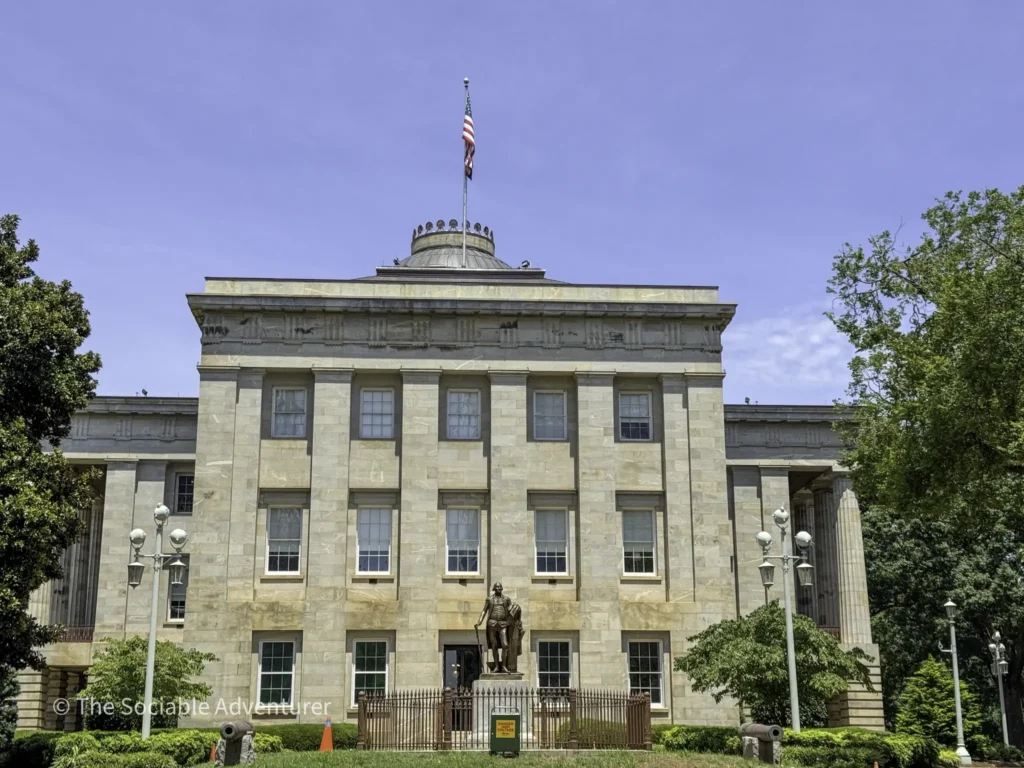
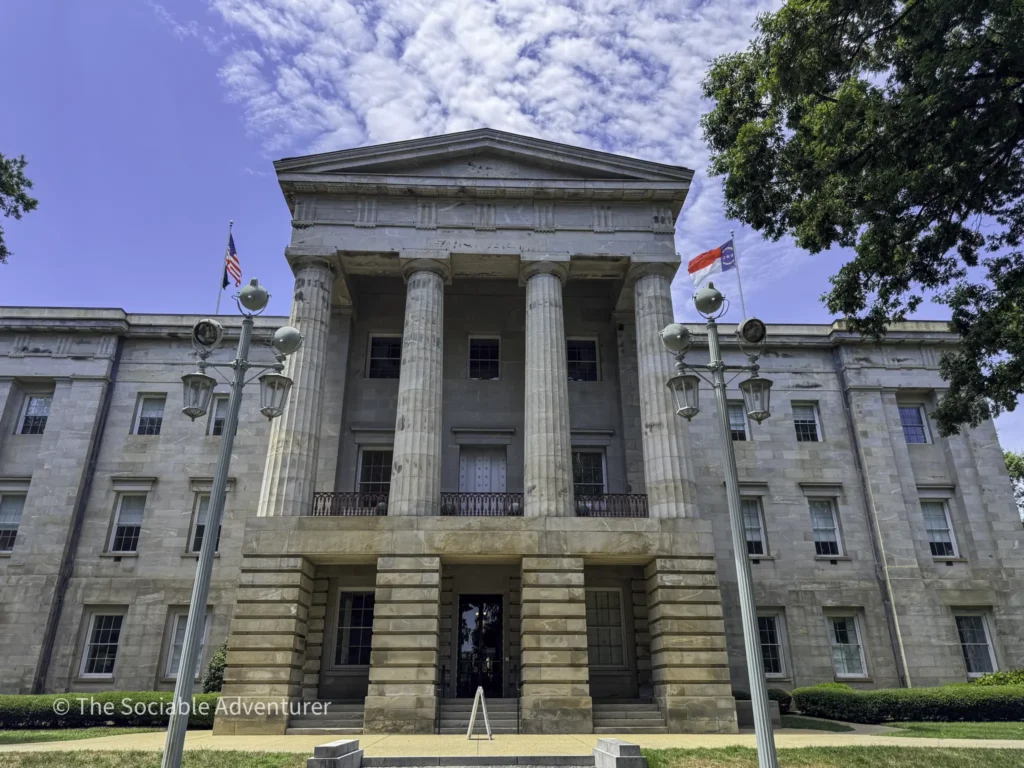
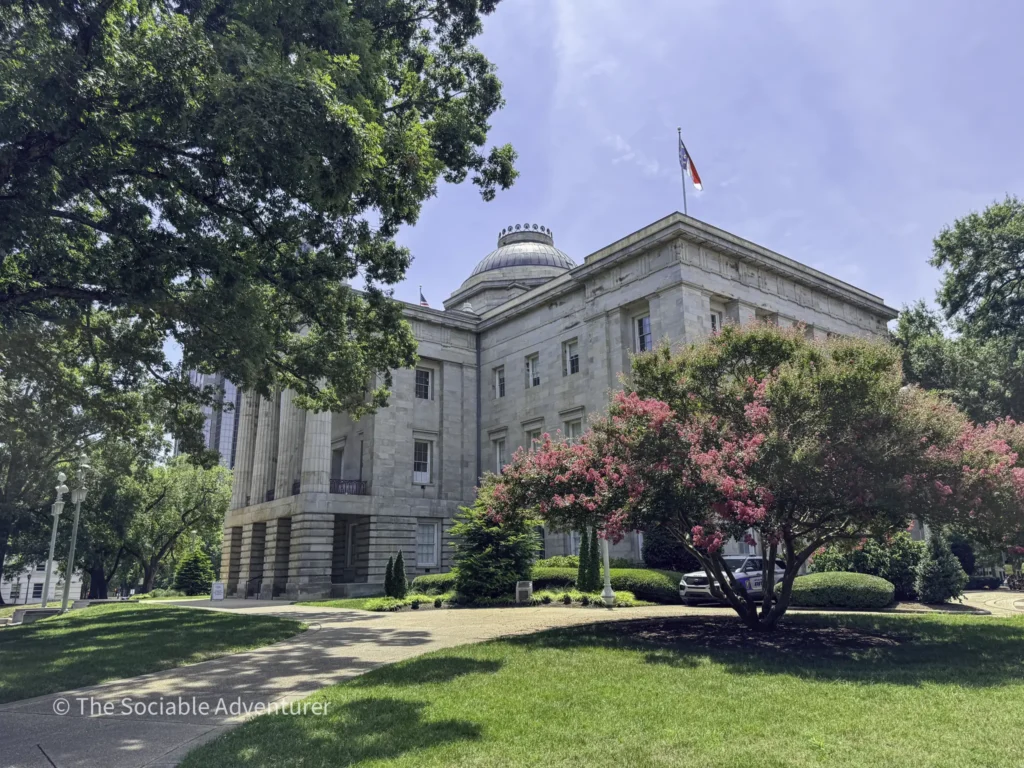
The North Carolina State Capitol is one of the most historically significant civic buildings anywhere in the American Southeast — the 1840 seat of state government in downtown Raleigh, NC, and a National Historic Landmark. The building anchors Union Square at the heart of the original one-square-mile grid that shaped Raleigh’s founding as North Carolina’s permanent capital. Today, the Capitol functions primarily as a preserved historic building open for public tours — the General Assembly has met in the adjacent State Legislative Building since 1963, and the Capitol itself offers free guided tours through the preserved Senate and House chambers and the grand rotunda.
Completed in the Greek Revival style, the Capitol tells the story of North Carolina’s civic evolution — from the earliest colonial-era capitals to the founding of the modern state government, which still meets in Raleigh today. Be sure to check out the YouTube video and pictures below to get a feel for the North Carolina State Capitol before you go — or to relive the visit after.
From New Bern to Raleigh — The Story of North Carolina’s Capital
North Carolina’s capital hasn’t always been Raleigh. During the colonial era, New Bern served as the state’s official capital from 1770 to 1792, with legislative meetings also held in Hillsborough and other cities during periods of political and military disruption. In 1792, the state legislature designated Raleigh as North Carolina’s permanent capital and built the city expressly for that purpose — designed around a one-square-mile grid centered on the future Capitol site at Union Square.
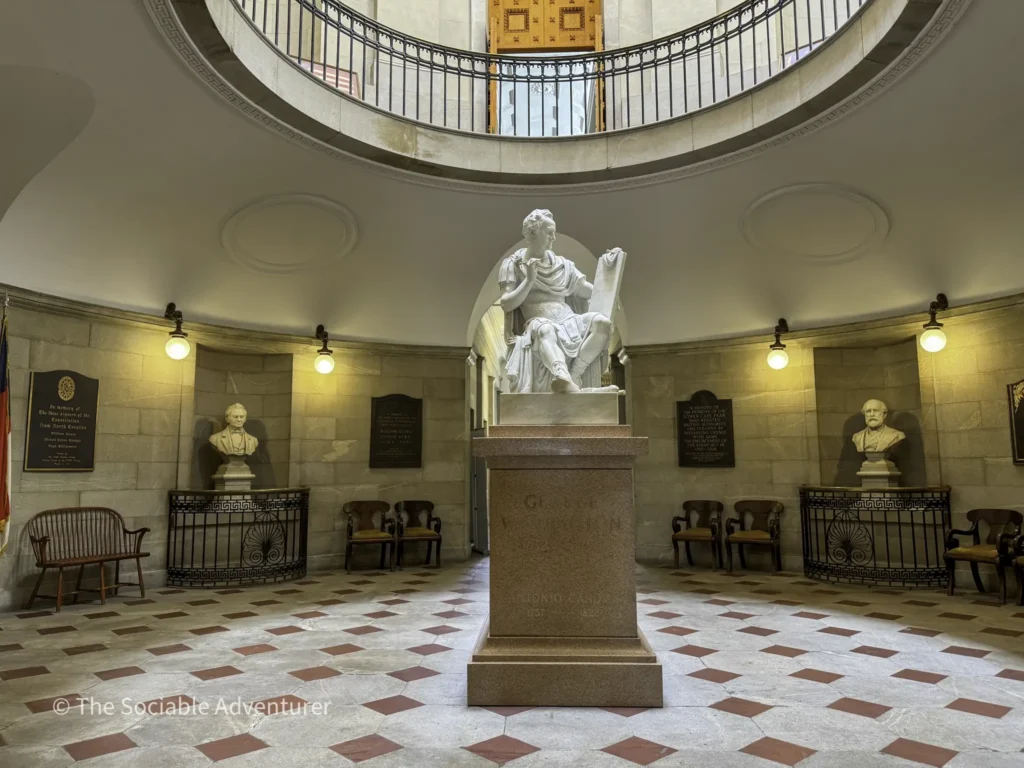
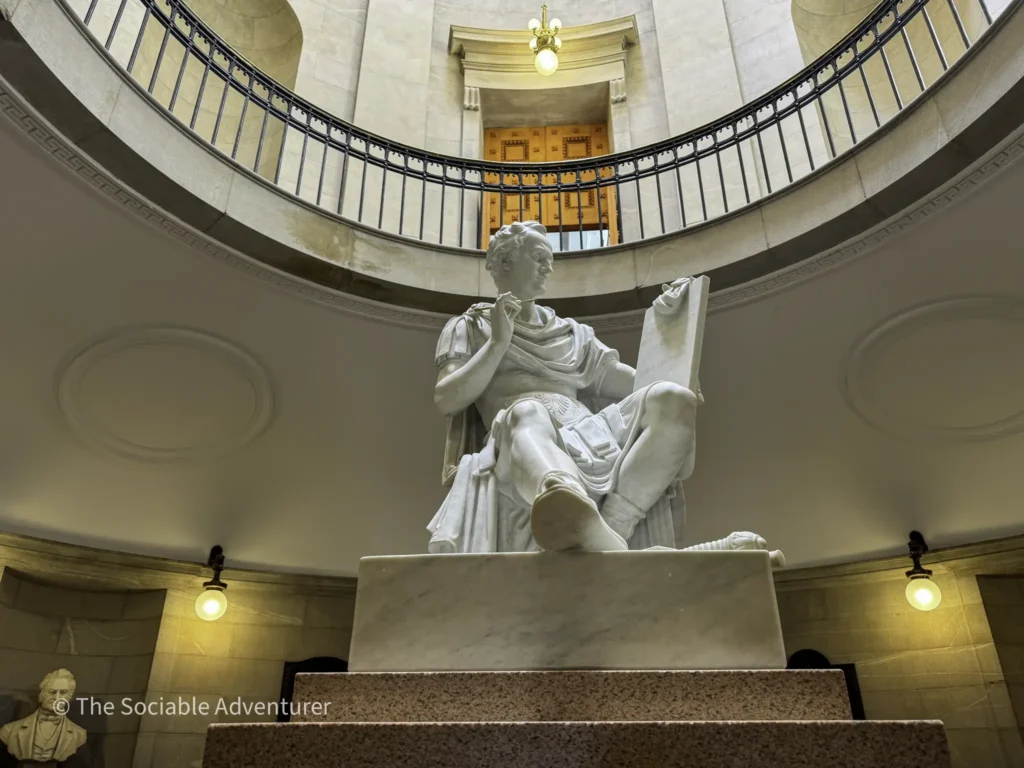
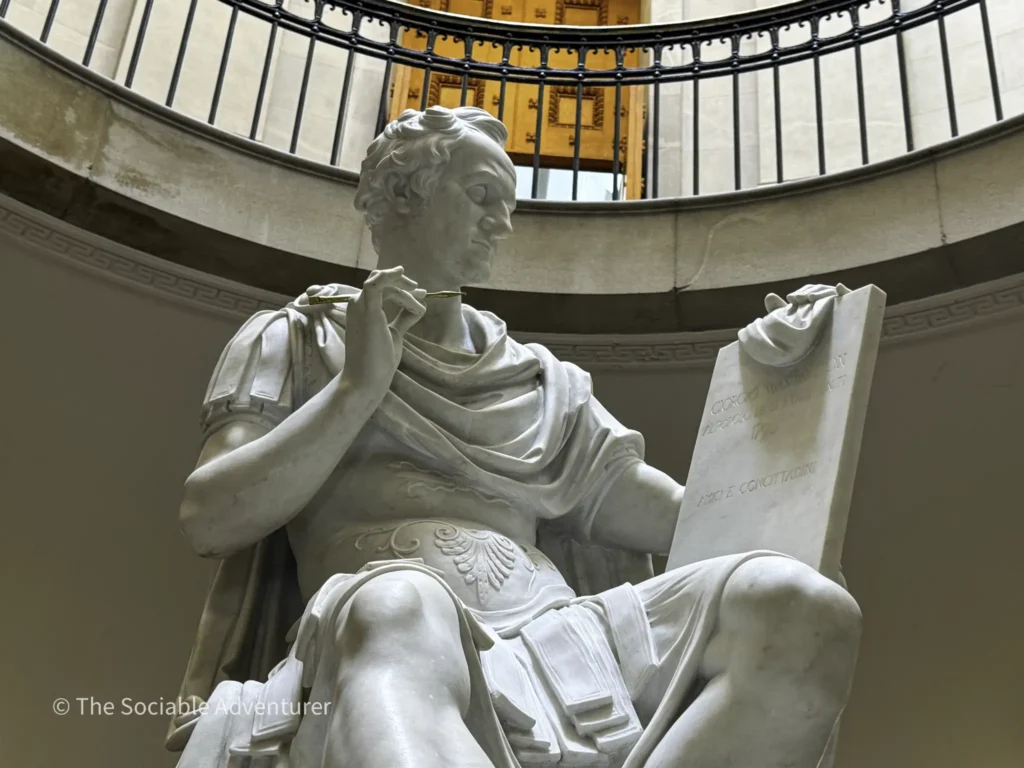
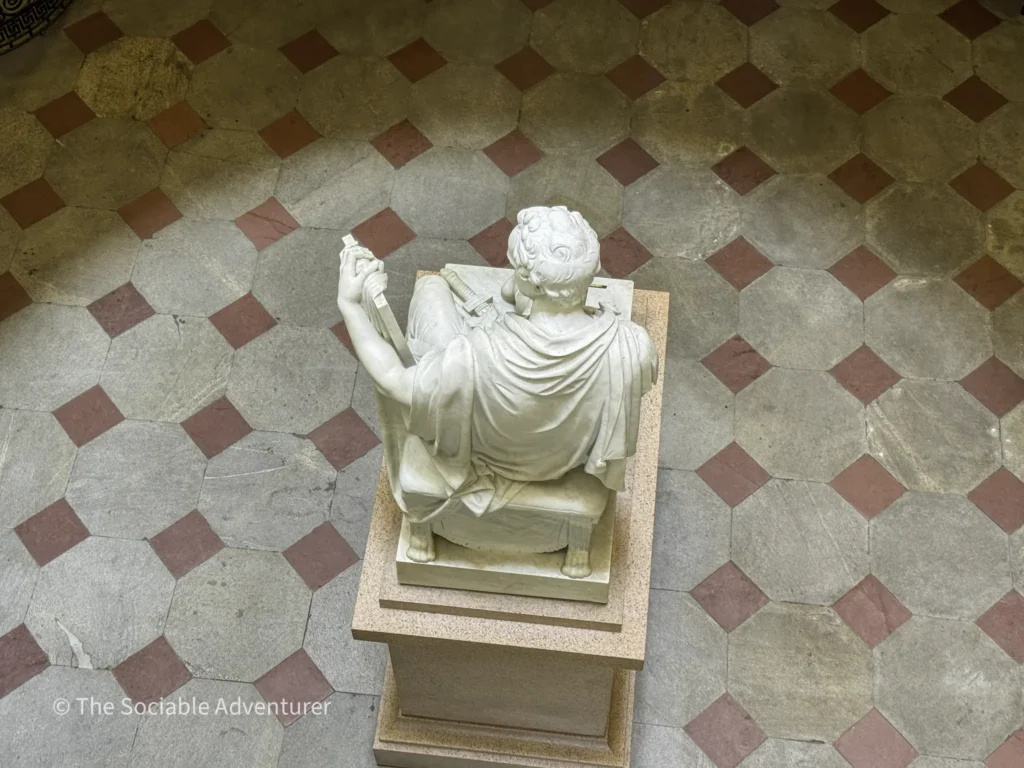
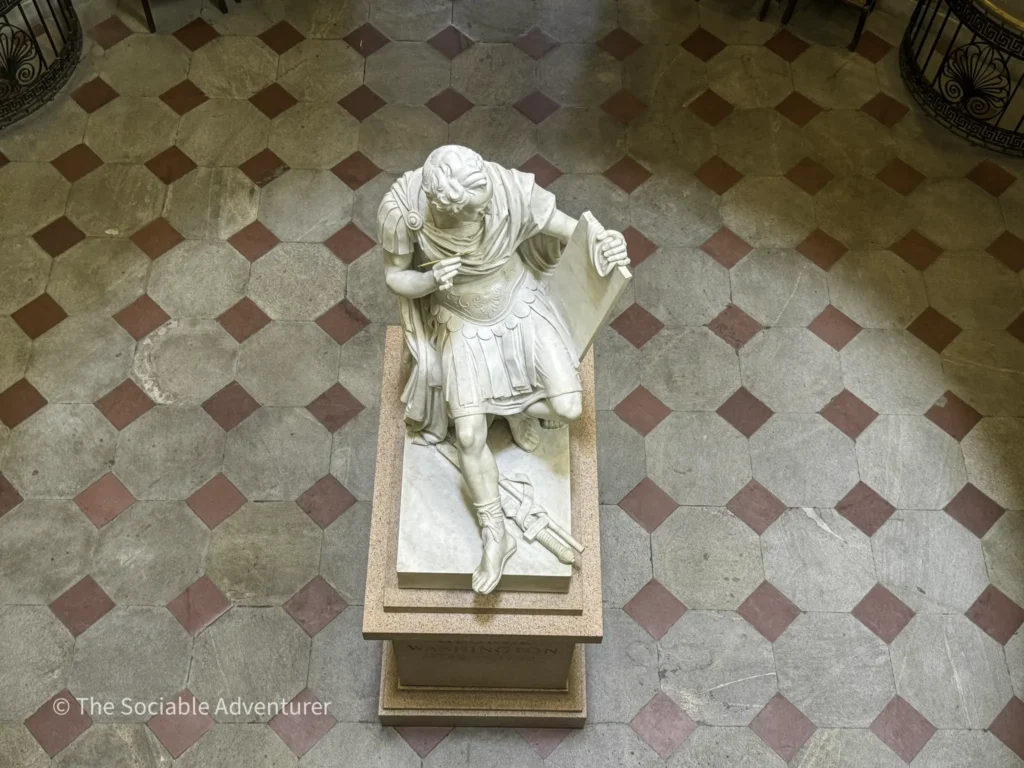
The original State House was built shortly after Raleigh’s founding and served as the seat of government for several decades — until a devastating fire in 1831 destroyed the entire building. Among the losses in that fire was one of the state’s most treasured artifacts: an original Antonio Canova marble statue of George Washington that had stood inside the rotunda. Today, a preserved piece of that lost statue is on display at the nearby City of Raleigh Museum — a tangible link to the historical moment that led to the construction of the current Capitol.
The 1840 Capitol — Greek Revival Architecture and a National Historic Landmark
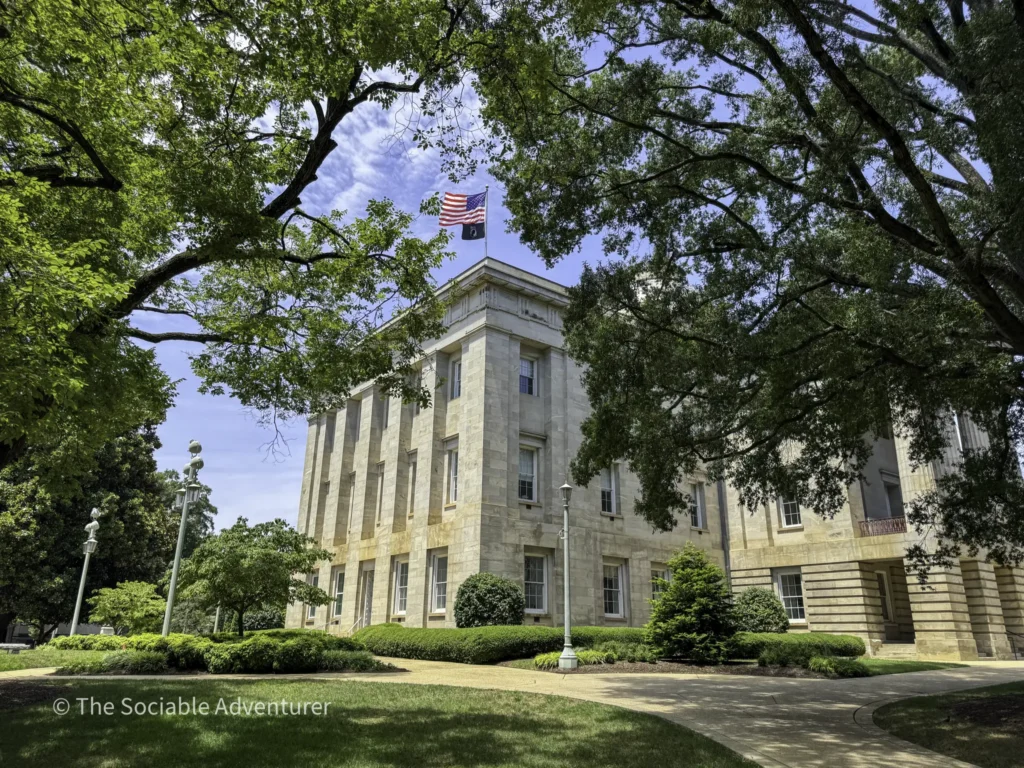
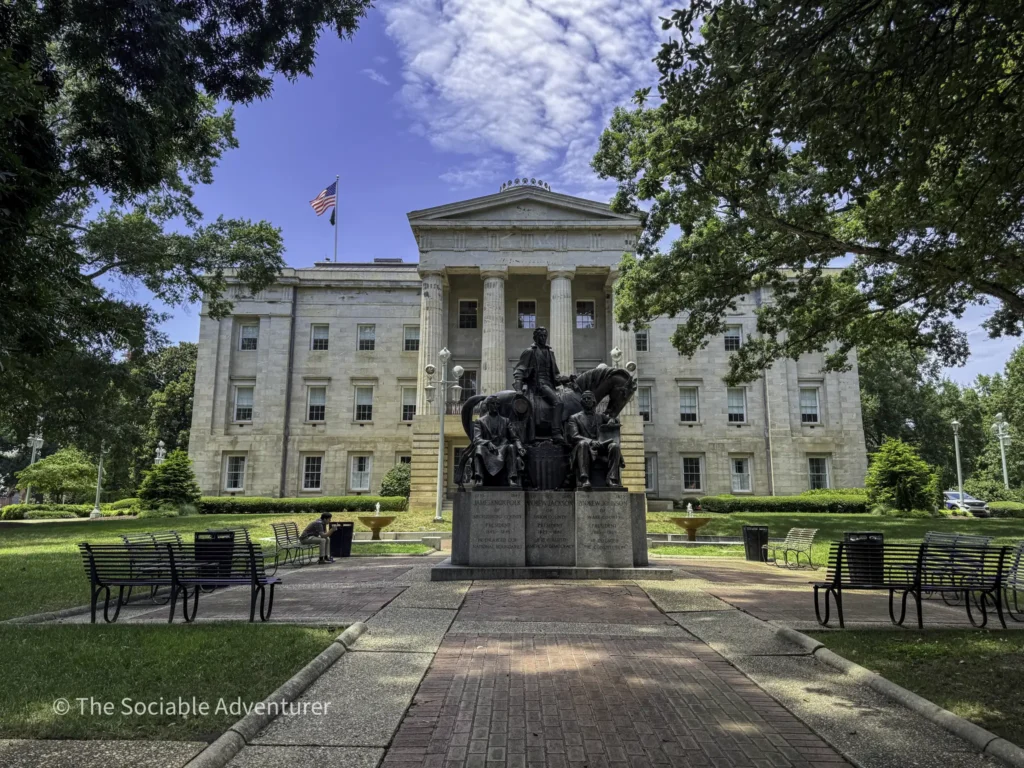
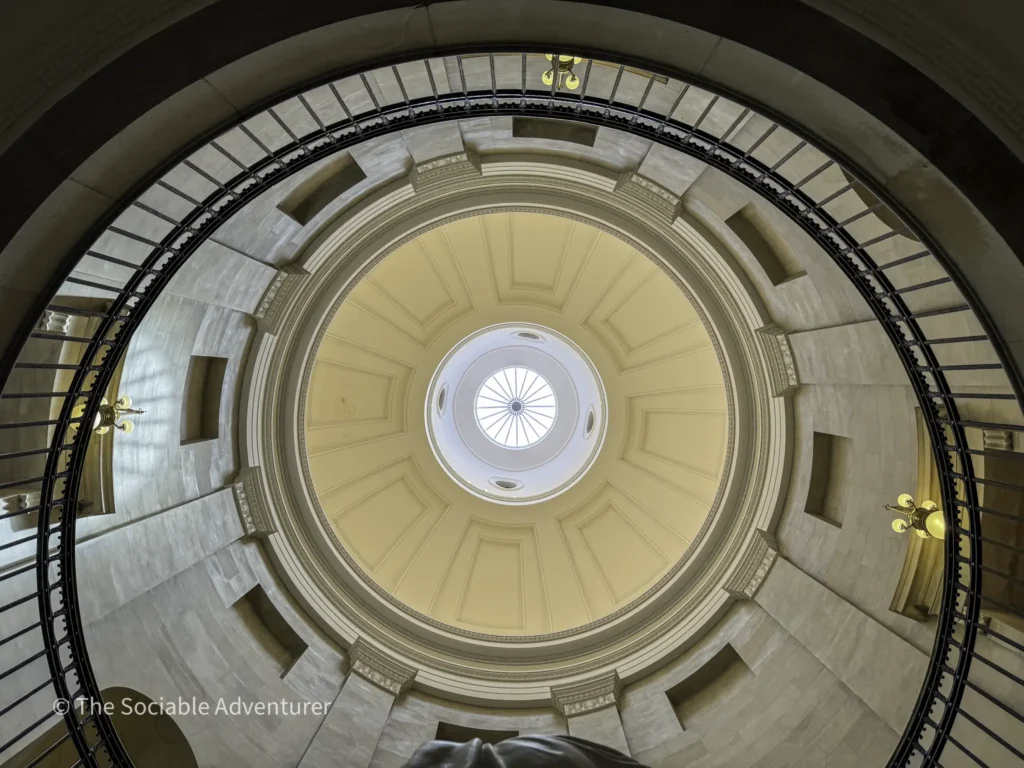
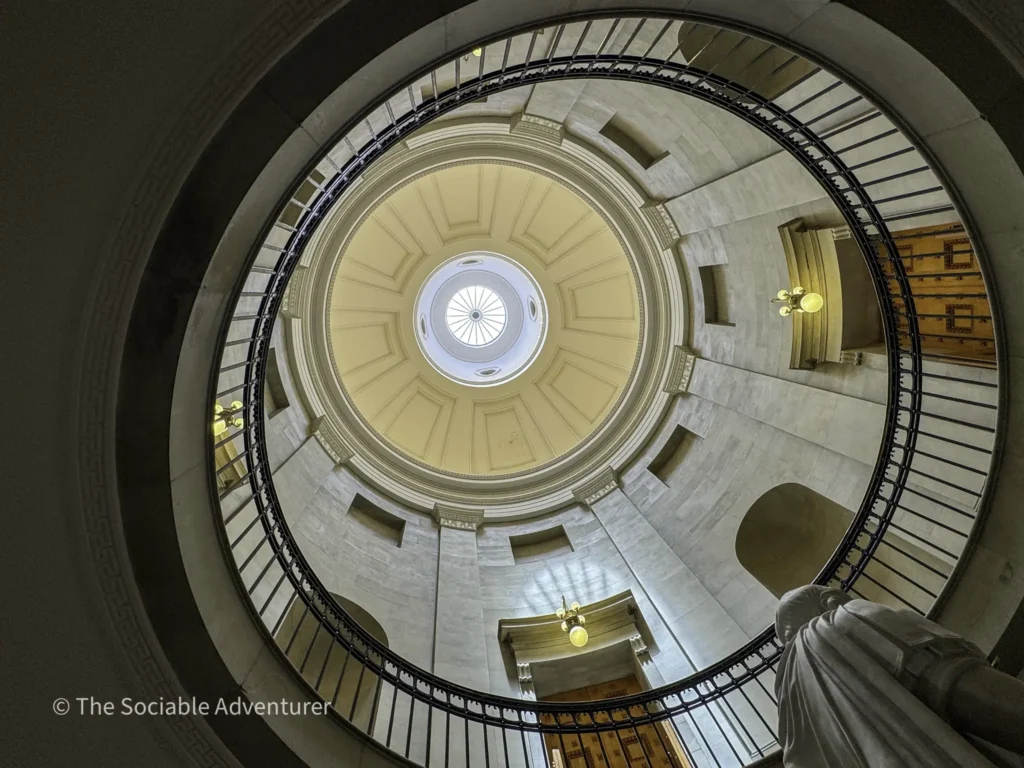
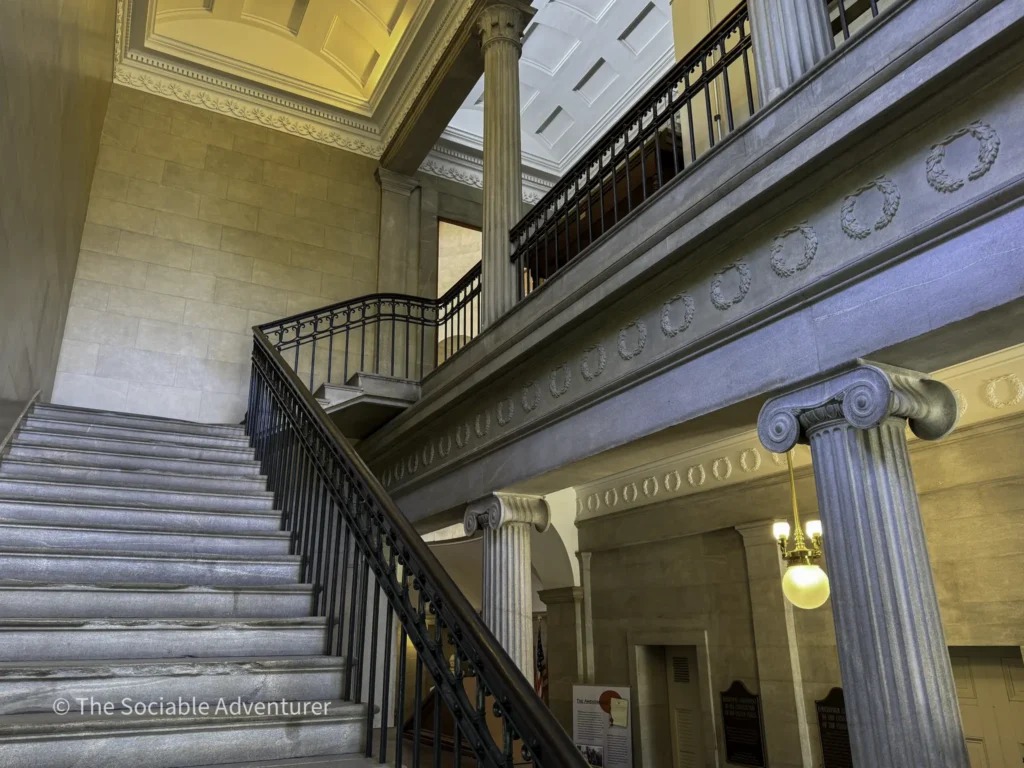
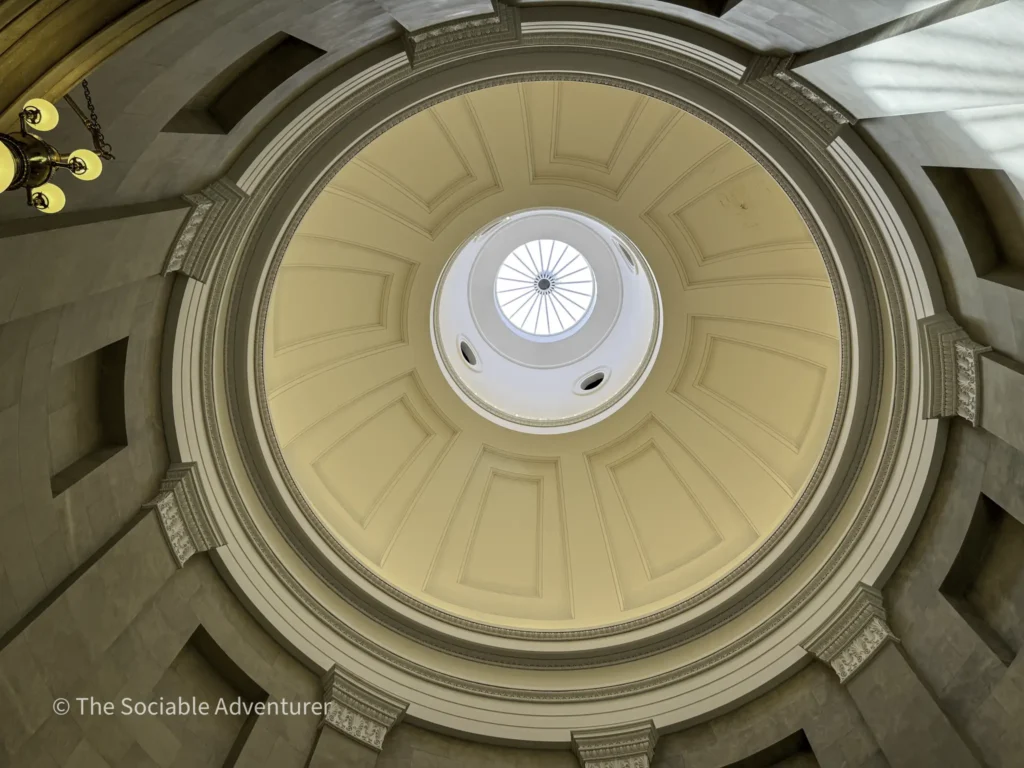
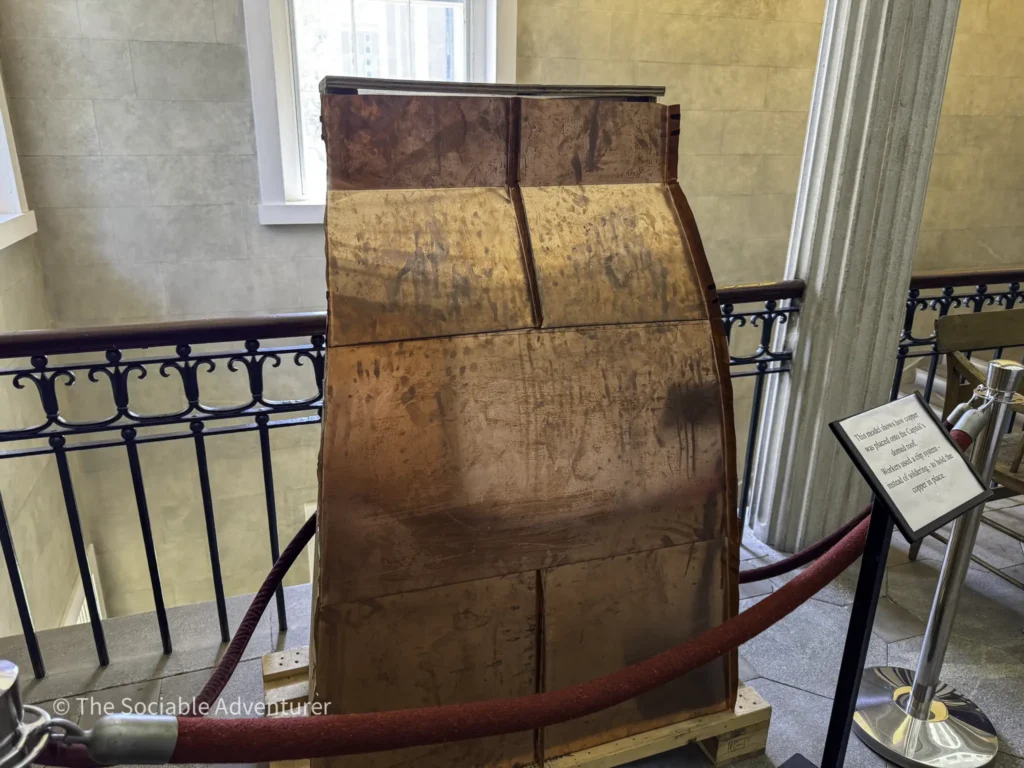
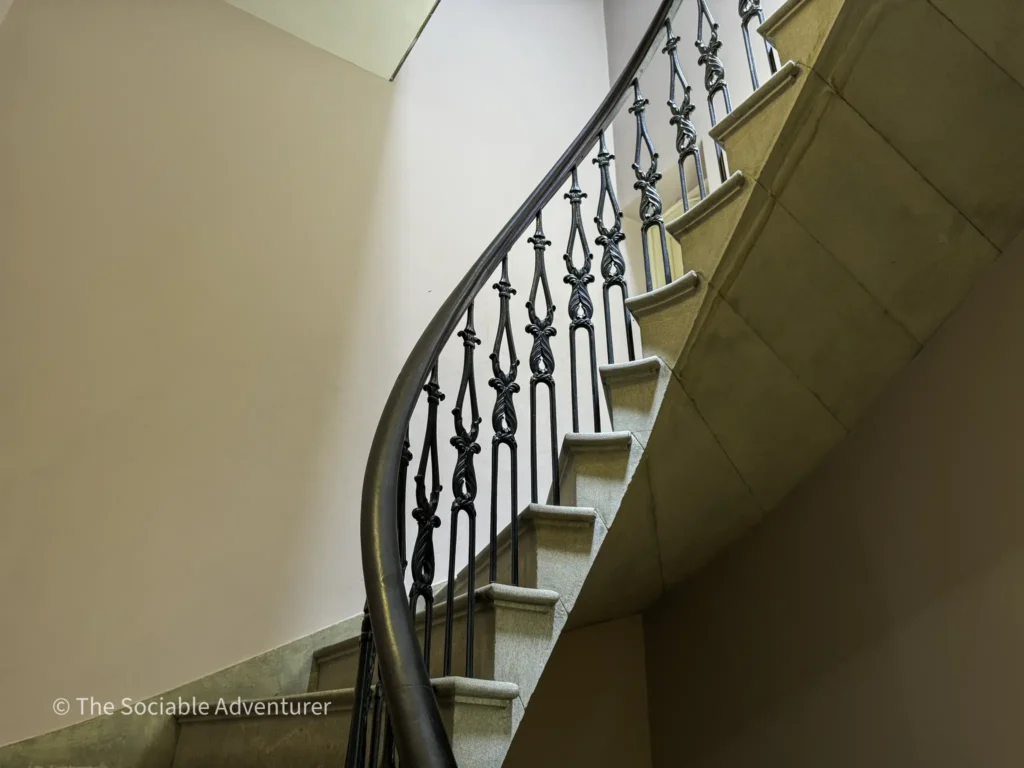
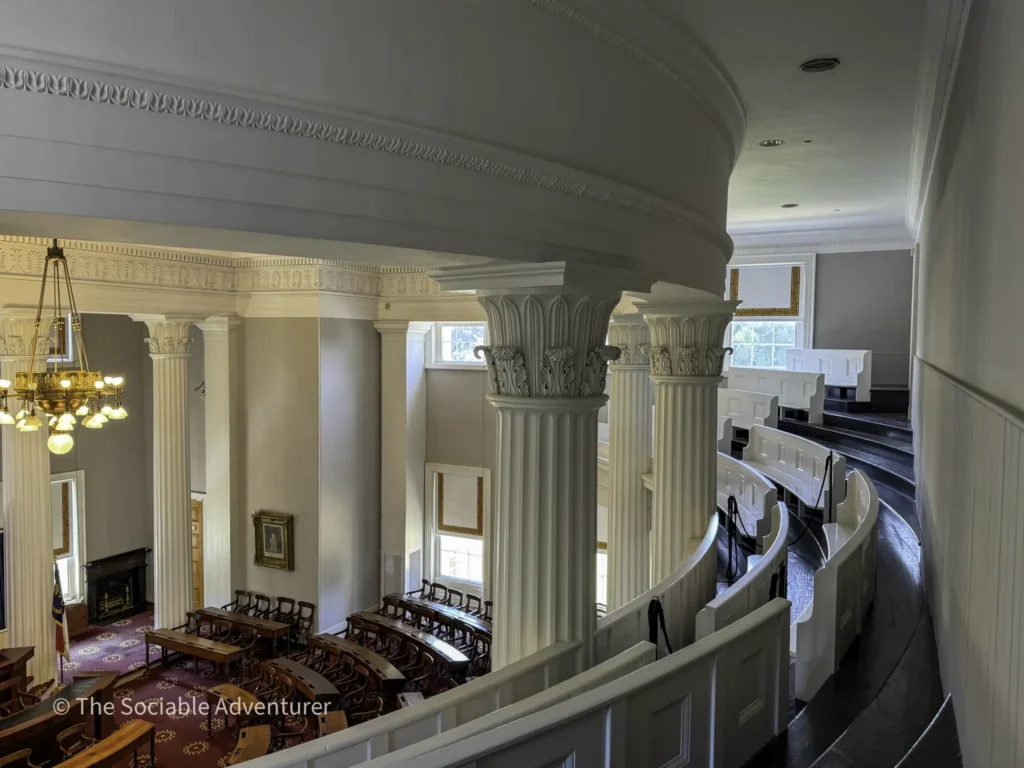
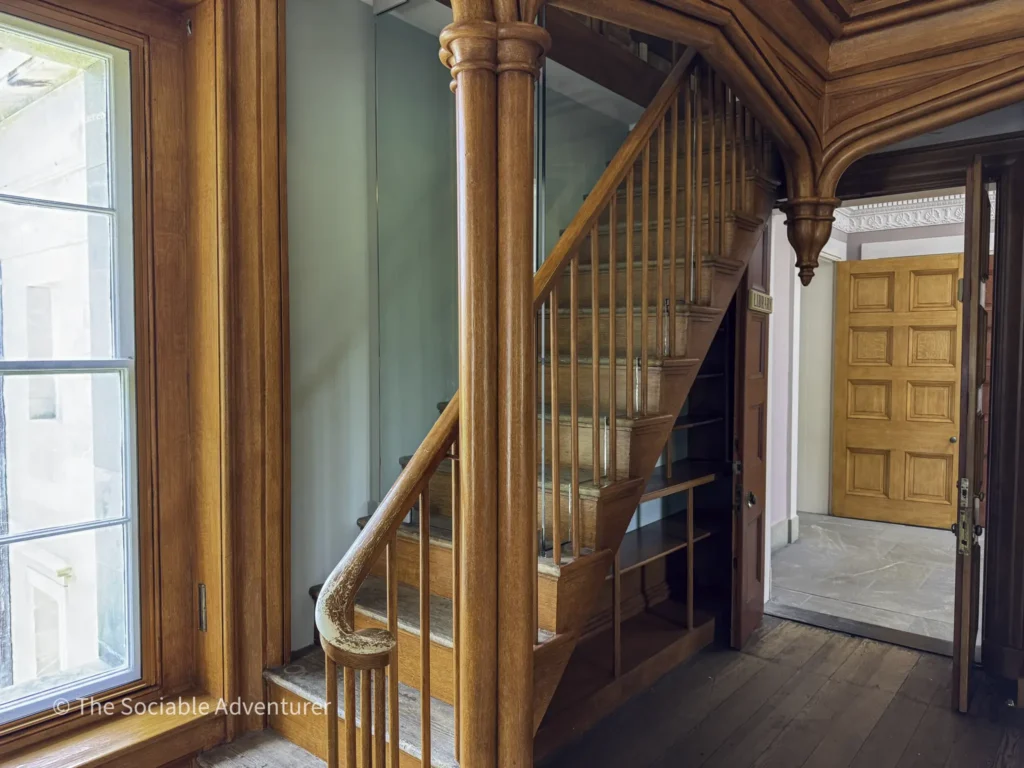
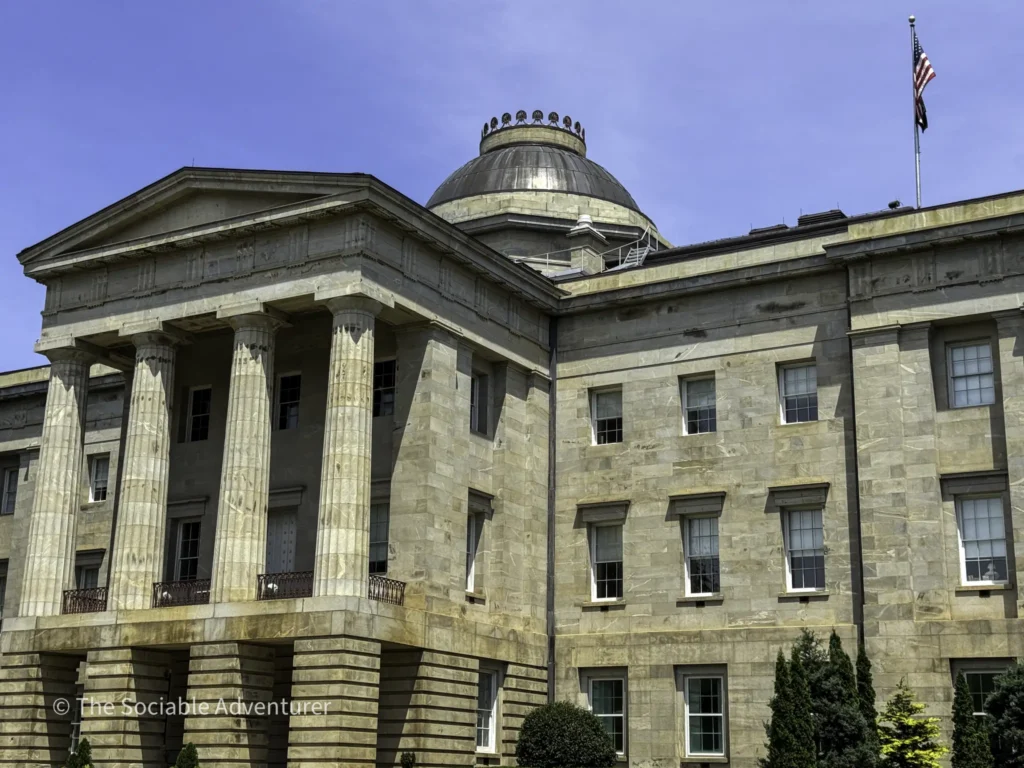
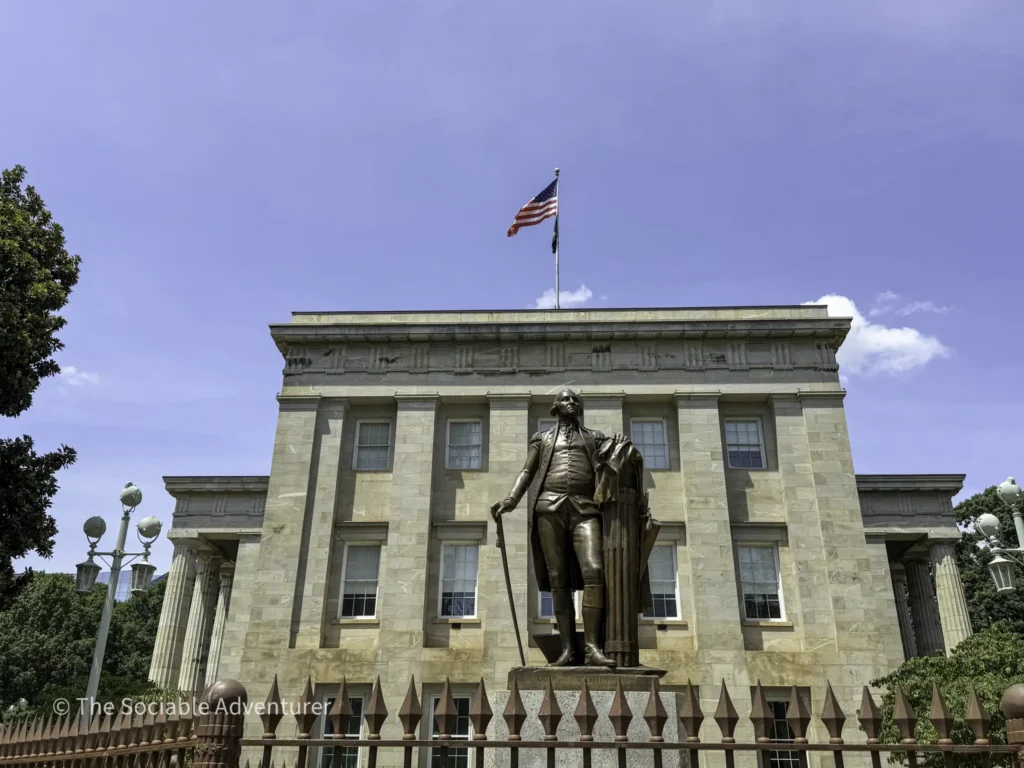
The current North Carolina State Capitol was completed in 1840 as a replacement for the original State House, which had been lost to fire. Designed in the Greek Revival style by prominent architects including Ithiel Town and Alexander Jackson Davis, the building features grand Corinthian columns, a copper-covered central dome, and interiors of extraordinary preservation quality. Today, the Capitol is recognized as a National Historic Landmark and stands as one of the finest and best-preserved examples of Greek Revival civic architecture in the United States.
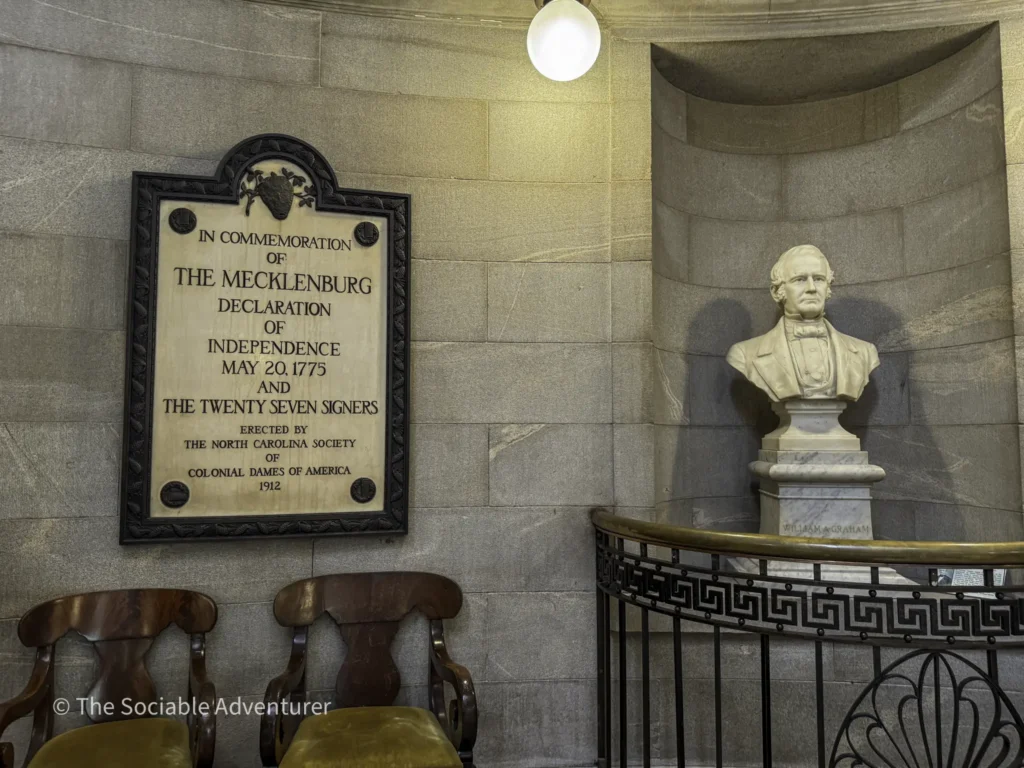
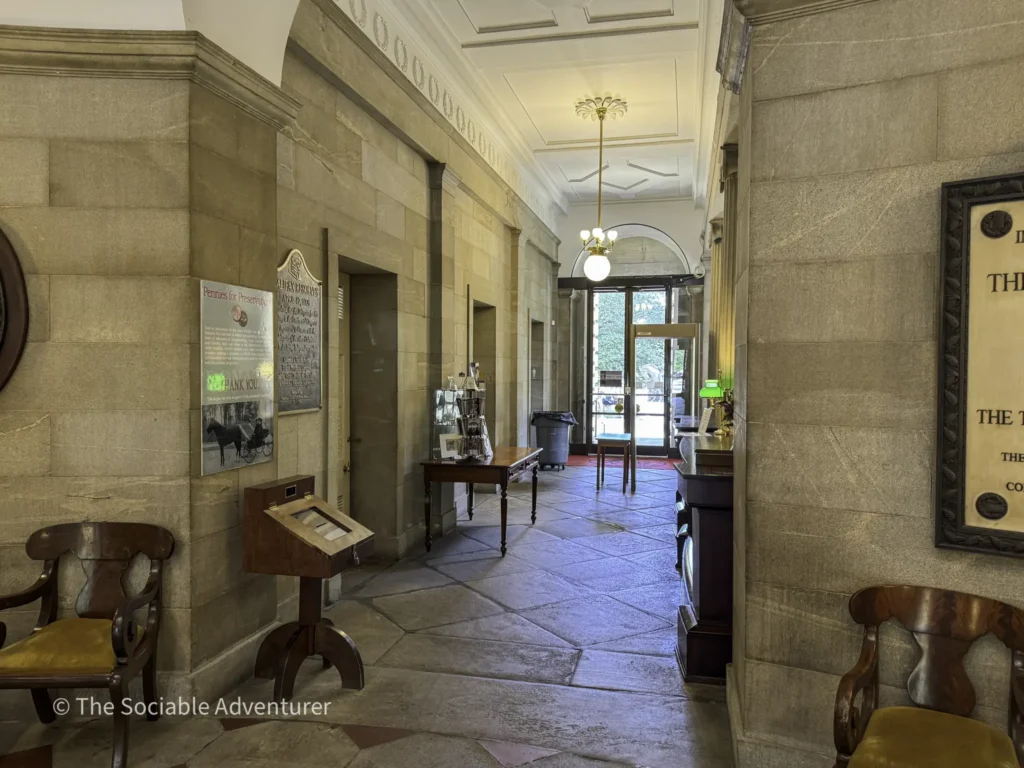
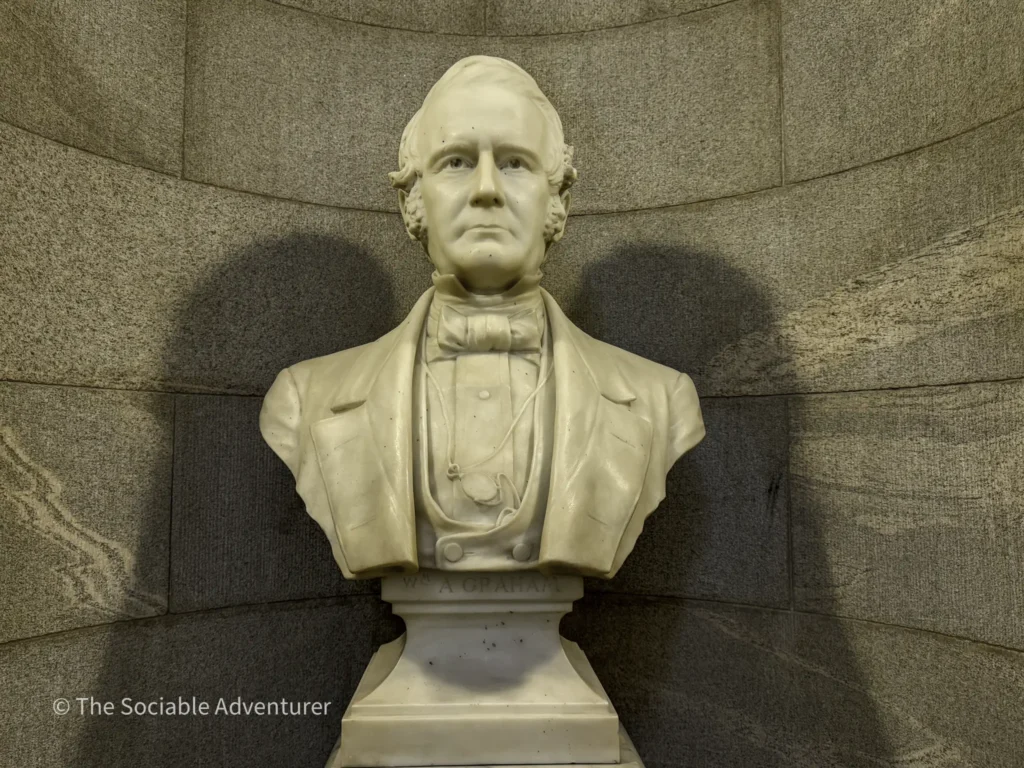
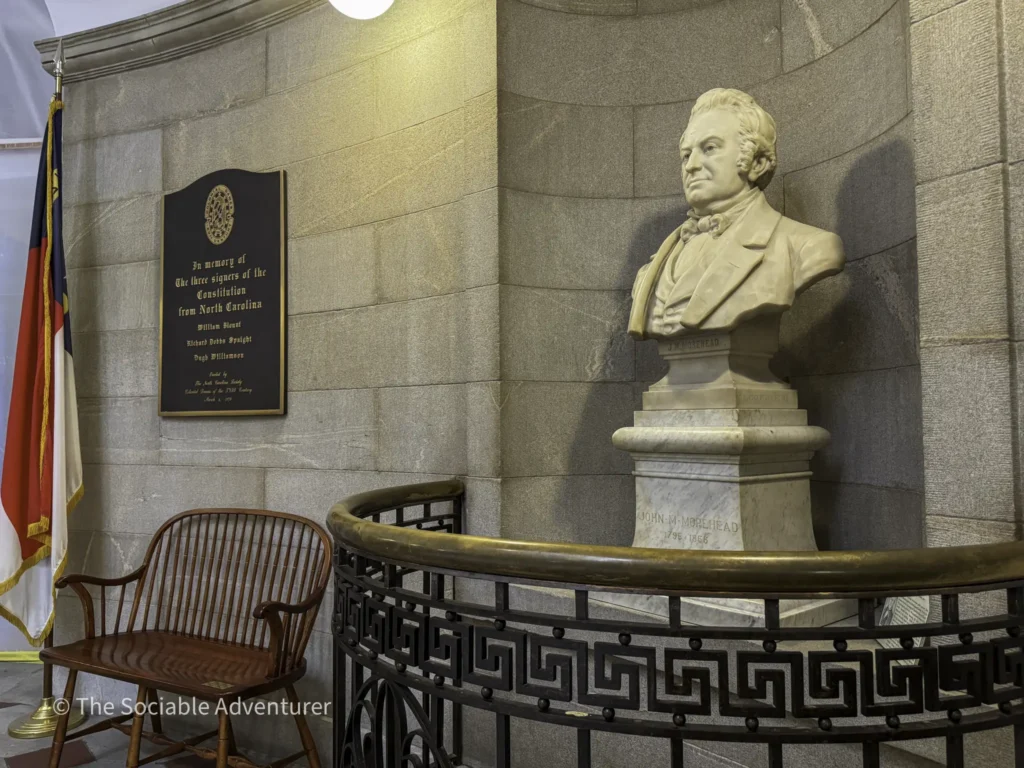
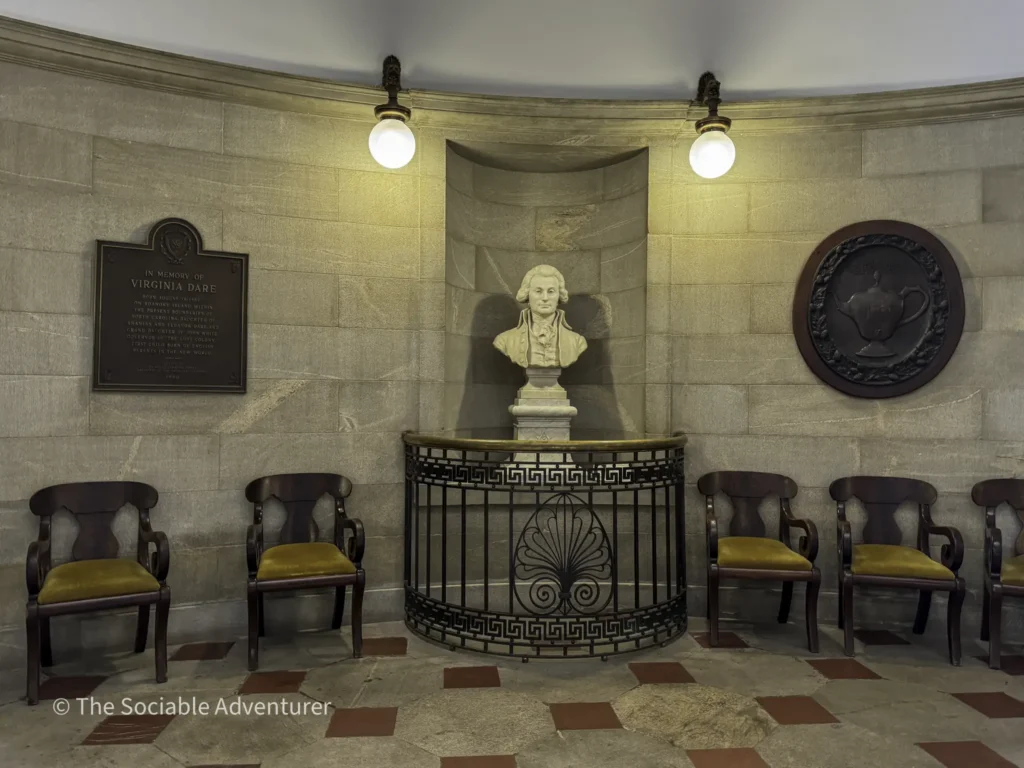
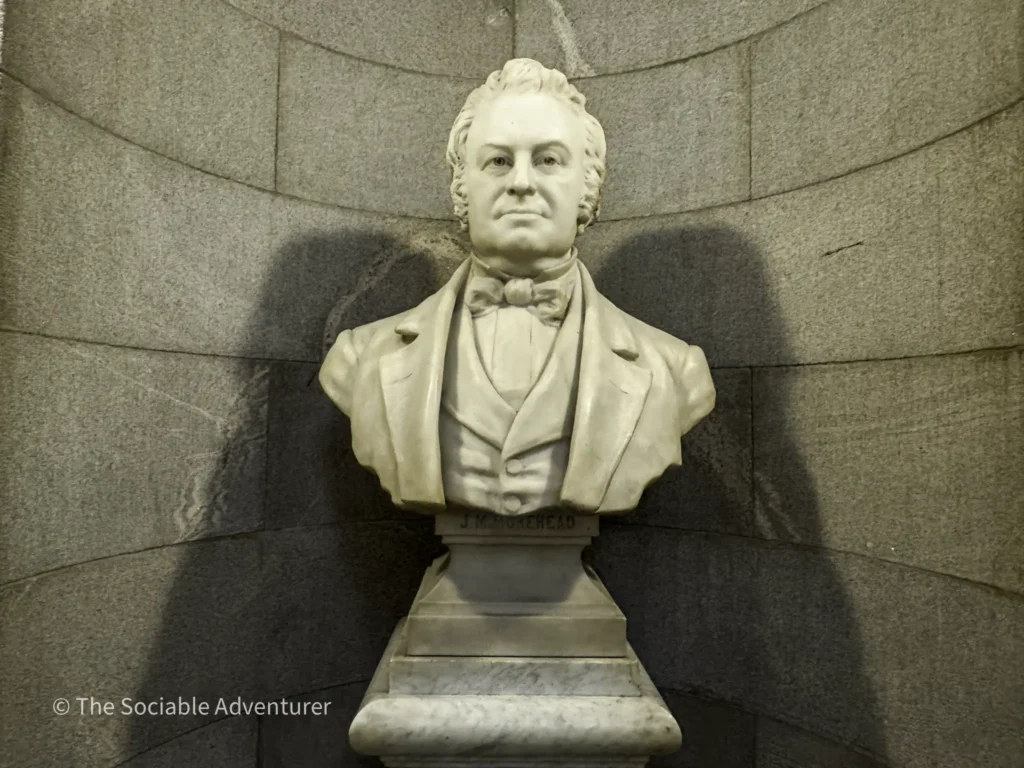
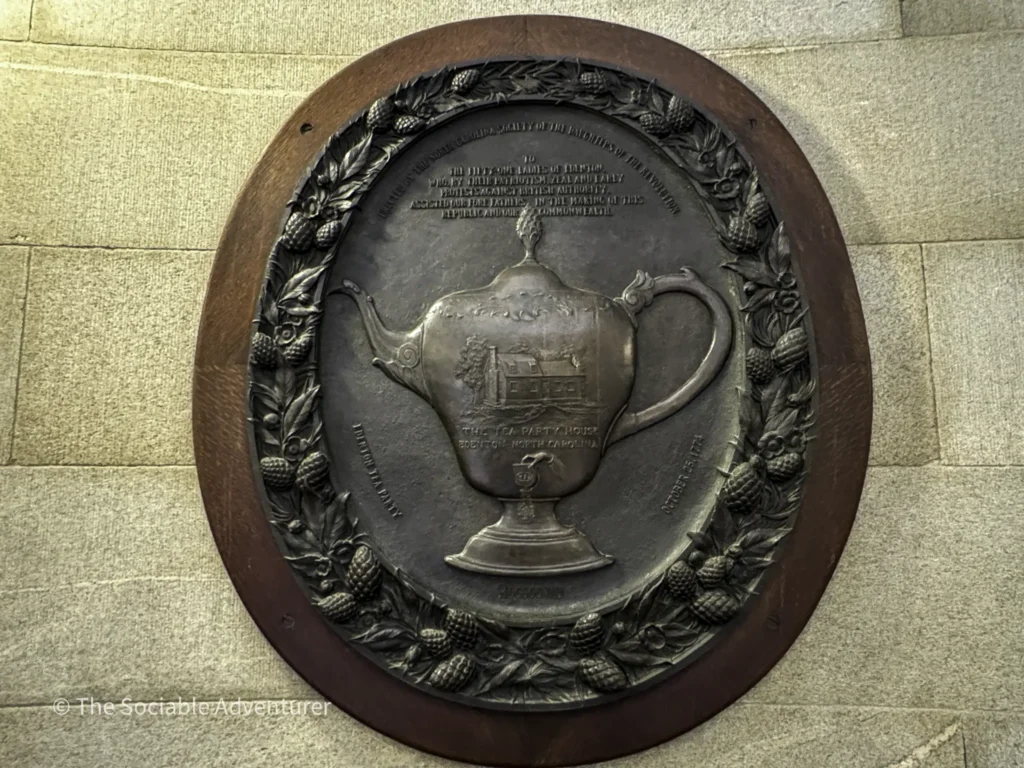
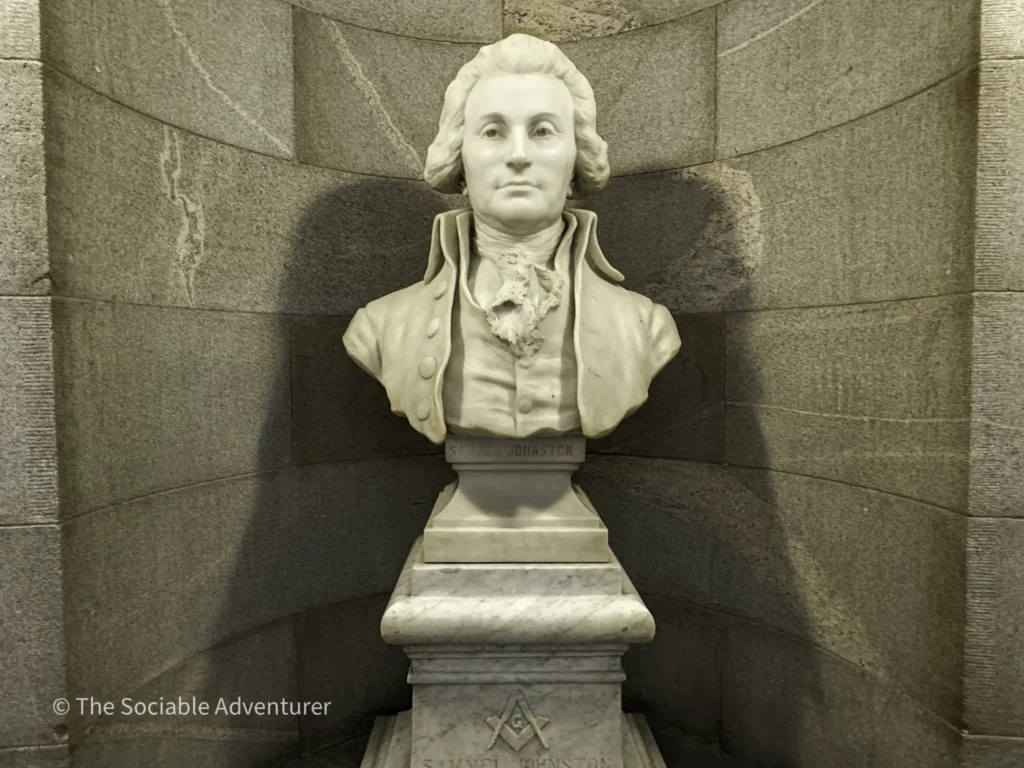
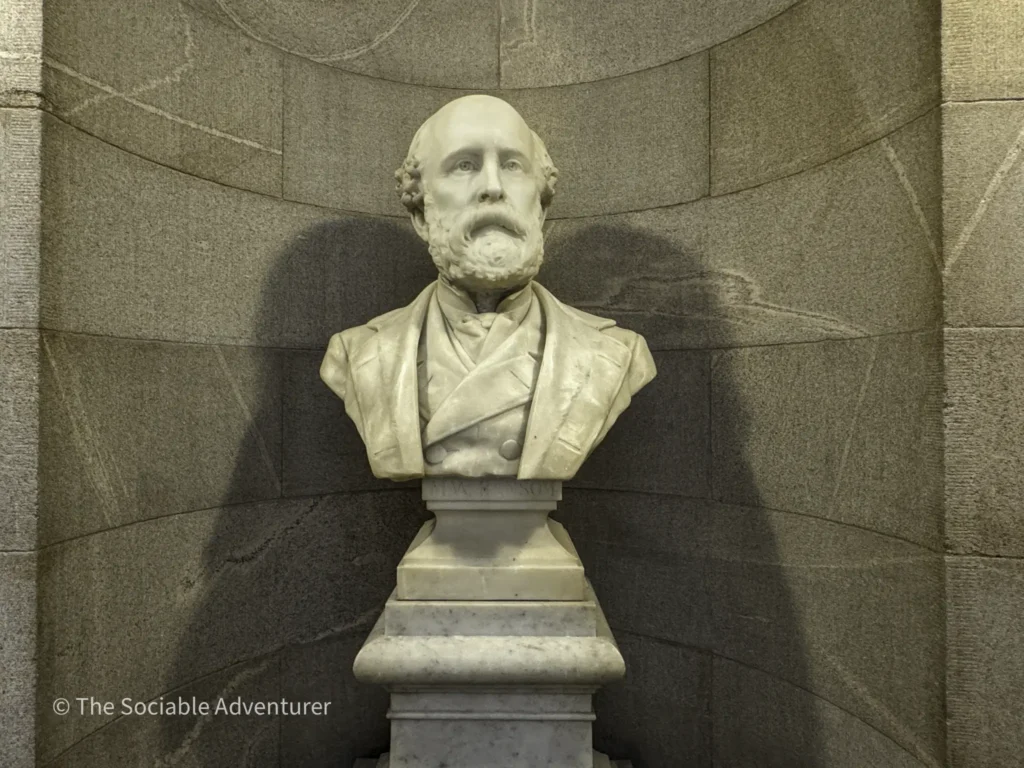
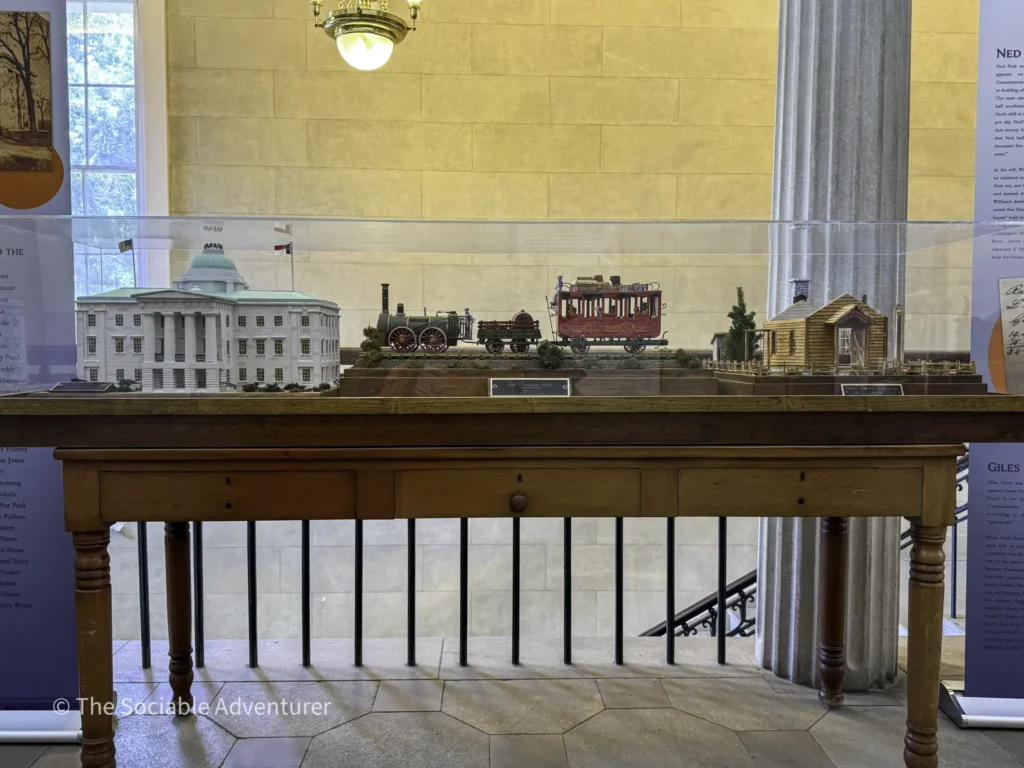
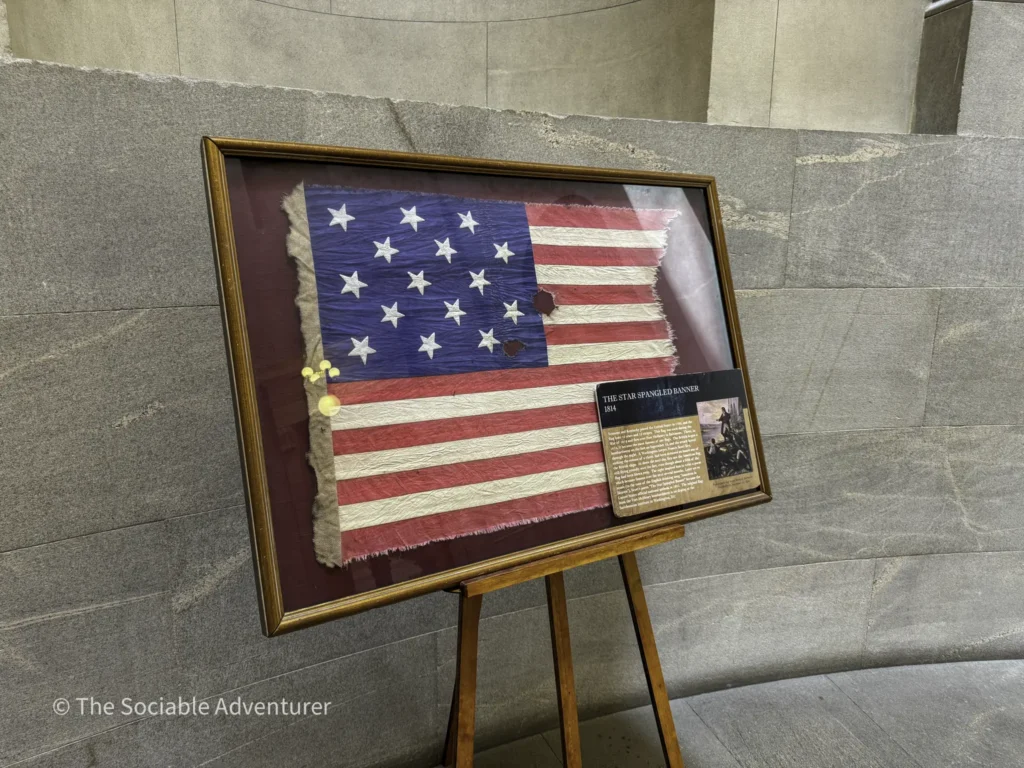
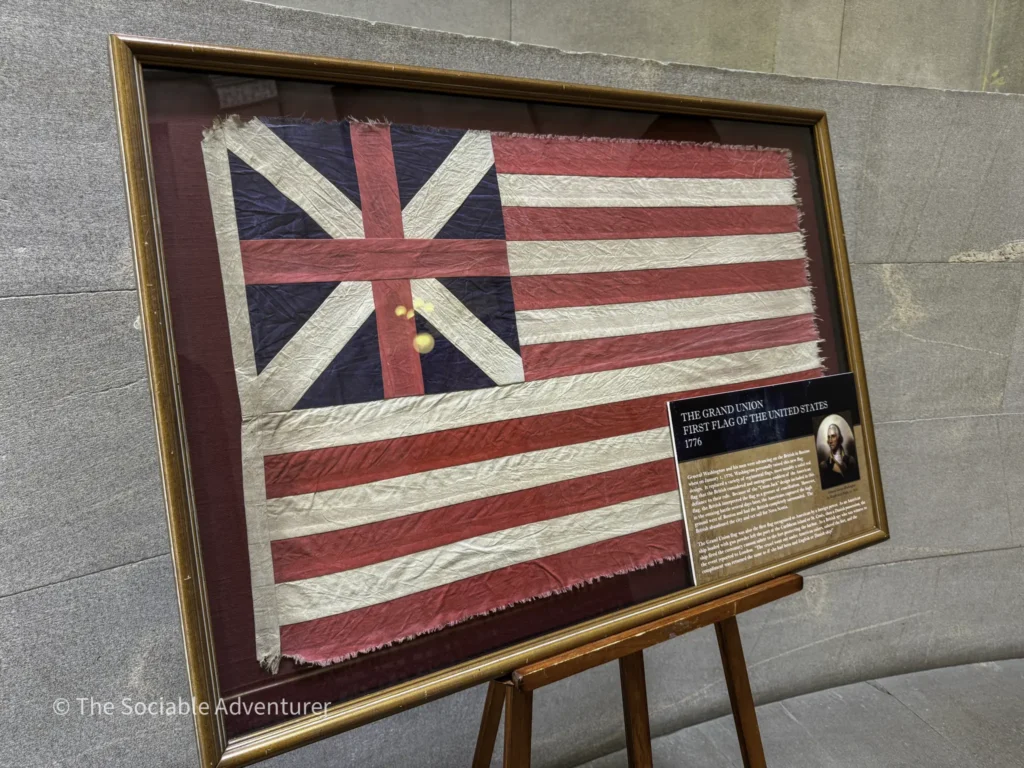
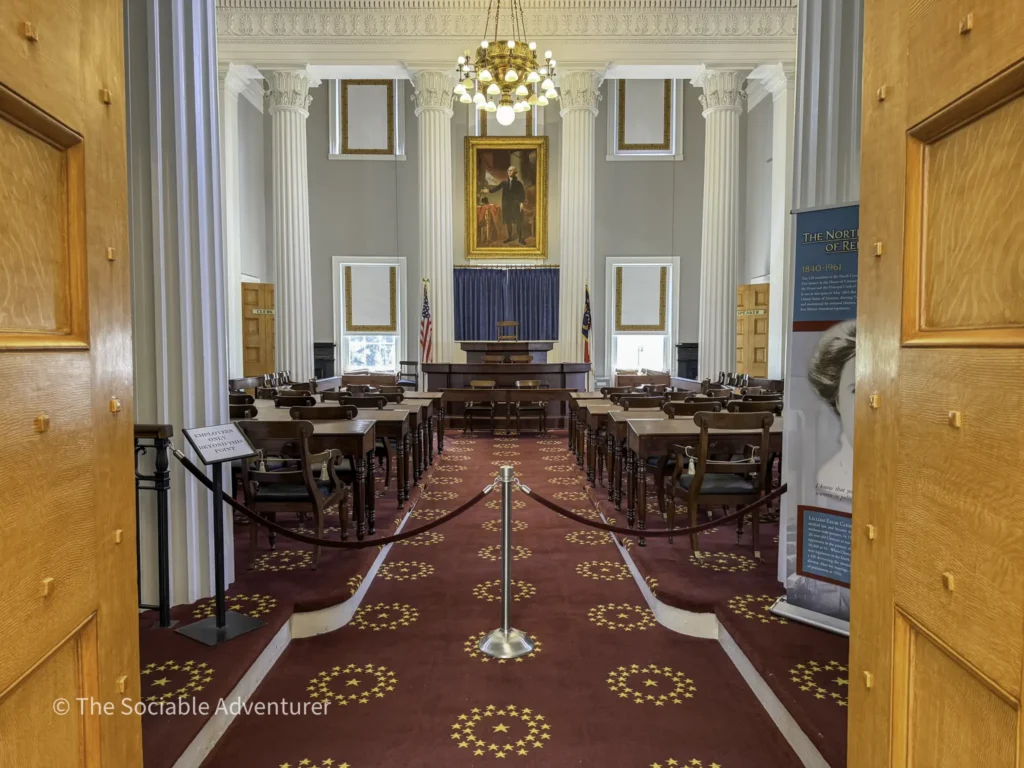
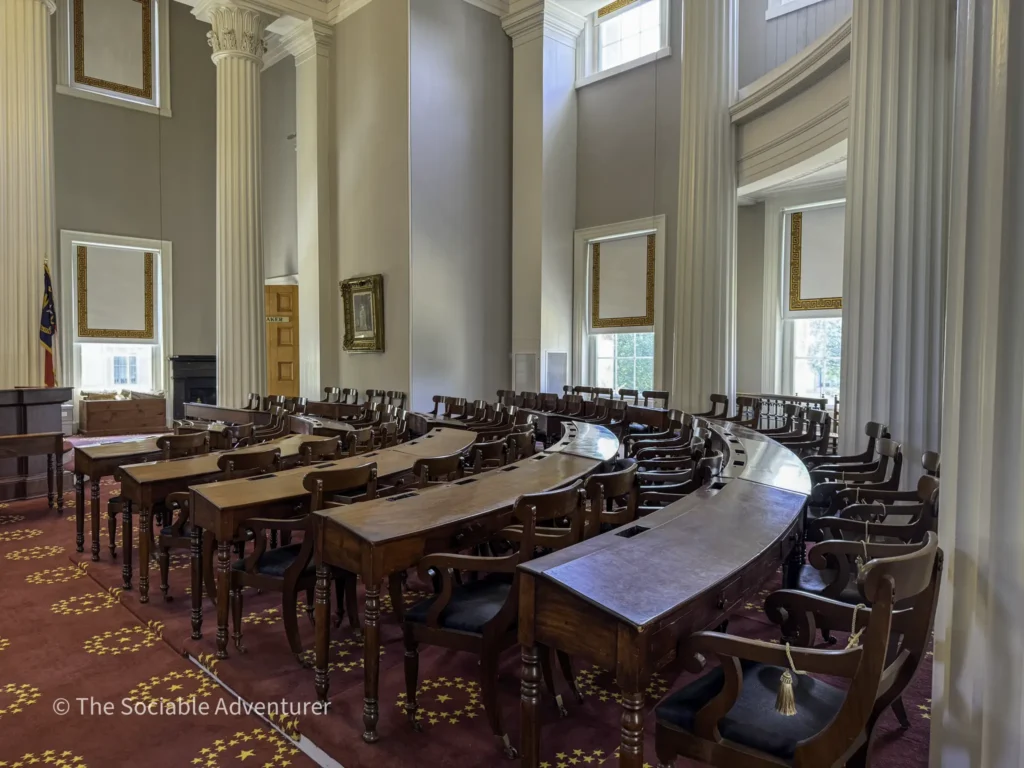
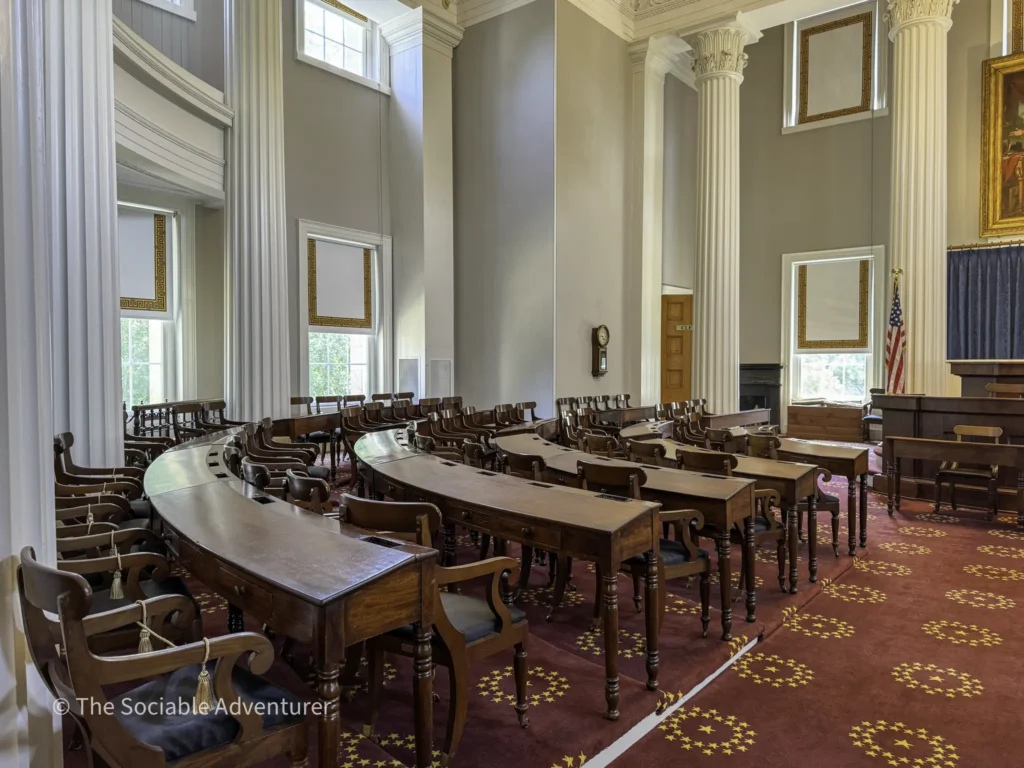
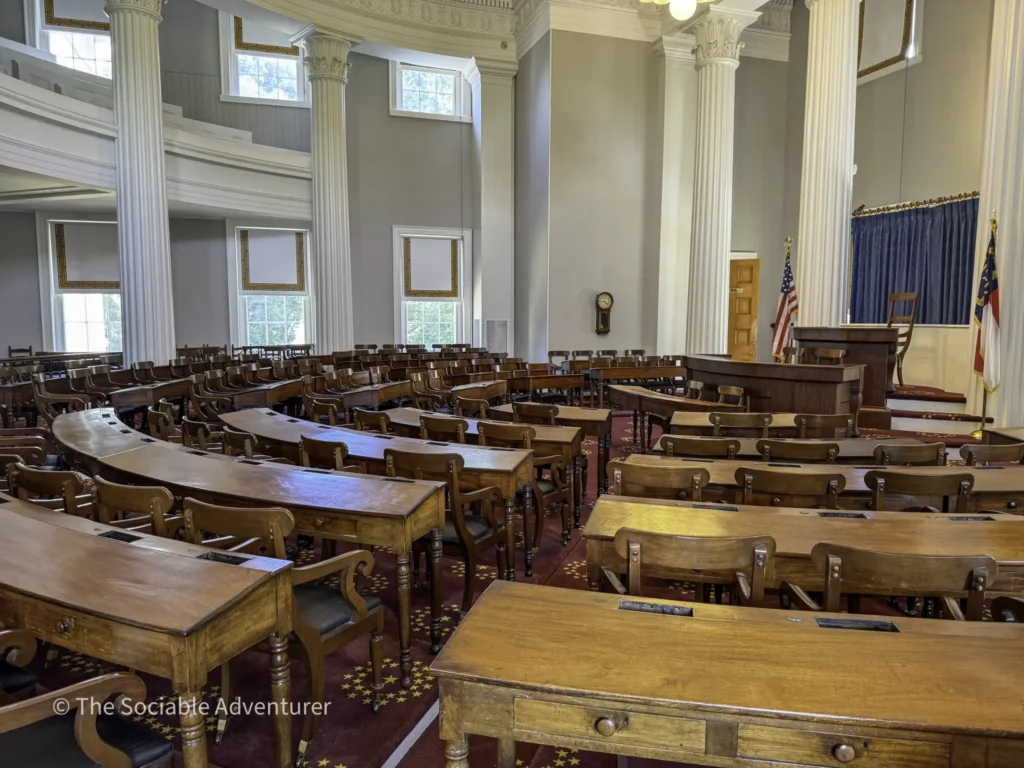
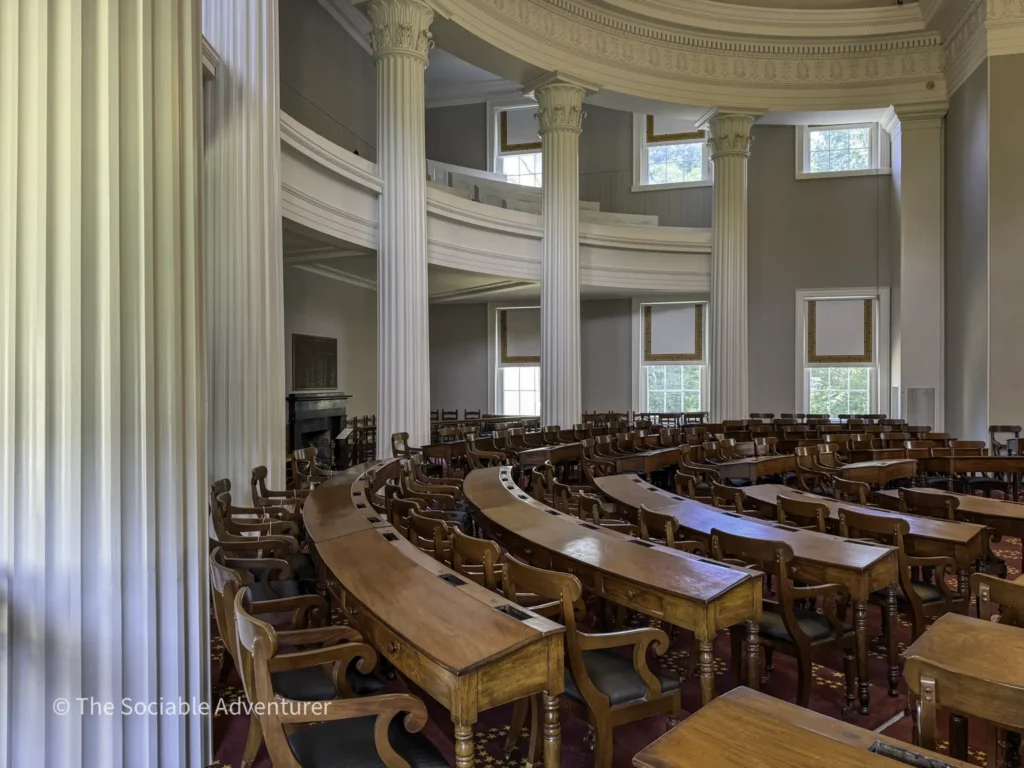
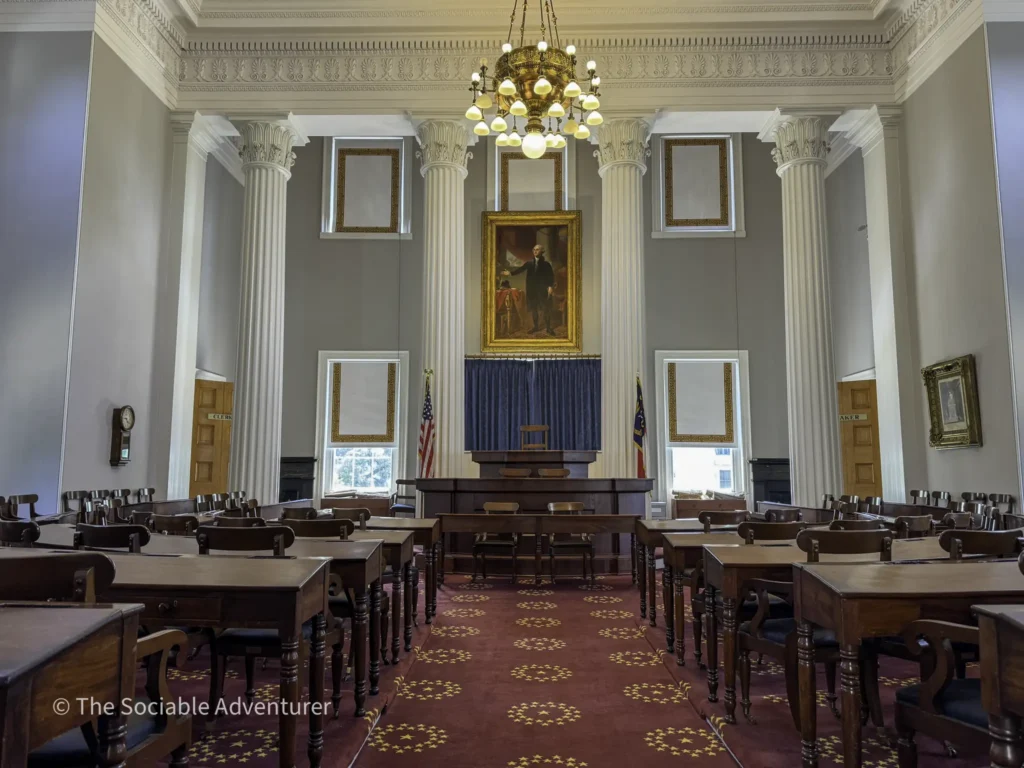
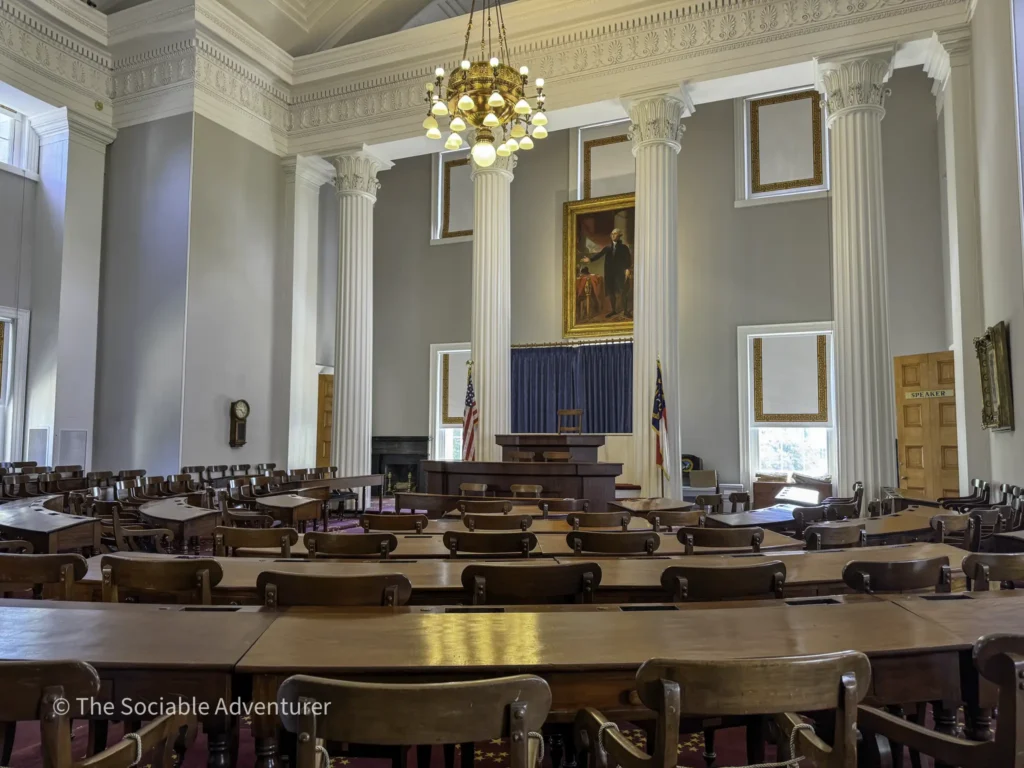
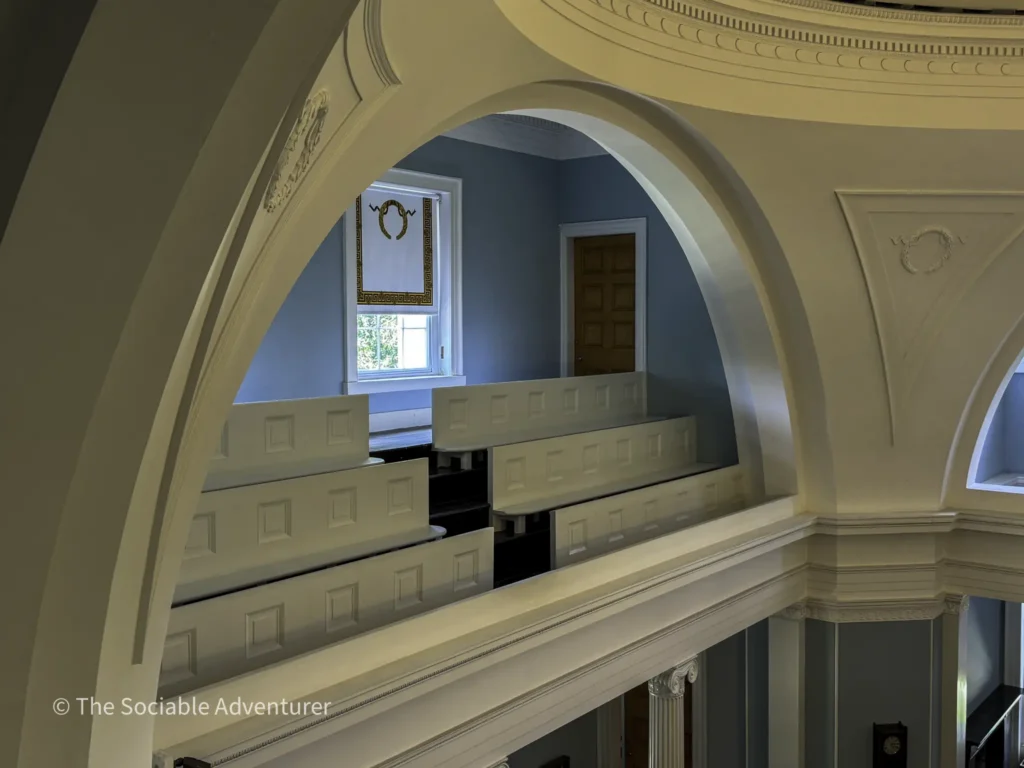
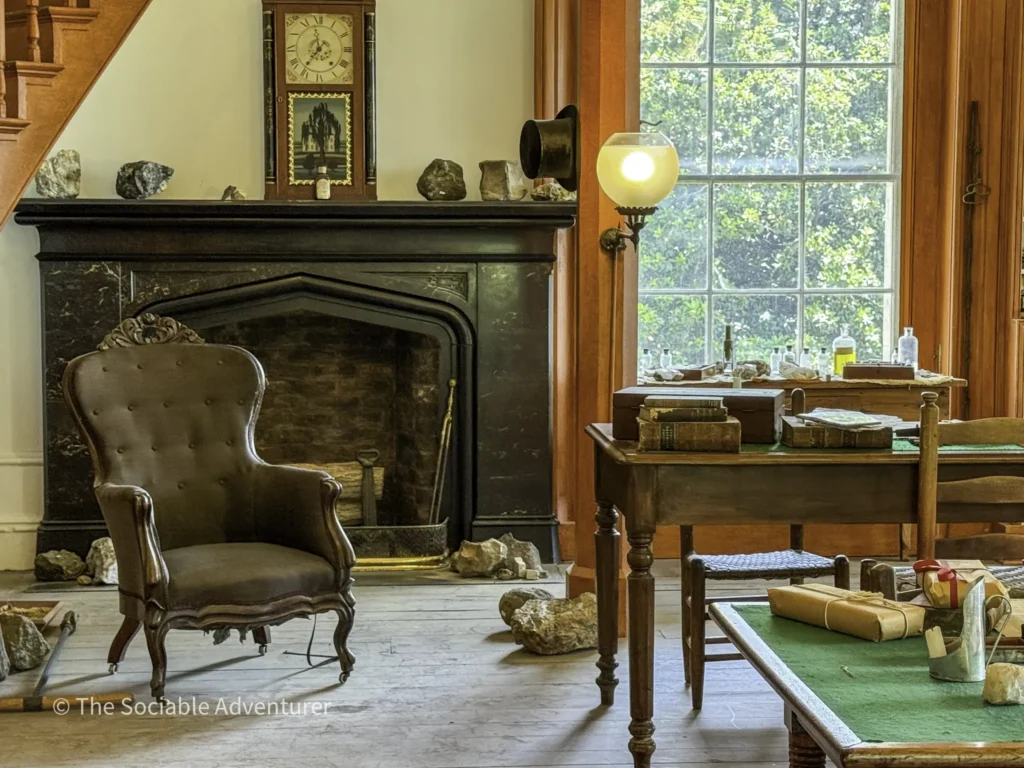
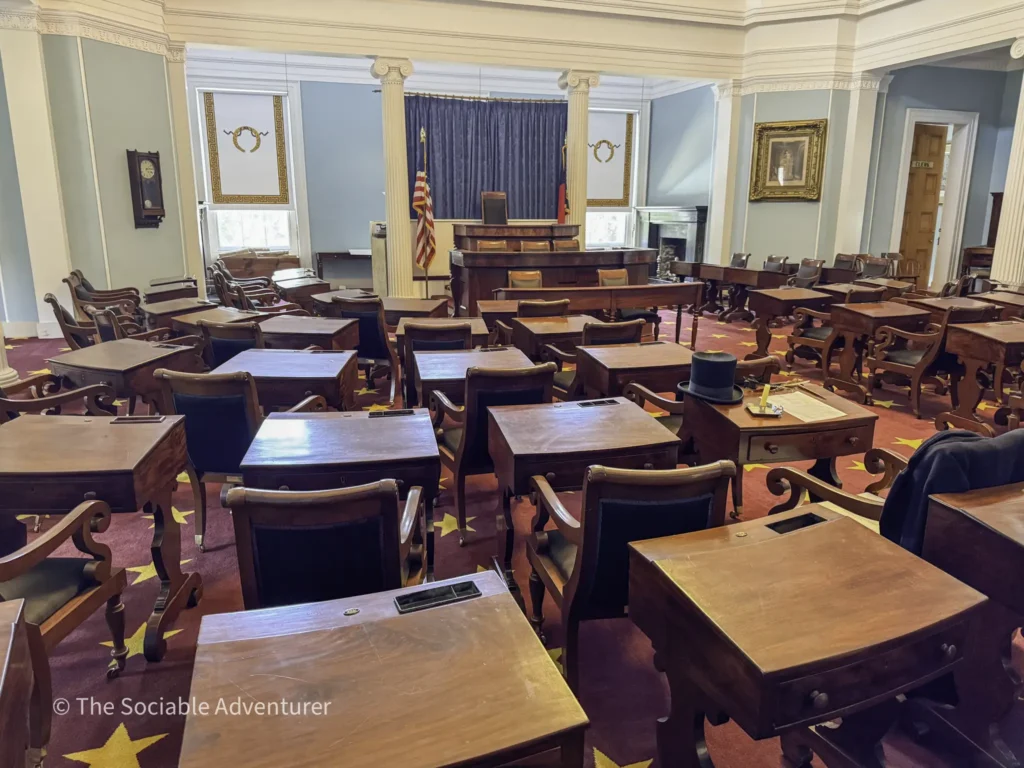
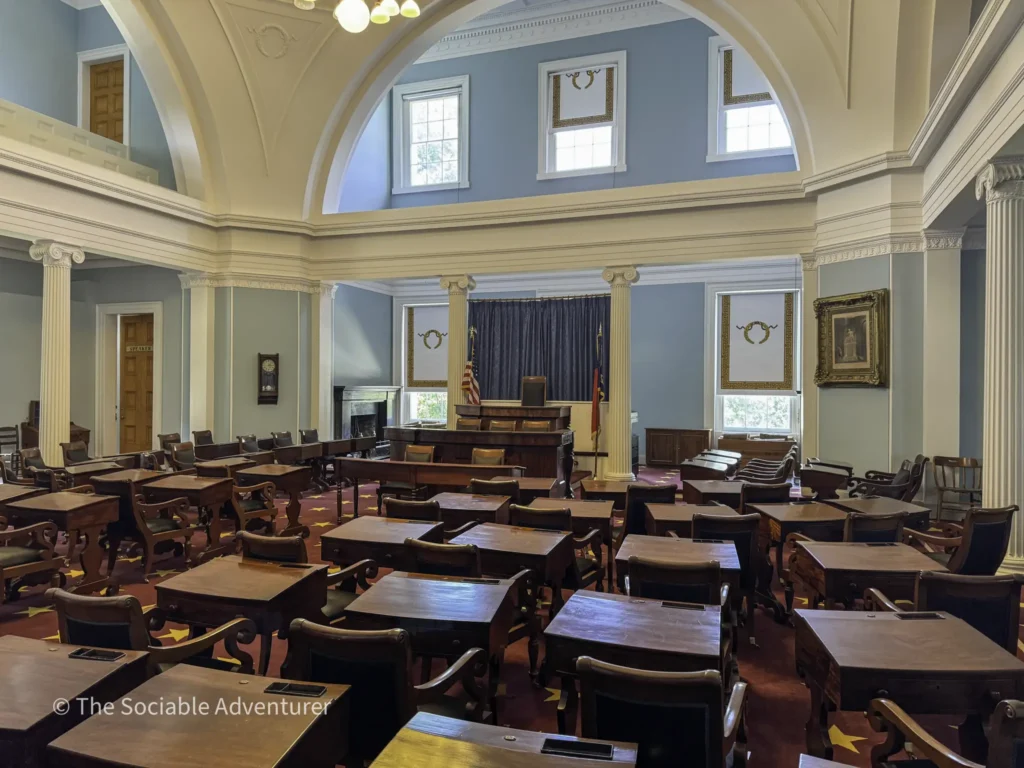
Historic Senate and House chambers on the second floor are furnished with period décor and preserved much as they appeared throughout the 19th century, while the rotunda houses commemorative statuary and displays interpreting NC’s civic history. Original executive offices — where multiple governors of North Carolina worked — remain intact and viewable during guided tours.
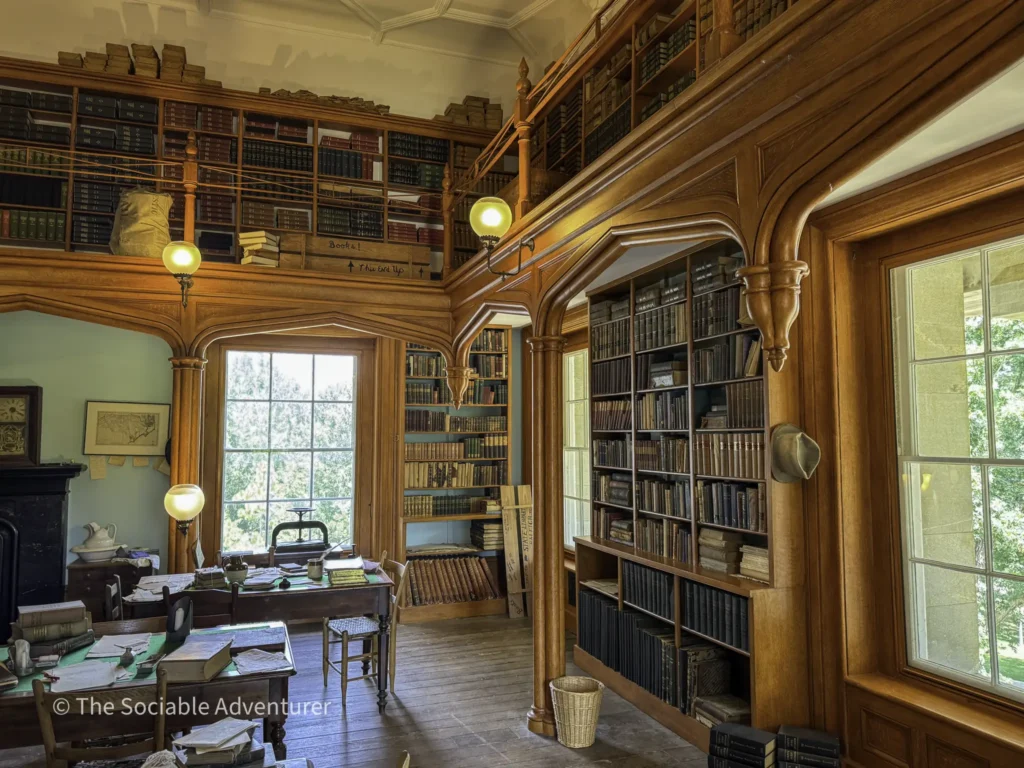
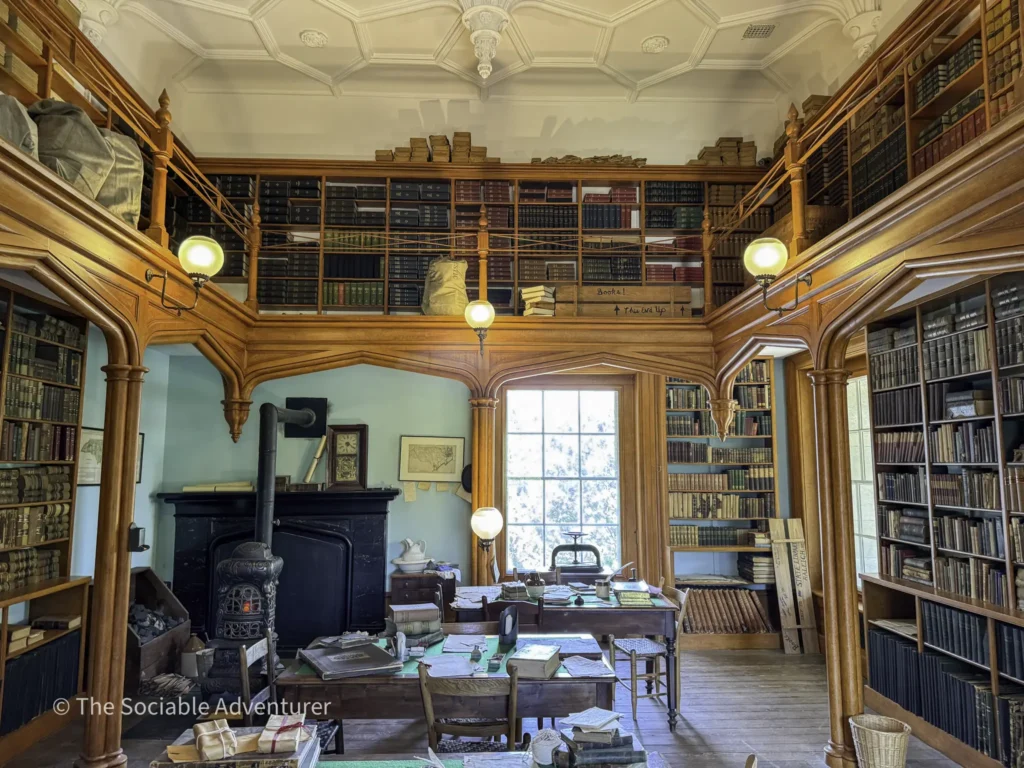
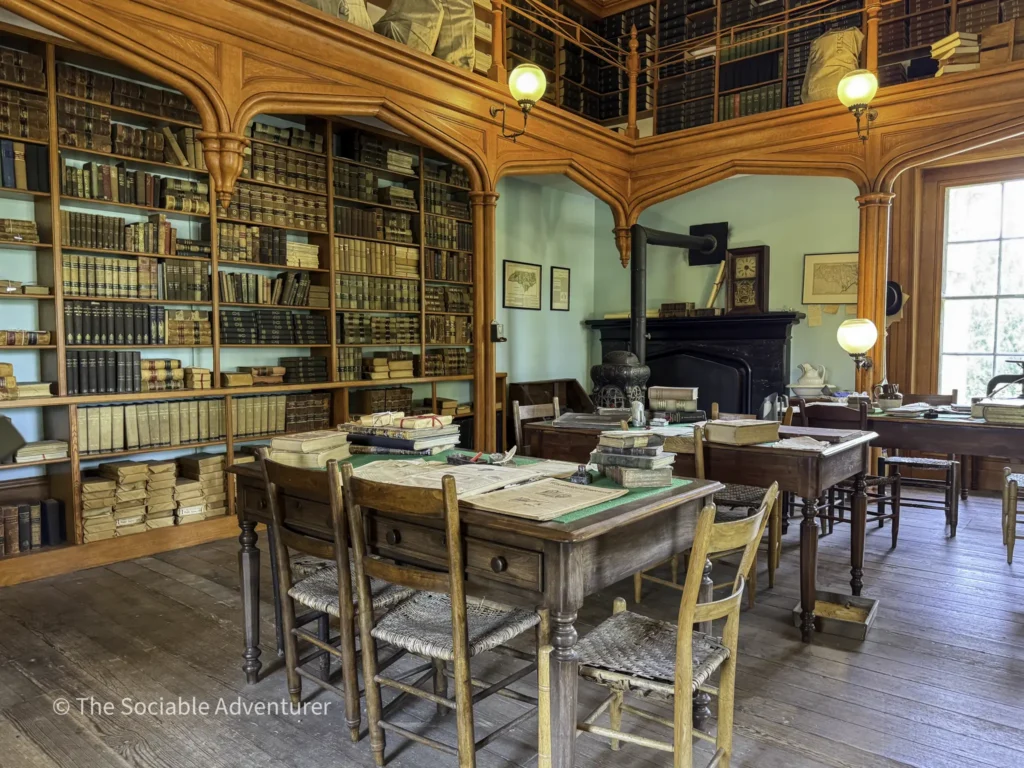
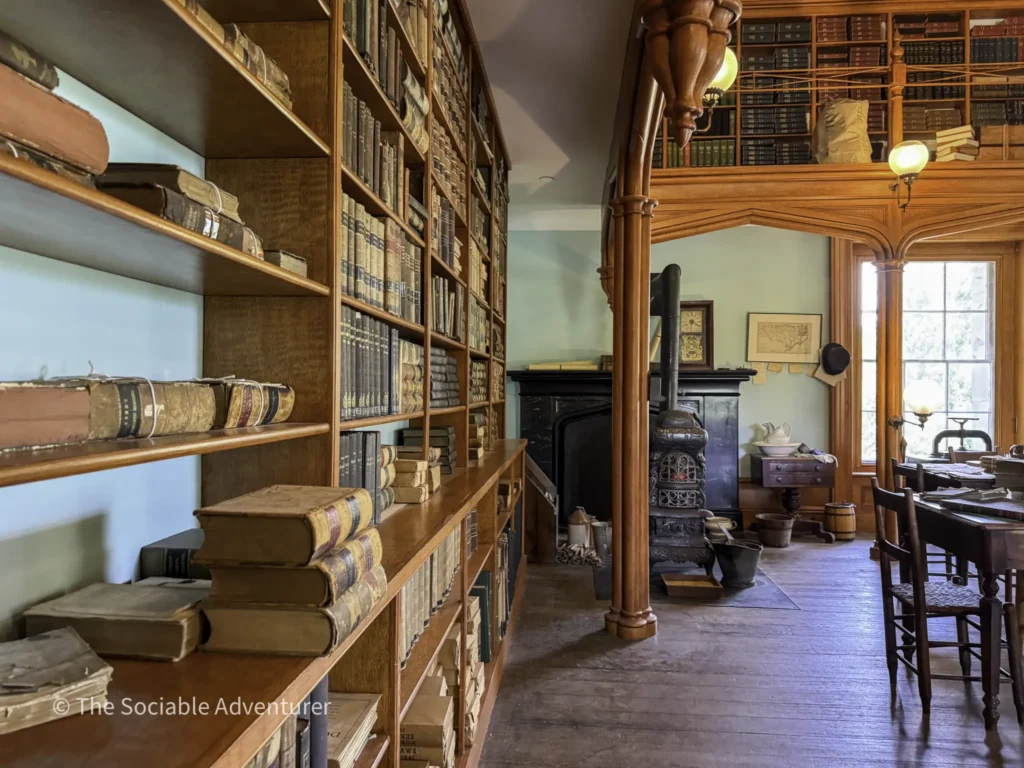
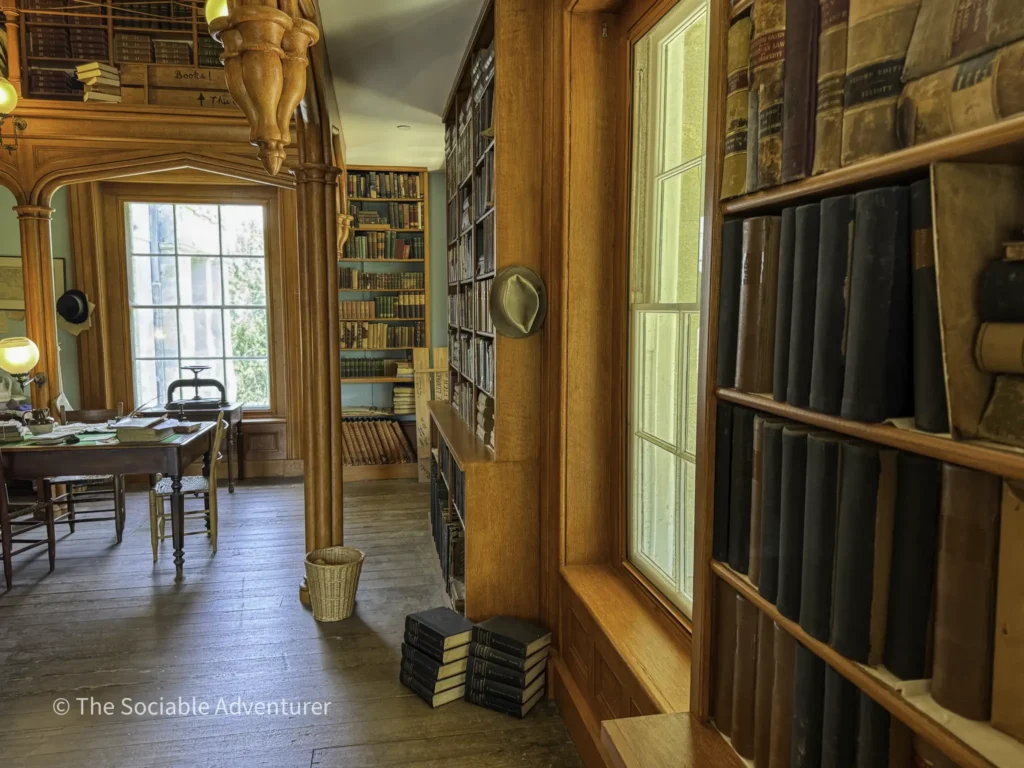
One of our personal favorite rooms in the Capitol is the State Library on the third floor — a wonderfully preserved 19th-century library with original bookshelves, period furnishings, and a distinctive skylight. The State Library’s own history mirrors the broader Capitol story: the original library collection of roughly 1,200 volumes was largely destroyed in the same 1831 fire that took the Antonio Canova George Washington statue, though a handful of books survived because they had been checked out at the time. The library eventually moved out of the Capitol into its own dedicated building in 1888, and the preserved room today captures the intellectual heart of NC’s mid-19th-century civic life.
A Historic Building Today — Free Guided Tours of the Preserved Chambers
The Capitol today functions primarily as a preserved historic building rather than an active statehouse — the General Assembly moved into the adjacent State Legislative Building (completed 1963) more than 60 years ago, and most day-to-day state government business is conducted in other downtown buildings. What remains at the Capitol is the preserved architectural experience — a walk through the 1840 Senate chamber, House chamber, executive offices, and rotunda, much as they appeared throughout the 19th century.
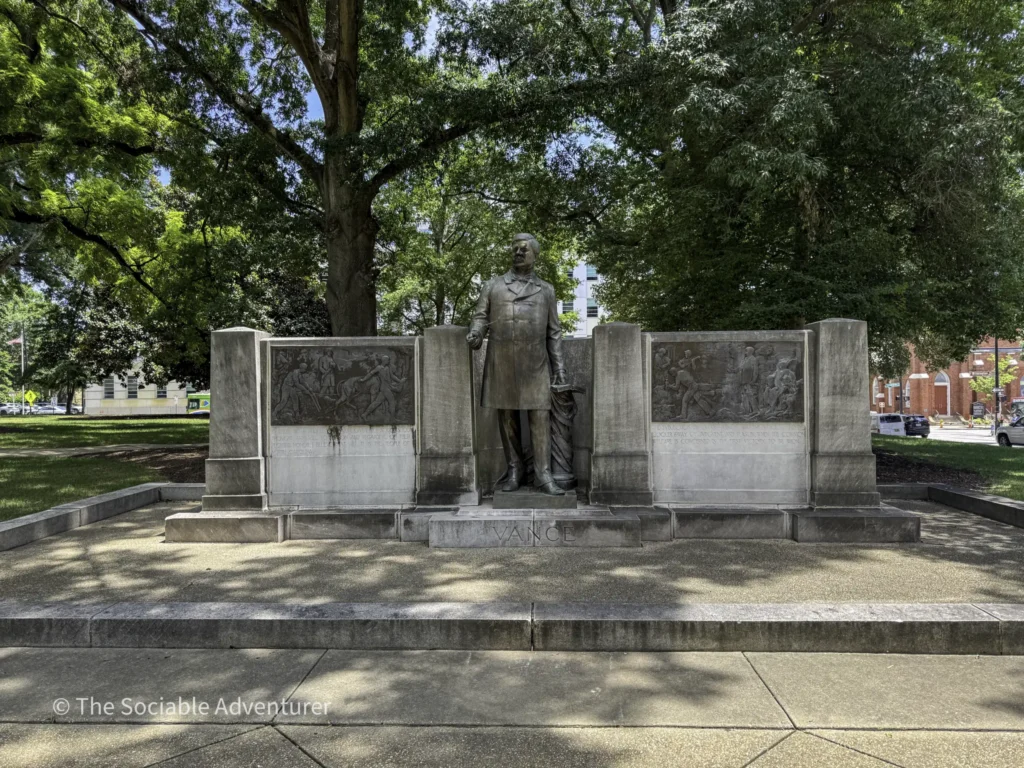
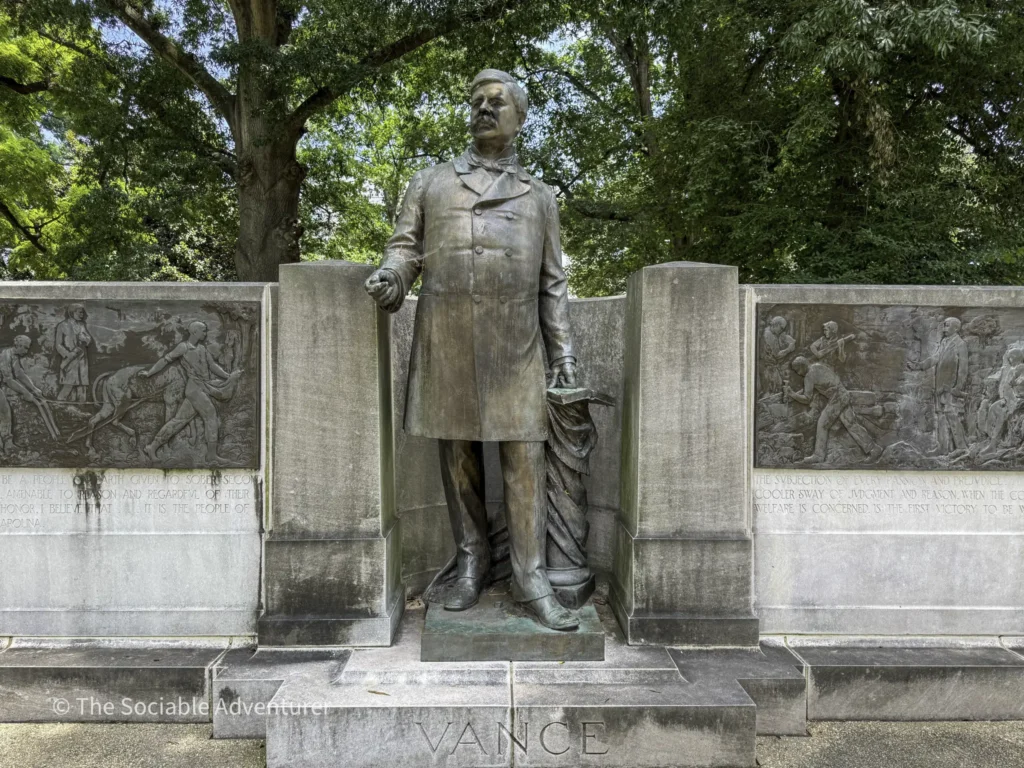
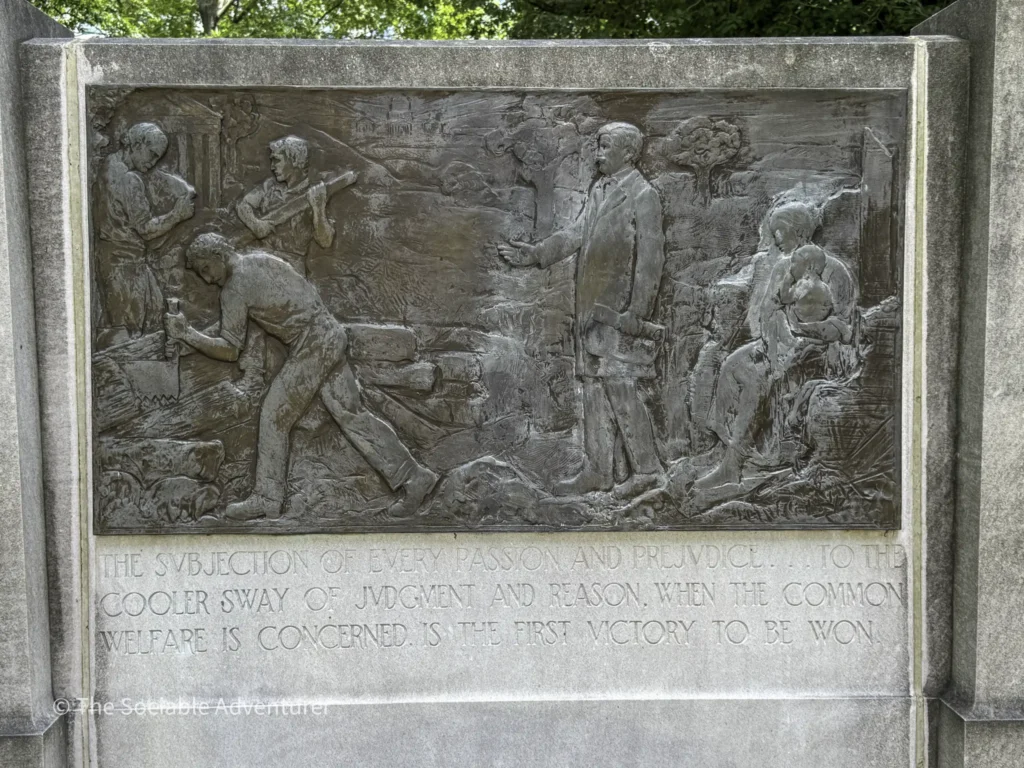
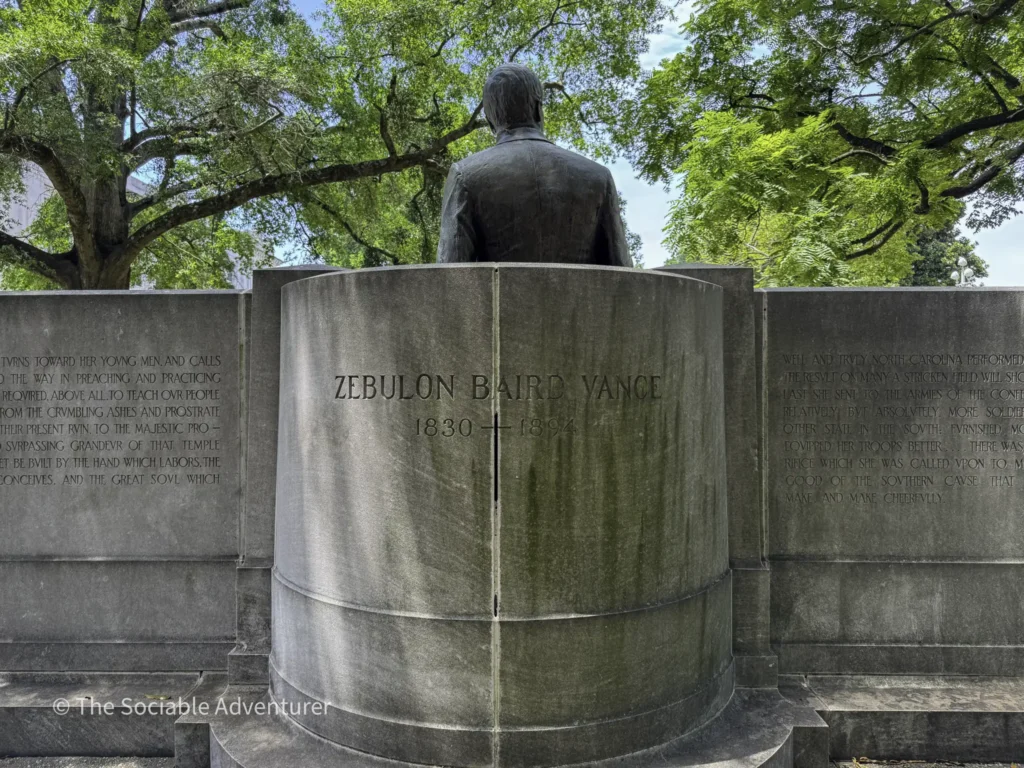
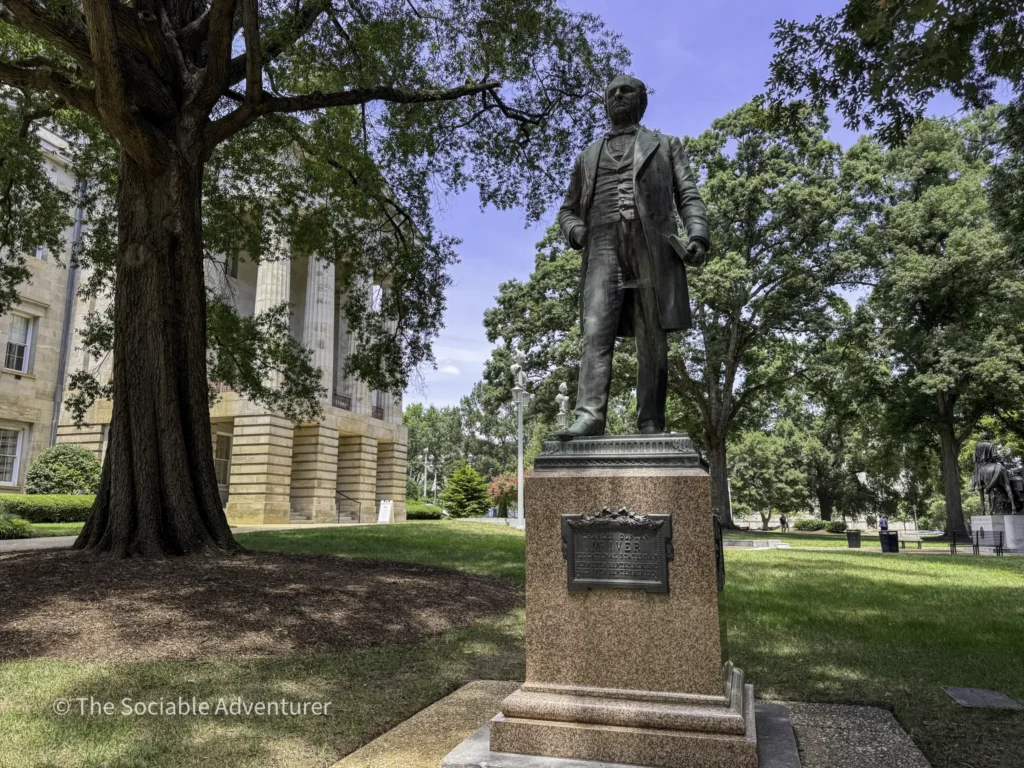
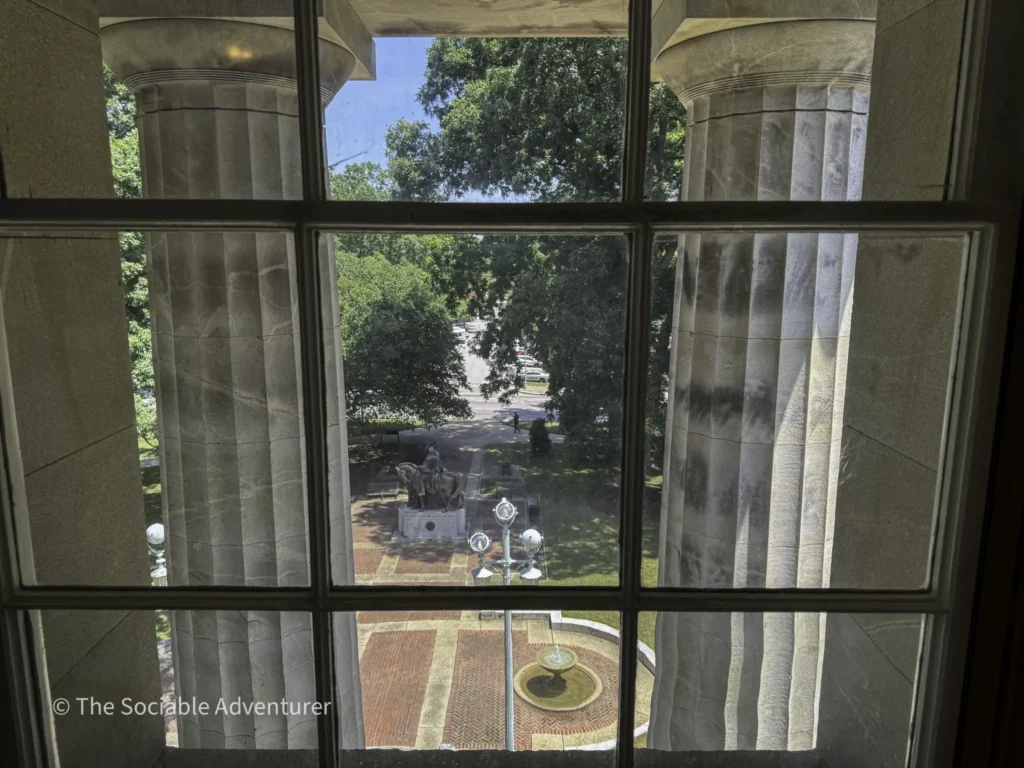
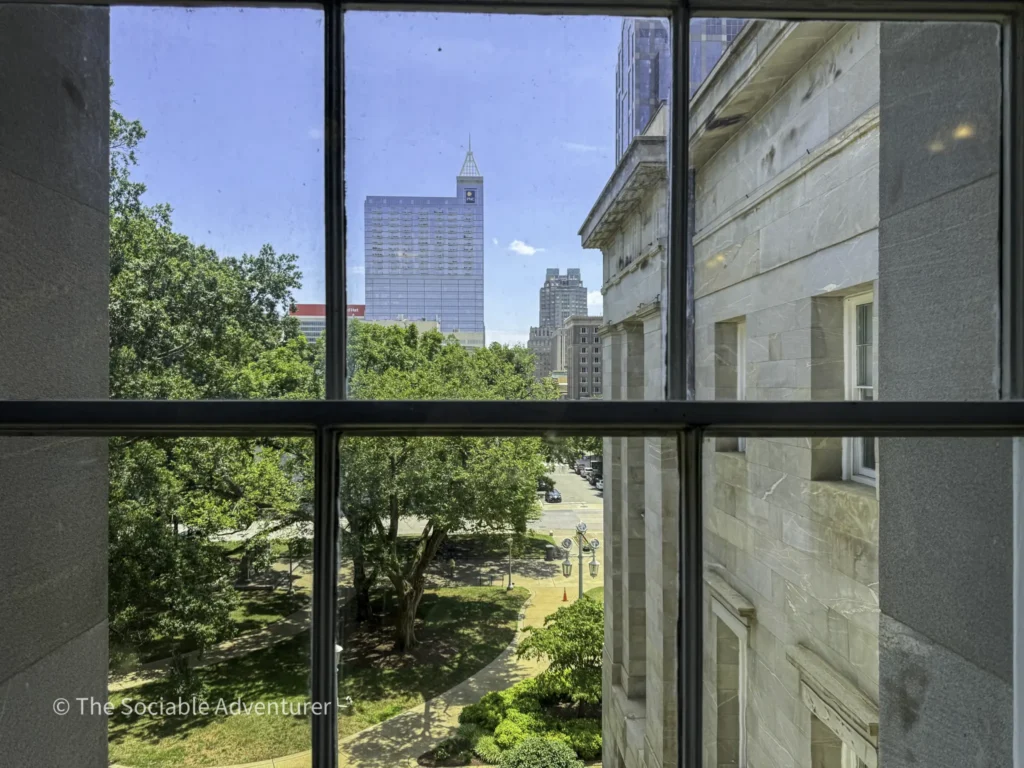
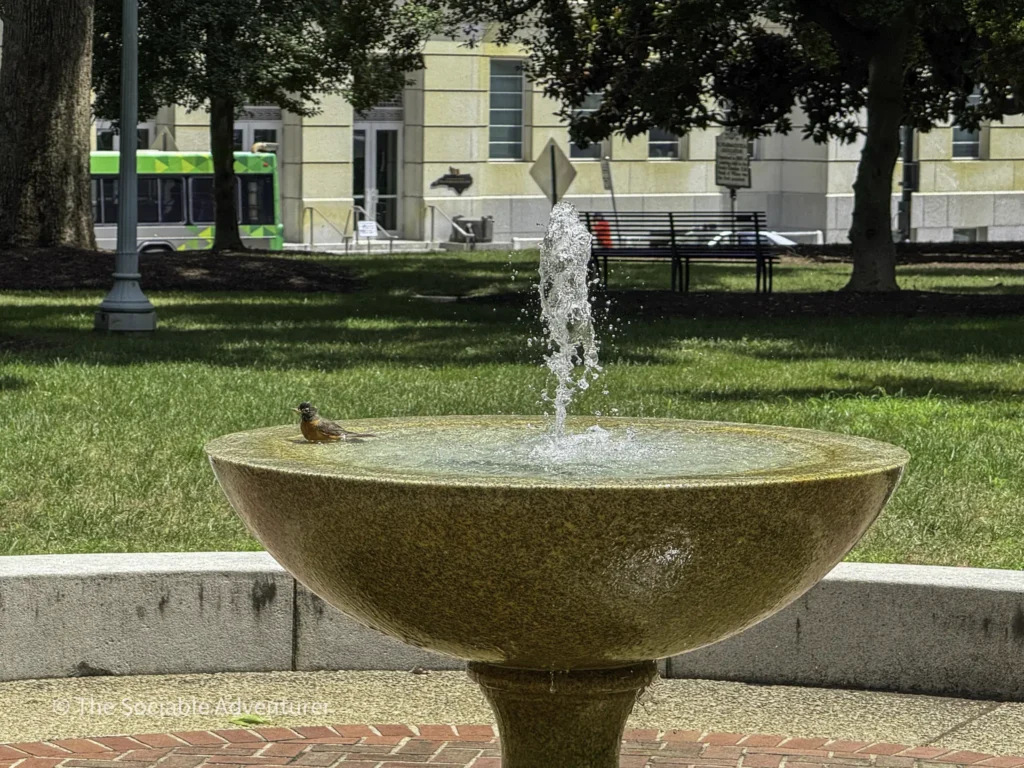
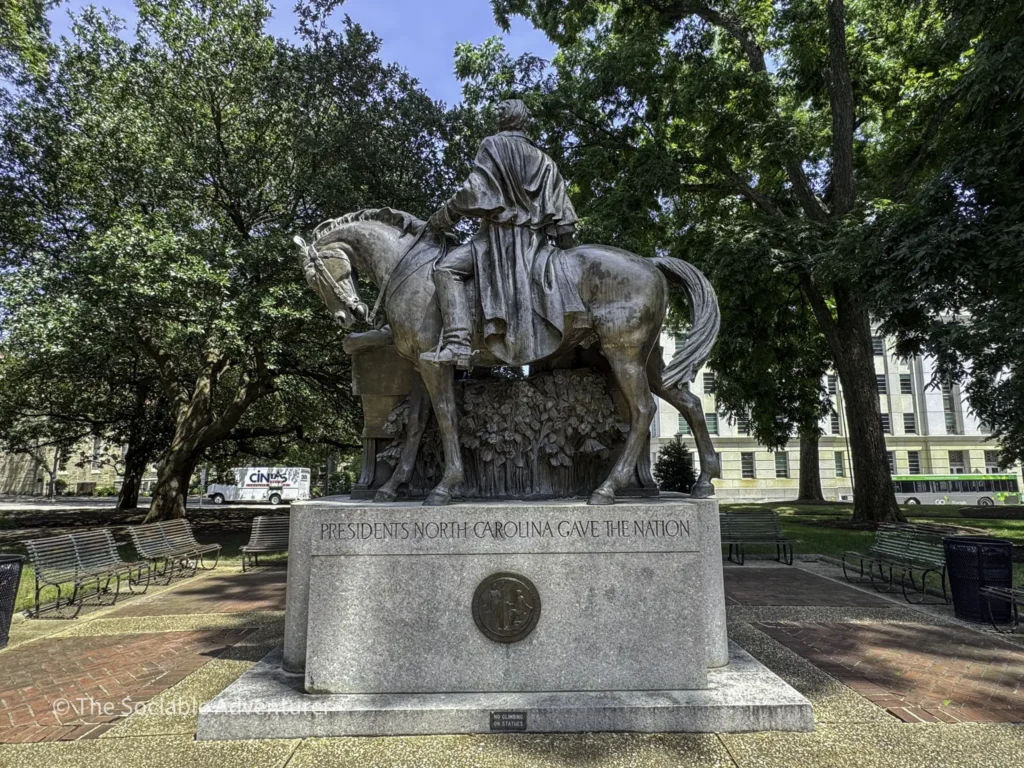
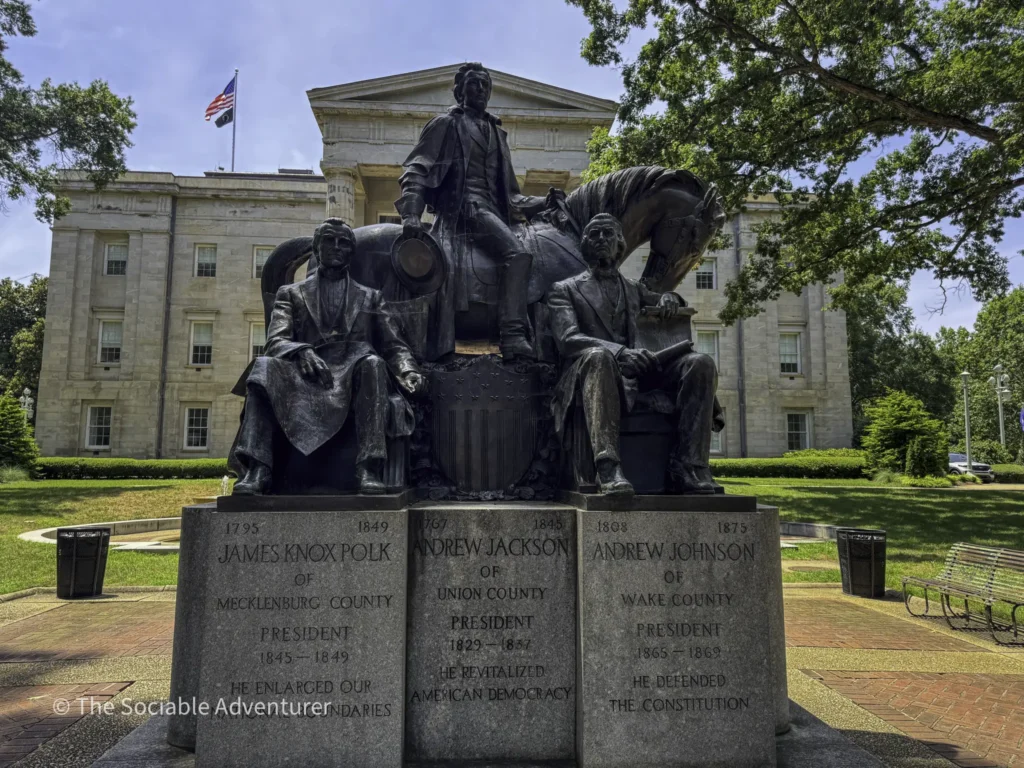
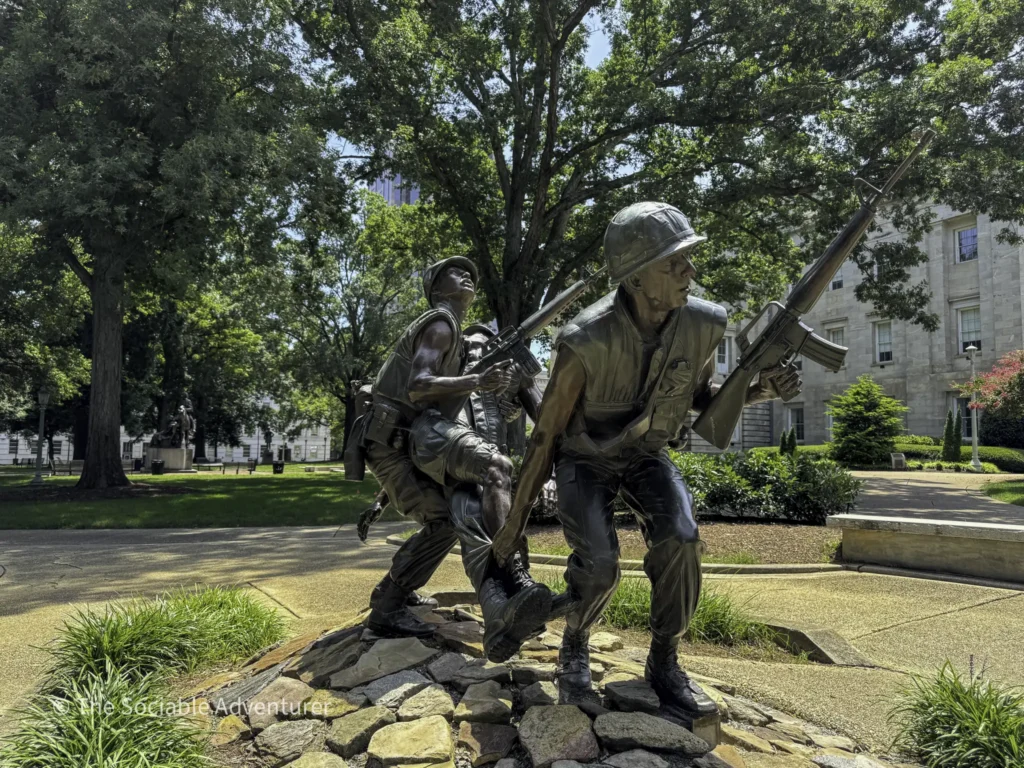
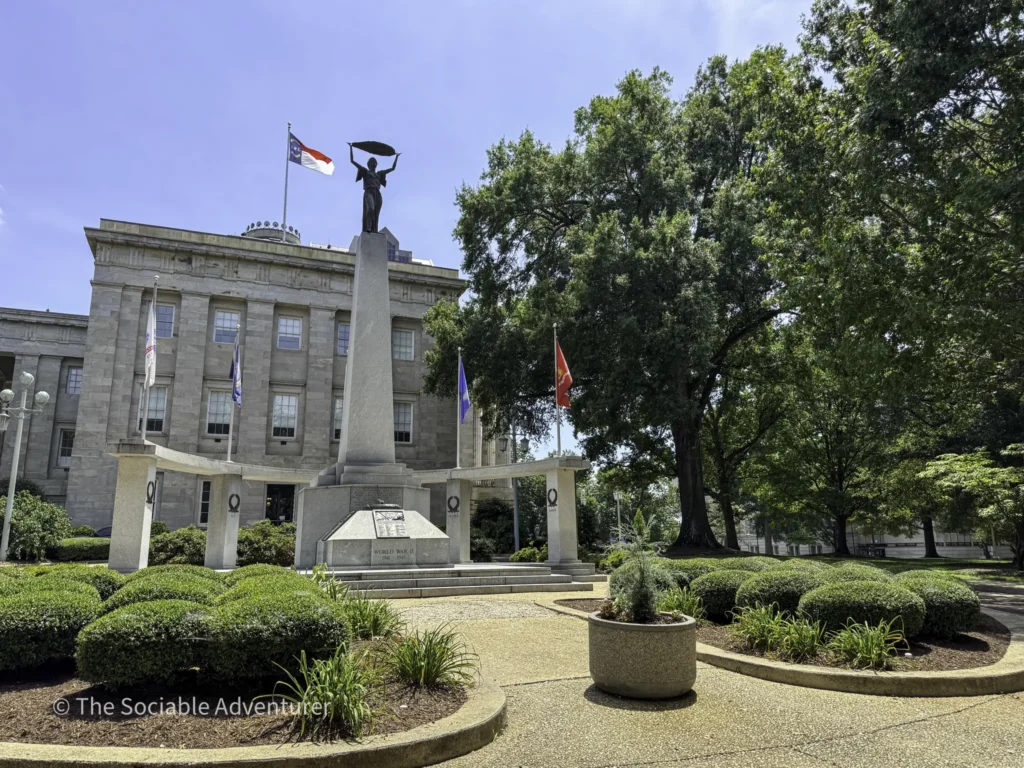
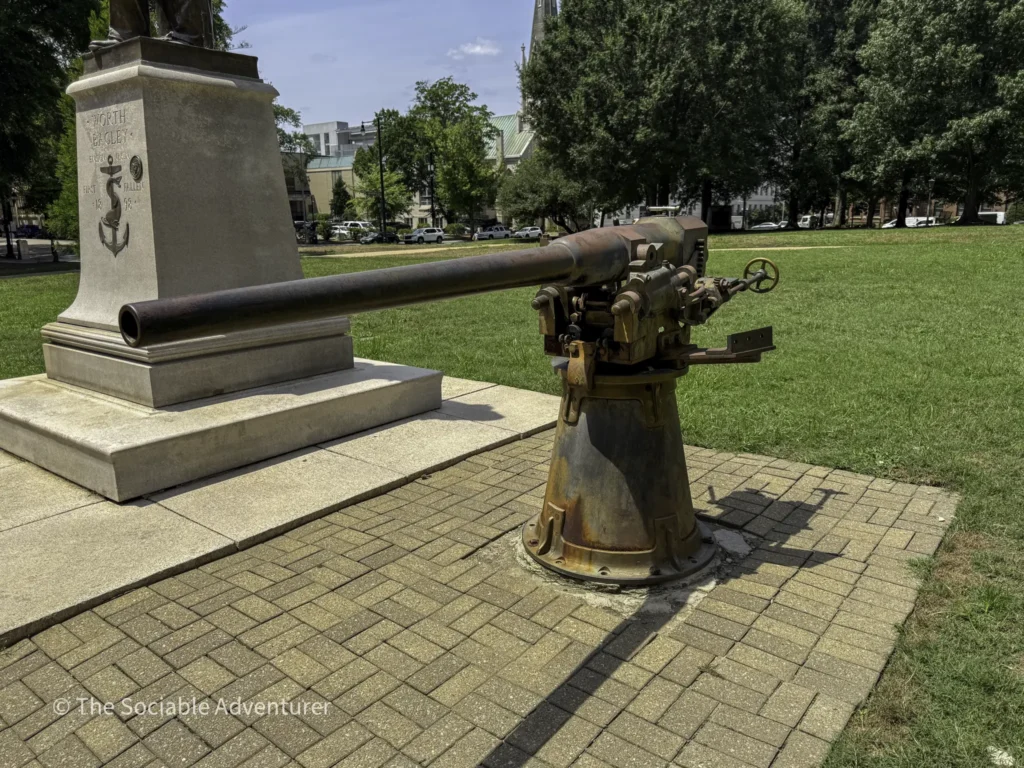
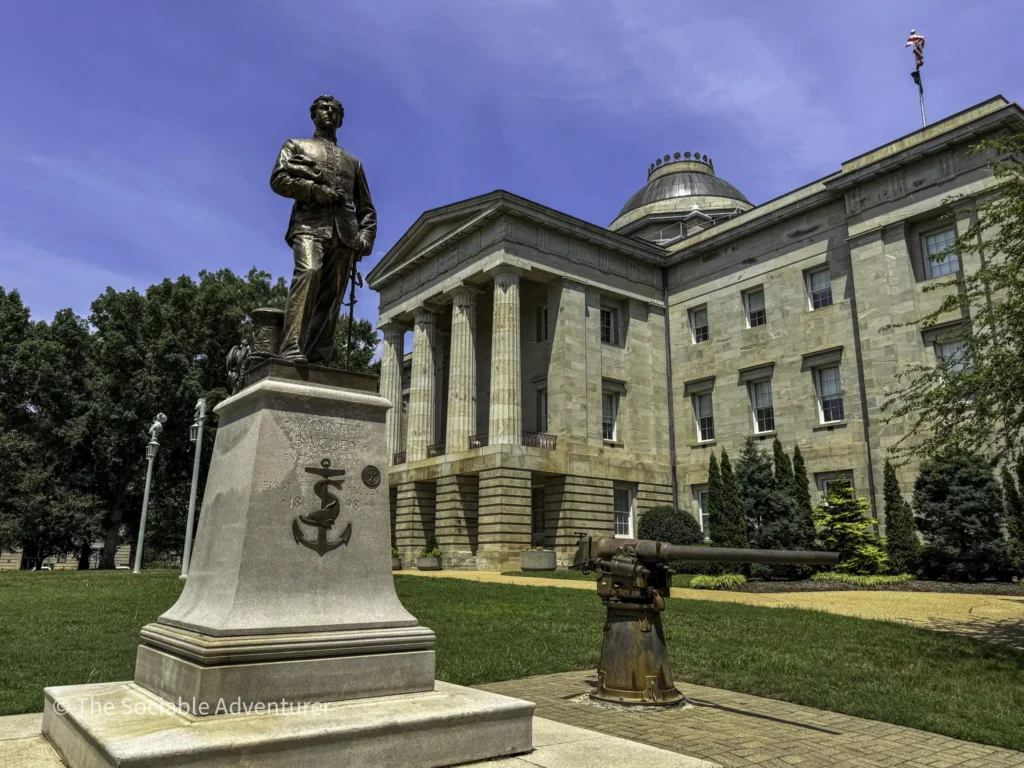
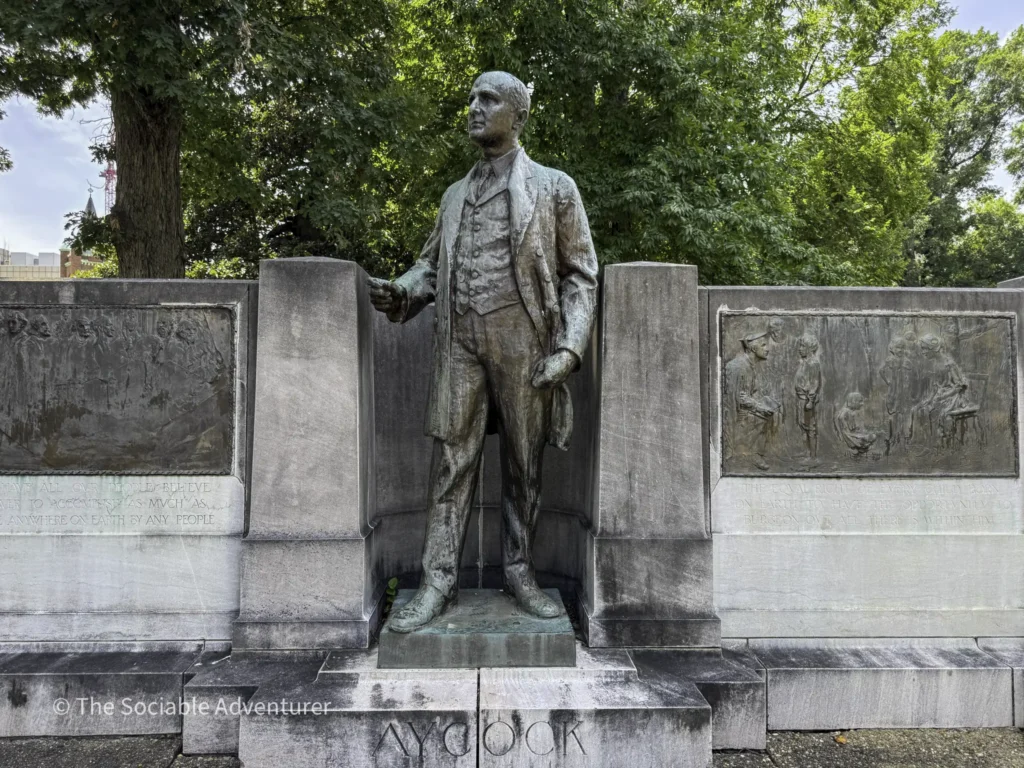
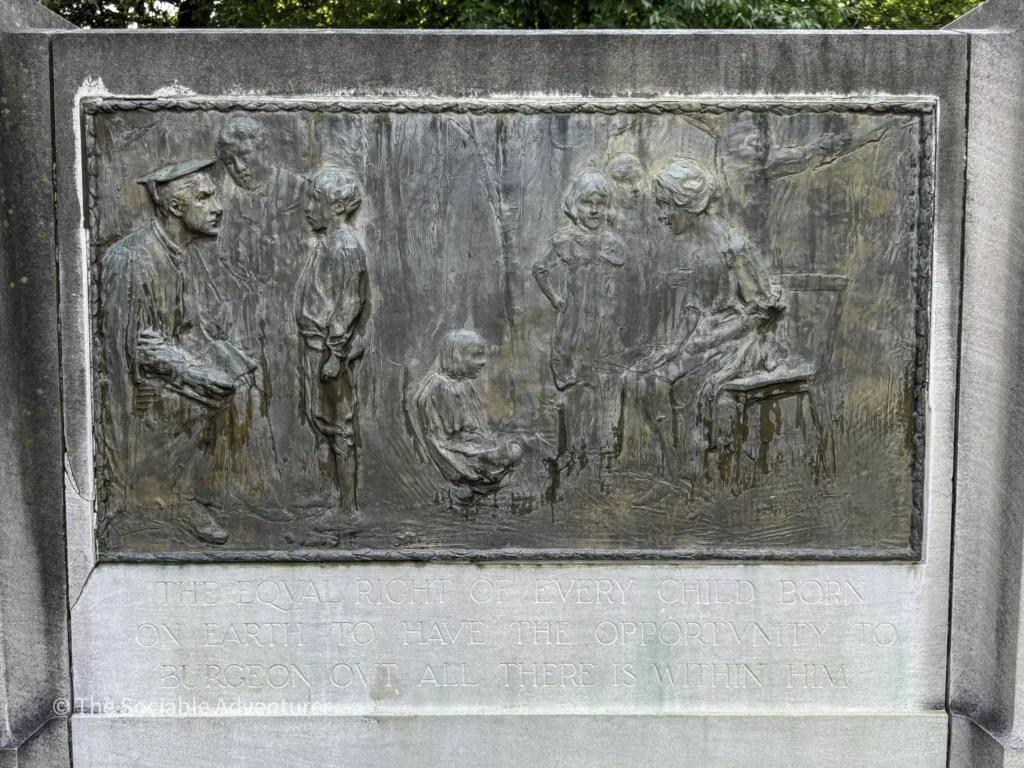
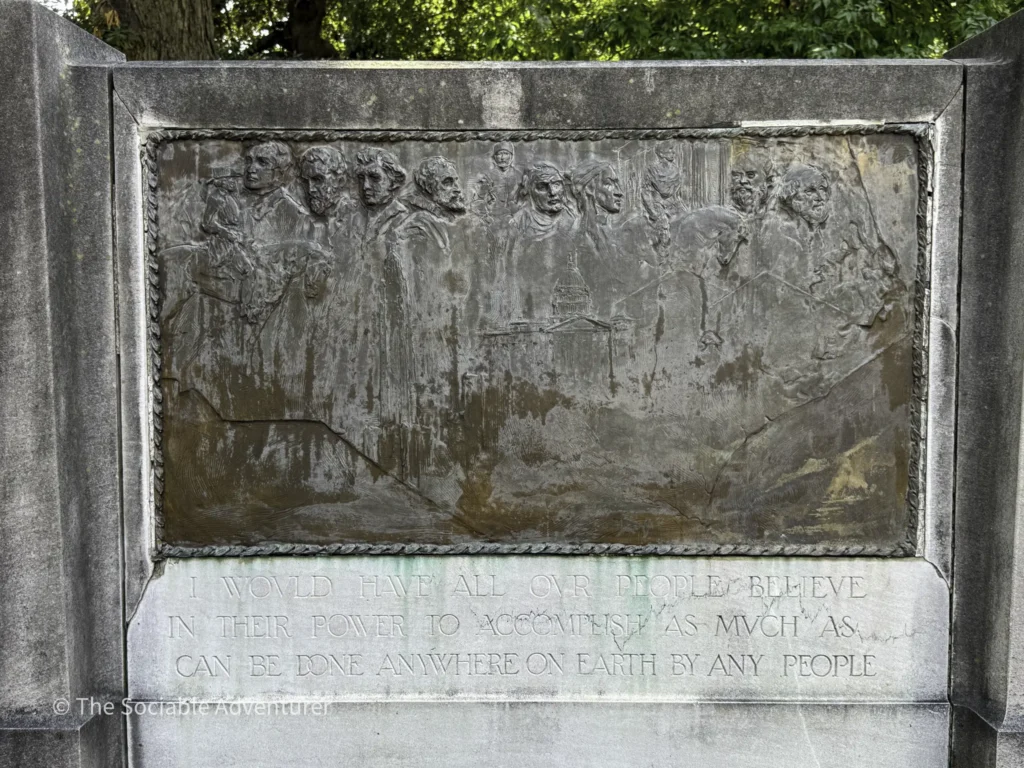
Free guided tours run daily during operating hours and walk visitors through the preserved chambers and the building’s broader story. Self-guided visits are also welcome. The Capitol continues to host occasional ceremonial state events, and Union Square — the four-block grounds surrounding the building — features additional monuments, statuary, and quiet green space that anchor the heart of downtown Raleigh.
The Capitol’s shift from active statehouse to preserved historic site is what makes it so distinctive today. Visitors can experience 1840s NC civic architecture in a way that active statehouses (with their modern security, ongoing renovations, and functional office use) can’t offer — a genuine walk into the state’s civic past rather than a scheduled interruption of active government business.
Good to Know
- Location: 1 East Edenton Street on Union Square, downtown Raleigh, NC
- Completed: 1840 (replacing the original State House lost in the 1831 fire)
- Architectural style: Greek Revival — designed by Ithiel Town and Alexander Jackson Davis
- Historic status: National Historic Landmark; one of the finest and best-preserved examples of Greek Revival civic architecture in the United States
- Current use: Primarily preserved as a historic building open for public tours; the General Assembly has met in the adjacent State Legislative Building since 1963, and day-to-day state government business is conducted in other downtown buildings. The Capitol continues to host occasional ceremonial state events
- Tour access: Free guided tours daily; self-guided visits welcome during operating hours
- Key rooms and features: Historic Senate chamber, House chamber, executive offices, rotunda with commemorative statuary, and the preserved State Library on the third floor (one of our personal favorite rooms in the building)
- Historical context: Raleigh became NC’s permanent capital in 1792 after earlier legislative meetings in New Bern (the state’s official capital from 1770 to 1792) and Hillsborough
- Fire and reconstruction story: The original State House was destroyed in a 1831 fire that also destroyed a treasured Antonio Canova statue of George Washington; a preserved piece of that statue is on display at the City of Raleigh Museum
- Grounds: Union Square — four-block grounds surrounding the Capitol with monuments, statuary, and green space
- Hours: Check the NC Historic Sites website for current hours and tour availability
- Best for: History enthusiasts, architecture lovers, families with children, students, and visitors making a full downtown Raleigh museum day
- Pair with: A visit to the City of Raleigh Museum (which houses the preserved piece of the 1831 George Washington statue), the North Carolina Museum of Natural Sciences, the North Carolina Museum of Art, or Mordecai Historic Park (home of Raleigh’s oldest residence and birthplace of President Andrew Johnson)
A Raleigh Highlight
The North Carolina State Capitol is the kind of stop that stays with you for the sheer weight of history contained in a single building. Standing in the rotunda where governors delivered inaugural addresses in the 1800s, walking through a Senate chamber preserved much as it appeared 175 years ago, and knowing that this specific building rose from the ashes of an 1831 fire that destroyed both the original State House and an Antonio Canova statue of George Washington — the whole experience carries a genuinely singular historical density. Unlike the active statehouses in most other states, the NC Capitol has been preserved as a historic-only building since the General Assembly moved out in 1963, giving visitors a rare opportunity to walk through 1840s civic architecture as a museum rather than an active government building.
The cross-references make the visit even richer. A short walk to the City of Raleigh Museum shows visitors the preserved piece of the 1831 Washington statue, closing the historical loop. A visit to New Bern — NC’s colonial-era capital before Raleigh — offers a counterpoint to what came before. And the surrounding Union Square grounds anchor the whole experience in the walkable downtown Raleigh museum district that grew up around the Capitol over nearly two centuries.
Resources
NC Historic Sites – NC State Capitol Webpage
Location

Your Complete Guide to Hiking Trails at Elk Knob State Park
Elk Knob State Park is one of North Carolina’s most rewarding mountain destinations — a 4,400-…

A Complete Guide to the Trails at Carolina Beach State Park
Tucked along the Cape Fear River on Pleasure Island, Carolina Beach State Park is one of southeaster…

The Complete Guide to Hiking Trails in Lansing, NC
Set in the rolling hills of Ashe County, just a stone’s throw from the Virginia and Tennessee …

Exploring Ashe County Park: A Hiker’s Guide to North Carolina’s Mountain Gem
If you’re searching for the best hiking trails at Ashe County Park in North Carolina, you̵…
Mountain Masterpieces: A Guide to the Ben Long Frescoes of Ashe County
In the quiet corners of Ashe County, where the Blue Ridge Mountains meet peaceful valleys, thereR…

Granite, Grunts, and Glory: A Day on the Stone Mountain Loop Trail
The Stone Mountain Loop Trail is the signature hike at Stone Mountain State Park in North Carolina —…