Carteret County, fondly known as one of the most genuinely rewarding coastal destinations in North Carolina, is a real treasure. Known as the “Crystal Coast,” this 85-mile stretch of protected shoreline blends maritime history, wild barrier islands, and fresh dockside seafood. Additionally, the county carries one of the deepest pirate legacies anywhere in the United States.
Carteret County was formed in 1722 and named for Sir George Carteret, one of the original Lords Proprietors of Carolina. Today, the county anchors a remarkable mix of small-town charm and natural beauty. Visitors can explore colonial-era Beaufort, watch wild ponies on Shackleford Banks, fish offshore from Morehead City, or learn about Blackbeard’s last days. Throughout the broader region, Carteret County rewards visitors who appreciate the deeper layers of NC’s Atlantic heritage. Click on any of the locality images below to begin planning your journey through this coastal region.
Named for Sir George Carteret, Lord Proprietor of Carolina
Carteret County was created in 1722 as Carteret Precinct and gained full county status in 1739. Originally, it was carved out of Craven County — the same county we’ve covered extensively for our New Bern work.
The name honors Sir George Carteret (c. 1610-1680). Notably, he served as a Vice-Admiral in the Royal Navy and as Treasurer of the Navy. Additionally, he was one of the eight original Lords Proprietors of Carolina to whom King Charles II granted the colony in 1663.
Sir George’s life was genuinely colorful. Originally, he was born in Jersey in the Channel Islands and grew up steeped in the maritime life of the English court. When he entered the Royal Navy, however, he dropped the “de” from his ancestral surname (“de Carteret”) because he was concerned it sounded too French.
Throughout his career, he became a major figure in 17th-century English politics. Notably, he was a friend and confidant of King Charles II during the king’s exile. As a result, Sir George appears prominently in Samuel Pepys’ famous diary. Furthermore, he was a Lord Proprietor of New Jersey alongside Lord Berkeley. Today, Carteret, New Jersey, Elizabeth, New Jersey (named for his wife), and Carteret County in NC all carry his family’s legacy.
NC’s Fourth-Oldest Town and a Deep Settlement History
Carteret County is home to Beaufort, the fourth-oldest town in North Carolina. The town was founded around 1713, just three years after New Bern. Specifically, Beaufort comes after Bath (1705), New Bern (1710), and Edenton (1712) in the order of NC’s earliest settlements.
The county’s English settlement history actually traces back even further. Remarkably, John Fulford is believed to be the first male of English parents born in what is now North Carolina. He was born in 1629 in present-day Carteret County. Eventually, Fulford settled in the area and lived to age 100, dying in 1729. Today, his grave can still be found in a cemetery outside Beaufort in an area called the Straits.
In the early colonial era, Carteret County’s economy was built on naval stores — tar, pitch, turpentine, and timber. These were harvested from local pine forests and shipped from coastal plantations. The plantations stretched from the White Oak River in the west to Cedar Island in the east. Many had their own private water landings. As a result, shipments traveled to Beaufort or to New Bern for further trade up and down the Atlantic seaboard.
A Pirate Coast — Blackbeard and the Hammock House
Carteret County’s most famous historical chapter belongs to Edward Teach — better known as Blackbeard. He was the most notorious pirate of the Golden Age of Piracy.
Throughout his brief but legendary career, Blackbeard used the broader Pamlico Sound and Core Sound as hideouts. Additionally, the deep waters of these sounds gave him places to slip away from Royal Navy ships chasing him along the Atlantic coast.
Beaufort’s iconic Hammock House is one of the oldest surviving homes in town. In the 18th century, it was owned by Revolutionary War officer William Dennis Sr. (1720-1800). Notably, the home became locally legendary as Blackbeard’s house.
Dennis himself was a remarkable figure. For example, he helped defend the county against Spanish pirates during the War of Jenkins’ Ear in 1747. Additionally, he served as a 2nd Major in the Carteret County Regiment of the North Carolina militia during the American Revolution. In 1782, he also fought alongside Lieutenant Colonel John Easton to drive the British from the county.
Blackbeard’s pirate career came to its dramatic end on November 22, 1718. Specifically, his ship, Adventure, was intercepted by Lieutenant Robert Maynard near Ocracoke Inlet just north of Carteret County. There, Blackbeard was killed in battle. Today, “Teach’s Hole” — the spot where the legendary pirate met his end — is still pointed out by pilots navigating Pamlico Sound. Furthermore, his earlier flagship, the famous Queen Anne’s Revenge, was later discovered as a shipwreck off the Carteret coast. As a result, it is now listed on the National Register of Historic Places.
Five Distinct Coastal Communities
Carteret County is home to five distinct coastal communities that we’ve personally explored:
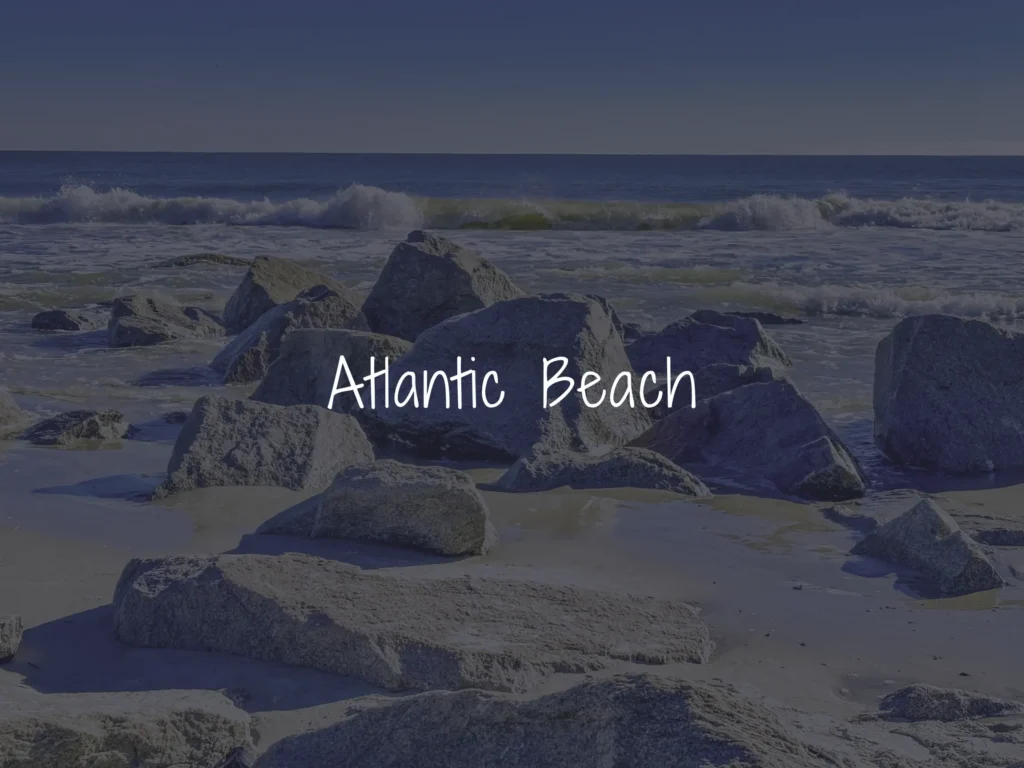
- Atlantic Beach: Set on the eastern edge of Bogue Banks, this classic beach town offers expansive sandy shores, family-friendly retro charm, and direct access to historic Fort Macon State Park.
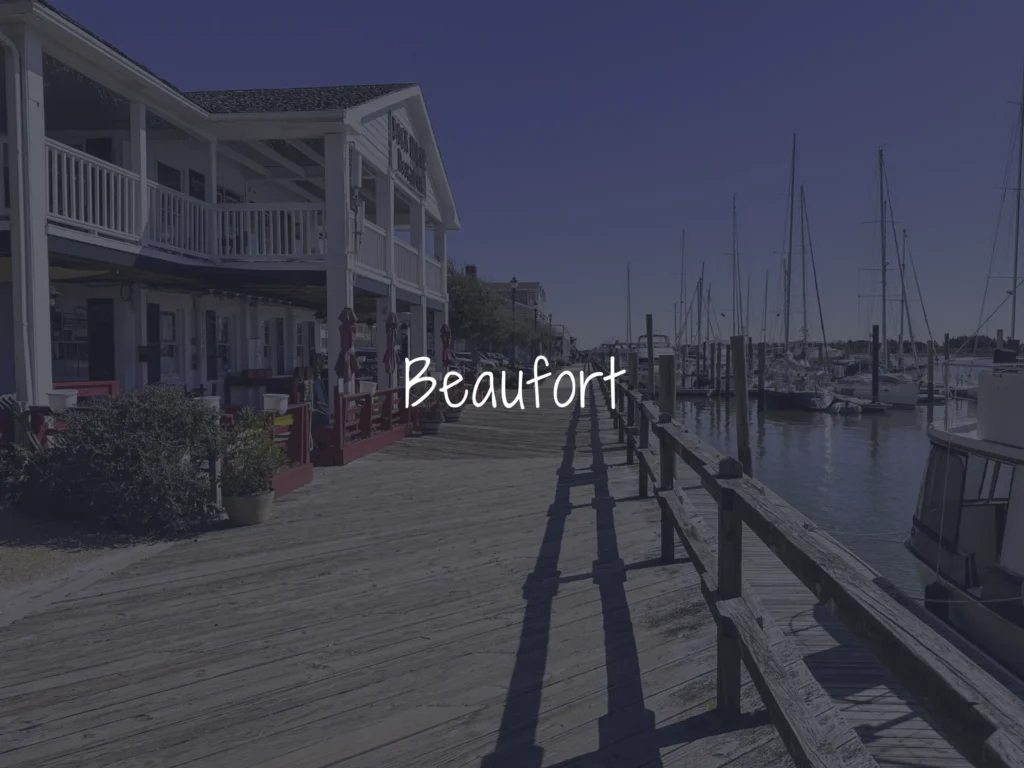
- Beaufort: As North Carolina’s fourth-oldest town, this beautifully preserved seaport welcomes visitors with its 18th-century architecture, lively waterfront boardwalk, deep pirate lore, and the historic Hammock House.
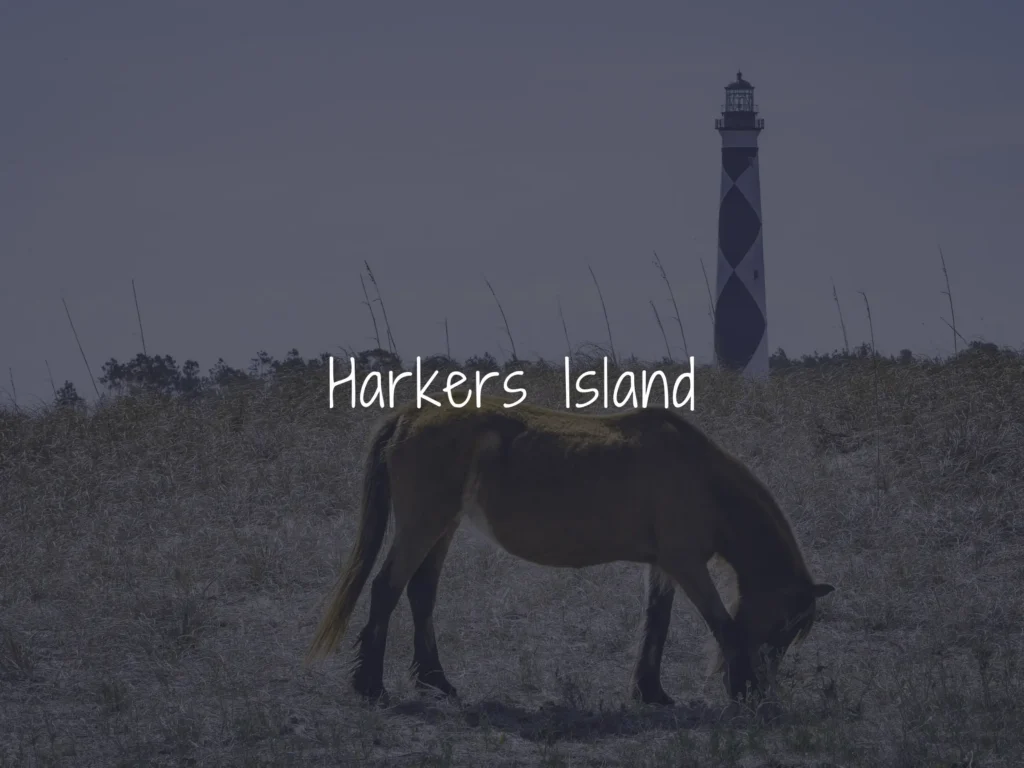
- Harkers Island: The authentic gateway to Cape Lookout, rich in down-east heritage, traditional boatbuilding history, and unparalleled access to wild barrier islands and the historic lighthouse.
- Morehead City: The bustling heart of the Crystal Coast, known globally for its premier charter fishing fleets, lively seafood dining scene, and the famous annual North Carolina Seafood Festival.
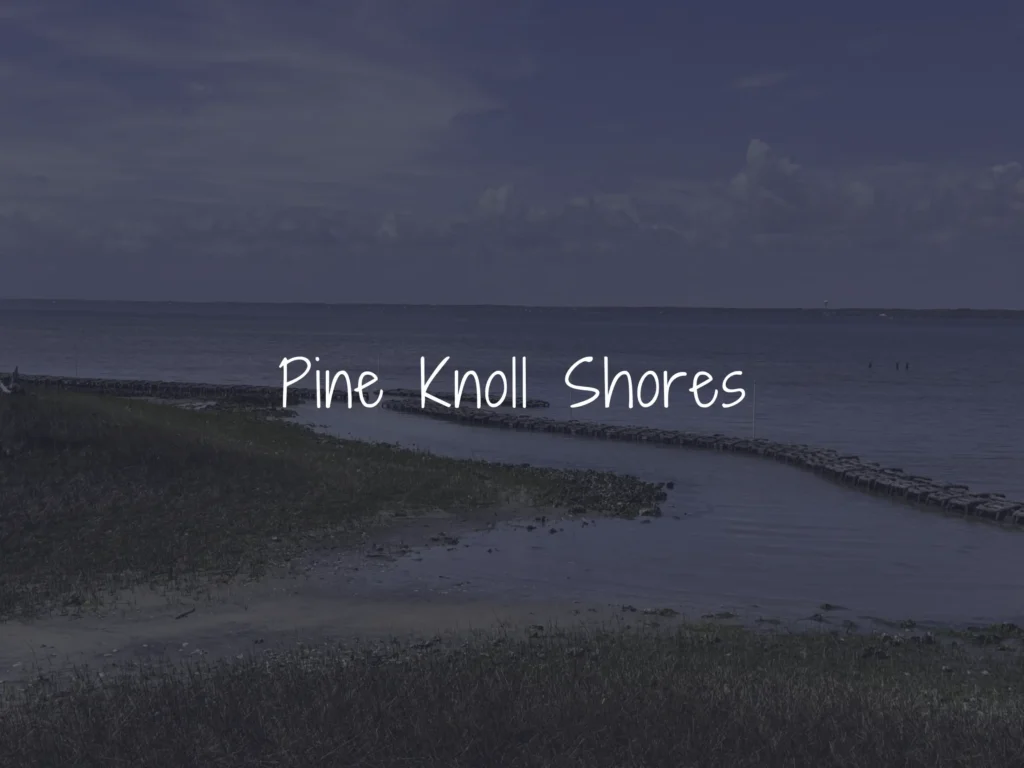
- Pine Knoll Shores: A tranquil, ecologically conscious community set within a preserved maritime forest, celebrated for its pristine beaches and the immersive North Carolina Aquarium.
A Place Built for Coastal Exploration
Life along the Crystal Coast moves at the natural rhythm of the tides. Specifically, the air carries salt water, the horizons stretch toward the open Atlantic, and the seafood is brought in fresh daily by the local fishing fleet.
It’s a place where mornings, afternoons, and evenings each offer something distinct. For example, you can spend your morning kayaking alongside wild dolphins. Then, your afternoon can be spent exploring a colonial-era burying ground. Finally, your evening can finish with the sunset spreading across a sound-side marina.
Overall, Carteret County beautifully balances coastal adventure with the slow, deliberate pace of traditional maritime life. Furthermore, the five communities below each contribute a distinct character to that broader experience.