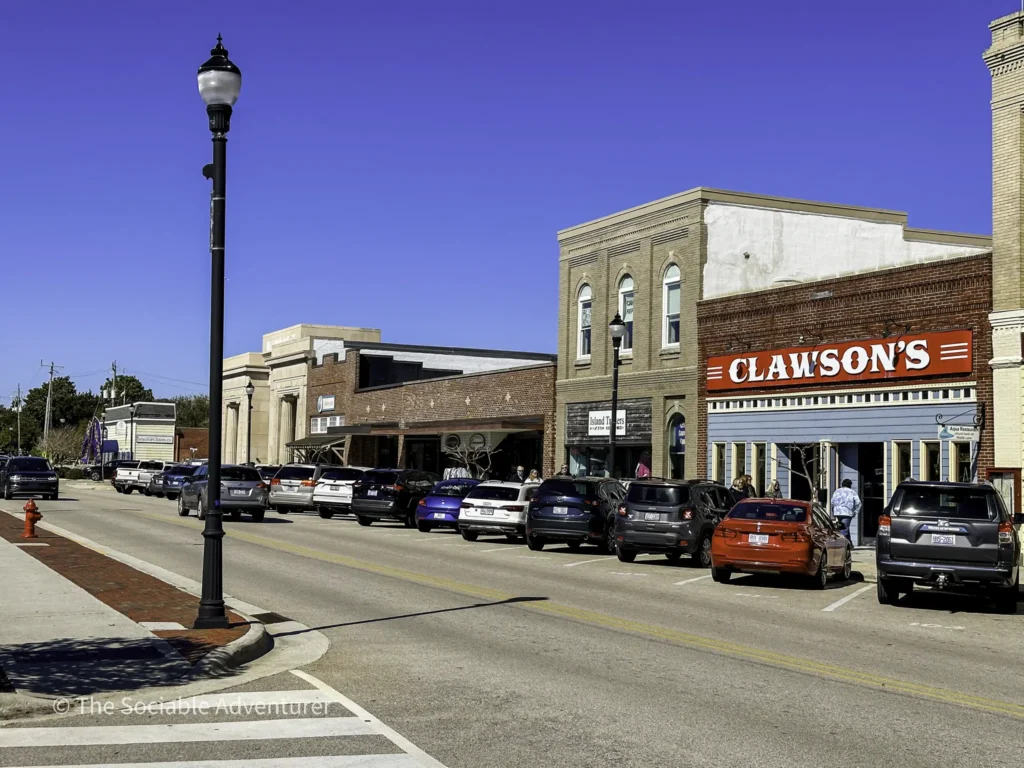
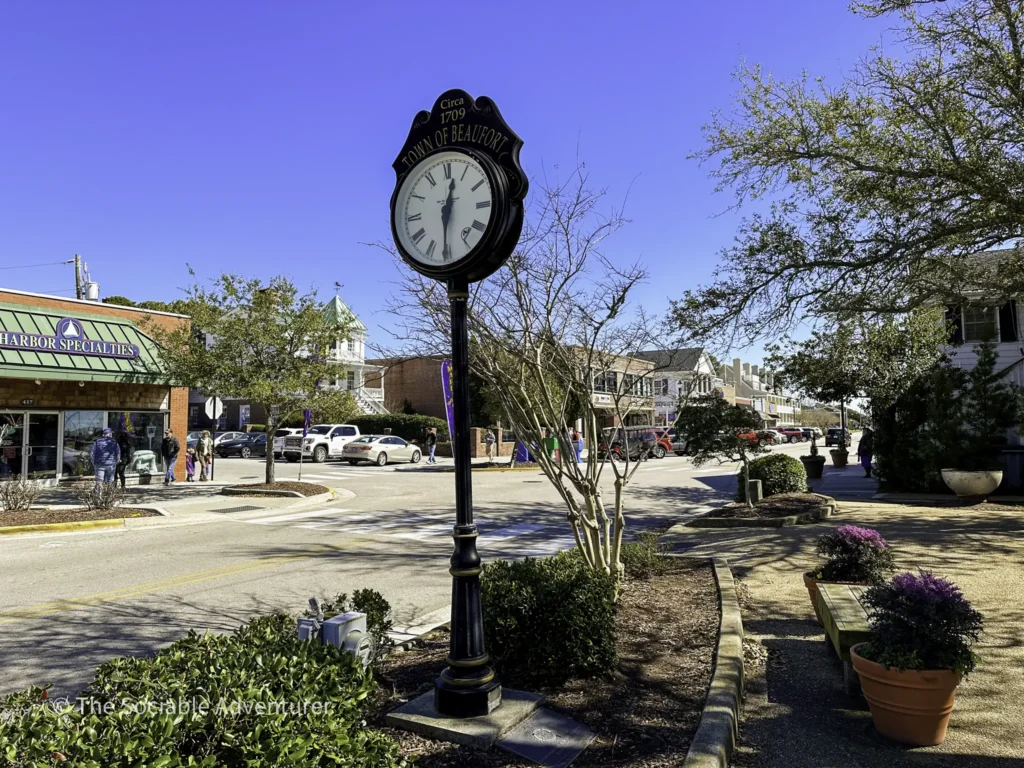
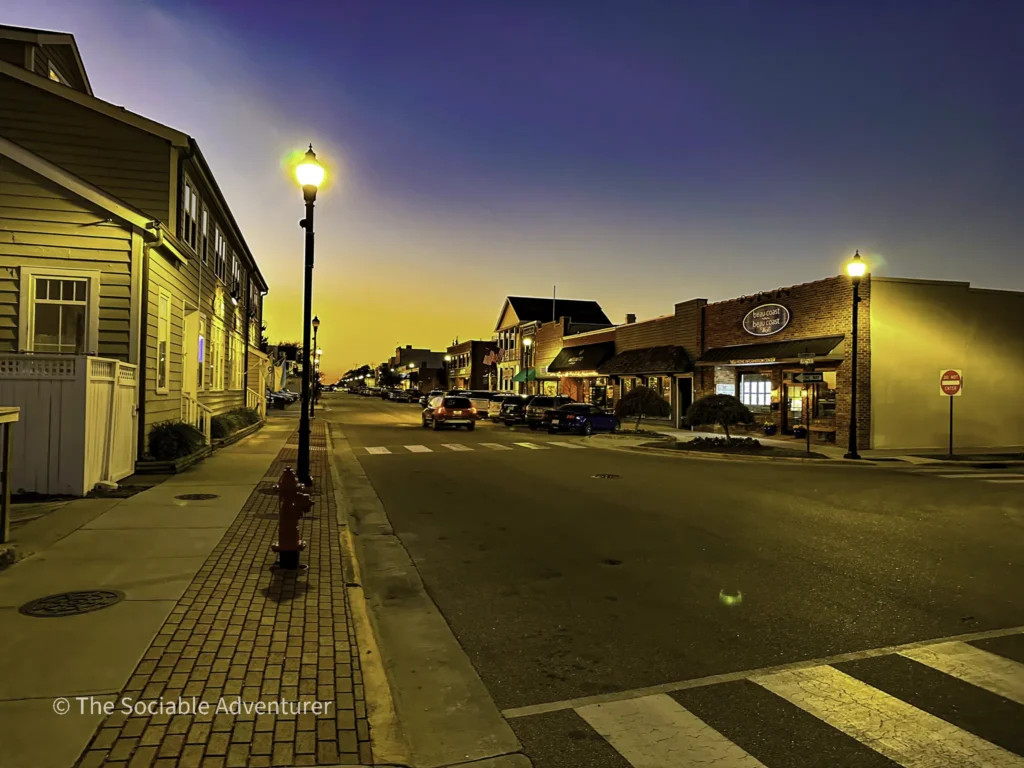
Beaufort, North Carolina, is a beautifully preserved coastal seaport along the Crystal Coast in Carteret County. Set on the shores of Taylor’s Creek with views across to the wild horses of the Rachel Carson Reserve, Beaufort is the fourth-oldest town in North Carolina. Its town plat dates back to 1713, when settlers transformed an early Coree Native American settlement known as “Cwarioc” (or “Fish Town”) into a thriving colonial port. With about 4,800 residents, Beaufort blends maritime history, 18th-century architecture, deep pirate lore from Blackbeard’s final days, and one of the most rewarding small-town walking experiences anywhere on the NC coast. Click on the attractions and food and beverage images below to dive deeper into the spots we’ve personally explored around Beaufort.
From Cwarioc to Beaufort — A 1713 Town Plat
Long before European settlers arrived, the Coree Native Americans lived in the area surrounding present-day Beaufort. They called it “Cwarioc” — translated as “Fish Town” — reflecting the abundance of fishing along Taylor’s Creek and Core Sound.
Early settlers began purchasing land in the area around 1709, including Farnifold Greene (who held an earlier 1707 patent), Robert Turner, and Nathan Taylor. By October 2, 1713, Robert Turner had hired Deputy Surveyor Richard Graves to formally plat the town. The original 100-acre plan laid out 106 lots for sale, with streets named for English royalty, including Anne, Queen, and Moore Streets — the last honoring Colonel Moore, who ended the Tuscarora War.
Beaufort’s status as the fourth-oldest town in North Carolina places it among an elite group of NC seaports: after Bath (1705), New Bern (1710), and Edenton (1712). The town earned formal incorporation in 1723.
A Pirate Coast and the Hammock House
Beaufort’s most famous historical chapter belongs to Edward Teach — better known as Blackbeard — the most notorious pirate of the Golden Age of Piracy. Blackbeard used the broader Pamlico Sound and Core Sound as hideouts during his brief but legendary career. Local legend connects him to the iconic Hammock House along the Beaufort waterfront.
Blackbeard’s flagship, the famous Queen Anne’s Revenge, ran aground near Beaufort in 1718. The wreck was later discovered off the Carteret coast and is now listed on the National Register of Historic Places. Artifacts recovered from the shipwreck are now displayed at the North Carolina Maritime Museum in downtown Beaufort — one of the most rewarding stops in town for history enthusiasts.
The town also produced its own war heroes. Captain Otway Burns — an American Privateer during the War of 1812, later a NC State Senator — attacked British vessels along the Atlantic coast and led expeditions as far south as the U.S. Virgin Islands. He’s buried at the Old Burying Ground, established in 1731 and one of Beaufort’s most evocative landmarks.
A Town Built for Walking — Historic Homes and Iconic Landmarks
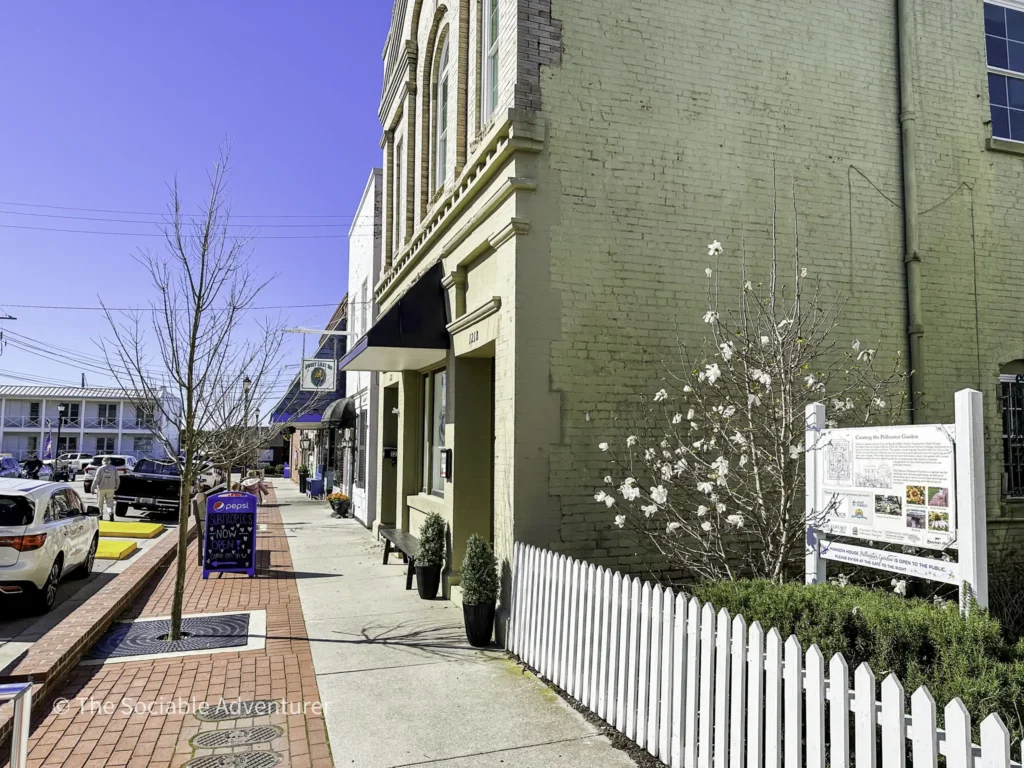
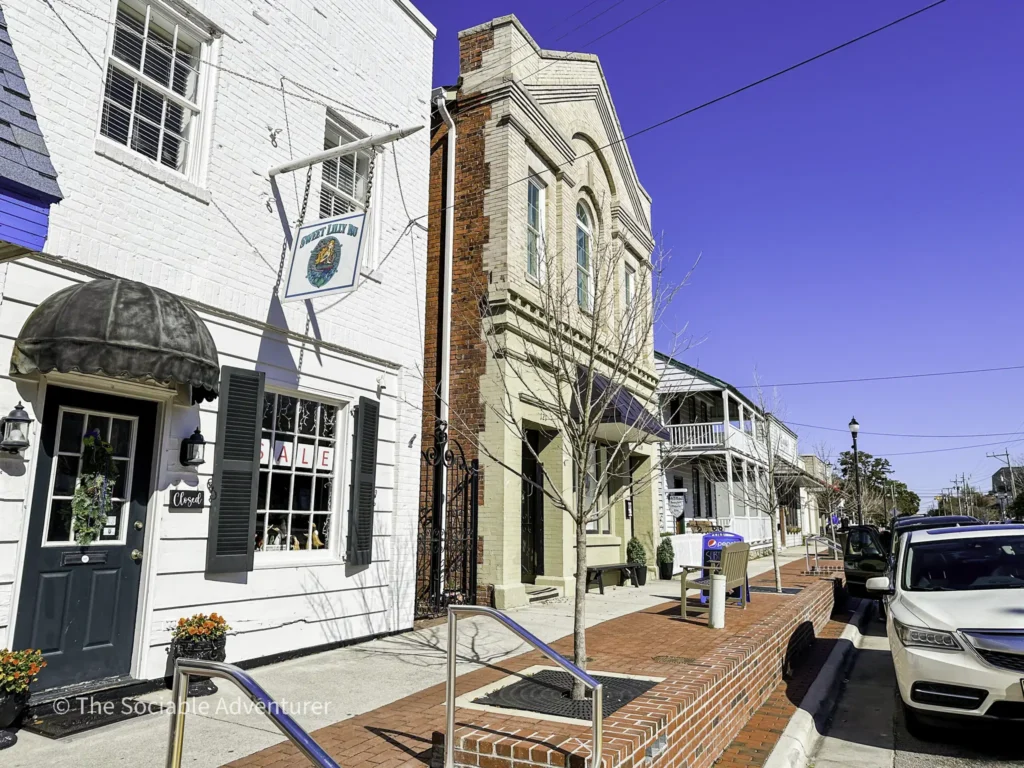
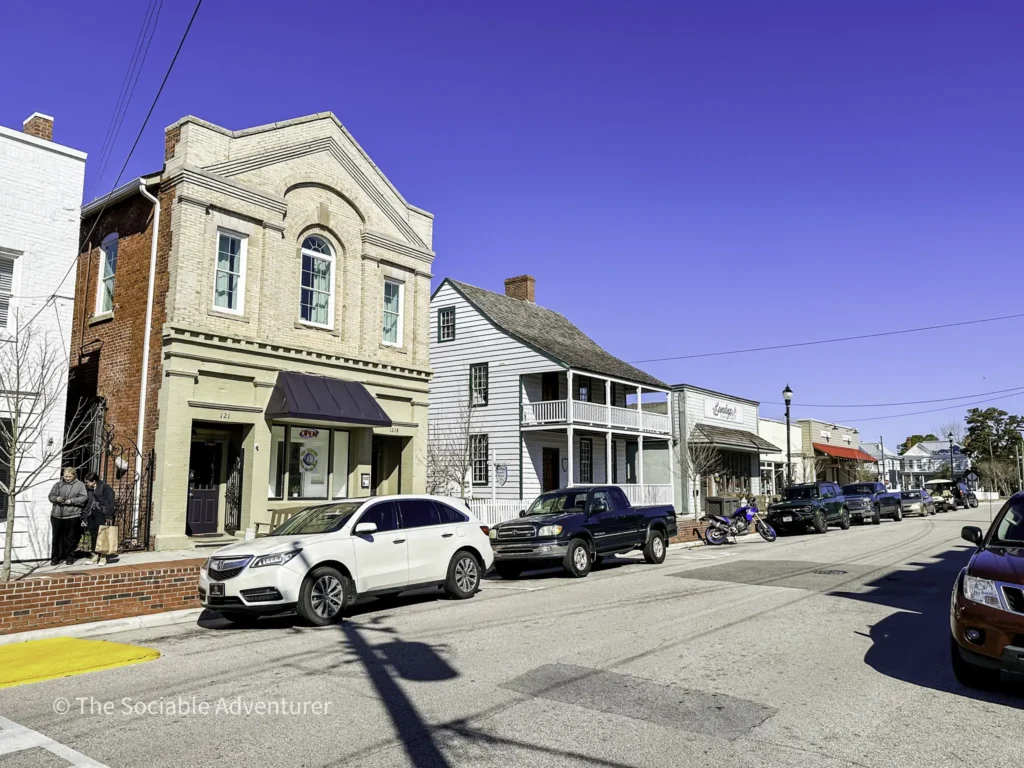
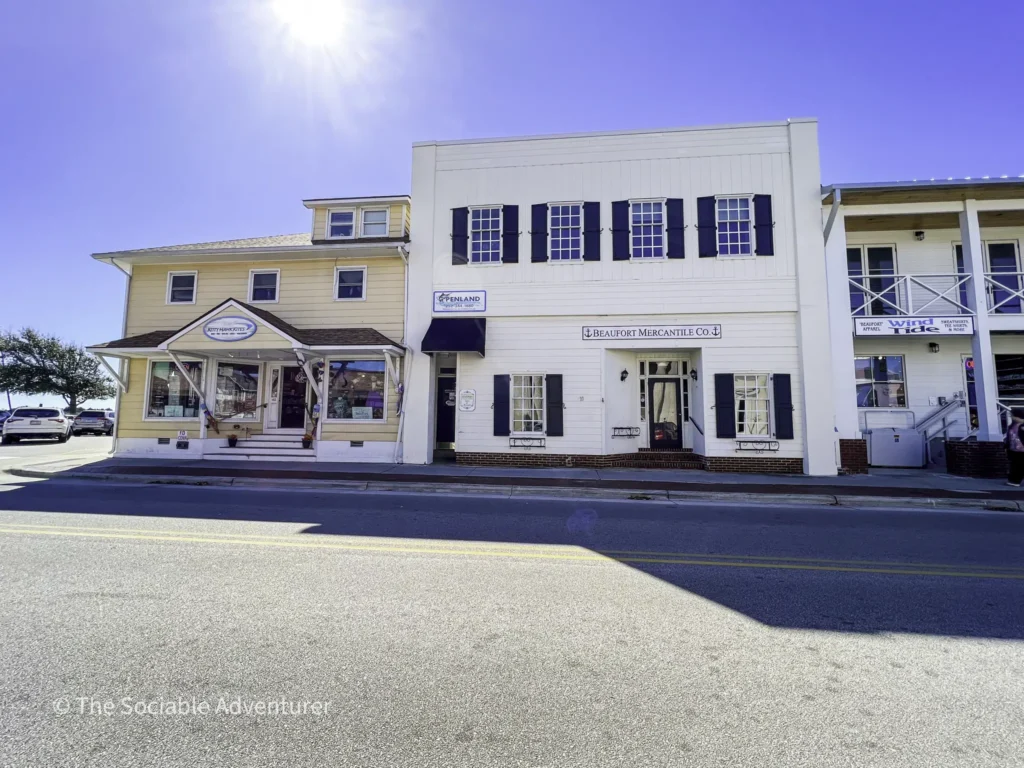
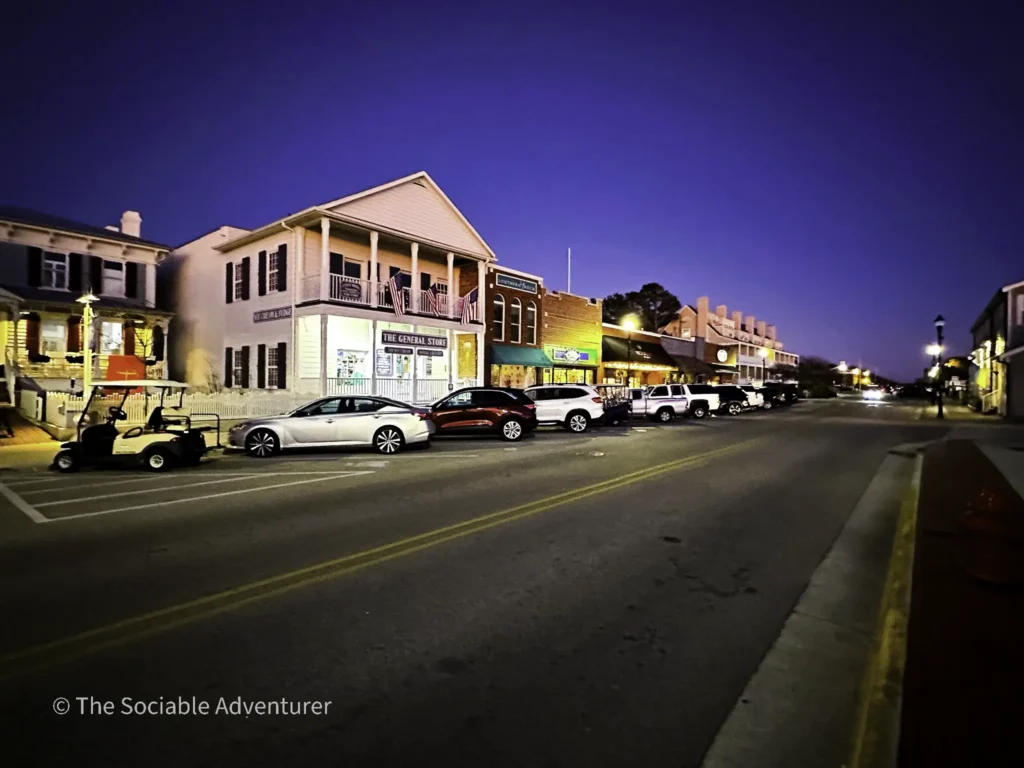
The Beaufort Historic District is one of the most beautifully preserved colonial seaport districts in the southeastern United States. Many original homes still stand, often built in the Bahamian and West Indian style by the early merchants and mariners who shaped the town’s culture. Look closely at the doors and front porches today, and you’ll spot plaques noting the original owners and construction dates.
Several individual landmarks stand out:
- The Old Burying Ground (1731) — Final resting place of Capt. Otway Burns and dozens of early Beaufort residents
- The Hammock House — Beaufort’s iconic historic home, popularly tied to Blackbeard legend
- The Jacob Henry House (1794) — Original home of Jacob Henry, who in 1809 famously fought for and won his right as a Jew to hold state office in North Carolina
- The Gibbs House (1851) — Once a temporary home for marine scientists from Johns Hopkins University, recognized as the first marine biology research laboratory in the country
- North Carolina Maritime Museum — Home to artifacts from the Queen Anne’s Revenge shipwreck
Walking through downtown Beaufort feels like stepping back through more than three centuries of NC coastal life.
A Working Port Through the Centuries
Beaufort’s economy has long been built around the sea. Through the 18th and 19th centuries, the town anchored a thriving industry of lumber, fishing, whaling, and naval stores. While it never reached the scale of Wilmington or Charleston due to its distance from major interior cities, Beaufort remained productive and prosperous for generations.
The town survived both the Revolutionary War and the War of 1812 relatively intact. Following the Civil War, Beaufort rebuilt quickly thanks to its enduring maritime economy. By the early 20th century, summertime visitors had begun discovering Beaufort as a charming coastal retreat.
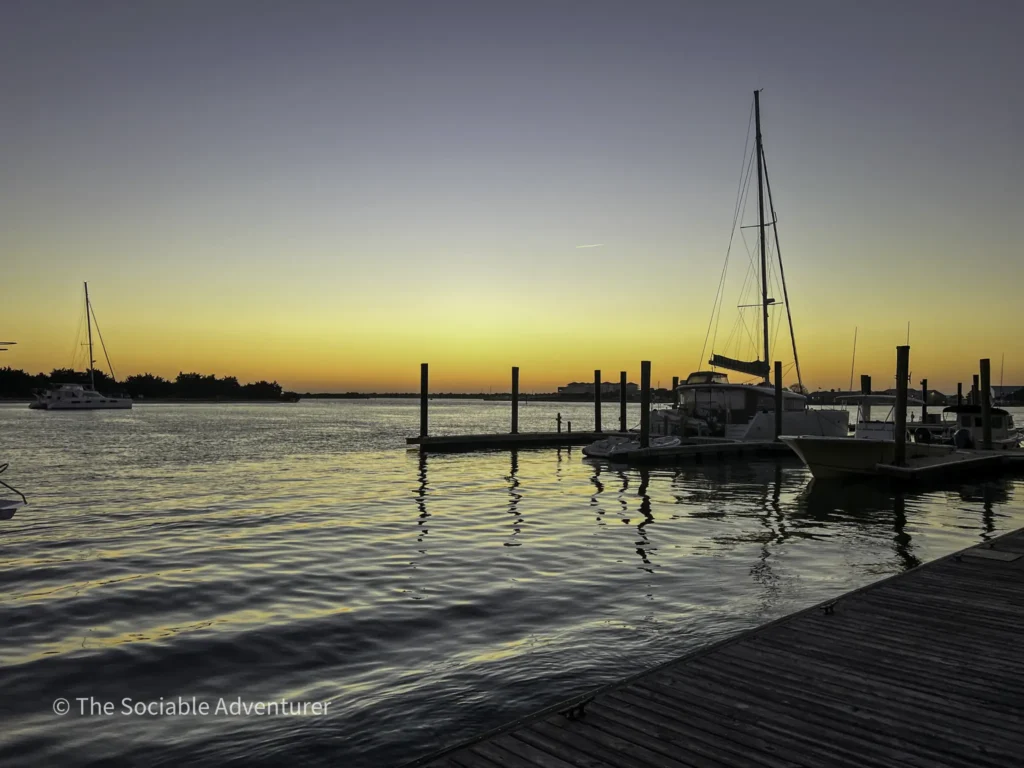
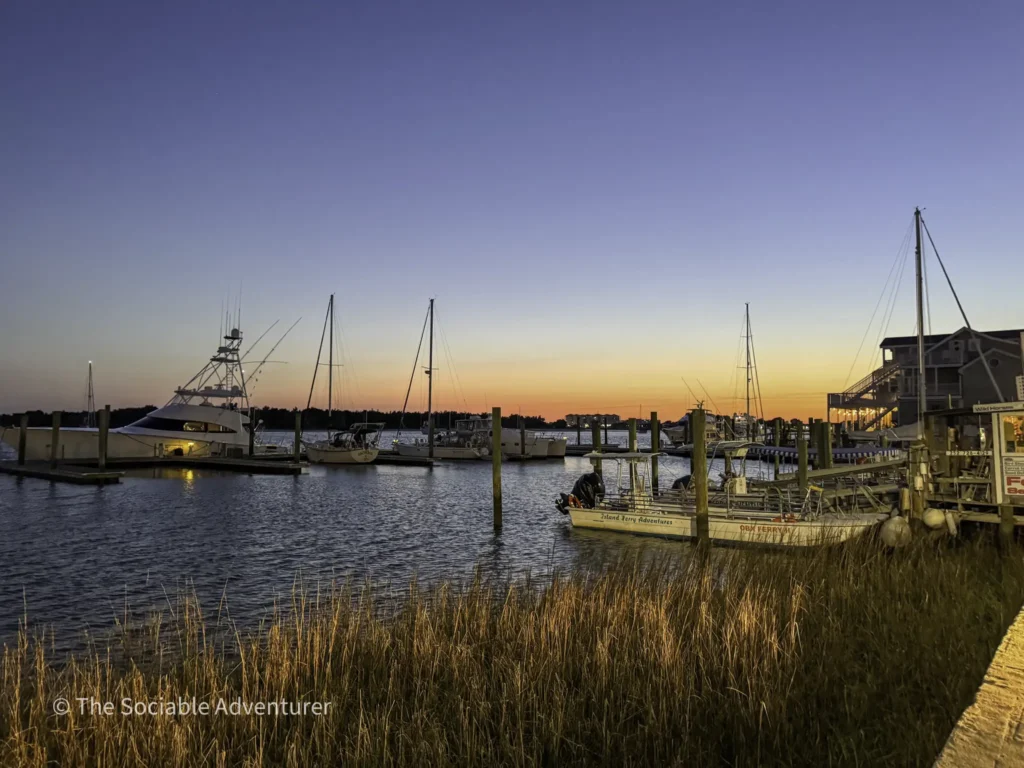
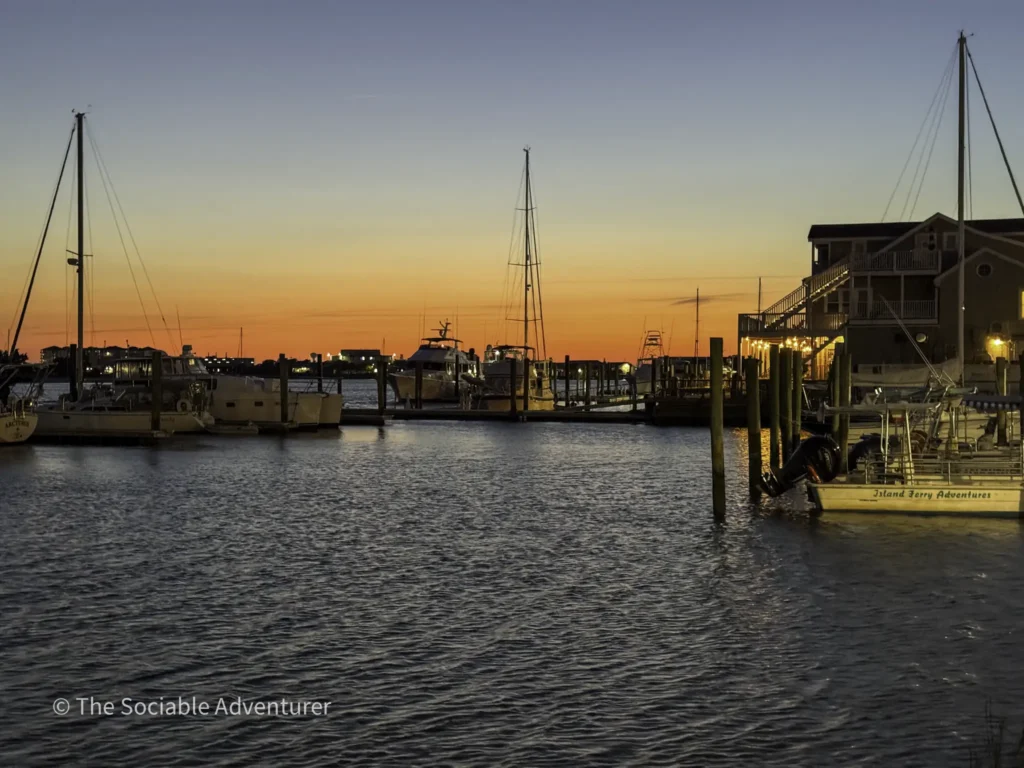
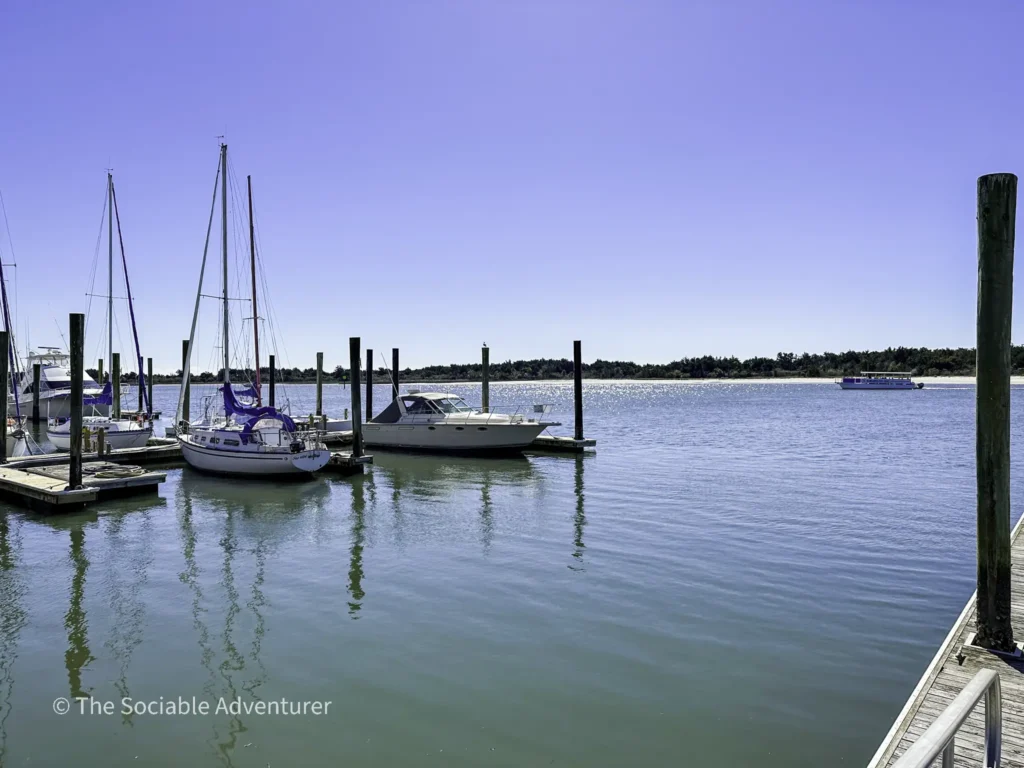
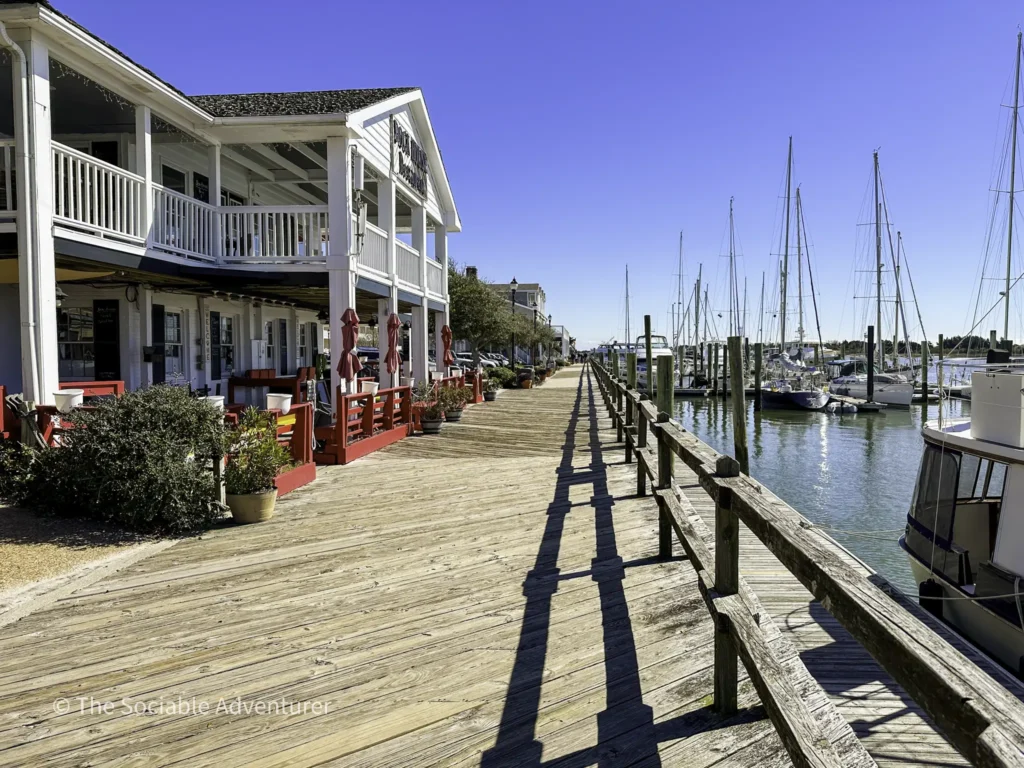
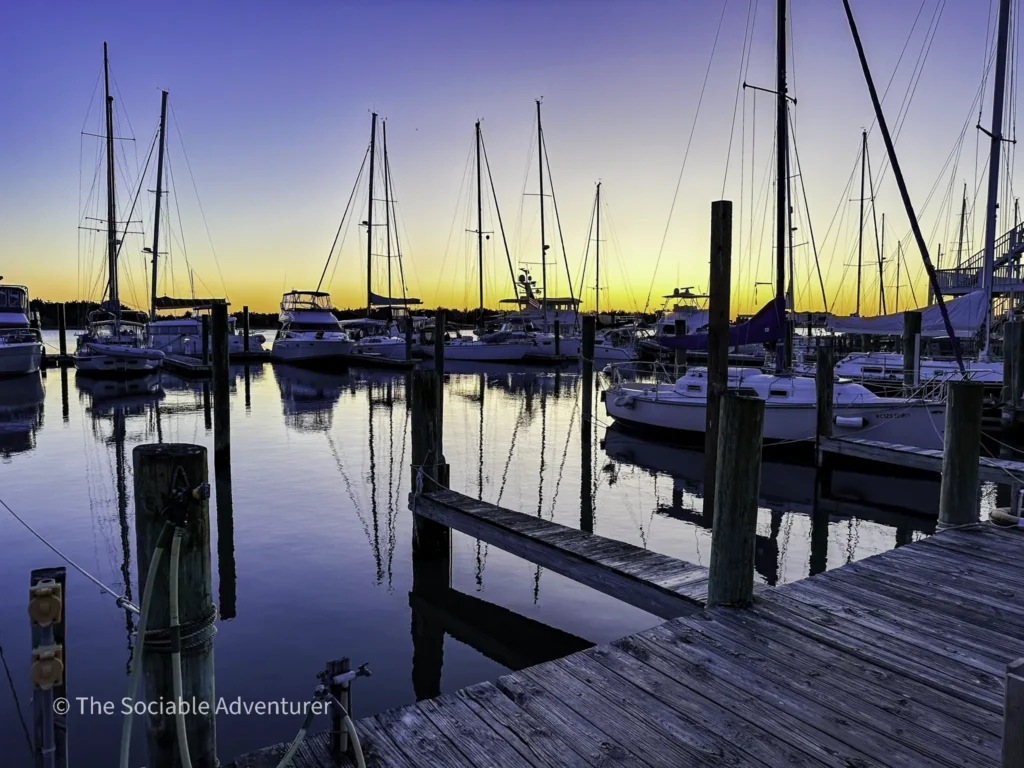
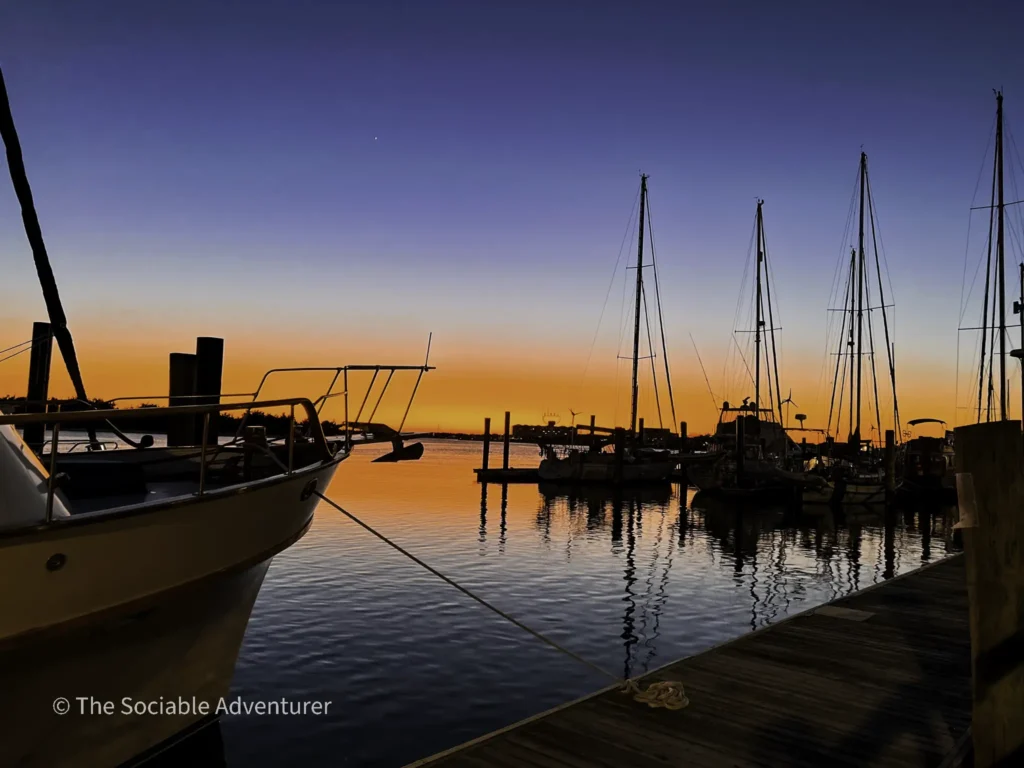
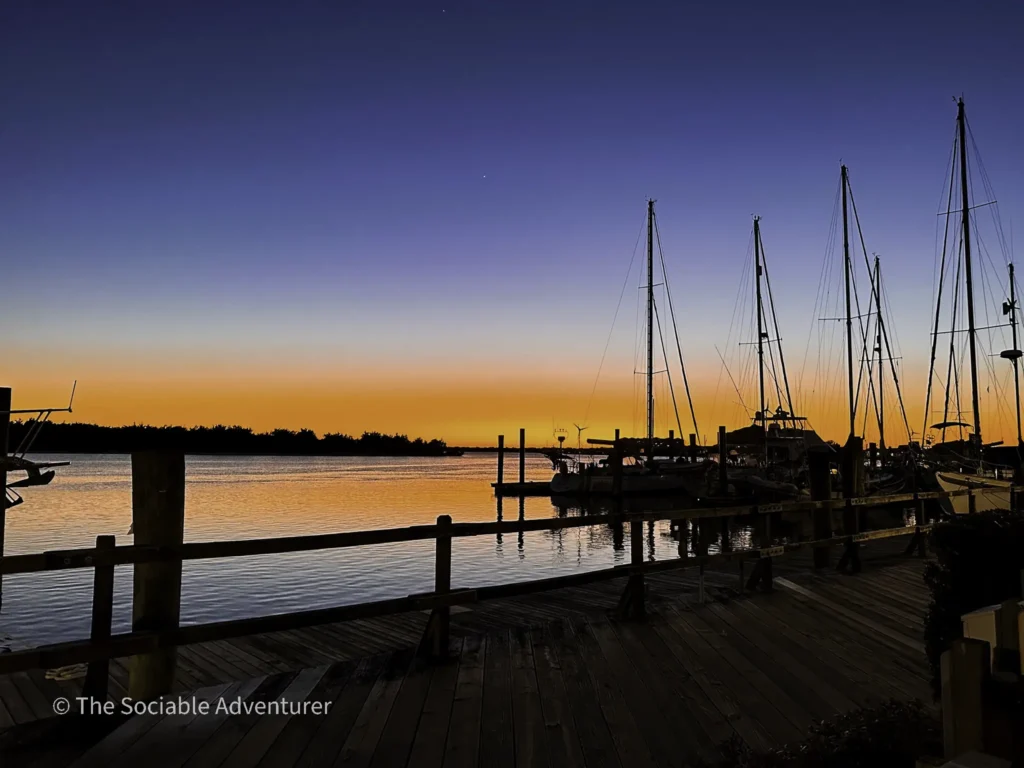
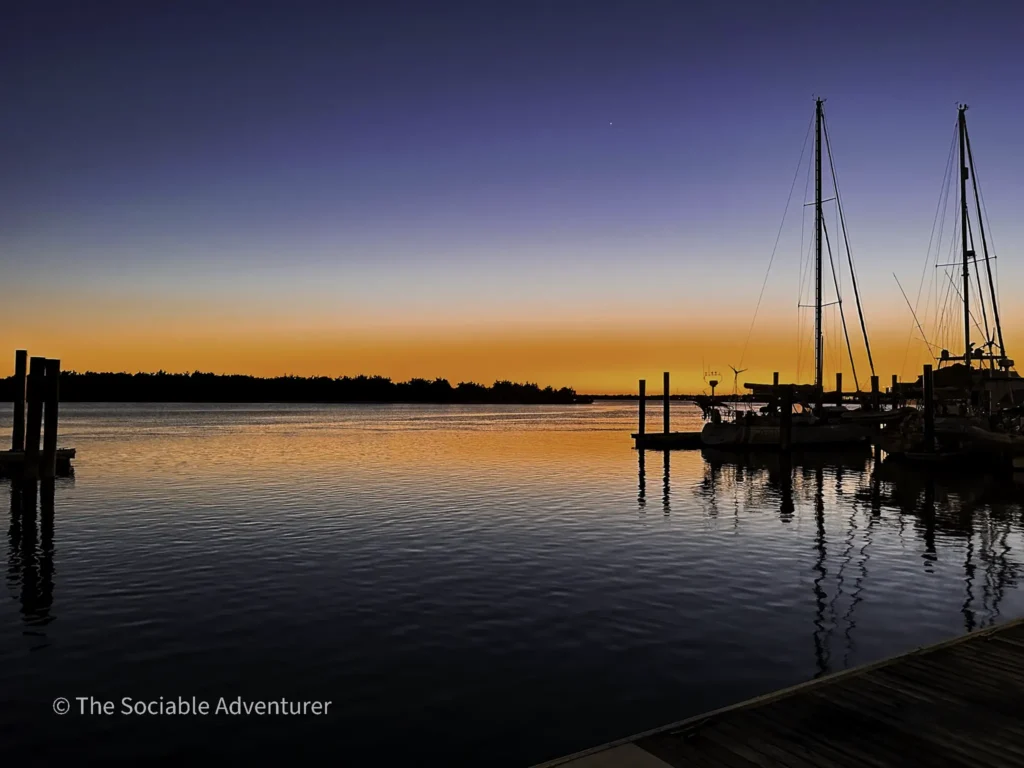
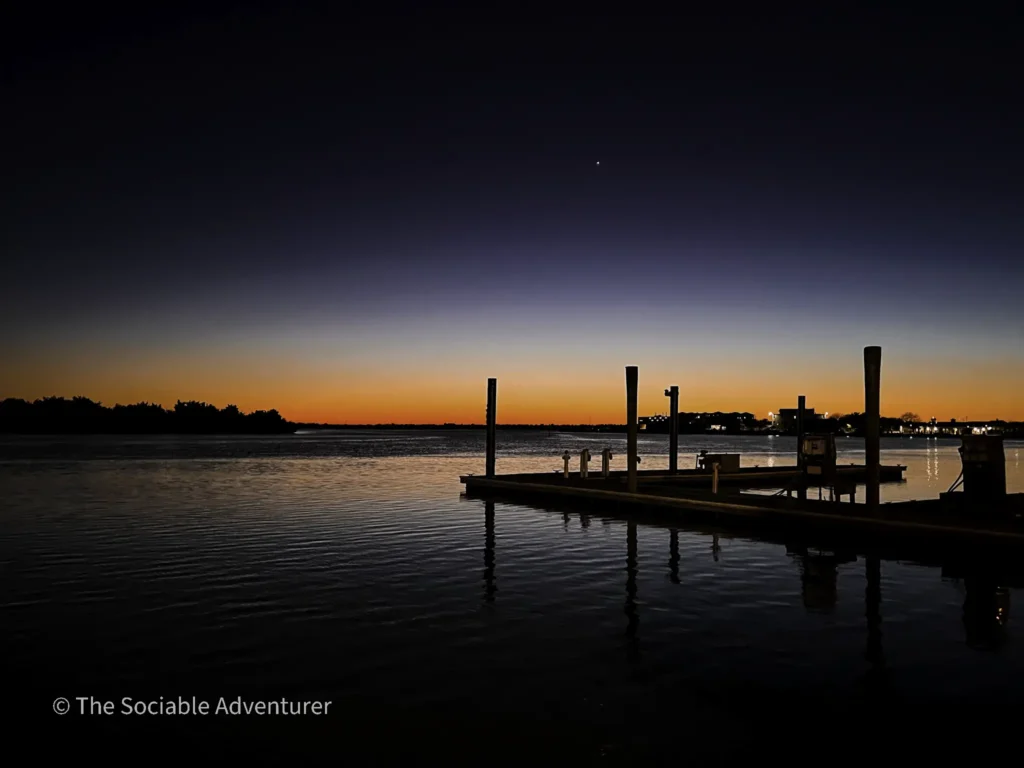
Today, the working port heritage is still visible. Visitors can watch sailboats bobbing along the waterfront, boats moving in and out of the inlet, and locals casting lines along the boardwalk.
Wild Horses, Walking Tours, and Cape Lookout Access
Beyond its historic district, Beaufort offers an equally rich set of natural attractions. Just across Taylor’s Creek sits the Rachel Carson Reserve — a 2,315-acre coastal estuarine reserve where visitors can see the famous wild horses of Carrot Island grazing along the marshlands.
The town also serves as one of the best gateways to the broader Cape Lookout National Seashore. Ferries depart regularly from the Beaufort waterfront to Shackleford Banks (home to additional wild horses) and Cape Lookout Lighthouse on the southern tip of the Outer Banks.
For visitors planning a longer Crystal Coast itinerary, Beaufort makes an ideal home base. It’s just a short drive from Atlantic Beach and Fort Macon State Park, and connects easily to Morehead City, Harkers Island, and Pine Knoll Shores.
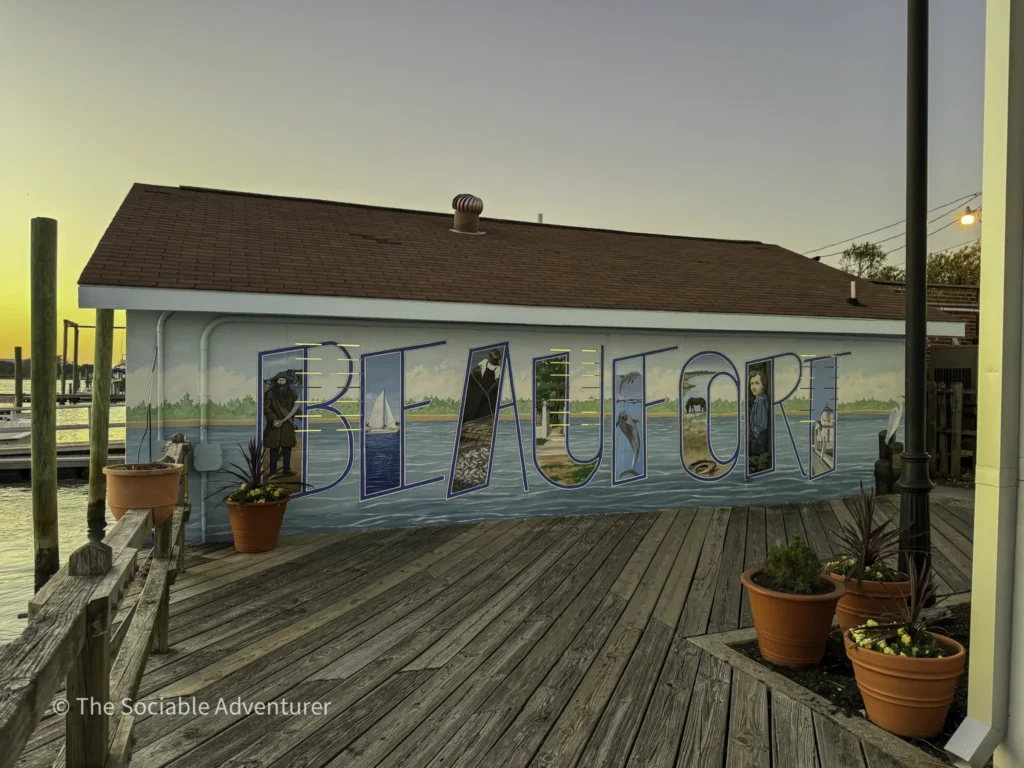
Photos of Beaufort, NC

Things To Do in Beaufort, NC