
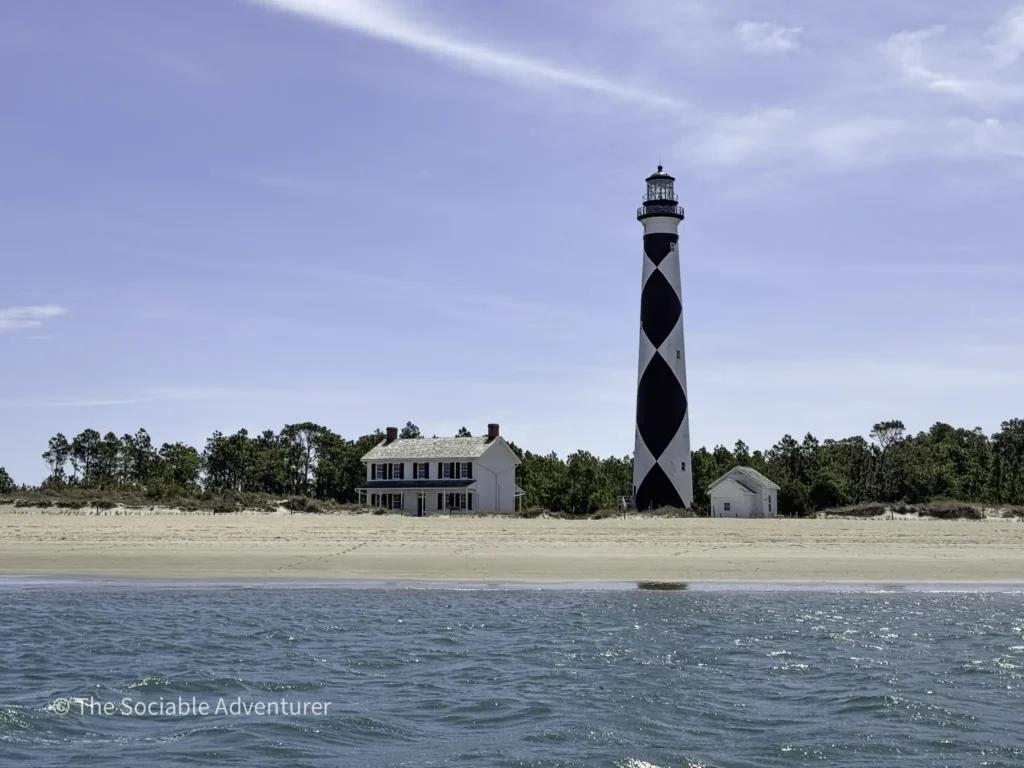
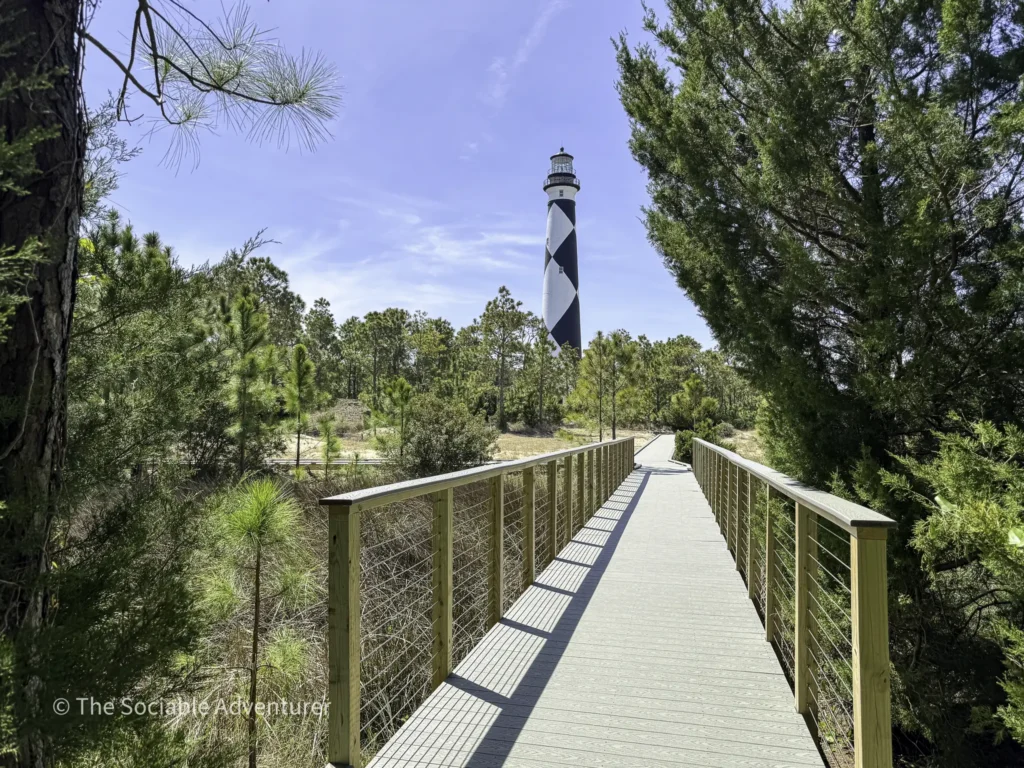
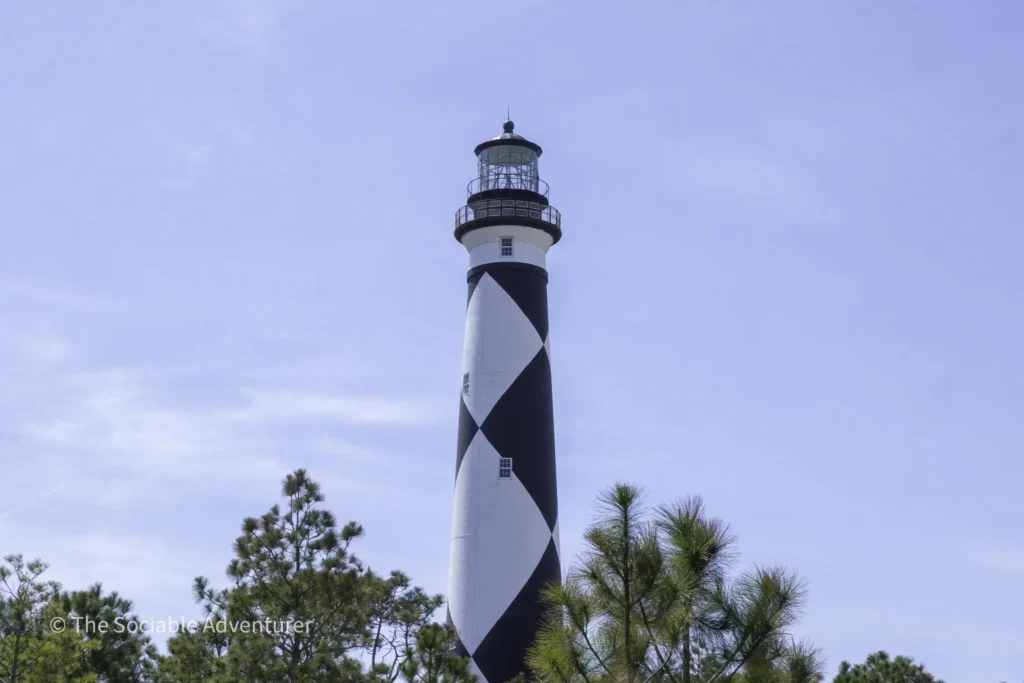
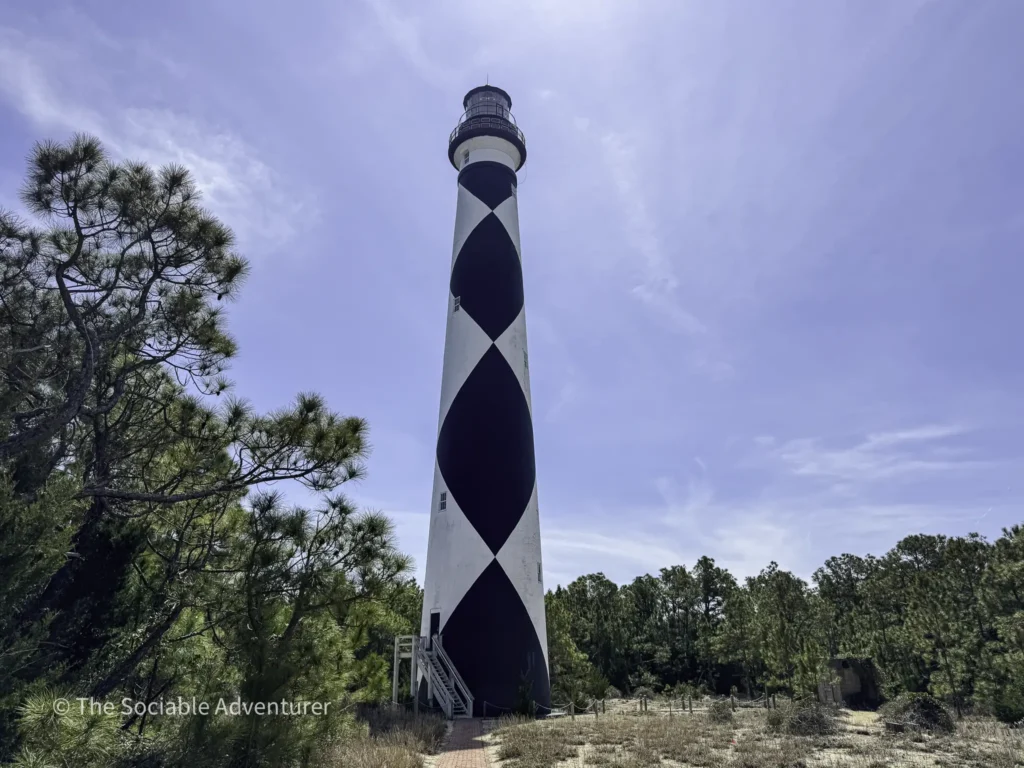
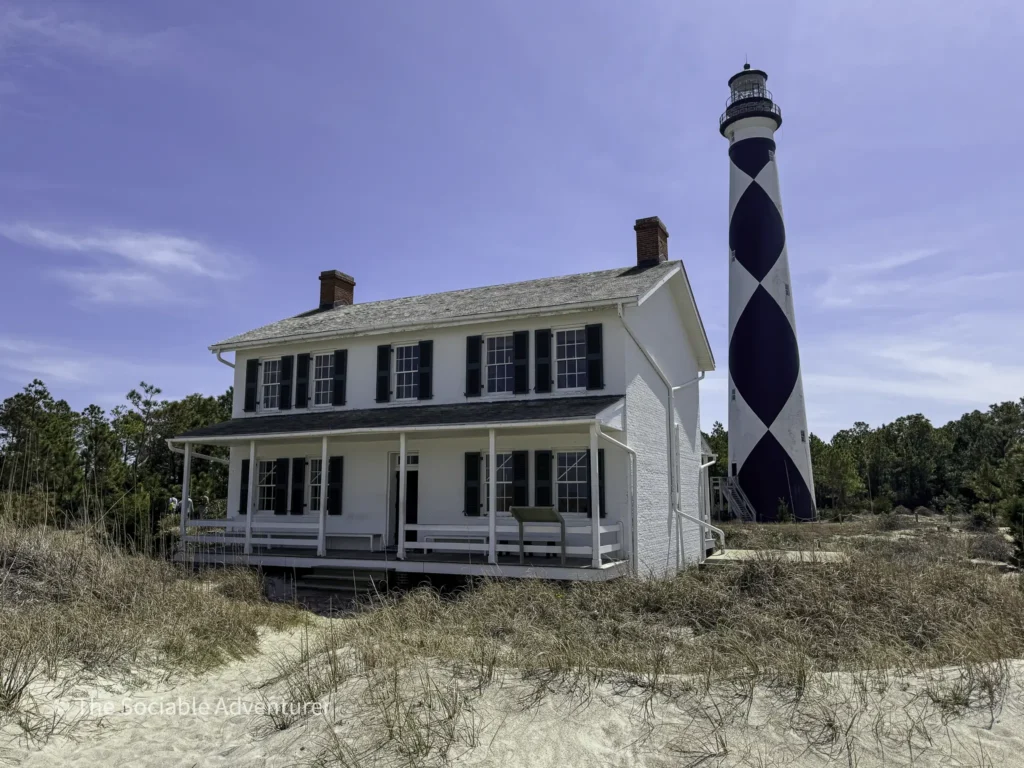
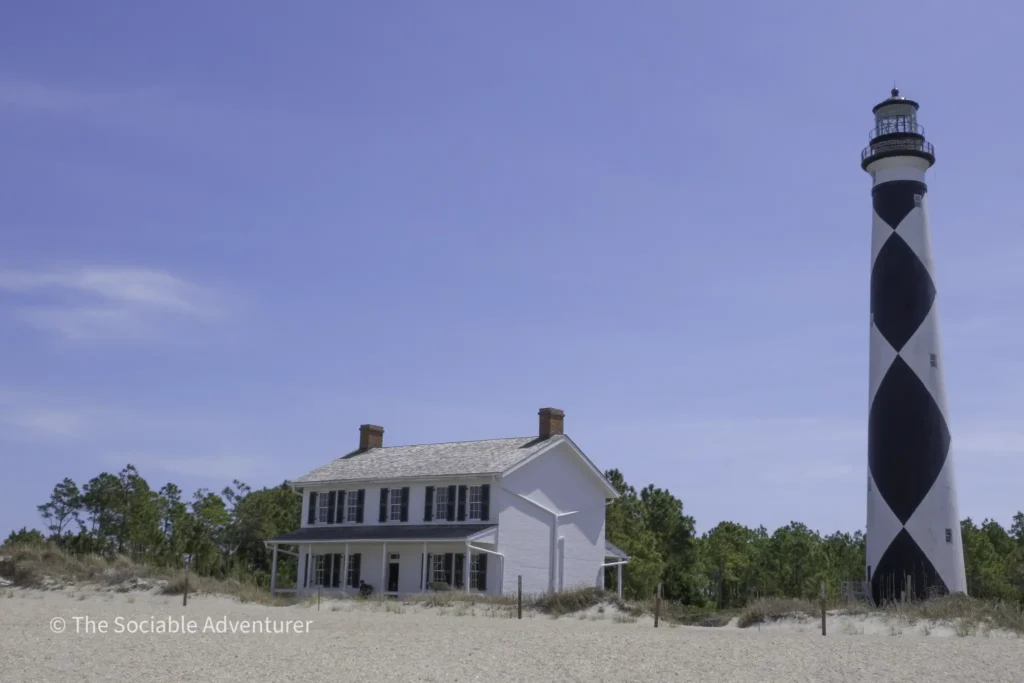
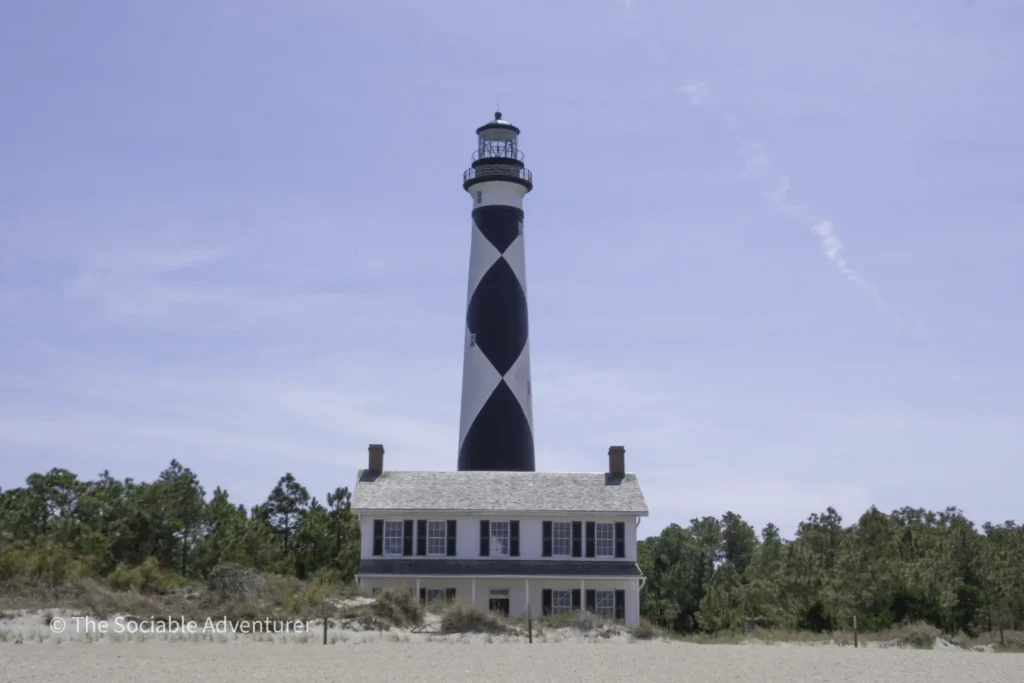
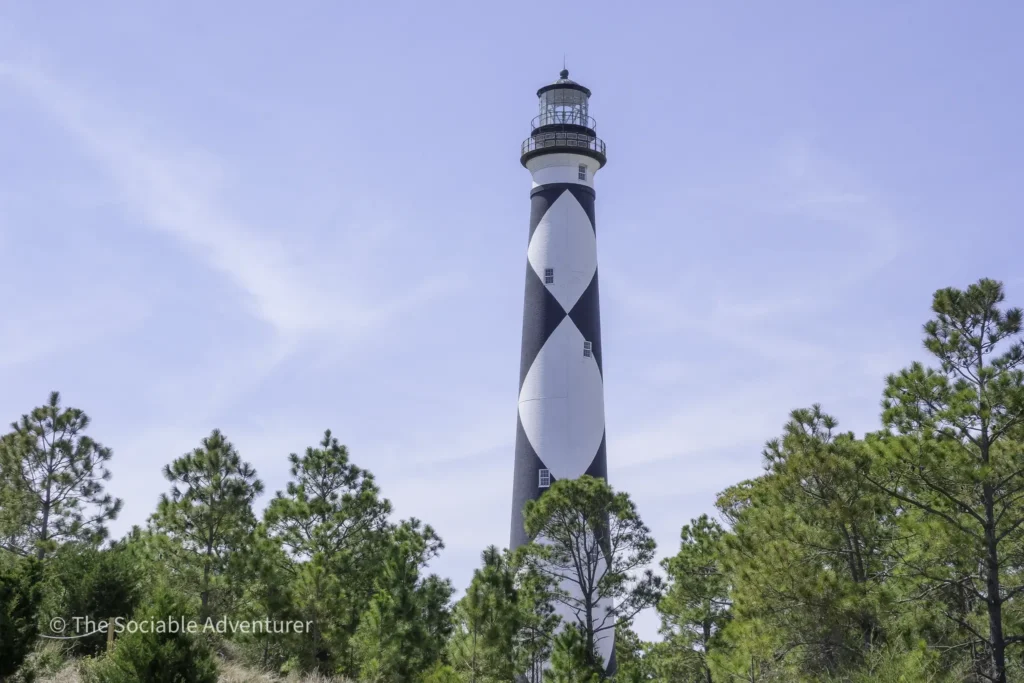
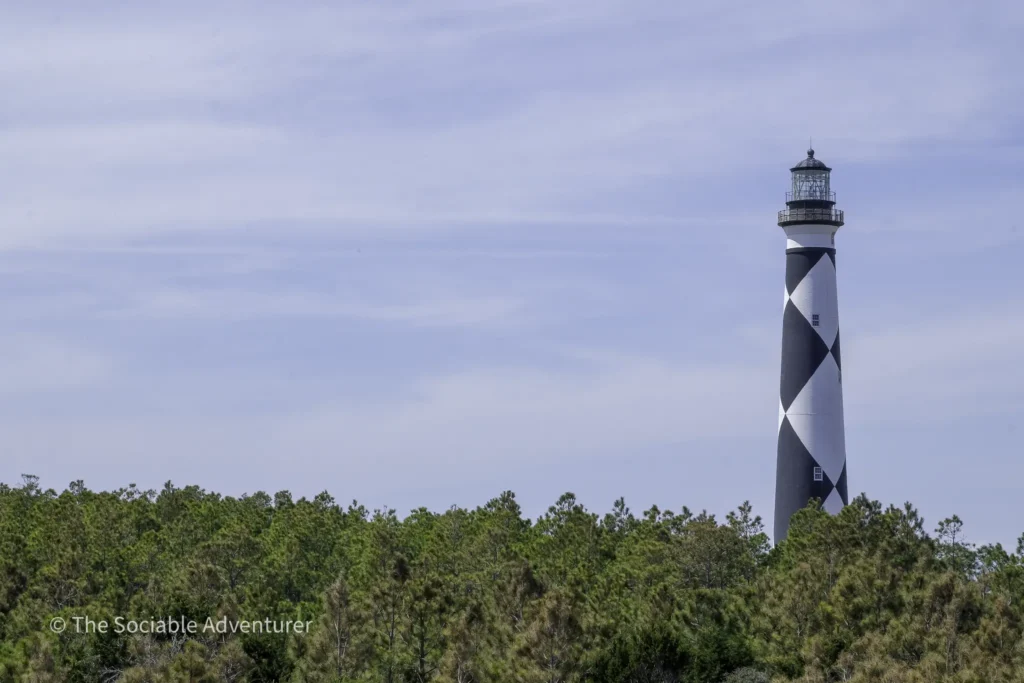
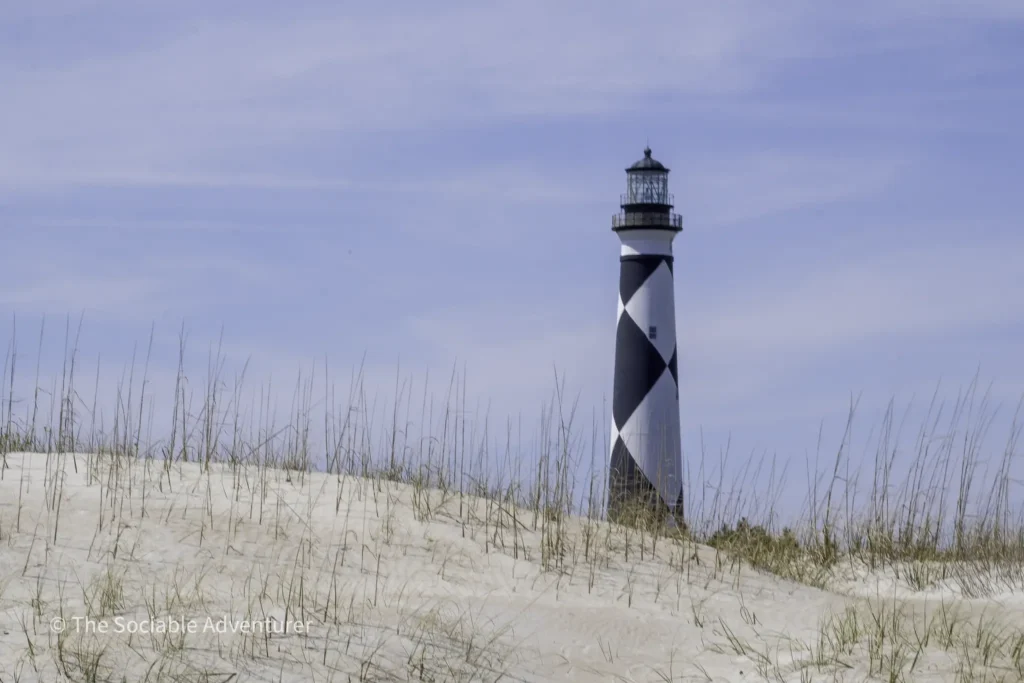
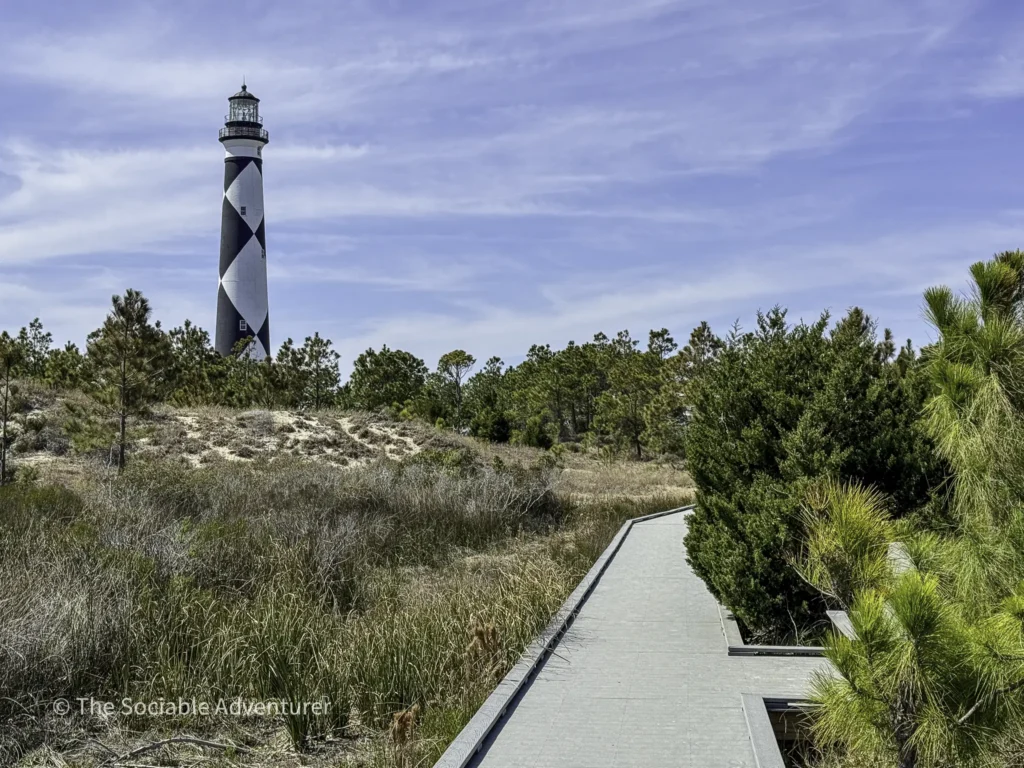
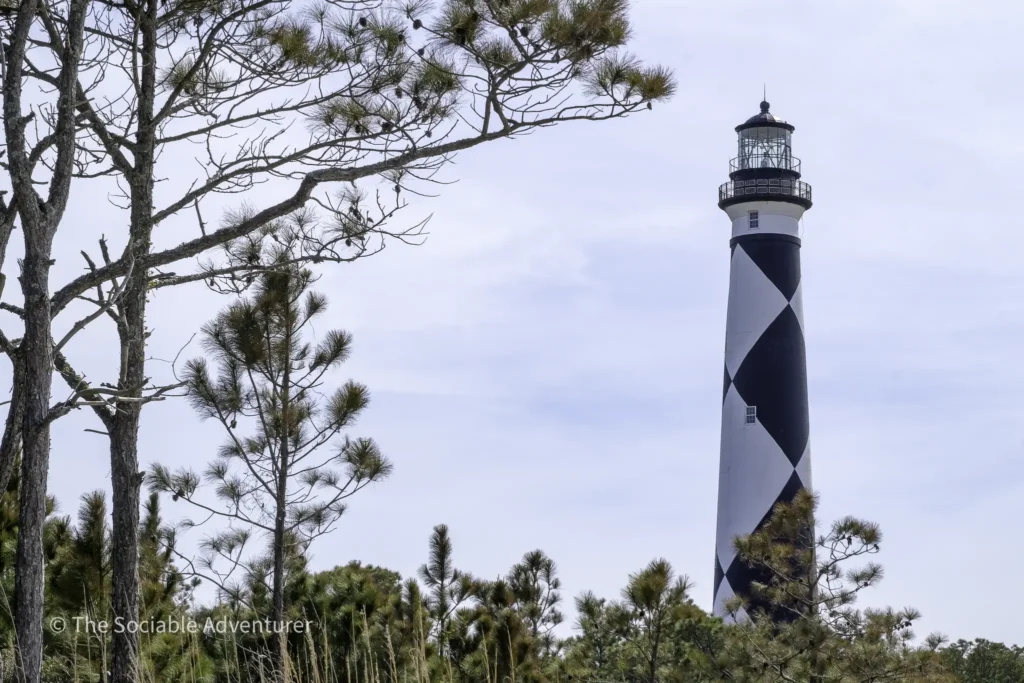
For one of the most iconic maritime landmarks anywhere along North Carolina’s Crystal Coast, the Cape Lookout Lighthouse is a real treasure. Standing 163 feet tall on the southern tip of North Carolina’s Outer Banks, this beloved lighthouse is famous for its distinctive black-and-white diamond pattern — a visual marker unmistakable from miles away.
The lighthouse sits at the heart of Cape Lookout National Seashore on South Core Banks, accessible only by ferry or private boat from nearby Harkers Island, NC or Beaufort, NC. Be sure to check out the YouTube video and pictures below to get a feel for the Cape Lookout Lighthouse before you go — or to relive the visit after.
A 163-Foot Lighthouse with a Distinctive Diamond Pattern
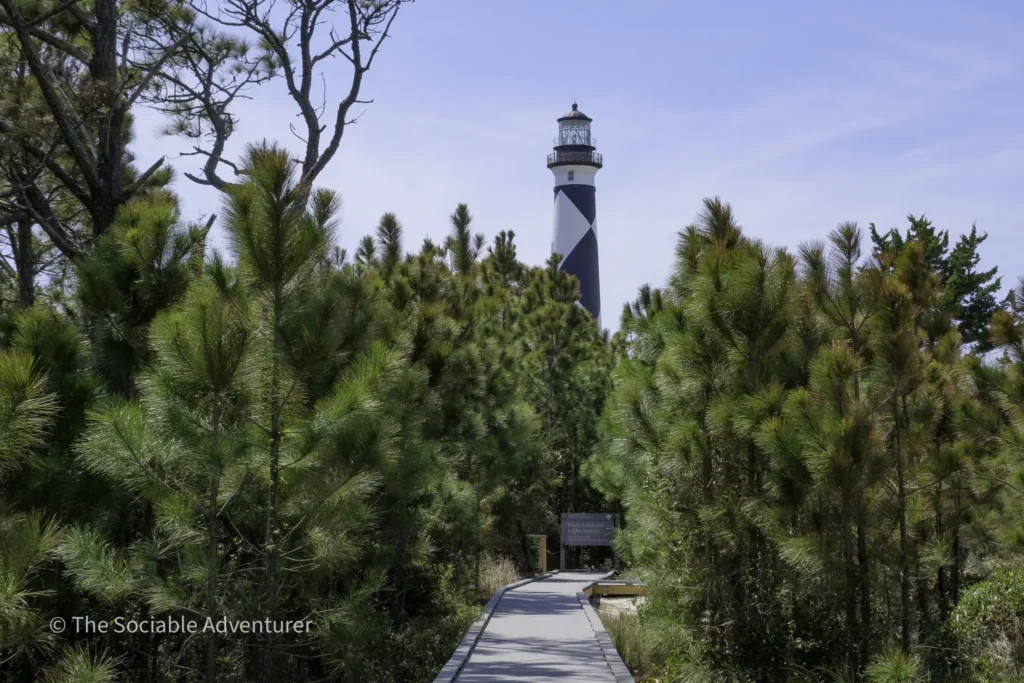
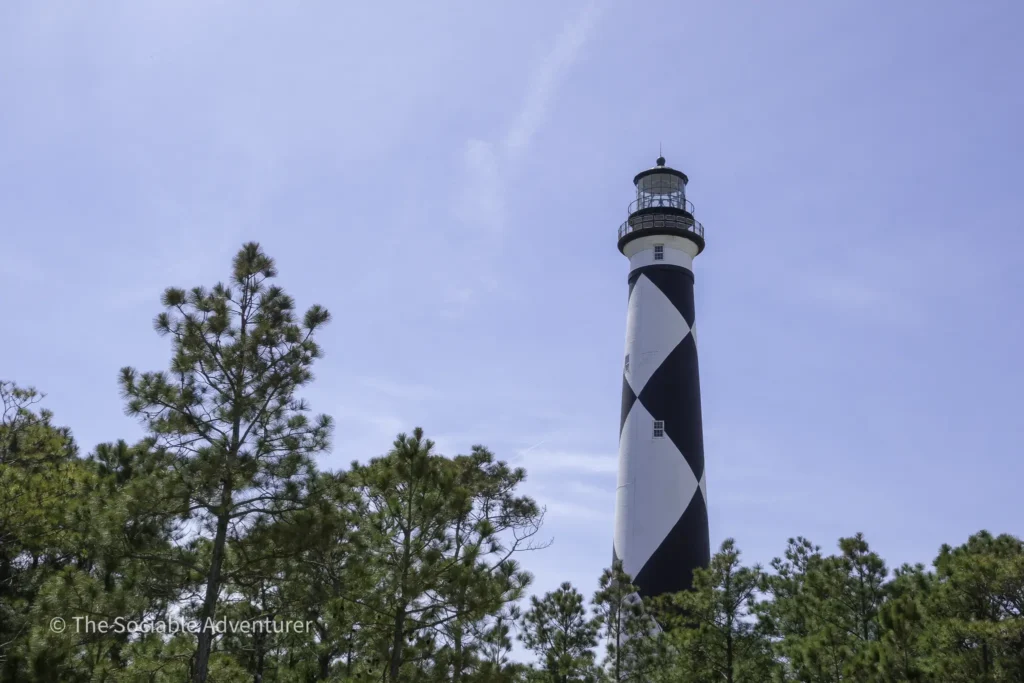
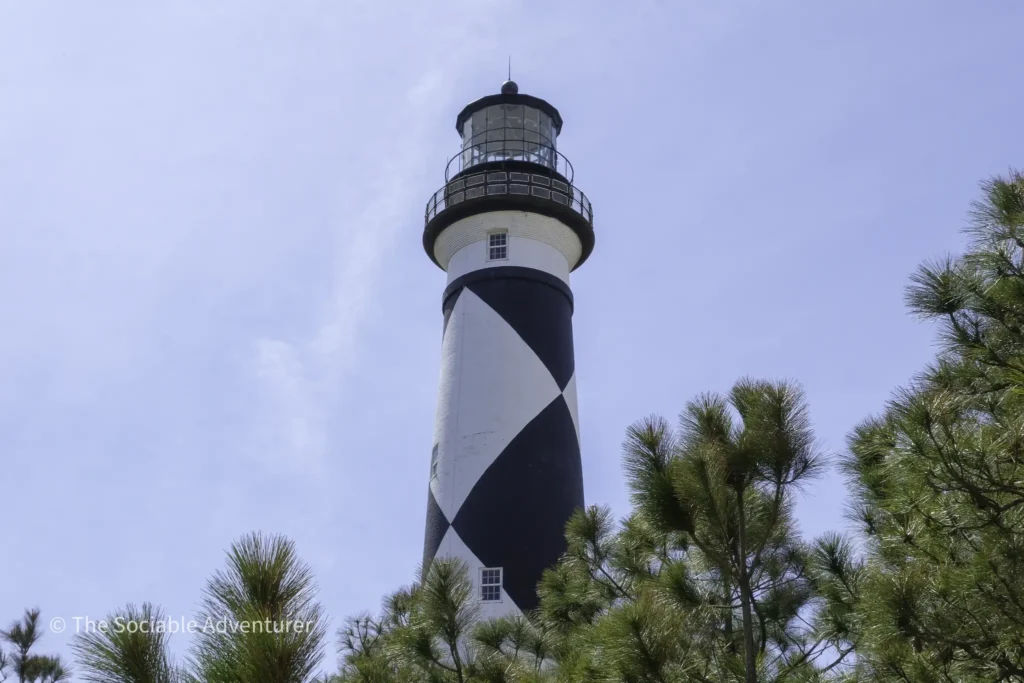
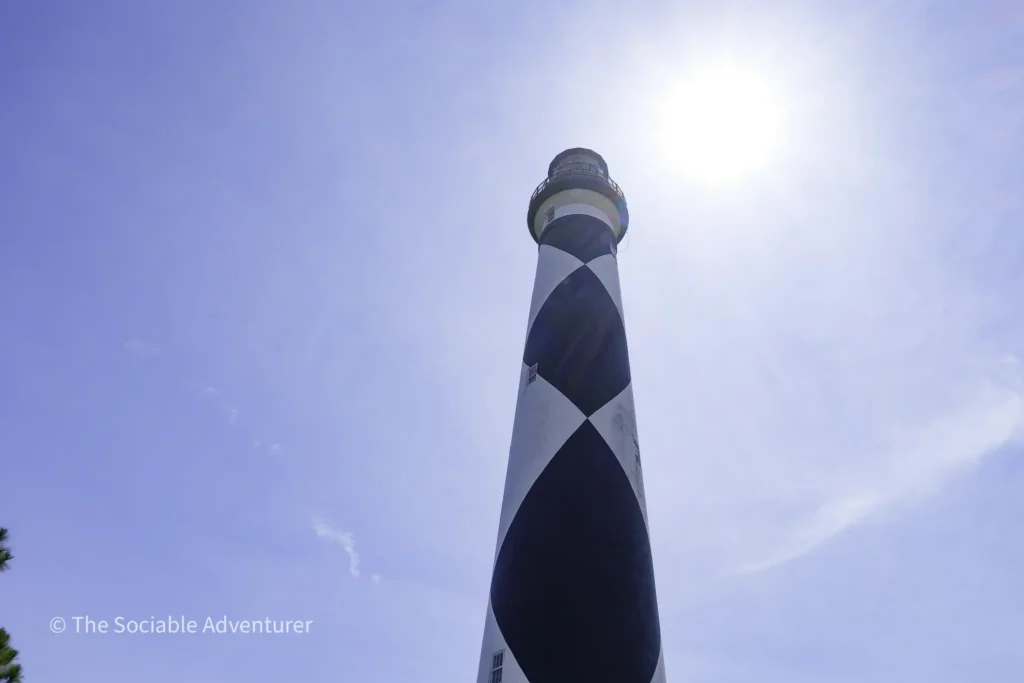
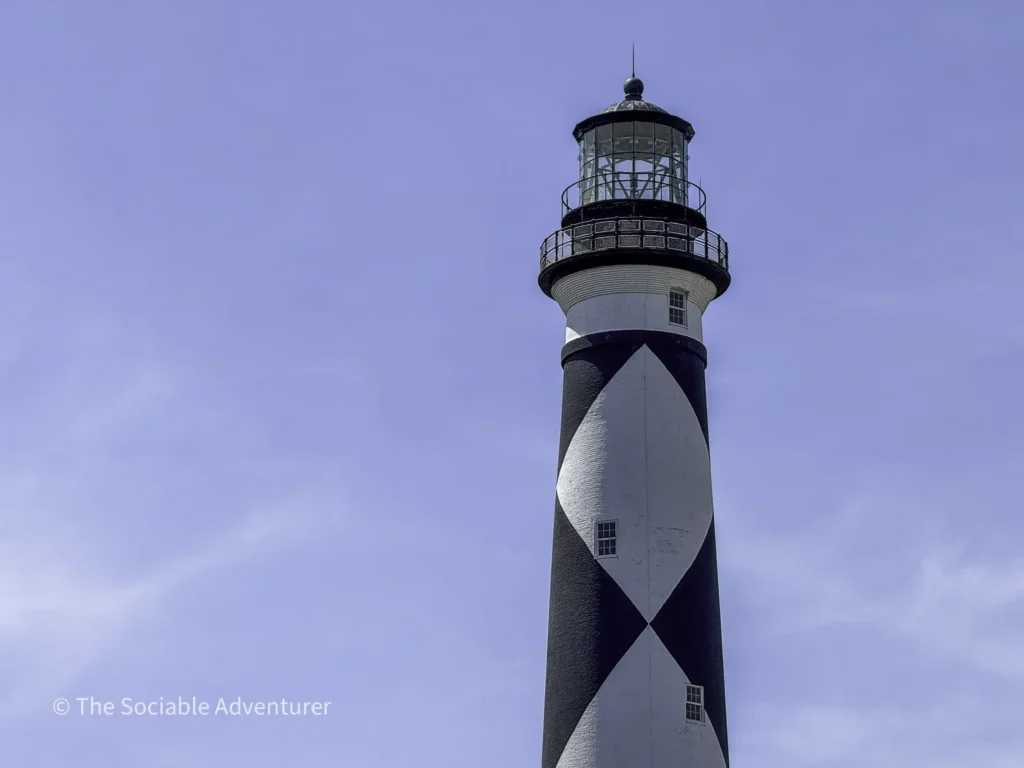
The Cape Lookout Lighthouse stands 163 feet tall along the southern tip of NC’s Outer Banks. The lighthouse is most easily recognized by its iconic black-and-white diamond pattern — a beautifully painted day mark that distinguishes it from other lighthouses along the Atlantic coast.
The lighthouse’s beam reaches up to 19 miles out to sea, making it a working navigational aid for vessels moving through the broader waters off Carteret County. The lighthouse remains one of the most photographed coastal landmarks anywhere in NC.
Built in 1812, Rebuilt in 1859 — A Layered History
The first Cape Lookout Lighthouse was originally built in 1812 to guide ships through the treacherous waters of the Outer Banks. The narrow shoals and shifting sandbars surrounding Cape Lookout claimed many vessels during the early-19th-century shipping era. The original lighthouse helped reduce those losses.
The lighthouse seen today was rebuilt in 1859 — a taller, more durable replacement that has stood for more than 165 years. The 1859 lighthouse acquired its now-famous diamond pattern in 1873 to give each Outer Banks lighthouse a distinctive daytime appearance.
The lighthouse also has a meaningful Civil War history. Josiah Fisher Bell — a Confederate agent from Beaufort — attempted to blow up the Cape Lookout Lighthouse during the war as part of a broader effort to disrupt Union Navy operations along the Atlantic coast. The attempt ultimately failed, and the lighthouse survived intact.
Climbing the 207 Steps — Views from the Top
When open to climbers, the Cape Lookout Lighthouse offers one of the most rewarding climbing experiences along North Carolina’s coast. The interior staircase rises 207 steps to the top viewing platform.
The views from the top are remarkable on clear days:
- Untouched barrier-island beaches of the South Core Banks stretching for miles
- Wild horses on Shackleford Banks — the Spanish-mustang-descended herd protected under the Shackleford Banks Wild Horses Protection Act
- The Atlantic Ocean to the east and the broader sounds to the west
- Other vessels passing through the broader Cape Lookout shipping lanes
The lighthouse is typically open for climbing from May through September under normal conditions. However, the lighthouse periodically closes for renovations and structural work, so visitors should check the National Park Service Cape Lookout Lighthouse page for the current climbing schedule before planning a visit.
How to Visit — Ferries from Harkers Island, Davis, and Beaufort
The Cape Lookout Lighthouse is accessible only by boat. South Core Banks has no bridges, paved roads, or commercial development — keeping the island undeveloped and largely wild. Visitors can reach the area as foot passengers via passenger ferry, or with a vehicle via separate vehicle ferries (which require an Off-Road Vehicle permit to drive on the islands).
For passenger-only visits:
- Island Express Ferry from Harkers Island — The primary passenger ferry service operating regular trips during the spring, summer, and early fall seasons
- Private boat or kayak — For visitors with their own watercraft
- Charter boats from Beaufort — A longer but rewarding option from the broader Beaufort waterfront
- Mega Truck Beach Shuttle (on-island) — Once on South Core Banks, Island Express Ferry Service operates a 4WD beach shuttle that runs from the Lighthouse Visitor Center to “the Point” (the southern tip of the island, known for shelling), passing through the Cape Lookout Village Historic District — a preserved ghost town near the lighthouse. Tickets are first-come, first-serve at the CALO store inside the Lighthouse Visitor Center; there’s a separate fee in addition to the ferry ticket
For visitors wanting to bring a vehicle:
Vehicle ferries operate from Davis, NC to South Core Banks (the island home of the lighthouse). Cape Lookout Cabins & Camps Ferry Service is the primary operator, though authorized ferry concessionaires can change over time. Drivers should check the National Park Service’s authorized ferry list for current operators before booking.
A few important practical notes for visitors bringing a vehicle:
- An Off-Road Vehicle (ORV) Beach Driving Permit is required for any vehicle on the South Core Banks. Permits are purchased annually through recreation.gov and are valid from mid-March through December 31. Decals can be picked up at the Harkers Island Visitor Center by appointment
- Vehicles are not allowed on the islands from January 1 through mid-March — a seasonal closure that protects wildlife and habitat
- 4WD vehicles are strongly recommended — the deep, soft “sugar sand” on the islands can strand even capable 4WD vehicles
Once on South Core Banks, visitors can walk the broader beaches, climb the lighthouse (when open), and combine the visit with other Cape Lookout National Seashore experiences.
Two Historic Villages — Cape Lookout Village and Portsmouth Village
The Cape Lookout National Seashore preserves two distinct historic villages — both maritime communities that thrived in the 19th century before being abandoned and acquired by the National Park Service.
Cape Lookout Village Historic District (South Core Banks)
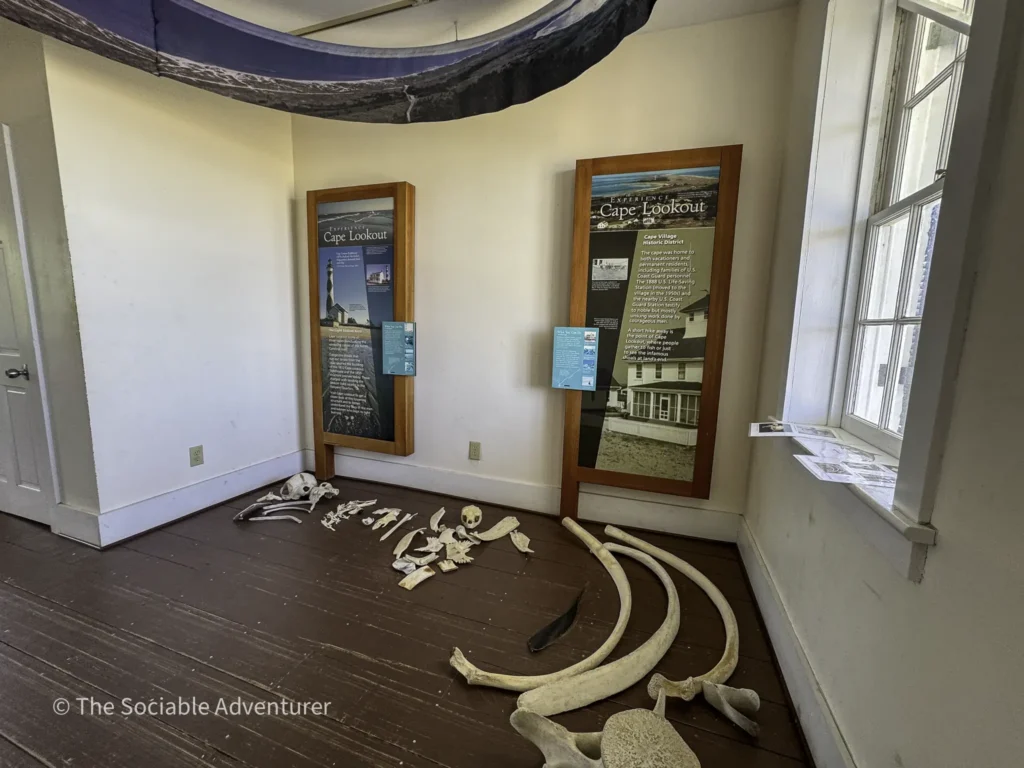
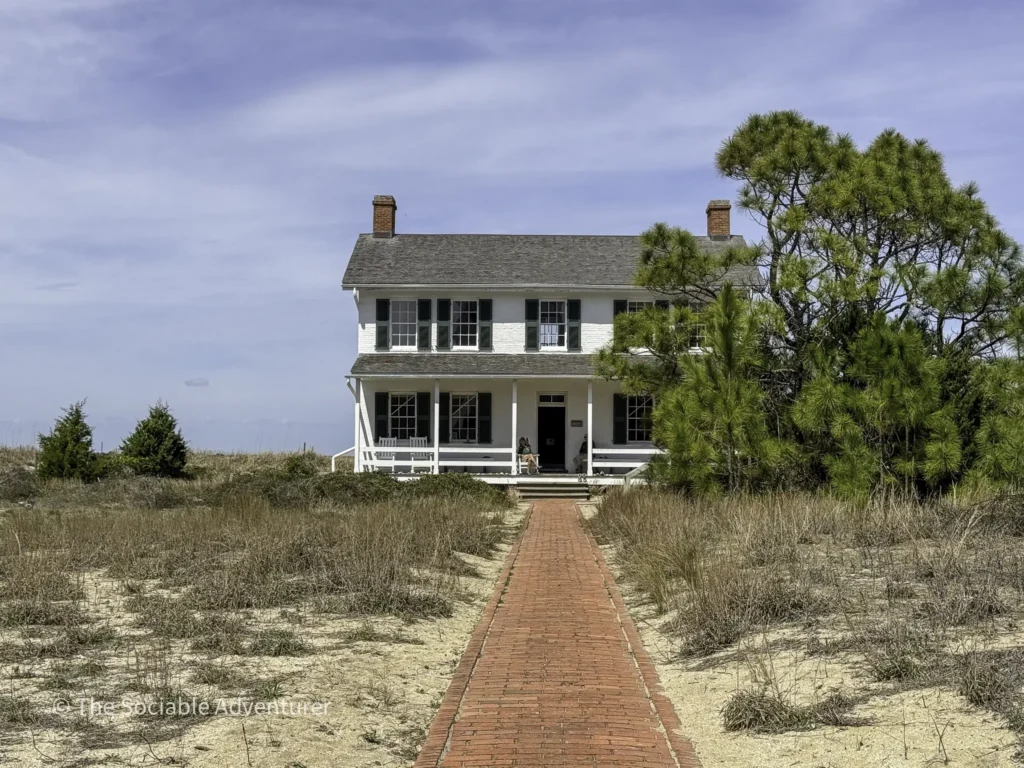
The Cape Lookout Village Historic District sits near the lighthouse on South Core Banks — easily accessible to lighthouse visitors. The village was once home to lifesavers, lighthouse keepers, fishermen, and “lookout” spotters who scanned the Atlantic for distressed vessels. Today, the district preserves a small collection of historic structures that tell the story of life around the working lighthouse during the late 19th and early 20th centuries.
Visitors arriving via passenger ferry can reach the Cape Lookout Village Historic District either by walking or by taking the Island Express Mega Truck Beach Shuttle, which passes through the village on its route between the Lighthouse Visitor Center and the Point.
Portsmouth Village (North Core Banks)
The better-known Portsmouth Village sits on the northern tip of North Core Banks — a separate barrier island accessed via a different ferry. Portsmouth has stood largely undisturbed for more than 50 years since its last residents left in 1971.
Established in 1753 by the North Carolina Colonial Assembly, Portsmouth was once a thriving port town that served as a critical “lightning” stop along the Atlantic shipping route. Larger cargo ships couldn’t navigate the shallow Outer Banks inlets, so they would offload cargo at Portsmouth, where smaller boats carried it to the mainland. At its peak in 1860, the village had a population of nearly 700.
Today, Portsmouth Village is preserved as a ghost town with more than 20 standing restored buildings — including the 1894 US Life-Saving Service Station, a Methodist Church, a one-room schoolhouse, a post office and general store, and several preserved houses dating from the 1840s through the early 1900s. The village is listed on the National Register of Historic Places and is staffed seasonally by NPS rangers and volunteers.
Access to Portsmouth Village is separate from access to the Cape Lookout Lighthouse. Vehicle ferries depart from Atlantic, NC, to North Core Banks (operators are subject to change — drivers should check the National Park Service’s authorized ferry list for current concessionaires). Visitors can also reach Portsmouth Village via boat tours from Ocracoke, located just across Ocracoke Inlet to the north.
Important note: Because Cape Lookout Village and Portsmouth Village are on separate islands separated by inlets, you can’t drive (or shuttle) between them. Visiting both requires two separate ferry trips on different days — or a substantial amount of planning.
Good to Know
- Height: 163 feet
- Original construction: 1812 (first lighthouse on the site)
- Current structure: 1859 (rebuilt)
- Diamond pattern added: 1873
- Climbing steps: 207 steps to the top
- Beam reach: Up to 19 miles out to sea
- Location: Southern tip of NC’s Outer Banks, on South Core Banks within Cape Lookout National Seashore
- Passenger ferry access: Island Express Ferry from Harkers Island; charter boats from Beaufort; private boat
- Vehicle ferry access: From Davis, NC to South Core Banks via Cape Lookout Cabins & Camps Ferry Service (check the National Park Service authorized ferry list for current operators)
- On-island shuttle: Island Express Ferry Service operates a 4WD “Mega Truck Beach Shuttle” from the Lighthouse Visitor Center to “the Point,” passing through the Cape Lookout Village Historic District; tickets first-come, first-serve at the CALO store inside the Visitor Center
- ORV permit required for vehicles: Off-Road Vehicle Beach Driving Permit required for any vehicle on the islands; purchased through recreation.gov; valid mid-March through December 31; pick up decals at the Harkers Island Visitor Center by appointment
- Vehicle restrictions: No vehicles allowed January 1 through mid-March (seasonal habitat protection closure); 4WD strongly recommended due to soft sand conditions
- Climbing season: Typically May through September (check the National Park Service website for current climbing status)
- Views from top: Untouched beaches of South Core Banks, wild horses on Shackleford Banks, the Atlantic Ocean
- Civil War history: Survived an attempt by Confederate agent Josiah Fisher Bell (of the Josiah Bell House in Beaufort) to destroy it
- Two historic villages within the seashore: Cape Lookout Village Historic District (South Core Banks, near the lighthouse) and Portsmouth Village (1753, North Core Banks); two separate islands accessed via separate ferries
- Best for: Lighthouse enthusiasts, history buffs, photographers, wildlife photographers (for the Shackleford Banks horse views), and outdoor adventurers
- Pair with: A visit to the Harkers Island Visitor Center, a wild-horse spotting trip to Shackleford Banks, a stop at the Core Sound Waterfowl Museum, or a daytime trip to the North Carolina Maritime Museum for the Queen Anne’s Revenge exhibit
A Harkers Island Highlight
The Cape Lookout Lighthouse is the kind of stop that genuinely captures the layered maritime history at the heart of NC’s Crystal Coast. The 163-foot 1859 structure has stood for more than 165 years, surviving hurricanes, Civil War sabotage attempts, and the slow march of time.
The black-and-white diamond pattern, added in 1873, gives the lighthouse a distinctive appearance. As a result, the lighthouse remains one of the most recognized maritime landmarks anywhere in NC.
The 207-step climb to the top offers a real reward for visitors willing to make the trek. The panoramic views across South Core Banks, the Atlantic Ocean, and especially the wild horses of Shackleford Banks give the experience real depth — when the lighthouse is open for climbing.
Whether you’re a lighthouse enthusiast, a history buff drawn to the Civil War sabotage story, or a visitor combining the ferry ride with a broader Cape Lookout National Seashore day, this is one of the most distinctive stops you can make in Carteret County.
Resources
National Park Service – Cape Lookout Lighthouse
Cape Lookout Lighthouse Ferry Service
Location
Social Media
@thesociableadventurer 🏖️🌊✨ Exploring the iconic Cape Lookout Lighthouse on North Carolina's Crystal Coast! With its stunning black-and-white diamond pattern, this historic beacon has guided ships since 1812. 🗺️💡 Although it's currently undergoing renovations, the breathtaking views from the 207-step climb will be worth the wait! Explore the untouched beaches and view the wild horses across the shore on Shackleford Banks! 🐎❤️ https://thesociableadventurer.com/cape-lookout-lighthouse/ #HarkersIslandNC #HarkersIsland #CrystalCoast #OuterBanks #OBX #OBXNC #OuterBanksNC #CarteretCounty #CarteretCountyNC #VisitNC #CelebratingNC #discover_carolinas #discoverNC #bestofthetarheelstate #NC #NorthCarolina #Adventure #Discover #Explore #TheSociableAdventurer #EasternNC #EastCoast #NatureLovers #CapeLookoutLighthouse #AdventureAwaits #CoastalBeauty #WildHorses #NCLighthouses #BeachDay #FerryRide #CapeLookout #NPS #NationalParkService #VisitParks #NationalParks @Visit NC @National Park Service ♬ original sound – The Sociable Adventurer
The Cape Lookout Lighthouse on NC’s Crystal Coast 🌊 is known for its black-and-white diamond pattern ⚫️⚪️. Built in 1812 and rebuilt in 1859, it stands 163 feet tall and guides ships through the Outer Banks 🚢. More info: thesociableadventurer.com/cape-lookout… #VisitNC #NC #Lighthouse #ENC
— thesociableadvtr.bsky.social (@thesociableadvtr.bsky.social) April 22, 2025 at 8:16 AM
[image or embed]
The Cape Lookout Lighthouse on NC’s Crystal Coast 🌊 is known for its black-and-white diamond pattern ⚫️⚪️. Built in 1812 and rebuilt in 1859, it stands 163 feet tall and guides ships through the Outer Banks 🚢.
— The Sociable Adventurer (@TheSociableAdv) April 22, 2025
More info: https://t.co/RywtGZOPS6#VisitNC #NC #Lighthouse #ENC pic.twitter.com/JFcM8NHXHr

Your Complete Guide to Hiking Trails at Elk Knob State Park
Elk Knob State Park is one of North Carolina’s most rewarding mountain destinations — a 4,400-…

A Complete Guide to the Trails at Carolina Beach State Park
Tucked along the Cape Fear River on Pleasure Island, Carolina Beach State Park is one of southeaster…

The Complete Guide to Hiking Trails in Lansing, NC
Set in the rolling hills of Ashe County, just a stone’s throw from the Virginia and Tennessee …

Exploring Ashe County Park: A Hiker’s Guide to North Carolina’s Mountain Gem
If you’re searching for the best hiking trails at Ashe County Park in North Carolina, you̵…

Mountain Masterpieces: A Guide to the Ben Long Frescoes of Ashe County
In the quiet corners of Ashe County, where the Blue Ridge Mountains meet peaceful valleys, thereR…

Granite, Grunts, and Glory: A Day on the Stone Mountain Loop Trail
The Stone Mountain Loop Trail is the signature hike at Stone Mountain State Park in North Carolina —…