Clemmons is a growing residential Village in Forsyth County, NC — a suburb of Winston-Salem located approximately 10 miles southwest of the city, along the Yadkin River and the Interstate 40 corridor. The Village is part of the broader Piedmont Triad metropolitan region (Greensboro / Winston-Salem / High Point), which anchors central North Carolina’s economic and cultural landscape.
Clemmons was founded in 1802 by Peter Clemmons, a merchant who moved to the area from Delaware with his wife, Harriet “Hattie” Butner, and their fourteen children, purchasing 216 acres for $542. Originally called Clemmonsville, the community grew as an agricultural and stagecoach-line hub through the 19th century.
The Idols Dam and Clemmons’s First-in-NC Hydroelectric Heritage
One of Clemmons’s most genuinely singular pieces of NC industrial history is the Idols Dam Power Station, built in 1898 on the Yadkin River just west of the Village. Idols Dam was North Carolina’s first commercial hydroelectric generating station and the first facility in the state to provide long-distance alternating-current transmission — a genuinely pioneering achievement in early American electrical infrastructure.
That first-in-NC hydroelectric heritage places Clemmons at a specific and often-overlooked moment in the American Southeast’s early industrial transition. The Yadkin River’s role in enabling the region’s electrification connects Clemmons’s early-industrial-era identity to broader NC industrial history, alongside the R.J. Reynolds tobacco industry story that shaped Winston-Salem’s parallel development.
Tanglewood Park — From Reynolds Family Estate to Regional Public Park
Clemmons is also home to one of the largest and most significant public parks anywhere in the greater Winston-Salem region — Tanglewood Park. The park spans more than 1,100 acres along the Yadkin River and was originally the private estate of the Reynolds family, associated with the R.J. Reynolds tobacco heritage that shaped Forsyth County’s modern identity.
Forsyth County acquired the Tanglewood estate from the Reynolds family in 1951 and established the property as a public recreational facility, creating a regional park that has served the greater Winston-Salem community for over 70 years. The park’s role as one of Clemmons’s most distinctive attractions extends the R.J. Reynolds legacy beyond Winston-Salem itself into the surrounding Forsyth County landscape.
Modern Clemmons — A Growing Winston-Salem Suburb
Modern Clemmons has grown rapidly through the post-World War II decades — driven by the completion of Interstate 40 through the Village, the expansion of Winston-Salem’s suburban footprint, and the Village’s designation as a formal municipality when it was incorporated in 1986 (a relatively recent formal incorporation, though the community had existed for nearly 200 years by that point).
Today, Clemmons functions as a residential bedroom community of approximately 21,000 residents, with a mix of established neighborhoods, newer subdivisions, and commercial corridors along I-40 and the Village’s central corridors. The Village’s proximity to Winston-Salem and its access to the broader Piedmont Triad metropolitan area make it a genuine destination for visitors interested in exploring the greater Forsyth County region.
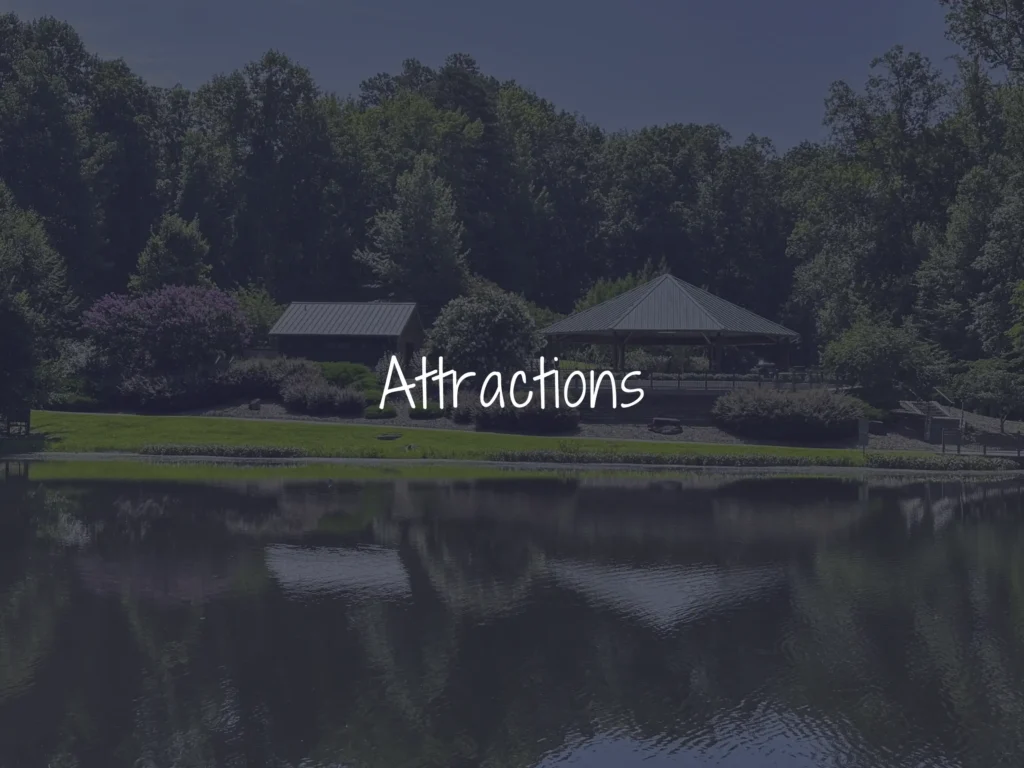
Click on the attractions and food and beverage images below to dive deeper into the spots we’ve personally explored around Clemmons.
Things to do in Clemmons, NC