
The gardens at Tryon Palace in New Bern, NC are one of North Carolina’s most remarkable blends of colonial history and mid-20th-century landscape design. Spanning 16 acres of carefully composed grounds in Craven County, the thirteen distinct gardens embody the formal “Colonial Revival” style, drawing inspiration from 18th-century British gardens, with much of the original design work carried out by landscape architect Morley Jeffers Williams in the 1950s.
Williams was both an archaeologist and a landscape architect, drawing on his experience at prestigious historic sites such as Mount Vernon and Monticello, as well as his academic roles at Harvard and North Carolina State University. Working alongside his architect wife Nathalia Uhlman, Williams crafted elegant parterres, vibrant flower beds, and serene pathways — all designed with limited archaeological evidence of what the original 18th-century gardens actually looked like. His vision and the work of the dedicated benefactors who funded the broader restoration created some of the most architecturally precise Colonial Revival gardens anywhere in the American South.
In this guide, we’ll walk through each of Tryon Palace’s thirteen gardens, what to expect, and how to plan the right visit for you. The images below are clickable, letting you view more photos and a YouTube video for each garden. If you’d rather see everything at a glance, our list of gardens is also available in a table format. Happy adventuring!
Table of Contents
Carraway Garden
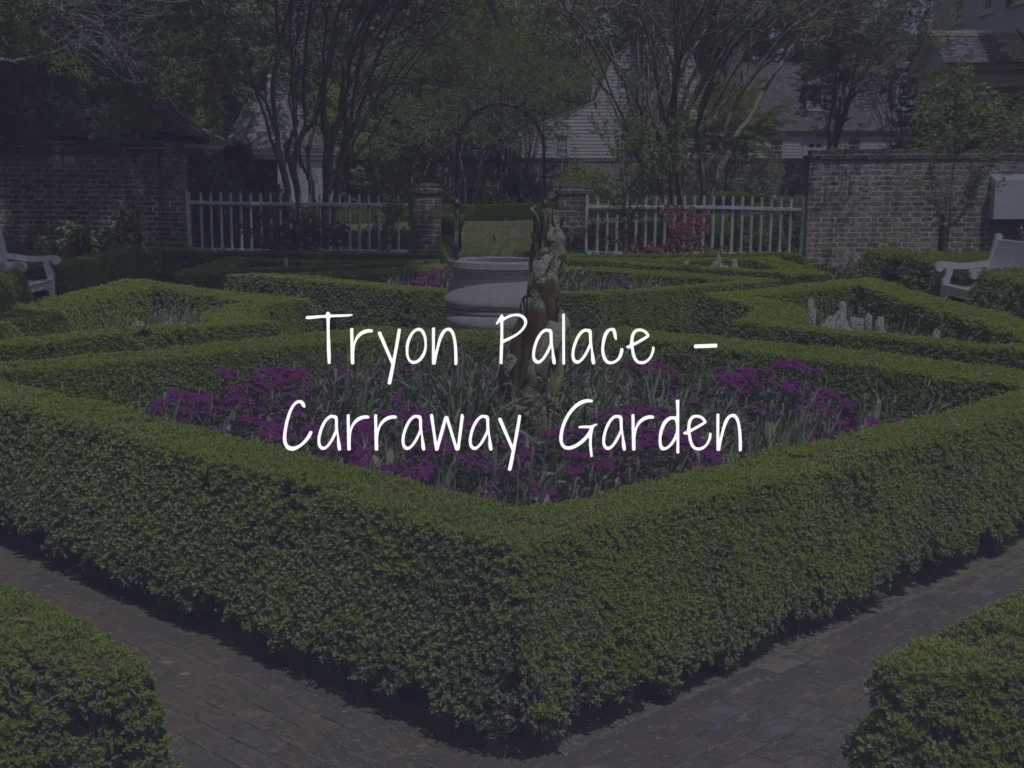
🌸 Named in honor of Gertrude Sprague Carraway (1896-1993) — the first director of the Tryon Palace Restoration, President General of the Daughters of the American Revolution, and a key figure in 20th-century North Carolina historic preservation.
🌼 Located behind the Waystation with a formal parterre design inspired by 18th-century British formal gardens.
🌳 The garden’s borders are anchored by dwarf yaupon hollies, neatly clipped into low hedges that form the architectural skeleton of the parterre.
🌱 Features a mix of modern and historic plants that fill the geometric beds with seasonal color and texture, refreshed three times each year to deliver a different visual experience for spring, summer, and fall.
🌷 The Colonial Revival design captures the elegance of European garden tradition while honoring Carraway’s vision for the broader Tryon Palace restoration.
Commission House Garden
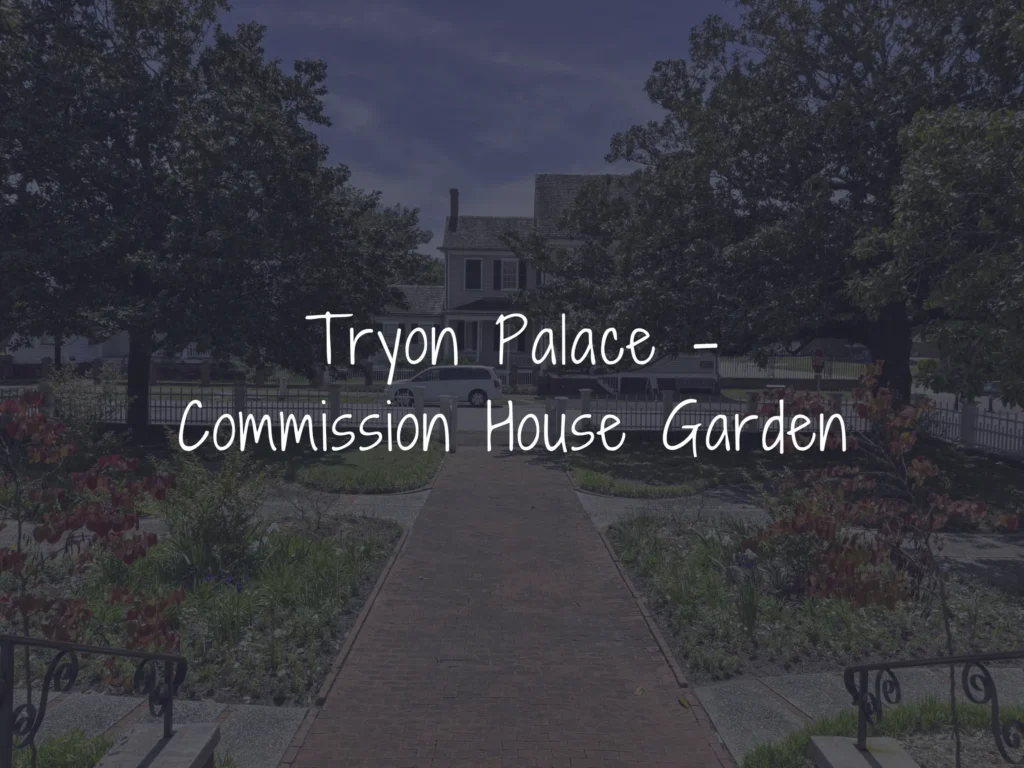
🌿 A late Victorian-style garden that captures the spirit of the quintessential 19th-century Southern home garden.
🌼 Features “old-fashioned” plants like magnolias, camellias, azaleas, and gardenias — many of which were actually exotic imports introduced to the South in the latter half of the 1800s.
✨ The garden’s plantings tell the story of how the South’s iconic plant palette was still very much in formation during the late 19th century.
🌳 Lush perennial and shrub beds capture the romantic, layered look that defined Southern gardens of the period.
🎉 The garden serves as a picturesque backdrop for events, including weddings, special celebrations, and seasonal photo opportunities.
🏛️ Located across the street from the main Tryon Palace entrance, making it easy to add to a longer day of exploration.
Dot Tyler Garden
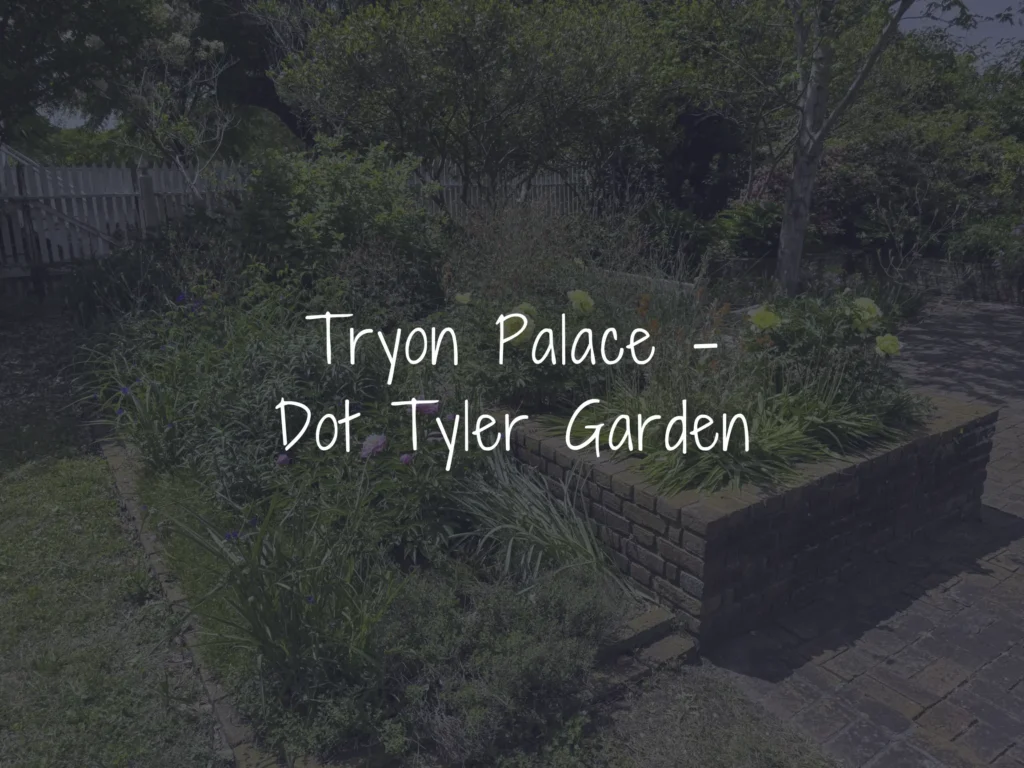
🌿 Honors Mrs. James “Dot” Tyler, a devoted longtime member of the Tryon Palace Garden Committee whose years of service helped shape the broader garden complex.
🏡 The garden occupies the space where the 19th-century side yard of the Jones House once stood, facing the historic Robert Hay House — giving it a rich historical foundation.
🌸 Features a layout of beds and lawns inspired by mid-19th-century gardens in New Bern, blending modern and historical design elements.
🌻 Vibrant flower beds capture Southern gardening traditions of the era with carefully chosen plantings throughout the seasons.
♻️ Emphasizes sustainable, pollinator-friendly practices, supporting local bees, butterflies, and other pollinators.
💍 A popular venue for intimate ceremonies and receptions, with distant views of the Palace itself providing a beautiful backdrop.
🍃 The combination of historical depth and ecological awareness gives the garden a sense of being both deeply rooted in the past and genuinely relevant to the present.
Green Garden
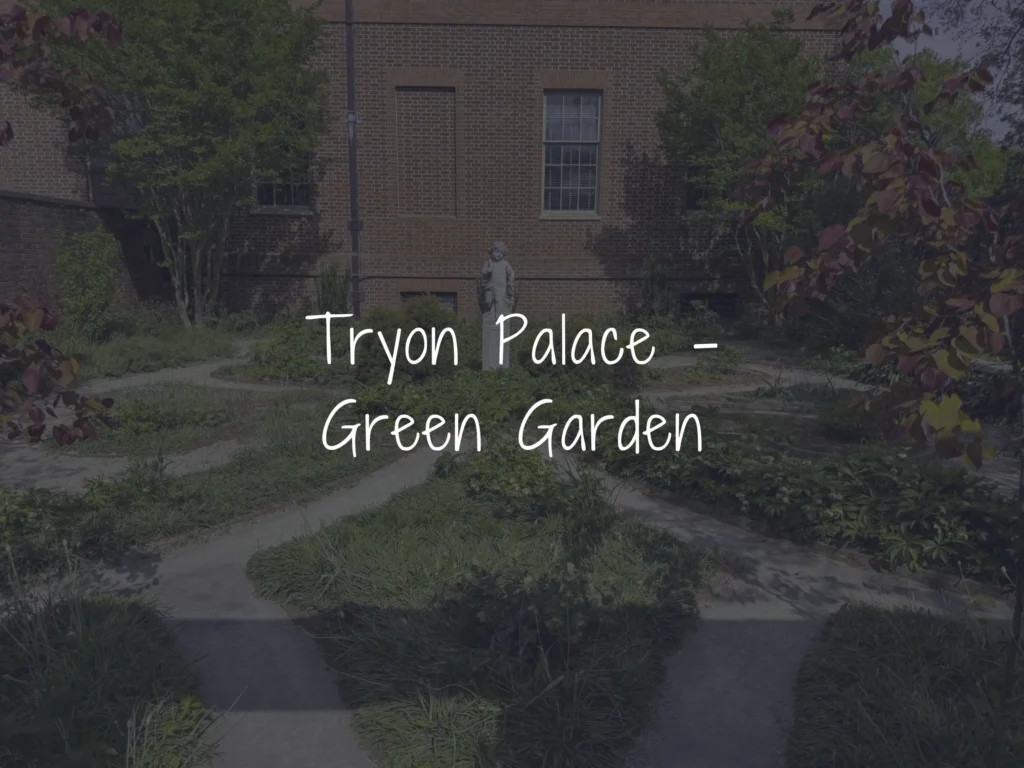
🏛️ A meticulously restored 18th-century English landscape design featuring geometric parterres, gravel pathways, and vibrant seasonal plantings.
🎨 Reflects the formal English colonial style that defined the Tryon Palace garden program at its most architecturally precise.
🌼 In 2018, the Green Garden was thoughtfully redesigned into a knot garden — one of the oldest and most distinctive traditions of European formal landscape design.
♻️ A knot garden uses carefully intertwined plants to create the visual illusion of woven strands forming an endless cycle, often used historically to symbolize eternity, continuity, and the rhythms of the natural world.
📸 Functions as both a living museum and a tranquil oasis, maintained with strict historical accuracy.
🌱 A beautiful garden display between the Green Garden and the Latham Garden showcases additional plantings and design elements that complement both spaces.
Hawks Allée
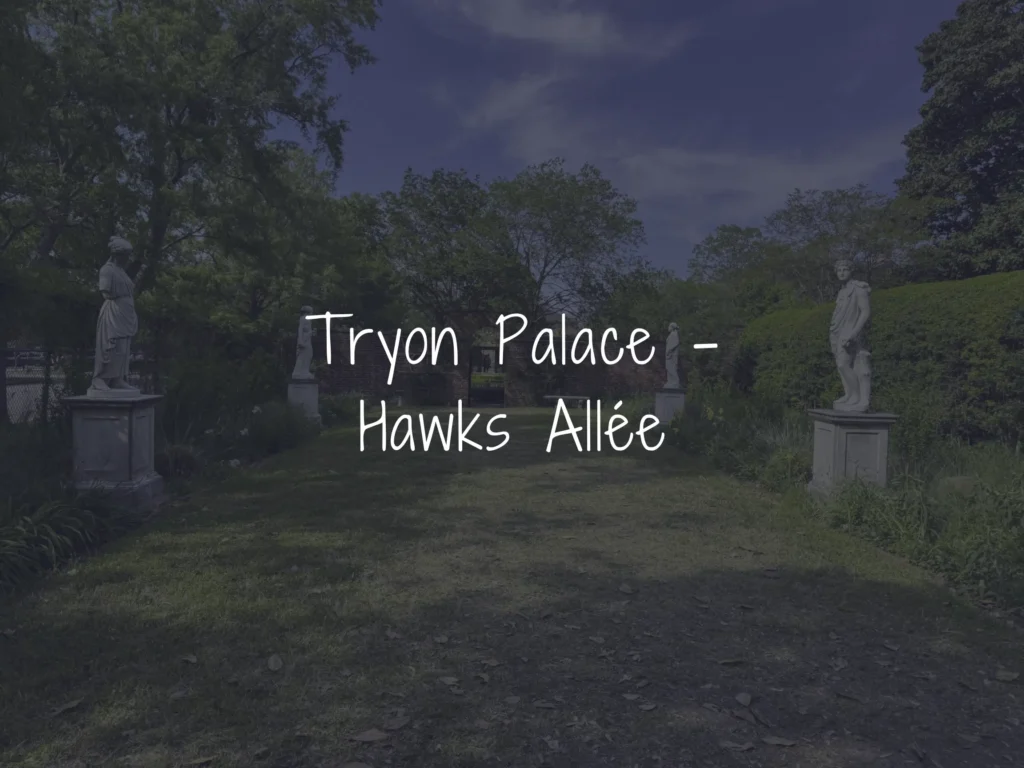
🌳 Named for John Hawks, the English-born architect who designed the original 1770 Tryon Palace for Royal Governor William Tryon — widely praised as “the finest government house in the colonies.”
📅 Established in 1961, following the Latham Garden’s completion and the Palace’s reopening in 1959.
📏 Serves as the endpoint of an axis that extends from the west door of the Stable Office through the Latham Garden — a ceremonial view line reflecting careful 18th-century axial design.
🎭 Features four marble statues representing the seasons and a terra cotta statue at the southern end, all donated by Mr. and Mrs. Henry Francis DuPont, descendants of John Hawks and founders of the celebrated Winterthur Museum in Delaware.
❌ During our 2025 visit, we noticed the terra cotta statue at the southern end had gone missing, with only its feet remaining on the pedestal.
🌼 Since 2017, the Allée has been transformed into a vibrant pollinator prairie, blooming for ten months of the year with perennials including purple coneflower, milkweed, and black-eyed Susans.
🐝 The new design draws bees, butterflies, songbirds, and other pollinators, creating one of the most ecologically meaningful redesigns on the Palace grounds.
Kellenberger Garden
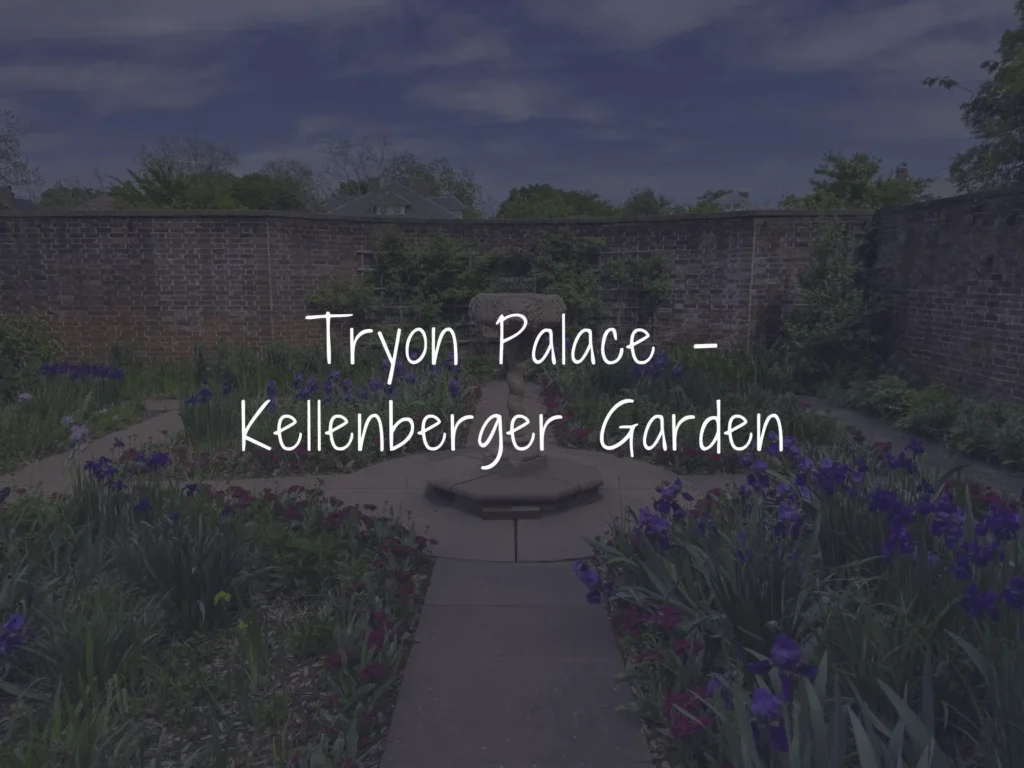
🌿 A charming walled “privy garden” — the term used historically for small, private, enclosed colonial-era gardens designed as intimate retreats.
🌺 Honors the contributions of May Gordon Latham Kellenberger and her husband, John, to the Palace’s restoration. May was the daughter of Maude Moore Latham, continuing a remarkable multi-generational family preservation legacy.
🌱 Designed by Morley Jeffers Williams in the 1950s — the same landscape architect responsible for the Pleached Allée and Wilderness Garden — in classic Colonial Revival style.
🎨 Features a harmonious mix of heirloom and modern plants, including marigolds and celosia (both popular in the 18th century), arranged to create a vibrant “stained-glass effect of colors” visible from both ground level and the Palace interior.
🌸 Renovated in 2019 with a focus on year-round blooms, with particular attention to pink flowers — Mrs. Kellenberger’s favorite — as a meaningful personal tribute.
Kitchen Garden
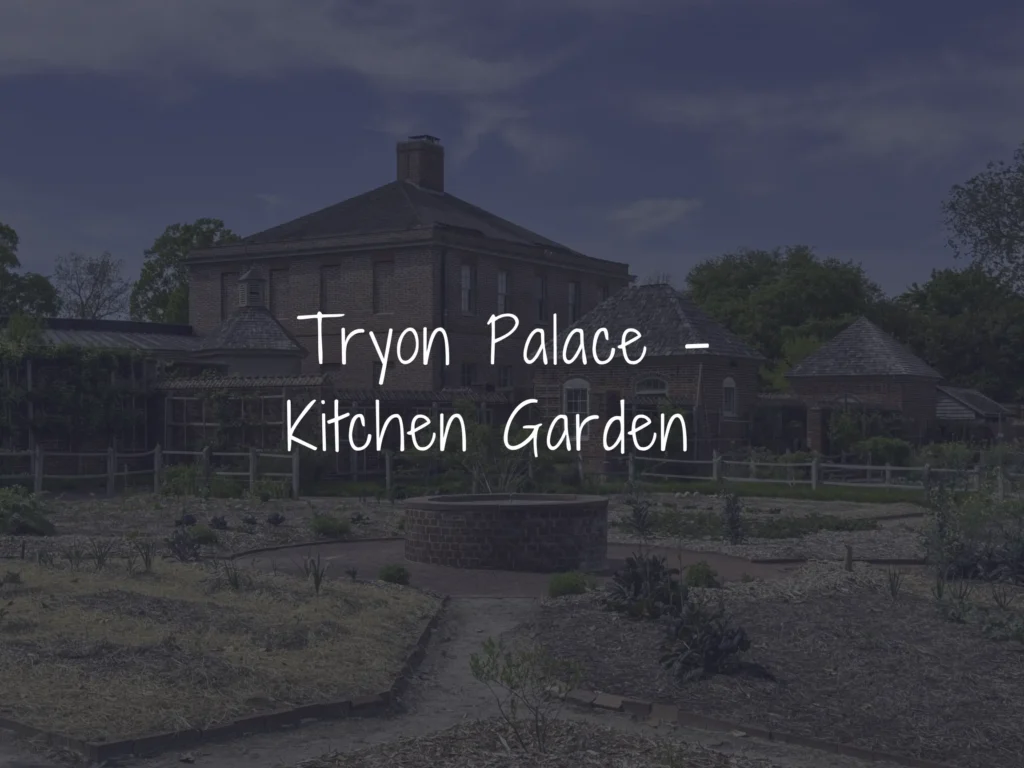
🌿 A carefully recreated 18th-century kitchen garden that captures the colonial-era blend of practicality and elegance.
🌱 Covers approximately one acre with raised beds, gravel paths, and a symmetrical layout that draws on both English and French gardening traditions.
🥦 Grows a variety of heirloom vegetables, herbs, and fruits, including cabbage, carrots, thyme, and the fascinating espalier fruit trees — a centuries-old horticultural technique where trees are trained flat against walls for space efficiency, more sunlight, and frost protection.
🍽️ Designed to evoke the kind of kitchen garden that would have supplied the Governor’s Palace kitchen during the 1770s, when Royal Governor William Tryon lived in the original Palace.
📚 Maintained using period-appropriate techniques that mirror what 18th-century gardeners would have practiced, making the garden function as both a living historical exhibit and an educational resource.
Latham Garden
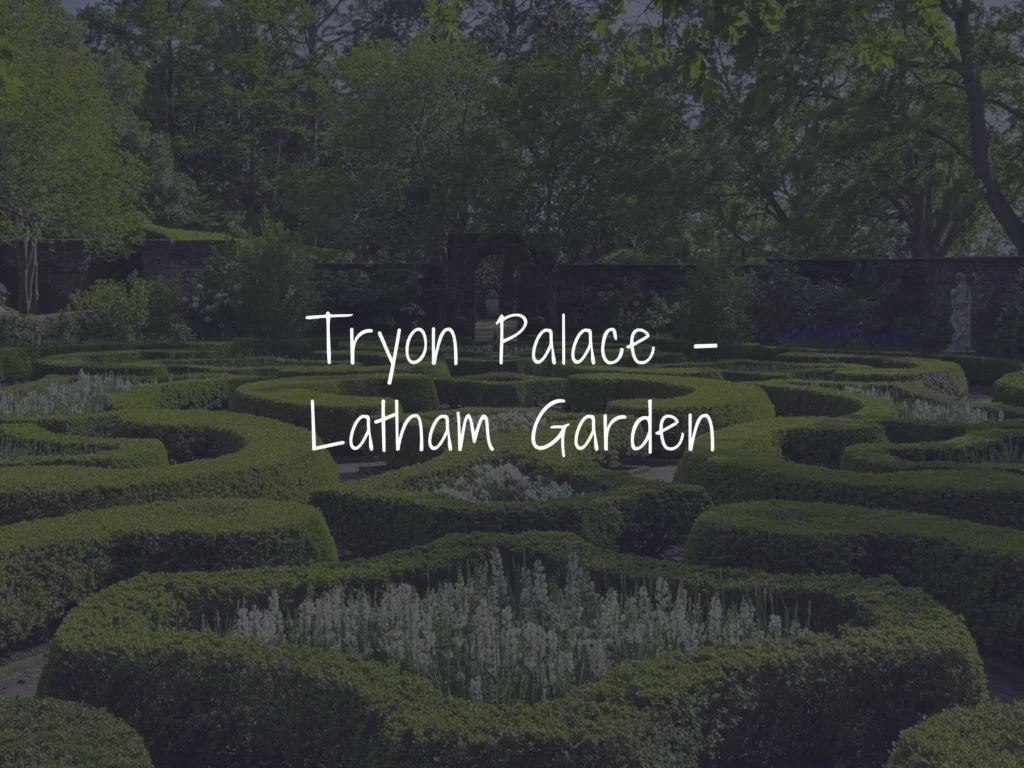
🌳 The flagship of the Tryon Palace garden complex — a stunning two-acre example of 18th-century English garden design.
🌺 Named for Maude Moore Latham, whose vision and generosity made the entire Tryon Palace restoration possible. Latham bequeathed both her decorative arts collection and significant funds, with her bequest contingent on the state of North Carolina matching her contribution.
🌿 Features meticulously manicured parterres that demonstrate the precise mathematical beauty of formal European garden design.
⛲ At the heart of the garden, a central fountain serves as the visual focal point, drawing the eye and providing the gentle sound of running water.
🧱 Enclosed by brick walls and lush hedges, creating a true sense of garden retreat — echoing the way 18th-century English aristocrats designed their most prized formal gardens.
🕰️ Latham’s preservation legacy continues through multiple parts of the Tryon Palace complex, including the Guion Gallery (her decorative arts collection) and the Kellenberger Garden (her daughter May’s tribute).
Pleached Allée
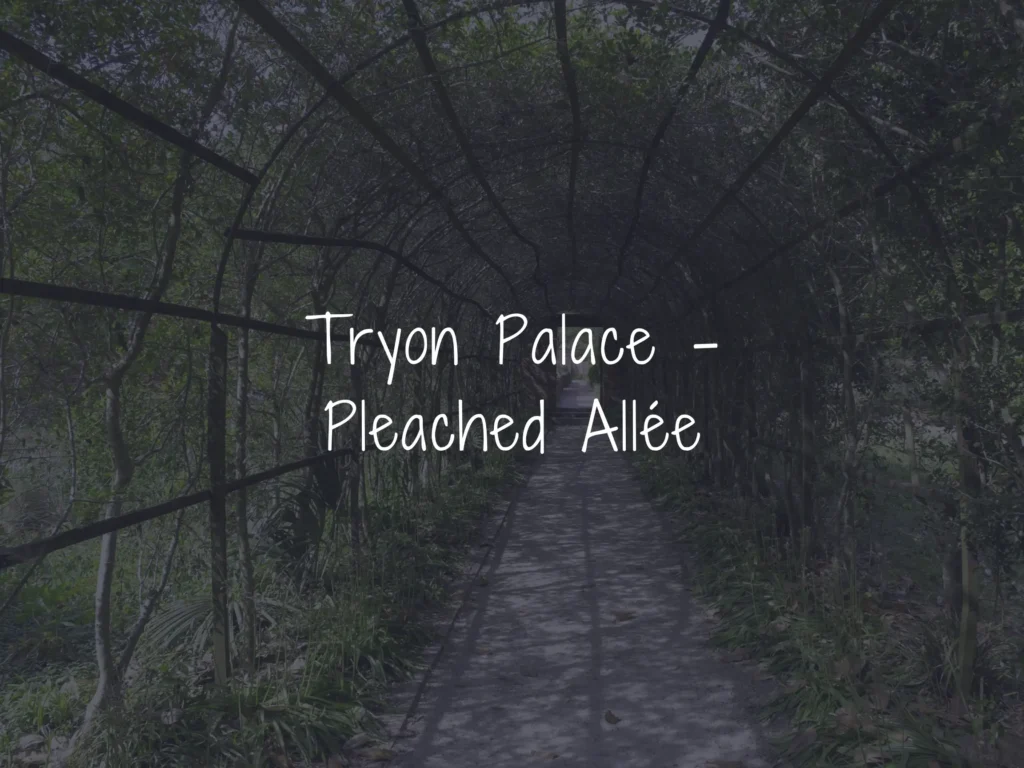
🌳 A genuinely magical living tunnel of intertwined branches — one of the most distinctive features anywhere on the Tryon Palace grounds.
🌿 Designed by Morley Jeffers Williams in the 1950s in Colonial Revival style, inspired by 18th-century British gardens where such living tunnels added dramatic visual structure and shaded walking space.
🌱 Lined entirely with yaupon holly (Ilex vomitoria) — a native southeastern evergreen — whose branches are carefully trained over the years to interweave overhead.
🌍 The Allée’s name comes from the horticultural art of pleaching — a centuries-old technique dating back to medieval European garden design, where the branches of trees or shrubs are carefully interwoven to create a continuous living wall or canopy.
🌊 Extends from the Green Garden toward the Trent River, drawing visitors from formal beauty out toward open water beyond.
🌸 The arching branches, dappled light, and symmetrical pathway create a uniquely photogenic backdrop, making it a beloved spot for bridal photography and quiet strolls.
South Lawn
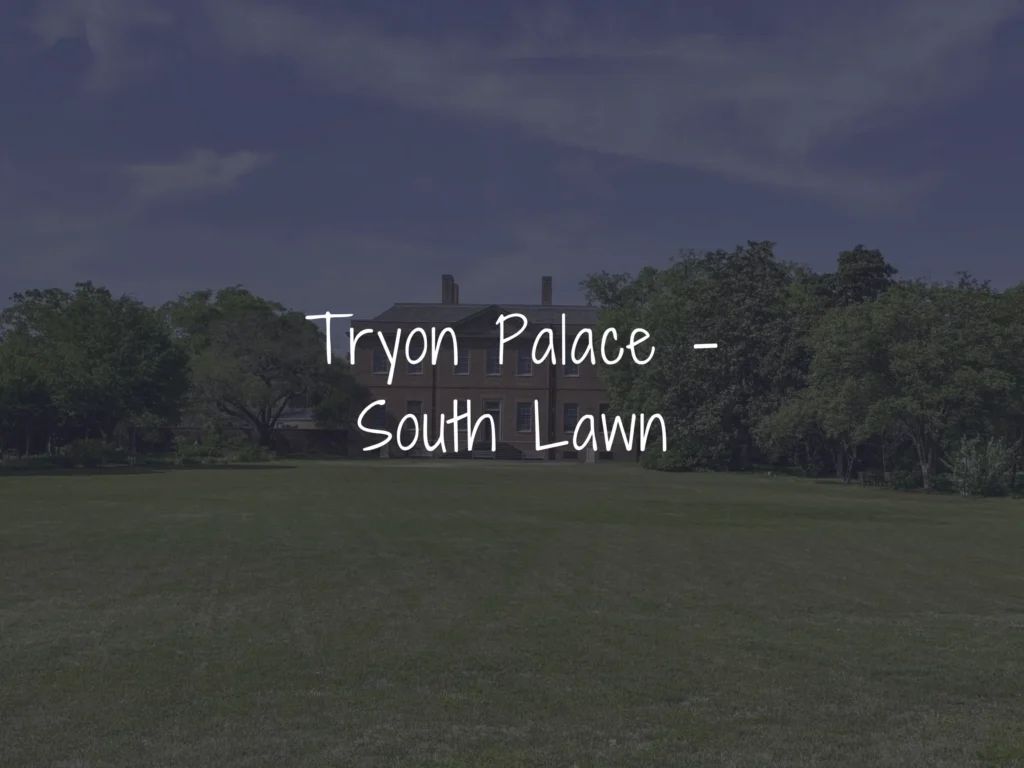
🌳 An expansive, well-maintained open lawn at the rear of the Tryon Palace estate — the natural gathering and ceremonial heart of the broader Palace grounds.
🎭 While the front of the Palace is the grand, ceremonial entrance, the rear view from the South Lawn has its own quieter, more contemplative character.
🎉 Frequently used for public events, historical reenactments, and seasonal festivals that draw visitors throughout the year, giving the Palace complex its dynamic, lived-in character.
🌼 Lined with native trees and surrounded by the broader Tryon Palace garden complex, giving the open lawn a sense of being framed by careful landscaping.
🏛️ The perimeter has grown up over the years, gently enclosing the lawn within the surrounding tree line — a contrast to the more open vistas you might have seen at the original 1770 Palace site, but a setting that gives the modern South Lawn its own peaceful, contained character.
Stanly House Garden
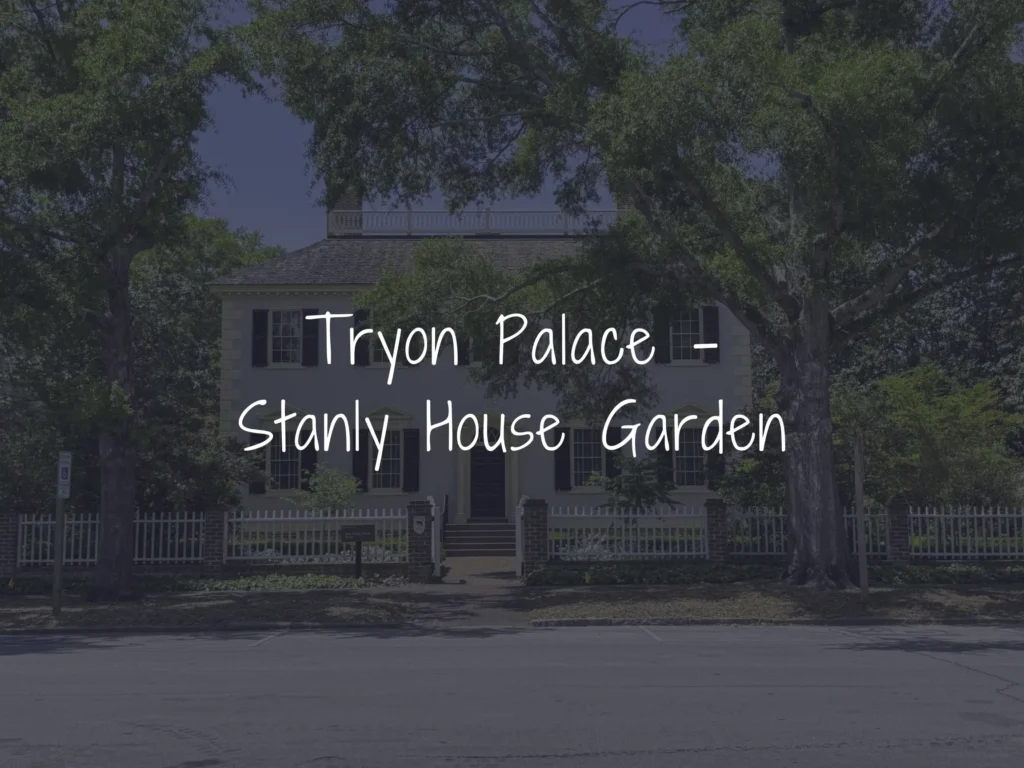
🌳 A thoughtfully designed formal “Town Garden” — the term used historically for smaller urban gardens maintained alongside the homes of prominent 18th-century townspeople.
🏛️ Established in 1967, after the Stanly House was relocated to its current site in 1966 as part of Tryon Palace’s broader preservation effort.
🌿 Features brick walkways bordered by boxwood hedges — a signature element of Georgian garden design that protects the house’s foundation while giving the architecture room to breathe.
🏡 Two reproduction summer houses inspired by an 1862 drawing offer shaded retreats and capture the spirit of 18th- and 19th-century outdoor gathering spaces.
💧 Adorned with heirloom camellias, a fountain surrounded by water lilies, and various wetland plants that complete the composition.
☀️ Impressively, the boxwood hedges flourish despite New Bern’s hot and humid summers — a testament to the careful selection of varieties and the skill of the Tryon Palace gardeners.
Stoney Garden
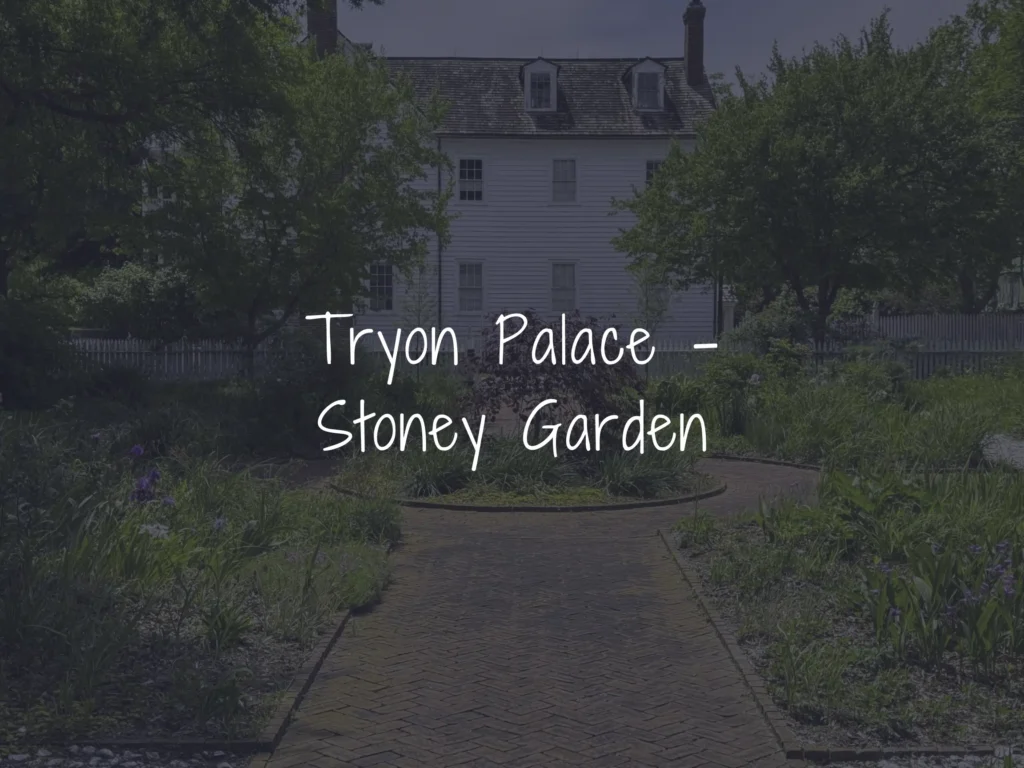
🌿 Located on Pollock Street, just beyond the Carraway Garden, with its own quietly charming character.
🌼 Offers a delightful glimpse into 19th-century New Bern horticulture, with a more relaxed, romantic feel than the formal 18th-century gardens elsewhere on the grounds.
🏡 Established in the late 1990s, the garden honors Mary Kistler Stoney, an original member of the Tryon Palace Commission — the founding governing body that planned and oversaw the reconstruction starting in 1945.
💰 Funded by the Stoney family, the garden is one of the more recent additions to the Tryon Palace garden complex.
🌹 Features old-fashioned perennials and antique roses chosen to reflect the varieties documented in Lavinia Cole Roberts’ detailed 19th-century New Bern garden inventory.
☀️ In 2020, the surrounding hollies were “coppiced” — a centuries-old woodland management technique where trees are cut back close to the ground to encourage fresh, vigorous regrowth from the stump.
🌸 The 2020 intervention was designed to enhance sunlight and foster greater perennial diversity, ensuring the garden remains vibrant for future seasons.
Wilderness Garden
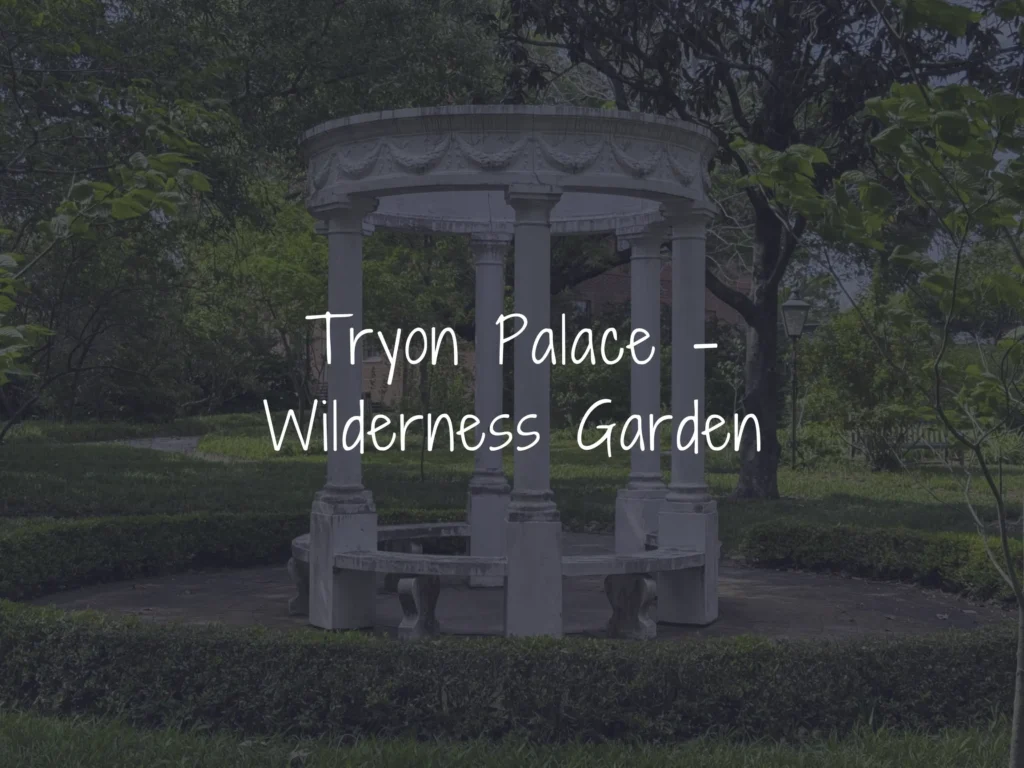
🌿 Designed as a deliberate counterpoint to the formal gardens elsewhere on the Palace grounds — a natural, less formal space where the untamed flora of eastern North Carolina takes center stage.
🌼 The concept of a “wilderness” garden has its roots in 17th- and 18th-century English garden tradition, where great estates would include a deliberately less formal section as a contrast to formal parterres.
🦋 Showcases native plants and trees that would have defined the eastern North Carolina landscape when European settlers arrived, including wildflowers, shrubs, and woodland species.
🌳 Maintained in Colonial Revival style by Morley Jeffers Williams in the 1950s, capturing both the spirit of 18th-century English wilderness gardens and the specific character of the eastern North Carolina landscape.
🌍 Plays an important ecological role as a diverse habitat for local wildlife and pollinators — supporting songbirds, butterflies, bees, and other species that depend on native flora.
Final Thoughts
The gardens at Tryon Palace are the kind of place that fundamentally rewards a slower visit. Spread across 16 acres of meticulously composed grounds, the thirteen distinct gardens range from the disciplined geometry of 18th-century English parterres to the romantic abundance of 19th-century Southern home gardens, from intimate walled “privy garden” retreats to wild native plant wilderness spaces — each one carrying its own layered history, its own remarkable cast of preservationists, and its own quietly distinctive character.
The threads that run through the broader garden program are what make it so special. Maude Moore Latham’s visionary funding of the original restoration, her daughter May Gordon Latham Kellenberger’s continued preservation work, Gertrude Carraway’s leadership as first director, Mary Kistler Stoney’s founding role on the Commission, and Dot Tyler’s dedication to the Garden Committee all reveal a multi-generational pattern of women whose vision and dedication brought these spaces back to life. Add the design genius of Morley Jeffers Williams — whose work also shaped Mount Vernon and Monticello — along with the careful research, historical inventories, and modern ecological awareness that shape every planting decision, and you’ve got one of the most genuinely meaningful garden complexes anywhere in the American South.
Pack water, give yourself enough time to slow down and absorb the layered beauty, and bring a sense of curiosity — the gardens at Tryon Palace reward every visit.

Your Complete Guide to Hiking Trails at Elk Knob State Park
Elk Knob State Park is one of North Carolina’s most rewarding mountain destinations — a 4,400-…

A Complete Guide to the Trails at Carolina Beach State Park
Tucked along the Cape Fear River on Pleasure Island, Carolina Beach State Park is one of southeaster…

The Complete Guide to Hiking Trails in Lansing, NC
Set in the rolling hills of Ashe County, just a stone’s throw from the Virginia and Tennessee …

Exploring Ashe County Park: A Hiker’s Guide to North Carolina’s Mountain Gem
If you’re searching for the best hiking trails at Ashe County Park in North Carolina, you̵…

Mountain Masterpieces: A Guide to the Ben Long Frescoes of Ashe County
In the quiet corners of Ashe County, where the Blue Ridge Mountains meet peaceful valleys, thereR…

Granite, Grunts, and Glory: A Day on the Stone Mountain Loop Trail
The Stone Mountain Loop Trail is the signature hike at Stone Mountain State Park in North Carolina —…