
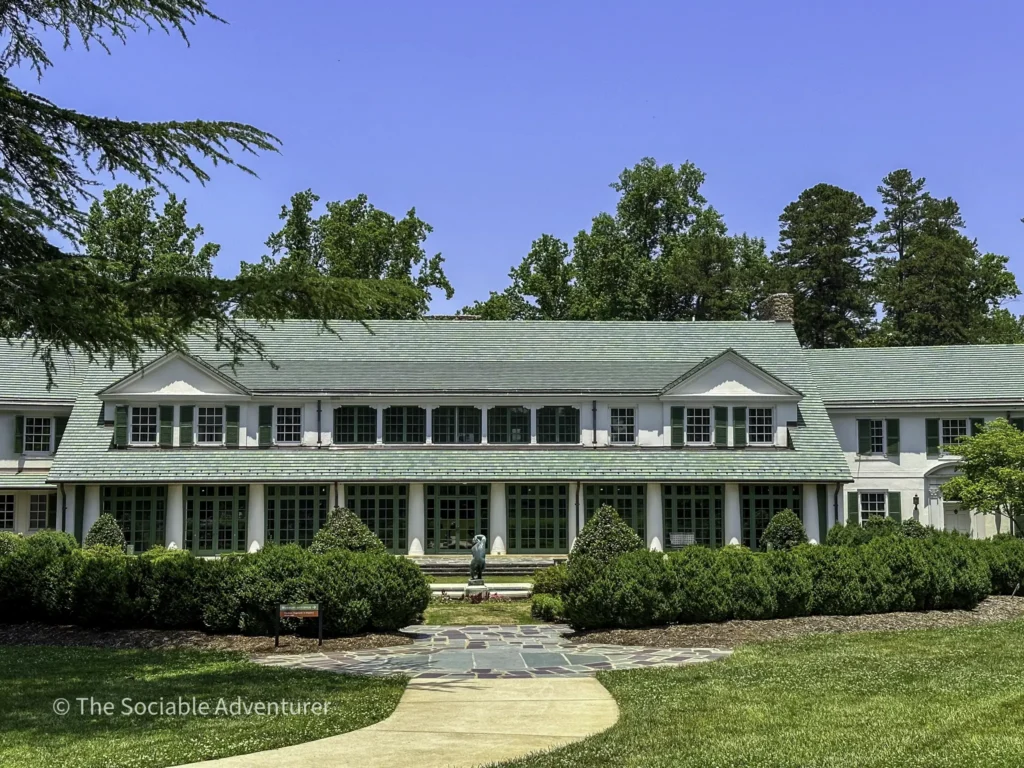
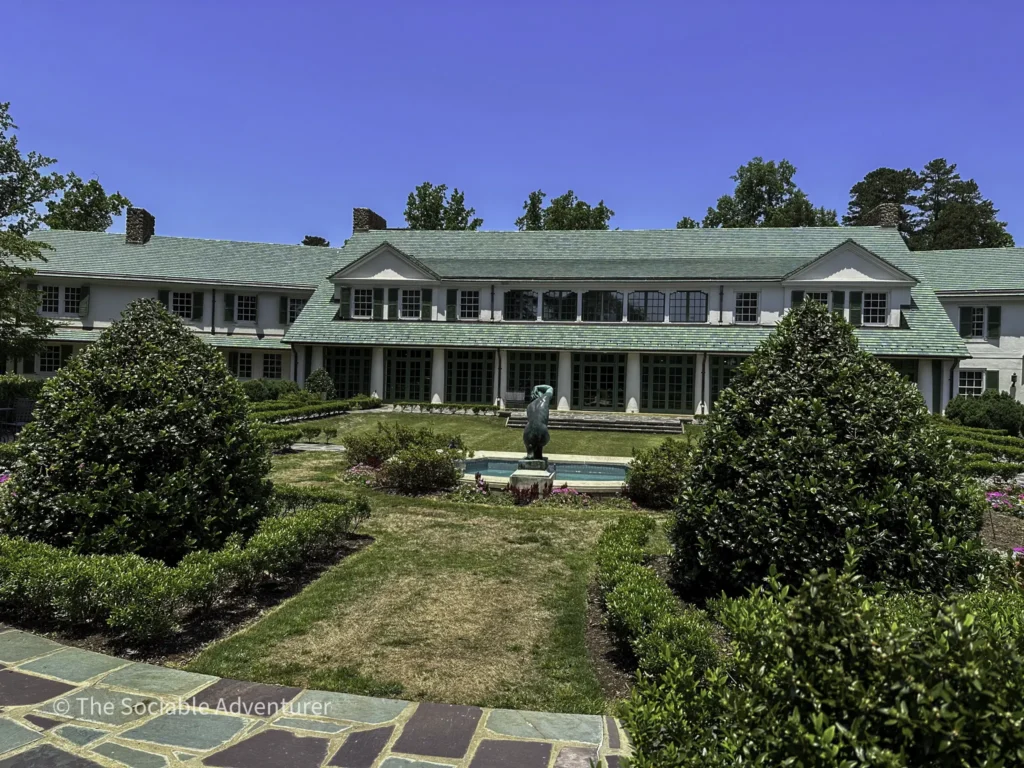
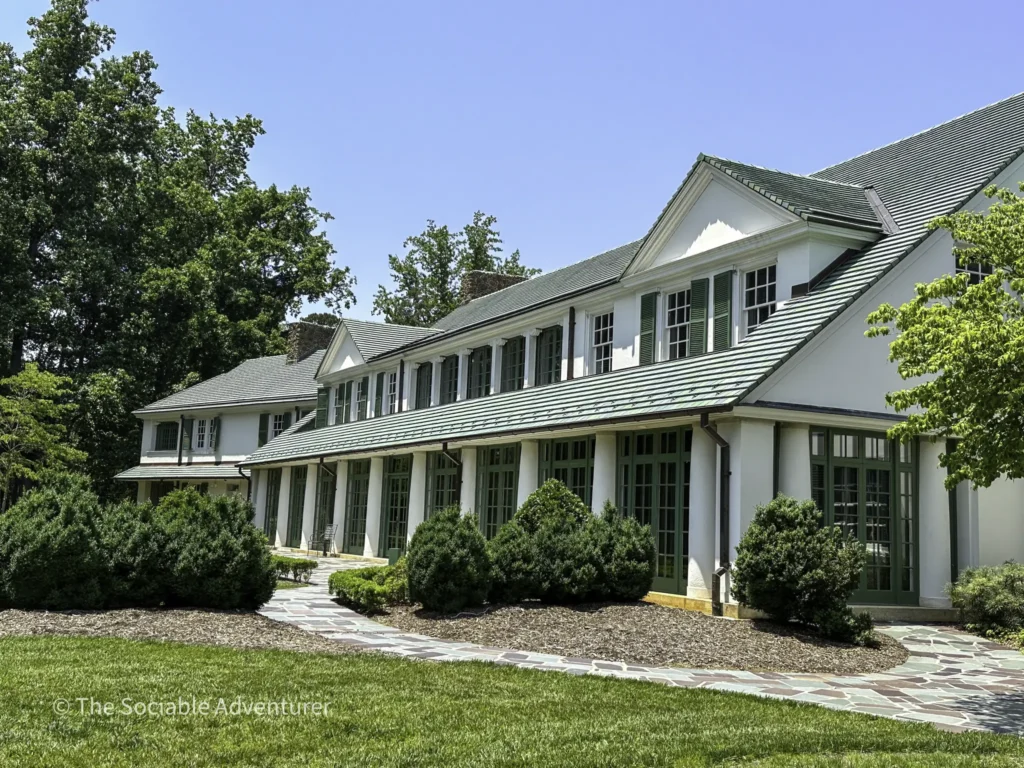
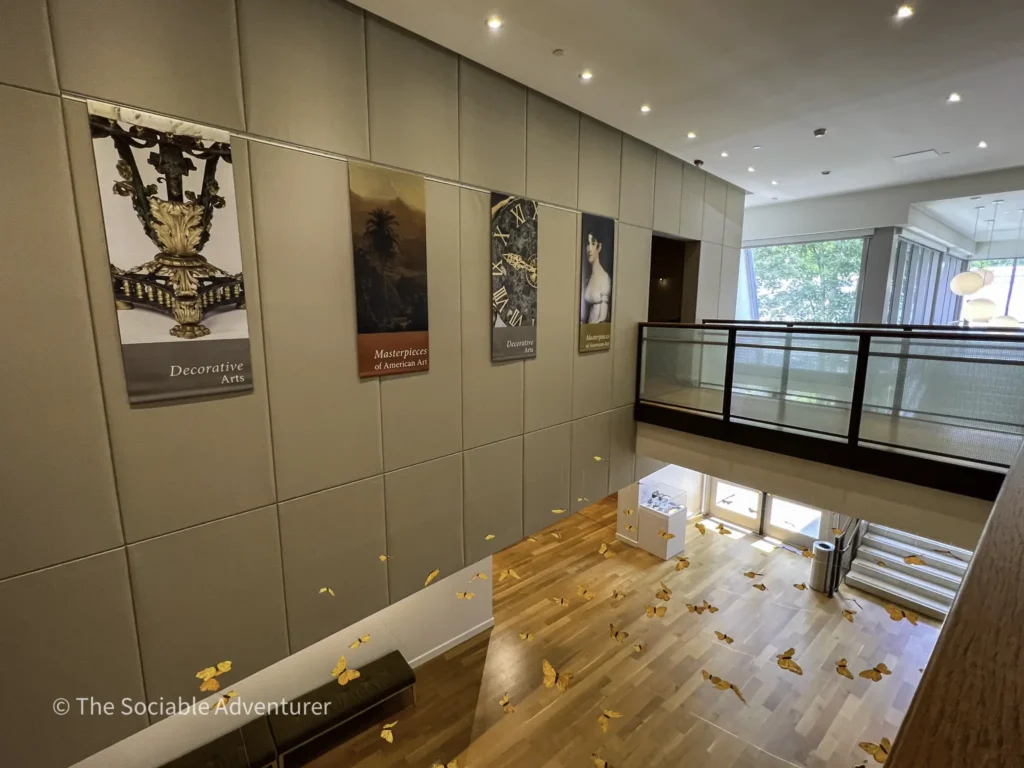
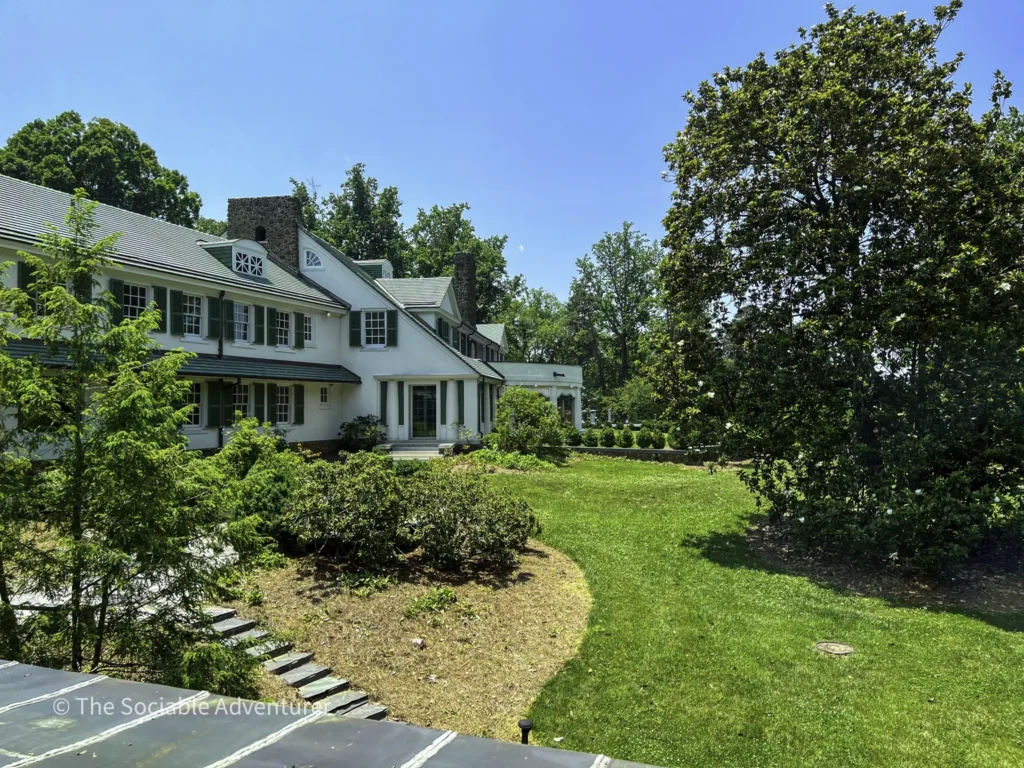
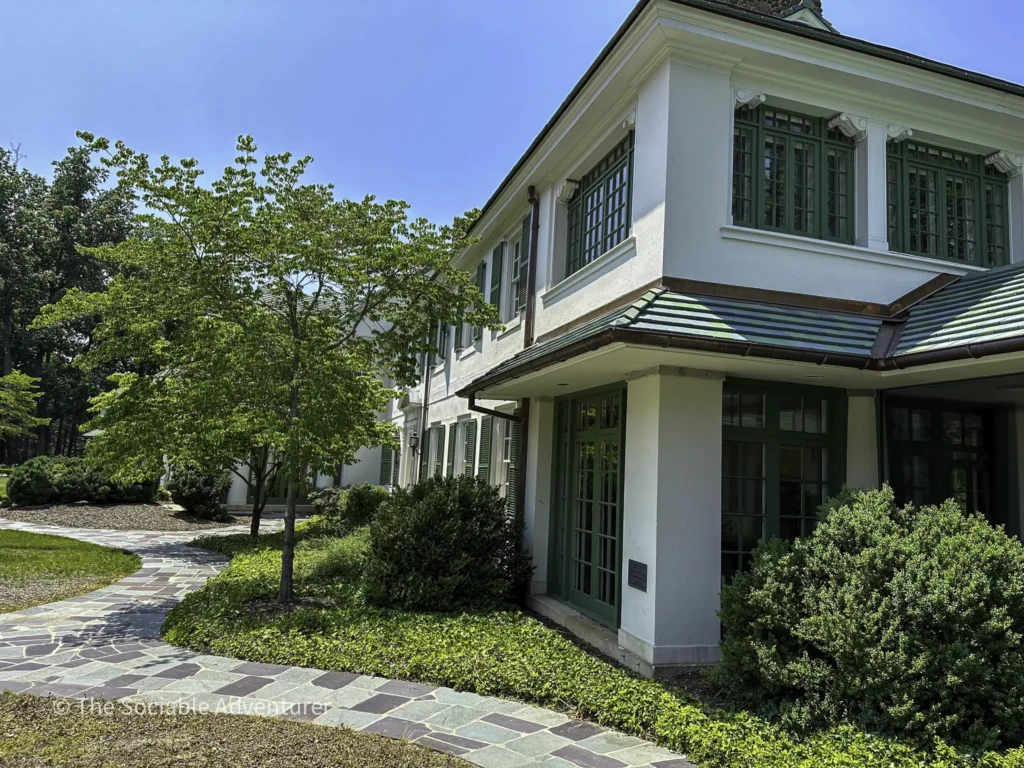
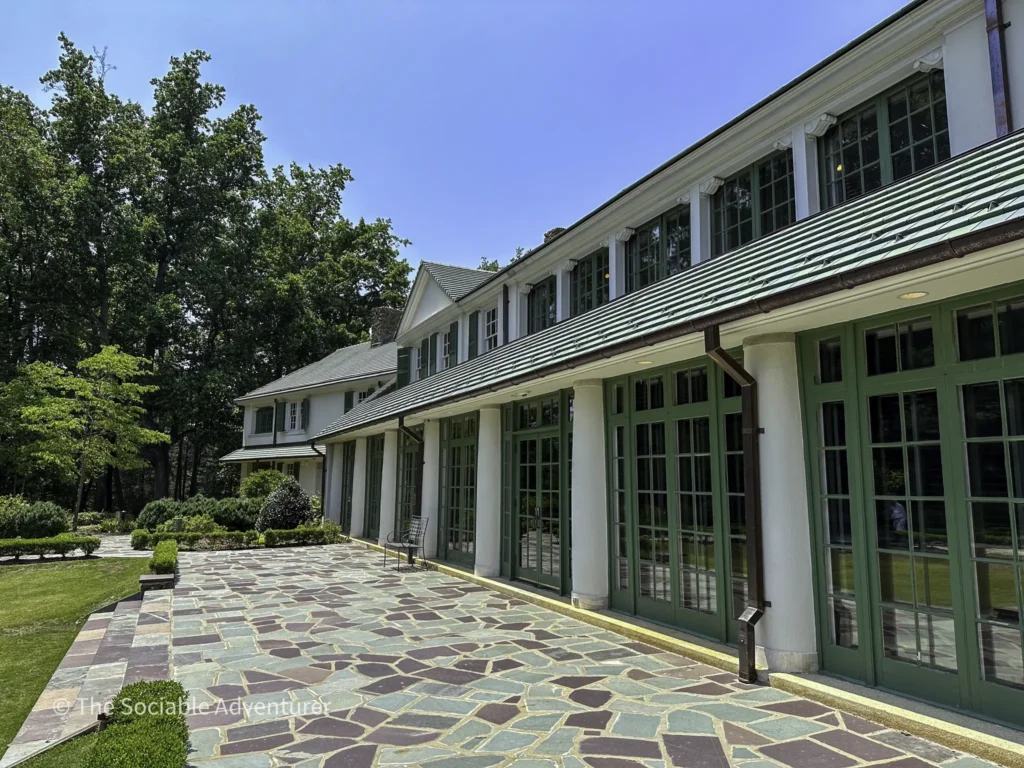
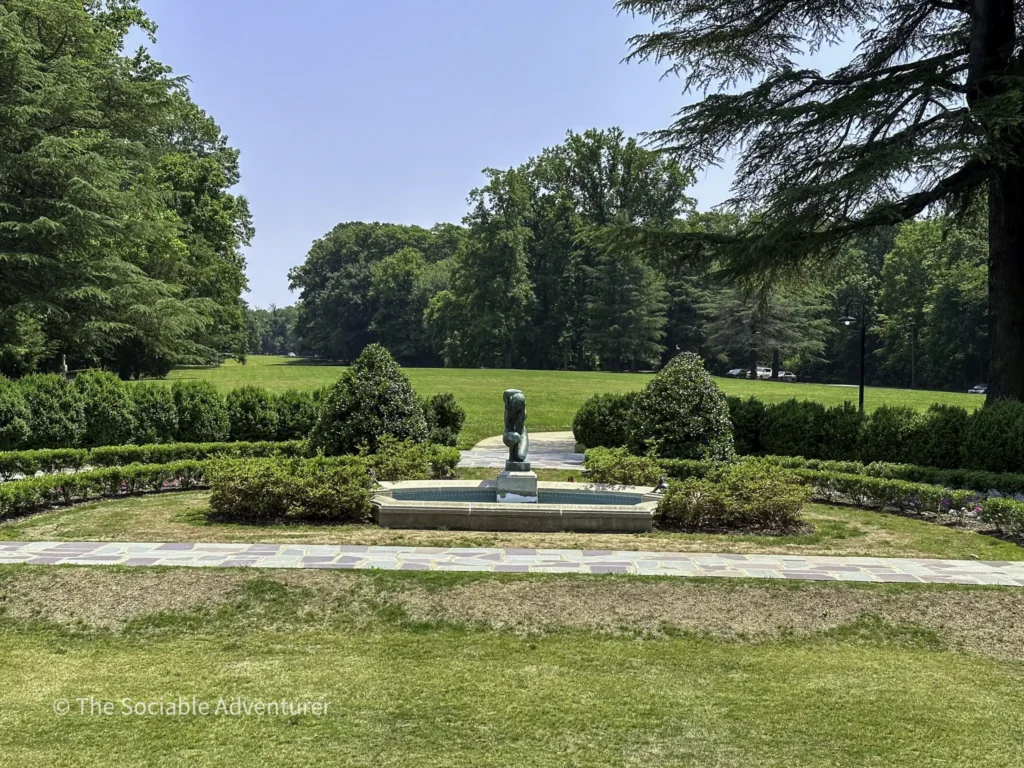
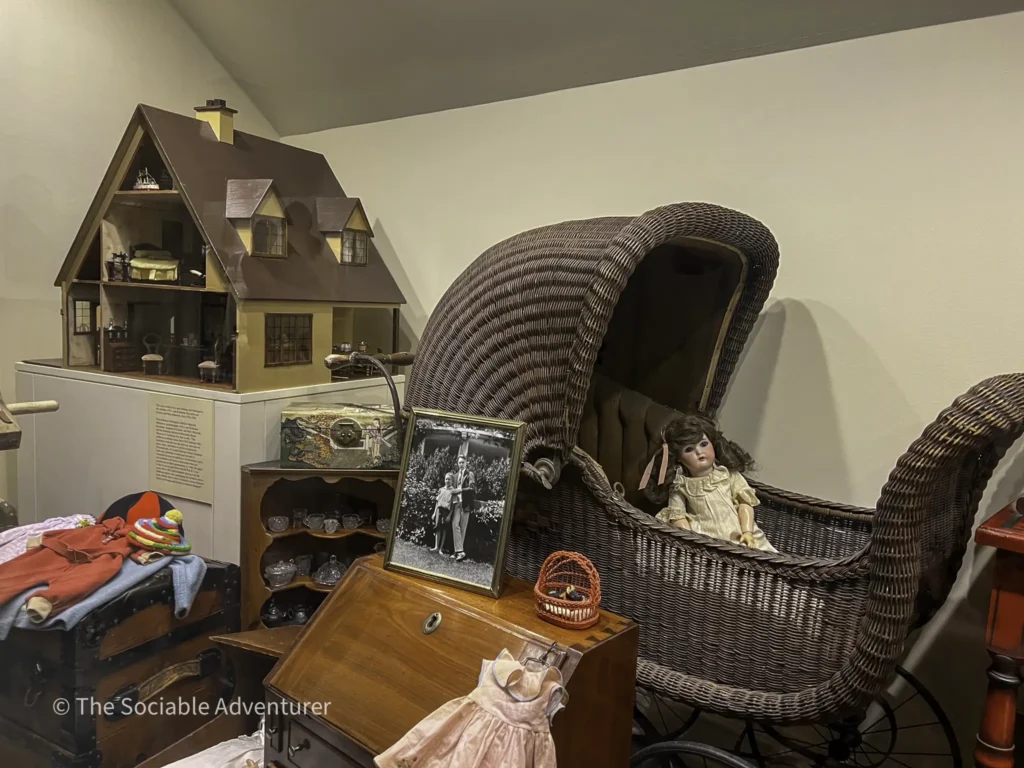
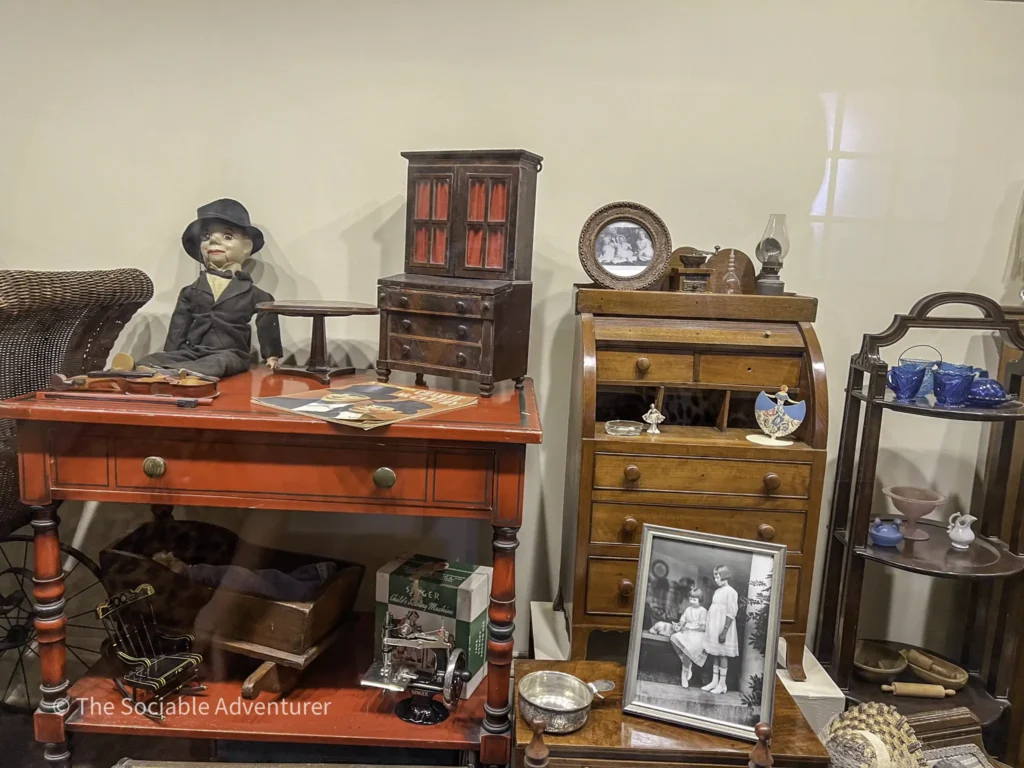
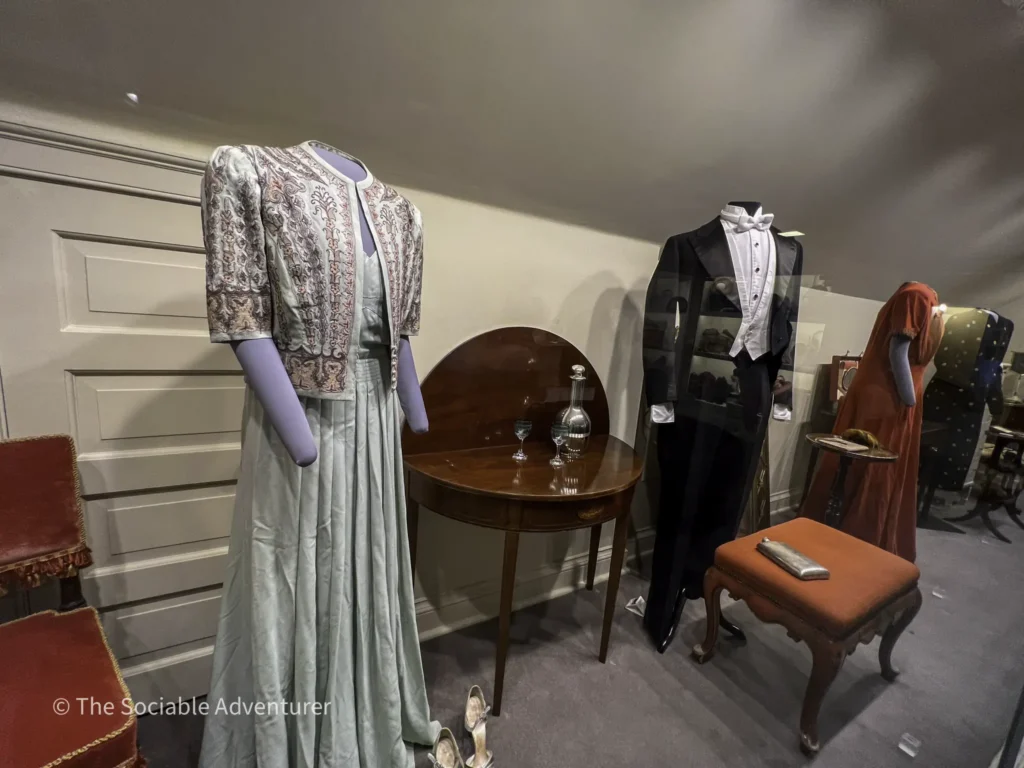
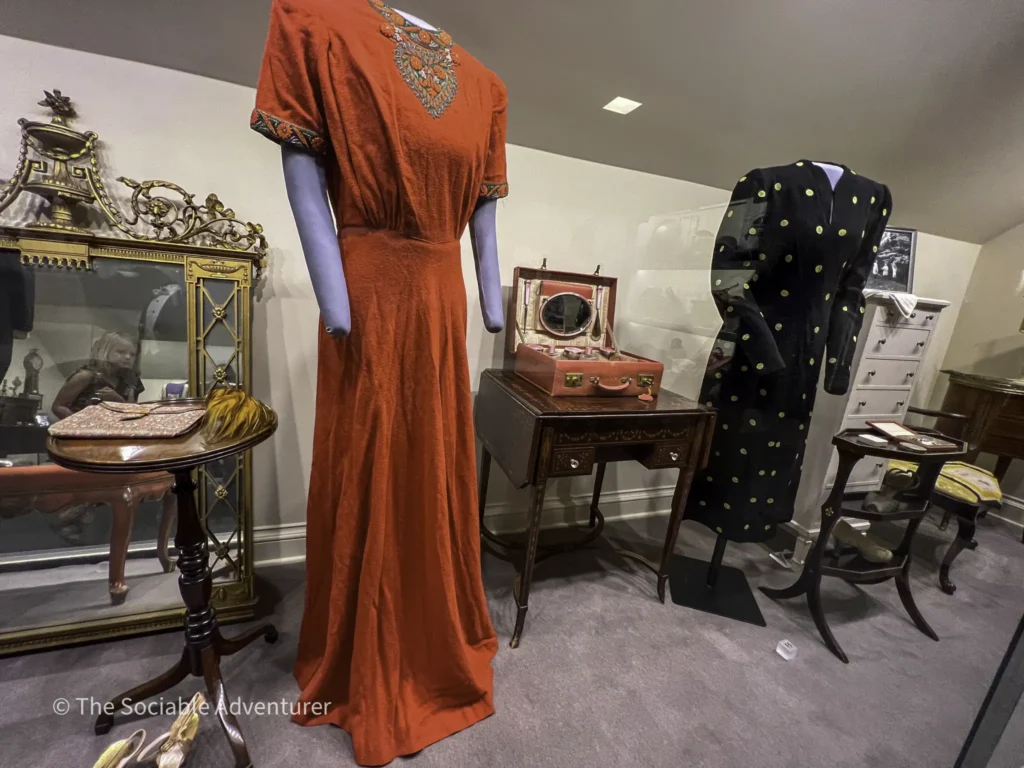
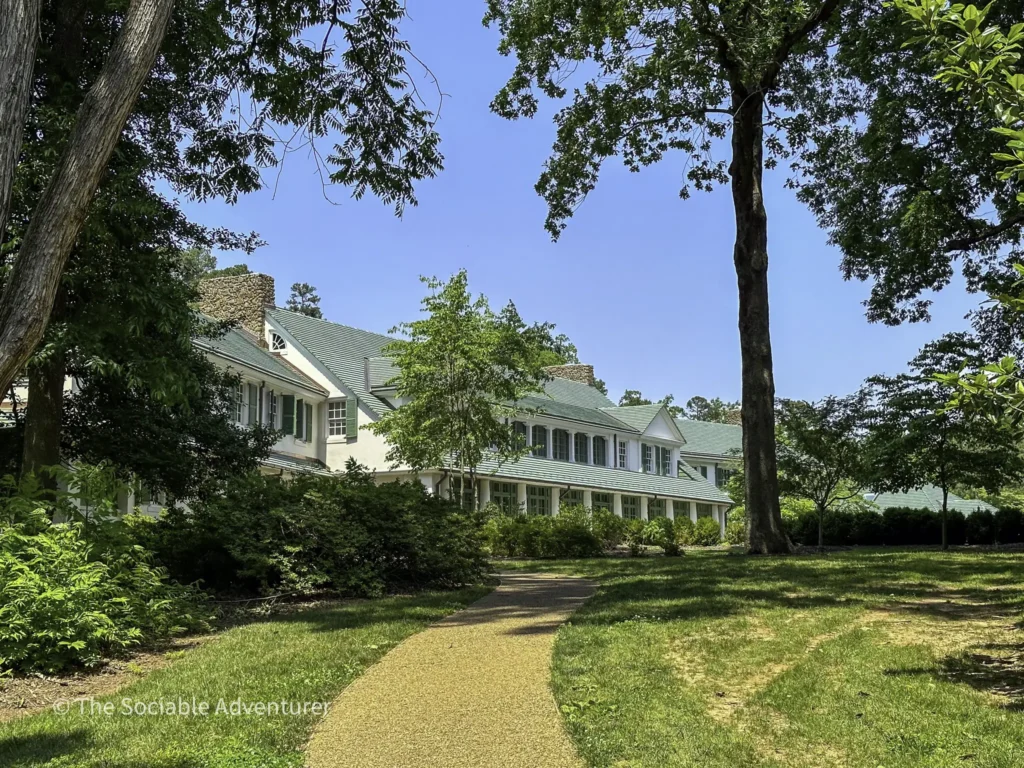
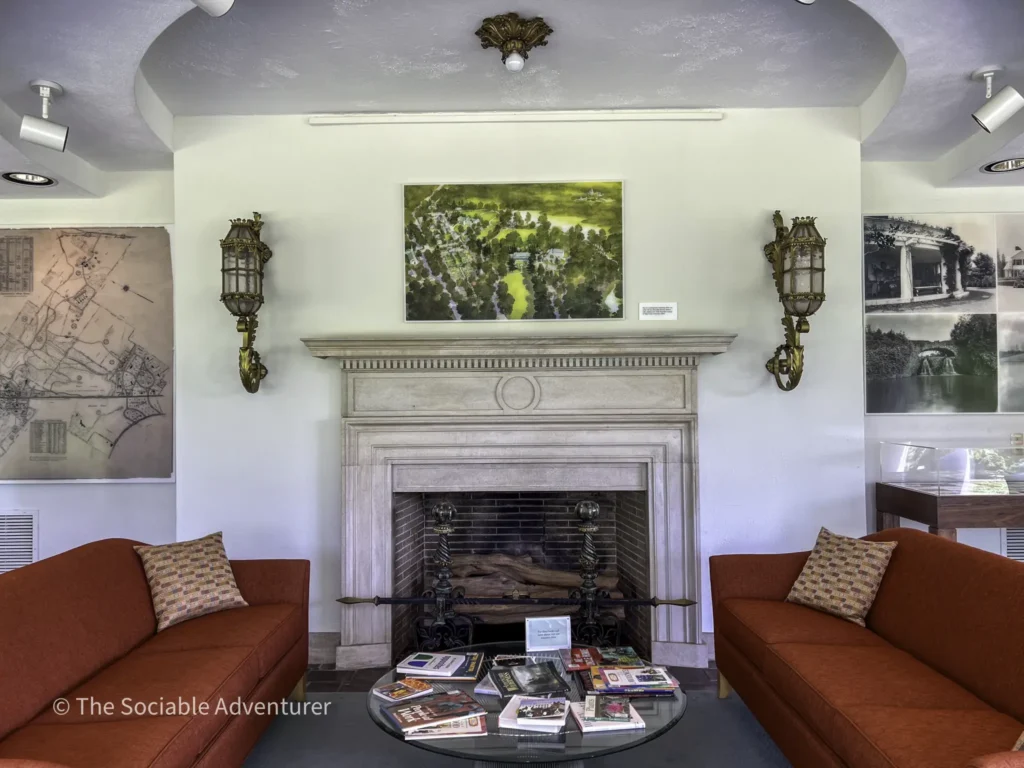
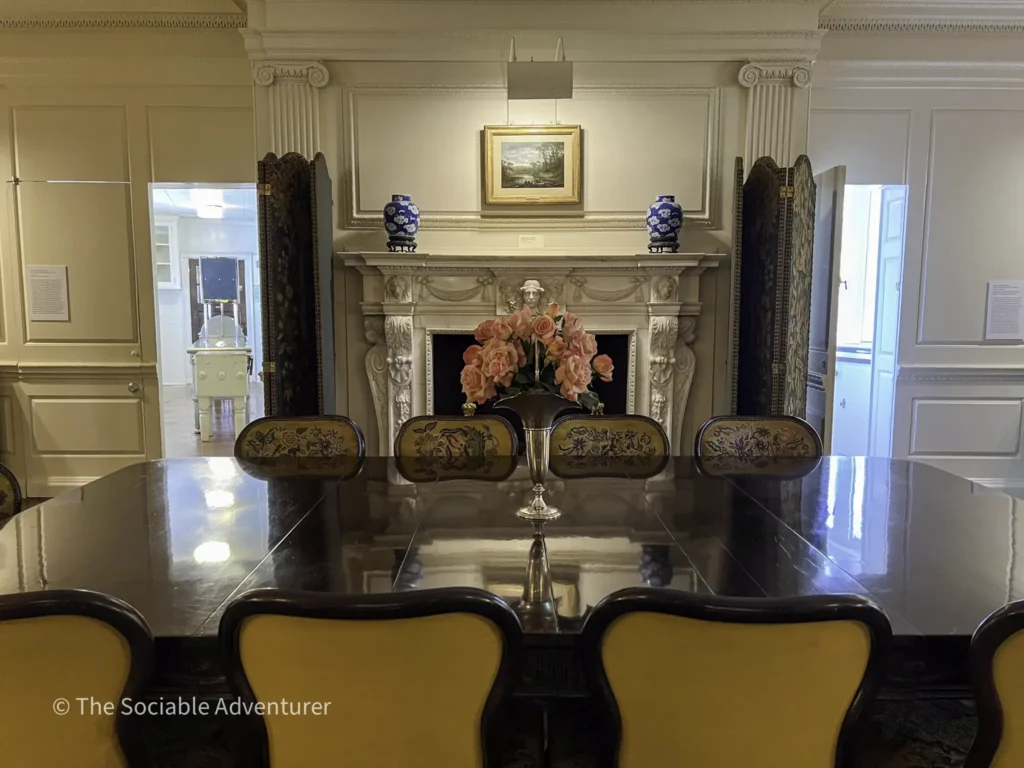
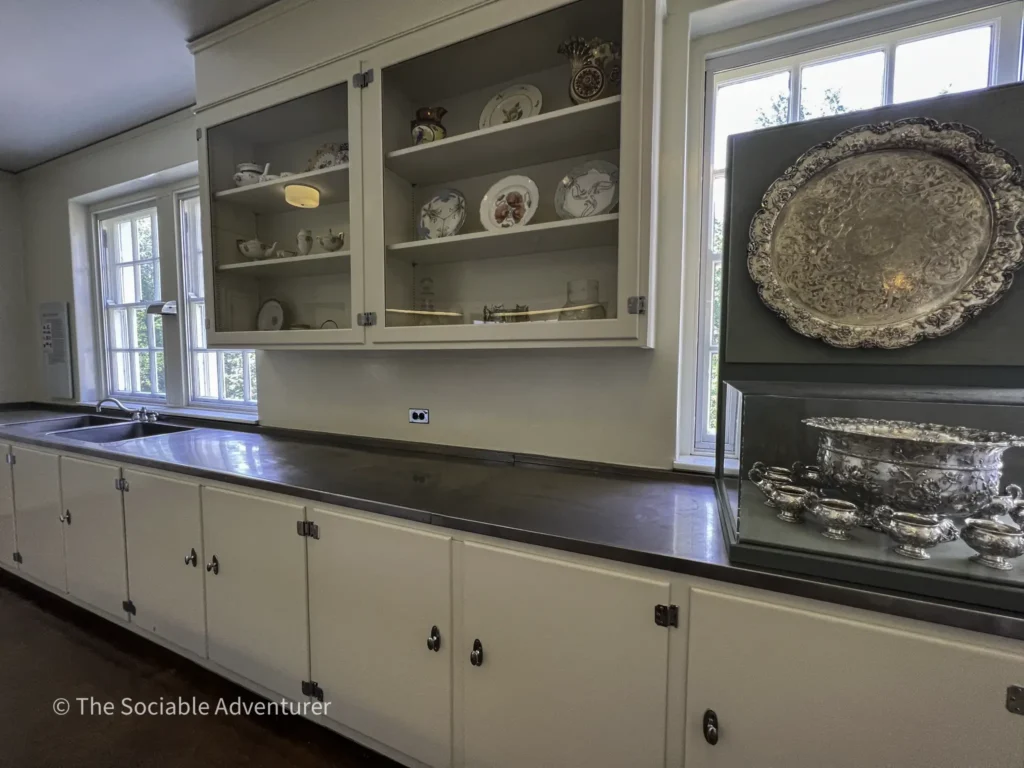
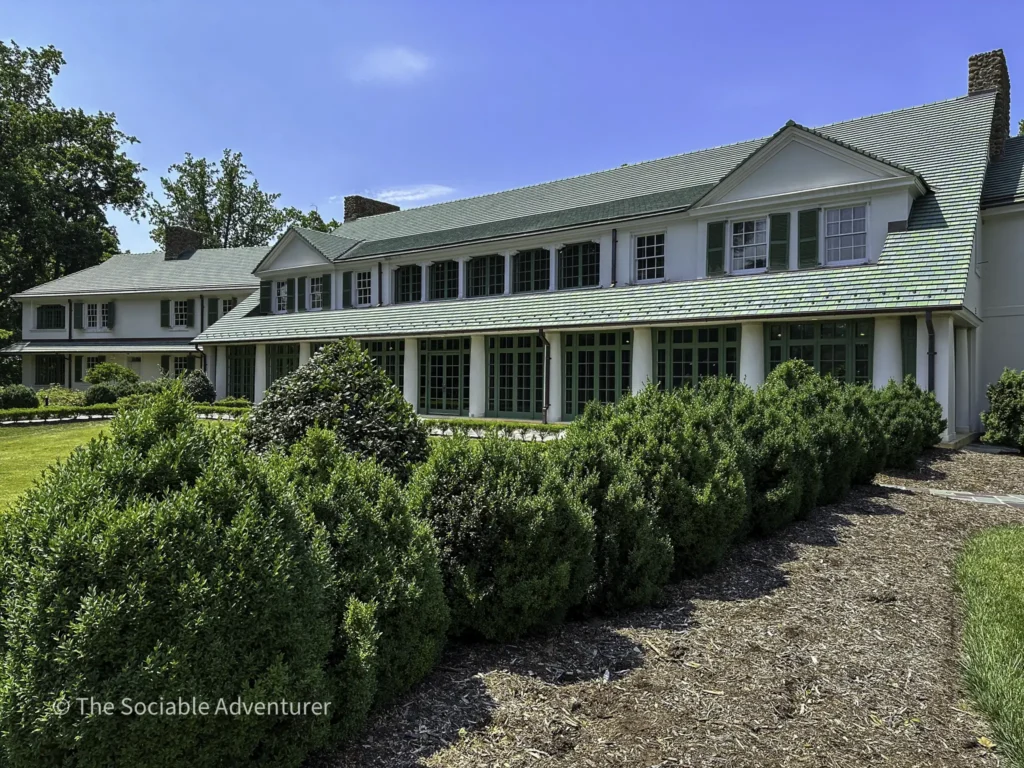
The Reynolda House Museum of American Art is one of the American South’s premier American art museums — housed inside the historic 64-room country home that Katharine Smith Reynolds and R.J. Reynolds completed in Winston-Salem, NC in 1917. Today, the museum displays a substantial permanent collection spanning 250 years of American art, plus more than 6,000 historic objects across the restored interior spaces of what remains one of the few well-preserved surviving examples of the American Country House movement.
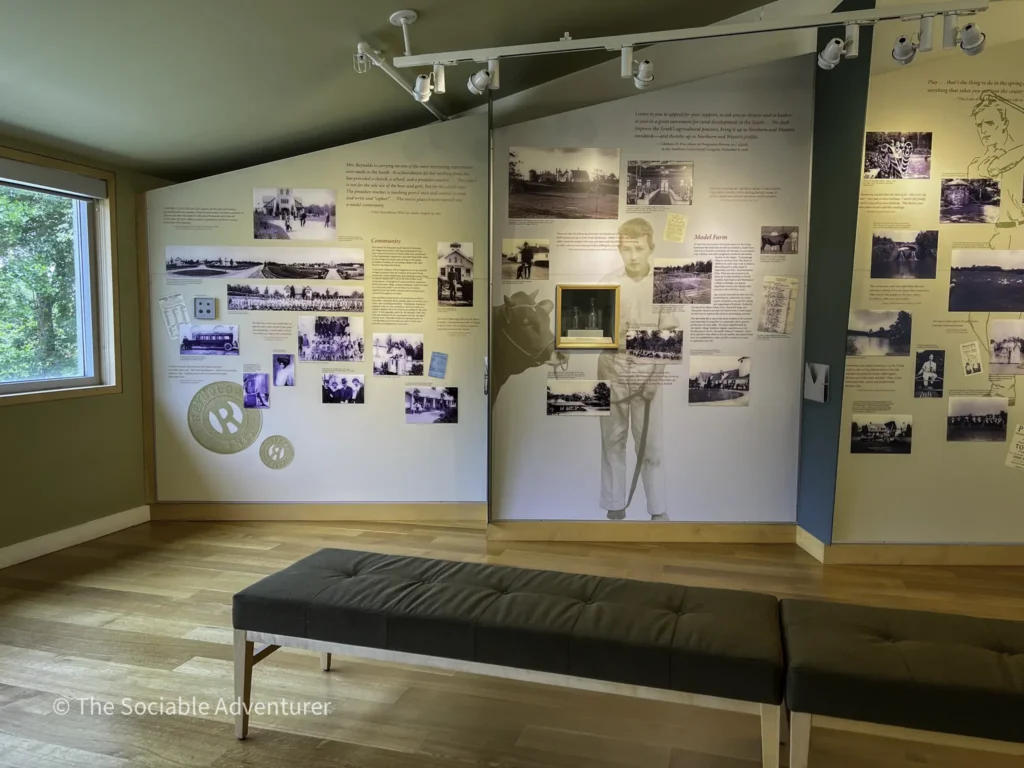
The Reynolda estate itself was Katharine Reynolds’s vision — a self-sufficient country home, a model progressive farm, and a substantive expression of early-20th-century American estate design. After the Reynolds family era ended, the estate was donated in stages to Wake Forest University, which opened to the public as an institution dedicated to the arts and education in 1965, and formally opened as an art museum in 1967. Since 2002, Reynolda House has been officially affiliated with Wake Forest University and now anchors the broader Historic Reynolda property alongside Reynolda Gardens, Reynolda Village Shops & Restaurants, and the estate’s walking trails.
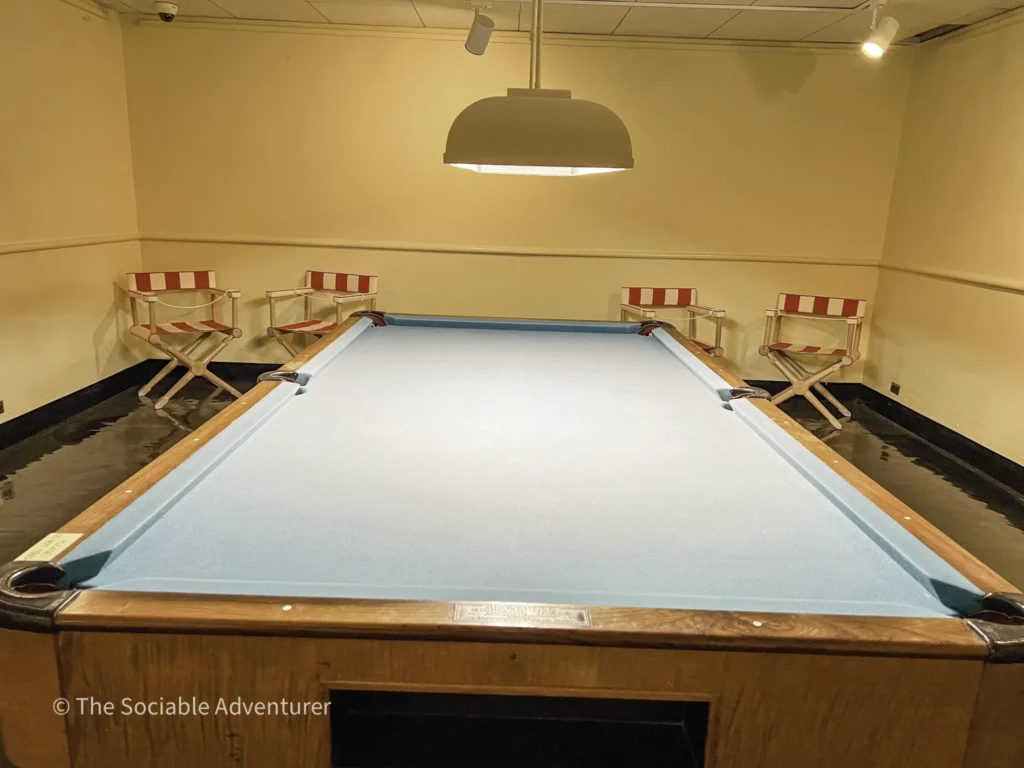
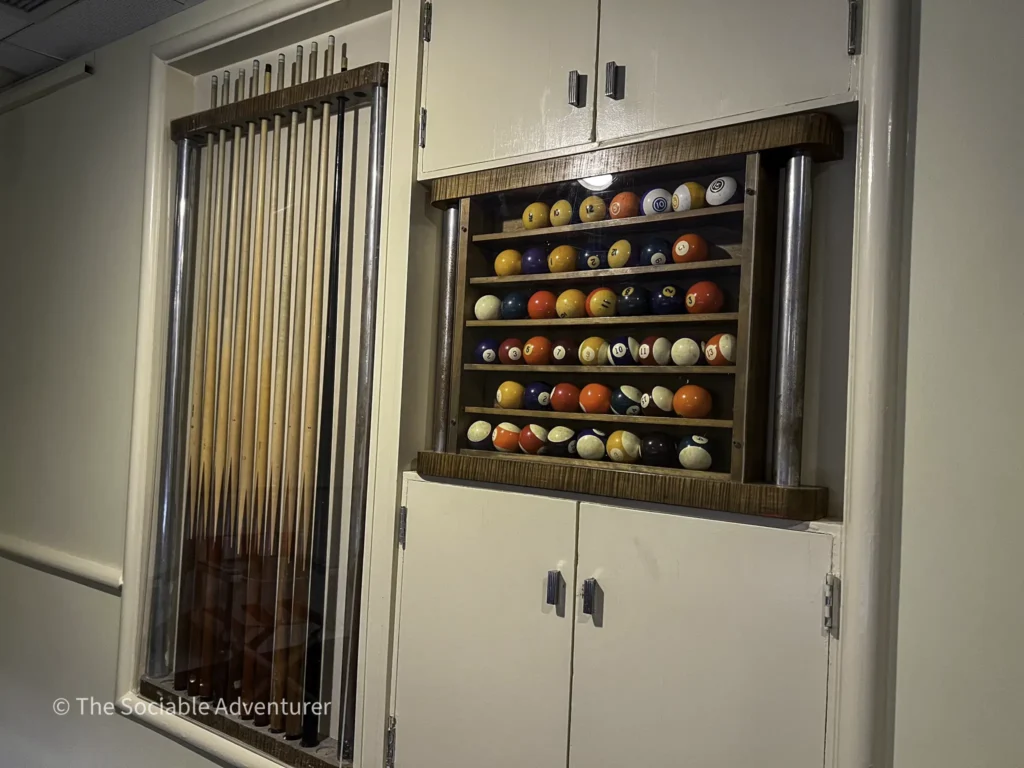
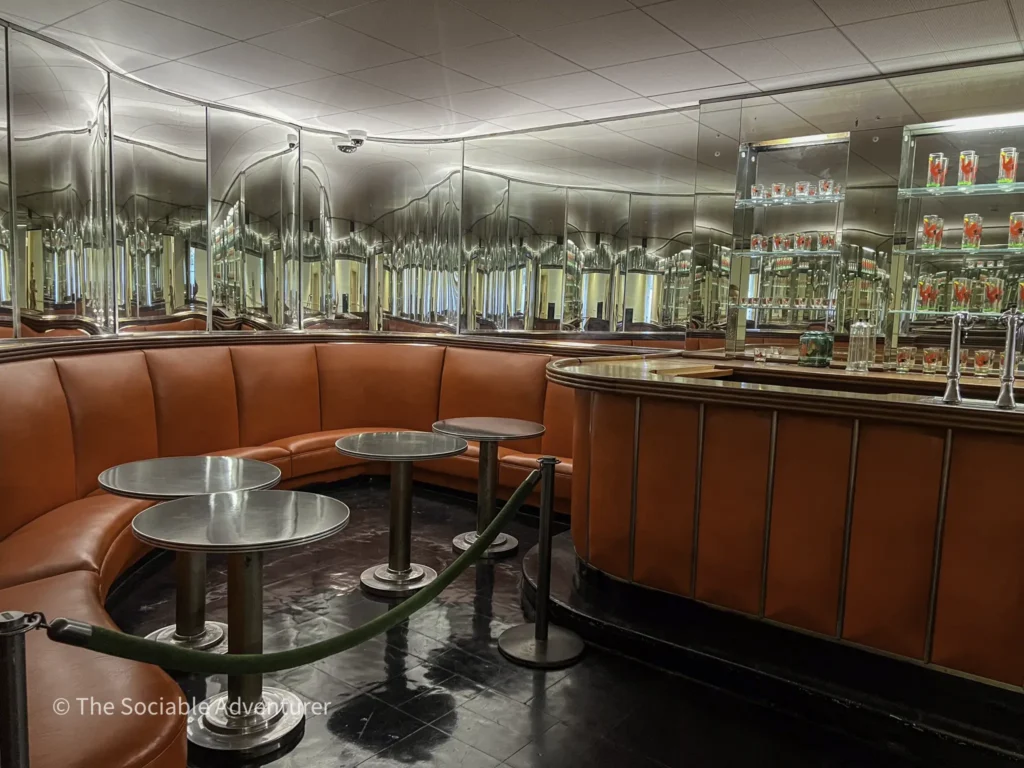
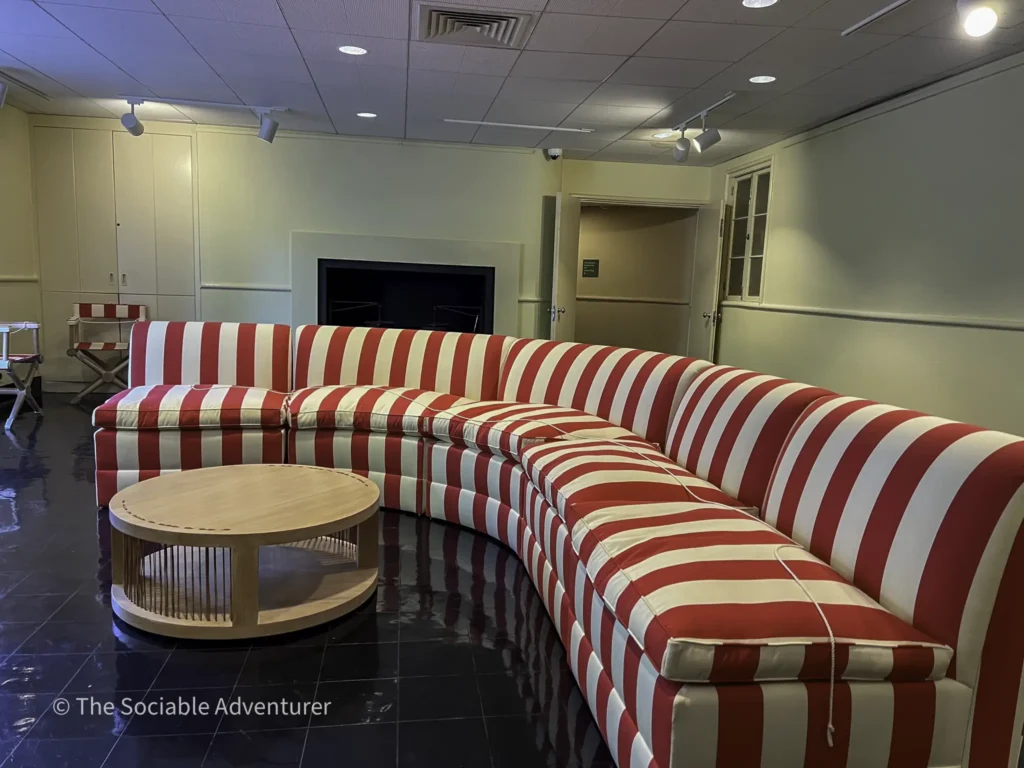
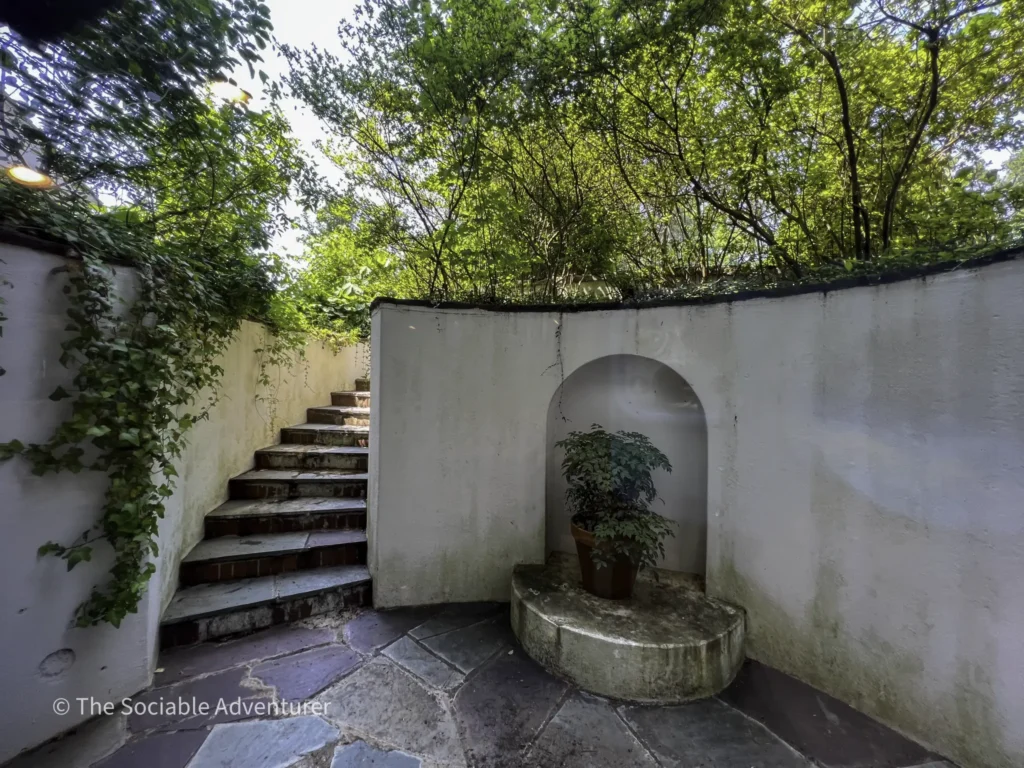
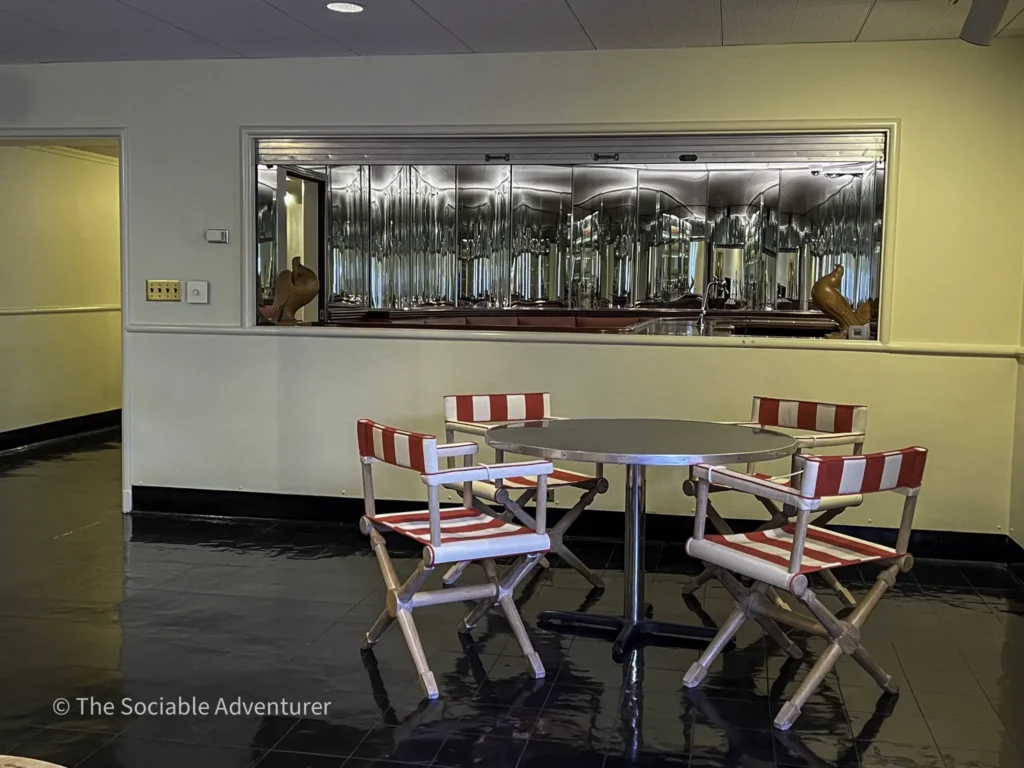
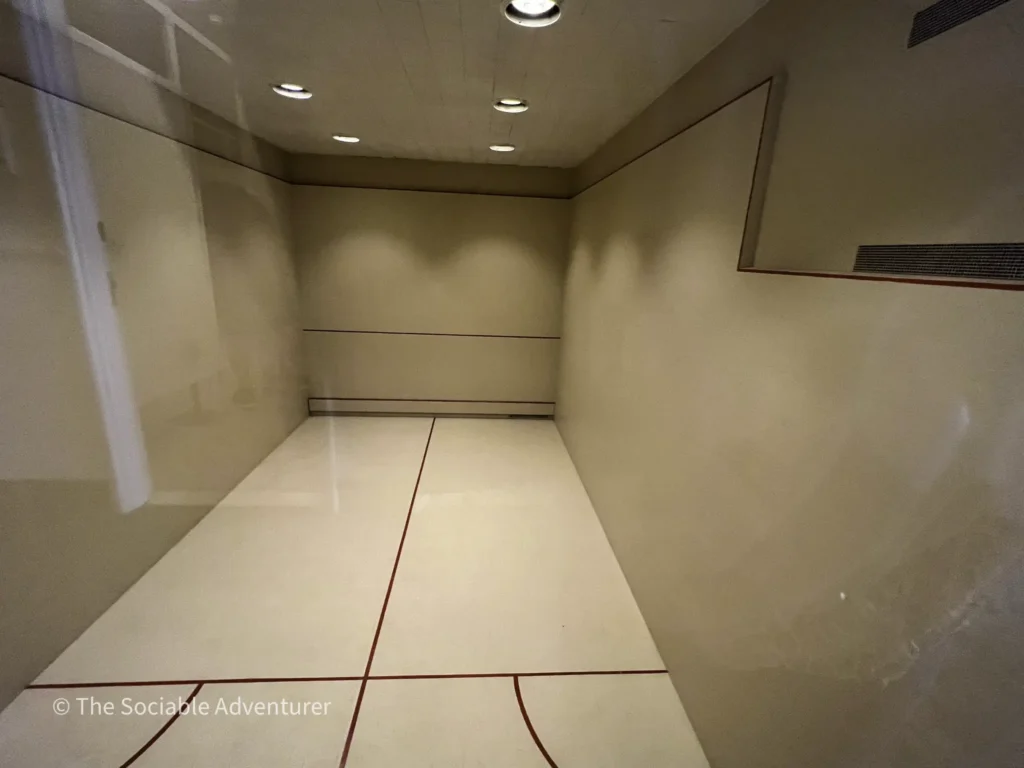
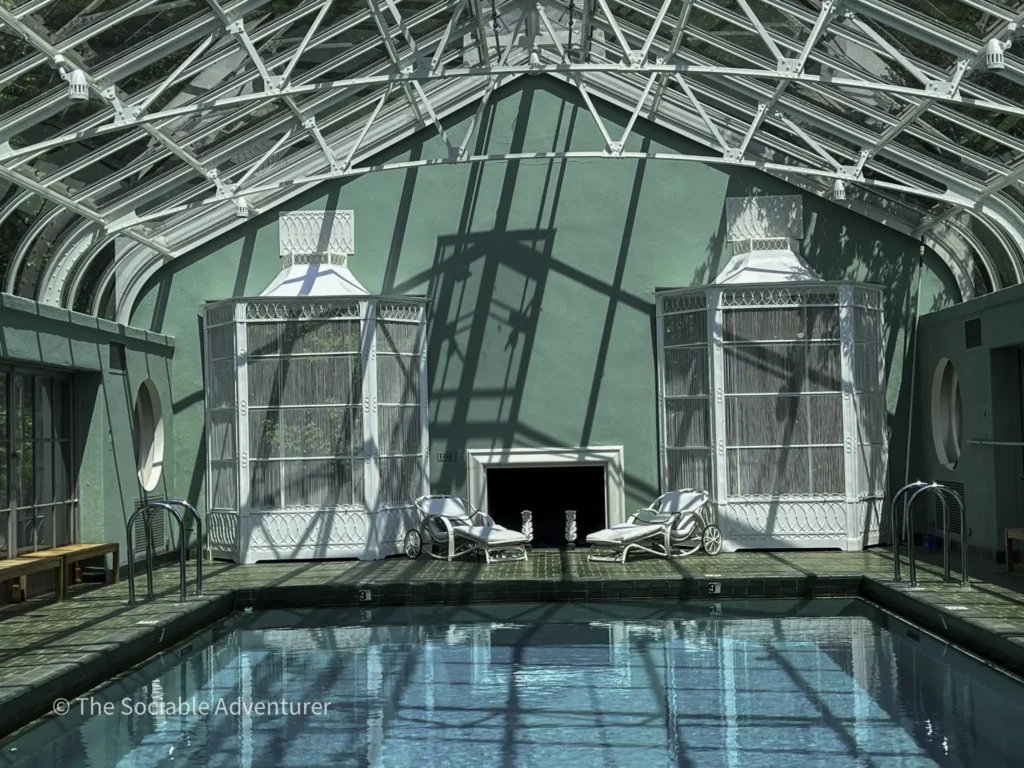
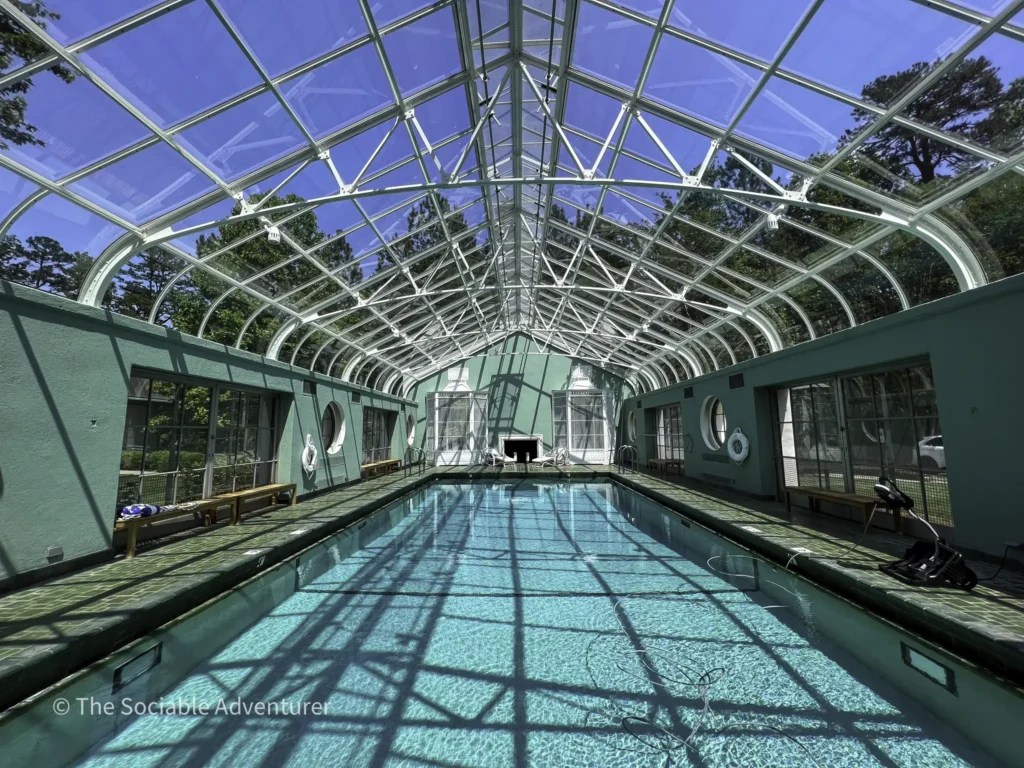
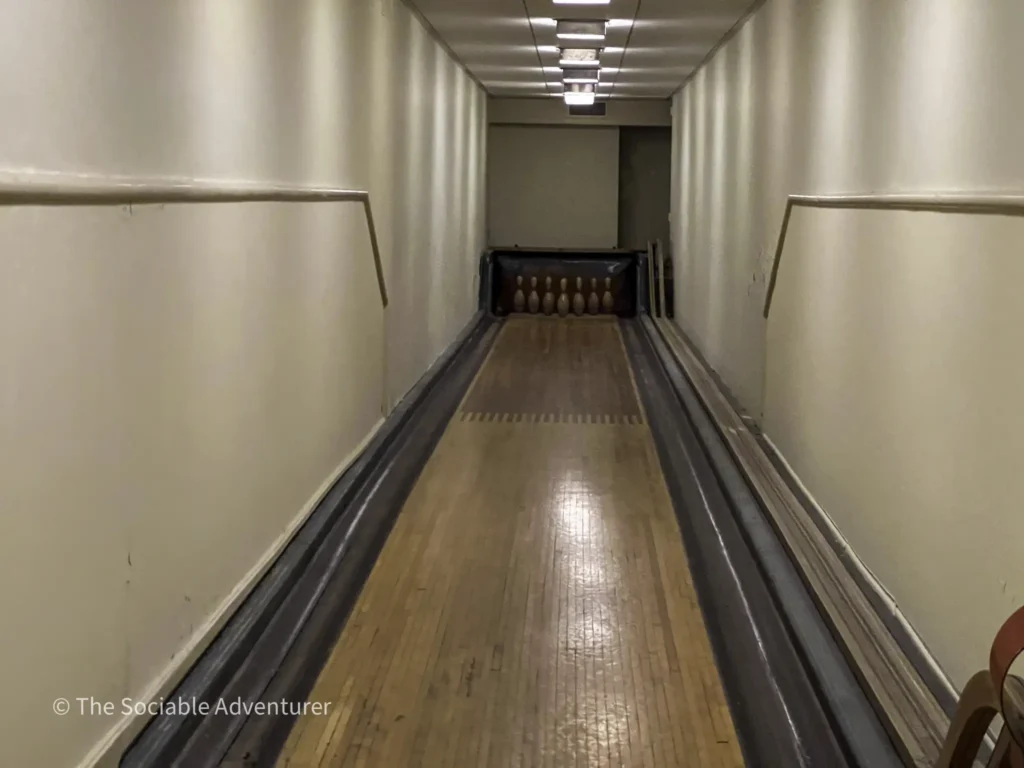
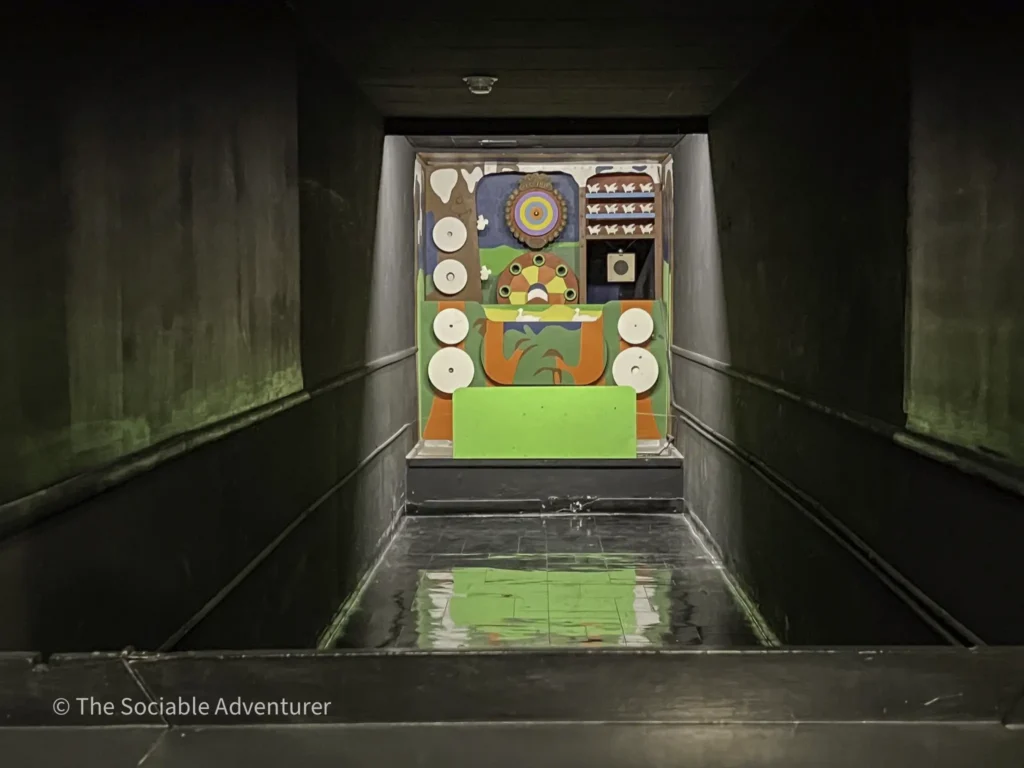
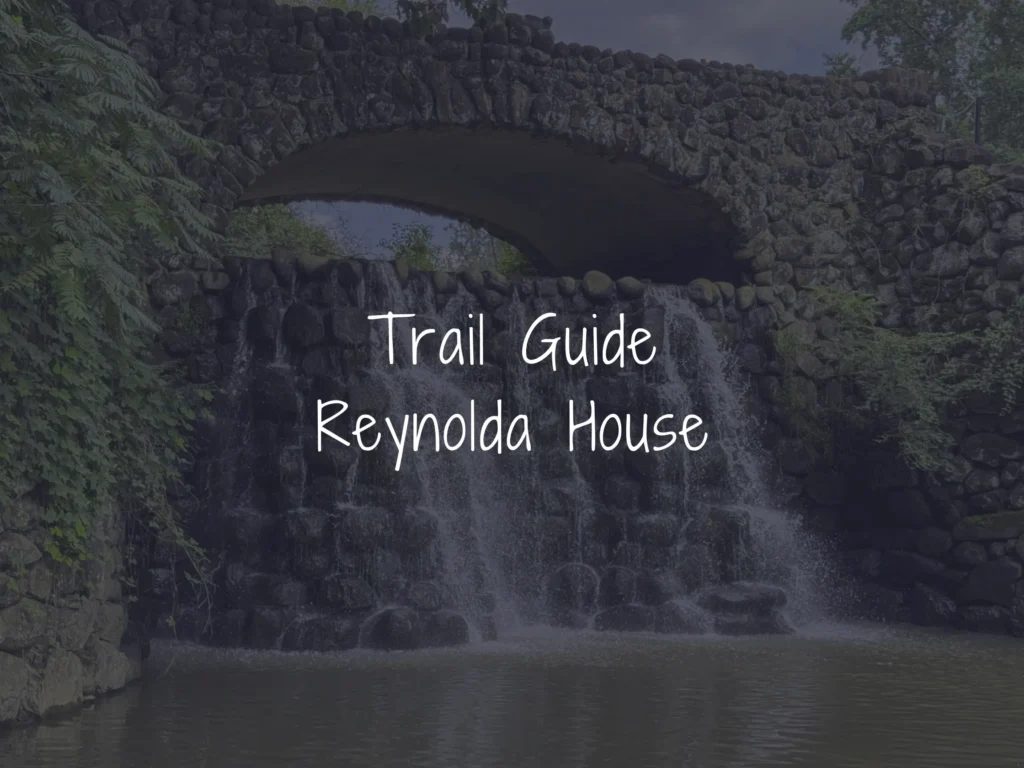
Be sure to check out the YouTube video and pictures below to get a feel for Reynolda House Museum of American Art before you go — or to relive the visit after. For deeper trail detail, see our Reynolda House trails guide.
The 1917 Katharine and R.J. Reynolds Home — American Country House Movement
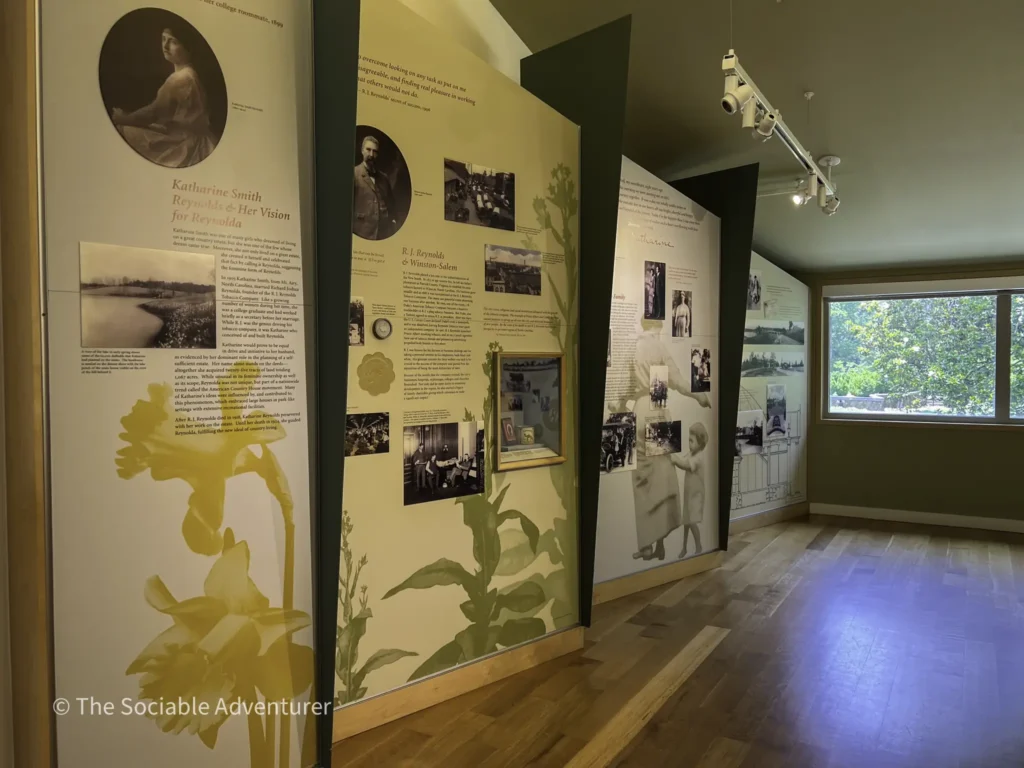
The Reynolda House story begins with Katharine Smith Reynolds and her husband R.J. Reynolds. Katharine, born in Mount Airy, NC in 1880, was the driving vision behind the estate — a college-educated, progressive-minded young woman who married the founder of the R.J. Reynolds Tobacco Company in 1905 and set out to build what Reynolda House Museum Executive Director Allison Perkins has described as “an American country home, a safe and healthy place to raise her children.” R.J. Reynolds himself had built America’s most successful tobacco company in Winston-Salem, keeping company stock local so the money stayed in the city.
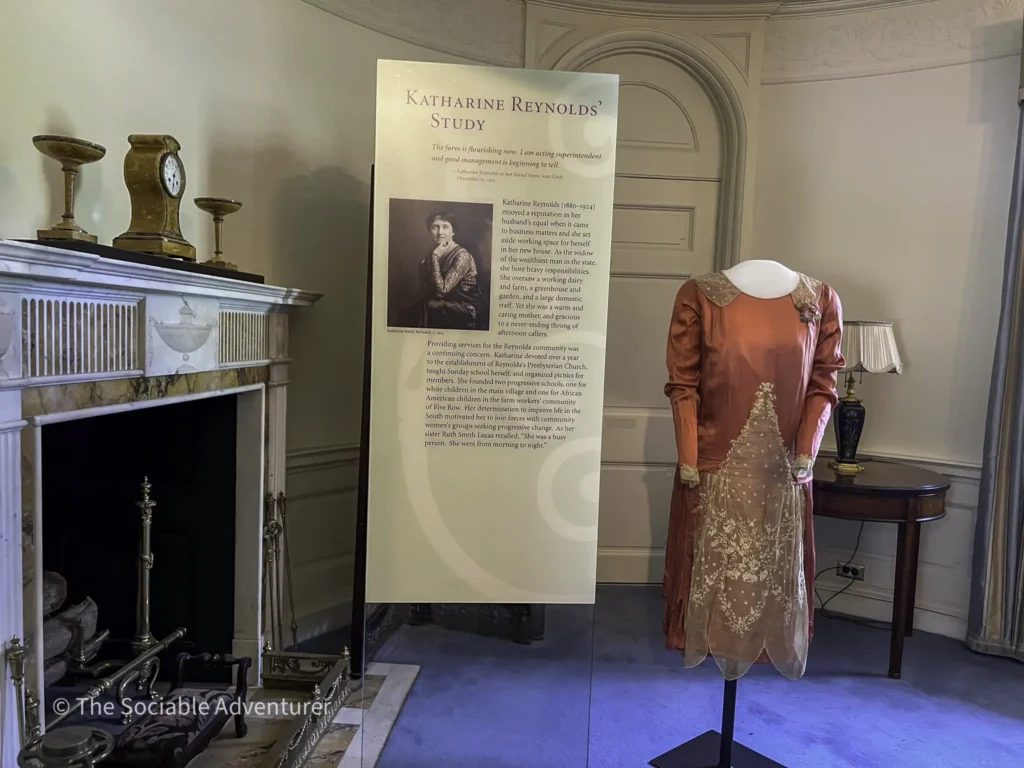
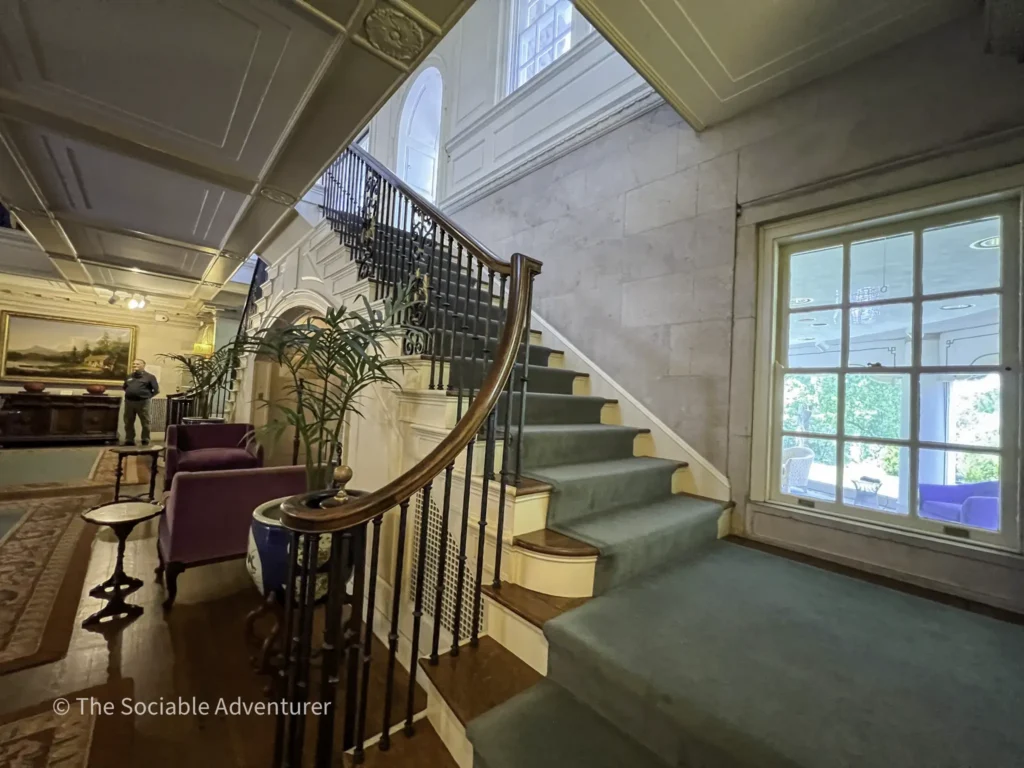
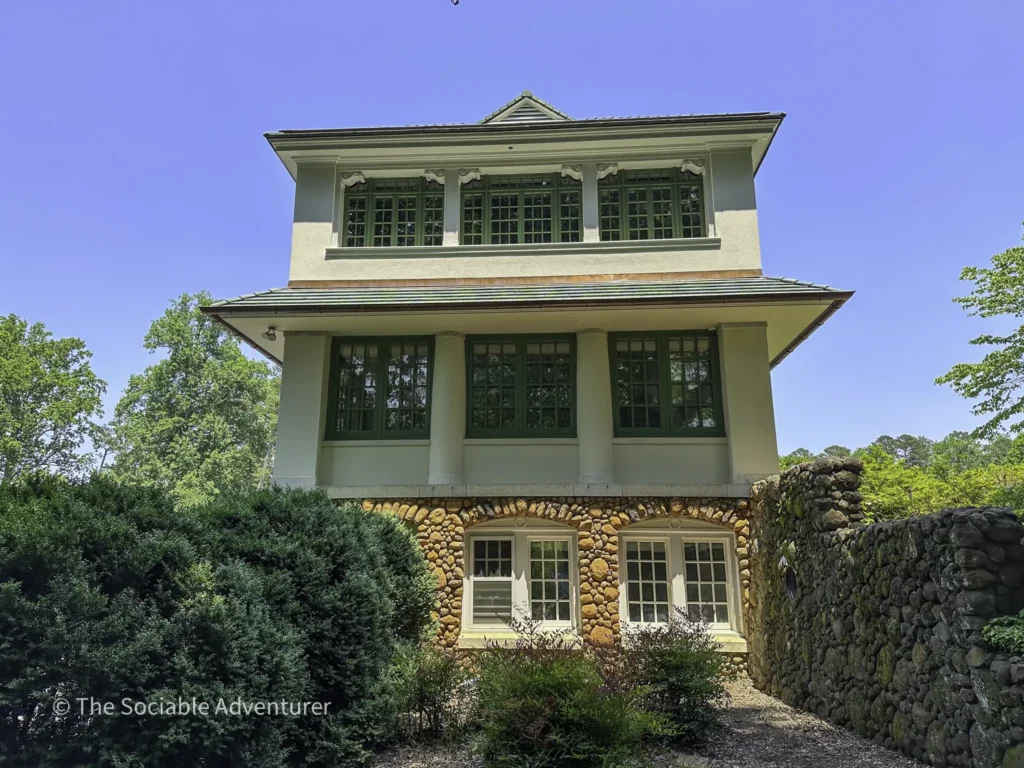
Katharine purchased more than 1,000 acres of land two miles northwest of Winston and worked with Philadelphia architect Charles Barton Keen to design the family home between 1912 and 1917. The finished house — 34,000+ square feet across 64 rooms — was, characteristically, referred to by Katharine as “the bungalow” despite its scale. That gentle understatement captures her broader philosophy for Reynolda: a country home rather than a mansion, warmth rather than opulence, family life rather than display.
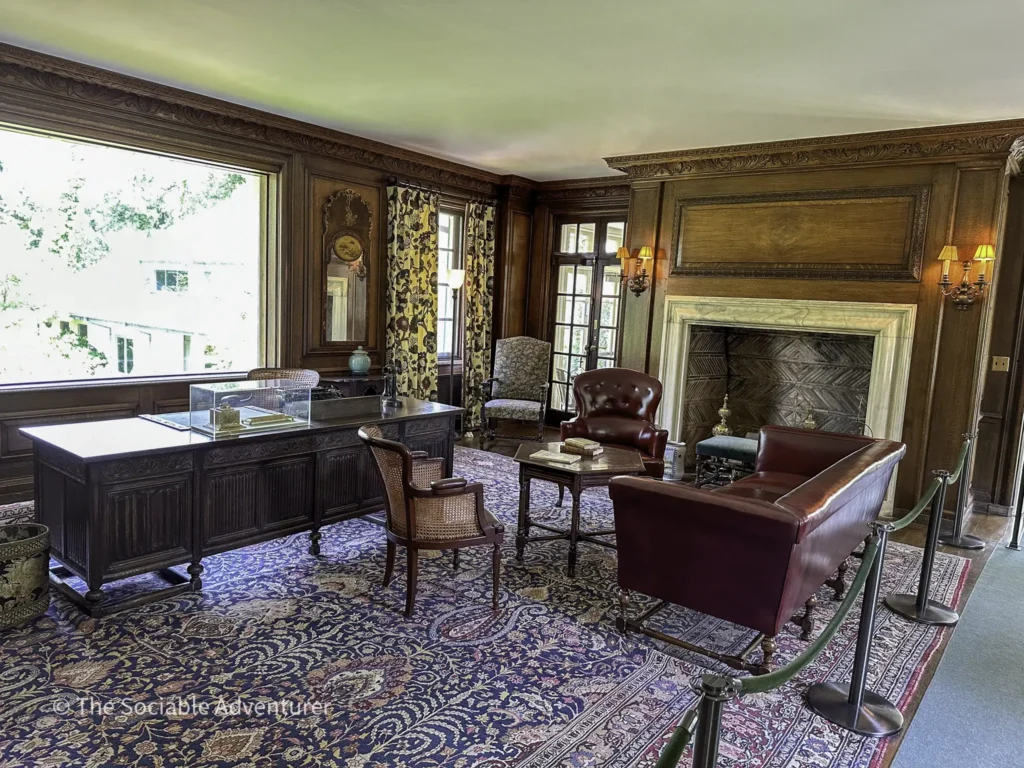
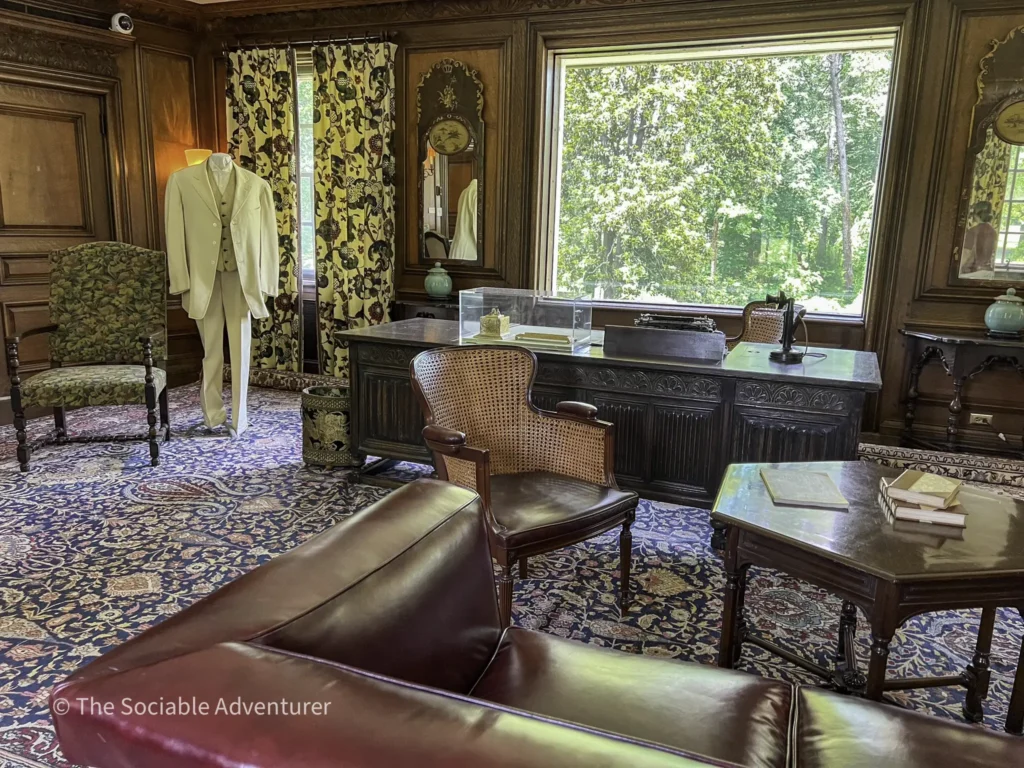
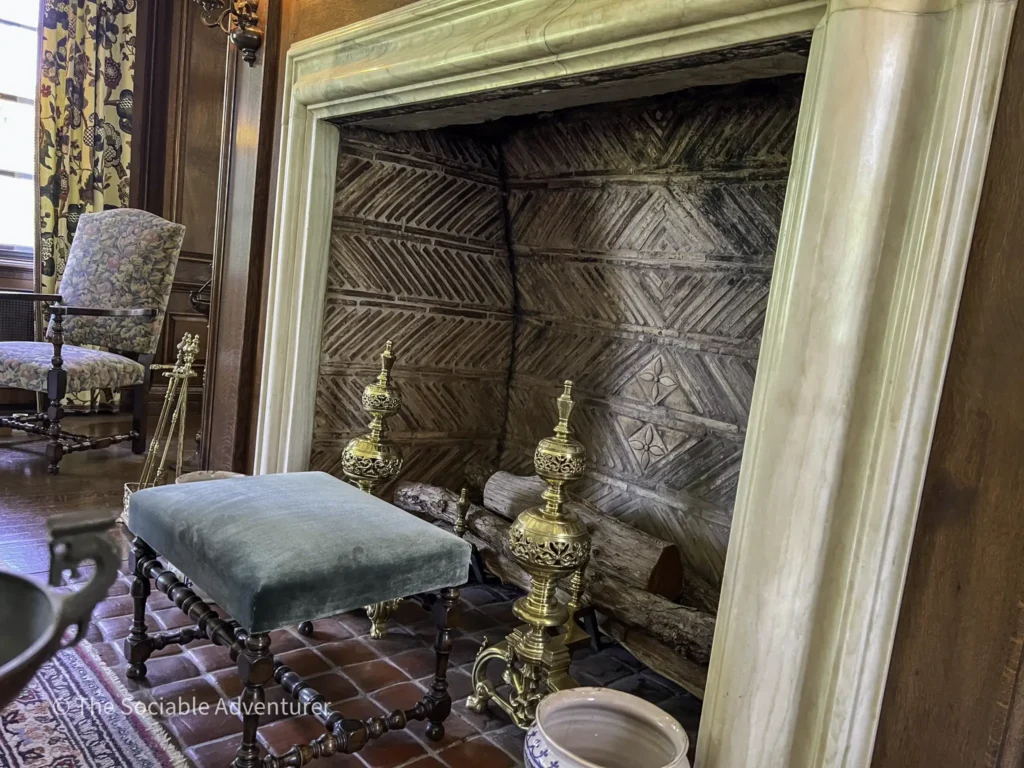
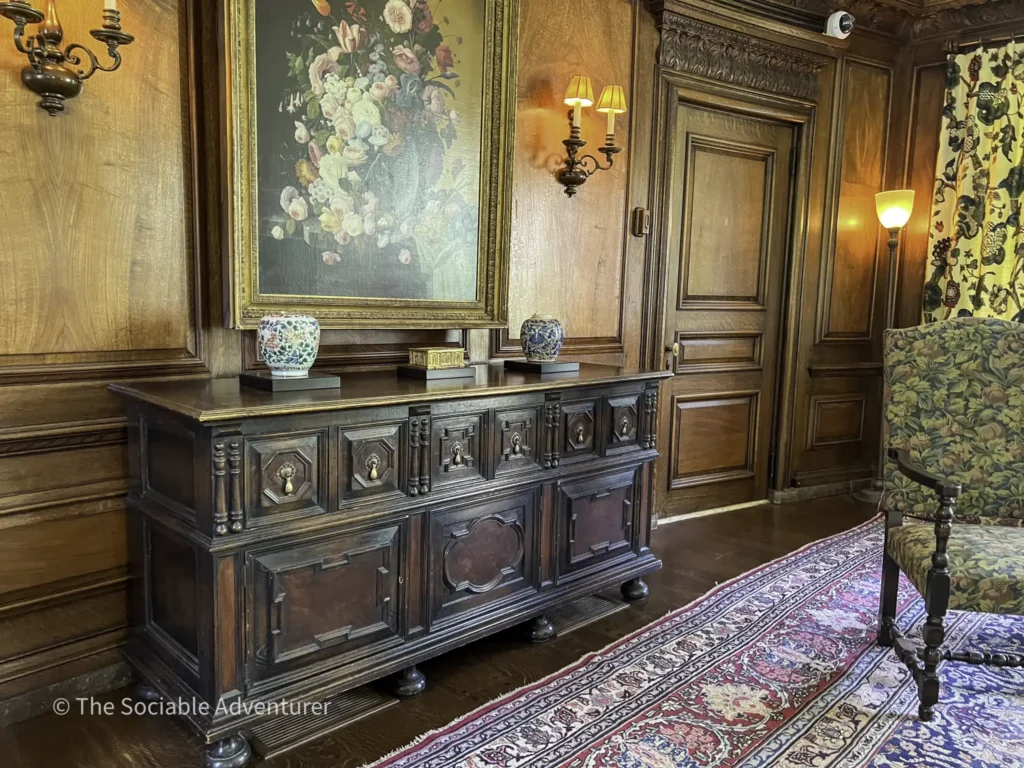
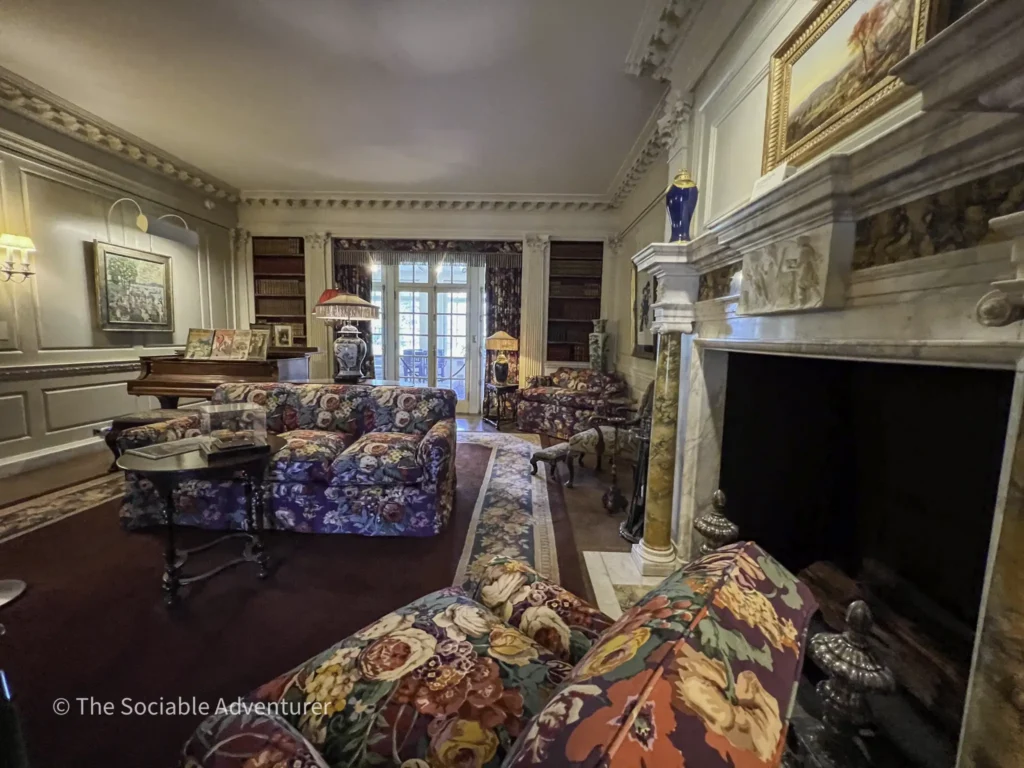
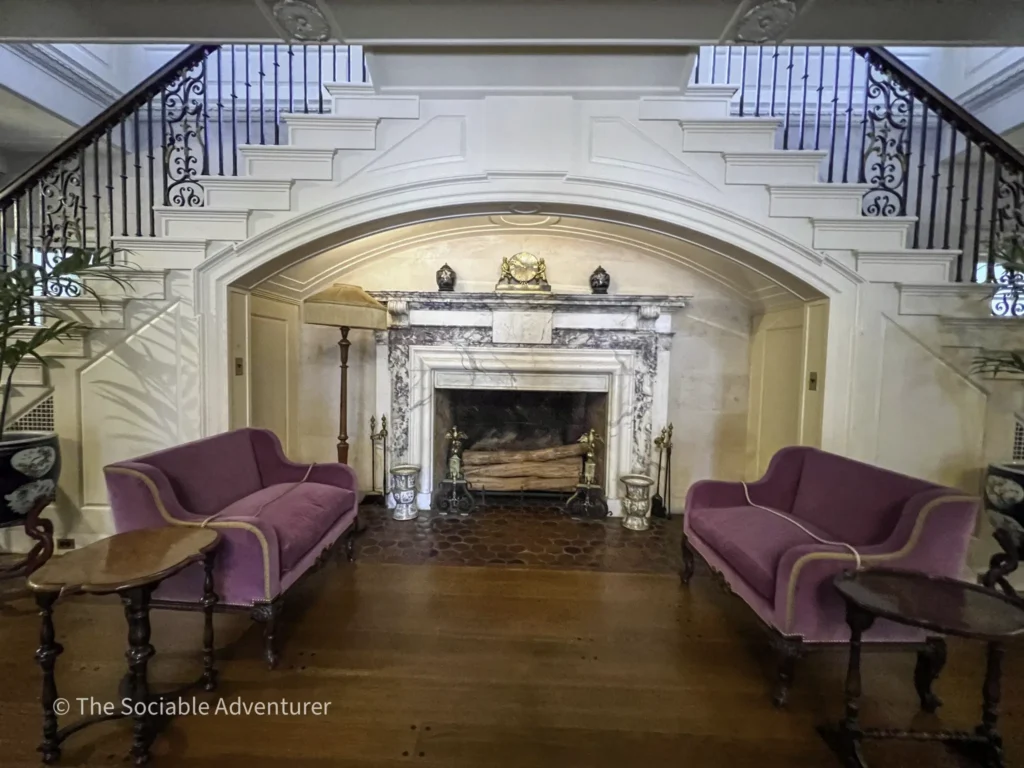
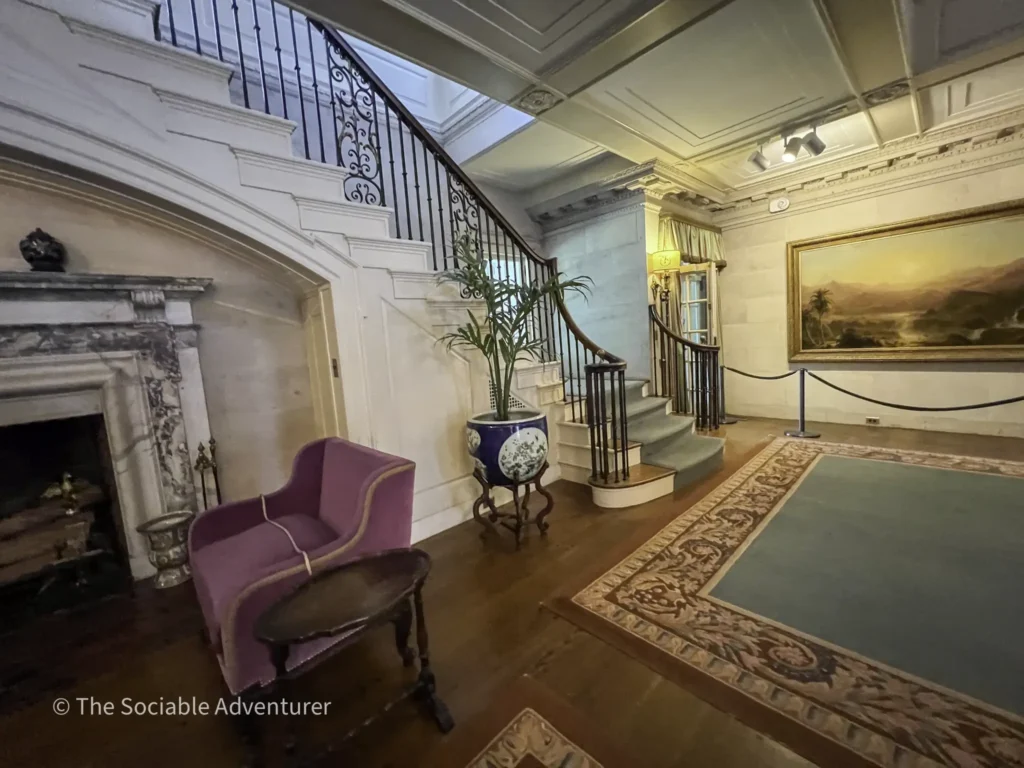
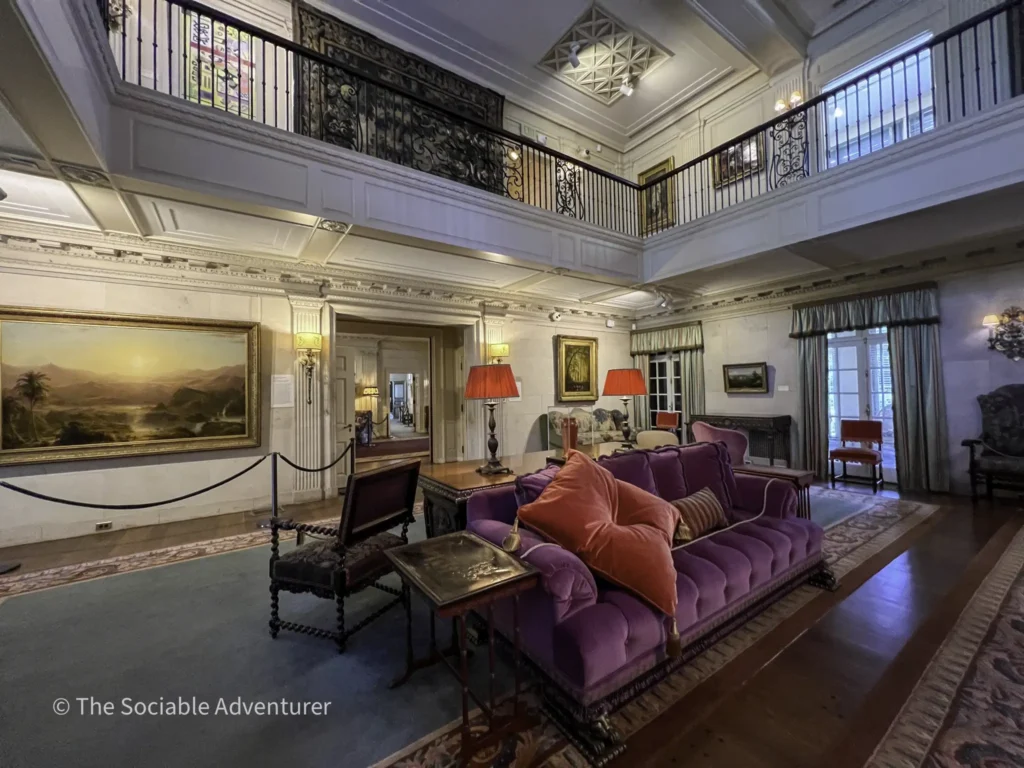
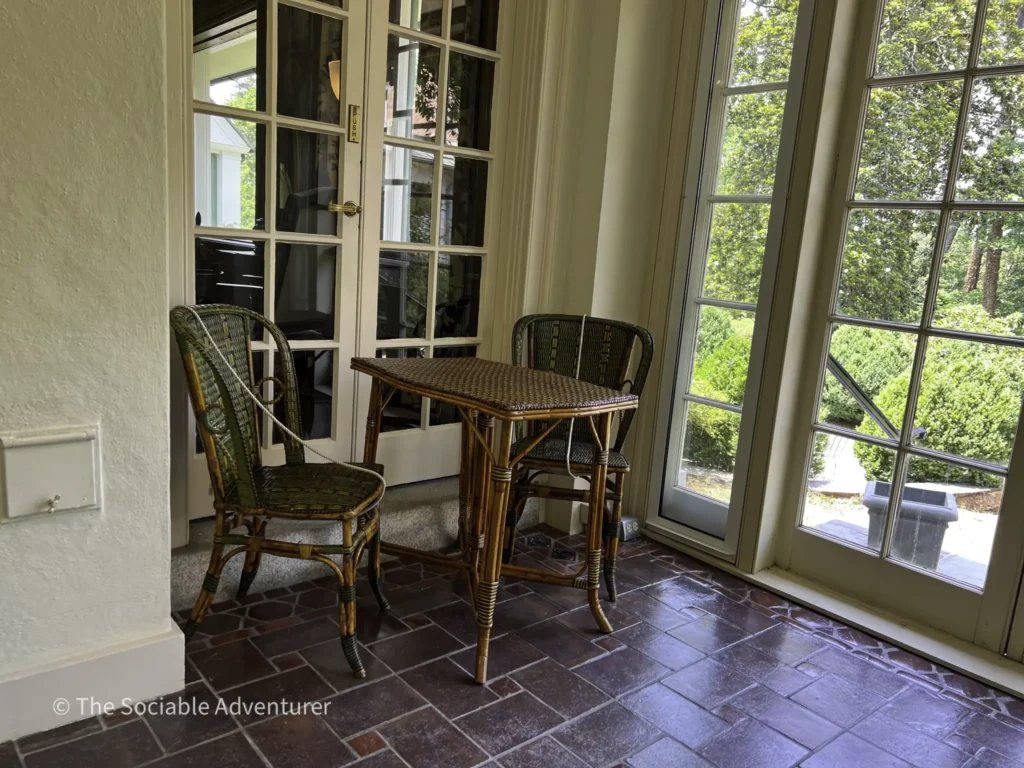
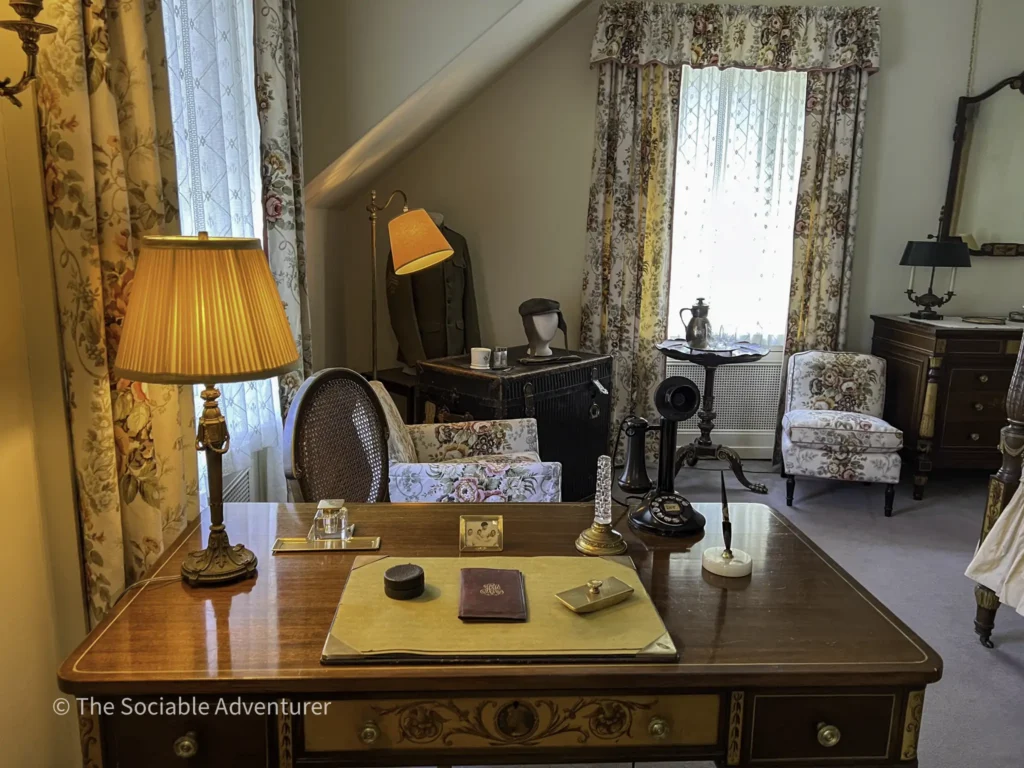
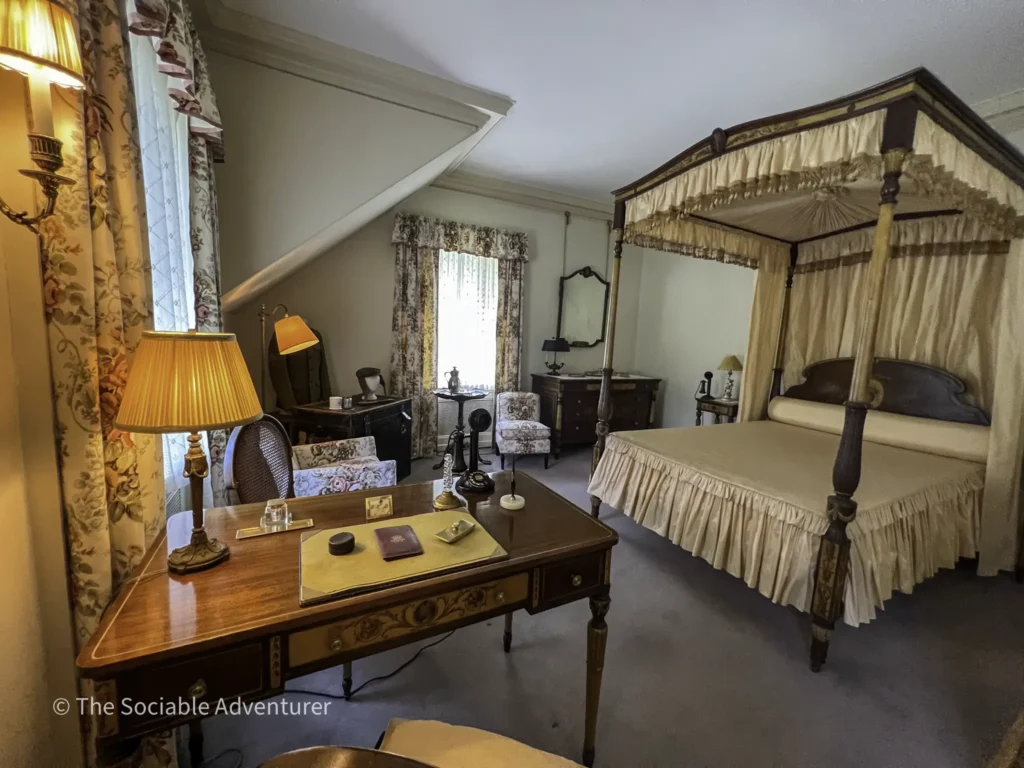
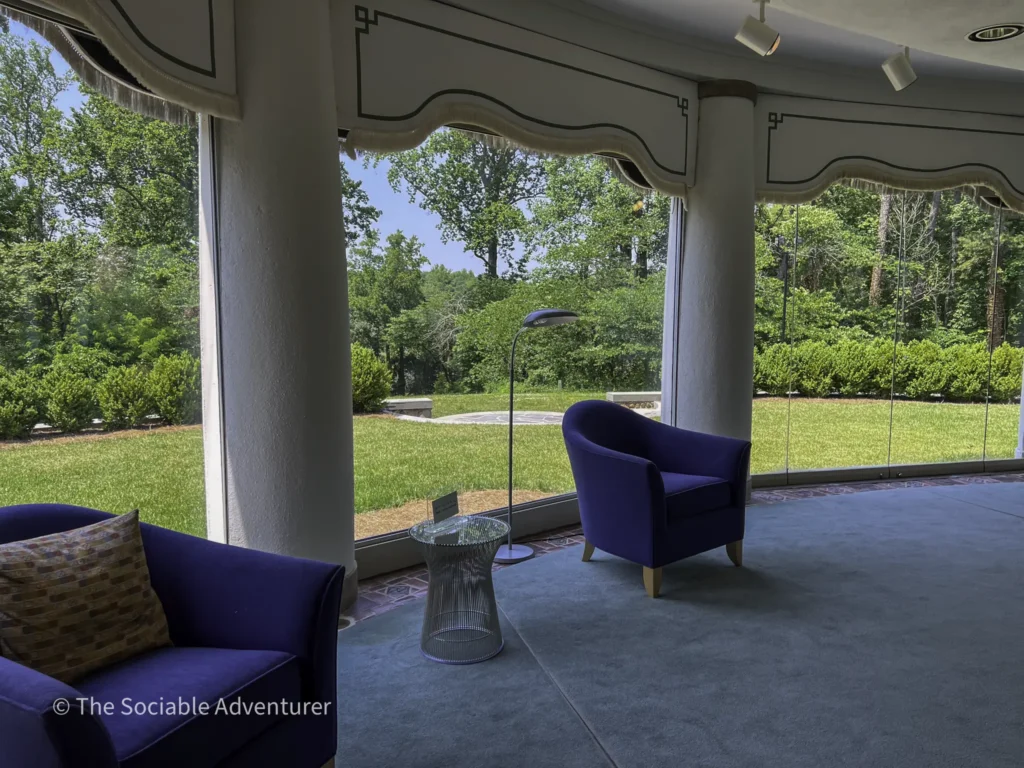
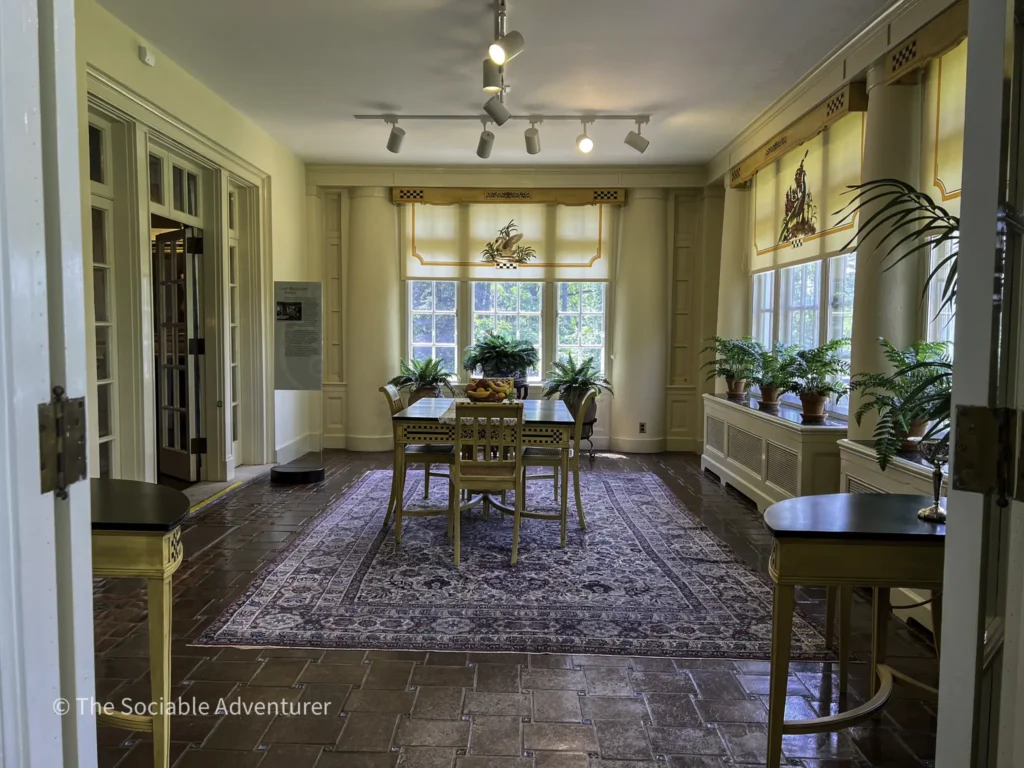
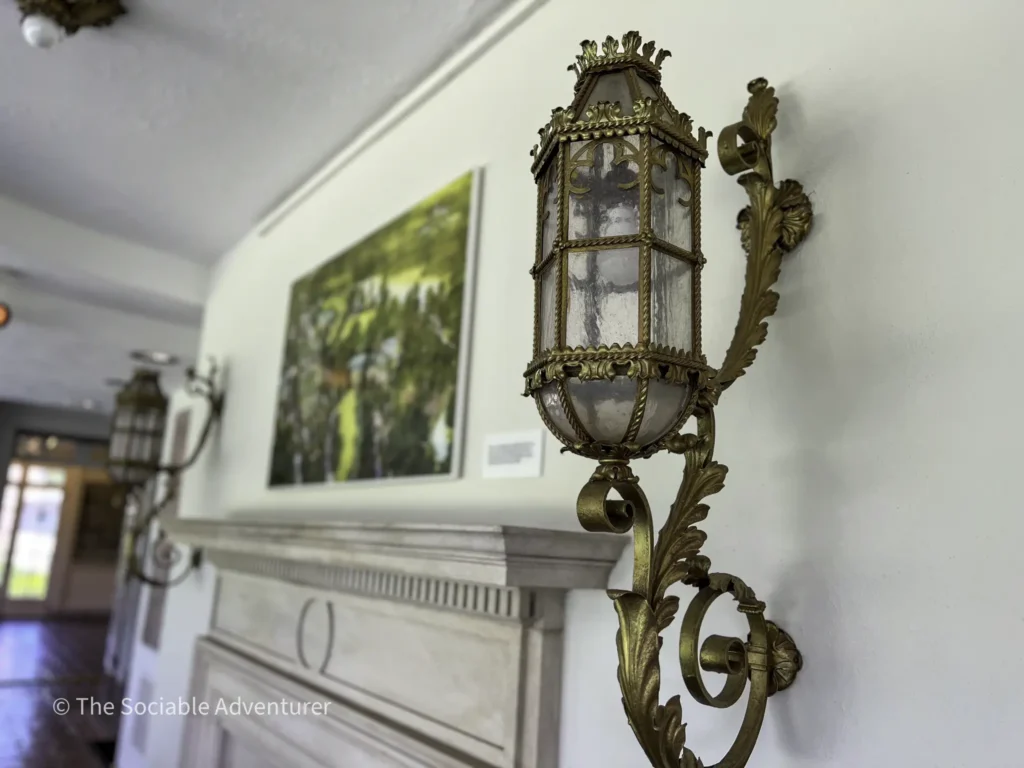
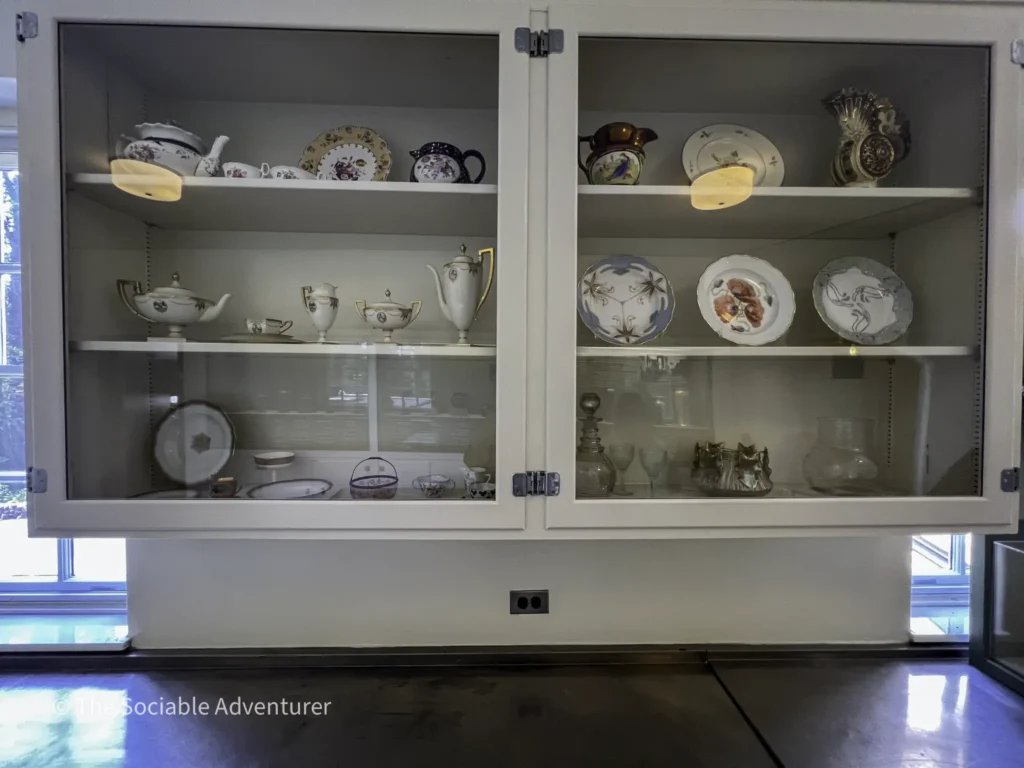
The interior architectural details reward slow attention. The house centers on an elegant two-story living room, cantilevered over a balcony, with the balustrade wrought by Samuel Yellin of Philadelphia — described in the museum’s own records as “the era’s finest ironmaster.” The room houses an Aeolian organ with 2,500 pipes, and the pipes themselves are concealed behind Flemish tapestries hanging from the balcony — a wonderfully theatrical arrangement that lets the music emerge from the tapestries themselves. Beyond the living room, the house displays substantial collections of American Art pottery, Tiffany glass, and the original Reynolds family furnishings and personal objects.
The completed estate opened in December 1917 in time for Christmas, but the family’s residence there was tragically brief. R.J. Reynolds was already seriously ill with pancreatic cancer when the family moved in, and the first public event held at Reynolda was his funeral on July 29, 1918. Katharine continued to oversee the estate as a widow with four young children, remarried Reynolda School principal J. Edward Johnston in 1921, and passed away on May 23, 1924, at age 44 following the birth of her son J. Edward Johnston, Jr. She was buried alongside R.J. at Salem Cemetery in Winston-Salem.
The Museum — 250 Years of American Art and the Babcock Wing
After Katharine’s death, the Reynolda estate was held in trust until the Reynolds children came of age. Eldest daughter Mary Reynolds Babcock acquired the property in the 1930s and, with her husband Charlie Babcock, made the substantive institutional decisions that transformed Reynolda from a private family estate into a public institution.
In 1946, the Babcocks donated 300 acres of the Reynolda estate to Wake Forest University to support its relocation from Wake Forest, NC, to Winston-Salem, enabling the establishment of the private research university that anchors Winston-Salem’s higher-education landscape today. President Harry S. Truman visited Winston-Salem in 1951 to break ground on Wake Forest’s new Reynolda-adjacent campus. After Mary’s death in 1953, Charlie Babcock continued the family’s philanthropic vision — donating the Gardens to Wake Forest with a specific stipulation about public access, and initiating the institutional planning that would eventually transform the family home into an art museum.
Reynolda House was incorporated as a nonprofit dedicated to the arts and education in 1964 and opened for part-time public visitation in 1965. In 1967, Reynolda House formally opened as an art museum, the founding of what has become one of the American South’s premier American art institutions.
The collection’s identity took shape thanks to a substantive early curatorial decision. Barbara Millhouse — a Reynolds family descendant and serious art collector — asked Stuart Feld, then a curator at the Metropolitan Museum of Art, for advice on building the museum’s collection. His answer was direct: “Buy American.” At the time, critics and scholars dismissed the value of American art, and the market was substantially undervalued. Millhouse raised $300,000 from family and family foundations and, with Feld as adviser, began purchasing masterworks for what was then a relatively modest sum. That early “buy American” strategy shaped the museum’s identity as a specialist in American art, years before American art received the substantial critical recognition it enjoys today.
The collection today spans 250 years of American art — from Colonial-era portraits through 20th-century masterworks — with signature artists including:
- Georgia O’Keeffe — a signature holding; O’Keeffe’s iconic flower and landscape paintings are cornerstone works of the collection
- Frederic Edwin Church — including “The Andes of Ecuador” (1855)
- Jacob Lawrence — a signature 20th-century holding
- Mary Cassatt — Impressionist mother-and-child studies
- John Singer Sargent — including “Mrs. Augustus Hemenway” (1890)
- Thomas Cole — including “Home in the Woods” (1847)
- Edward Hicks — including “Peaceable Kingdom of the Branch” (c. 1826-30)
- Gilbert Stuart — Colonial-era portraiture
- John Singleton Copley — Colonial-era portraiture
- Charles Wilson Peale — early American portraits
- Andy Warhol — Pop Art
- Grant Wood — American Regionalism
- Alexander Calder — mobile sculpture
- Romare Bearden — collage and mixed-media
- Lee Krasner, Stuart Davis, Martin Johnson Heade, Thomas Eakins, Andrew Wyeth, Roy Lichtenstein, Chuck Close, Nam June Paik, Albert Bierstadt, Charles Burchfield, and Edward Hopper — additional collection anchors
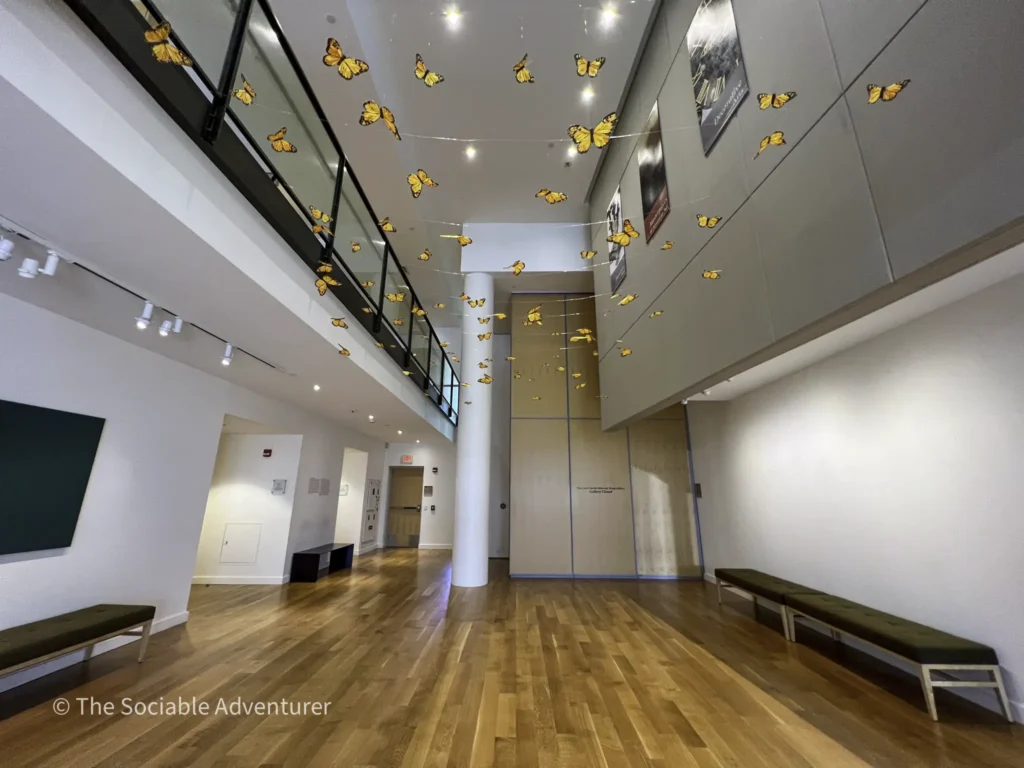
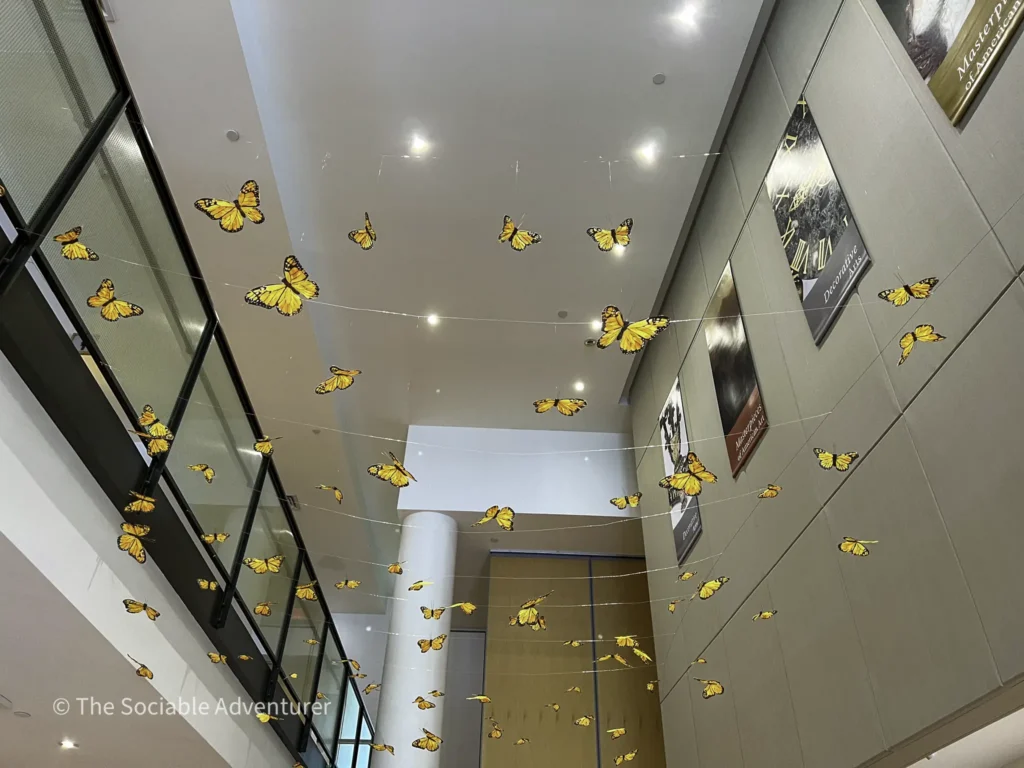
Beyond the permanent collection, the museum hosts rotating special exhibitions in the Mary and Charlie Babcock Wing — a gallery, auditorium, and fine arts storage addition that opened in 2005. Two special exhibitions typically feature in the Babcock Gallery each year, one in the fall and one in the spring. Museum programming also includes concerts, lectures, classes, film screenings, and the annual Chimes Opening Night Gala.
Museum Director Allison Perkins leads Reynolda House Museum of American Art today, continuing the substantial curatorial vision that Barbara Millhouse and Stuart Feld established in the museum’s earliest years.
Visiting the House — Practical Notes and the Wider Reynolda Ecosystem
Reynolda House Museum of American Art operates on a ticketed admission basis — a contrast with Reynolda Gardens, which is free year-round. The museum is open Tuesday through Saturday from 9:30 AM to 4:30 PM, Sunday from 1:30 PM to 4:30 PM, and is closed on Mondays. Check the Reynolda website for current admission pricing, membership options, and any temporary closures.
A visit to Reynolda House pairs naturally with the wider Historic Reynolda property. The three complementary destinations across the estate include:
- Reynolda Gardens — the four-acre Formal Gardens designed by Thomas Sears, the restored 1913 Brown Family Conservatory (reopened October 2024), and the wider 134-acre garden footprint — all free daily from sunrise to sunset
- Reynolda Village Shops & Restaurants — the original farm village buildings from the 1917 estate, now converted into a shopping and dining district with 19 stores and restaurants
- The Reynolda estate walking trails — a network of trails winding through the estate’s original wooded acreage, connecting the museum, gardens, and village
For a deeper look at the trail network across the estate, see our dedicated Reynolda trails guide with maps and route recommendations.
Good to Know
- Location: 2250 Reynolda Road, Winston-Salem, NC 27106
- Phone: 888-663-1149
- Email: hello@reynolda.org
- Hours: Tuesday–Saturday 9:30 AM–4:30 PM; Sunday 1:30–4:30 PM; closed Mondays (check the Reynolda website for current hours and holiday closures)
- Admission: Ticketed (check the Reynolda website for current pricing); Reynolda offers periodic free-admission programming
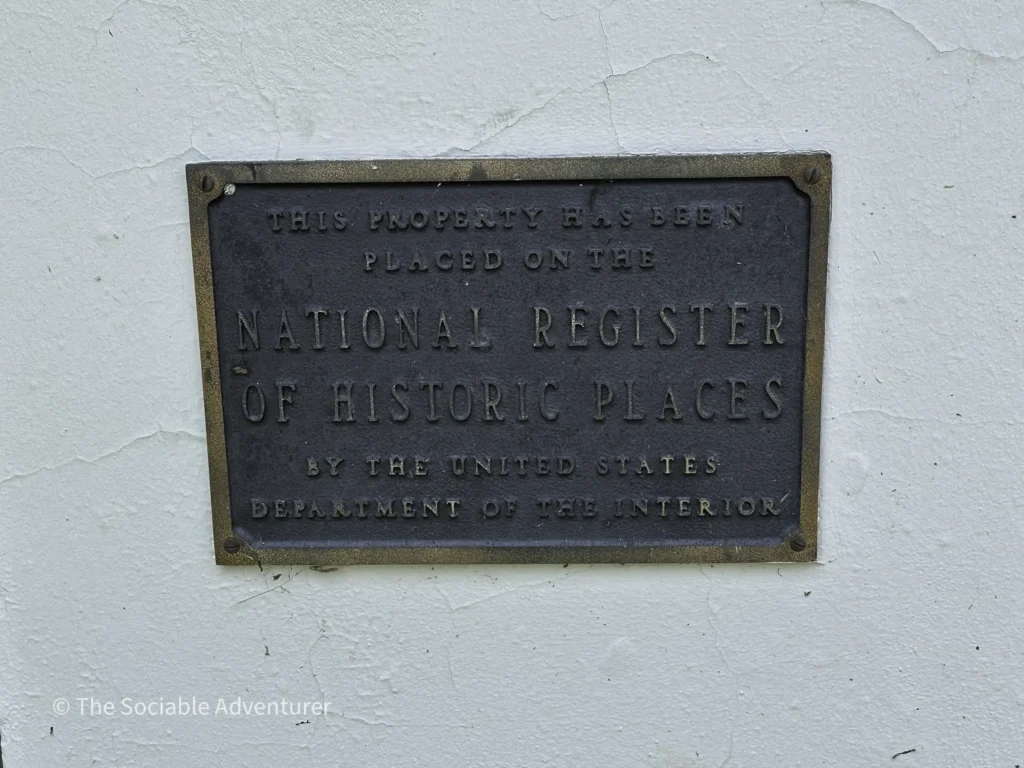
- The house: Completed 1917 by Katharine and R.J. Reynolds; designed by Philadelphia architect Charles Barton Keen; 34,000+ square feet across 64 rooms; on the National Register of Historic Places
- The museum: Opened for public visitation in 1965; formally an art museum since 1967; officially affiliated with Wake Forest University since 2002; the Mary and Charlie Babcock Wing was added in 2005
- The collection: Spans 250 years of American art; 6,000+ historic objects; signature artists include Georgia O’Keeffe, Frederic Edwin Church, Jacob Lawrence, Mary Cassatt, John Singer Sargent, Andy Warhol, Grant Wood, Alexander Calder, and Romare Bearden
- Museum Director: Allison Perkins
- Institutional structure: Part of the Historic Reynolda property alongside Reynolda Gardens, Reynolda Village Shops & Restaurants, and the estate walking trails
- Best for: American art enthusiasts, historic house museum visitors, Georgia O’Keeffe fans, American Country House movement architecture enthusiasts, and Reynolds family history enthusiasts
- Pair with: The full Winston-Salem attractions cluster; the natural Reynolda estate pairing with Reynolda Gardens and Reynolda Village Shops & Restaurants; the Reynolda estate trails for the woodland walking network; the Reynolda Road corridor combining Reynolda House with the NC Museum of Art – Winston-Salem; or the Winston-Salem art destinations pattern combining Reynolda House with the Lam Museum of Anthropology (also on Reynolds-donated Wake Forest land) and MESDA
A Winston-Salem Highlight
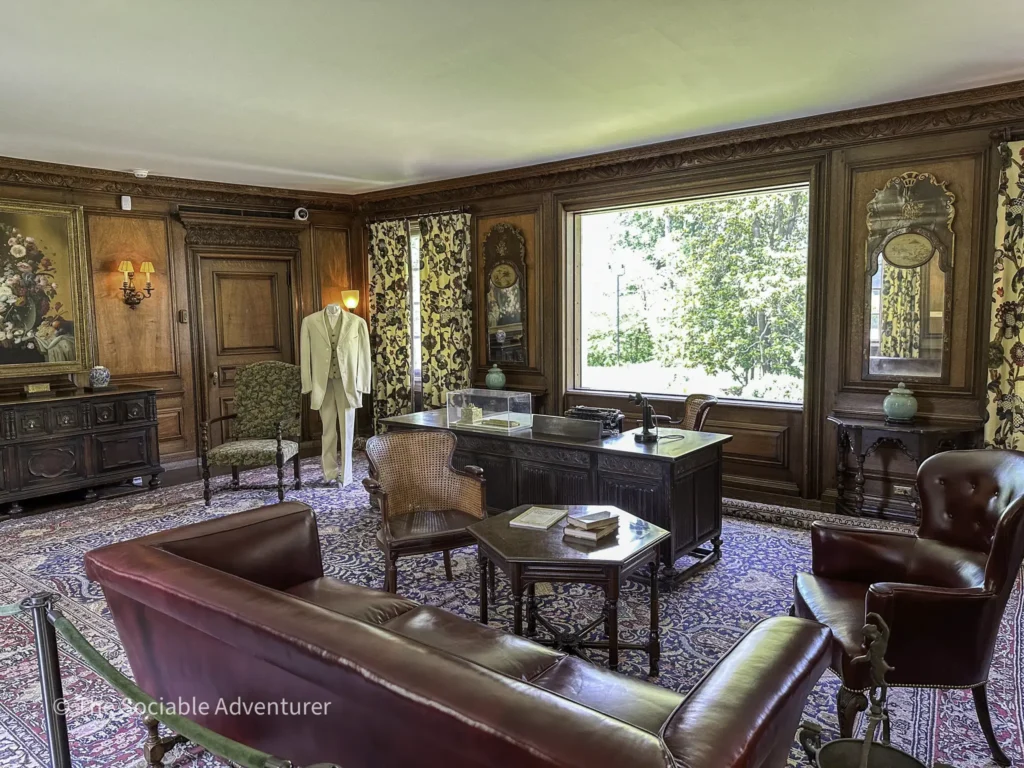
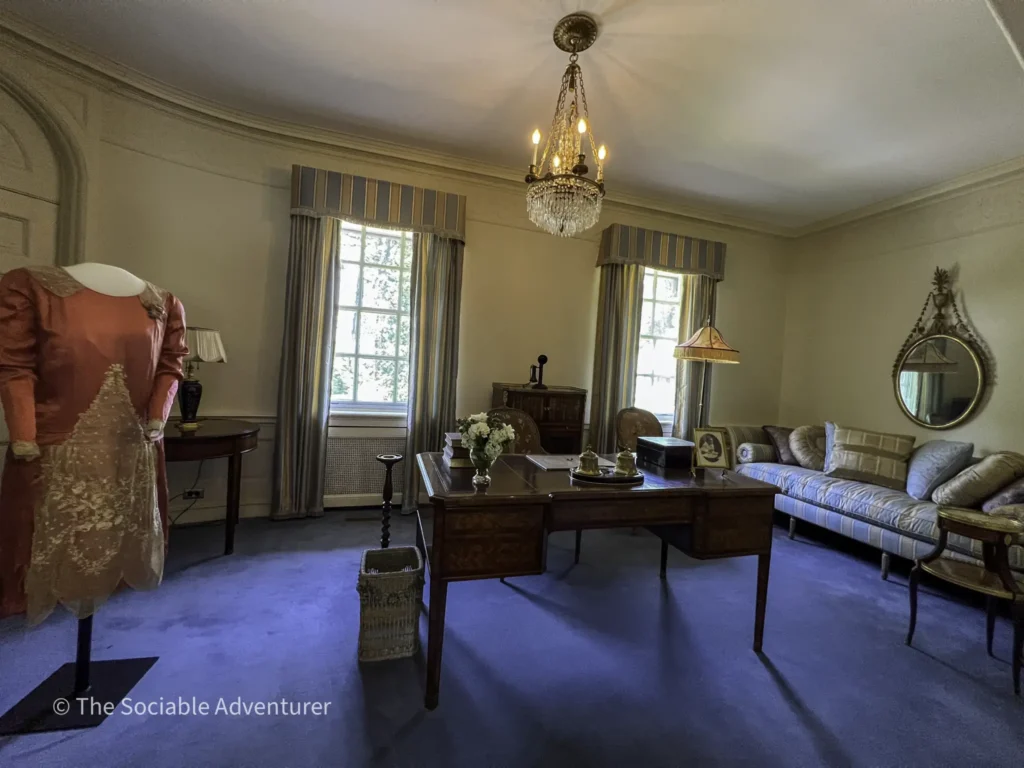
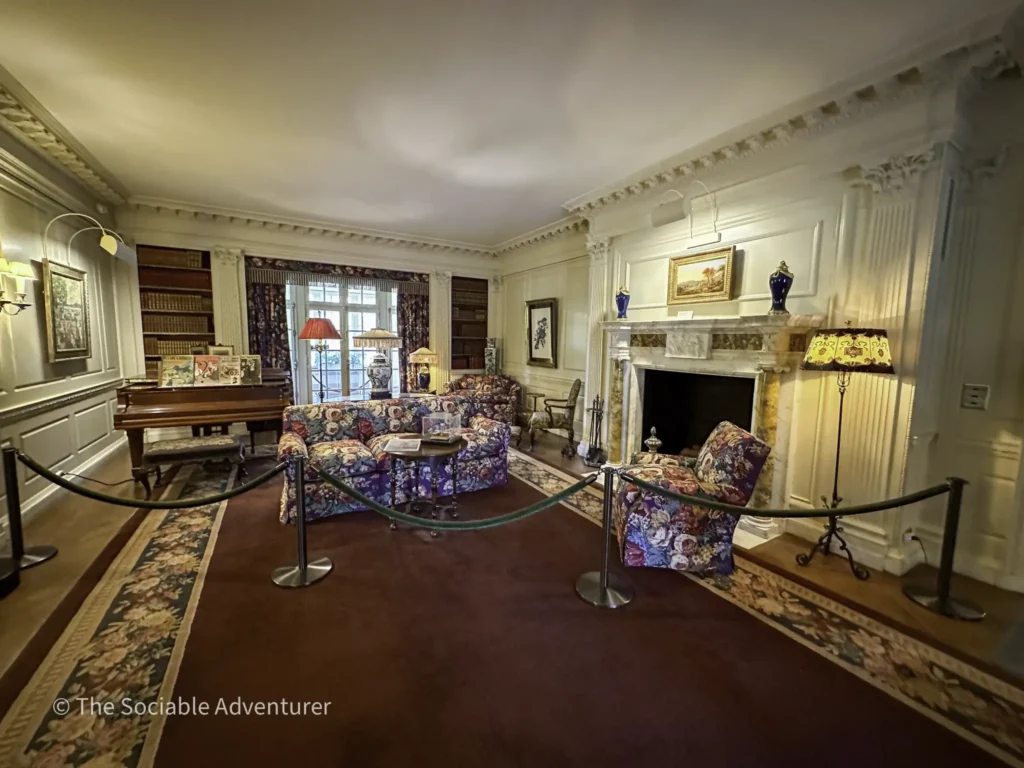
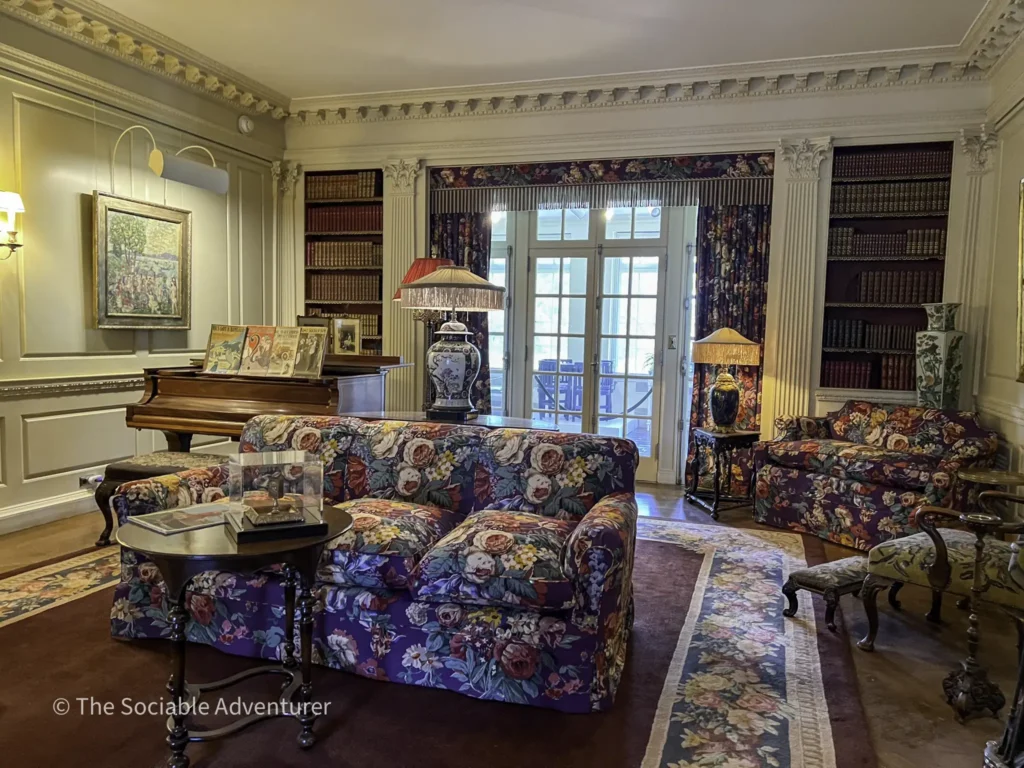
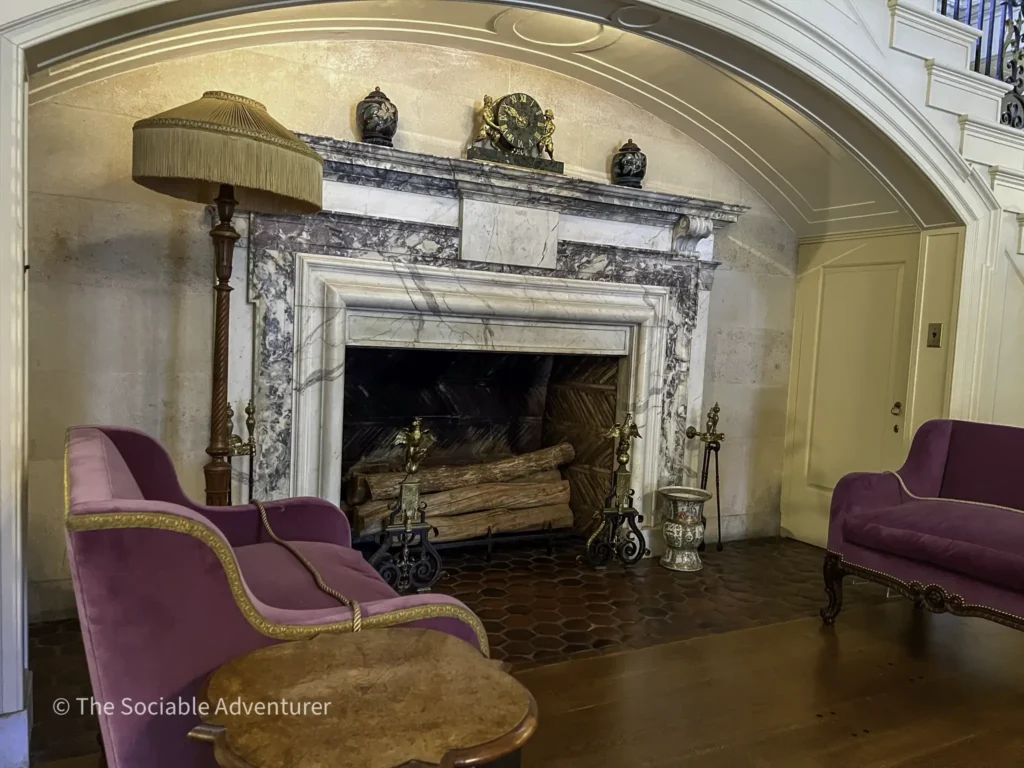
Reynolda House Museum of American Art is one of those places you leave planning to return. The 1917 country home itself is worth the visit — the two-story living room with the Samuel Yellin balustrade, the 2,500-pipe Aeolian organ hidden behind Flemish tapestries, and the sixty-plus rooms preserved with Reynolds family furnishings and personal objects. It’s one of the few well-preserved surviving examples of the American Country House movement, and the domestic scale of the interiors keeps the experience personal rather than palatial.
The art collection is a reason to give the museum a full day. Two hundred and fifty years of American art housed inside a family home rather than a purpose-built museum, with signature masterworks by Georgia O’Keeffe, Frederic Edwin Church, Jacob Lawrence, Mary Cassatt, John Singer Sargent, Thomas Cole, Edward Hicks, Grant Wood, and Andy Warhol — plus rotating special exhibitions in the Babcock Wing twice a year. The collection benefits from Barbara Millhouse and Stuart Feld’s 1960s “Buy American” strategy, which built the museum’s identity around American art years before critics and scholars gave American art the substantial recognition it enjoys today.
For the full Historic Reynolda experience, plan for a full day. Start at Reynolda House Museum of American Art for the morning galleries and the historic interiors. Walk over to Reynolda Gardens for the Formal Gardens and the restored Brown Family Conservatory. Take a break for lunch or shopping in Reynolda Village. And for the wider estate, follow the Reynolda walking trails that connect all three destinations across the original 1,067-acre Reynolds family footprint. Between the house, the art, the gardens, the village, and the trails, Reynolda rewards the substantial time you’re willing to give it.
Resources
Reynolda House Museum of American Art Website
Location
Social Media
@thesociableadventurer Want to visit one of the most remarkable historic homes in North Carolina? Reynolda House and Gardens is the 170-acre 1917 estate of RJ and Katharine Reynolds in Winston-Salem, NC. The property is home to the Reynolda House Museum of American Art, Reynolda Gardens, Reynolda House, Reynolds Village Shops and Restaurants, and walking trails. The Gardens are open year-round and are free of charge, while the House and Art Museum require tickets for tours during their open hours. Find more details about itineraries at https://reynolda.org/visit/itineraries/. @Visit NC @DiscoverTheCarolinas @thegotowinstonsalem #VisitNC #celebratingNC #DTWS #VisitWinston #WinstonSalemNC #WinstonSalemForsythCounty #ForsythCounty #ForsythCountyNC #CelebratingNC #myNC #BestOfTheTarheelState #TarheelState #ExploreNC #ExploreLocal #travelNC #NCadventure #NCexperience #ExploreWinston #NCArt #ArtMuseum #ArtNC #NCmuseums #Reynolda #ReynoldaVillage #ReynoldaGardens #HistoricTown #HistoricVillage #HistoricReynolda #ReynoldaHouse #HistoricHome #HistoricGarden #WinstonSalem ♬ Feeling Good – Michael Bublé
Built in 1917 by Katharine and R.J. Reynolds, the Reynolda House is a stunning mansion and beautifully landscaped gardens and woodlands. @VisitNC #VisitNC pic.twitter.com/SI4HnJkGpb
— The Sociable Adventurer (@TheSociableAdv) April 18, 2024

Your Complete Guide to Hiking Trails at Elk Knob State Park
Elk Knob State Park is one of North Carolina’s most rewarding mountain destinations — a 4,400-…
A Complete Guide to the Trails at Carolina Beach State Park
Tucked along the Cape Fear River on Pleasure Island, Carolina Beach State Park is one of southeaster…

The Complete Guide to Hiking Trails in Lansing, NC
Set in the rolling hills of Ashe County, just a stone’s throw from the Virginia and Tennessee …

Exploring Ashe County Park: A Hiker’s Guide to North Carolina’s Mountain Gem
If you’re searching for the best hiking trails at Ashe County Park in North Carolina, you̵…
Mountain Masterpieces: A Guide to the Ben Long Frescoes of Ashe County
In the quiet corners of Ashe County, where the Blue Ridge Mountains meet peaceful valleys, thereR…
Granite, Grunts, and Glory: A Day on the Stone Mountain Loop Trail
The Stone Mountain Loop Trail is the signature hike at Stone Mountain State Park in North Carolina —…