
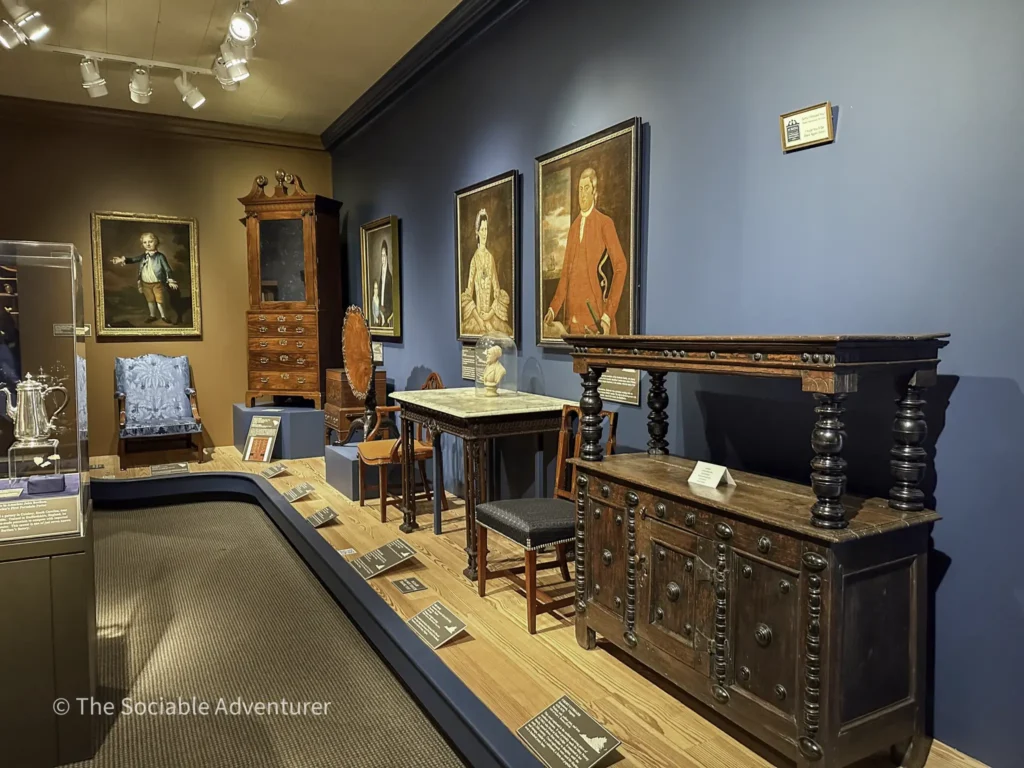
The Museum of Early Southern Decorative Arts (MESDA) is genuinely one of the most substantial specialty museums anywhere in the American South — a substantive research and exhibition institution in Winston-Salem, NC that houses more than 3,600 objects made in the American South prior to 1860, displayed across 33 galleries in the Frank L. Horton Museum Center on the southern edge of Old Salem. MESDA is part of Old Salem Museums & Gardens, and represents one of the most comprehensive collections of Southern decorative arts and material culture scholarship in the country.
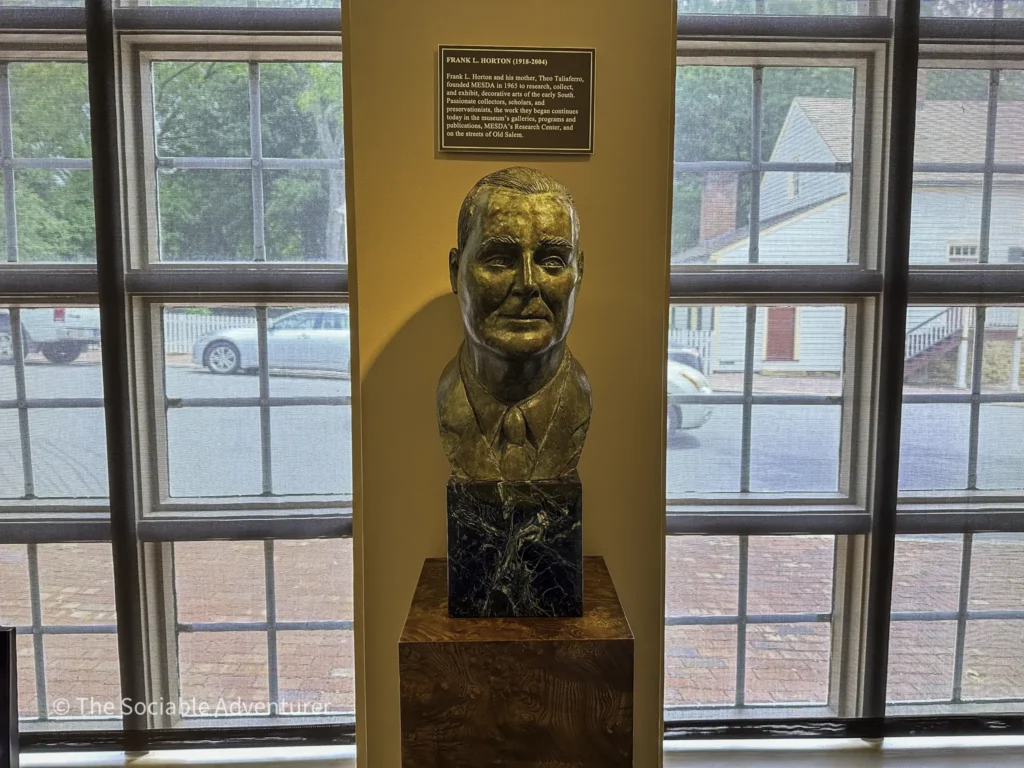
Founded in 1965 by Frank L. Horton and his mother, Theodosia “Theo” Liipfert Horton Taliaferro, MESDA emerged as the culmination of a decades-long Southern decorative arts scholarship movement — beginning with the 1949 Williamsburg Antiques Forum’s call to attention that Southern craftsmanship had been largely dismissed by scholars and ignored by collectors through the first half of the 20th century. Today, MESDA operates as the preeminent research center for the study of Southern decorative arts, housing a research library, three specialized databases documenting more than 60,000 Southern artisans across 125 trades, and a substantial catalog of ongoing scholarly programming.
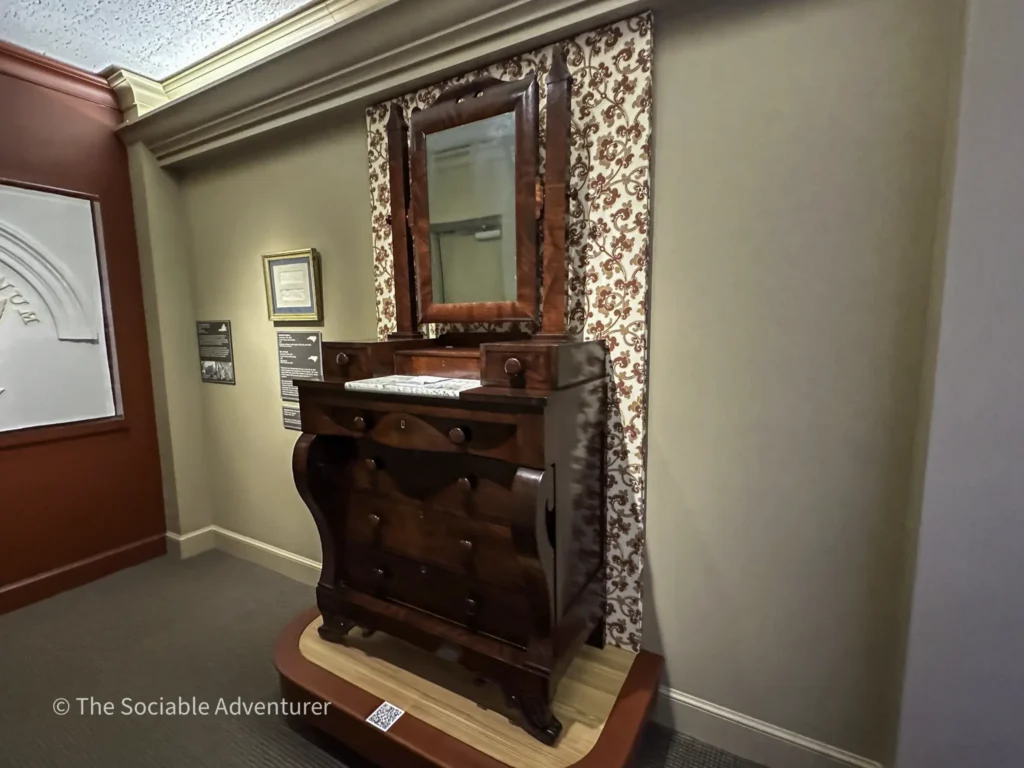
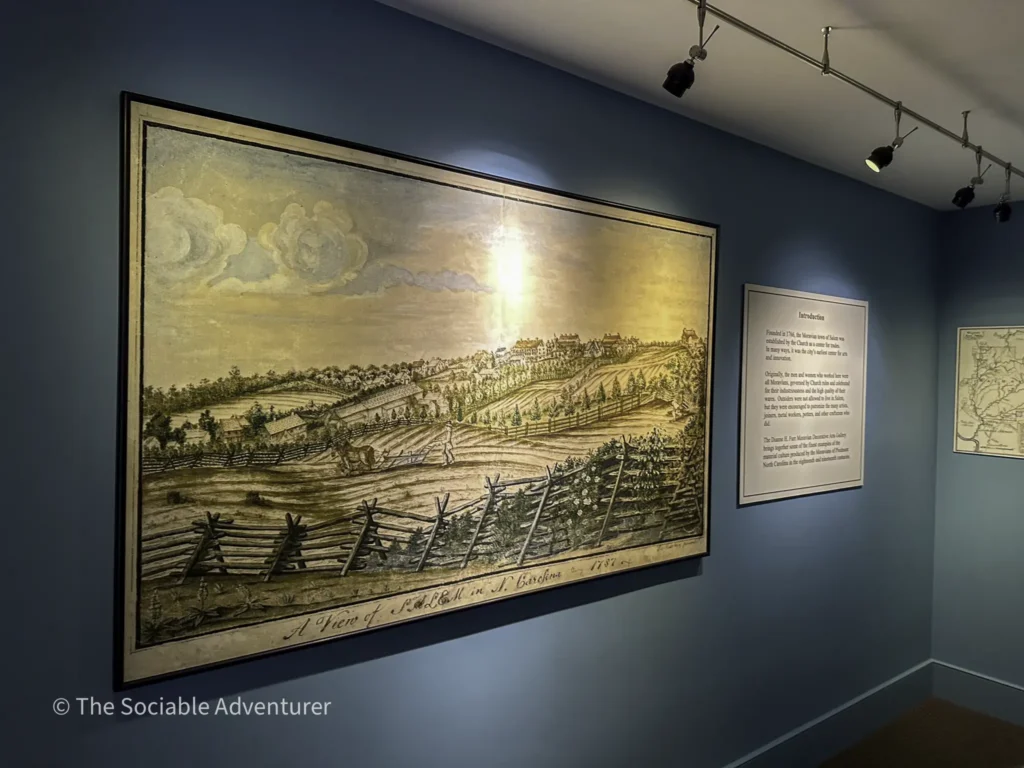
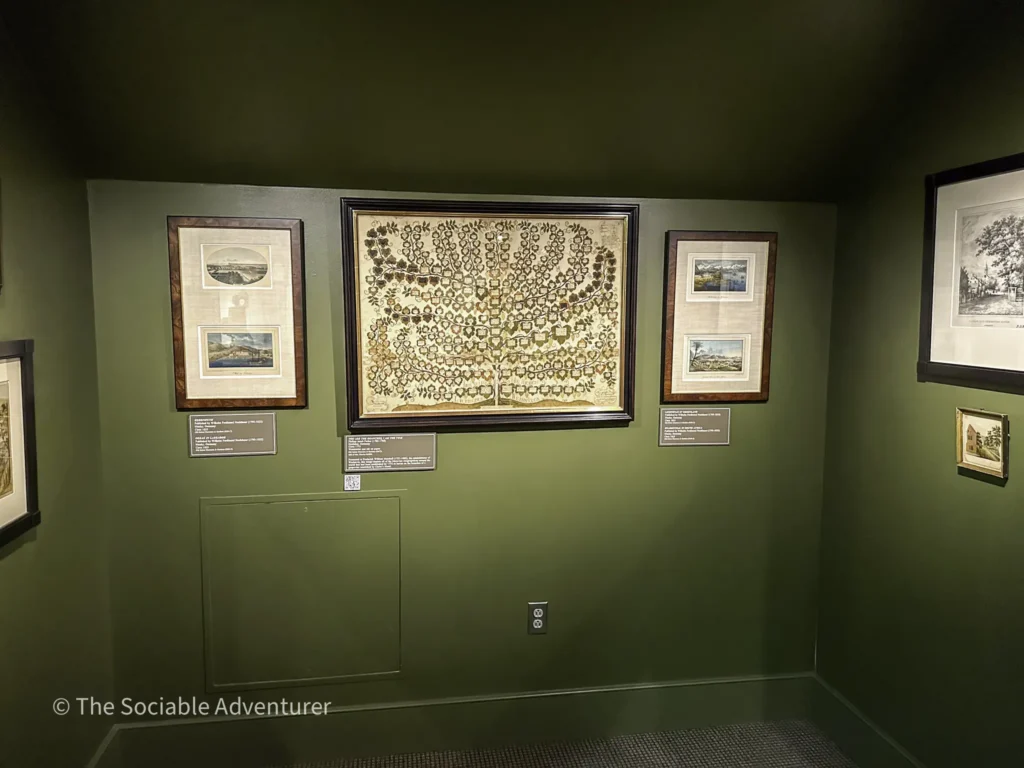
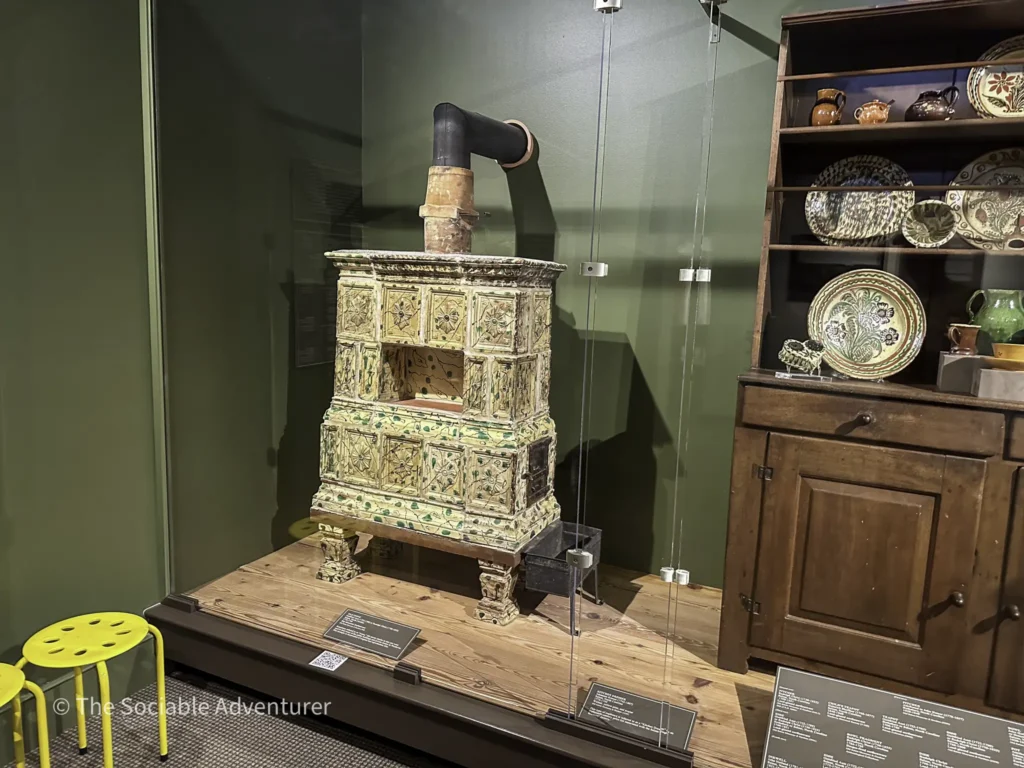
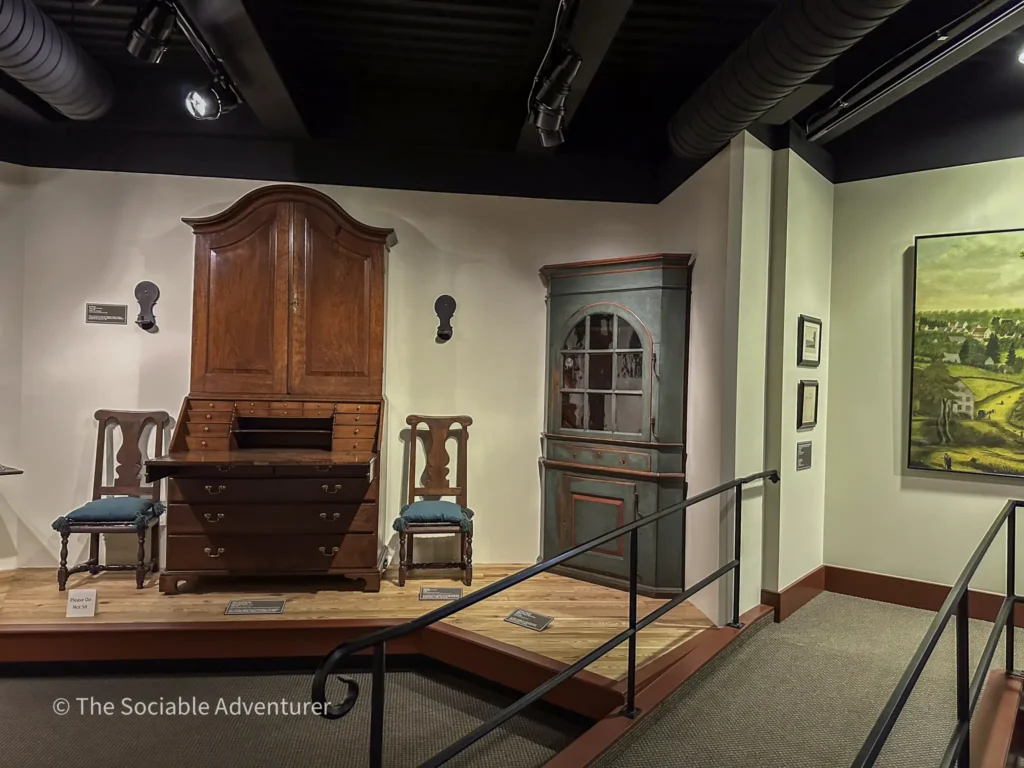
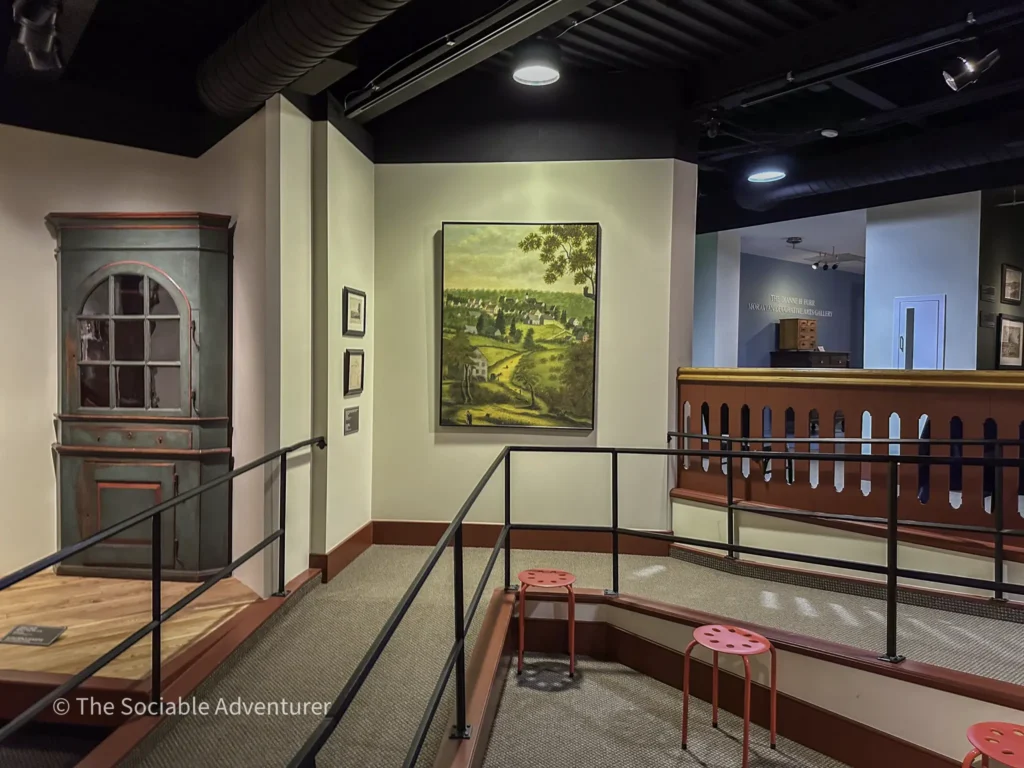
Be sure to check out the YouTube video and pictures below to get a feel for MESDA before you go — or to relive the visit after.
The 1965 Founding — Frank L. Horton and Southern Decorative Arts Scholarship
MESDA’s story is inseparable from its founder, Frank Liipfert Horton (March 21, 1918 – February 21, 2004) — a Raleigh-born antiques dealer and museum professional whose vision genuinely shaped Southern decorative arts scholarship for a generation. Horton first came to Winston-Salem in 1950, when he became Old Salem Inc.’s first director of restoration — supervising the restoration and reconstruction of approximately 50 historic buildings across both the Old Salem and Historic Bethabara Park historic districts between 1950 and 1972.
The founding of MESDA in 1965 was the culmination of a broader Southern decorative arts scholarship movement that had been building through the 1940s and 1950s. During the first half of the 20th century, Southern antiques were mostly dismissed by scholars and ignored by collectors — the substantive interest was almost entirely focused on the American Northeast. That began to change with the 1949 Williamsburg Antiques Forum at Colonial Williamsburg in Virginia, which included a genuinely seminal session that highlighted the lack of information about Southern craftsmanship. The 1952 Williamsburg Antiques Forum — coinciding with the first definitive exhibition of Southern furniture (“Furniture of the Old South, 1640-1820” at the Virginia Museum of Fine Arts) — accelerated the scholarly conversation. MESDA’s opening in 1965 represented the movement’s genuine culmination.
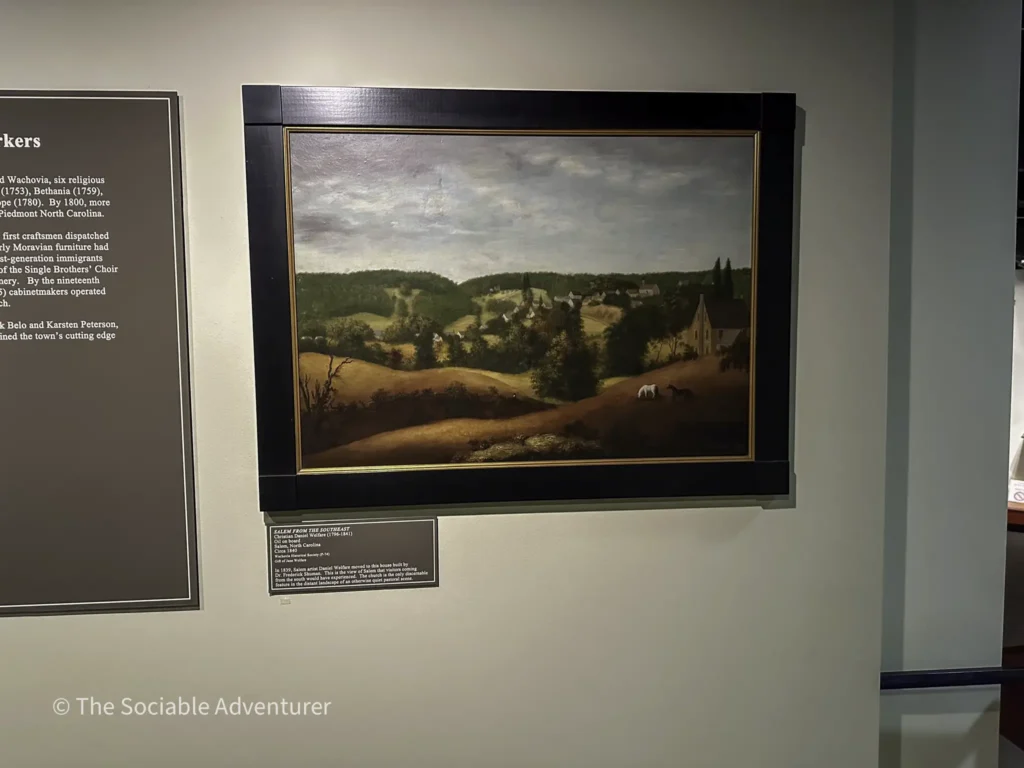
Frank and his mother Theo built MESDA around their personal antique collection. Frank identified three regional frameworks within Southern decorative arts scholarship that continue to organize MESDA’s exhibitions today: the Chesapeake, the Lowcountry, and the Backcountry. Each region reflects the distinct cultural backgrounds of the people who settled there — from the tidewater aristocracy of coastal Virginia and Maryland to the Charleston-anchored Lowcountry planters to the Moravian, Scots-Irish, and German settlers who shaped the Piedmont and Appalachian backcountry.
Frank Horton passed away in 2004, and MESDA remains genuinely central to Southern decorative arts scholarship and public exhibition — currently under the leadership of curator Lea Lane and executive leadership at Old Salem Museums & Gardens.
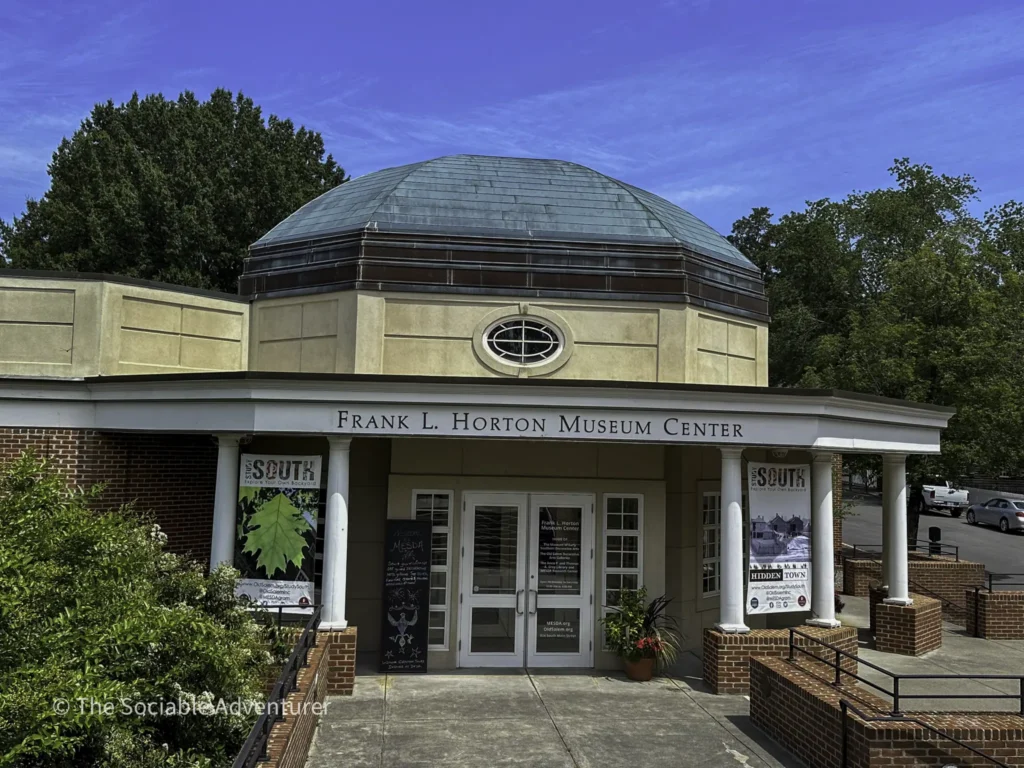
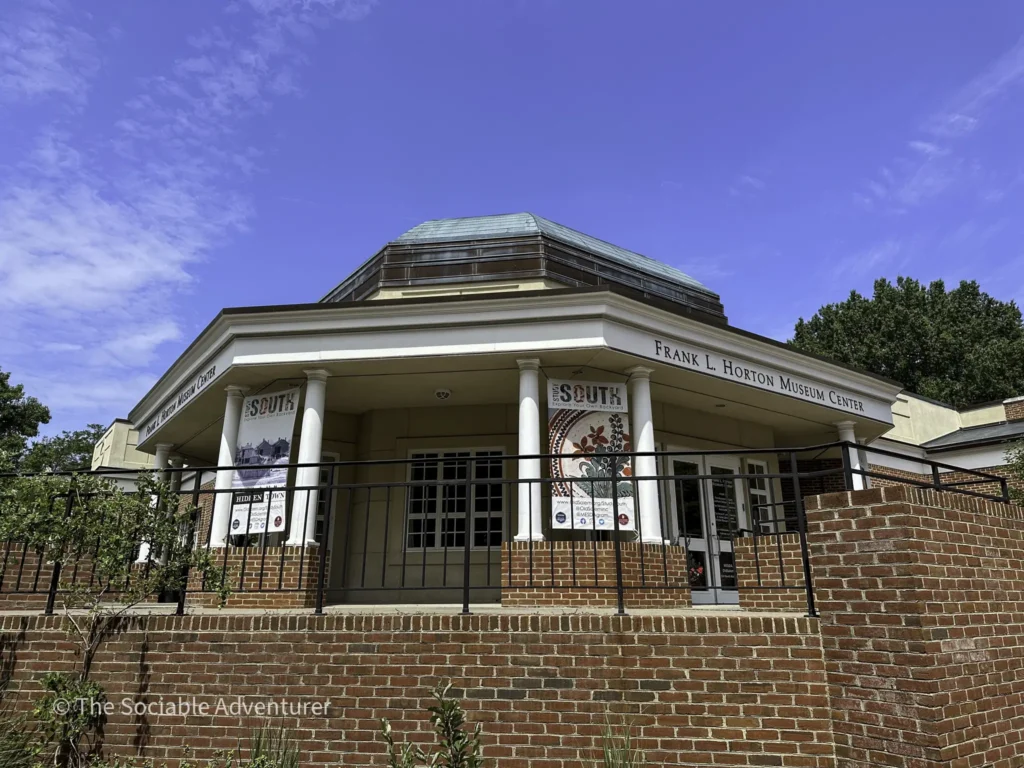
The Frank L. Horton Museum Center — 33 Galleries in a Former Kroger Store
MESDA’s museum home is genuinely one of the more delightful adaptive-reuse stories in NC museum architecture. The Frank L. Horton Museum Center — named after MESDA’s founder — was a vastly expanded and transformed former Kroger grocery store. What began as a mid-20th-century supermarket has been metamorphosed into a substantial multi-story museum facility housing MESDA’s 33 galleries, the Old Salem Museums and Gardens Research Center, and the museum’s substantial library and archives.
The building sits at the southern end of Old Salem and is the first building visitors encounter after crossing the Heritage Bridge into the Old Salem historic district. That pedestrian-first orientation gives MESDA a genuine architectural role as the “gateway” museum to Old Salem — visitors typically begin their Old Salem visits at MESDA before moving on to the restored Moravian streetscapes to the north.
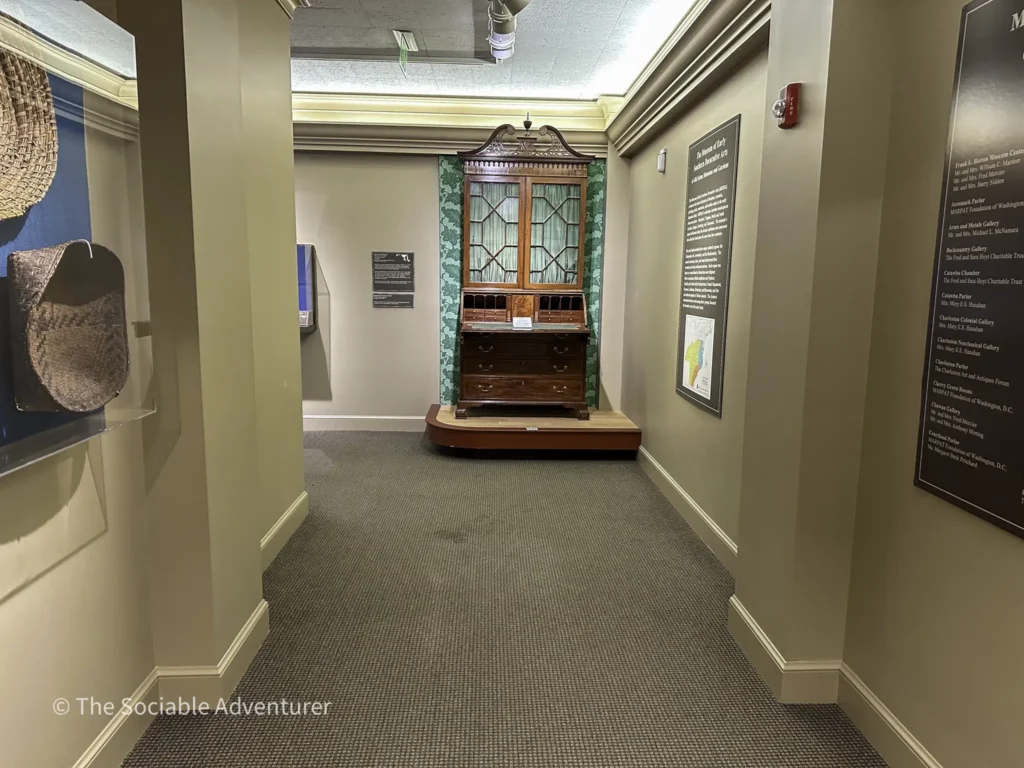
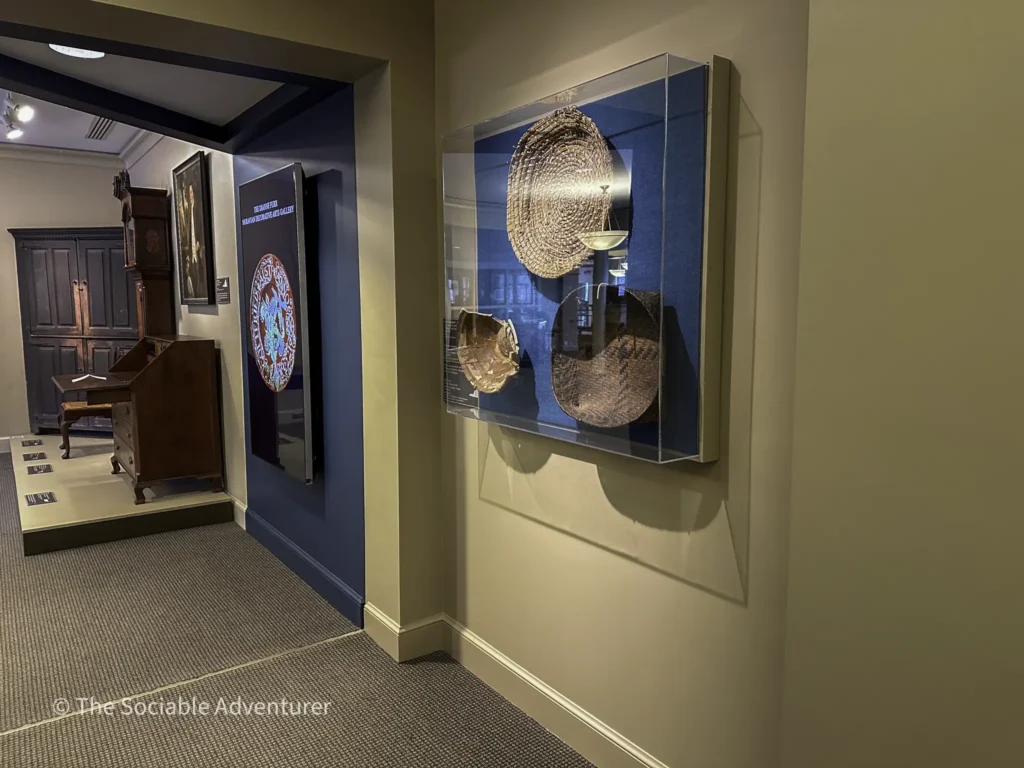
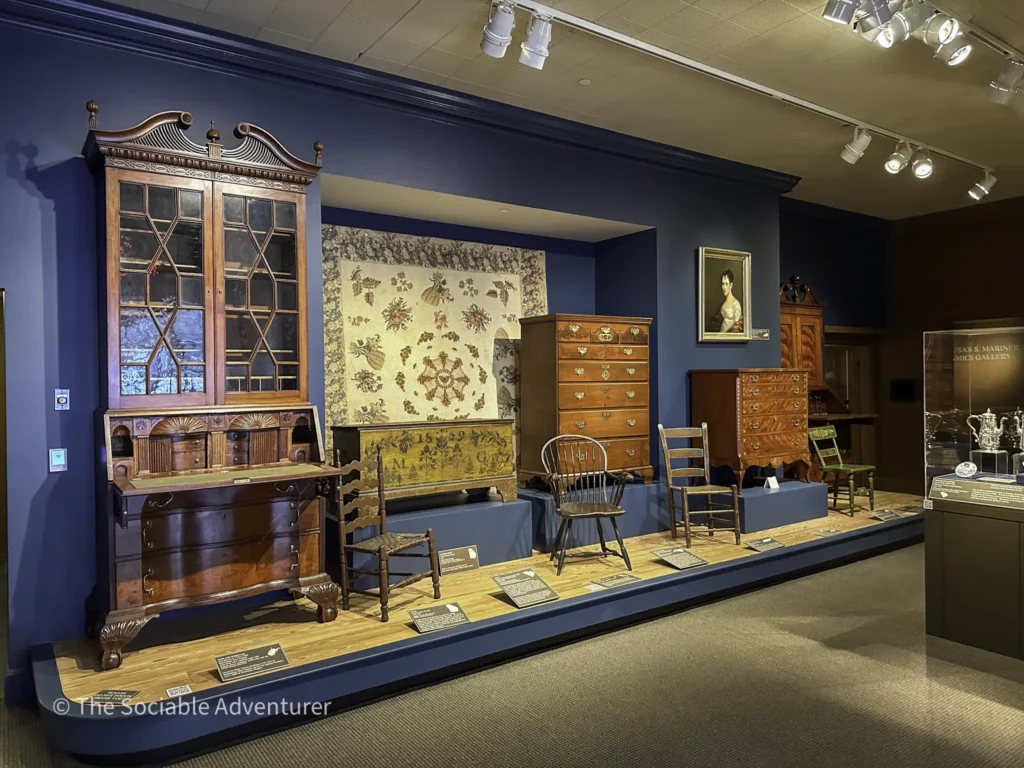
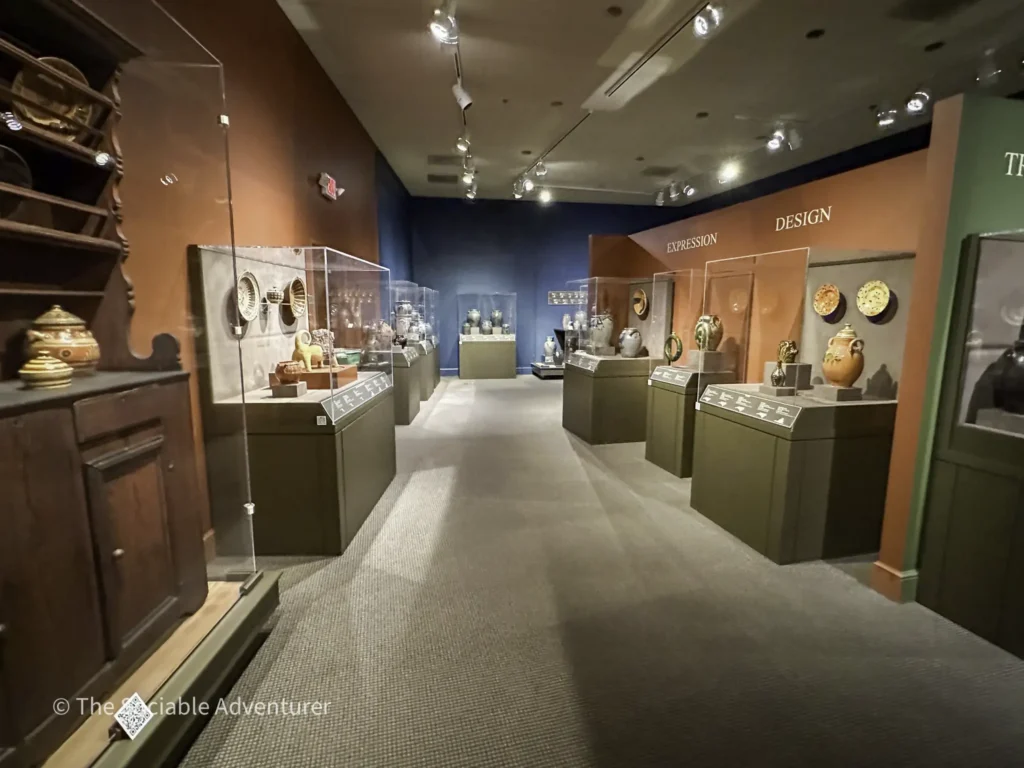
The museum’s 33 galleries display MESDA’s collection through a genuinely thoughtful combination of formats:
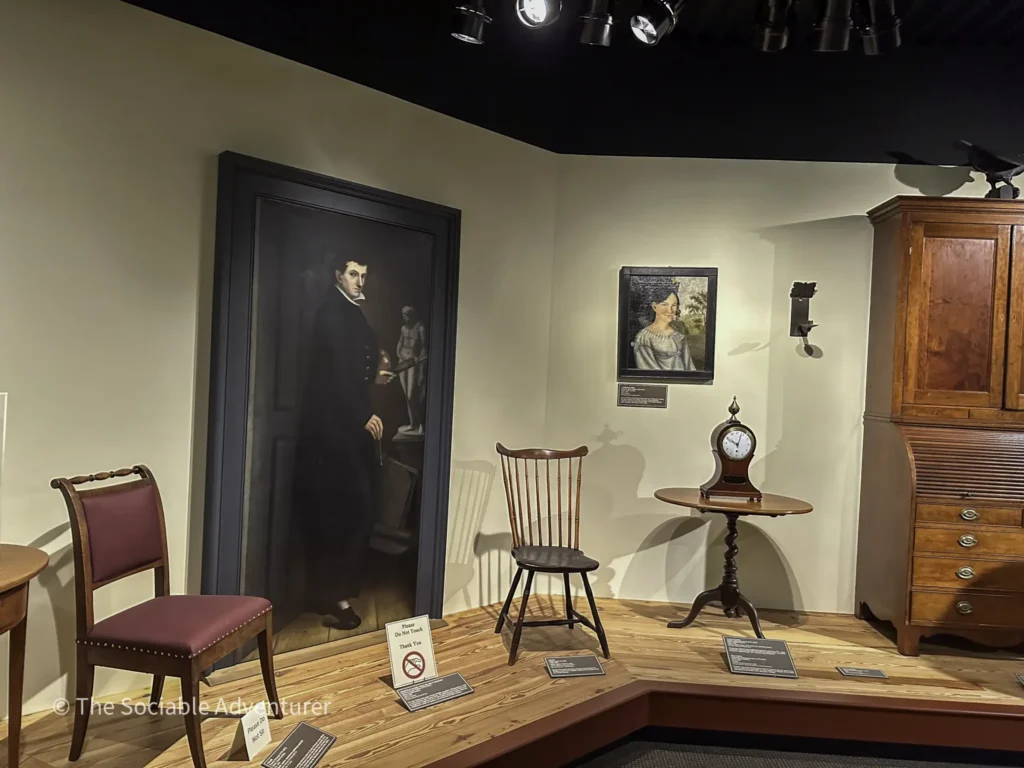
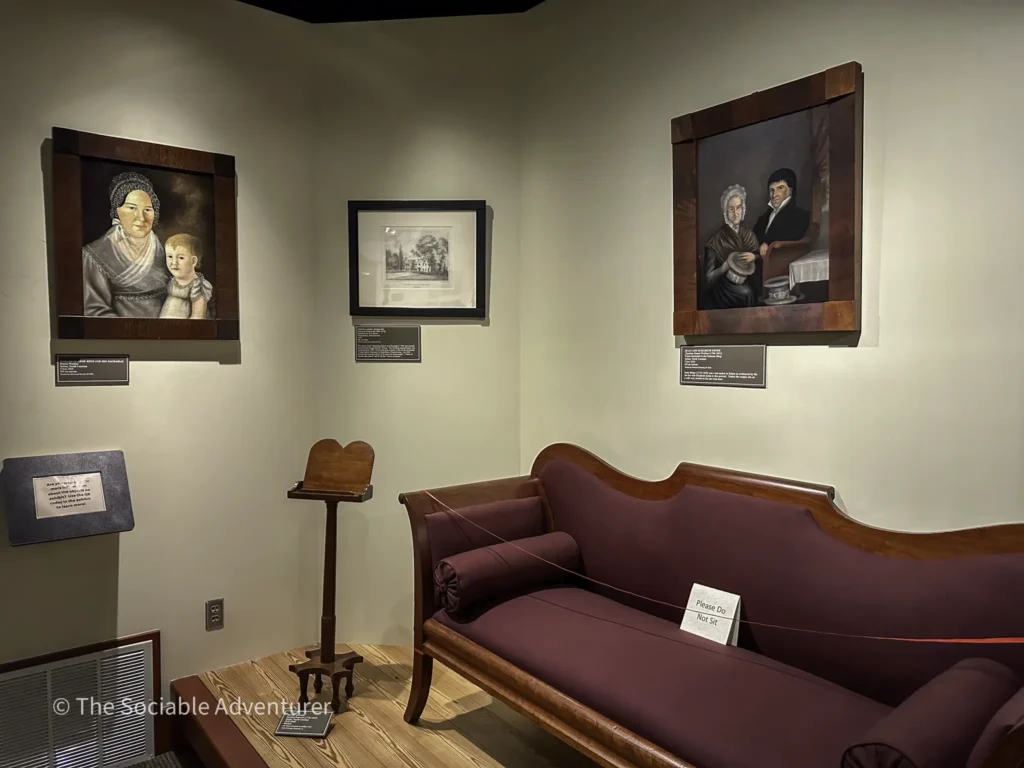
- Period rooms — historical rooms removed from derelict or threatened Southern houses (or reproduced from period Southern houses), including a 17th-century Virginia great hall, a one-room Maryland plantation dwelling, a backcountry North Carolina log house, and a parlor from Charleston, SC
- Regional exhibits — organized around Frank Horton’s Chesapeake / Lowcountry / Backcountry framework
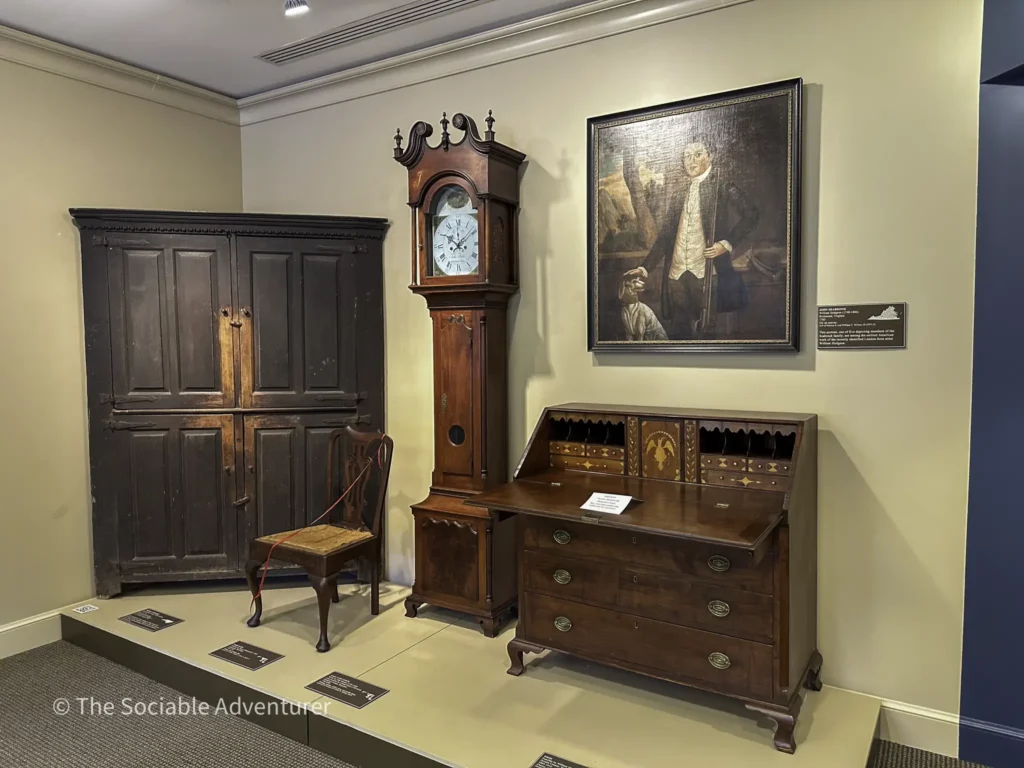
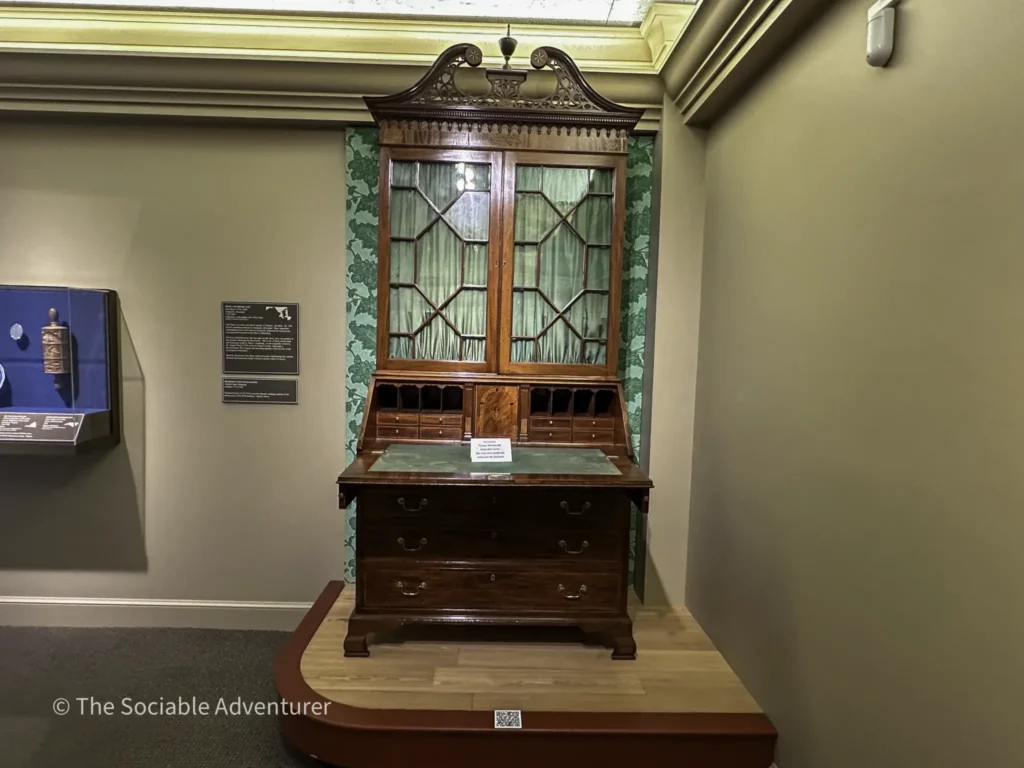
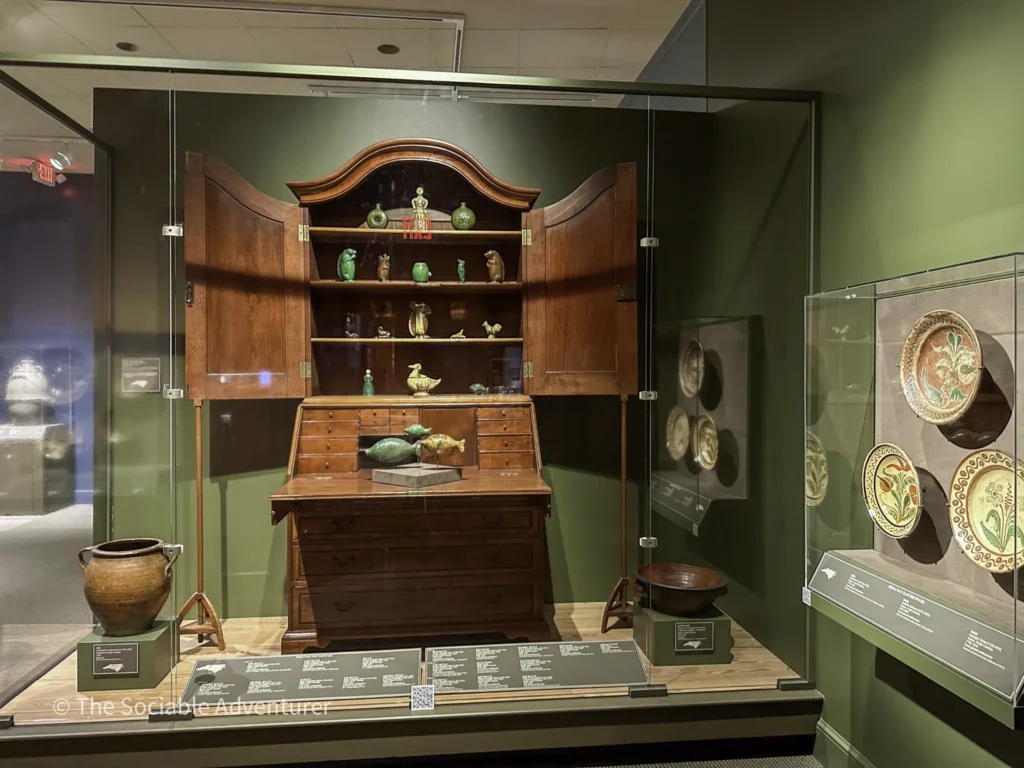
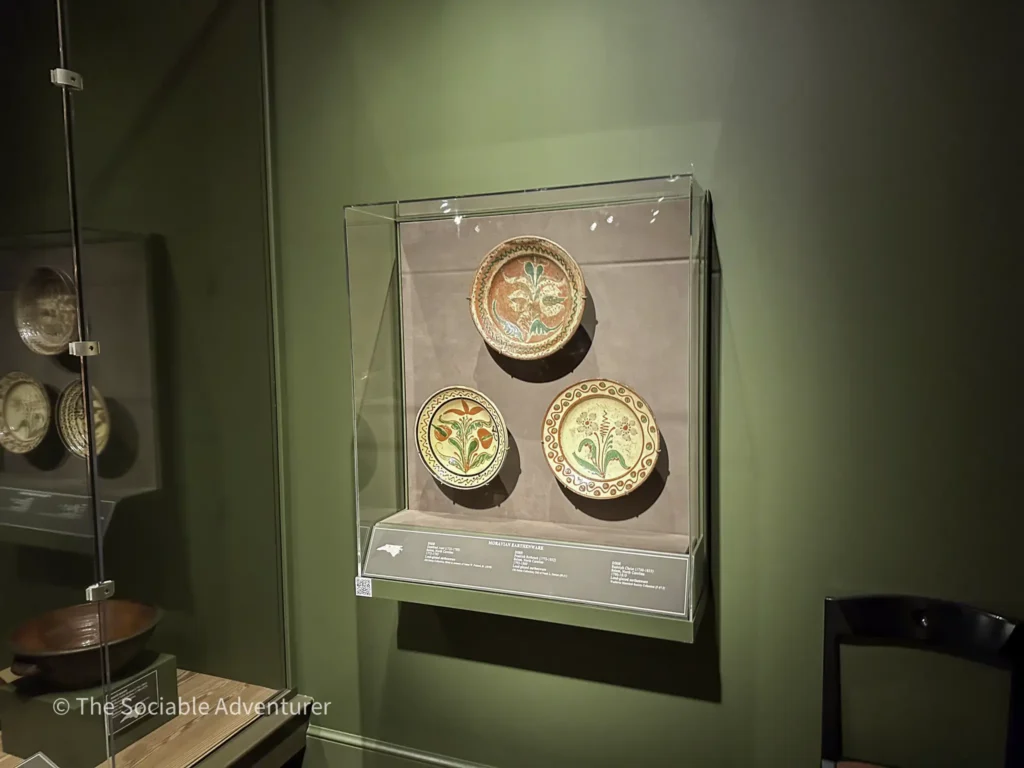
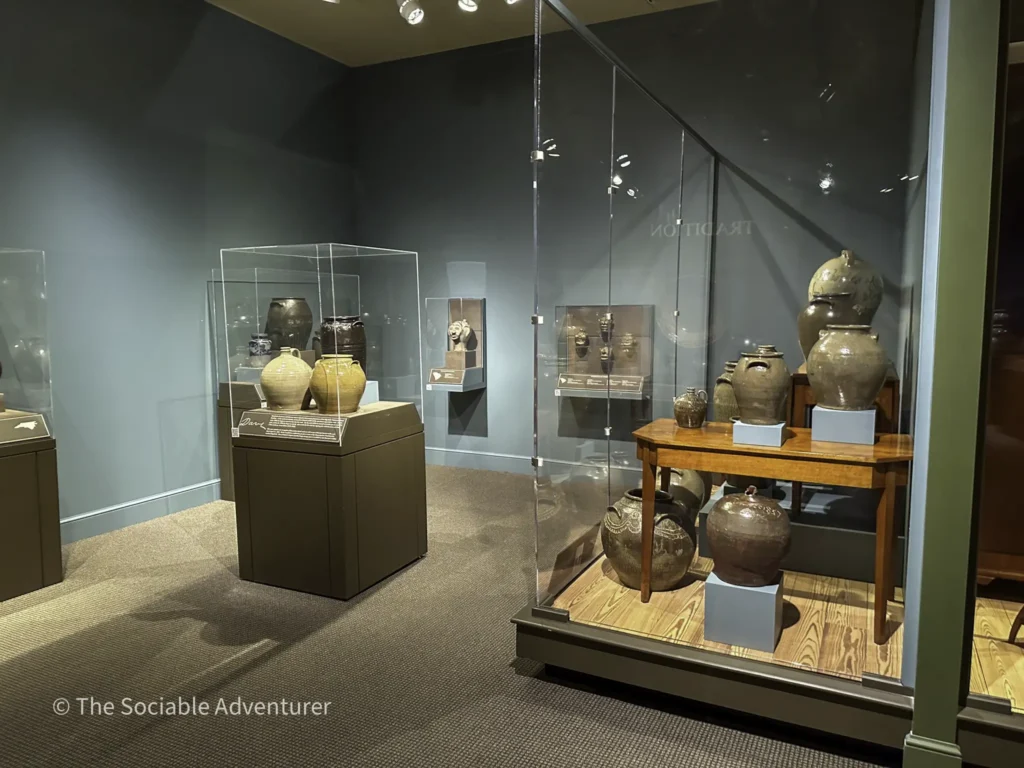
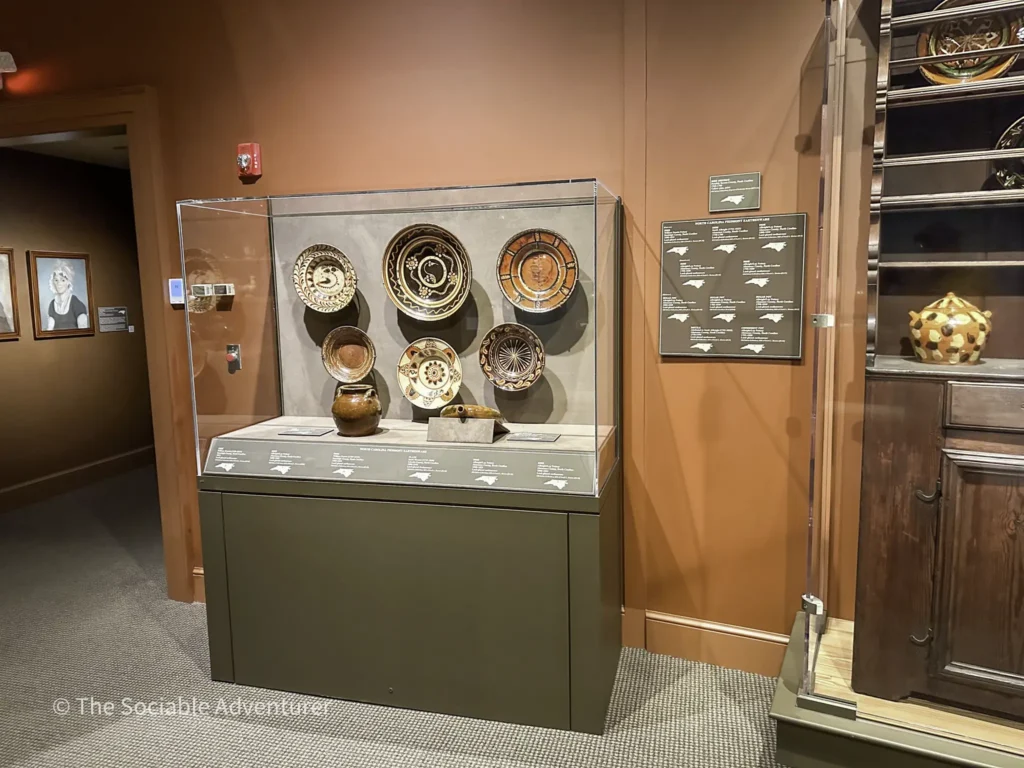
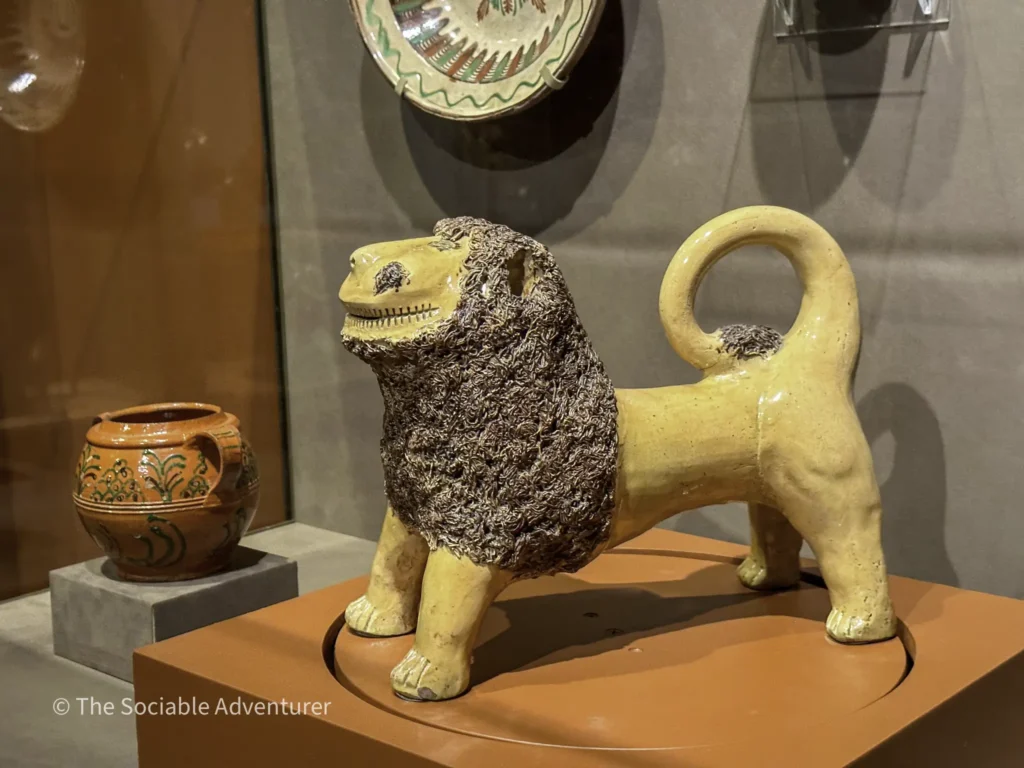
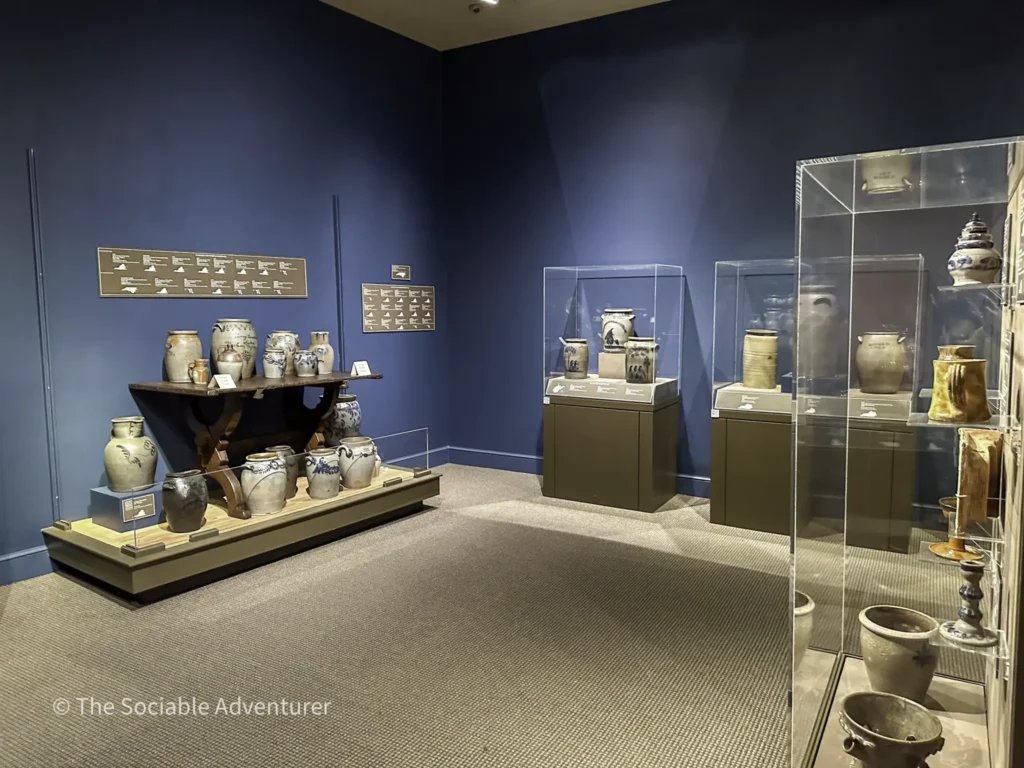
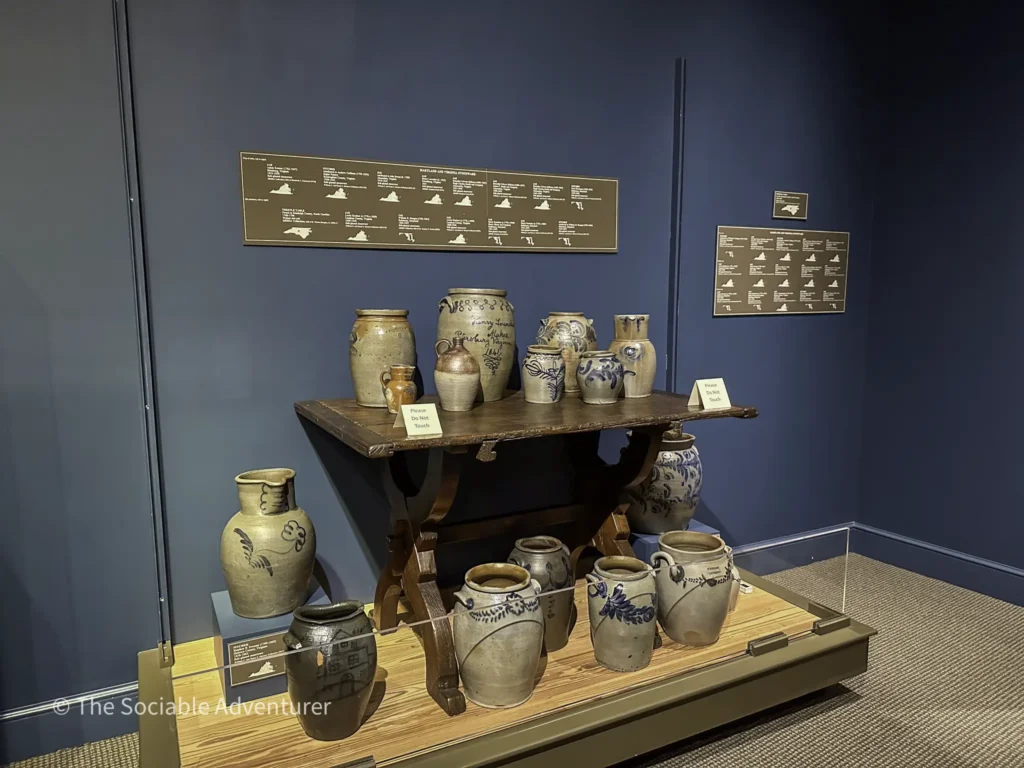
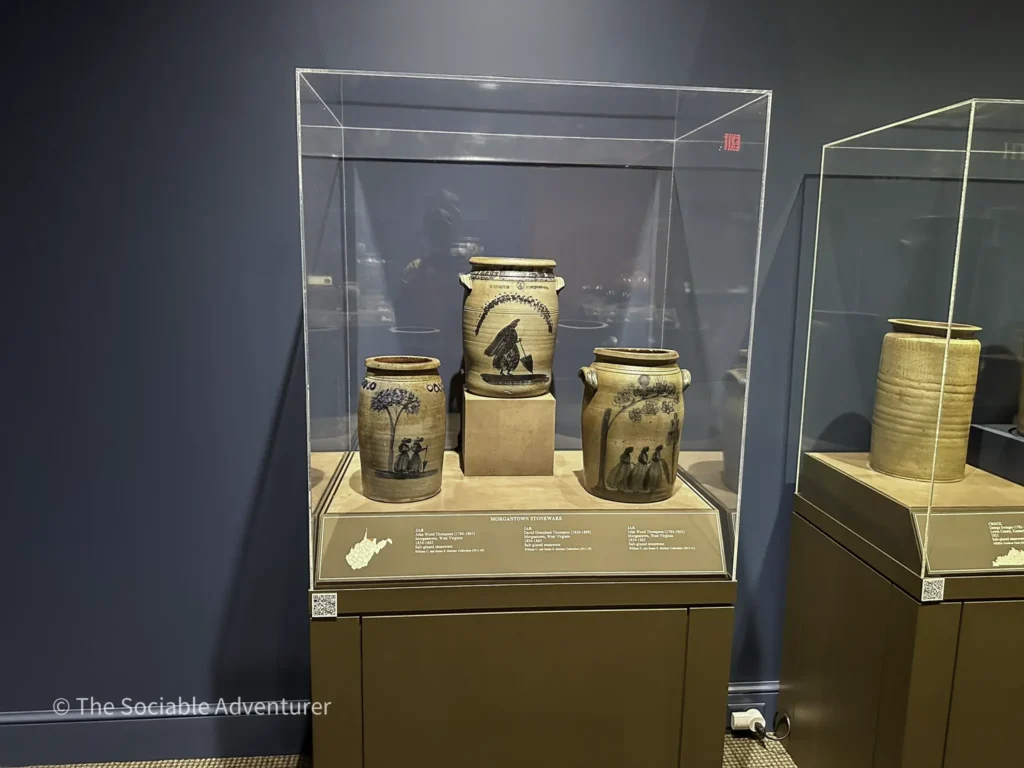
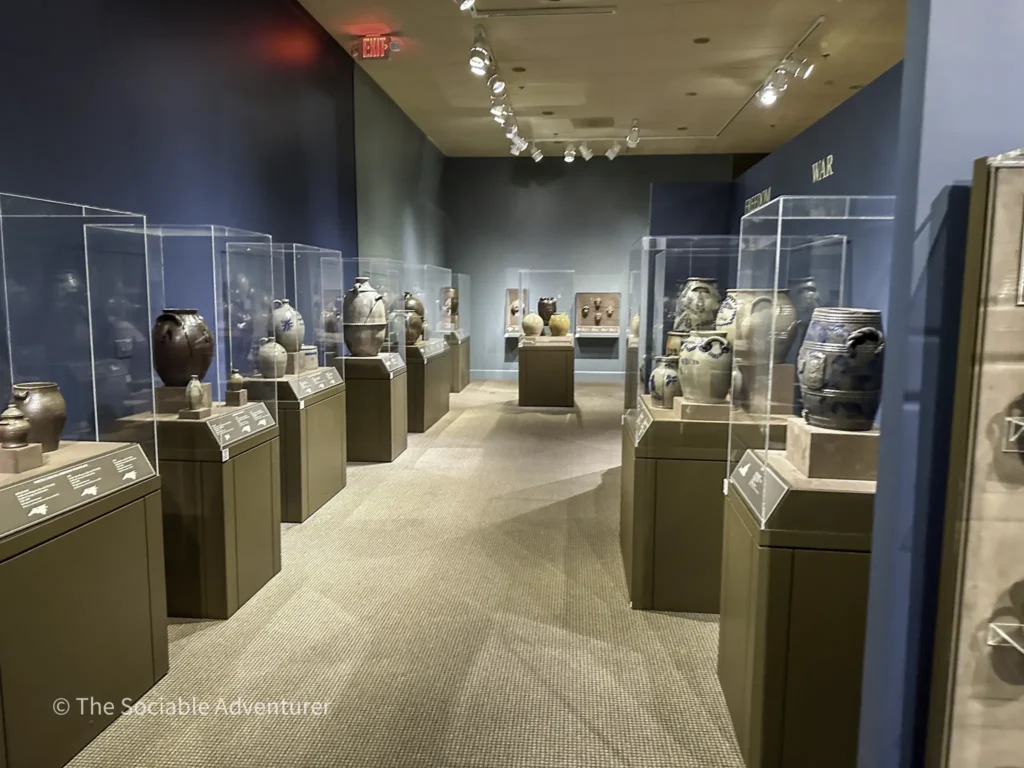
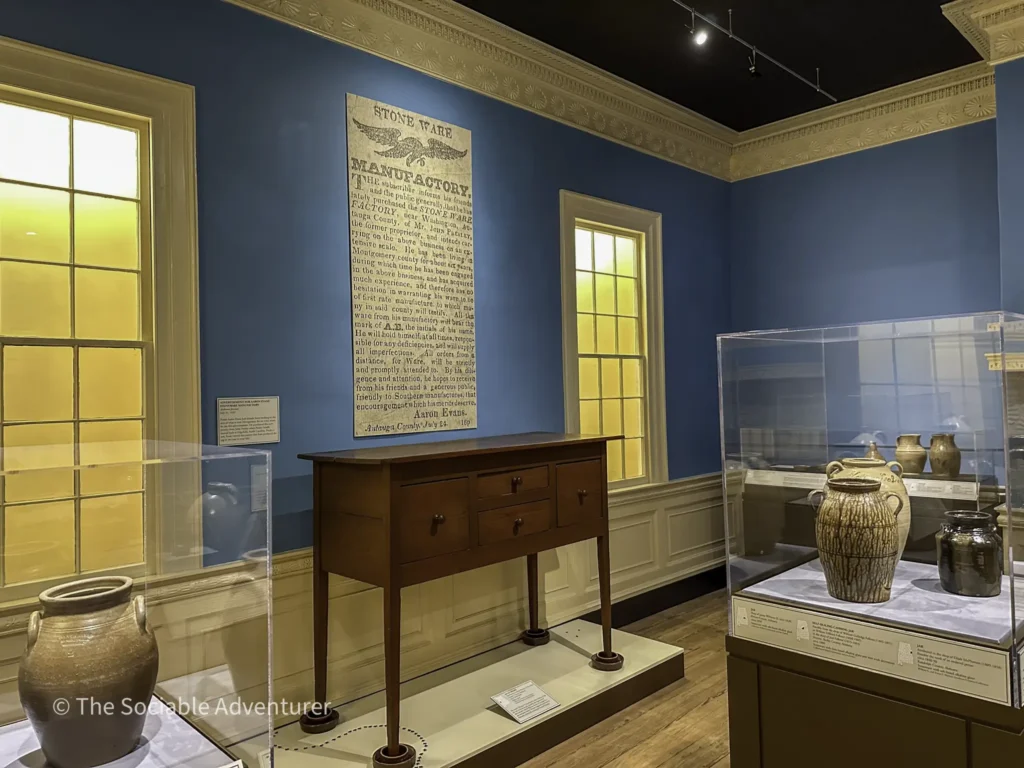
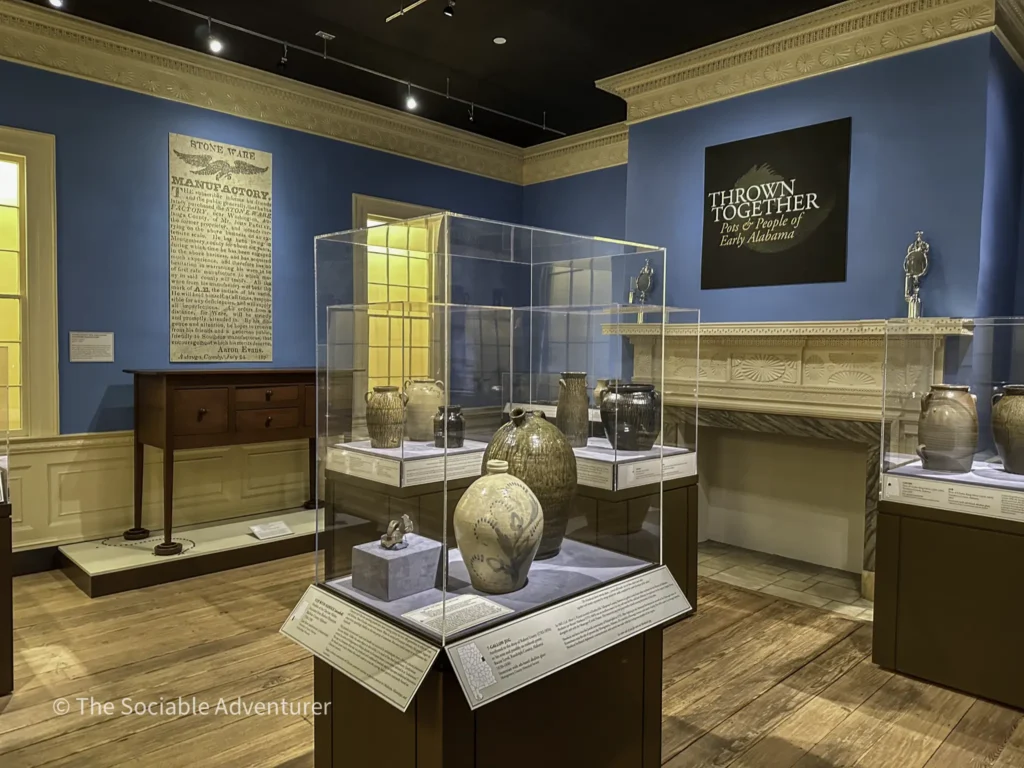
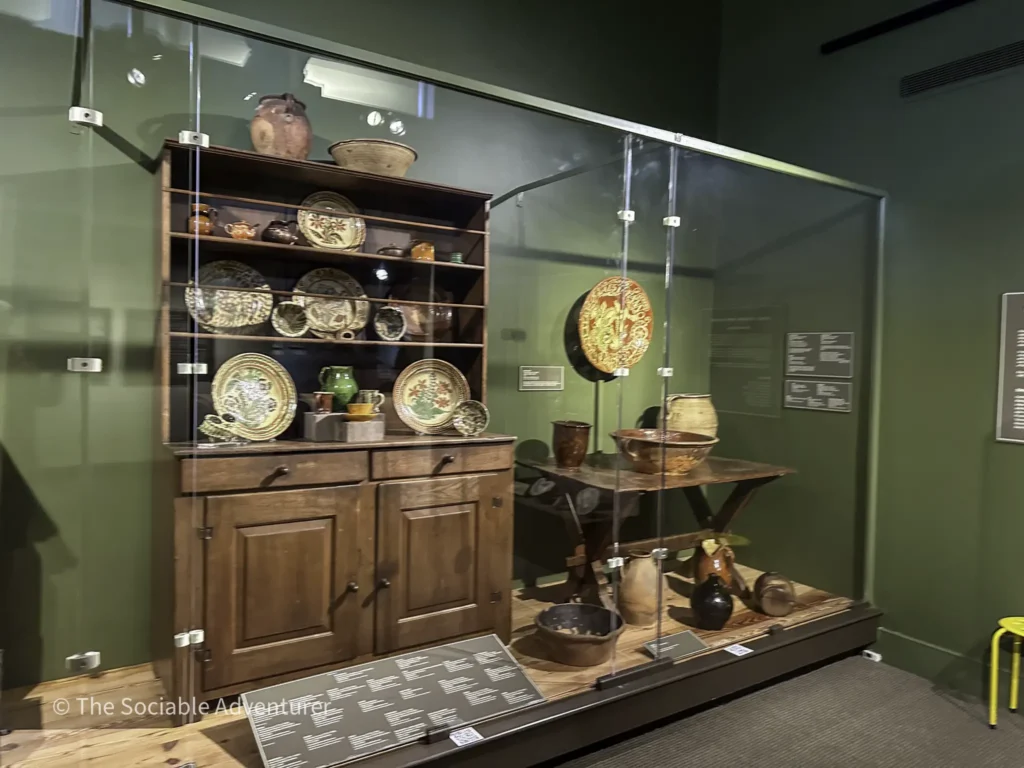
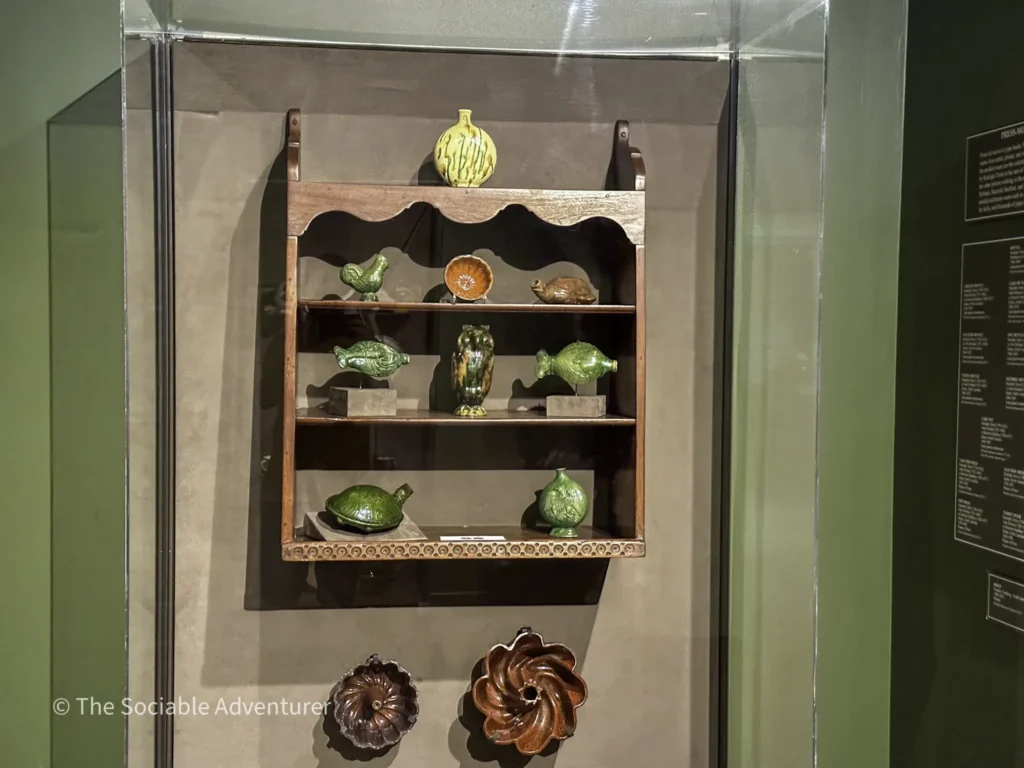
- Thematic galleries — including the Southern Masterworks Gallery (“best of the best” showcase featuring standout furniture, paintings, metalwork, and textiles) and the Southern Ceramics Gallery (one of the most comprehensive collections of antebellum Southern pottery anywhere)
- The Edenton Rooms — Edenton, NC decorative arts collection
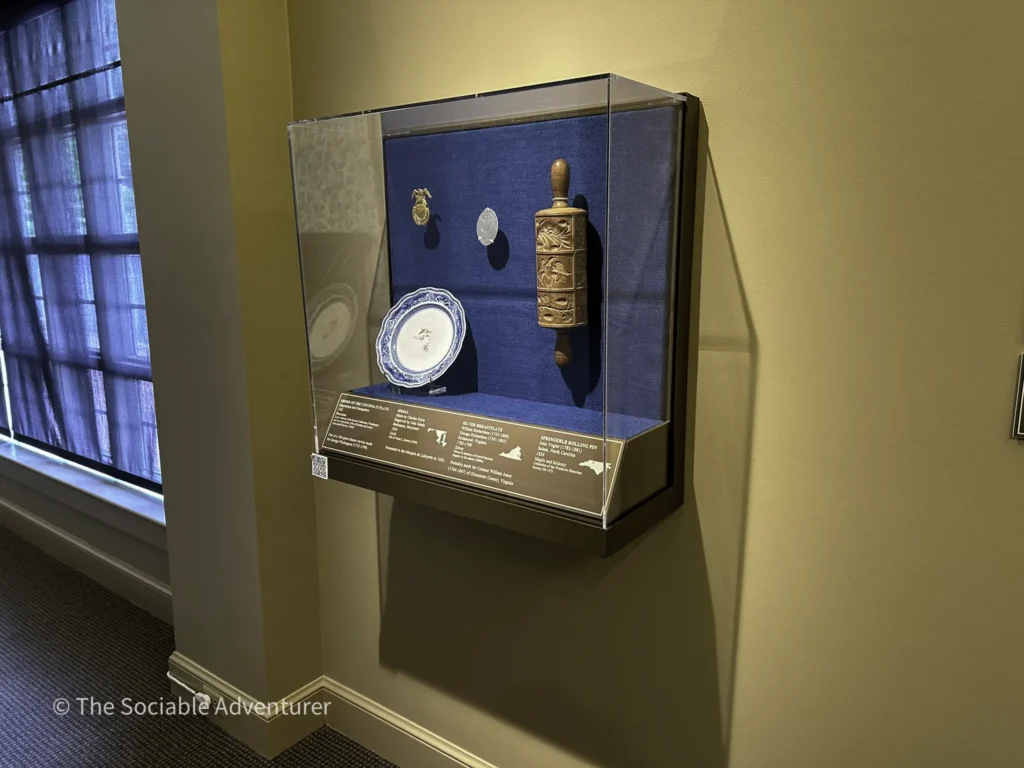
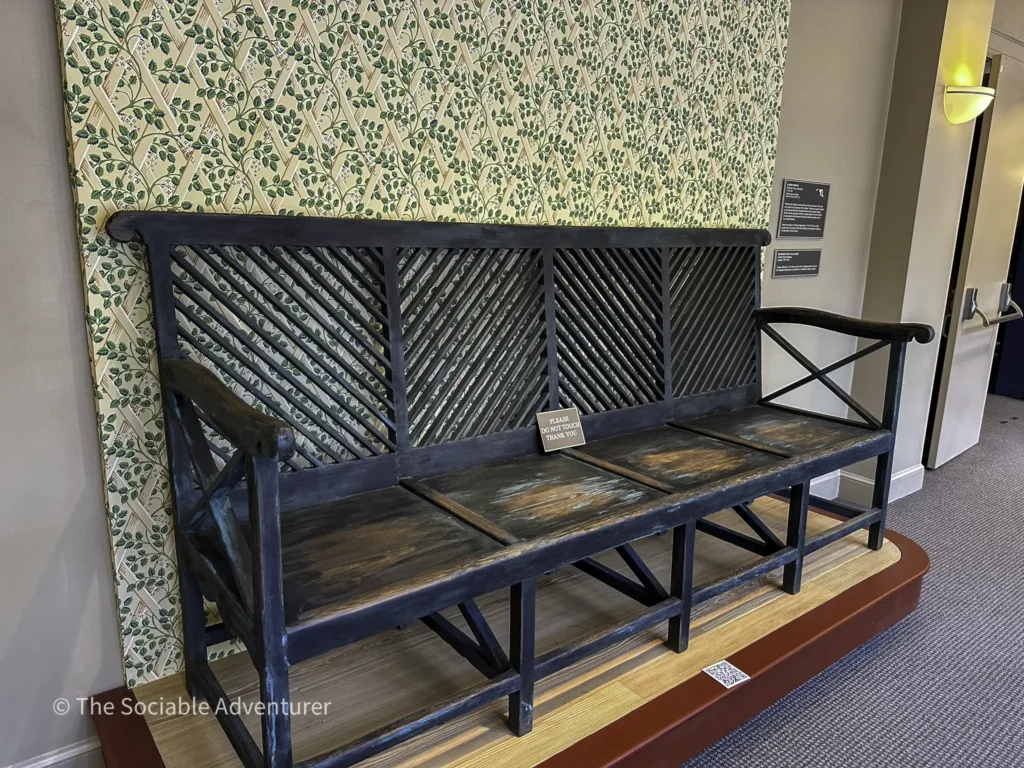
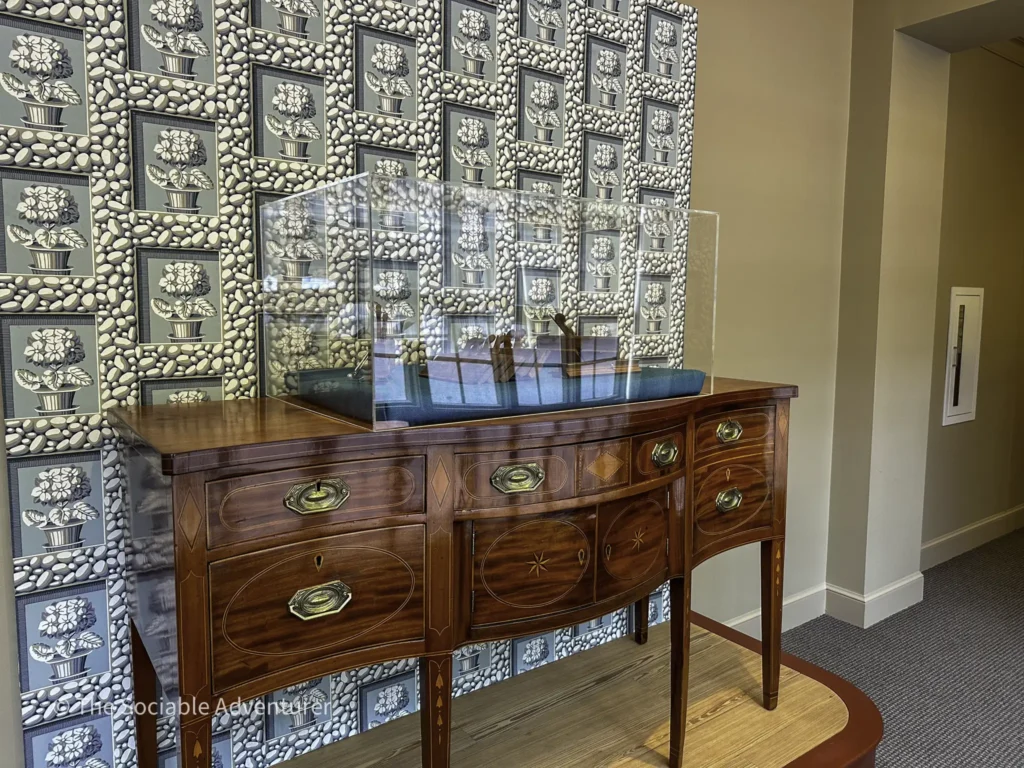
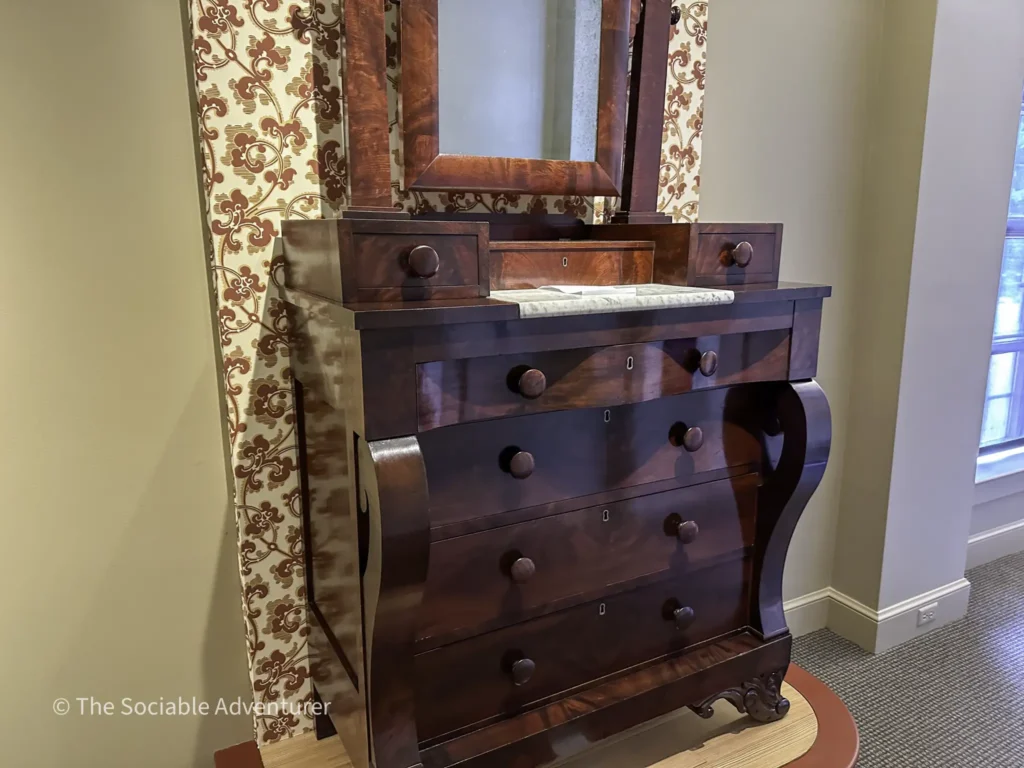
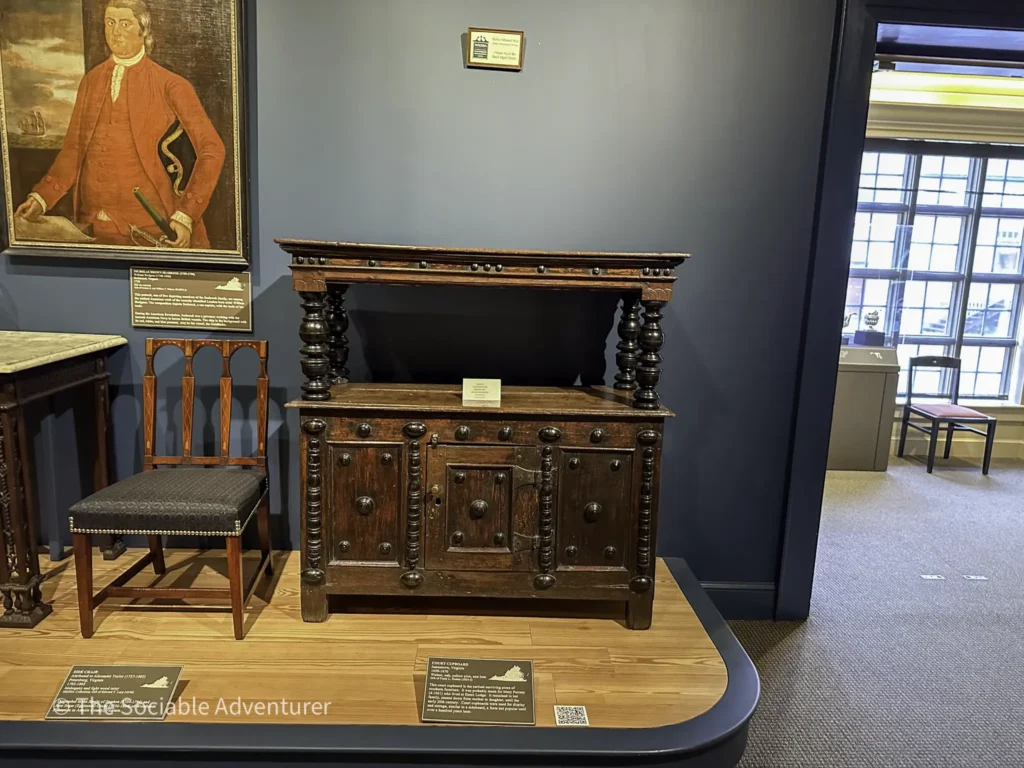
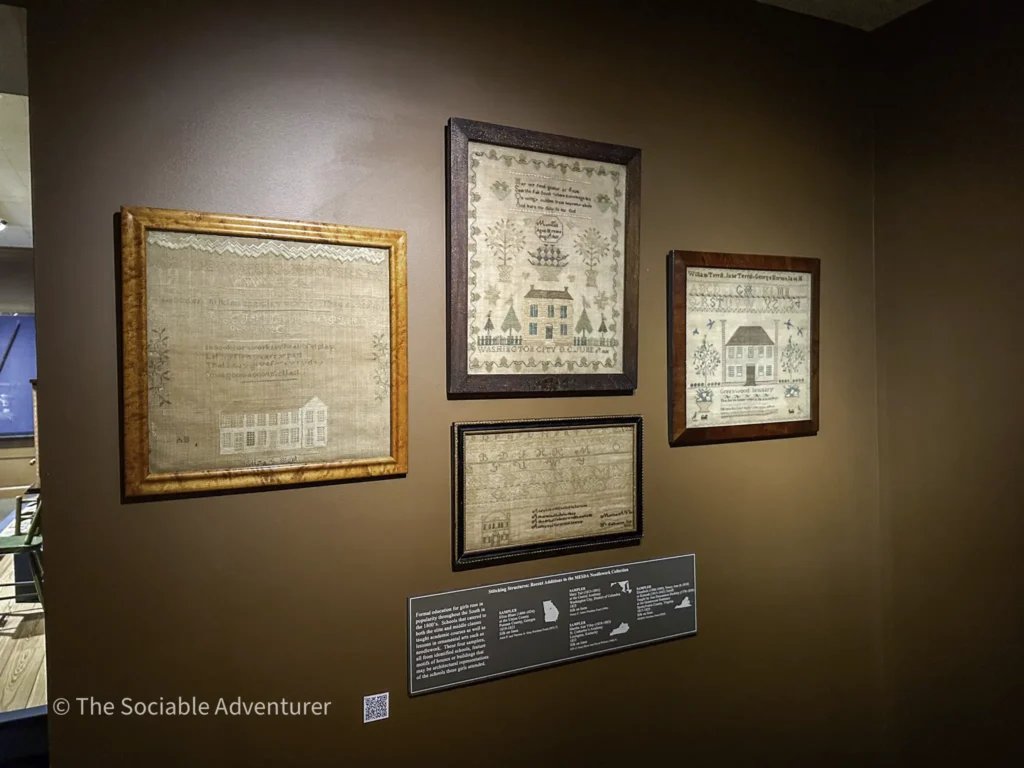
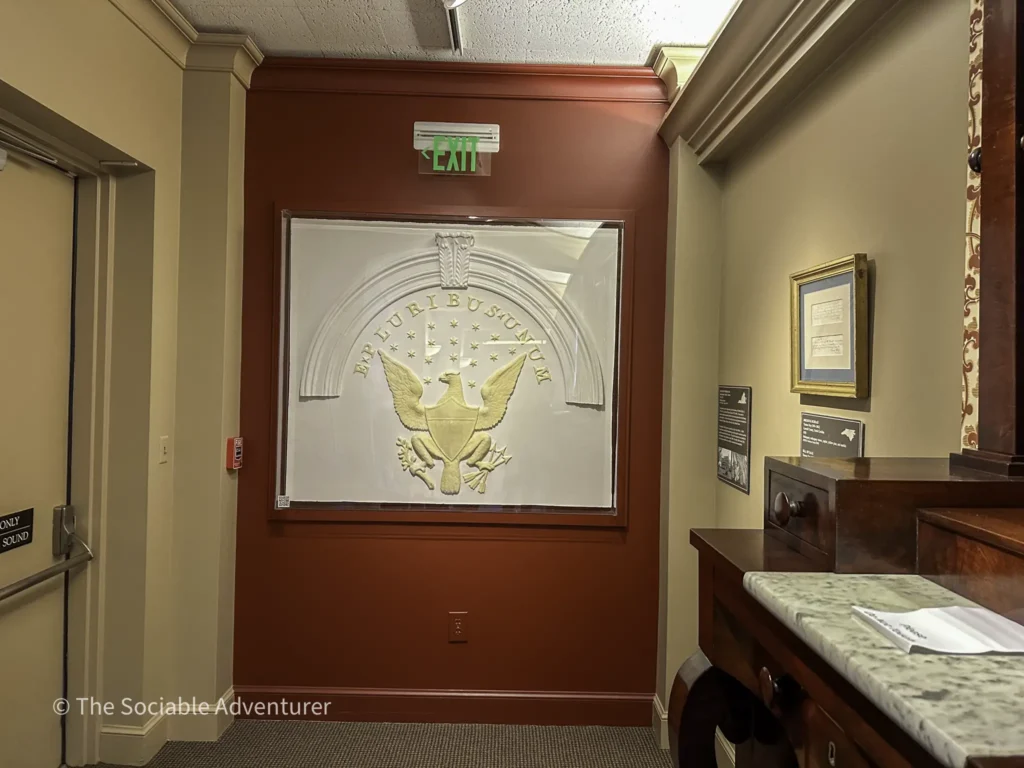
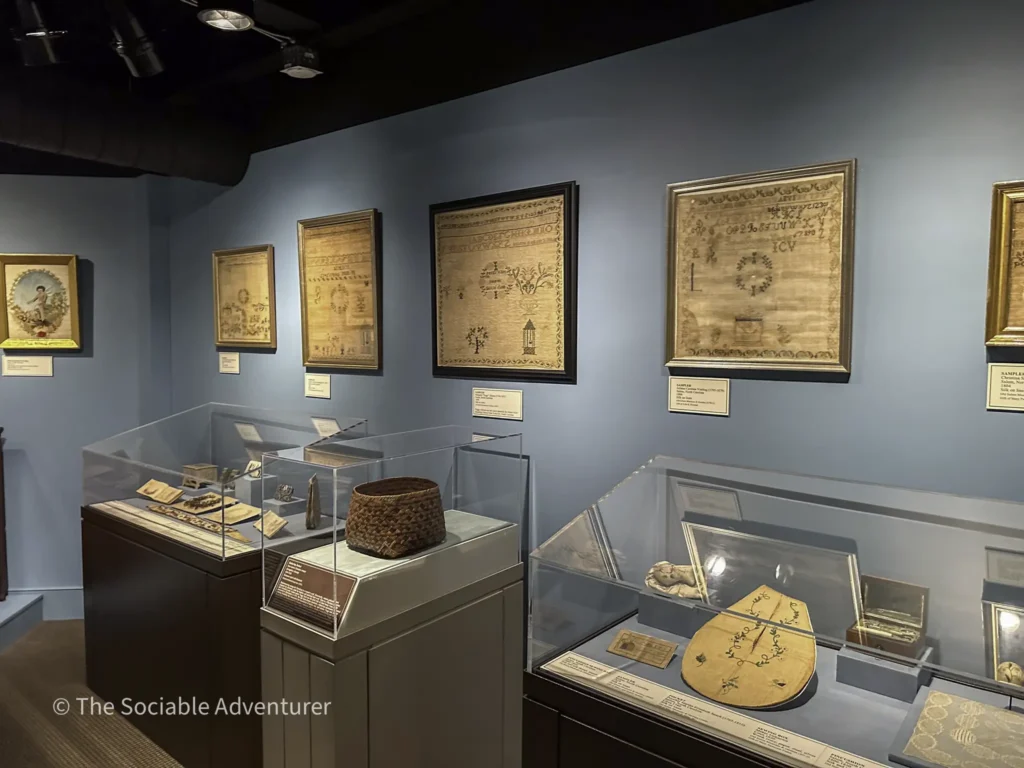
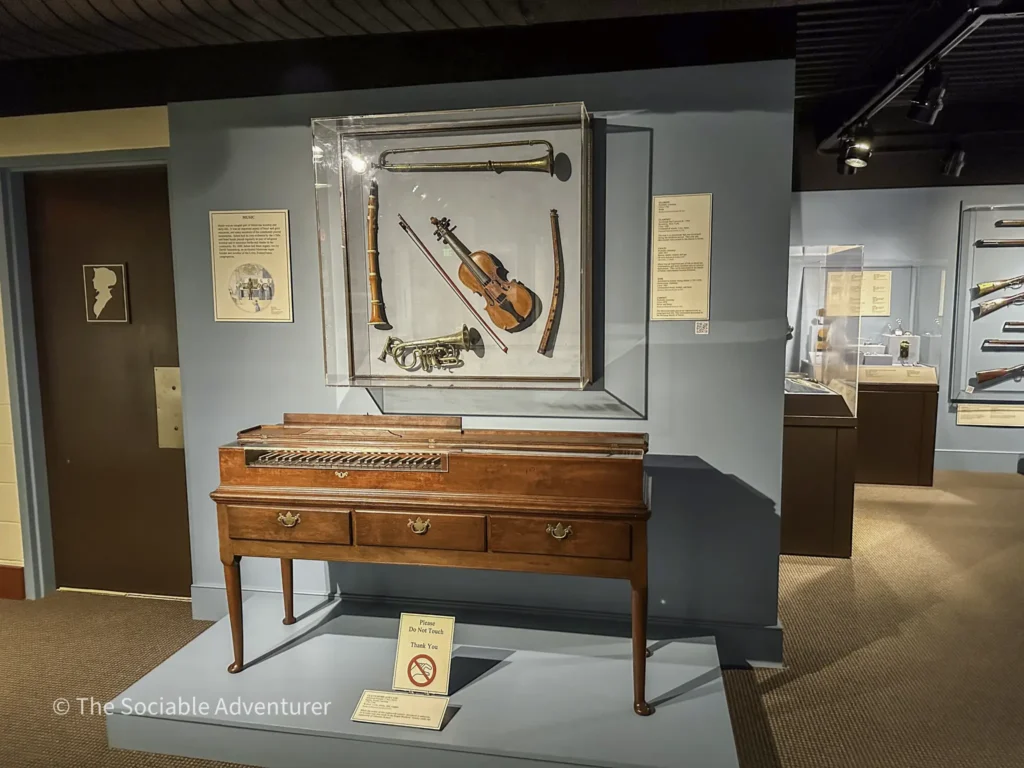
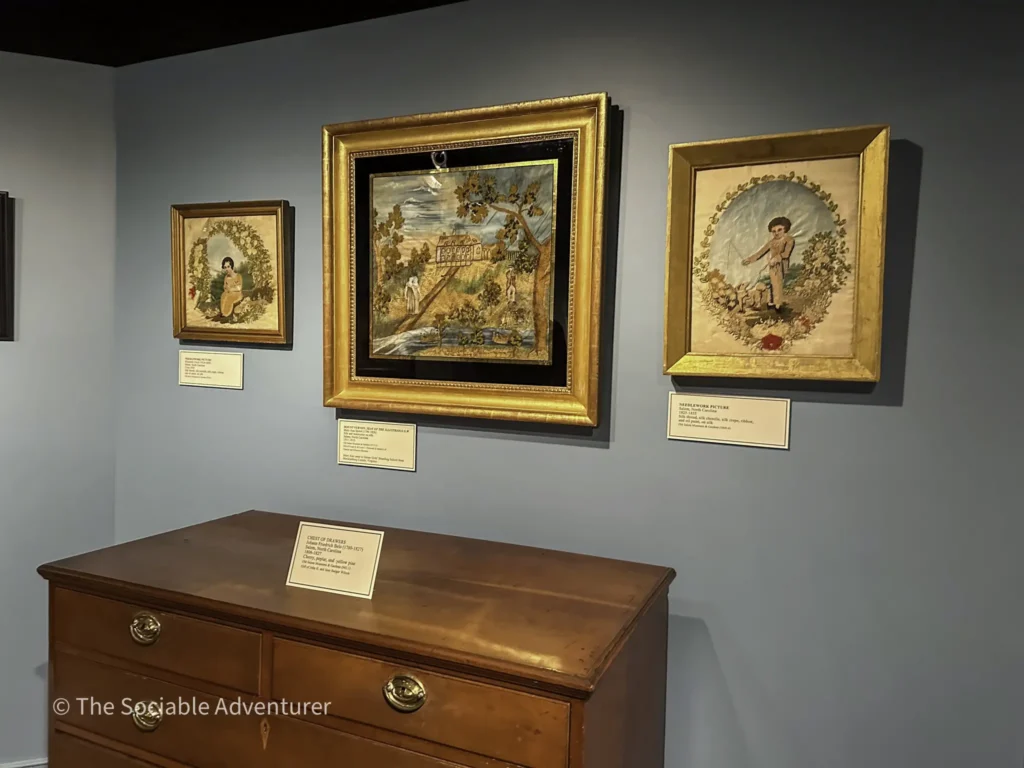
The collection spans furniture, paintings, textiles, ceramics, silver, and other metalware made and used across the American South — with a particular focus on Maryland, Virginia, the Carolinas, Georgia, Kentucky, and Tennessee. The All-in-One Old Salem ticket includes access to three self-guided MESDA galleries in the Frank L. Horton Museum Center, giving visitors a genuinely accessible introduction to the collection.
The Research Center — Preeminent Southern Decorative Arts Scholarship
Beyond the exhibition galleries, MESDA operates as the preeminent research center for the study of Southern decorative arts — a genuinely substantive scholarly institution that draws researchers, curators, and academics from across the United States. The research center’s substantive resources include:
- MESDA Craftsman Database — documentary information on more than 60,000 Southern artisans working across 125 different trades — genuinely singular scale for Southern craftsmanship scholarship
- MESDA Object Database — photographic catalog of approximately 15,000 objects with detailed provenance and craftsmanship documentation
- MESDA Subject Database — thematic and regional research references
- Research Library — more than 5,000 volumes on decorative arts subjects, supplemented by extensive microform holdings of primary documents
- Gray Rare Book Collection — specialized rare-book holdings
MESDA publishes the MESDA Journal (Journal of Early Southern Decorative Arts) twice yearly — genuinely one of the most substantive academic publications in Southern material culture scholarship — plus The Luminary newsletter and multiple substantive scholarly books over the museum’s six decades.
For scholars and serious researchers, MESDA offers the MESDA Summer Institute — a substantial educational program for graduate students and professionals — plus Connoisseur Tours, StudySouth educational programs, and dedicated Research Appointments available by advance scheduling.
Good to Know
- Location: 924 South Main Street, Winston-Salem, NC 27101
- Phone: 336-721-7360
- Parent institution: Part of Old Salem Museums & Gardens; located at the southern end of the Old Salem historic district
- Museum home: The Frank L. Horton Museum Center (named after MESDA’s founder), a vastly expanded and transformed former Kroger grocery store; the first building visitors encounter after crossing the Heritage Bridge into Old Salem
- Founded: 1965 by Frank L. Horton and his mother, Theodosia “Theo” Liipfert Horton Taliaferro
- Founder background: Frank L. Horton (March 21, 1918 – February 21, 2004) was Old Salem Inc.’s first director of restoration (1950), overseeing the restoration and reconstruction of approximately 50 historic buildings across both the Old Salem and Historic Bethabara Park historic districts between 1950 and 1972
- Regional distinction: Preeminent research center for the study of Southern decorative arts; one of the most comprehensive collections of Southern decorative arts and related scholarly resources in the country
- Collection scale: More than 3,600 objects made in the American South prior to 1860
- Museum layout: 33 galleries across the Frank L. Horton Museum Center; period rooms, regional exhibits plus thematic galleries
- Regional framework: Chesapeake / Lowcountry / Backcountry — Frank Horton’s original scholarly framework organizes exhibitions today
- Geographic coverage: Maryland, Virginia, the Carolinas, Georgia, Kentucky, and Tennessee
- Collection categories: Furniture, paintings, textiles, ceramics, silver, metalware
- Signature period rooms: 17th-century Virginia great hall; one-room Maryland plantation dwelling; backcountry North Carolina log house; Charleston, SC parlor; the Edenton, NC rooms
- Signature thematic galleries: Southern Masterworks Gallery (“best of the best” showcase); Southern Ceramics Gallery (one of the most comprehensive antebellum Southern pottery collections)
- Research Center resources: MESDA Craftsman Database (60,000+ Southern artisans across 125 trades); MESDA Object Database (15,000 objects with provenance); MESDA Subject Database; Research Library (5,000+ volumes); Gray Rare Book Collection
- Publications: MESDA Journal (Journal of Early Southern Decorative Arts, twice yearly); The Luminary newsletter (twice yearly)
- Educational programs: MESDA Summer Institute; Connoisseur Tours; StudySouth; Research Appointments
- Current featured exhibit: “Lately From: Immigrant Craftspeople & the Making of the American South”
- Access: The All-in-One Old Salem ticket includes access to three self-guided MESDA galleries; separate tickets are available for full museum access
- Hours: Check the MESDA website for current specific hours
- Best for: Southern decorative arts enthusiasts, antique furniture and ceramics collectors, historical craftsmanship scholars, adaptive-reuse architecture enthusiasts (given the Kroger-to-museum transformation), museum professionals and researchers, and visitors to Old Salem exploring the full Moravian heritage cluster
- Pair with: The full Winston-Salem attractions cluster; the natural Moravian heritage trilogy combining MESDA with Old Salem Museums & Gardens (MESDA’s parent institution), Historic Bethabara Park (also restored under Frank L. Horton’s leadership), and Bethania, NC (the second Moravian Wachovia settlement); Winston-Salem’s flagship museums including the Reynolda House Museum of American Art and Reynolda Gardens; or the NC Museum of Art – Winston-Salem for contemporary art context
A Winston-Salem Highlight
MESDA is the kind of stop that stays with you for the sheer scholarly depth and Southern craftsmanship. Between the 1965 founding by Frank L. Horton and his mother, Theo Taliaferro, the 3,600+ objects made in the American South prior to 1860, the 33 galleries in the Frank L. Horton Museum Center, and the Chesapeake / Lowcountry / Backcountry regional framework that Frank Horton established as foundational to Southern decorative arts scholarship, MESDA represents a genuinely substantial NC cultural destination that few other Southern museums can match.
The Frank L. Horton Museum Center architectural story rounds out the appeal. The transformation of a mid-20th-century Kroger grocery store into a vastly expanded, reimagined museum housing 33 galleries plus a substantial research center is genuinely one of the more delightful adaptive-reuse stories in NC museum architecture. Combined with Frank Horton’s substantive involvement in restoration leadership at both Old Salem and Historic Bethabara Park from 1950 to 1972, MESDA sits at the substantive center of Winston-Salem’s preserved Moravian heritage ecosystem.
Combined with the preeminent research center resources including the 60,000-artisan Craftsman Database, the substantial published scholarship of the MESDA Journal, the substantive educational programming (MESDA Summer Institute, StudySouth, Connoisseur Tours), and the walking-distance proximity to the full Old Salem Museums & Gardens historic district, MESDA has become one of the most consistently rewarding specialty museum destinations anywhere in the greater Forsyth County / Piedmont Triad region — and a genuine anchor of North Carolina’s Southern decorative arts scholarly landscape.
Resources
Location
Social Media
@thesociableadventurer The Museum of Early Southern Decorative Arts (MESDA) is an enchanting institution located in the heart of Old Salem, Winston-Salem, NC. It is dedicated to preserving and showcasing the rich heritage of Southern decorative arts. The museum offers visitors an immersive journey through the cultural history of the region. The collection includes meticulously crafted furniture, exquisite ceramics, and textiles spanning centuries. MESDA provides insight into the craftsmanship, traditions, and influences that have shaped Southern aesthetics. The galleries are carefully curated and the exhibits are engaging, offering a glimpse into the lives and stories of early Southern artisans and the communities they served. MESDA is a must-visit destination for art, history, and culture enthusiasts. https://thesociableadventurer.com/museum-of-early-southern-decorative-arts-mesda/ #WinstonSalem #WinstonSalemNC #ForsythCounty #ForsythCountyNC #VisitNC #myNC #CelebratingNC #ExploreNC #ExploreLocal #discover_carolinas #discoverthecarolinas #BestoftheTarheelState #NC #NorthCarolina #Discover #Adventure #Explore #TheSociableAdventurer #NCTown #NCCity #PiedmontNC #NCArt #NCMuseum #NCHistory #History #Art #Museum #OldSalem ♬ The Resolution – Jack's Mannequin
The Museum of Early Southern Decorative Arts (MESDA) is an enchanting institution located in the heart of Old Salem, Winston-Salem, NC. It is dedicated to preserving and showcasing the rich heritage of Southern decorative arts. thesociableadventurer.com/museum-of-ea… #VisitNC #NC #Museum #Art
— thesociableadvtr.bsky.social (@thesociableadvtr.bsky.social) January 5, 2025 at 11:32 AM
[image or embed]
The Museum of Early Southern Decorative Arts (MESDA) is an enchanting institution located in the heart of Old Salem, Winston-Salem, NC. It is dedicated to preserving and showcasing the rich heritage of Southern decorative arts. @VisitNC #VisitNC pic.twitter.com/KsPN1Pwb3d
— The Sociable Adventurer (@TheSociableAdv) March 24, 2024

Your Complete Guide to Hiking Trails at Elk Knob State Park
Elk Knob State Park is one of North Carolina’s most rewarding mountain destinations — a 4,400-…

A Complete Guide to the Trails at Carolina Beach State Park
Tucked along the Cape Fear River on Pleasure Island, Carolina Beach State Park is one of southeaster…

The Complete Guide to Hiking Trails in Lansing, NC
Set in the rolling hills of Ashe County, just a stone’s throw from the Virginia and Tennessee …

Exploring Ashe County Park: A Hiker’s Guide to North Carolina’s Mountain Gem
If you’re searching for the best hiking trails at Ashe County Park in North Carolina, you̵…
Mountain Masterpieces: A Guide to the Ben Long Frescoes of Ashe County
In the quiet corners of Ashe County, where the Blue Ridge Mountains meet peaceful valleys, thereR…

Granite, Grunts, and Glory: A Day on the Stone Mountain Loop Trail
The Stone Mountain Loop Trail is the signature hike at Stone Mountain State Park in North Carolina —…