
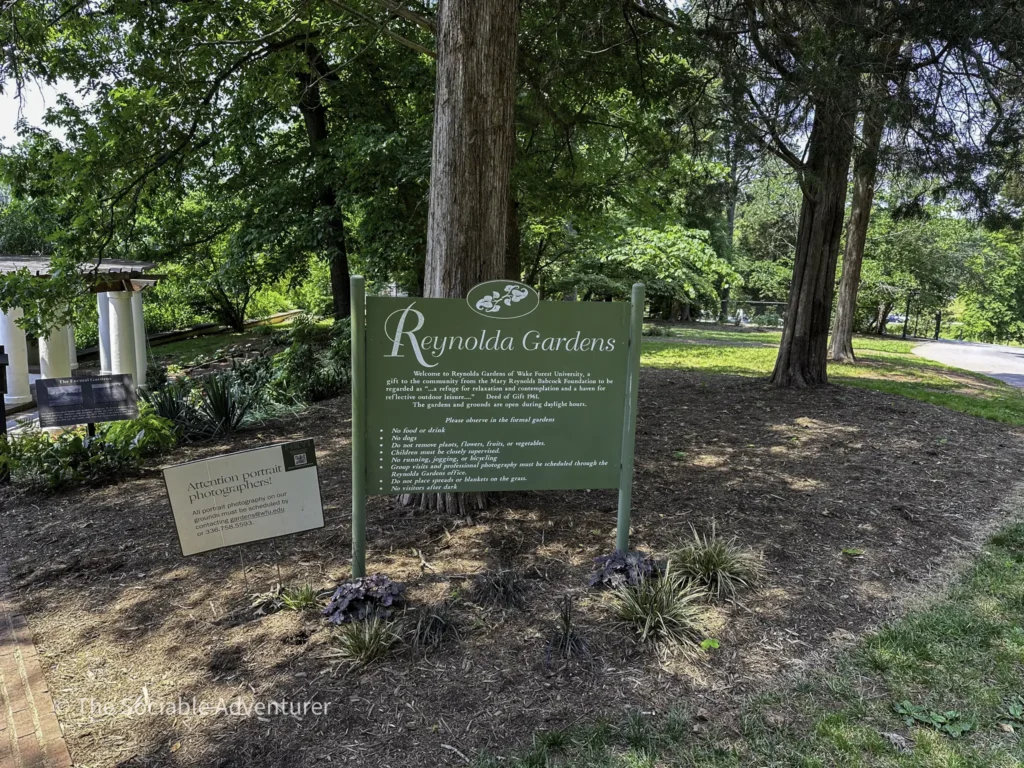
Reynolda Gardens is the four-acre formal garden and Brown Family Conservatory complex at the heart of the historic Reynolda estate in Winston-Salem, NC — the 1917 country home and model farm of Katharine and R.J. Reynolds, now part of Wake Forest University. Open daily from sunrise to sunset and completely free to the public, the Formal Gardens preserve landscape architect Thomas Sears’s 1915-era design of four intentional garden “rooms” — parterres divided by a central path and cross path, each cultivated as a themed living collection.
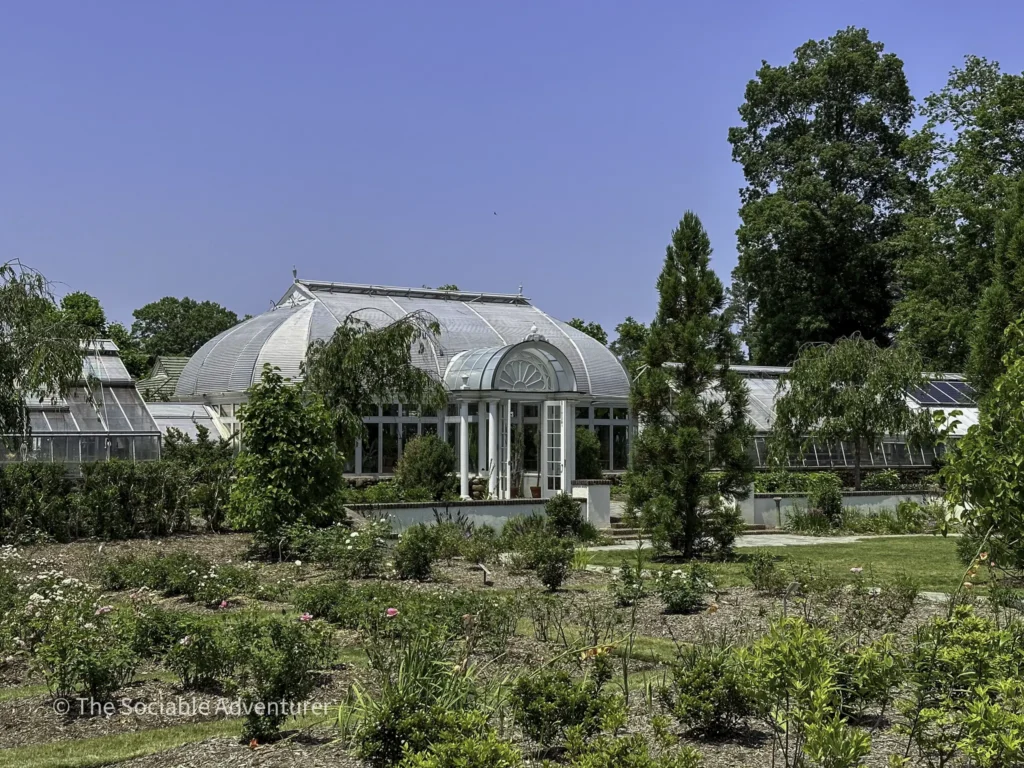
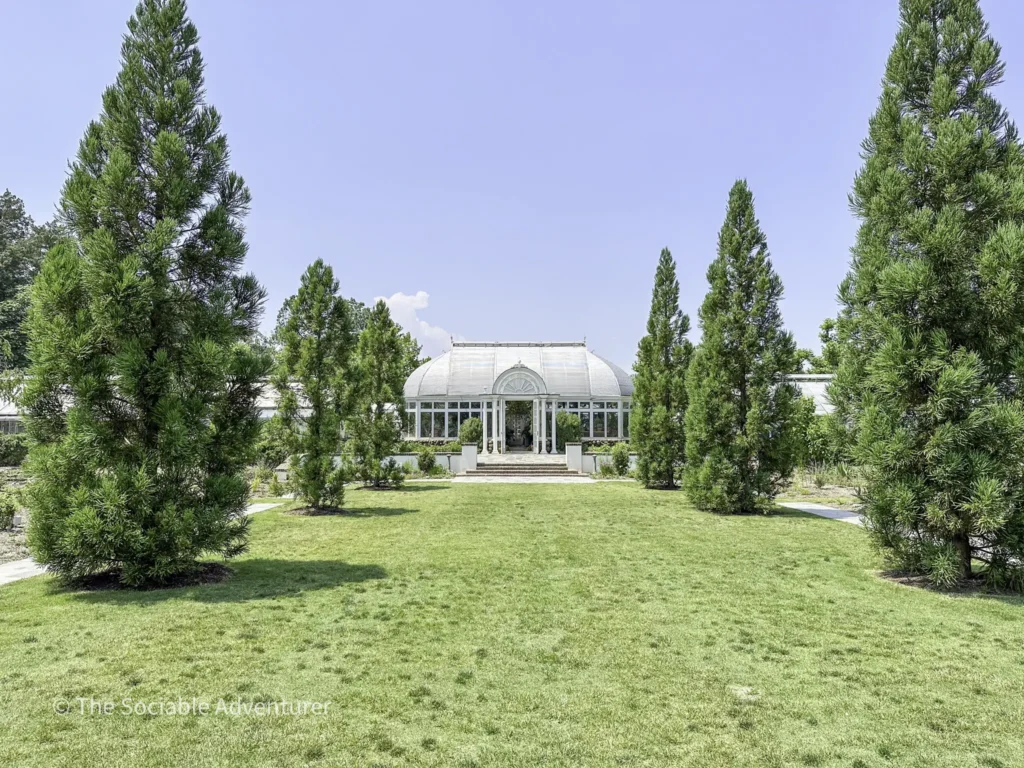
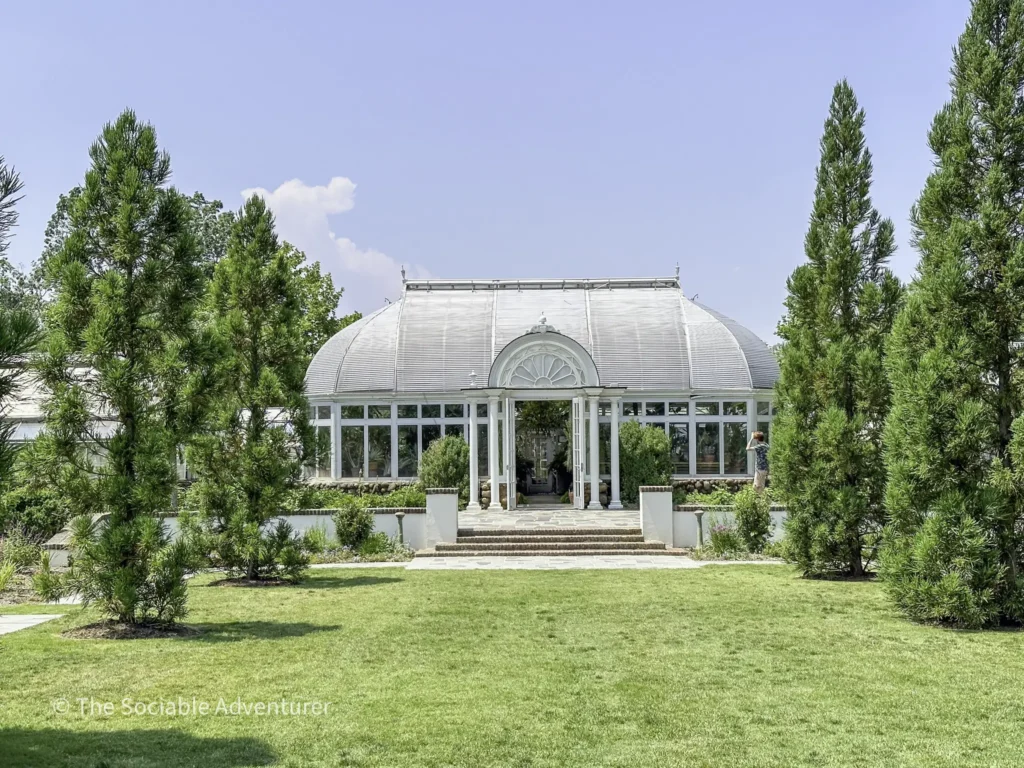
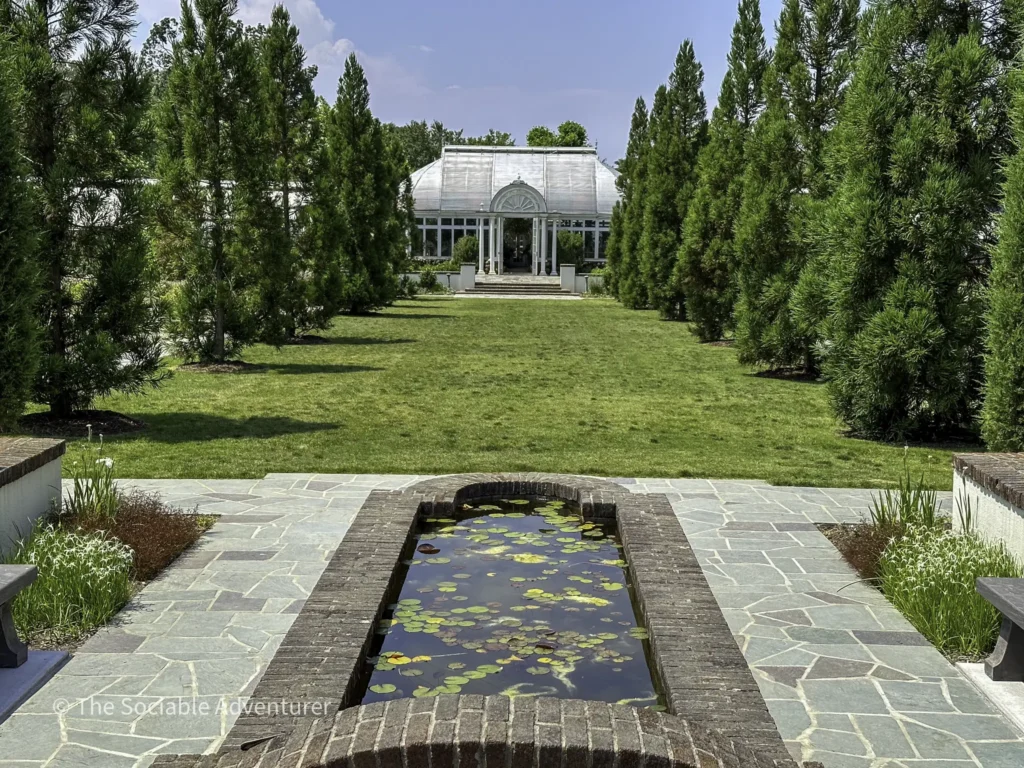
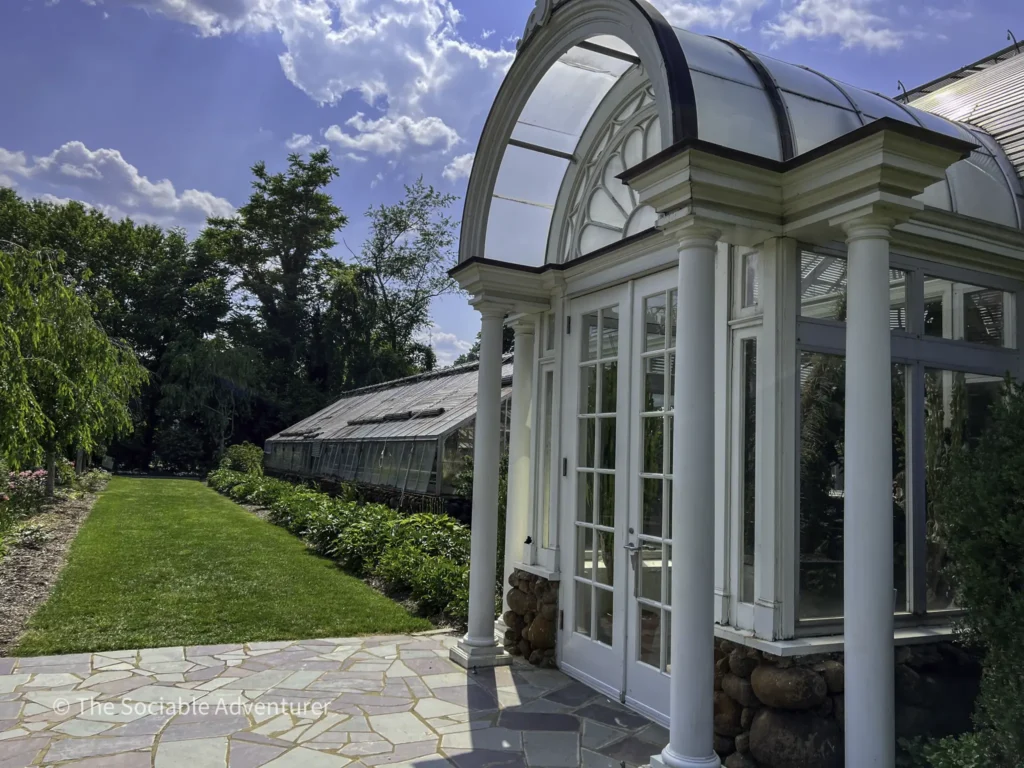
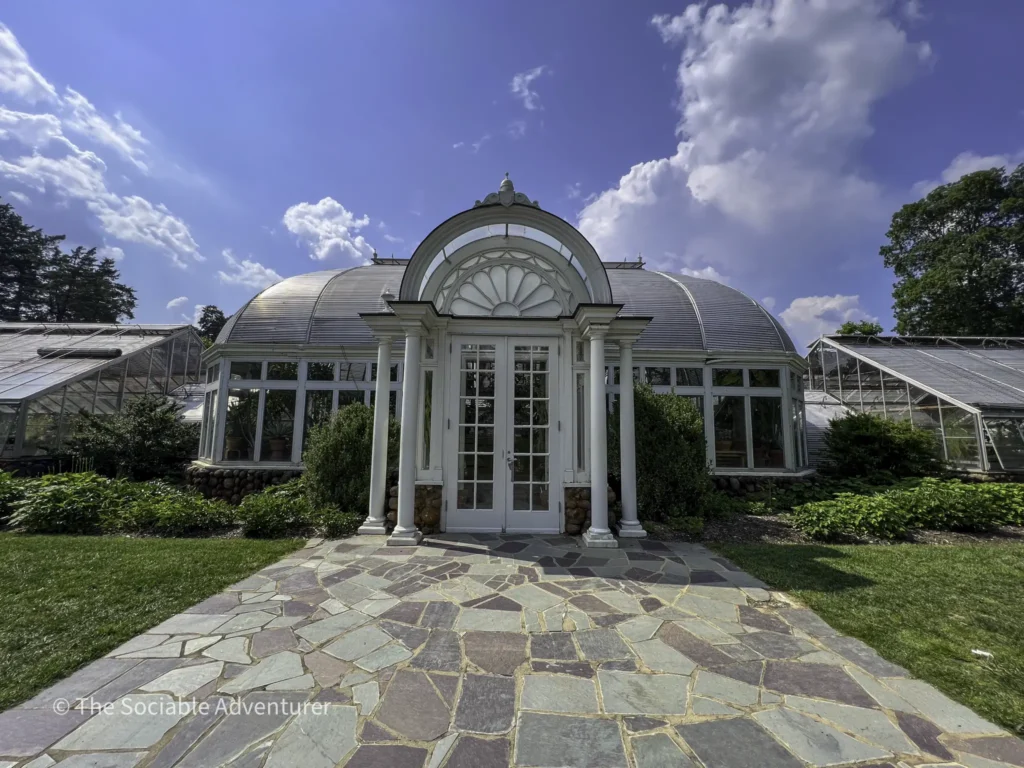
The Formal Gardens are entered through the restored 1913 Brown Family Conservatory — the historic Lord & Burnham greenhouse that Katharine Reynolds commissioned to grow her vegetables, propagate seasonal displays, and host free public shows. The Conservatory reopened in October 2024 following a complete restoration that returned its curved glass wings to their original 1913 form. Together, the formal gardens and conservatory offer one of the most substantive early-20th-century estate garden experiences preserved in the American South — and one you can visit any day of the year, no ticket required.
Be sure to check out the YouTube video and pictures below to get a feel for Reynolda Gardens before you go — or to relive the visit after.
The Formal Gardens — Four Parterres, Japanese Teahouses, and a Katharine Reynolds Design Choice
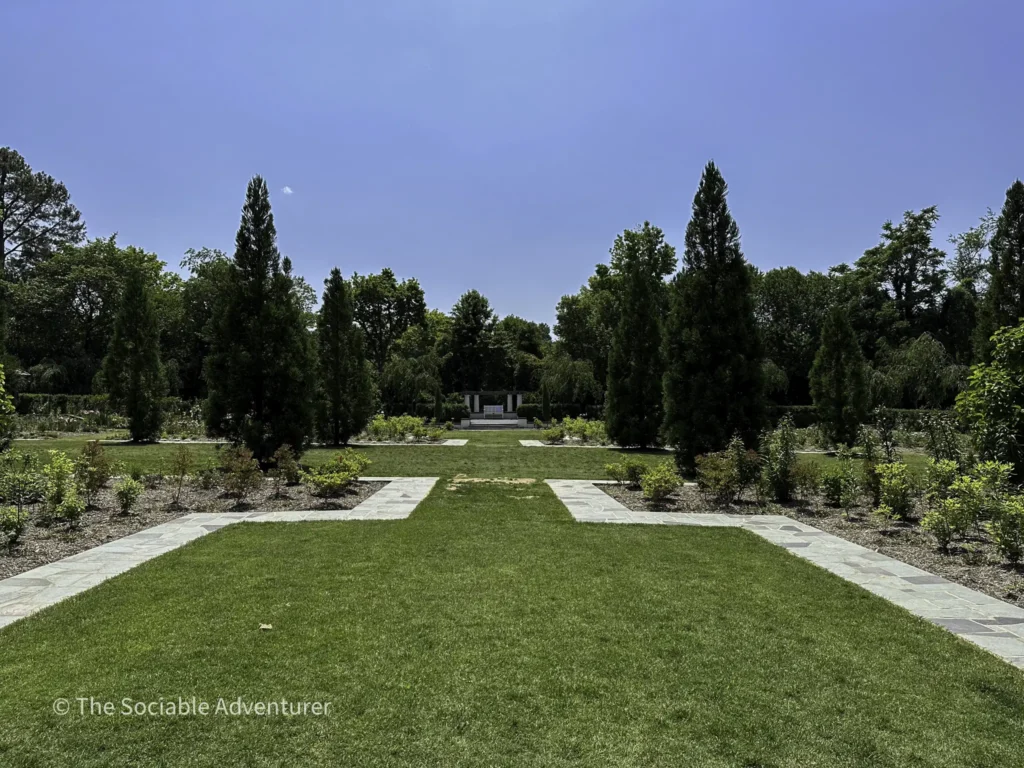
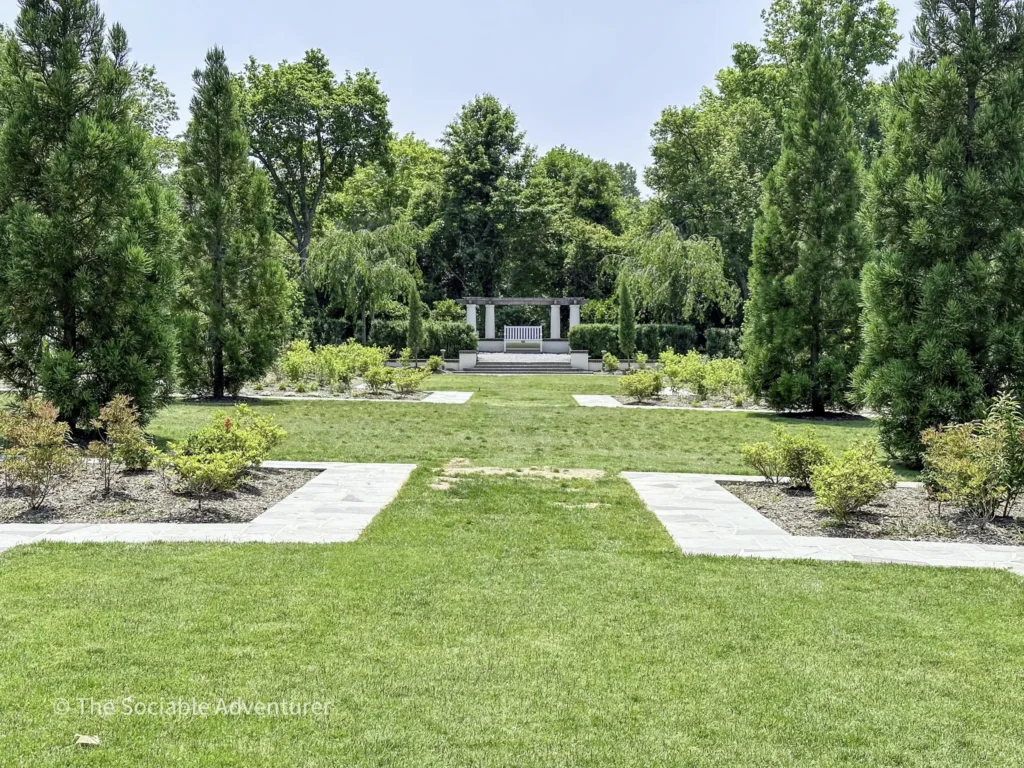
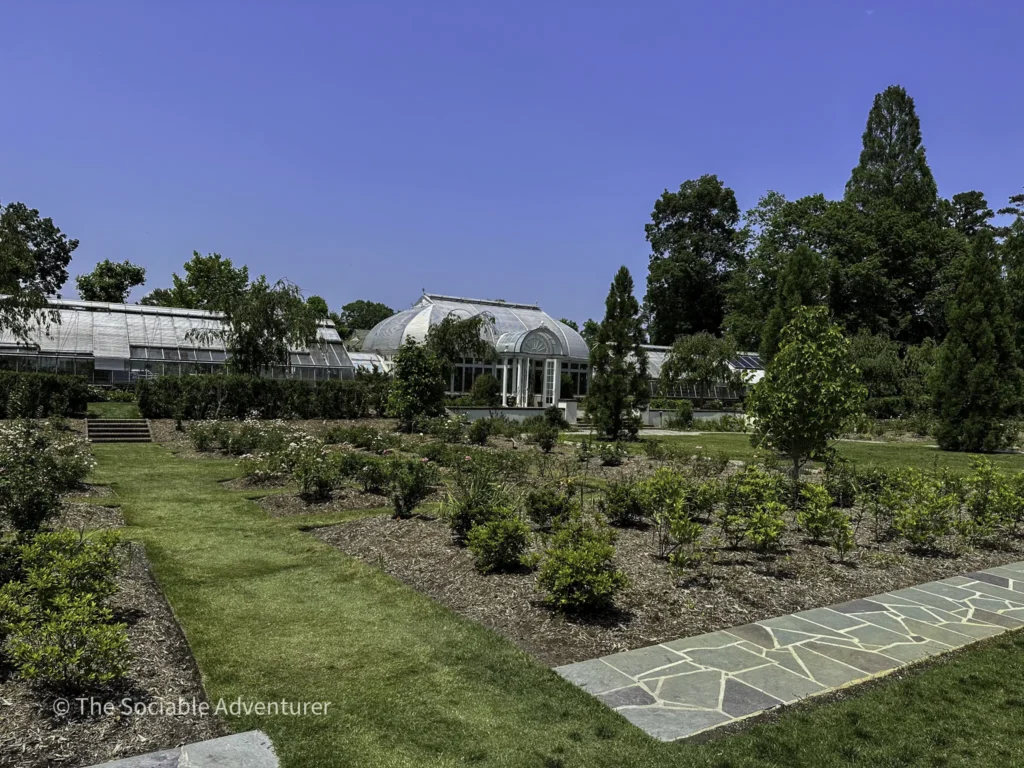
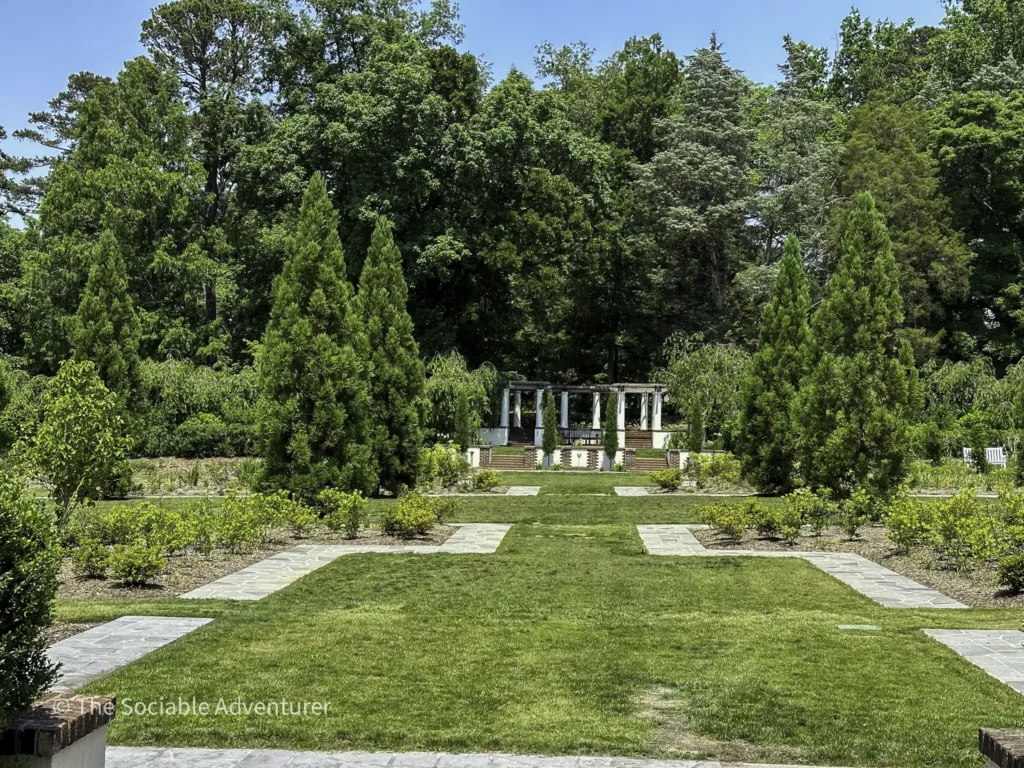
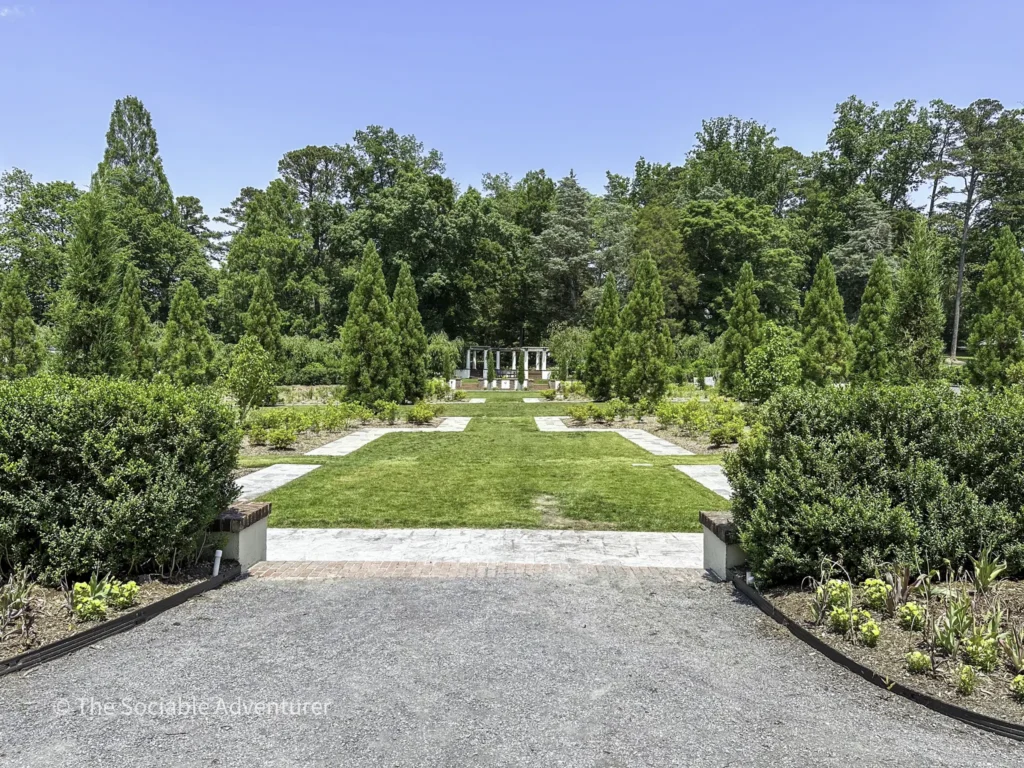
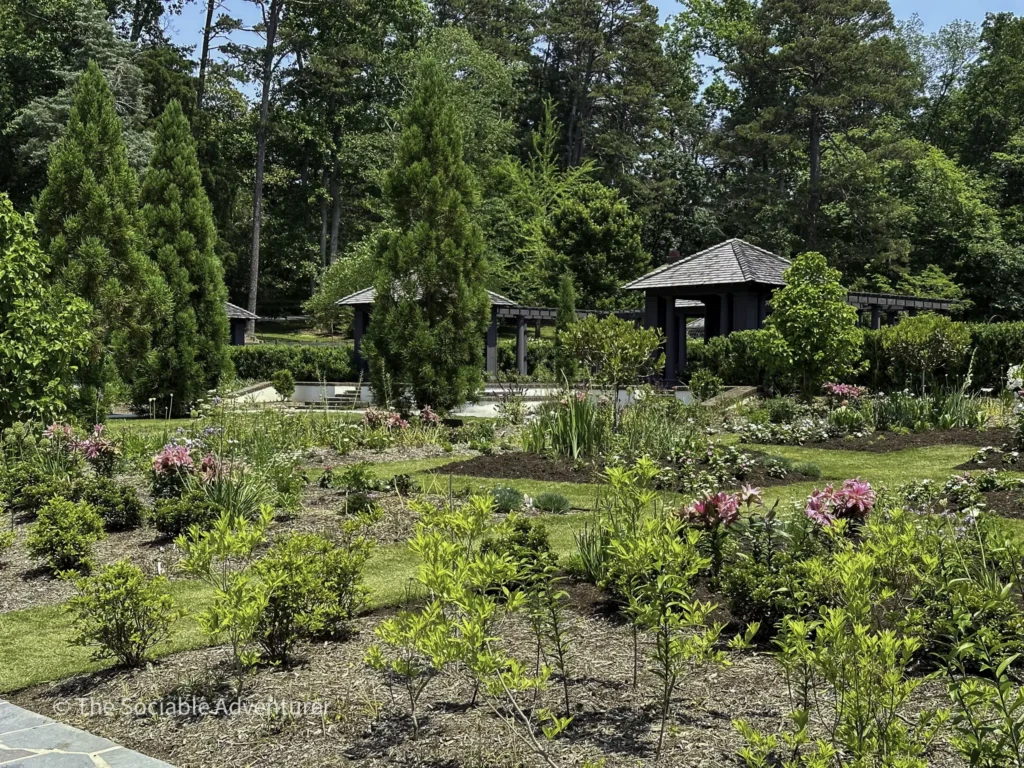
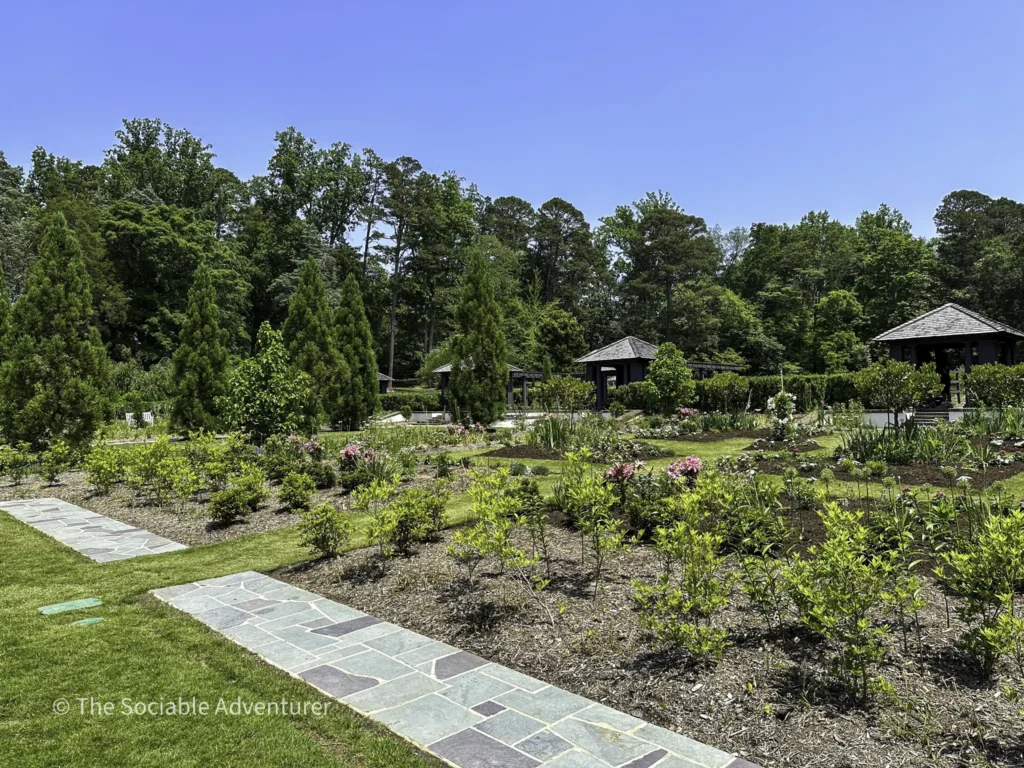
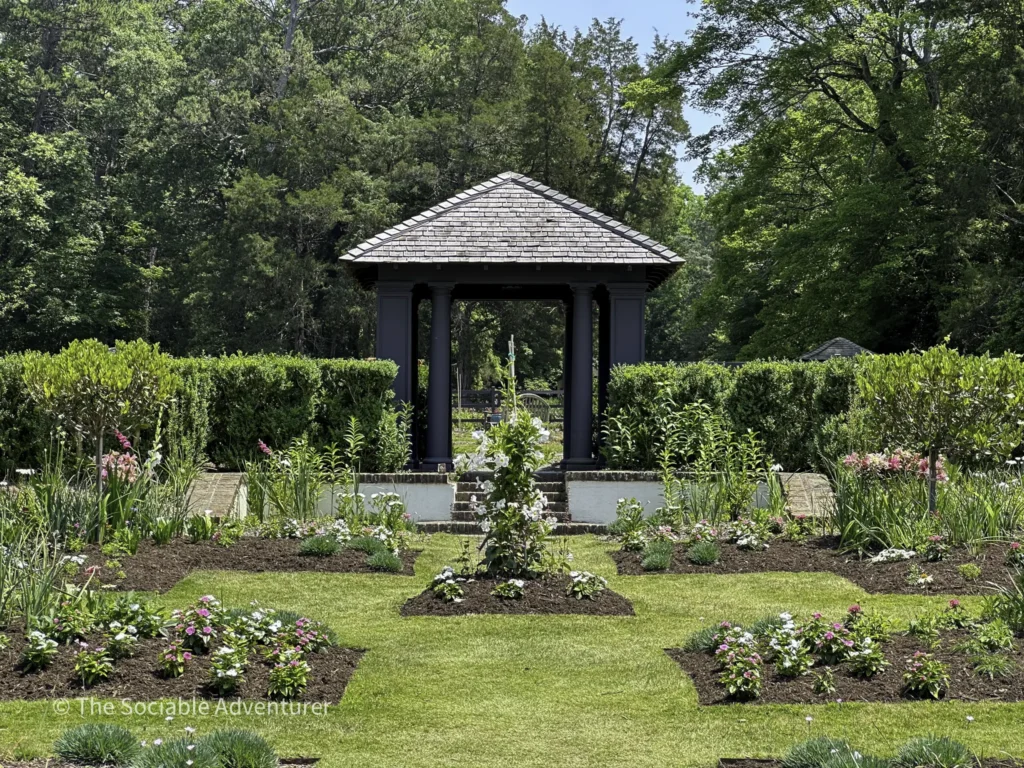
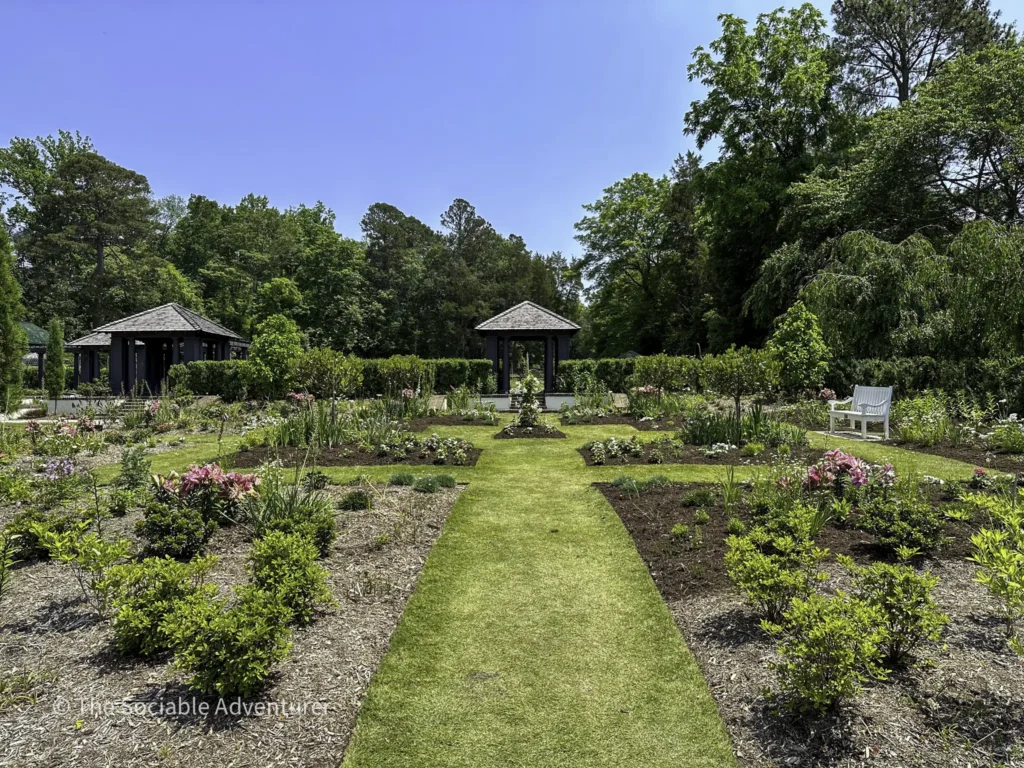
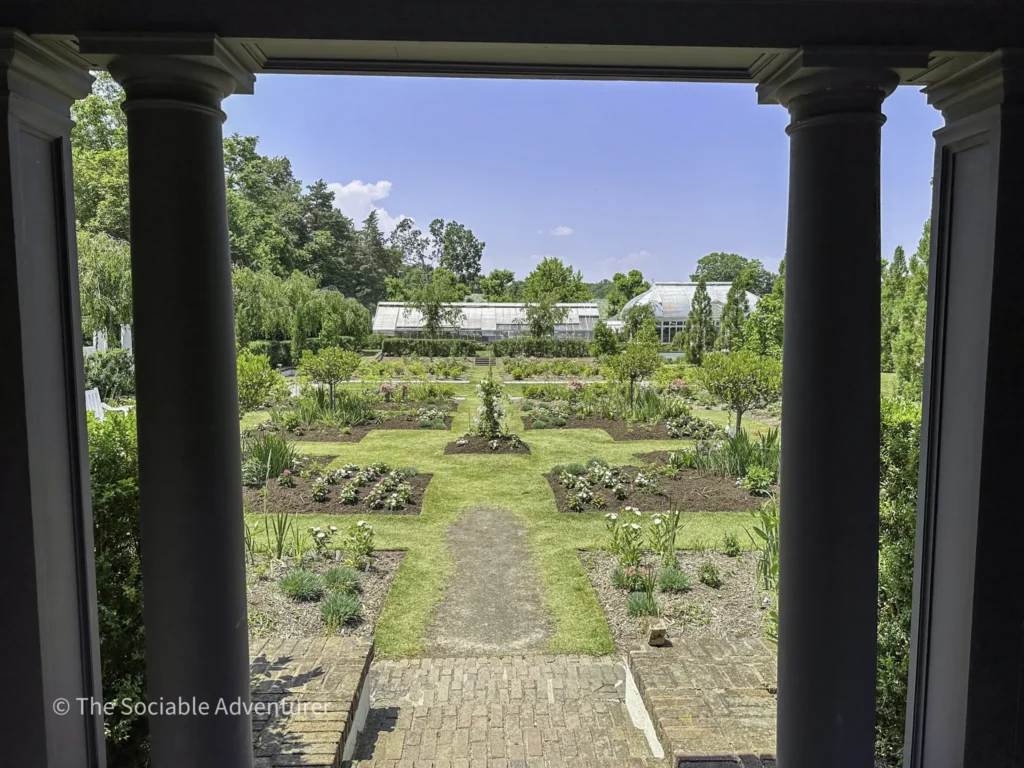
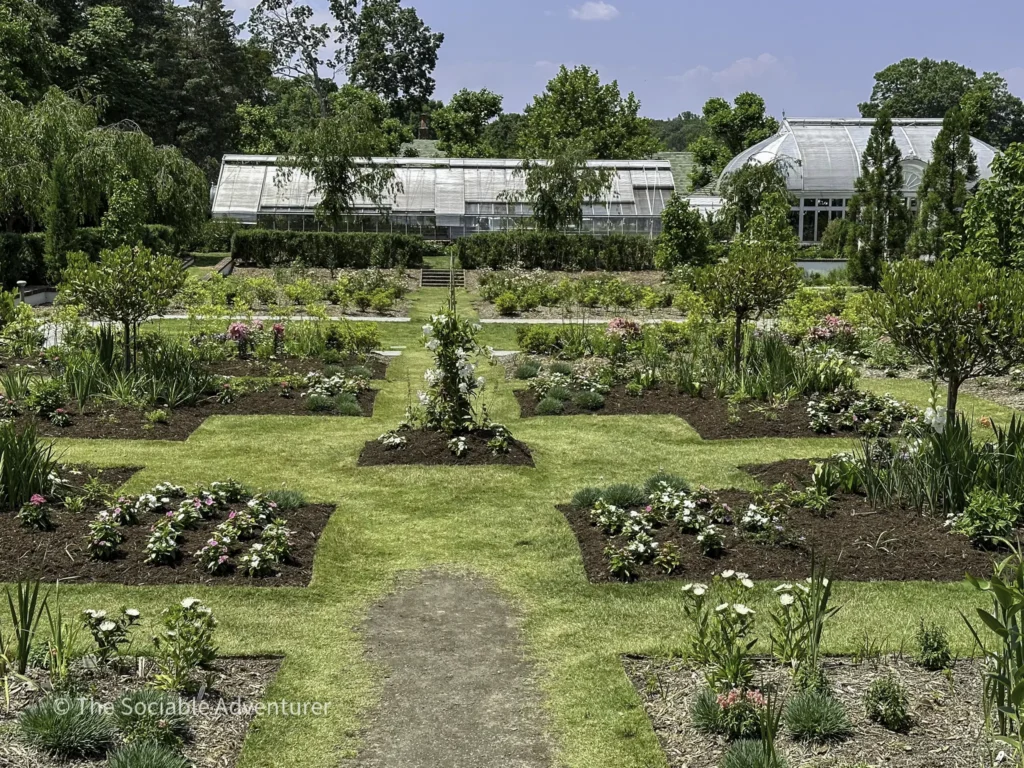
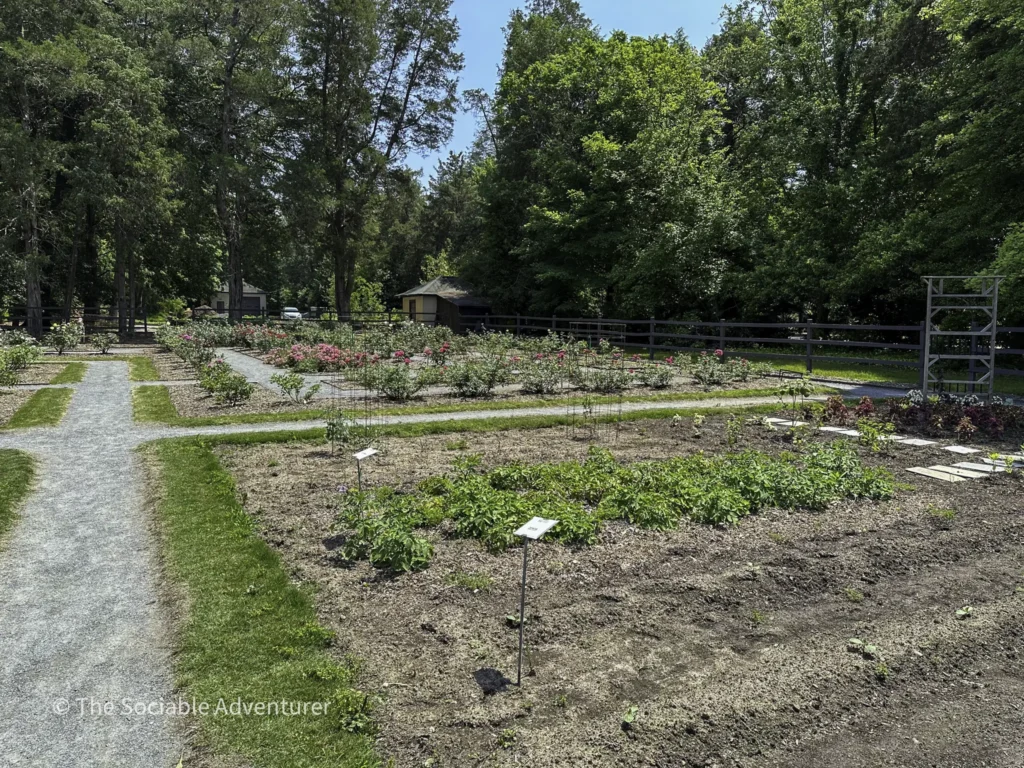
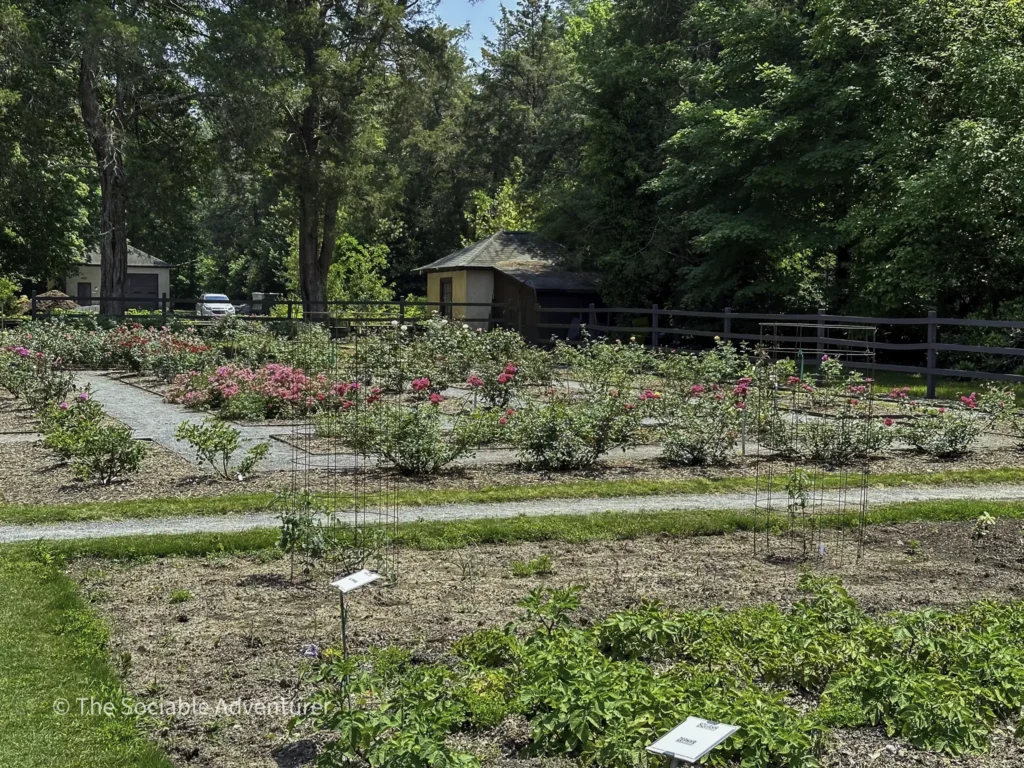
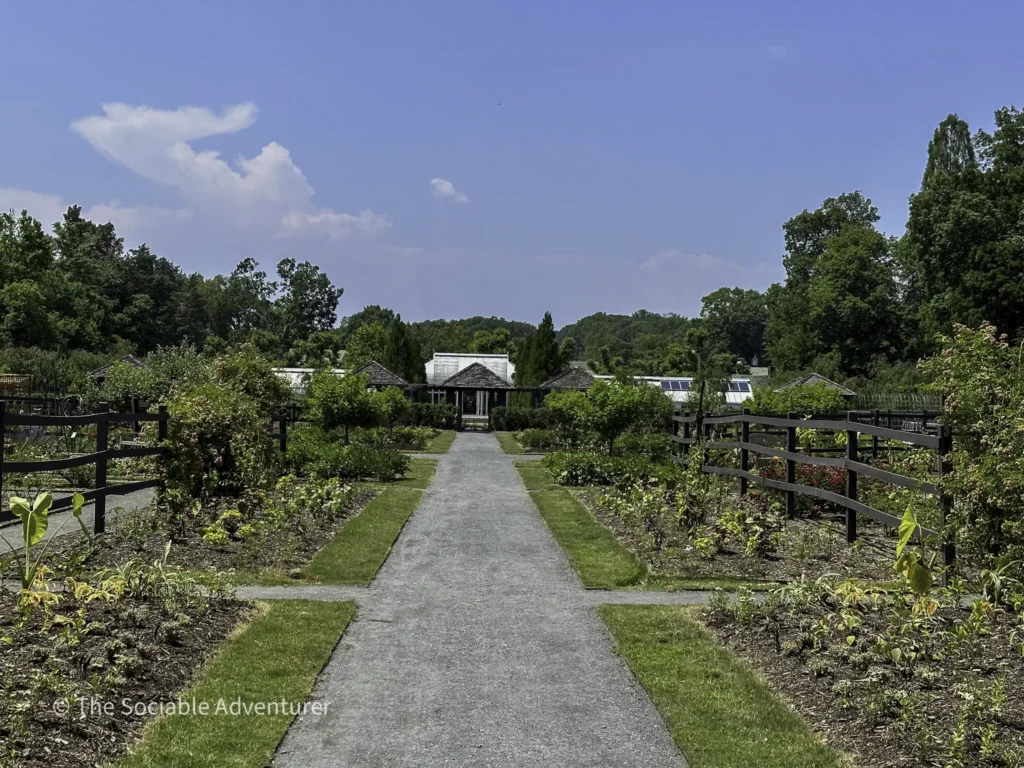
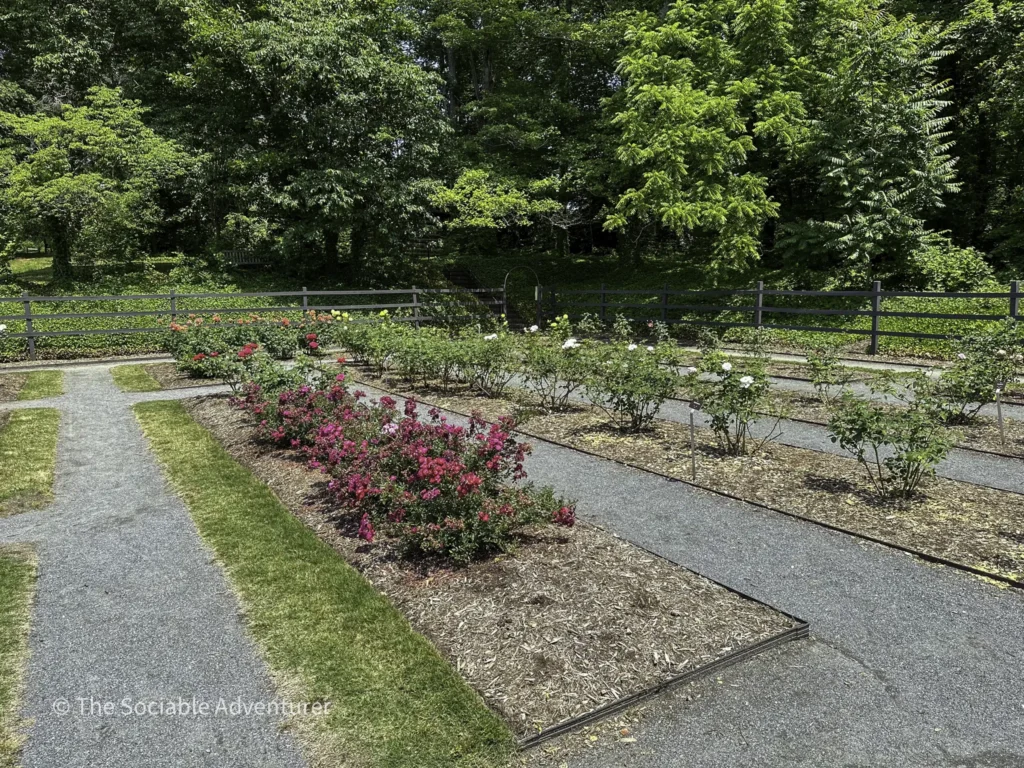
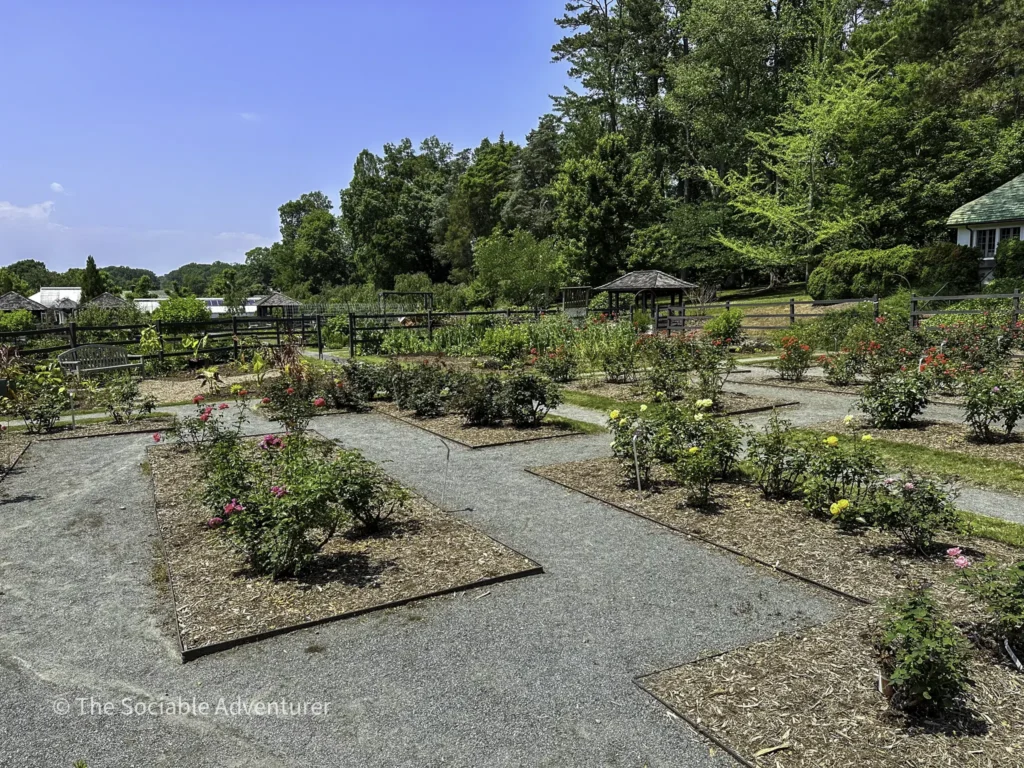
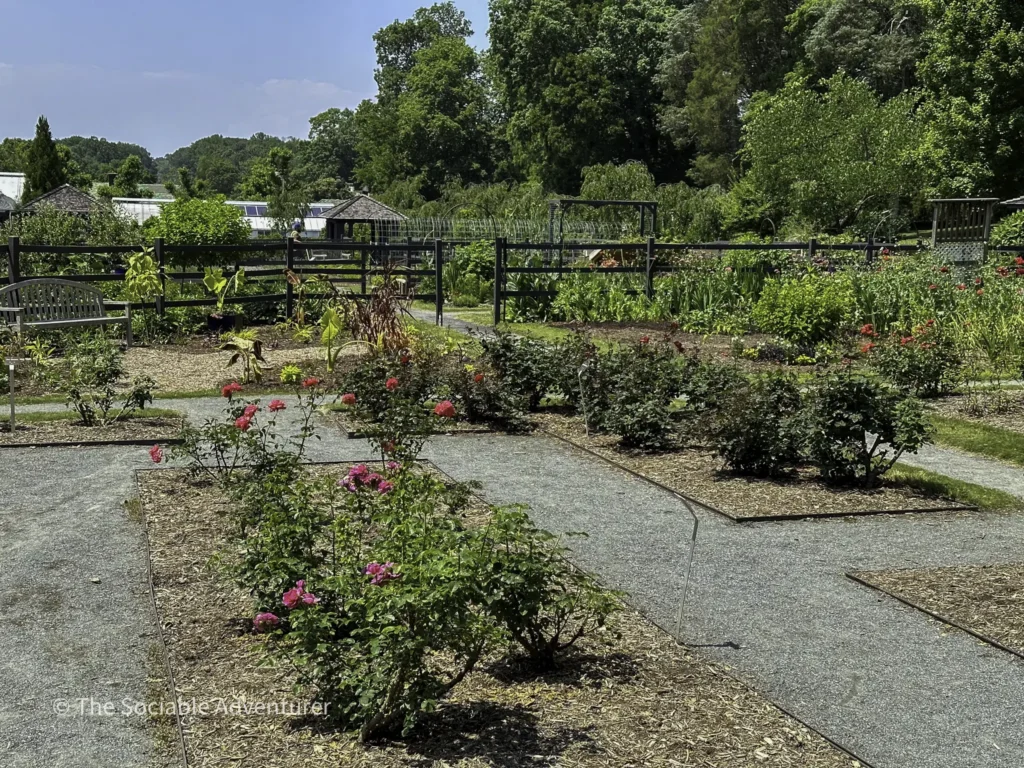
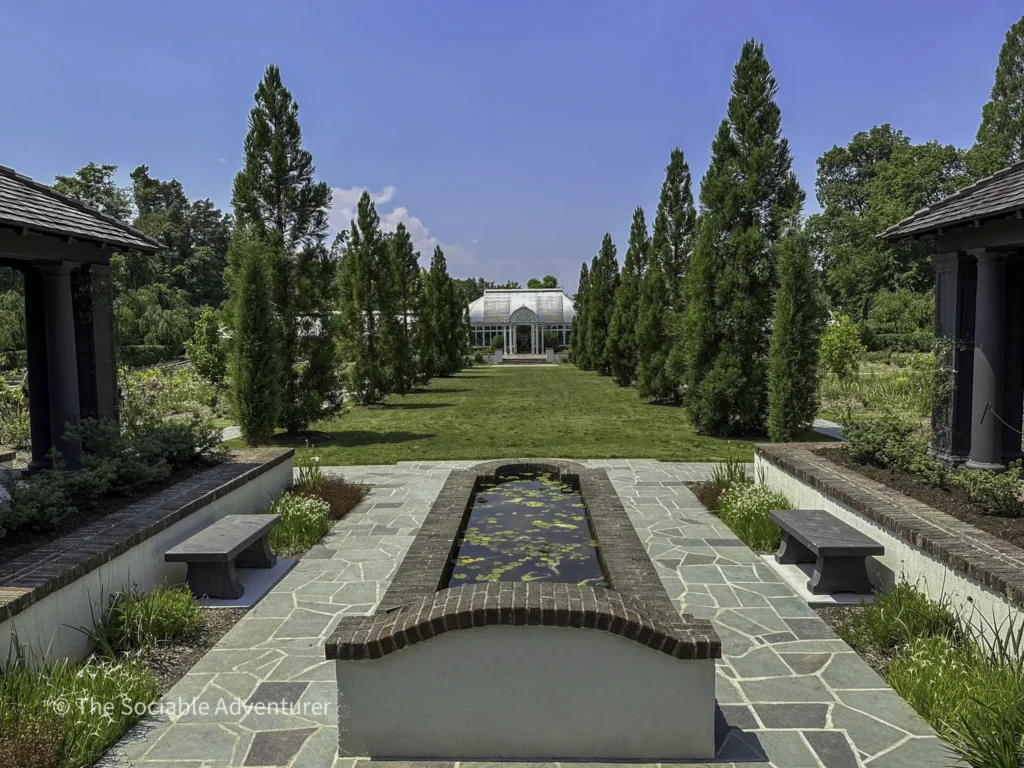
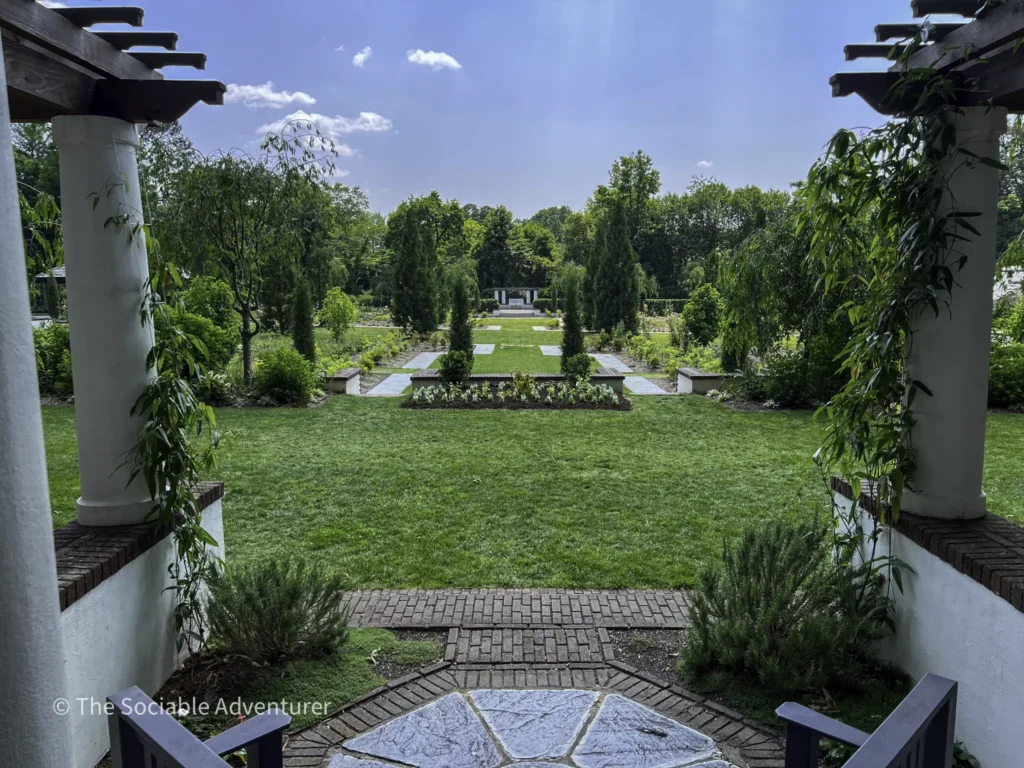
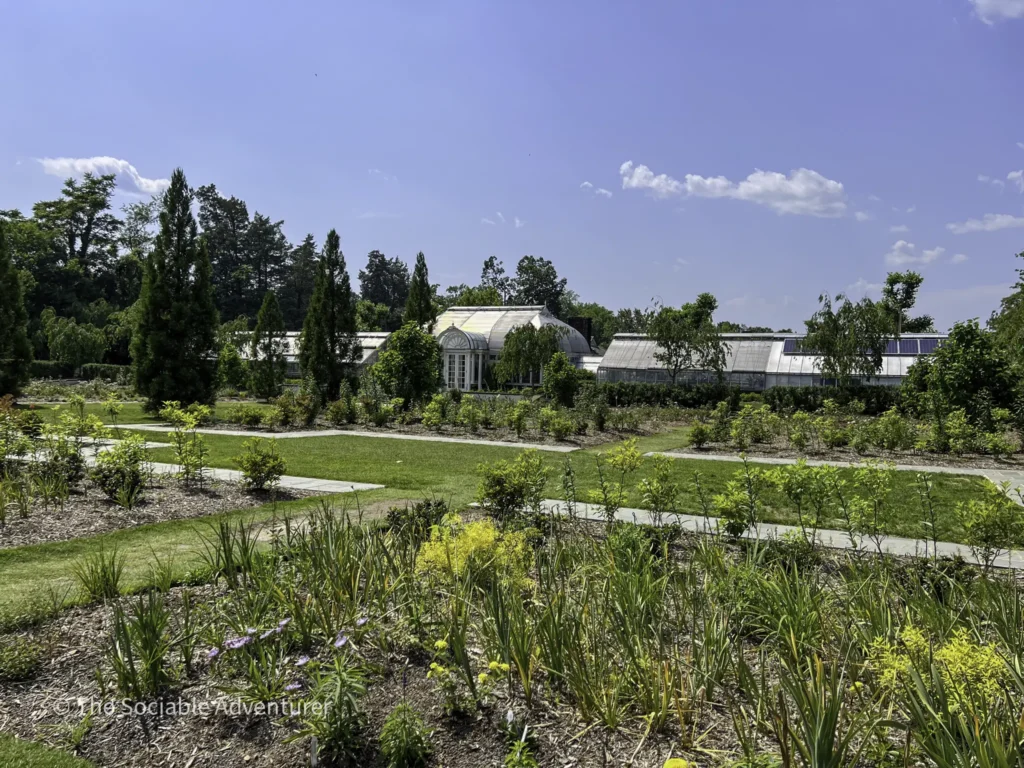
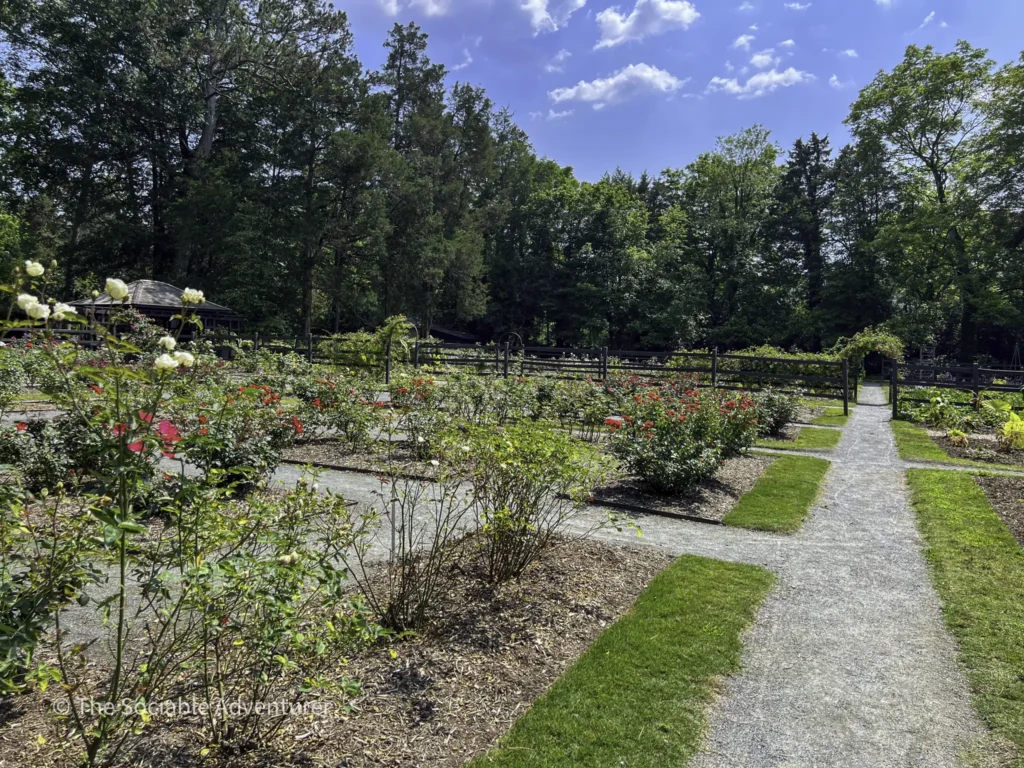
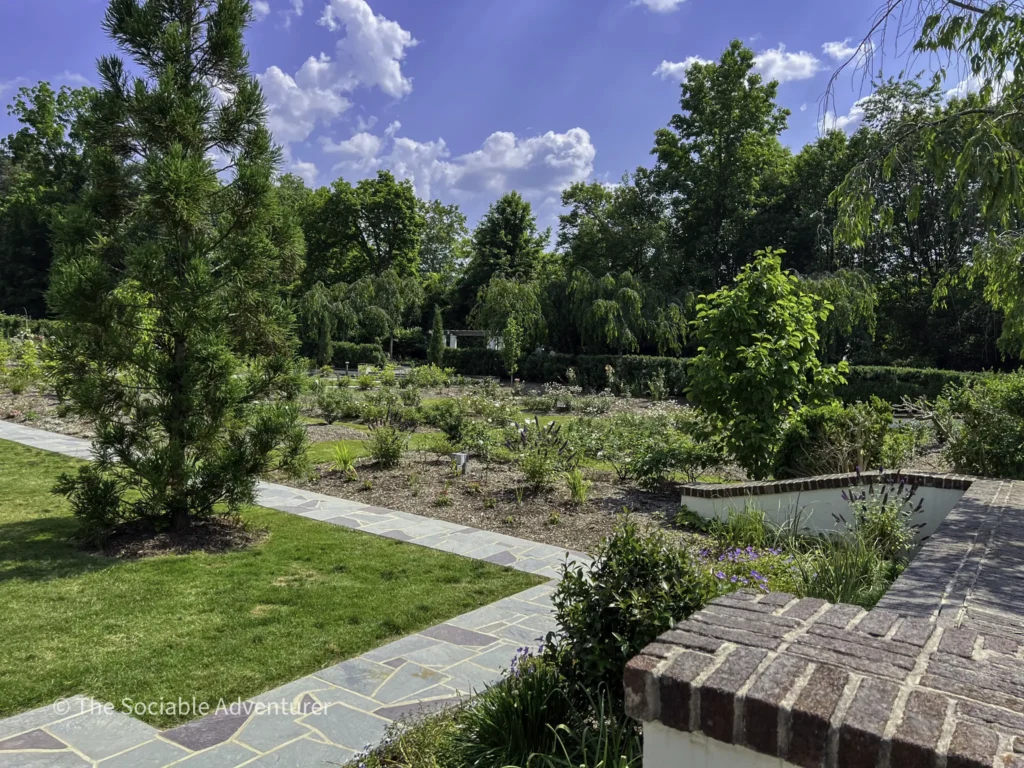
The Formal Gardens were designed by landscape architect Thomas W. Sears beginning in 1915, extending the initial 1911-1913 landscape plan that the firm of Buckenham and Miller had created for the broader estate. Sears organized the Formal Gardens around a central path that connects the ornamental garden to the fruit, cut flower, and vegetable garden, with a cross path dividing the space into four distinct “garden rooms” — parterres, each cultivated as its own living collection with a themed identity:
- The Pink & White Garden — soft-toned parterre of pink and white cultivars across the seasons
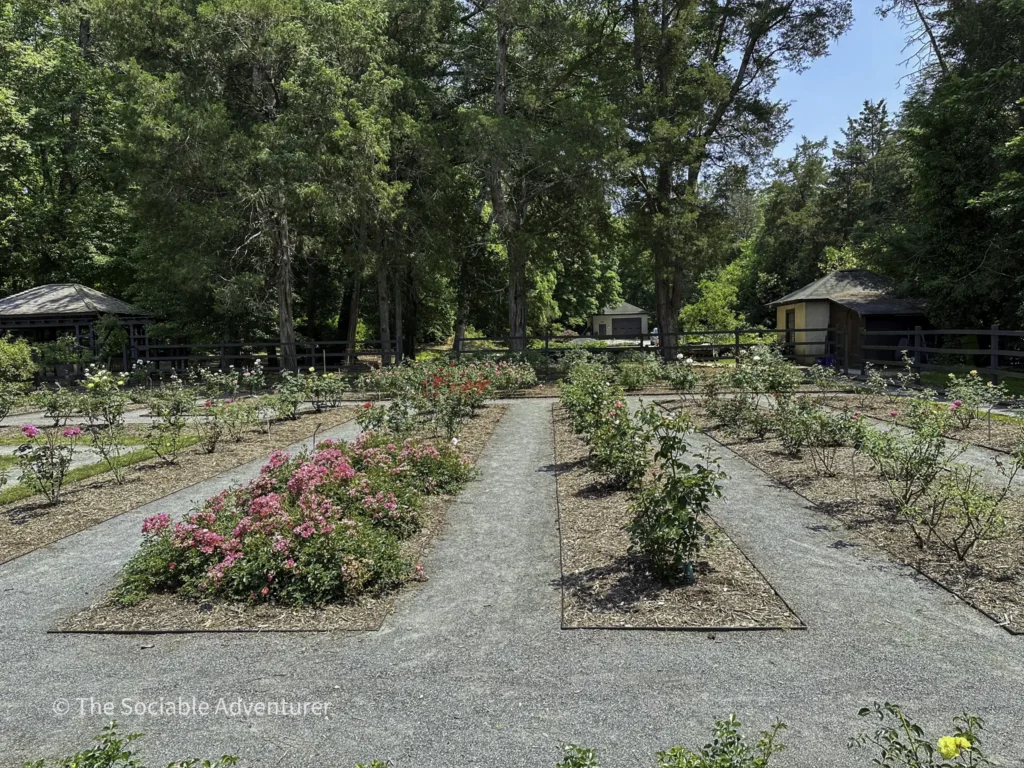
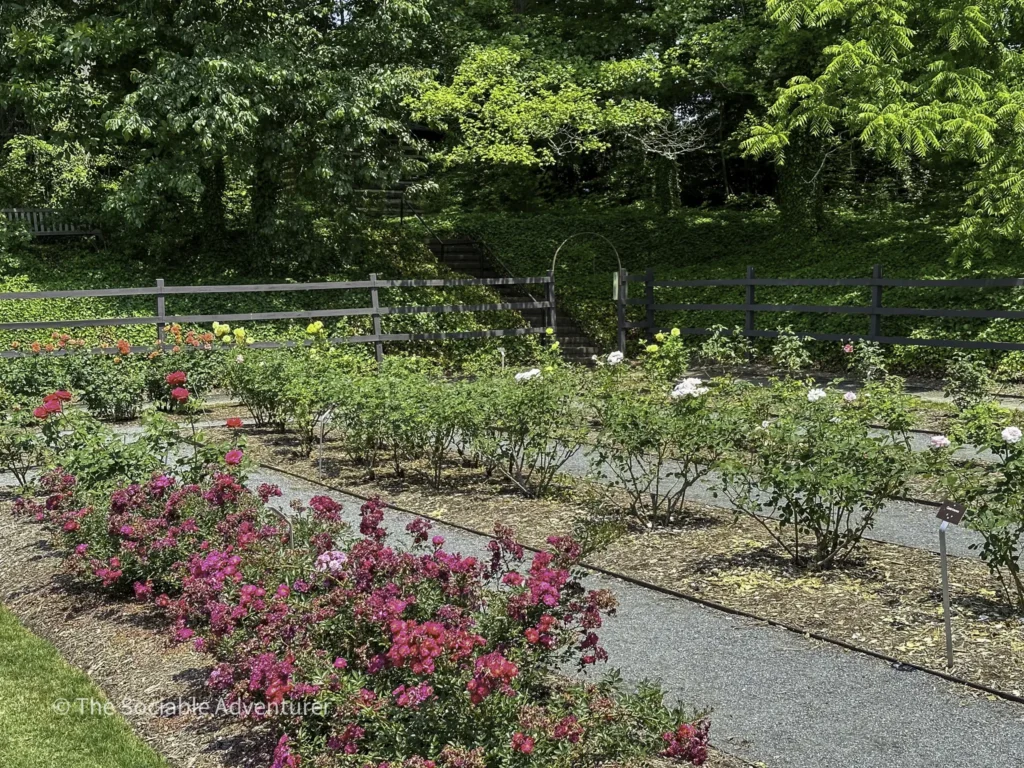
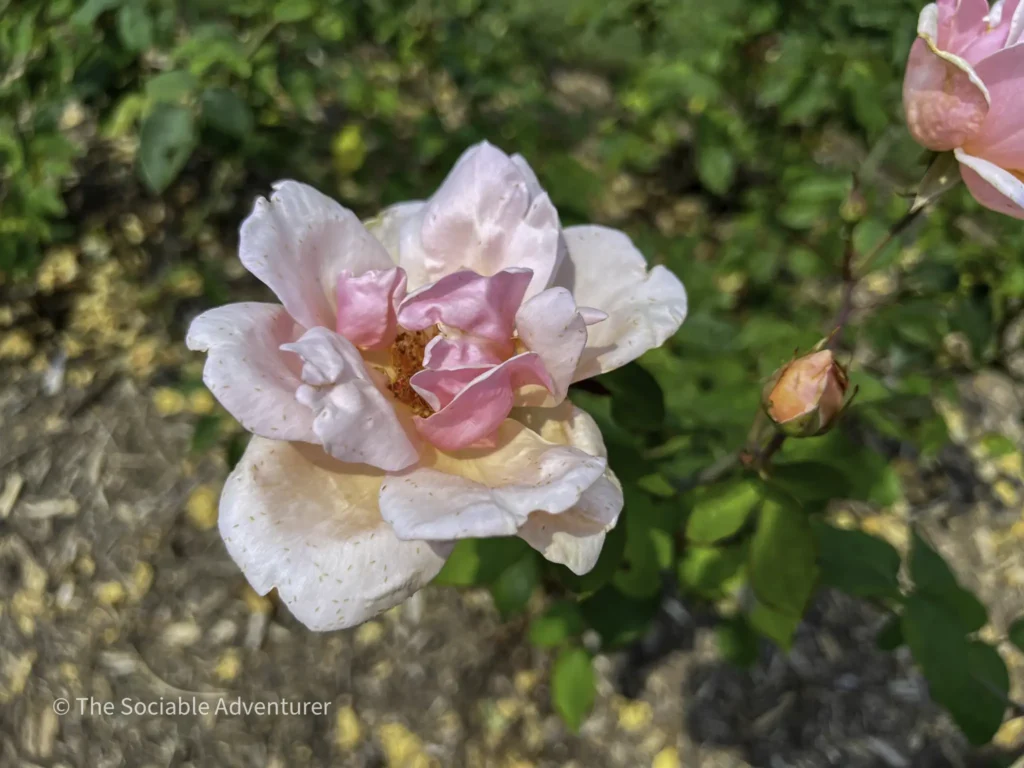
- The West Rose Garden — one of the two dedicated rose parterres
- The East Rose Garden — the second rose parterre, positioned on the opposite side of the cross path
- The Blue & Yellow Garden — bold-toned parterre pairing blue and yellow blooms
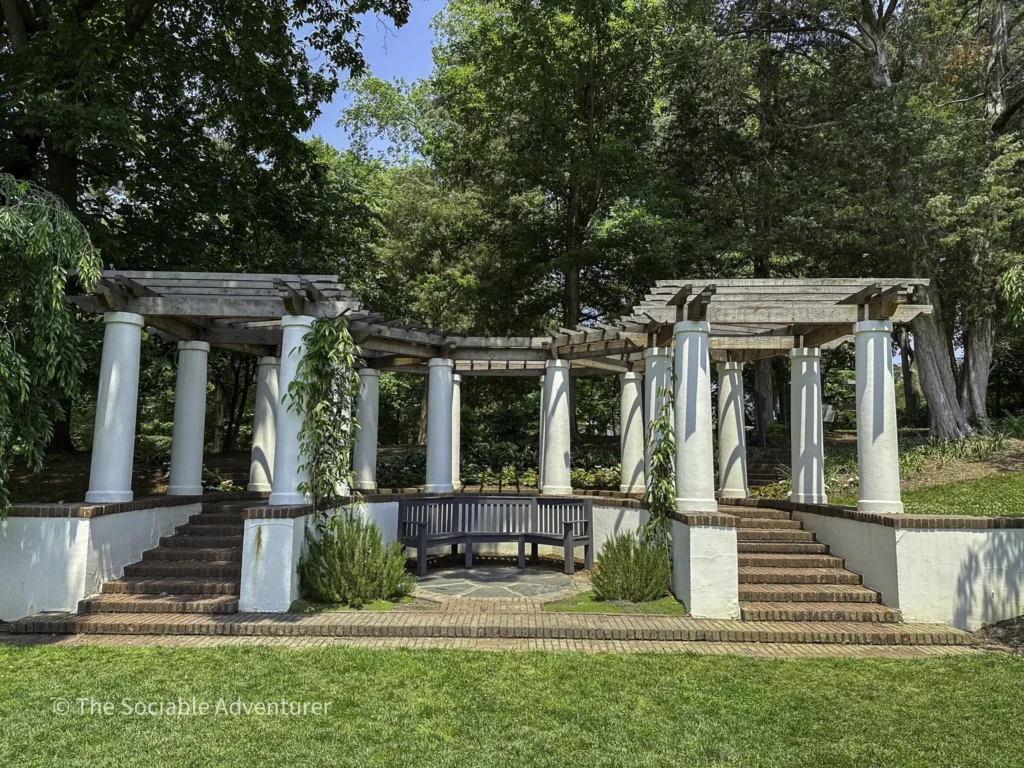
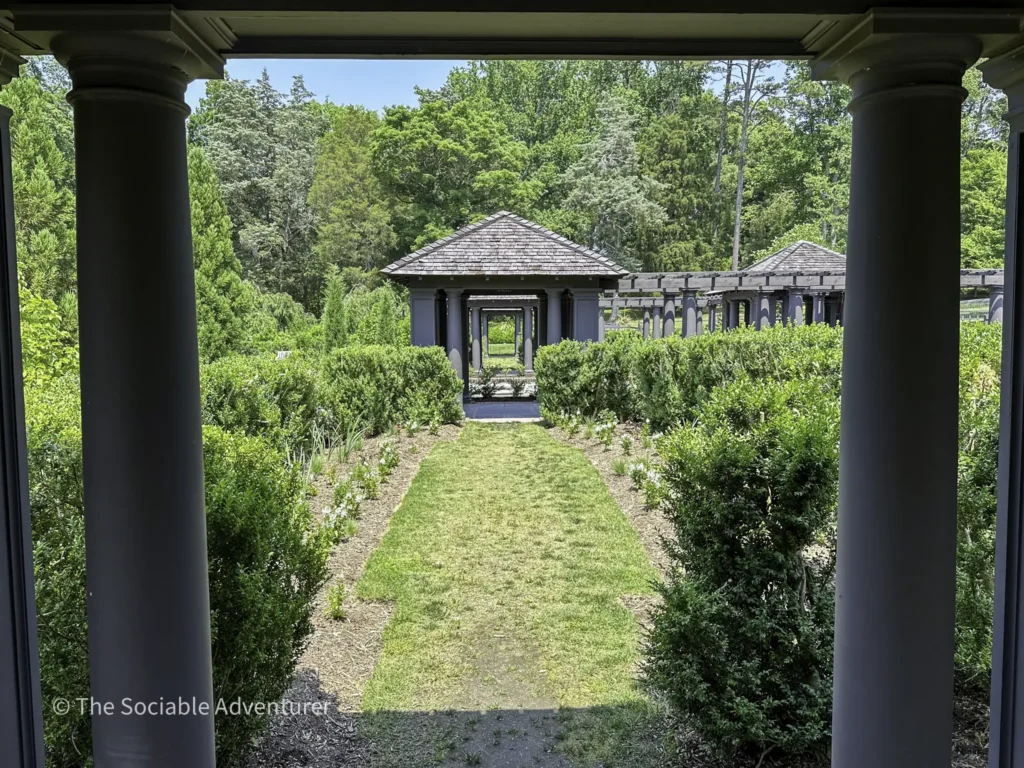
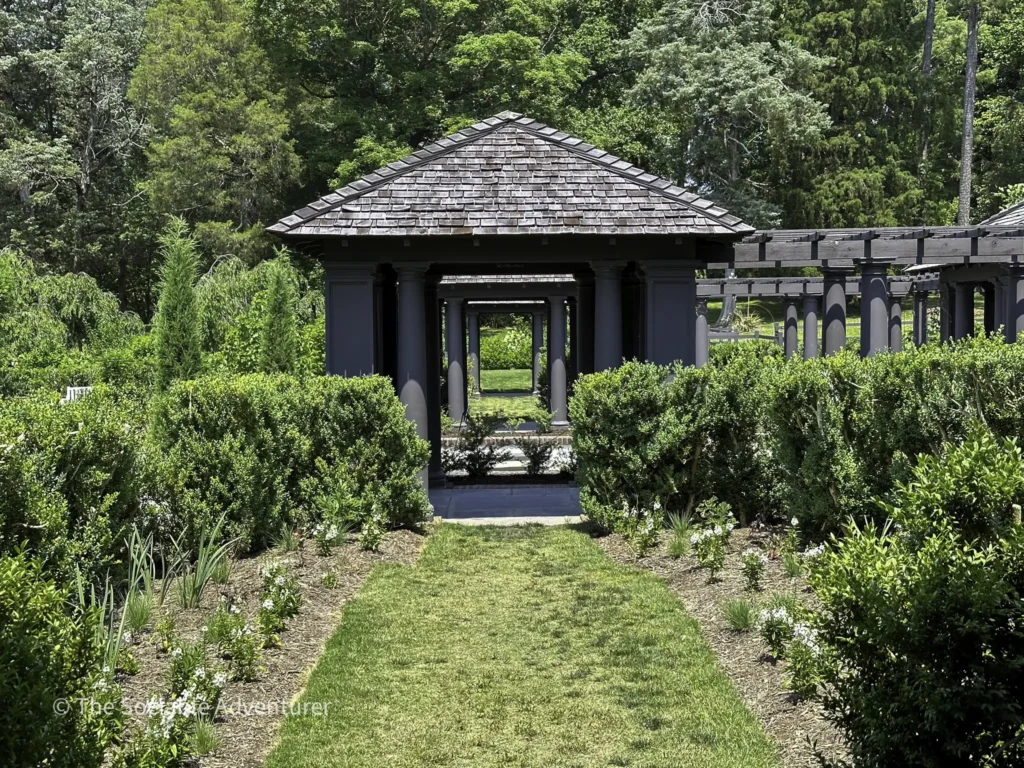
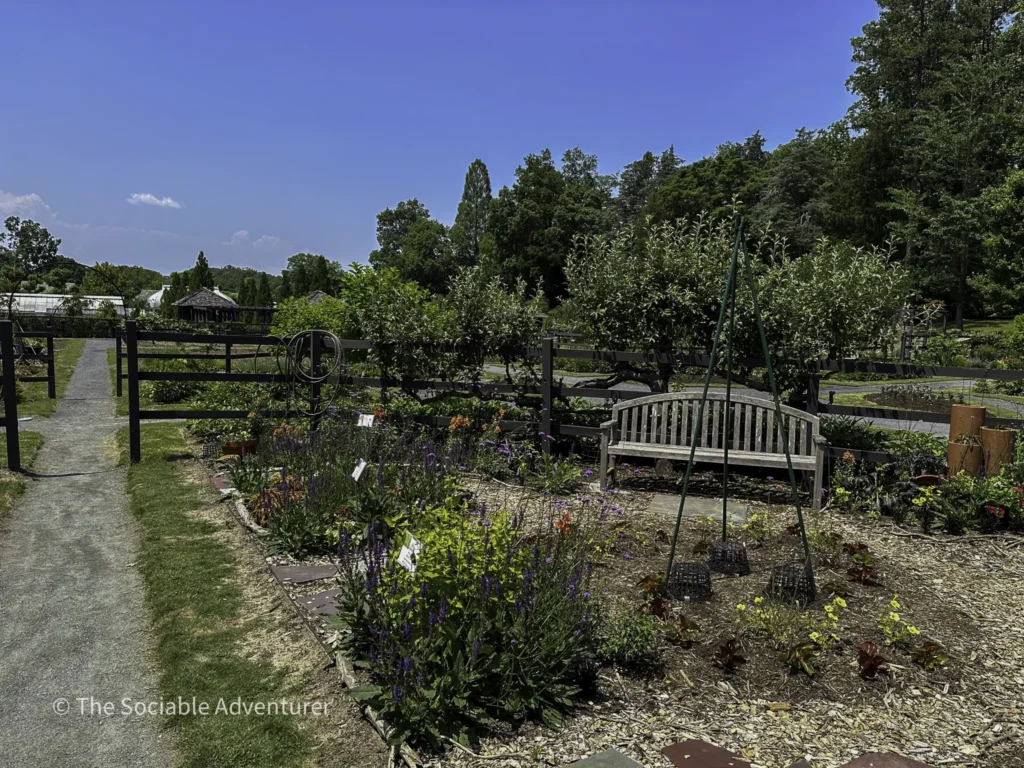
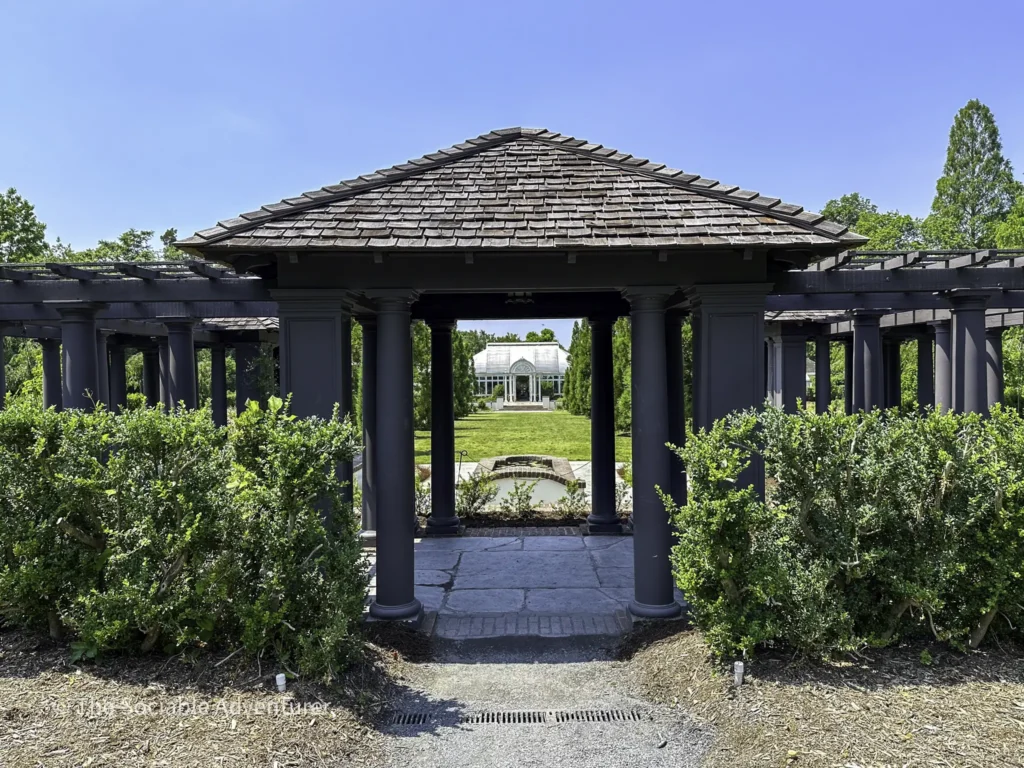
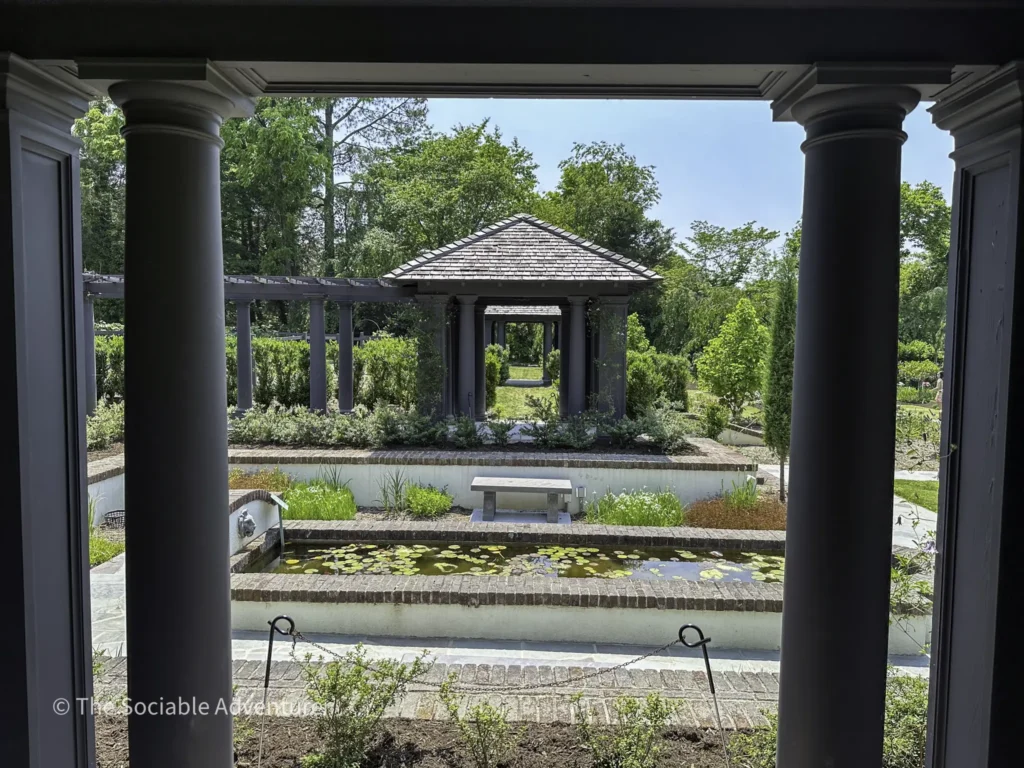
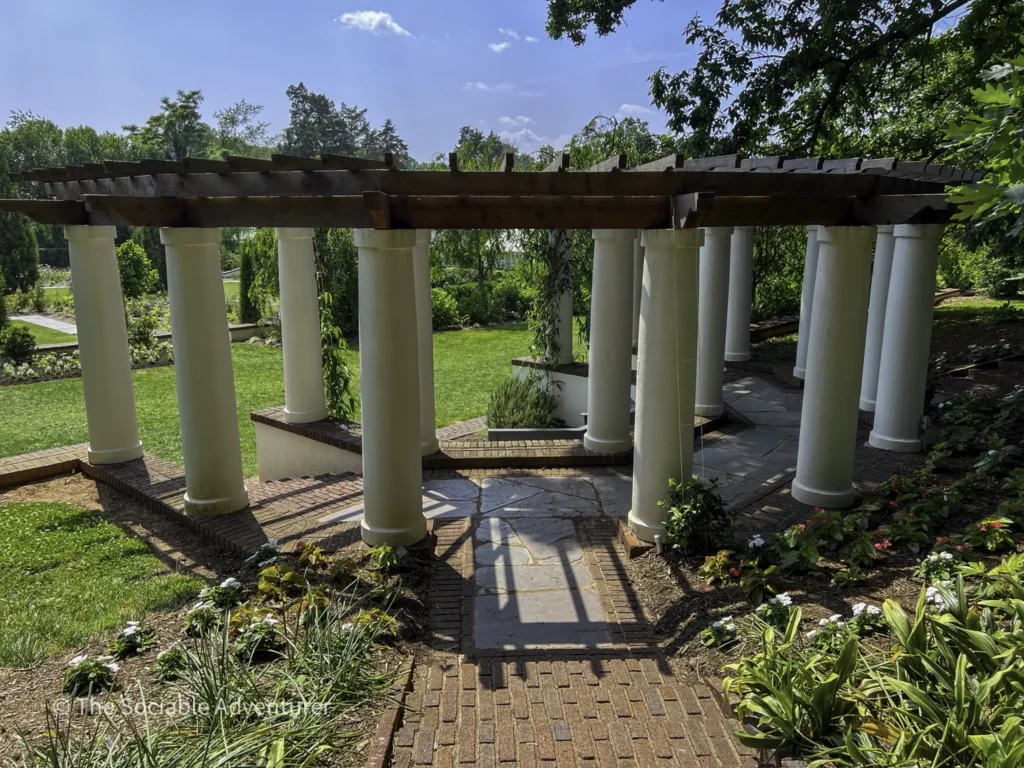
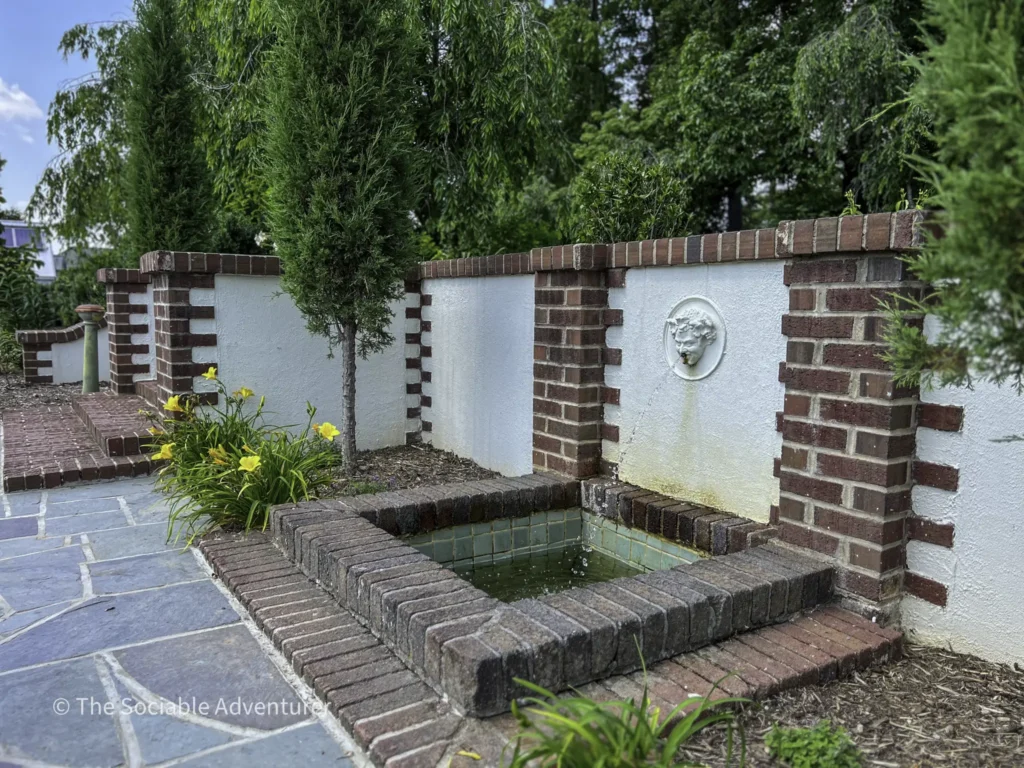
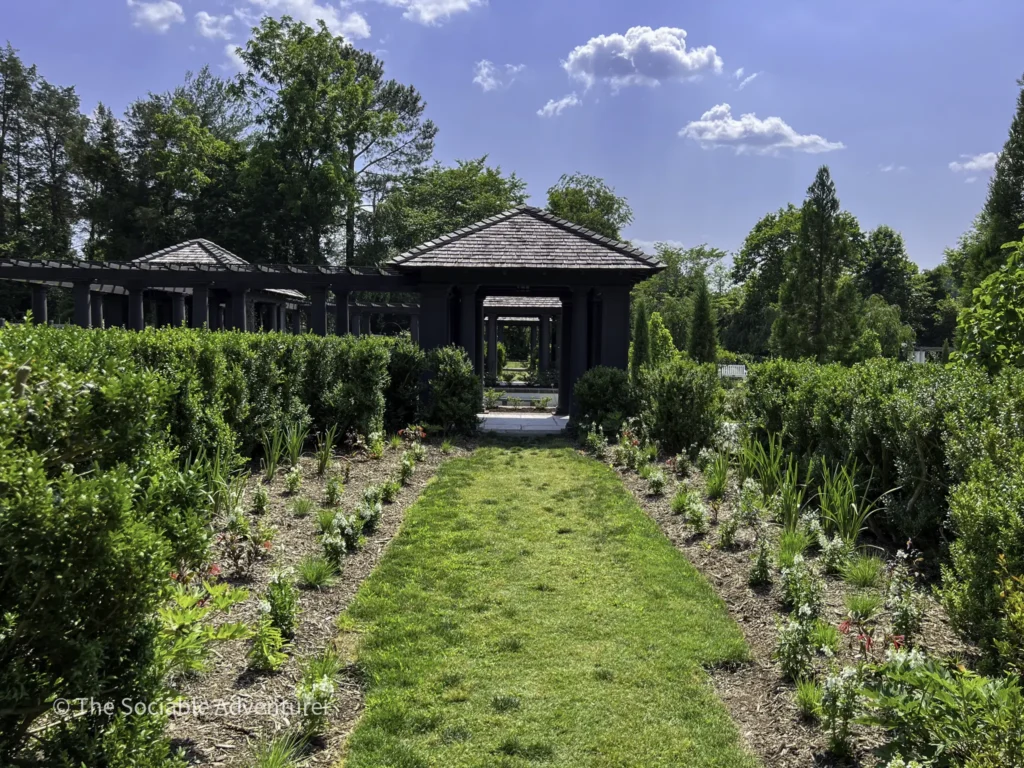
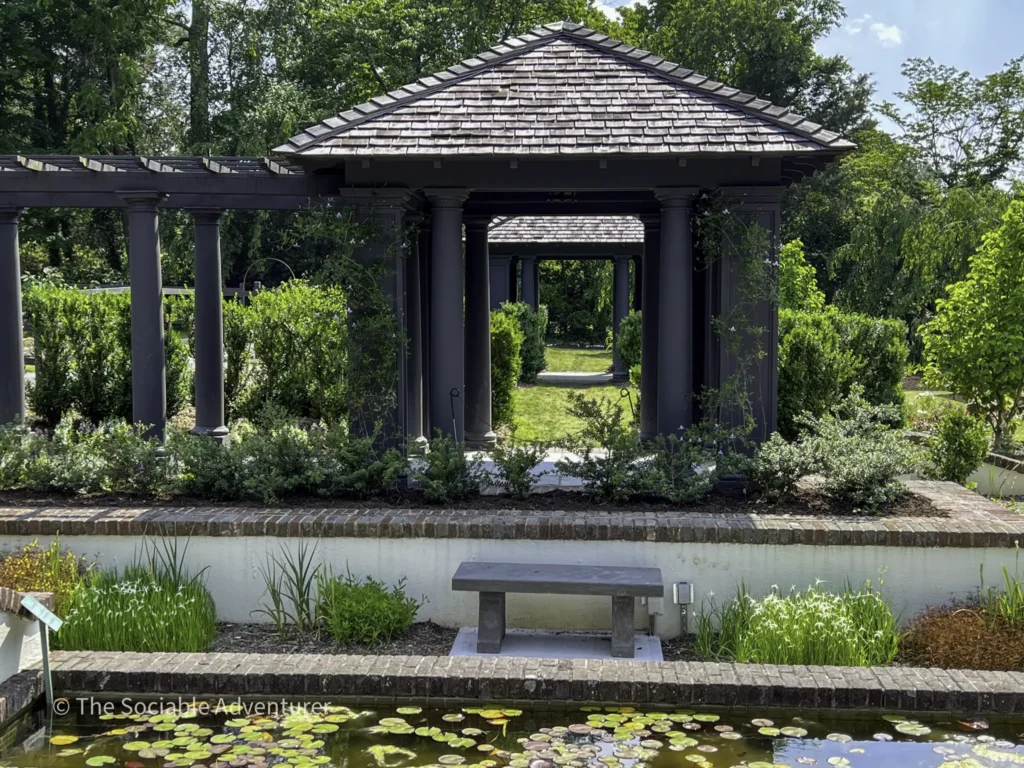
Woven throughout the parterres are the distinctive Reynolda estate features that make the Formal Gardens genuinely singular: Japanese-style teahouses anchor multiple corners (the Japanese Teahouse in the Blue & Yellow Garden is particularly photogenic), pergolas frame walking paths, two fountains provide water features, and perennial and shrub borders plus specimen trees provide seasonal contrast throughout the year.
Beyond the ornamental parterres, don’t miss the Fruit, Cut Flower & Vegetable Garden — Sears’s practical companion to the ornamental garden that still produces seasonal cut flowers and edible plants — and the wonderful Dick and Smith Reynolds’s Log Cabin Playhouse, a preserved children’s playhouse from the Reynolds family era that captures a genuine domestic detail of the estate.
The Formal Gardens have a distinctive design origin worth knowing. When the estate’s landscape architects originally advocated for the Formal Gardens to be positioned as an extension of the main residence, Katharine Reynolds insisted that the gardens instead be an extension of the greenhouses. That single design choice reshaped how visitors experience Reynolda today — the gardens open directly from the Brown Family Conservatory along Reynolda Road, allowing public access to the formal gardens while preserving the family’s privacy at the main house. It’s one of the more concrete examples of Katharine’s progressive vision for Reynolda as a public-facing model estate rather than a purely private country home.
The Brown Family Conservatory — The 1913 Greenhouse Restored in 2024
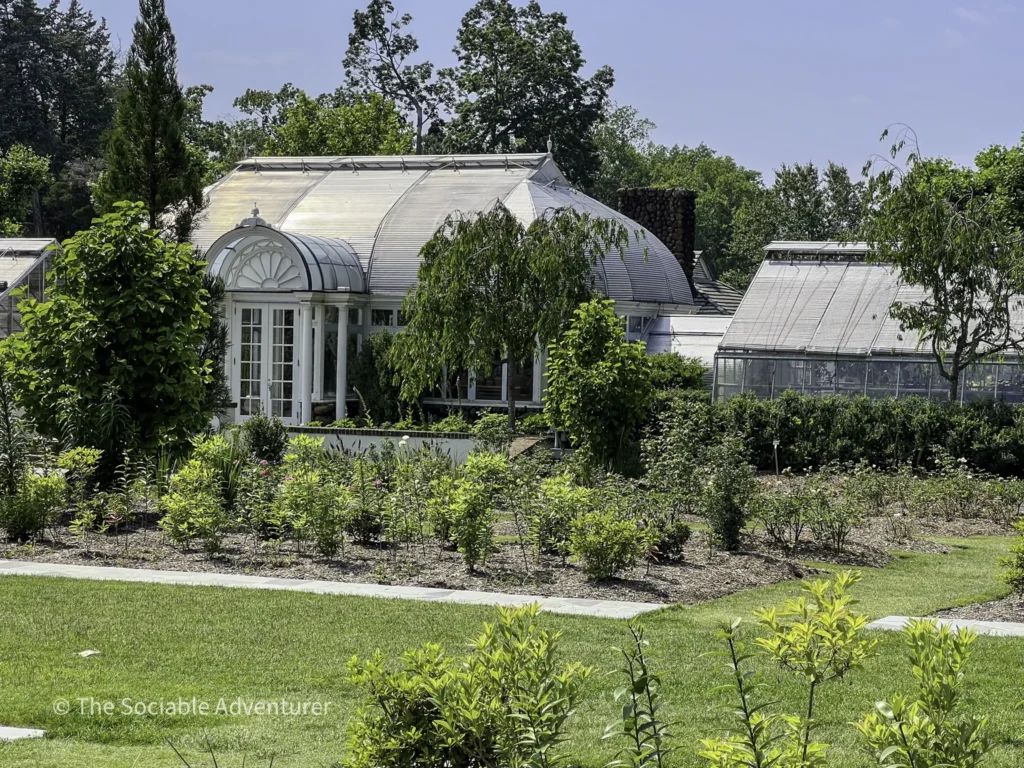
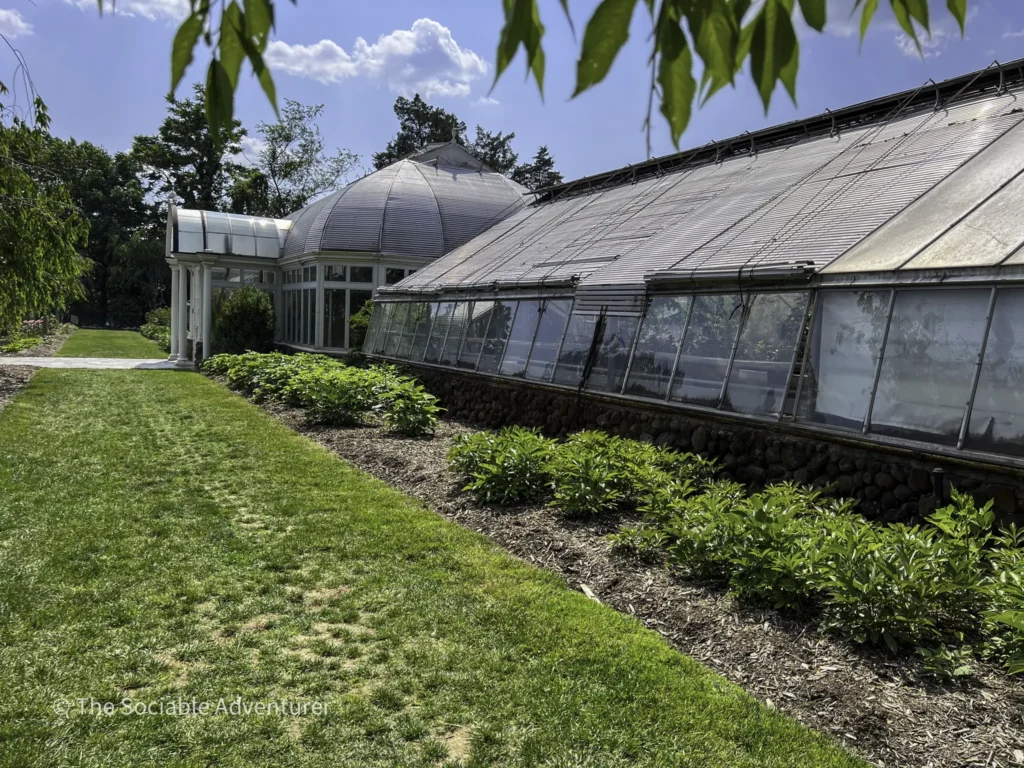
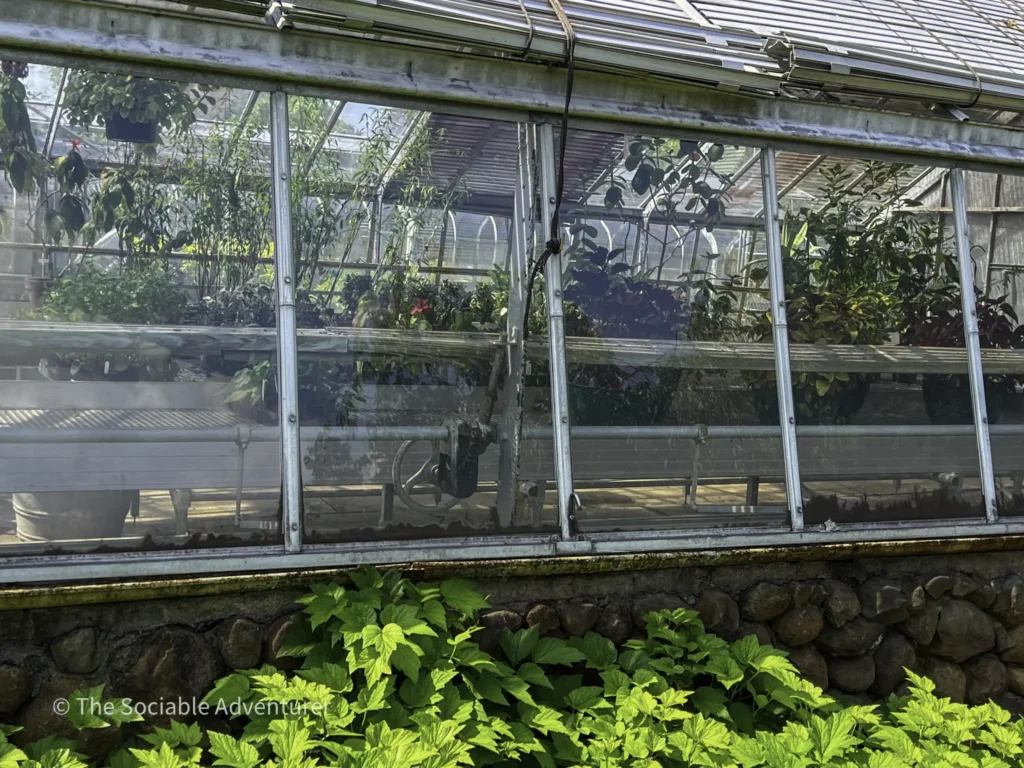
The Brown Family Conservatory serves as the public entrance to the four acres of Formal Gardens — and it deserves the same slow attention that the parterres do. Originally built as a Lord & Burnham Greenhouse complex in 1913, the conservatory predates even the Formal Gardens themselves. Katharine Reynolds commissioned the greenhouse complex to propagate vegetables, keep melons through the winter, present large seasonal community displays, and host a free annual chrysanthemum show open to Winston-Salem residents.
The greenhouse underwent several changes over its long history — most visibly the removal of the distinctive curved glass on each wing. In fall 2023, the greenhouse closed for a complete restoration to return the architectural centerpiece to its 1913 form, with modern control systems installed for improved functionality. The Brown Family Conservatory reopened in October 2024 and now serves as the free public gateway to the Formal Gardens.
Inside the Conservatory, four distinct plant rooms give visitors a substantive tour of the world’s growing regions:
- The Orangery — take a deep inhale inside; citrus and orange trees anchor this room
- The Mediterranean rooms — five distinct Mediterranean growing regions displayed together (a genuine highlight of the reopened Conservatory)
- The Palm Room — tall palms and tropical understory plants
- The Tropical Room — the most colorful room, showcasing tropical foliage with dramatic variations in color, shape, and texture
Adjacent to the main Conservatory sits The Melon House — a historic greenhouse added after the original Lord & Burnham complex — which now serves as Reynolda Gardens’s plant shop, stocked with plants for purchase (many propagated right at Reynolda Gardens). Beyond individual plants, the Melon House also stocks pots, garden-inspired boutique items, and seasonal selections.
The Conservatory connects to the Reynolda Welcome Center, housed in the historic Florist Workroom and functioning as the visitor orientation point for a Formal Gardens visit. Note that the Welcome Center is cashless, so bring a card or mobile payment for any Melon House plant purchases or Welcome Center items.
For serious plant collectors, the Gardens host a fall plant sale and a spring plant sale — biennial events that draw gardeners from across the region for Reynolda-propagated selections that aren’t easily found in commercial nurseries. Friends (donor members) of Reynolda Gardens receive early access to both sales, which typically feature the substantial fall and spring inventory that Gardens Director Jon Roethling and his team have grown throughout the year.
Beyond the Formal Gardens — the Wider Reynolda Ecosystem
While the Formal Gardens and Brown Family Conservatory anchor a Reynolda Gardens visit, the wider Reynolda property extends far beyond the four-acre formal garden footprint. Additional outdoor spaces include the Woodland Trail and the Wildflower Garden with its running creek (the site of the popular Family Creek Crawl family programming), plus smaller natural features throughout the 134-acre grounds.
A visit to Reynolda Gardens also pairs naturally with the two other Reynolda destinations:
- Reynolda House Museum of American Art — the restored 60-room “bungalow” that Katharine Reynolds always called home, now displaying one of the American South’s most substantial collections of American art in the original interior spaces
- Reynolda Village Shops & Restaurants — the original farm village buildings from the 1917 estate, now converted into a working shopping and dining district with 19 stores and restaurants
Good to Know
- Location: 100 Reynolda Village, Winston-Salem, NC 27106
- Phone: 336-758-5593
- Email: gardens@reynolda.org
- Hours: Open daily sunrise to sunset (year-round)
- Brown Family Conservatory + Welcome Center hours: Tuesday–Saturday 9:30 AM–4:30 PM; Sunday 1:30 PM–4:30 PM
- Admission: FREE
- Payment note: The Welcome Center is CASHLESS (bring a card or mobile payment for plant purchases)
- Institutional parent: Reynolda Gardens of Wake Forest University; part of the Historic Reynolda property alongside the Reynolda House Museum of American Art and Reynolda Village Shops & Restaurants
- The Formal Gardens (4 acres):
- Designed by Thomas W. Sears starting 1915 (extending the initial 1911-1913 Buckenham and Miller landscape plan)
- Four parterres divided by a central path and cross path:
- Pink & White Garden
- West Rose Garden
- East Rose Garden
- Blue & Yellow Garden
- Additional features: Japanese-style teahouses (multiple), pergolas, two fountains, perennial and shrub borders, specimen trees, Fruit + Cut Flower + Vegetable Garden, Dick and Smith Reynolds’s Log Cabin Playhouse
- Katharine Reynolds’s design choice: Gardens positioned as an extension of the greenhouses (rather than the main residence) — enabling public access from Reynolda Road while preserving family privacy
- The Brown Family Conservatory:
- Originally the Lord & Burnham Greenhouse, completed in 1913 (predating the Formal Gardens)
- Katharine Reynolds commissioned it to propagate vegetables, overwinter melons, and host free community displays, including an annual chrysanthemum show
- Closed fall 2023 for complete restoration to the original 1913 form with modern controls
- Reopened October 2024 as the Brown Family Conservatory
- Free public entrance to the Formal Gardens
- Four plant rooms inside: The Orangery, The Mediterranean rooms (five distinct regions displayed together), The Palm Room, The Tropical Room
- The Melon House: Historic greenhouse added after the original Lord & Burnham complex; now Reynolda Gardens’s plant shop, stocked with Reynolda-propagated plants, pots, and garden boutique items for purchase
- Seasonal plant sales: Biennial fall and spring plant sales; Friends of Reynolda Gardens receive early access
- Current Gardens Director: Jon Roethling
- Beyond the formal gardens: Woodland Trail, Wildflower Garden (with creek — site of the Family Creek Crawl), and additional outdoor spaces across the wider 134-acre Reynolda property
- Regular programming: Tuesday Gardening Series, Young Explorers (early childhood), Family Creek Crawl, fall and spring plant sales
- Best for: Formal garden enthusiasts, greenhouse and conservatory enthusiasts, families with young children (Young Explorers + Family Creek Crawl), plant sale collectors (fall and spring), Japanese teahouse and pergola photographers, free outdoor Winston-Salem destinations, and Reynolds family history enthusiasts
- Pair with: The full Winston-Salem attractions cluster; the natural Reynolda estate pairing with the Reynolda House Museum of American Art and Reynolda Village Shops & Restaurants; the Reynolda Road corridor combining Reynolda Gardens with the NC Museum of Art – Winston-Salem (Hanes House campus, once Marguerite Drive campus reopens post-2026 renovation); or the Winston-Salem heritage gardens pattern combining Reynolda with Old Salem Museums & Gardens and Historic Bethabara Park
A Winston-Salem Highlight
Reynolda Gardens rewards a slow, unhurried visit — and after the October 2024 reopening of the restored Brown Family Conservatory, there’s more to see than there’s been in decades. The Conservatory alone deserves a full hour of wandering between the Orangery, the five Mediterranean regions, the Palm Room, and the Tropical Room, and the Melon House plant shop is a genuinely dangerous place for gardeners with credit cards.
Beyond the conservatory, the four Formal Garden parterres — Pink & White, West Rose, East Rose, and Blue & Yellow — offer a substantial working example of Thomas Sears’s early-20th-century garden room design. The Japanese teahouses, pergolas, fountains, and the wonderful Dick and Smith Reynolds’s Log Cabin Playhouse give the Formal Gardens the kind of layered detail that rewards multiple visits across the seasons — spring roses in the West and East Rose Gardens, summer color in the Blue & Yellow parterre, fall chrysanthemums that continue Katharine Reynolds’s original 1913 tradition of free public seasonal displays.
For the best visit, plan to arrive Tuesday through Sunday so the Brown Family Conservatory and Welcome Center are open — the Formal Gardens themselves are accessible daily from sunrise to sunset, but the greenhouse experience is worth building your visit around. Time your visit for the fall or spring plant sale if you can, and consider becoming a Friend of Reynolda Gardens for early access to those events. And bring a card, not cash, if you want to bring home a Reynolda-propagated plant.
Resources
Reynolda Gardens and Grounds Webpage
Location
Social Media
@thesociableadventurer Reynolda Gardens is a breathtaking botanical paradise situated in Winston-Salem, North Carolina. This picturesque garden, part of the historic Reynolda Estate, spans over 134 acres of meticulously landscaped grounds, featuring a stunning array of flora and fauna. Visitors can meander through winding paths shaded by towering trees, discover tranquil ponds alive with water lilies, and admire vibrant seasonal blooms that paint the landscape with bursts of color. The garden seamlessly blends formal garden designs with natural woodland areas, providing a serene retreat for nature enthusiasts and art lovers alike. With its rich history and captivating beauty, Reynolda Gardens offers a peaceful escape and a chance to connect with the natural world in a setting of timeless elegance. https://thesociableadventurer.com/reynolda-gardens/ #WinstonSalem #WinstonSalemNC #ForsythCounty #ForsythCountyNC #VisitNC #myNC #CelebratingNC #ExploreNC #ExploreLocal #discover_carolinas #discoverthecarolinas #BestoftheTarheelState #NC #NorthCarolina #Discover #Adventure #Explore #TheSociableAdventurer #NCTown #NCCity #NCGardens #NCFlowers #BotanicalGarden #Garden #Flowers #ReynoldaGardens ♬ Tighten Up – The Black Keys
Reynolda Gardens is a breathtaking botanical paradise situated in Winston-Salem, North Carolina. thesociableadventurer.com/reynolda-gar… #VisitNC #NC #NorthCarolina #WinstonSalem #Gardens #BotanicalGardens #ReynoldaHouse #ReynoldaGardens #ForsythCountyNC @visitnc.bsky.social
— thesociableadvtr.bsky.social (@thesociableadvtr.bsky.social) January 5, 2025 at 8:52 AM
[image or embed]
Reynolda Gardens is a breathtaking botanical paradise situated in Winston-Salem, North Carolina. https://t.co/UdDJtqNiC6#VisitNC @VisitNC pic.twitter.com/a3RwKCH7Ji
— The Sociable Adventurer (@TheSociableAdv) April 23, 2024

Your Complete Guide to Hiking Trails at Elk Knob State Park
Elk Knob State Park is one of North Carolina’s most rewarding mountain destinations — a 4,400-…

A Complete Guide to the Trails at Carolina Beach State Park
Tucked along the Cape Fear River on Pleasure Island, Carolina Beach State Park is one of southeaster…

The Complete Guide to Hiking Trails in Lansing, NC
Set in the rolling hills of Ashe County, just a stone’s throw from the Virginia and Tennessee …

Exploring Ashe County Park: A Hiker’s Guide to North Carolina’s Mountain Gem
If you’re searching for the best hiking trails at Ashe County Park in North Carolina, you̵…
Mountain Masterpieces: A Guide to the Ben Long Frescoes of Ashe County
In the quiet corners of Ashe County, where the Blue Ridge Mountains meet peaceful valleys, thereR…

Granite, Grunts, and Glory: A Day on the Stone Mountain Loop Trail
The Stone Mountain Loop Trail is the signature hike at Stone Mountain State Park in North Carolina —…