Wake County sits at the heart of North Carolina’s Research Triangle region — the dynamic central NC corridor anchored by three major research universities and one of the largest research and development parks in the world. As the most populous county in NC and one of its fastest-growing areas, Wake County is home to a layered mix of state government, world-class universities, major medical and technology employers, and a deep cultural and recreational scene that draws visitors and new residents from across the country.
The county was established in 1771 and named after Margaret Wake, the wife of British colonial Governor William Tryon (who served as colonial governor of NC from 1765 to 1771 before going on to serve as the colonial governor of New York). Two decades later, the state legislature founded the city of Raleigh in 1792 specifically to serve as North Carolina’s permanent state capital, making it one of the few American cities planned and built expressly for that purpose.
Raleigh — A Planned Capital with a Grid Layout and the State Capitol
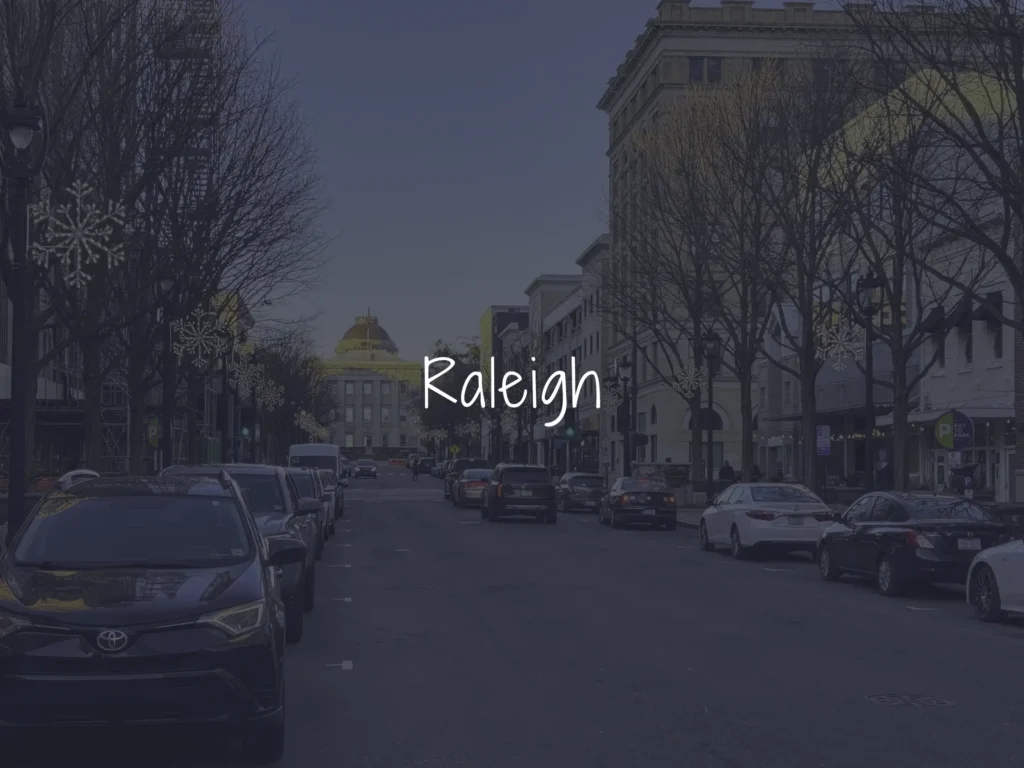
The original city of Raleigh was designed in a tidy one-square-mile grid organized around the State Capitol, with five public squares spaced throughout the layout. The North Carolina State Capitol was completed in 1840 and stands today as a National Historic Landmark — one of the finest and best-preserved examples of Greek Revival civic architecture in the United States. The Capitol building remains the seat of NC’s governor and lieutenant governor, while the General Assembly meets in the adjacent State Legislative Building (completed in 1963).
Around the State Capitol, downtown Raleigh has grown into one of NC’s most active urban districts — combining the original government complex with the broader cultural, entertainment, and dining scene that defines the modern city.
A Major Research and Education Hub
Wake County’s modern character is genuinely shaped by its position within the Research Triangle — a regional corridor whose name comes from the three major research universities anchoring the area: North Carolina State University in Raleigh (Wake County, founded 1887), Duke University in Durham (Durham County), and the University of North Carolina at Chapel Hill in Orange County. The three universities together inspired the creation of the Research Triangle Park in 1959 — one of the largest research and development centers in the world, spread across portions of Wake, Durham, and Orange counties.
The Research Triangle Park’s success transformed the region’s economy. Wake County is now home to major technology employers such as SAS Institute (headquartered in Cary, the analytics software giant whose campus is one of the largest in the broader Triangle), along with significant operations by IBM, Cisco, Red Hat (now part of IBM), and many others. Beyond technology, Wake County is also a major medical and healthcare hub — anchored by WakeMed, UNC REX Healthcare, Duke Raleigh Hospital, and numerous research-focused medical centers.
The Wake County Public School System is also one of the largest school districts in the United States by enrollment, with consistently strong rankings for academic outcomes and graduation rates.
Cultural Institutions, Sports, and Major Events
Wake County’s cultural scene is one of the deepest in NC. Major institutions we’ve personally explored include:
- North Carolina Museum of Natural Sciences — The largest natural history museum in the Southeast, with the Nature Exploration Center and Nature Research Center, four floors of exhibits, live animals, and the iconic SECU Daily Planet globe. Free general admission. Featured in our blog post Discover Amazing STEM Experiences and Science Centers in North Carolina
- North Carolina Museum of Art — Major art museum with the 164-acre Ann and Jim Goodnight Museum Park; the Southeast’s largest collection of Rodin sculptures and free general admission to the permanent collection
- North Carolina Museum of History — Free admission, located across from the State Capitol; tells the story of NC history through more than 150,000 artifacts spanning 14,000+ years
- Mordecai Historic Park — Home to the Mordecai House (Raleigh’s oldest residence still on its original foundation, built 1785), plus the birthplace of Andrew Johnson (17th President of the United States)
- City of Raleigh Museum — Located in the 1874 Briggs Building; focuses on Raleigh’s specific history
- North Carolina Sports Hall of Fame — Inside the NC Museum of History; celebrates the state’s sports heritage and most notable athletes
- Pullen Park — Founded in 1887, the first public park in NC and the fifth-oldest operating amusement park in the United States (and 16th oldest in the world); features a beloved 1911 carousel, miniature train, and pedal boats on Lake Howell
- Historic Yates Mill County Park — A wonderfully preserved 18th-century gristmill park in southern Raleigh; one of the oldest operational mills in the broader Wake County area
- North Carolina State Fair — Running annually since 1853; one of the largest state fairs in the Southeast, drawing over a million visitors during its 11-day October run at the NC State Fairgrounds
- Lenovo Center (formerly PNC Arena) — Home to the Carolina Hurricanes (NHL, 2006 Stanley Cup winners) and the NC State Wolfpack men’s basketball team
The county also hosts several major annual events, including the Hopscotch Music Festival (a major downtown Raleigh music festival), IBMA World of Bluegrass (the bluegrass music industry’s annual showcase, held in Raleigh), and a steady year-round calendar of festivals, food events, and cultural programming.
A Growing Craft Beer Scene
Raleigh’s craft beer scene has grown into one of the most active in NC over the past decade. Among the spots we’ve personally explored:
- Burial Beer Co. Raleigh Taproom — Located in the historic Transfer Co. Food Hall, with 24 rotating taps and an art-forward atmosphere
- R&D Brewing – Seven Saturdays Taproom — Founded in 2017 by industry veterans, the official beer sponsor of the Carolina Hurricanes
- Wye Hill Kitchen & Brewing — A female-owned brewpub in Boylan Heights with one of the best patios in Raleigh
In nearby Wake Forest, the craft beer scene extends further with Norse Brewing Company — a Scandinavian-themed brewery with a Nordic-inspired Great Hall, dog-friendly patio, and a signature Viking Burger made from bison, boar, wagyu, and elk.
Outdoor Recreation and State Parks
Beyond its urban character, Wake County offers a thoughtful range of outdoor recreation. The county’s three major outdoor anchors are:
- Falls Lake State Recreation Area — On the northern edge of Wake County, around Wake Forest, offering boating, fishing, swimming, hiking, and camping around Falls Lake
- Jordan Lake State Recreation Area — On the southwestern edge of the county near Apex (extending into Chatham County), with over 4,500 acres, a strong birdwatching scene including bald eagles, and similar outdoor offerings
- William B. Umstead State Park — Over 5,500 acres of woodlands, creeks, and hills along the Wake/Durham border between Raleigh, Durham, and Chapel Hill; popular for hiking, biking, and horseback riding
In Wake Forest, E. Carroll Joyner Park spans 117 acres and combines a historic pecan grove planted during the Great Depression, restored farm buildings, a 1,000-seat lawn amphitheater, and three miles of paved trails.
For more on the broader NC state park system, check out our blog post A Guide to the Best of North Carolina’s State Parks.
The county is also known for its excellent public schools, expansive greenways, neighborhood parks, and a year-round outdoor culture — making it one of NC’s most family-friendly regions.
Towns and Cities of Wake County
The towns and cities we’ve personally explored each carry their own distinct character within the broader Wake County experience:
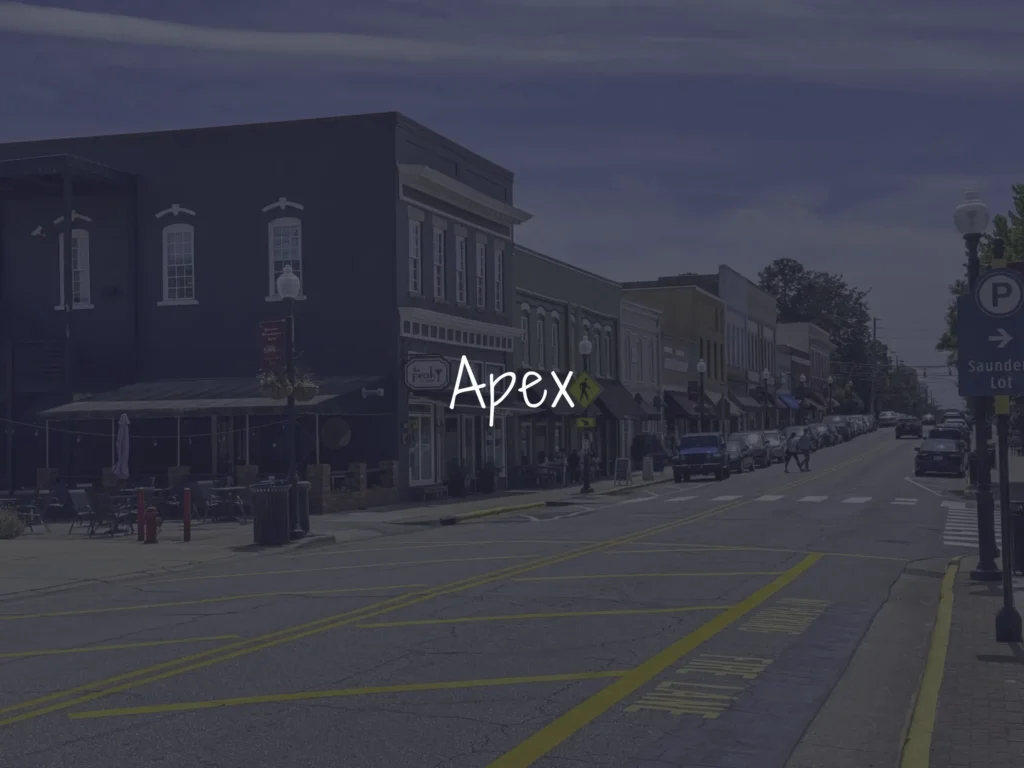
- Apex — A historic railroad town frequently ranked among the best places to live in the United States, anchored by a beautifully preserved Salem Street downtown, and home to Jordan Lake State Recreation Area
- Cary — One of the Triangle’s largest suburbs and home to the SAS Institute campus; known for excellent schools and a thoughtful approach to community planning
- Raleigh — North Carolina’s state capital and the largest city in Wake County, home to the State Capitol, NC State University, the broader downtown cultural and government district, the major NC state museums, Pullen Park, and a growing craft beer and dining scene
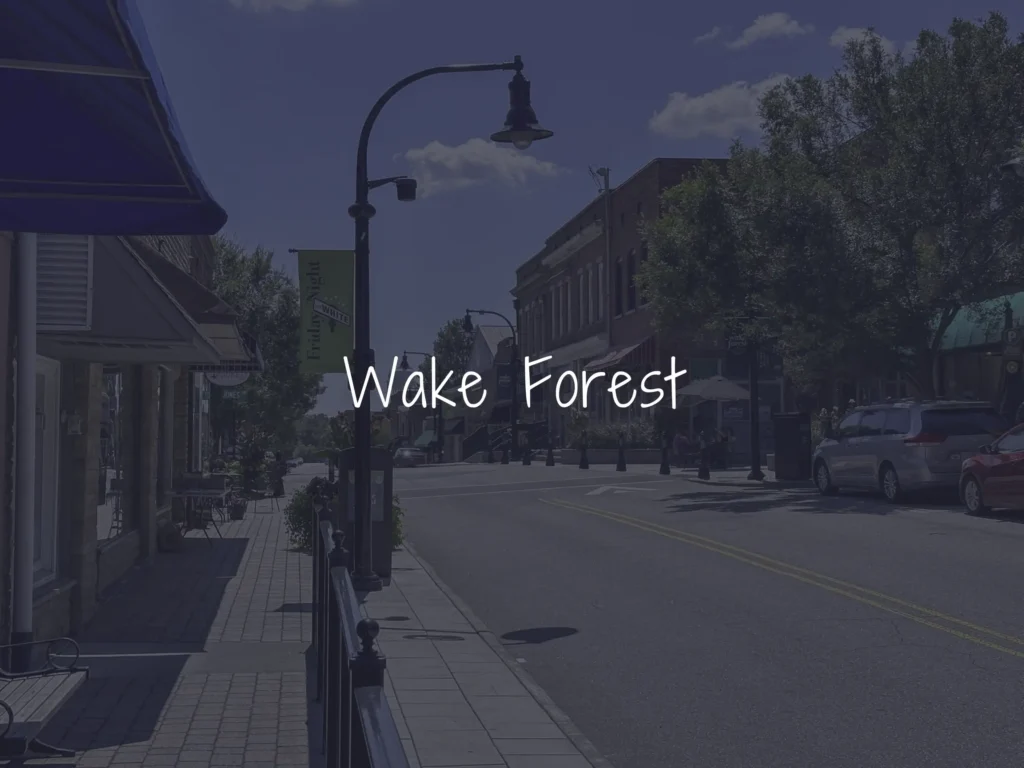
- Wake Forest — The original 1834 home of Wake Forest University before the university relocated to Winston-Salem in 1956; today, a historic small town with a charming downtown, E. Carroll Joyner Park, and nearby access to Falls Lake State Recreation Area
Click on the images below to dive deeper into the towns we’ve personally explored around Wake County.